Monthly Archives: May 2019

Book Review – Writing From Life

Written by: Lynne Hackles

Published by: How to Books

Writing from Life

This book does exactly what it says on the cover. It is absolutely jammed packed with great ideas. So, even though `nothing much has happened to me’, just reading the book has fired my imagination.

If you are thinking about taking a writing course, I suggest you buy this book first and work though it, whether you want to write for children or adults, feature articles to gothic horror, as it will show you how your own past can make your writing come alive.

Writing from Life demonstrates how to take all those things that you thought were fairly insignificant and make good use of them. Nothing goes to waste from noticing the colour of a leaf to baking a cake for you grandson. It talks you through how you can use personal experiences to put more emotion into your writing and provide vivid settings. There are examples and anecdotes not only from the author’s life, but from a whole range of highly successful, professional writers, who talk about how they have used their personal experiences in their writing.

Each chapter contains exercises and tips that not only inspire you, but explain how YOU can make money from your writing by identifying the markets available to send your writing to.

This book is a `must have’ for every writer’s bookshelf.

I have previously published this book review on Amazon.

An interview with… Nicola Davis

For my Research Secrets, column in February 2009, I interviewed children’s natural history book writer, Nicola Davis.

nicola_davies

Nicola’s skill is writing narrative non-fiction in a way young children will understand. She has written several books in the Walker Read and Wonder series, including Big Blue Whale, One Tiny Turtle and Ice Bear. She has also written science books for older children, including Poo a Natural History of the Unmentionable, Extreme Animals and Who’s Eating You – a book about parasites.
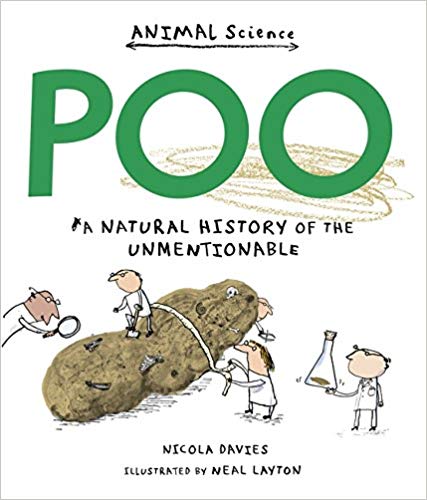
poo

“I love my subject so research is a pleasure. Also, research gives me ideas for HOW to approach a subject, as well as providing the WHAT part. Writing a book makes you ask two questions: What am I going to write and HOW am I going to write it. Research a BIT to give you some of the WHAT of your book; then write an outline to give you the HOW, which will help you generate the right questions to ask to get all the rest of the WHAT.” Nicola Davis

Nicola has spent most of her life studying animals in one way or another so she is aware research doesn’t fall into a particular category. Much of the material that goes into her books is stuff she already knows. She explains she just needs to top up some of her general knowledge with a bit of Googling and library work.

She tries not to write about animals or habitats that she hasn’t seen but her work as a wildlife researcher, tour guide and TV presenter in all sorts of places certainly helps. She has visited animals in Newfoundland, Alaska, Kenya, Madagascar, Australia, Tobago – much of that time she is sailing on board various sorts of boats from 25 foot wooden sail boats to cruise ships. 

“I often use New Scientist and other more specialised scientific journals, plus a large library of zoological reference on my own shelves. It depends entirely on the project….For Ice Bear I knew most of the polar bear stuff but wanted more about polar bears and Inuit culture and both books and Internet were good for that. For Extreme Animals I collected likely material from trawling New Scientist and other journals for about six months before I put the book together.” Nicola Davis

Her aim is to show children that science isn’t a stone tablet… so if there is controversy over something, or an area where we just don’t know, she strongly believes it’s exciting, interesting and VITAL to say so.

Some information is simply too big and complex for young children. They need a background of other knowledge to understand it. Nicola’s text may not be able to deliver all of the tricky concepts, but it can, by subtle suggestion and association, prepare their minds to receive it later. For example, bat echolocation is fabulously complex, making use of frequency modulation and Doppler Effect in ways that science is only just beginning to fully understand. This is way too much for a young child, but the essence of the idea can be carried very simply:

“…bat shouts as she flies, louder than a hammer blow, higher than a squeak. She beams her voice around like a torch, and the echoes come singing back. They carry a sound picture of all her voice has touched.” (Nicola Davis from Bat Loves the Night, Walker Books 2001, page 14

It isn’t the whole story, but it’s true, accurate and lays the right foundation. Also and perhaps more importantly, it gives a feeling, an atmosphere of what is going on during echolocation; it imparts to the reader a basic emotional understanding of the facts.

You can read the full interview in the February 2009 #89 issue of Writers Forum.

You can find more information about Nicola Davis, her books and her writing at: www.nicola-davies.com

Write What Interests You

This is the opposite of write what you know. I don’t believe writers have to write what they know. You should write about what interests you and then find out more about it. In theory, if a topic interests you it will interest others.

I have a column in Writers’ Forum and authors and their research. These authors have not just written what they know they have taken interesting themes and topics and find out more through their research. In fact, some who have initially started out writing what they know have found after starting researching around the subject they did not know as much about it as they thought.

Just like mystery writer, Helen Moss, you should research around the subject and get a feel for the current theory and practice.

Helen Moss feature

When you are interested in a subject it shows in your writing. The passion and enthusiasm shines through. You might think, ‘most people are not interested in the things I am,’ but a passionate piece of writing will capture their hearts and entice them in.

Author, Nick Cook, is not a quantum physicists but it is a subject he is fascinated with. For his trilogy he used Twitter to find out the information he required to make his story believable and authentic.

Nick Cook snip

He said:

“I realised I needed to find out more about tornadoes and storm chasing to write my book. This was key… but how do you get in contact with a real expert dealing with an area that you are writing about? I tried all sorts of things, but was getting nowhere fast. What finally worked was sending out a call for help via social media, namely Twitter. Before long someone tweeted back to tell me there was this man that I should really talk to if I wanted to learn more about the storm chasing world. A few emails later Jesse agreed to do an interview with me. ” Nick Cook

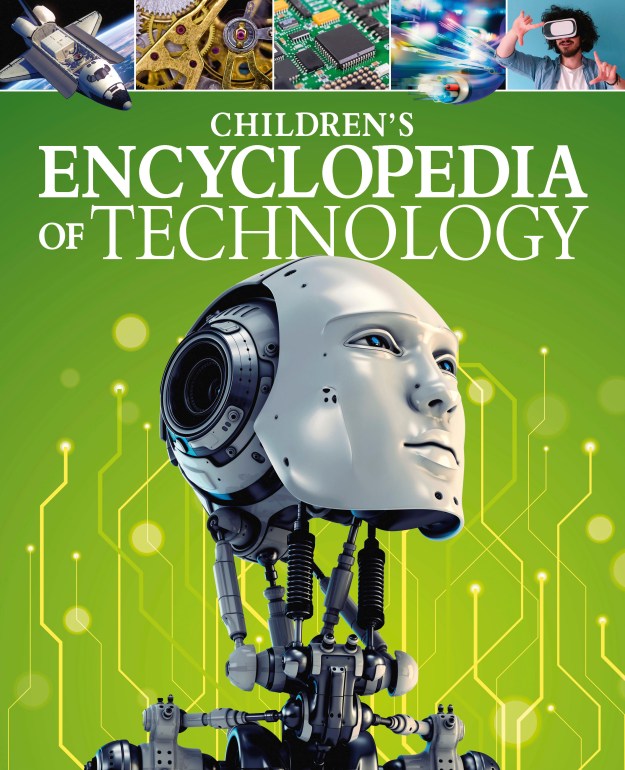
I get asked to write to commission about many subjects that I previously have very little knowledge about such as information on body technology for the Children’s Encyclopedia of Technology (co-written with Alex Woolf). In this case, specifically RFID chips, which are like business cards inserted under the skin. They can transfer contact details to smartphones and provide links to complex medical data. And Clustered Regularly Interspaced Short Palindromic Repeats (CRISPR), which exploits bacteria, in order to make changes to DNA and possibly cure genetic diseases.

ChildrensEncyclopediaOfTechnology-280x225-Cover_F-17May18

I also wrote in-depth information about ten scientists and ten great inventors for my graphic novels Heroes of Science which includes the stories of Nicolaus Copernicus, Charles Darwin, Marie Curie and Albert Einstein and Heroes of Discovery, which includes the stories of Ada Lovelace, Nikola Tesla, Tim Berners-Lee and Elon Musk.

Through extensive research I manage to write these books and I am very proud of them. I retain the knowledge for a limited time but then I seem to have a mind wipe to make way for any new information I need to know for my next book.

The message of this blog post today is if you are stuck for ideas think what you are interested in even if you don’t know anything about it and write about that.

You can find out more about me, my books and my writing career on my website: www.anitaloughrey.com or follow me on Twitter @amloughrey or Instagram @anitaloughrey