Monthly Archives: October 2022

An interview with… Sophie Anderson

In the October issue of Writers’ Forum #248 Oct 22, I have interviewed Sophie Anderson for my Writing for Children double-page spread, about how Slavic folklore and fairy tales have influenced her novels.
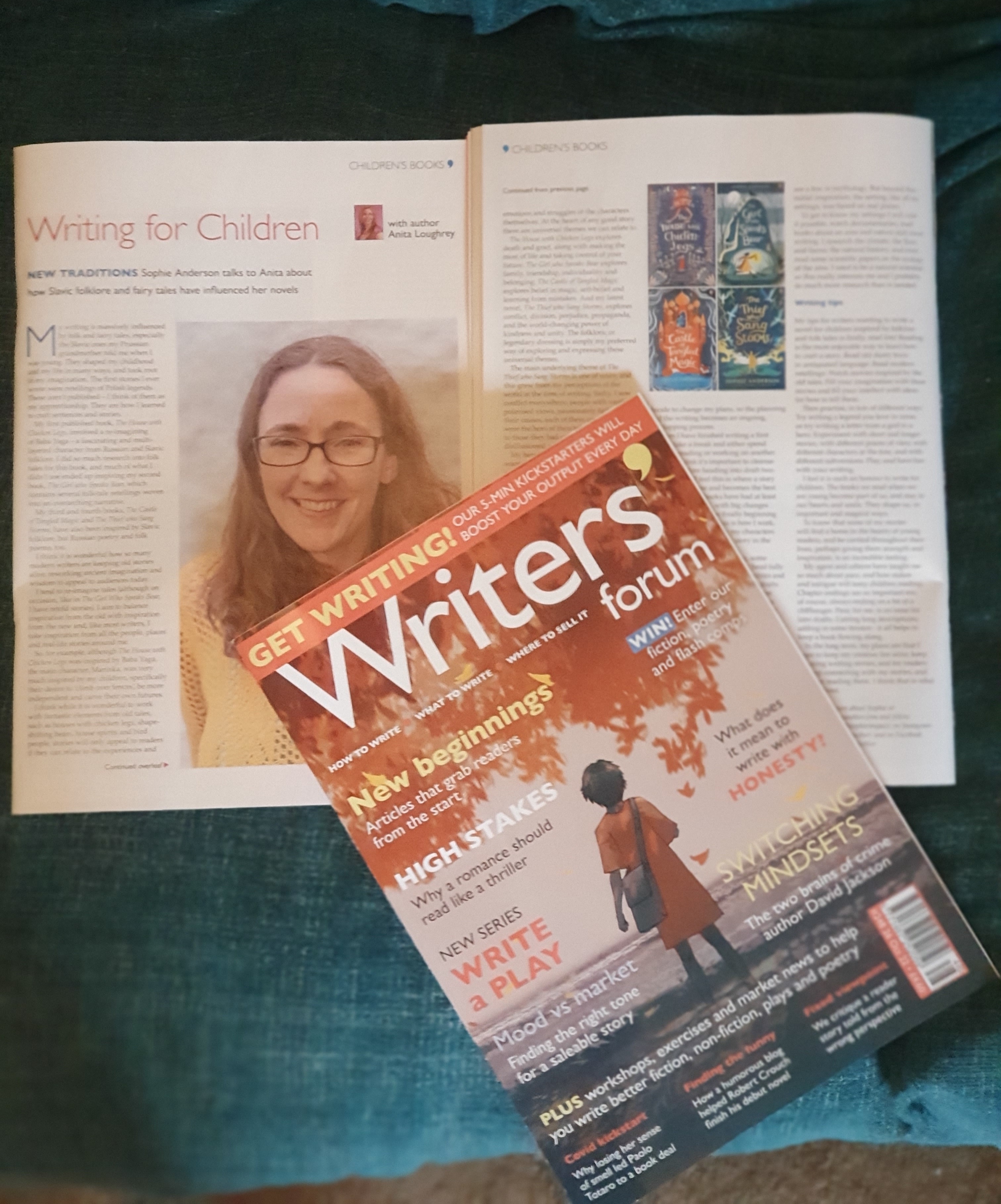
Sophie told me her writing is massively influenced by folk and fairy tales, especially the Slavic ones her Prussian grandmother told her when she was young.

“They shaped my childhood and my life in many ways, and took root in my imagination.”

Sophie Anderson

Sophie’s first published book was The House with Chicken Legs, which involved a reimagining of Baba Yaga – a fascinating and multi-layered character from Russian and Slavic folklore. She revealed she did so much research into folktales for this book, that much of what she didn’t use ended up inspiring her second book, The Girl who Speaks Bear, which contains several folktale-retellings woven into an overarching narrative.
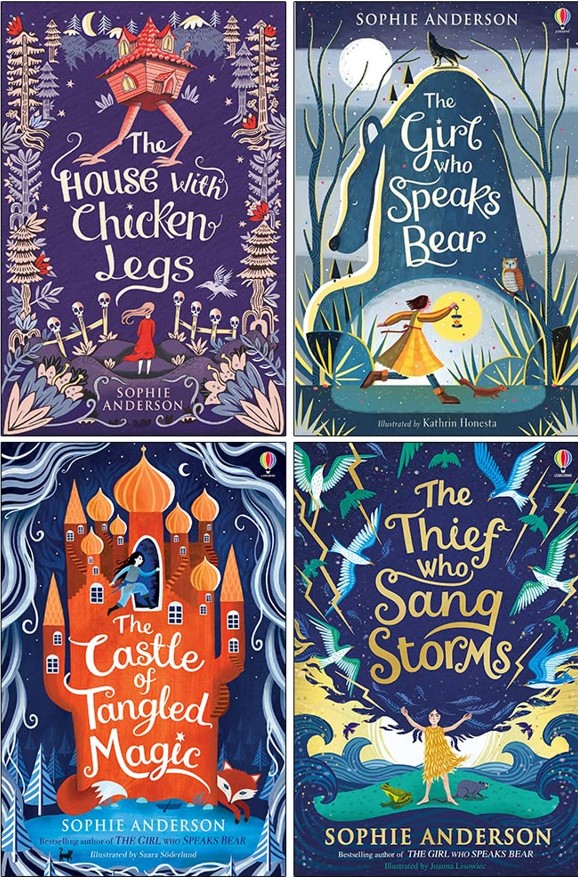
Her third and fourth books, The Castle of Tangled Magic and The Thief who Sang Storms, were also inspired by Slavic folklore, as well as Russian poetry and folk poems.

“I think it is wonderful how so many modern writers are keeping old stories alive; retelling, reimagining and reworking ancient imagination and wisdom to appeal to audiences today. I tend to reimagine tales rather than retell them (although on occasion, like in The Girl Who Speaks Bear, I have retold stories). I aim to balance inspiration from the old with inspiration from the new.”

Sophie Anderson

Sophie explained she takes inspiration from all the people, places and real-life stories around her. The House with Chicken Legs was inspired by Baba Yaga, the main character, Marinka, was inspired by her children, specifically their desire to ‘climb over fences’, be more independent, and carve their own futures.

At the heart of any good story there are universal themes we can relate to. The House with Chicken Legs explores death and grief along with making the most of life and taking control of your future. The Girl who Speaks Bear explores family, friendship, individuality and belonging. The Castle of Tangled Magic explores belief in magic, self-belief, and learning from mistakes. The Thief who Sang Storms, explores conflict, division, prejudice, propaganda, and the world-changing power of kindness and unity. The main underlying theme is one of unity.

“I think whilst it is wonderful to work with fantastic elements from old tales, such as houses with chicken legs, shapeshifting bears, house-spirits, and bird-people, stories will only appeal to readers if they can relate to the experiences, emotions and struggles of the characters themselves.”

Sophie Anderson

She uses folklore and legends as a way of exploring and expressing these themes.
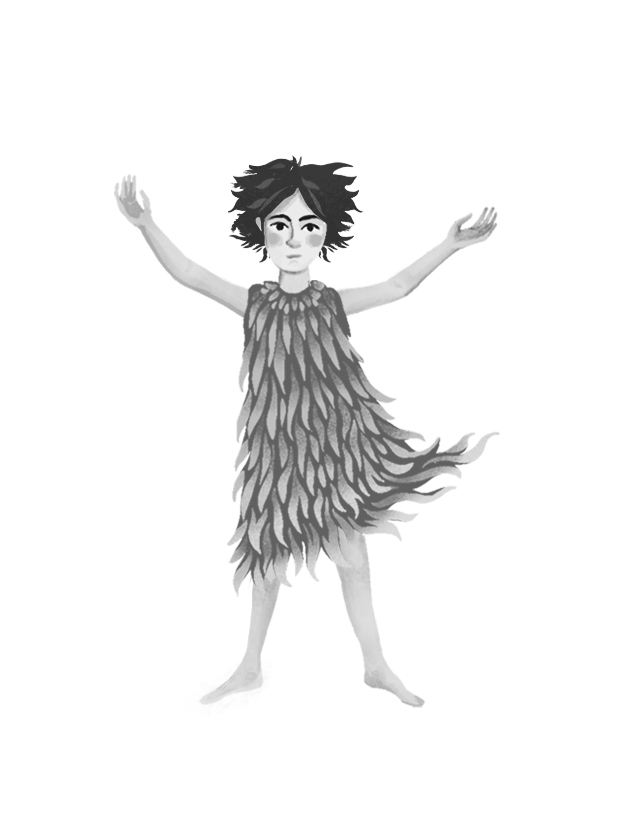
Linnet from The Thief who Sang Storms
Illustrated by Joanna Lisowiec

Sophie revealed her planning process is messy and very paper-based. She told me she fills up notebooks with ideas and stream-of-consciousness free writing and ring-binders with maps and plans, character studies, notes on settings, lists of key events and plot points, and thoughts about possible themes and messages. Once she starts writing the chapters she inevitably changes her plans so it is an organic process. .

Sophie said if a character feels vague and not fully-formed she will do some exercises, like write letters or a diary from that character’s point of view. Or might interview them, take them out for an imaginary coffee for a chat, or write a scene that doesn’t end up in the book, where they are having a day out with a friend.

Her writing tips to writers wanting to write a novel for children inspired by folklore and folktales is firstly, read lots!

“Reading is the most enjoyable way to learn how to craft a story. Read old dusty texts in antiquated language. Read modern retellings. Watch movies inspired by the old tales. Fill your imagination with these stories and fill your intellect with ideas for how to tell them.”

Sophie Anderson

Then practice, in lots of different ways.

“Try writing a legend you love in verse, or try writing a letter from a god to a hero. Experiment with short and longer stories, with different points of view, with different characters at the fore, and with different subversions. Play, and have fun with your writing.”

Sophie Anderson

You can discover more about Sophie on her website: www.sophieandersonauthor.com and follow her on Twitter: @sophieinspace, Instagram: @sophieandersonauthor and Facebook: @SophieAndersonAuthor.

To read the complete feature you can purchase a copy of #248 Oct 2022 Writers’ Forum by ordering online from Select Magazines.

To read my future Writing 4 Children or Research Secrets interviews you can invest in a subscription from the Writers’ Forum website, or download Writers’ Forum to your iOS or Android device.
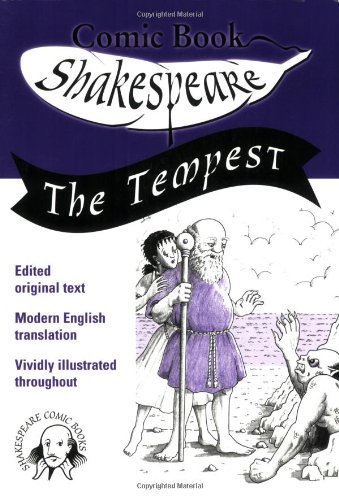
Book Review: Comic Book Shakespeare – The Tempest

Title: Comic Book Shakespeare – The Tempest

Written by: William Shakespeare; Simon Greaves (trans)

Illustrated by: Simon Greaves

Published by: The Shakespeare Comic Book Company

Comic Book Shakespeare – The Tempest

I was greatly impressed by this comic book version of The Tempest and believe this series of books would be an excellent introduction to Shakespeare. Part of a series of books these Shakespeare comic books include edited original text with a modern English translation. They are vividly illustrated throughout to bring the play to life. Each of the comic books is supported by a teacher book containing over 50 pupil worksheets which meet the requirements of the National Literacy Strategy for KS2 and KS3.

The Shakespeare comic book version of The Tempest is an edited version of the Shakespearean play, retaining approximately 50% of his original text. The comic book dual text approach allows younger students to explore Shakespeare whilst providing key quotations, essential plot lines and clarity of understanding for the older pupil. The pictures help to bring the drama to life and provide visual clues for the reader to the characters and their emotional state.

I would not recommend they replace the original version all together but, they would be ideal to encourage even the most reluctant reader to take an interest in the classics. The structure of the book made it very easy to read and follow the plot. The clever line drawings added essential information on the characters feelings and attitudes. Even being able to see the way the characters are dressed provides essential information for the pupils to visualise the cultural and historical setting of the play. The books would also be brilliant for stimulating the children’s own role play and Shakespearean productions.

An interview with… Donna Amey Bhatt

For the September #247 21 Sep 2022 issue of Writers’ Forum I interviewed Donna Amey Bhatt about co-writing a children’s book with her husband, Vikesh. Donna was already a published author with her book, How To Spot a Mum.

Co-writing a book was something new for both of them and Donna was worried it might put a strain on their relationship but found in reality it bought them closer together. Although, the deadline for the book ended up being difficult, as their baby was due. It meant they needed to be much more organised.

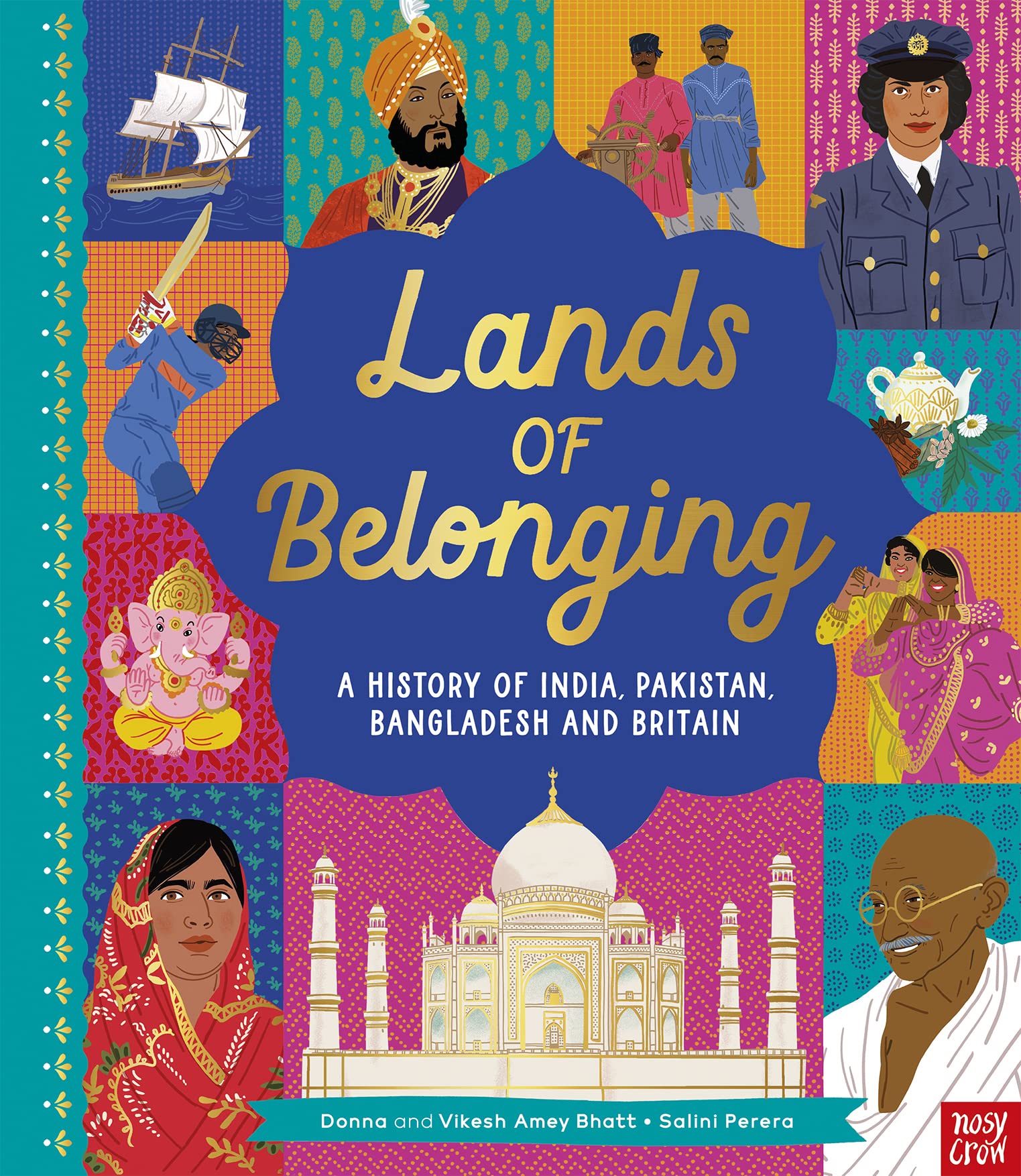
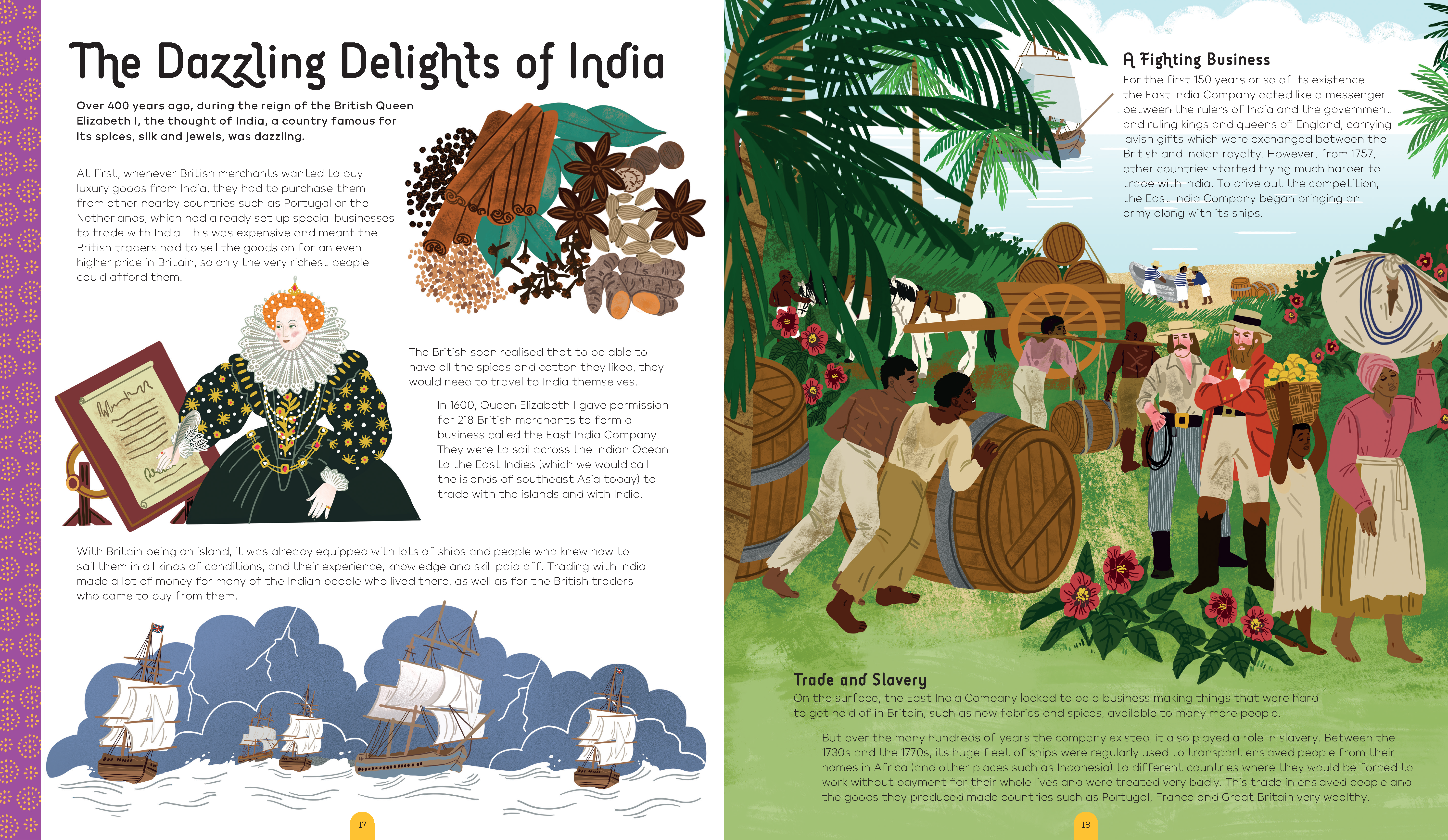
Donna told me Vikesh came up with the idea for Lands of Belonging: A history of India, Pakistan, Bangladesh, and Britain over lockdown, and together they fleshed it out and pitched it. Lands of Belonging is a thrilling exploration of the complicated history of South Asia and Britain, examining what it means to ‘belong’.

In the interview Donna explained one of the things that inspired the book was the fact Vikesh grew up without being told the full history as to why his family lived here. It’s a huge part of the UK’s story that is often overlooked in both schools and the media. They have also found through their work in marketing not many places truly embrace diversity. This is something Vikesh is passionate about changing, and educating the younger generation is where it really needs to start. It is especially topical this year, 2022 as it is the 75th anniversary of Partition.

Donna elaborated how the combined history is often glamourised, things like the Raj and ‘Britannia ruling the waves’ really don’t tell the story of them people from India, Pakistan, and Bangladesh who lived during those times. Their contributions to our country are so huge, and so brilliant they should be acknowledged and celebrated.

The book is split into two sections. The first looks at the past, and plots the beginning of Britain and India’s relationship, as well as looking at what India was like before it was colonised.

The second half is a look at modern Britain as shaped by Indian, Pakistani, and Bangladeshi people. It was important to Donna and Vikesh to include a diverse variety of Indian culture within the book. She told me that as well as fact checking with friends and family, Nosy Crow were incredibly thorough and provided two academics and many fact checkers to ensure all the information was 100% accurate.

Key to them was the fact they had a brilliant illustrator, Salini Perera, who could show things so beautifully. So, things like talking about traditional dishes and costume didn’t need lengthy explanation. They trusted Salini’s skill and it paid off.

“One of our favourite pages explains a few types of yoga, and Salini has done a brilliant job of showing some of the positions.”

Donna Amey Bhatt

There are plenty of history books that solely tell you what happened in the past but there are not many that explain how these events effect our culture and the world today. Donna explained she believes looking at how the past has led to how we live today is often what draws readers (and potential publishers) in.

Her advice to other writers who want to write about the history of their culture is to try to think of how you can explain things interactively. Maybe there’s an activity you can include that makes your point, or you can use illustration to plot something instead of using too much text. The great thing about writing for children is there’s space to experiment, and many of the rules for writing can be thought more as suggestions.

They both hope Lands of Belonging serves as a helpful reference to people who don’t fully understand this part of history.

Find out more about Donna and her book on Instagram @doonkris and Twitter @doonkris , and her website is www.donnaamey.com.

Donna’s latest book is How to Greet a Gran, published by Quarto. It’s a look at grans all over the world, tells you a little about granny customs in different countries, and vitally; what to call them.

How to greet a gran by Donna Amey Bhatt and Aura Lewis

You can buy copies of all Donna’s books from your local bookshop, or online at uk.bookshop.org, an organisation with a mission to financially support local, independent bookshops. It is also available at Waterstone and Amazon.

To read the complete feature you can purchase a copy of #247 21 Sep 2022 Writers’ Forum by ordering online from Select Magazines.

To read my future Writing 4 Children or Research Secrets interviews you can invest in a subscription from the Writers’ Forum website, or download Writers’ Forum to your iOS or Android device.