

I am so pleased to welcome Sue Wallman back to my blog today as a special guest talking about her latest YA thriller, Every Word A Lie.
Sue has worked for a newspaper in Paris and for magazines in London, She then became a secondary school librarian for six years. Now she is fulfilling her dream of writing and doing writing-related events full-time.

Her journey to publication took eight years, and picked up pace when she won The Woman’s Prize for Fiction First Chapter Award in 2013. Her debut, Lying About Last Summer, was published in 2016. Seven years later she has seven books under her belt.

Her latest book, Every Word A Lie, is a nail-biting story of a catfishing prank that gets out of control and gets deadly. Two friends, Amy and Stan, plan revenge on their prankster friend Hollie by catfishing her as her crush. They only mean to do it for a day or two – but then Hollie ends up dead.
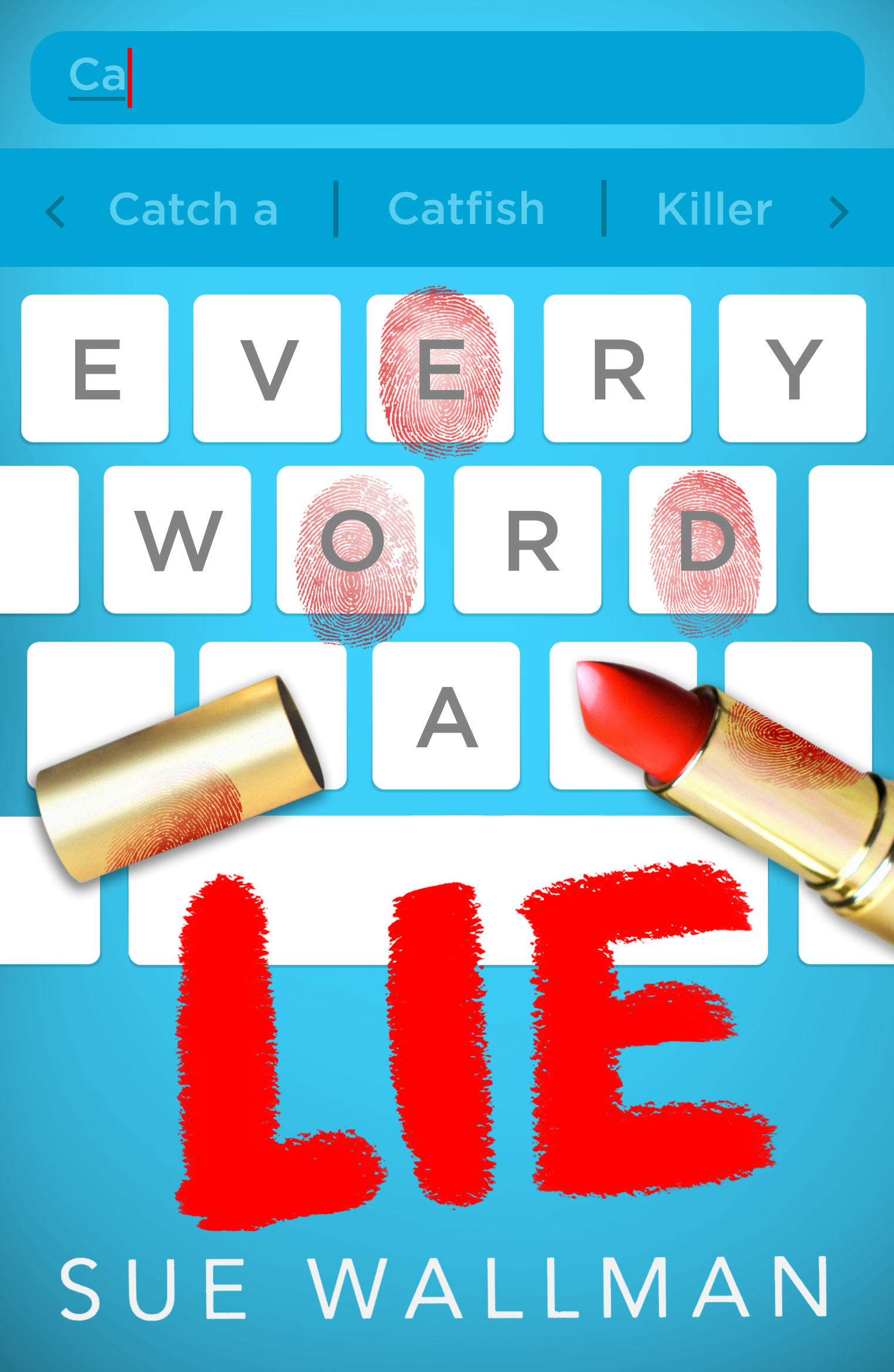
As the catfish continues to strike others, Amy needs to find out: who is really in control of the catfish? Can she trust anyone? And is she the killer’s next target?
********
Hi Sue,
Welcome to my blog. It is great to have you back here and talking about your latest novel, Every Word A Lie. I think the last time you were featured on my blog was March 2020 talking about your research for your award-winning YA thrillers. I am sure Every Word A Lie will be just as popular.
Thank you for having me back on, Anita!
Tell us what was your inspiration for Every Word A Lie and why you decided to write a book about catfishing for the YA market?
This book came about because my editor, Linas Alsenas, asked me if I’d listened to the podcast called Sweet Bobby that everyone in the Scholastic office was addicted to. It’s a real-life story about a woman who’d been catfished over a period of years and it was completely shocking. Catfishing – when someone pretends to be somebody else online – is a huge thing right now, and so many people are affected by it, adults and young people alike. It takes many different forms, from dating and delivery scams to bullying and manipulation, to people trying out different identities or escaping their real lives. But whatever the reason, there is always a victim.
When I spoke to teenagers in my creative writing group about it, they didn’t necessarily know the term catfishing, but they all knew someone who it had happened to, or they had had experience of it themselves. The scary thing is that parents often try to help but can’t and even the police have limited powers.
In my young adult thriller, Every Word A Lie, Amy and Stan are best friends who are part of a friendship group that loves pranks. When they want to get back at their friend Hollie who signed them up to litter-picking as a joke, they message her as a boy they know she has a crush on. Things spiral, Hollie winds up dead, and Amy and Stan are devastated. But the deaths – and the catfish messages – keep on coming…
How do you manage to develop so many different relatable characters with their own unique back stories and traits?
I’m really pleased you think they are relatable. I start with the basic plot and work out what sort of characters I need. In my first draft, however hard I try, my characters are horribly two dimensional, but then when I know the story properly, I flesh them out as authentically as I can. It’s like chipping away to uncover something.
What is your secret to the way you always keep your readers guessing who the murderer is right to the end?
I have to misdirect the reader and hope that I’ve got the right balance of giving enough information but not giving too much away. Sometimes when I’m working on a later draft and there have been multiple changes and I’m in a muddle, and my editor is also too close to it, someone else in the Scholastic office will read it to check that there isn’t a major clanger in there and the murderer isn’t too easily guessed. Then I have to wait and see what readers think. There’s no better feeling than someone thinking it was a really satisfying read!
When you are writing an emotional difficult scene how do you approach it? Talk us through your writing process.
I just go for it and write it how I see it in my head. Often in later drafts when I’m polishing it, I can wring more emotion from it.
What are your favourite authors and how have they influenced your writing?
The authors who influenced me from way back are Anne Tyler, who writes for adults, who conveys so much in a few words. I was astonished by Meg Rosoff’s How I Live Now when it first came out (2005) and E. Lockhart’s We Were Liars (2014) – deceptively simple writing which resonates and is achingly poignant. I also think Holly Jackson is also a great writer and deserves her huge success.
Do you have a particular place you like to write?
I can write anywhere as long as there is coffee and preferably a few snacks to hand.
Now you have several more YA thrillers under your belt what writing advice would you give to people aspiring to be a children’s book writer?
Learn the craft of writing. I didn’t understand about all sorts of things when I started, even though I’d worked as a magazine journalist. Fiction is different. To improve, you need to know about show not tell, how the mid-point of a book is important, and so on. I read a few books about writing, and read successful fiction books, looked up free resources online, was a member of a critique group for a while and joined the Society of Children’s Book Writers and Illustrators.
Is there anything else you would like to tell readers about Every Word A Lie and writing for Young Adults?
Yes, this was the first title of mine that made it through the whole process! All my previous titles were ditched in favour of one thought up by my agent, editor or someone else at the publishers.
Thank you Sue for agreeing to be interviewed on my blog. It has been fantastic having you back and thank you for letting us into your secret to keeping your readers guessing.
********
To read my previous interviews with Sue Wallman take a look at: An interview with… Sue Wallman and Another interview with… Sue Wallman.
To find out more about Sue Wallman and her novels visit her Website: www.suewallman.co.uk. You can also follow her on X: @SueWallman, Instagram: @suewallman and Threads: @suewallman.
You can buy copies of all Sue Wallman’s novels from your local bookshop, or online at uk.bookshop.org which supports local, independent bookshops.







 Much To Do About Writing