Category Archives: An Interview with…

An interview with… Undiscovered Voices

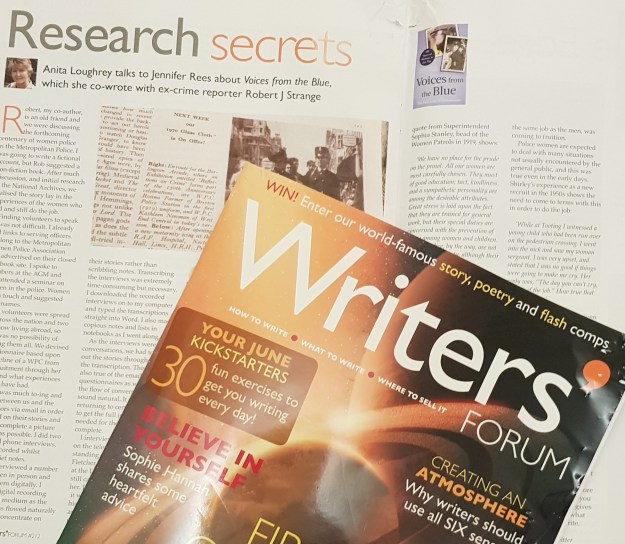
In my Writing 4 Children column in the national writing magazine Writers’ Forum this month #212 Jun 2019, I discover more about the unique biennial competition for children’s book writers to get their manuscripts in front of agents and publishers.

UV photo

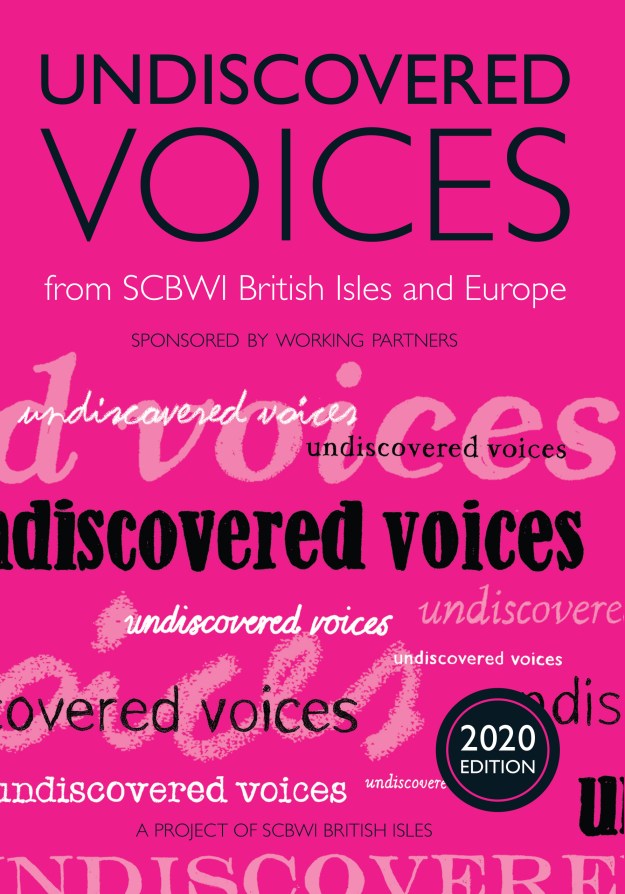
Undiscovered Voices is run by volunteers from the Society of Children’s Book Writers and Illustrators (SCBWI) and sponsored by fiction book packager Working Partners. The competition is open for submissions on the 1st June 2019. The winners will be included in the 7th anthology out in 2020. The anthology will  be sent to every agent and publishers in the world of children’s books in the UK and US. It is also available as a free download from www.undiscoveredvoices.com.

UV7_COVER

The feature contains excellent advice and tips for children’s authors who are considering entering the competition from each of the UK volunteer organisers: Catherine Coe, Jenny Glencross, Benjamin Scott, Simon James Green, Rosie Best and Sara Grant.

“Undiscovered Voices is not just a competition, but a supportive and friendly community. The UV team are aware it feels like an intimidating process, but want people to be reassured that the publishing industry is essentially just full of people who love books and who want nothing more than to discover new writers. Everyone is rooting for you to be successful.” UV team

The judges for the 2020 anthology are:

This is such an excellent opportunity for unagented and unpublished children’s authors. Don’t miss it.

An interview with… Flying Eye Books

In 2013, I interviewed Sam Arthur about the then new children’s book imprint, Flying Eye Books, which creates beautiful children’s books to stand out in a digital age.

Sam Arthur photo

Flying Eye Books is the children’s imprint of award-winning visual publishing house Nobrow. Established in early 2013, Flying Eye Books sought to retain the same attention to detail in design and excellence in illustrated content as its parent publisher, but with a focus on the craft of children’s storytelling and non-fiction.

Since then, an array of stunning and innovative titles have populated the list, including the award-winning Hildafolk series by Luke Pearson, the highly acclaimed Professor Astro Cat’s Frontiers of Space from Ben Newman and Dr. Dominic Walliman and exquisite picture books and enchanting illustrated biographies from breakaway young talents like Wild by Emily Hughes and Shackleton’s Journey by William Grill, New York Times Best Illustrated Book of 2014 and winner of the 2015 Kate Greenaway Medal.

“When we started Nobrow Press one of our main sources of inspiration was children’s books. Our aim was to provide an independent platform for graphic art, Illustration and art comics in the UK and abroad. After publishing a few books aimed at younger readers under our Nobrow imprint we soon realised that we weren’t necessarily reaching our key demographic, that is to say, kids! So, after lots of hard work, the idea of a dedicated children’s imprint became a reality.” Sam Arthur

Sam told me, he can tell within a couple of pages if a submission is something they’d be interested in. Badly drawn and badly written are always a turn off. Also when someone hasn’t considered what types of books they publish, or don’t really know what Flying Eye Books do and who they are: this is just a waste of everyone’s time.

Sam revealed he never really has much time to read cover letters. He says that something along the lines of, Here’s a copy of my book, I’d love you to publish it. If you’re interested here are my contact details. Thanks for your time.’ is pretty much perfect! They are always looking for more original graphic novels for Nobrow Press and Sam is always looking for children’s picture books that fit their list.

“We firmly believe paper books are an important part of people’s lives. We feel that there is still great pleasure to be taken in the tactile nature of reading a physical book. We still like to collect tangible objects too and although the digital world is replacing some things, often it is simply providing a way to celebrate our love of the real world and the objects within it.” Sam Arthur

Sam’s advice to anyone wanting to submit their work is before you send them anything, make sure you have a good blog or website, which is up to date with your work. If they like a submission the first thing they do is check you out online to see other work you have done. An online presence could just be a bunch of drawings uploaded to a Flickr page – it doesn’t have to be a fancy website. 

“Our perception of you is based on a combination of your submission and your presence online. So my best advice is to consider this before you send anything in. If you have nothing it makes it difficult for us to get a picture of what you do and the decision to work with you will be affected by that.” Sam Arthur

wf144

You can read the full interview in the #144 issue of Writers Forum. You can find out more about Flying Eye Books from their website: www.flyingeyebooks.com.

An interview with… Nicola Davis

For my Research Secrets, column in February 2009, I interviewed children’s natural history book writer, Nicola Davis.

nicola_davies

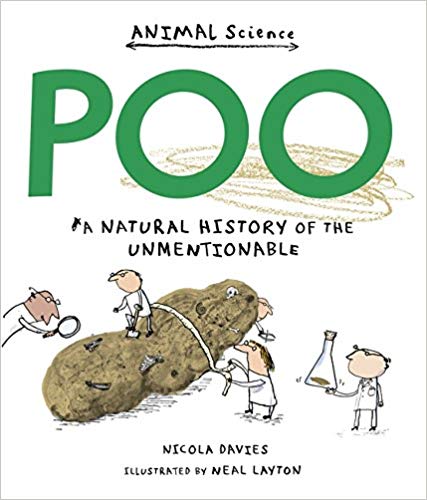
Nicola’s skill is writing narrative non-fiction in a way young children will understand. She has written several books in the Walker Read and Wonder series, including Big Blue Whale, One Tiny Turtle and Ice Bear. She has also written science books for older children, including Poo a Natural History of the Unmentionable, Extreme Animals and Who’s Eating You – a book about parasites.

poo

“I love my subject so research is a pleasure. Also, research gives me ideas for HOW to approach a subject, as well as providing the WHAT part. Writing a book makes you ask two questions: What am I going to write and HOW am I going to write it. Research a BIT to give you some of the WHAT of your book; then write an outline to give you the HOW, which will help you generate the right questions to ask to get all the rest of the WHAT.” Nicola Davis

Nicola has spent most of her life studying animals in one way or another so she is aware research doesn’t fall into a particular category. Much of the material that goes into her books is stuff she already knows. She explains she just needs to top up some of her general knowledge with a bit of Googling and library work.

She tries not to write about animals or habitats that she hasn’t seen but her work as a wildlife researcher, tour guide and TV presenter in all sorts of places certainly helps. She has visited animals in Newfoundland, Alaska, Kenya, Madagascar, Australia, Tobago – much of that time she is sailing on board various sorts of boats from 25 foot wooden sail boats to cruise ships. 

“I often use New Scientist and other more specialised scientific journals, plus a large library of zoological reference on my own shelves. It depends entirely on the project….For Ice Bear I knew most of the polar bear stuff but wanted more about polar bears and Inuit culture and both books and Internet were good for that. For Extreme Animals I collected likely material from trawling New Scientist and other journals for about six months before I put the book together.” Nicola Davis

Her aim is to show children that science isn’t a stone tablet… so if there is controversy over something, or an area where we just don’t know, she strongly believes it’s exciting, interesting and VITAL to say so.

Some information is simply too big and complex for young children. They need a background of other knowledge to understand it. Nicola’s text may not be able to deliver all of the tricky concepts, but it can, by subtle suggestion and association, prepare their minds to receive it later. For example, bat echolocation is fabulously complex, making use of frequency modulation and Doppler Effect in ways that science is only just beginning to fully understand. This is way too much for a young child, but the essence of the idea can be carried very simply:

“…bat shouts as she flies, louder than a hammer blow, higher than a squeak. She beams her voice around like a torch, and the echoes come singing back. They carry a sound picture of all her voice has touched.” (Nicola Davis from Bat Loves the Night, Walker Books 2001, page 14

It isn’t the whole story, but it’s true, accurate and lays the right foundation. Also and perhaps more importantly, it gives a feeling, an atmosphere of what is going on during echolocation; it imparts to the reader a basic emotional understanding of the facts.

You can read the full interview in the February 2009 #89 issue of Writers Forum.

You can find more information about Nicola Davis, her books and her writing at: www.nicola-davies.com

An interview with…NJ Crosskey

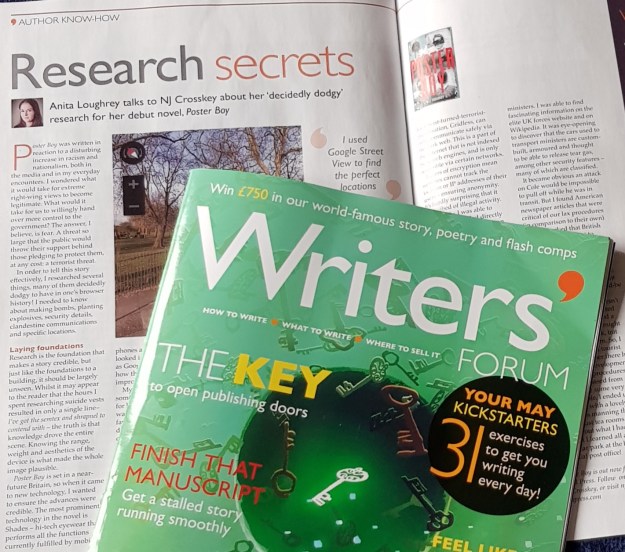
In my Research Secrets column in the national writing magazine, Writers’ Forum, this month I interview NJ Crosskey about her ‘decidedly dodgy’ research for her debut novel, Poster Boy.

Research Secrets - N J Crosskey photo2

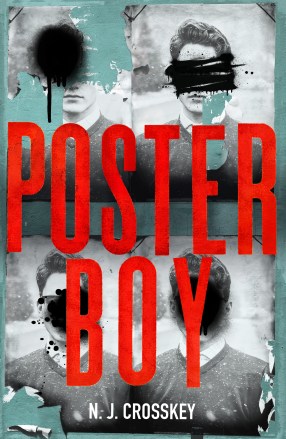
Poster Boy is about Rosa who is at her brother’s funeral with a bomb strapped to her chest. The story unfolds as a flashback showing Rosa growing up with her brother Jimmy and the events that led up to his death and ultimately turning him into a reluctant hero. This novel demonstrates how easy it is to manipulate and spin opinion using social media and fake news and how Rosa is able to see through the lies and the fear they are purposely creating.

NJ Crosskey explained to write this book she needed to know about making bombs, planting explosives, security details for government ministers, clandestine communications and specific locations. She told me:

“Research is the foundation that makes a story like Poster Boy credible. But just like the foundations to a building, it should be largely unseen. Whilst it may appear to the reader that the hours I spent online researching the construction and effects of suicide vests resulted in only a single line:

‘I’ve got the semtex and shrapnel to contend with.’

The truth is that knowledge drove the entire scene. Knowing the range, weight, and aesthetics of the device is what made the whole image plausible.” NJ Crosskey

She used Google street view to find perfect locations which she knew little about and was able to talk to experts by asking around amongst friends and on online writing forums. Her advice to other writers is to think outside the box when it comes to researching your novel. Facts are important, of course, but real human experiences and opinions are equally vital for ensuring your story comes across as authentic – no matter how fantastical your plot!

“There are so many tools these days for writers seeking information, we really are spoilt! As well as all the obvious places to find information (Google searches, newspapers and journals, text books etc), there are a whole host of other resources. You can find TED Talks by experts on almost any subject online, Ancestry.com is invaluable for those writing historical fiction, and sites such as Quora allow you to ask questions that can be answered by experts all over the world.” NJ Crosskey

Poster Boy_High res (1)

Poster Boy was published April 1st 2019 by Legend Press.

You can find out more by NJ Crosskey by following her on Twitter @NJCrosskey, or visiting her blog: https://njcrosskey.wordpress.com/

An Interview with… Mo O’Hara

For the last few years I have been interviewing authors, illustrators, editors and fellow bloggers about their love of stationery for the Papers Pens Poets blog. The blog was not my idea it was my friend’s Jo Franklin‘s idea. But I am excellent at working to a brief so I have taken the idea and ran with it. Since March 2016,when we launched the blog, we have made — posts and most of them have been interviews.

In July 2016, I interviewed children’s book writer, Mo O’Hara. She told me:

“Like so many authors I am a bit of a stationary nerd.  I am notebook and file obsessed but pens aren’t really something that I gush over.  I’m definitely not a fountain pen girl (I’m far too messy).” Mo O’Hara

When she starts a new project she generally allows herself to splurge on a new notebook as a treat.

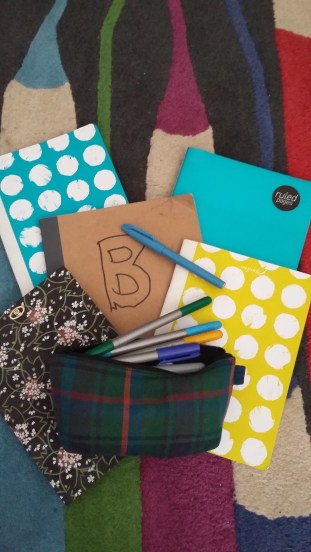
notebooks

Also if she is going to a conference or retreat she always start with a fresh notebook but she also takes her thought notebooks and her project notebooks along too. She said:

“It’s more about the feel of a notebook for me and not the look.  I always buy them in shops and not online because I need to pick up the book and hold it. I’m very kinaesthetic like that.” Mo O’Hara

little notebookss

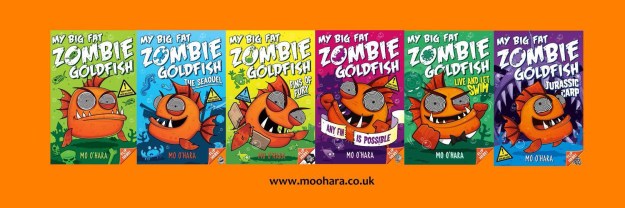
Mo O’Hara writes the My Big Fat Zombie Goldfish series, published by Macmillan.

All Zombie Titles Pic

She launched a brand new series My FANGtastically Evil Vampire Pet in September 2018. the second in the series, Space Cat-astrophe was released in February 2019.

space vampire

Mark is off to Evil Scientist Space Camp, which is being led by the totally epic evil astronaut Neil Strongarm who is looking for evil apprentices for his next space mission!

You can read the complete interview on the Papers Pens Poets blog.  You can find out more about Mo O’Hara and her books on her website is: www.moohara.co.uk and follow her on twitter: @Mo_OHara. 

An interview with… Fiona Barker

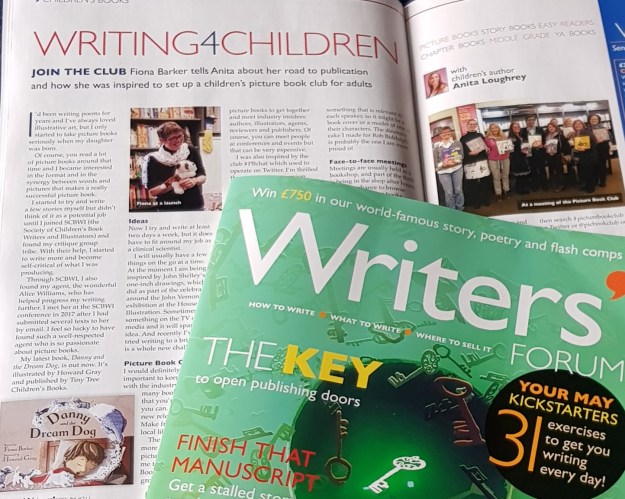
In the latest issue of Writers’ Forum I have interviewed picture book writer, Fiona Barker for my Writing for Children column. She talks to me about her road to publication and how she was inspired to set up a children’s picture book club for adults.

Writing 4 Children - Fiona Barker and Picture Book Club3

In the feature she mentions how she is inspired by John Shelley’s one inch drawings and #ukpbchat which meets online each month on Twitter. Fiona recommends that aspiring picture book writers should follow key children’s book bloggers such as Book Lover Jo, or even me.

The Picture Book club meetings are usually held in a bookshop, often Waterstones in Reading but they are moving around the country. they also broadcast the events live on the Picture Book Club Facebook page. To stay up-to-date with locations and dates the events are running you can follow the Facebook page @picbookclub

Fiona told me:

“At a typical PBC meeting, members pay £5 ‘membership’ on the door. This helps us to cover speaker expenses. We have a talk or discussion for 30-40 mins and then break for cake and a chance to chat informally. The cakes are a big feature of PBC. We try to make something that is relevant to each speaker, so it might be a book cover or a model of one of their characters. The dinosaur cake I made for Rob Biddulph is probably the one I am most proud of.”

PBC 14 1

To find out more about Fiona Barker and her books you can follow her @Fi_BGB on twitter, @FionaWritesBooks on Facebook and Instagram and her author website is www.fionabarker.co.uk.

An interview with… Julia Jarman

In any writing project, no matter what genre it is, I believe the most important part is the bit that comes first – the research. But where do you find the information you need and once you have gathered it how do you use it in your book? In my Research Secrets column in the national writing magazine Writers’ Forum I ask top authors to share their research tips.

In January 2009, I interviewed Julia Jarman about the how her research inspires her children’s novels. She often mixes genres, but history is usually part of this mix. Julia’s inspiration for her novels tends to come from her historical research. But, there is nothing that fires up her imagination like a good artefact. She likes to hold and feel an item.

Julia Jarman

Julia Jarman has written over twenty children’s novels and picture books for Anderson Press, including Peace Weavers and the Time-Travelling Cat series. The Roman Eagle is the third book in the Time-Travelling Cat series.

Julia explained:

“First, I have an idea, such as when I wanted to write a time-travelling cat book about the Romans. I had written other books in the series on the Egyptians and the Tudors but, the Romans have always fascinated me. I remembered someone had told me about Calleva Atrebatum, the deserted Roman town near Silchester, where the Roman wall still exists. I did some research on the Internet and then went to visit it. I found out many of the artefacts they had found during excavations were in Reading Museum. I went to Reading Museum to see some of the artefacts that were unearthed by the Victorian archaeologists.” Julia Jarmin

Julia had read of a Roman tile with a cat’s paw print embedded into it and came across a similar tile at Reading Museum from Calleva. She found out when the tiles were turned out of their moulds, they were left to dry before being fired in a kiln. They must have been left to dry on the ground because many have been found with footprints of people and animals that walked across them. A cat had walked across this tile while the clay was still soft. It must have been made by one of the first domestic cats in Britain, bought over by the Romans. This is the point she knew she wanted Ka, the time-travelling cat from her stories, to have made this paw print.

Whilst looking around the museum, she also came across a cast bronze figure of an eagle which inspired her. The wings of this bronze eagle were missing but, they would have been outstretched as shown on the book cover of the Time-travelling Cat and The Roman Eagle. The historians think, because of the way the bird’s claws were rounded, it was clutching an orb. It is believed that the eagle was probably part of a larger figure of an emperor or a god.

Time travelling cat

This set her imagination to work and a whole load of what if… questions started whirring in her head. What if… it was part of a staff used at the forum at Calleva and what if… this important symbol had been stolen by one of the tribesman.

“This is the way I work. I have a loose story idea then I see the artefacts and then I start to do some firm plotting. But, I don’t let the facts tie me down. I use them as a launch pad for my imagination. It is not so much what the object is, it is what it can be; it is the possibilities.” Julia Jarman

Again for Peace Weavers, she had her initial idea when she visited a school on an American airbase in East Anglia, where they had uncovered an Anglo Saxon burial ground during a recent archaeological dig. She was particularly interested to find out more about an Anglo Saxon warrior, buried with his sword, shield and horse. On the cover of the hardback, the bottom half of the picture shows these skeletons.

Peacewvrscover

At the same time they found the skeleton of a very tall woman nearby, hers was the tallest skeleton uncovered and her jewellery was very different from that of the other skeletons. This started Julia wondering about her and her jewellery and what sort of life she had.

“All stories are a mix of real life and imagination. You prime your imagination by asking yourself questions. I do my research at the beginning and if I need to know anything else I do more research. I don’t have a system but I just try to immerse myself in the subject. I just to love find things out, but once I’ve found my story I’m eager to get writing.” Julia Jarman

The librarian on the base introduced her to West Stow, a reconstructed Anglo Saxon village. In this village, the houses have been rebuilt complete with authentic style furniture and cooking utensils. Visitors can go into the houses, smell the wood smoke, feel the solid wood and imagine living in early Anglo-Saxon times. At certain times of the year, the village is used by groups of costumed Saxons who bring it to life with demonstrations of textiles, weaving, basket making and cooking.

Julia went to experience the food, the music and the atmosphere and it was there she found and bought replicas of the sleeve clasp and the brooch.

“I like to have something tangible in my hand to inspire me. Holding them was better than the pictures and an added bonus is they are good for showing on school visits. These artefacts engaged my imagination. The sleeve clasp in particular is key to my plot.” Julia Jarman

You can read the full interview in the January 2009 #88 issue of Writers Forum.

For more information about Julia Jarman and her books see her website: www.juliajarman.com where she shares her Writing Recipe for cooking up stories.
An interview with… Patrice Lawrence

In July 2016, I interviewed award-winning novelist, Patrice Lawrence for the Papers pens Poets blog. She told me her most highly-prized stationery item, way above anything else, is her green tartan pencil case.

Patrice stationery

“It was a present from my daughter and came from Muji, a popular haunt for our stationery needs.  I can’t even remember having a pencil case at school, but I must have.  And I’ve certainly got one now.  It’s crammed full of Sharpies, promotional pens from charities and companies, a couple of cheap, sparkly ink pens that leak over my fingers and a lovely sky blue Pentel sign pen.  It says it on the side.  Sign.  So I did.” Patrice Lawrence

Patrice admits to being a bit of a notebook hoarder. She has leather-bound and fabric-covered that were much-needed presents. She has an assortment of black Cass Arts sketch books of all sizes, including a couple of A3 hardbacks she has used for planning books she hasn’t had time to write yet.  She even has three from post-Christmas Paperchase sales to secretly record interesting bus stations.

She told me:

“Orangeboy was written on and off over a few years, by keyboard and pencil, in random notebooks and occasionally the back of a conference agenda if the speakers weren’t quite doing it for me.” Patrice Lawrence

Her latest book Rose Interrupted, published by Hodder Children’s Books, is due to be launched in July, 2019. It is about 17-year-old Rose and 13-year-old Rudder who have escaped a strict religious sect with their mum. They are still trying to make sense of the world outside – no more rules about clothes and books, films and music, no more technology bans. But also no more friendship with the people they’ve known all their lives, no community and no certainty. This is the story about coming of age, slap-bang in the middle of a strange new world.

You can read the complete interview with Patrice here.

To find out more about Patrice Lawrence and her books, you can follow her on Twitter at @LawrencePatrice and on her blog at: www.patricelawrence.wordpress.com

An interview with… Catherine Coe

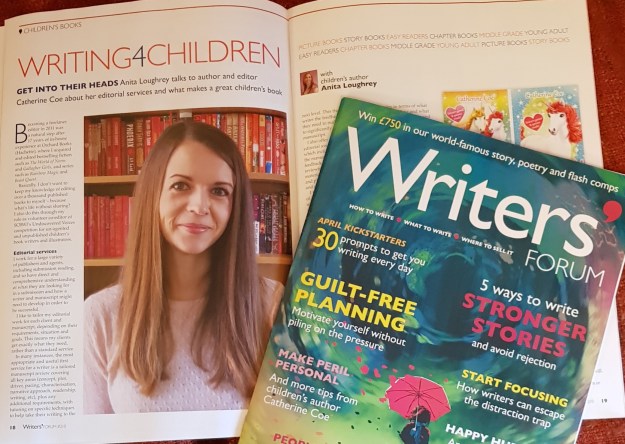
In my Writing 4 Children column this month I talk to author and editor, Catherine Coe about her editorial services and what makes a great children’s book.

Catherine Coe feature 1

Catherine explained how she takes on a select number of writers for long-term mentoring, which includes regular contact through video calls and feedback on work in progress. Many of he writers she has worked with have gone on to get publishing deals  with publishers such as Chicken House, David Fickling Books, Hot Keys, Hachette Children’s Group, Macmillan and Scholastic.

She strongly advocates that to write for children you need to get inside the child’s head, as you are more likely to engage your audience with appealing content, write in a style they enjoy and crucially, avoid speaking down to them. 

“I believe it is vital to remember what it was like to be a child and to channel those memories in terms of what you liked reading and what captured your attention and imagination.” Catherine Coe

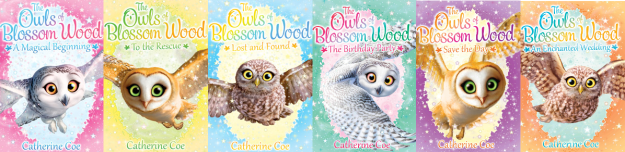
Catherine has written over 30 books for children, including the popular Owls of Blossom Wood series.

Owlsbooks1-6

Her writing tip is to ensure your book has an overarching problem or goal that drives the plot. One that is compelling to the reader and will keep them turning the pages.

“Any book that keeps a child up at night reading is a great one.” Catherine Coe

To find out more about Catherine Coe and her editorial services, visit her website: http://www.catherine-coe.com

You can also follow her on Twitter @catherinecoe

An interview with… Shahed Saleem

For my Research Secrets column this month I talk to Shahed Saleem about the in-depth research he did in the British mosque for his debut non-fiction book.

Shaded Saleem feature 1

This book presents the first overview of Muslim architecture in Britain, from the earliest examples in the late 19th century, to mosques being built today. Key architectural stages are identified and explained alongside the social history of Muslim settlement and growth. The mosques Shahed has written about represent a cross-section of the diversity of the Muslim population in Britain, and the types of mosque buildings that exist.

The British Mosque cover

Shahed explained:

“My core research methods for each mosque were building visits, oral histories, planning records and local history libraries.” Shahed Saleem

Gaining information from archive drawings was possible because of his background as an architect. Through planning records he could follow discussions and negotiation that took place around the design of the building. But his most informative primary source for researching was visiting each mosque and its surrounding area.

His research tip is to have a core research method you can use as a template for your particular project and then use more flexible methods around this which can be improvised depending on what you find out from that particular study.

To find out more about Shahed and his architecture practice take a look at www.makespace.co.uk 

Or follow him on Twitter @makespace_