Anita Loughrey's blog. This is my journal about my experiences and thoughts on writing. As well as news about me and my books, it includes writing tips, book reviews, author interviews and blog tours.
For more information about me and my books see my website: www.anitaloughrey.com. Follow me on Twitter @amloughrey, Facebook @anitaloughrey.author and on Instagram @anitaloughrey
I interviewed BAME author Ruby Lovell about the importance of diversity in children’s fiction for my Writing for Children slot in Writers’ Forum #200 June 2018.
She revealed when she moved to London from Sri Lanka at seven years old, the culture shock was quite something.
“I spoke very little English and my school mates had never met anyone from Sri Lanka, so didn’t really understand me or my culture. I found it hard to fit in at first and that experience stuck with me, especially when I looked at the books available to me as a child. All that was on offer were things like Enid Blyton and stories about white British children getting up to great adventures. Growing up on exotic tales from my grandmother, that lack of diversity in reading always stuck with me.”
Ruby Lovell
She explained her experience made her aware of the lack of diversity in books and wanted to see more children of colour represented in children’s literature for her own children who have never been to Sri Lanka and experienced all the wonderful things she did as a child growing-up there.
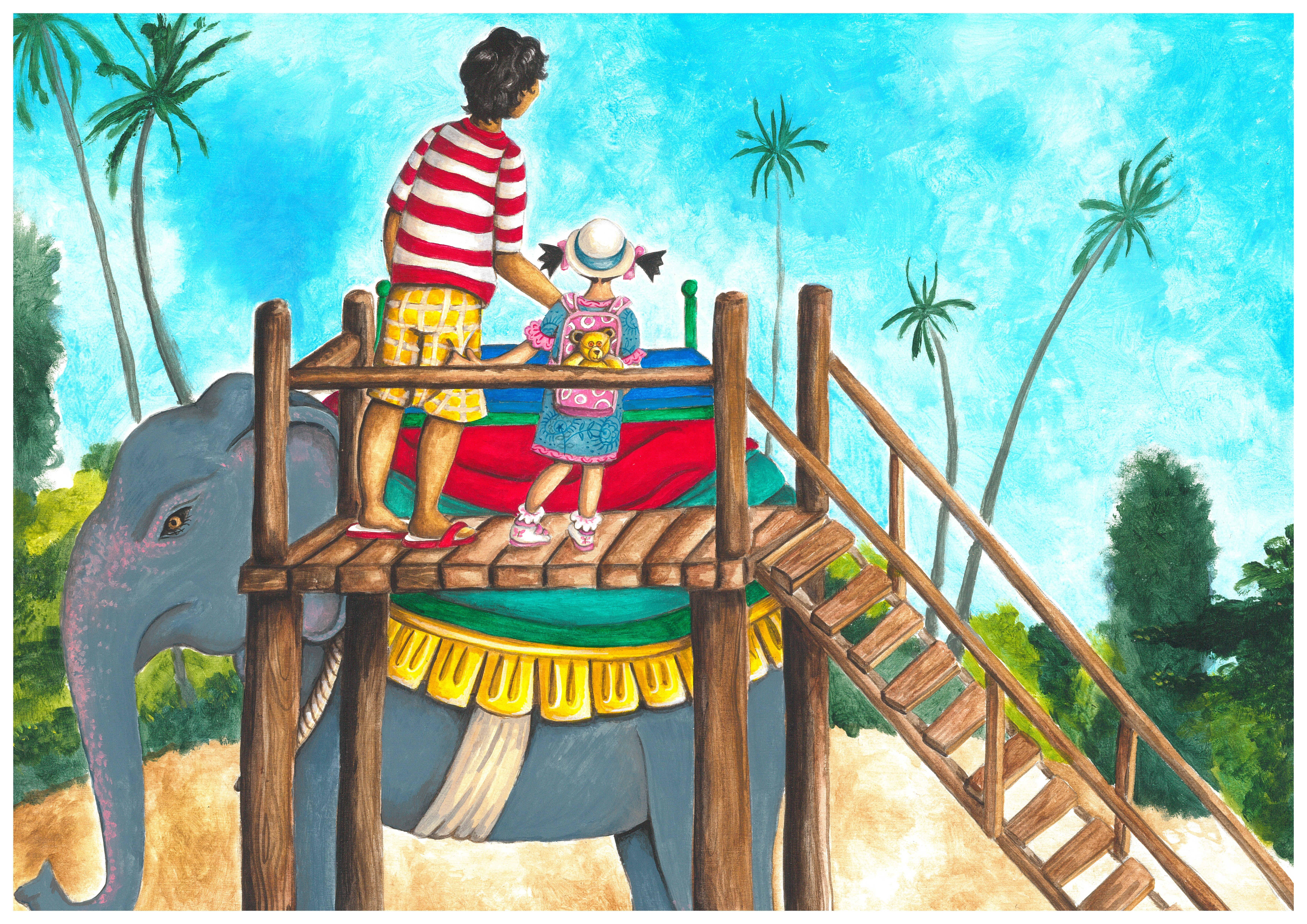
This inspired her to write her Ruby series of picture books published by Lychee Books. The adventures that the character Ruby gets up to are all based on real-life experiences her boys had during their first trips to Sri Lanka. They visited an elephant orphanage where they saw how injured elephants are cared for, rode tuk tuks and they learned to play the traditional drums and see snake charmers and much more.
Illustration by Zara Merrick
Ruby enthusiastically spoke about how this unique experience awoke an explosion of an exciting new culture that was part of them.
“My writing and the books I create for children all come from my heart. I had a huge amount of help from my young sons and writing something that means something to you is so much more special than an idea picked out of thin air. I want my books to not only be a ‘go to’ bedtime story for children of a South Asian background, but for children of all races and backgrounds who want a good adventure story.”
Ruby Lovell
Ruby explained she was motivated by the fact you find a lot in books for kids that characters are anthropomorphised so they appeal to as many people as possible but she wants to see books with people of colour on the cover, people who are differently able, a range of genders and shapes and sizes. She elaborated children are unique, so let’s write books that are as varied as they are. A diverse book is one that explores a different point of view than those represented in the majority of books on the market. This can be a different racial/cultural point of view in the case of Ruby’s book, or a different point of view about physical ability, sexual orientation etc.
Hearing other people’s stories helps children appreciate other points of view, especially those that differ from their own. The more diverse a child’s reading experience, the more understanding, tolerant and accepting they will become as human beings. They will also form friendships with children of various backgrounds and this is healthy as when they become adults this helps them become accepting of a world filled with so many different cultures, religions and customs.
Ruby Rides and Elephant by Ruby Lovell and Zara Merrick
Ruby would also like to see more books featuring mixed race characters of all combinations of backgrounds and smaller racial groups and backgrounds. For example, the Disney film Moana was one of the first mainstream representations of Polynesian culture for children.
Ruby’s tip on writing for children is to run your book past real children before you send it out to agent. See their reaction, learn which jokes soar and which ones fall flat. Children are wonderfully honest critics, but don’t just rely on your own kids. See if you can go into a local primary school and do a reading of your final manuscript (with some illustrations if you can). The feedback and reaction you receive will shape your writing like nothing else.
Find out more about Ruby Lovell and her picture book Ruby Rides an Elephant and the other books in the series at: www.lycheebooks.org You can follow her on Twitter @RLovellAuthor and on Instagram @rubylovellauthor
To read the complete feature you can purchase a copy of #200 June 2018 Writers’ Forum by ordering online from Select Magazines.
For the #242 30 Mar 2022 issue of Writers’ Forum, Christina Courtenay (Pia Fenton) explained to me why seeing and experiencing things first-hand is the best kind of research.
Being half Swedish, she has been interested in the Vikings for a long time and wanted to showcase their amazing achievements as craftsmen, traders and explorers, as well as their fearlessness, curiosity and sense of adventure.
She started by researching the background and history, then studied particular aspects more in depth, which included reading loads of books, watching a wide range of TV programmes and visiting museums. She found there are a lot of resources out there on the Vikings and her main problem was in trying to choose the resources that would be most useful.
Christina told me that if she can’t find the relevant non-fiction books in the library, she will buy second-hand copies online from AbeBooks, where she has discovered some real bargains. Whilst reading, she take notes and compiles a summary of the information she needs.
“It is a long process and it’s ongoing as I keep finding and adding more information all the time. I also chatted to re-enactors and contacted an archaeologist who is a specialist in the Vikings. I managed to make contact via social media – Twitter and Facebook are very useful for that.”
Christina Courtenay
To keep track of her research, she creates Word documents with headings like ‘Clothes’, ‘Food’, ‘Weapons’ etc in alphabetical order and whenever she finds new and relevant information she adds it under the specific heading so she can easily find it later.
Christina revealed her most frustrating experience when writing her Icelandic stories was they had to be mostly written without ever going to Iceland, and it wasn’t until right before her deadline that the Covid restrictions were eased and she finally managed a trip over there. Before this she had to rely on contacting all the people she knew who had either been to Iceland or lived there, and sent them a questionnaire.
“I also read an awful lot of travel blogs, and watched YouTube clips as well. For specific places, there is always Google Earth if you need to see the layout of the land. But I won’t lie – it was extremely difficult and I didn’t feel entirely satisfied with the result so it was a huge relief when I was able to go there myself.”
Christina Courtenay
For Christina, seeing and experiencing things first hand is key. In Ribe, Denmark, there is an outdoor museum with a dozen buildings of various types.¹ Sitting in the longhouse and chieftain’s hall helped her to imagine myself back in time and she was able to lie down on a sleeping bench covered in old furs.
Christina sitting in hall at Ribe
Near Skanör in the south of Sweden is a similar museum, the Fotevikens Museum², and in Iceland she found a reconstructed turf house at the Eiriksstadir Museum³, which was invaluable. These museums always have dedicated and knowledgeable staff who are more than happy to answer questions. There are also places like the Jorvik Viking Centre⁴ in York https://www.jorvikvikingcentre.co.uk/ where you can experience life in that city. She said the best thing about visiting living history museums and events like the Jorvik Viking Festival is seeing the re-enactors (and talking to them) and the various craftsmen.
Christina explained replica Viking clothing and jewellery are readily available for the purposes of re-enactment, as are weapons. You can see examples on the Jelldragon Viking Craft Store⁵ online. In fact, her family have become used to buying her Viking artefacts for Christmas and birthdays. Christina told me she has also learnt to weave properly on a loom and suggested a great book with instructions for band-weaving is Weaving Patterned Bands by my teacher Susan J Foulkes
“Wearing them or handling them allows me to imagine what it would feel like to live in that era. And I bought myself a fire iron and tried striking it with the flint to make fire – it worked just fine.”
Christina Courtenay
Christina told me she has also learnt to weave properly on a loom and recommended, Weaving Patterned Bands by Susan J Foulkes as it contains excellent instructions for band-weaving.
The heroine in one of her stories has to sew herself some clothes so Christina decided to try to make a so called smokkr – the apron overdress worn by some Viking women. Re-enactors recommended she purchase the woollen material needed from Bernie the Bolt Cloth Merchant⁶ on Facebook, as he stocks authentic fabric for historical garments. She found a pattern in a leaflet she’d bought some years earlier. She sewed several of the seams by hand to find out how long it would take.
The Viking dress Christina made
She revealed the main surprise was how heavy the resulting dress was – several yards of woollen fabric weighed a lot more than she’d imagined. She also realised the garment had to be fairly loose as there were no buttons/openings, and also for ease of movement.
“Paired with a linen underdress (which I had bought readymade), it felt great, although it’s still missing a decorative border. I did a weekend course to learn how to do band-weaving though, so I will soon be adding that. Apron dresses were held up by straps fastened with tortoise brooches, so of course I asked for a pair for Christmas, as well as a belt with a Viking buckle and some Viking leather half-boots. And I bought beads for a necklace to string between the brooches.”
Christina Courtenay
Her favourite piece of hands-on research so far was helping to row a Viking ship round Roskilde harbour in a reconstructed longship at the Viking Ship Museum⁷ there. She found out it was a very smooth ride. The most unusual research was when she visited an open air museum in Gudvangen, Norway, called Njardarheimr⁸ where I was allowed to try throwing a Viking axe with the aim of hitting a huge block of wood. To my intense surprise, I managed it. (Lucky throw?)
For Viking food Christina recommends cookbooks such as, Eat Like a Viking by Craig Brooks and revealed she has tried some of the recipes.
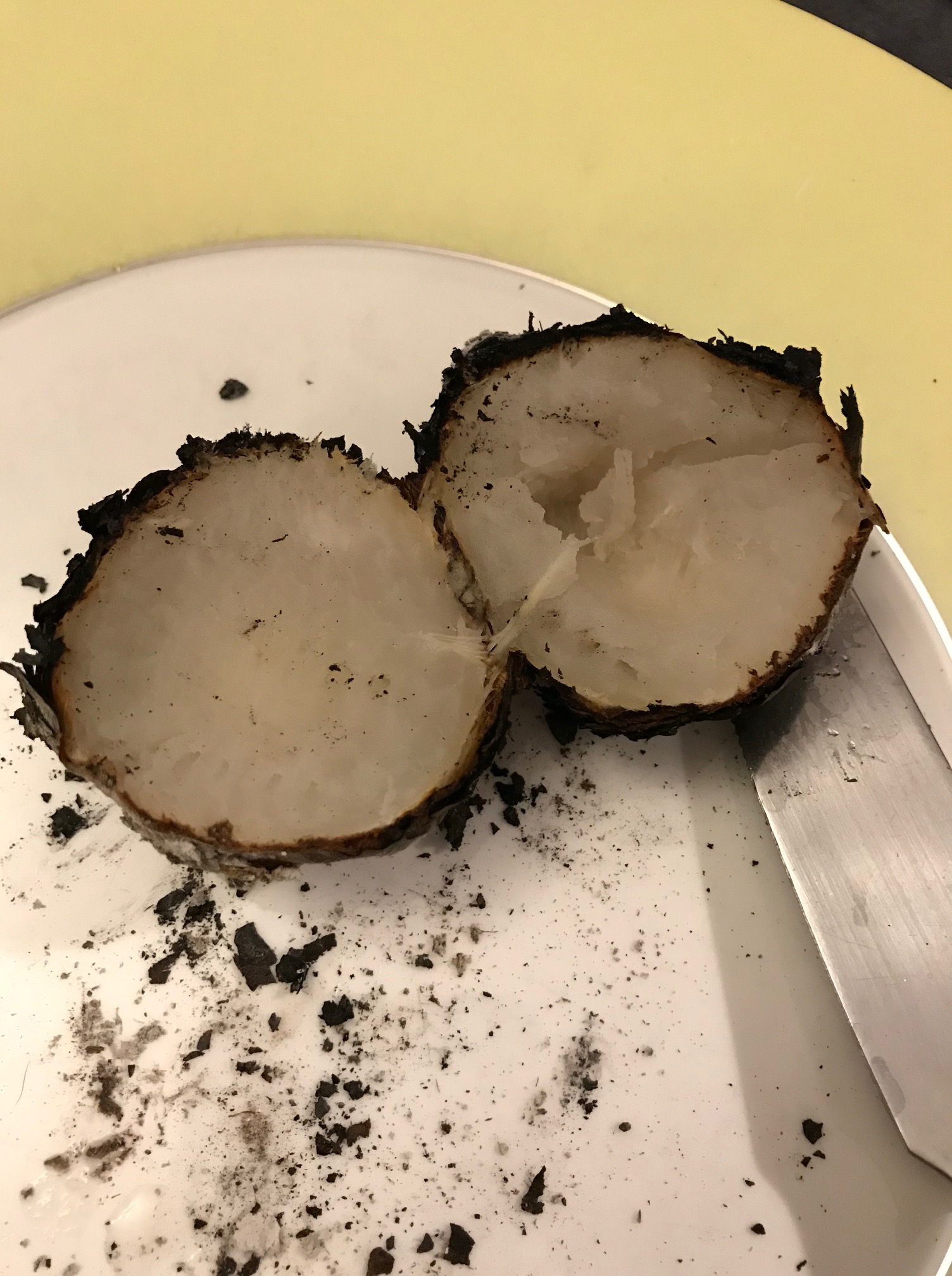
Ember cooked turnip
A lot of their food was fairly bland and monotonous and, for me, not salty enough. (I love salt!) For the purposes of preserving meat, either smoking it or keeping it in whey was more common.
While visiting the island of Birka she went to the Birka Vikingastaden⁹, just west of Stockholm, where she was shown how Vikings made flatbread – delicious. And tried mead which she found lovely and sweet.
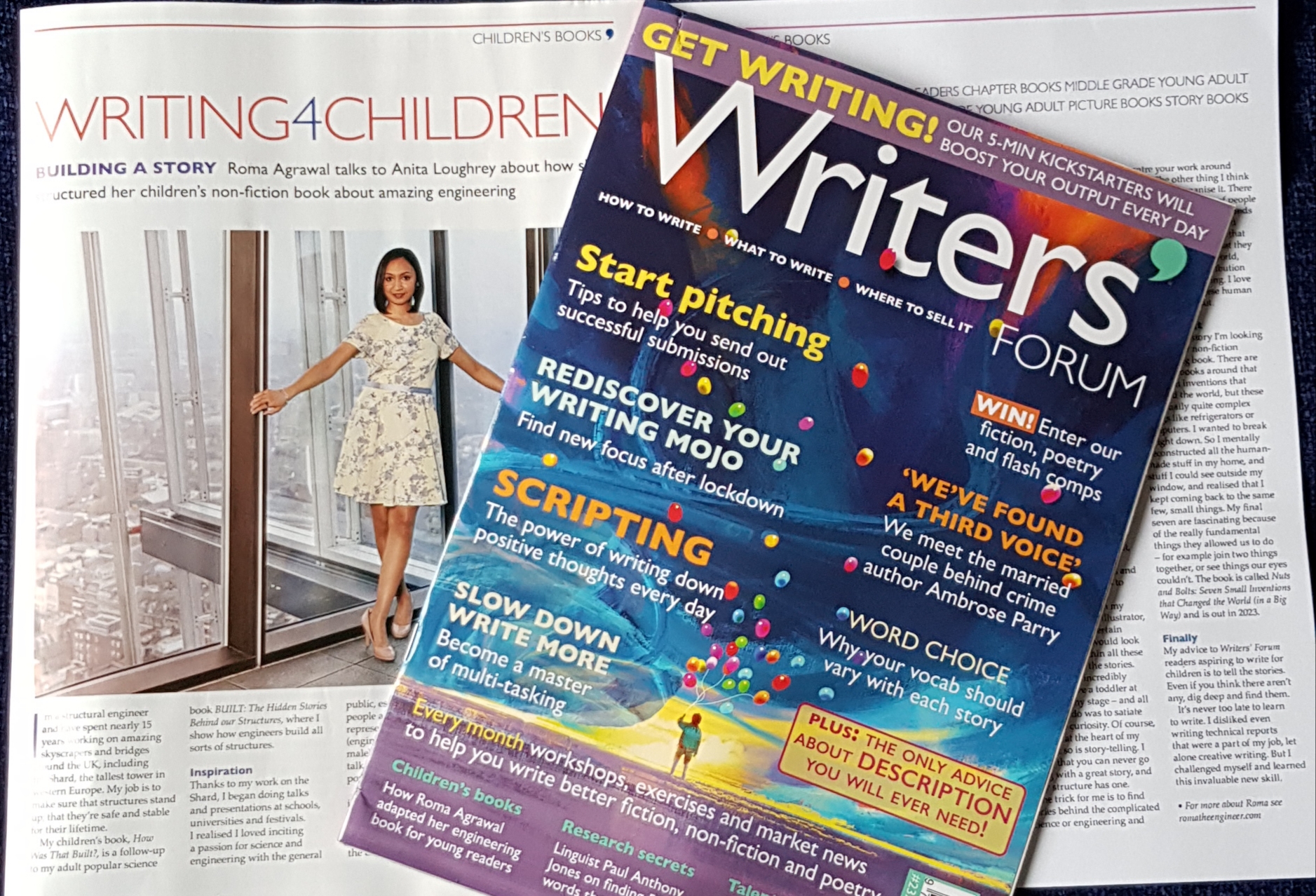
My interview today is a blast from the past from Writers’ Forum issue #237 Oct 2021, when I interviewed structural engineer, Roma Agrawal, about her children’s non-fiction that provides a behind-the-scenes look at some of the world’s most amazing landmarks.
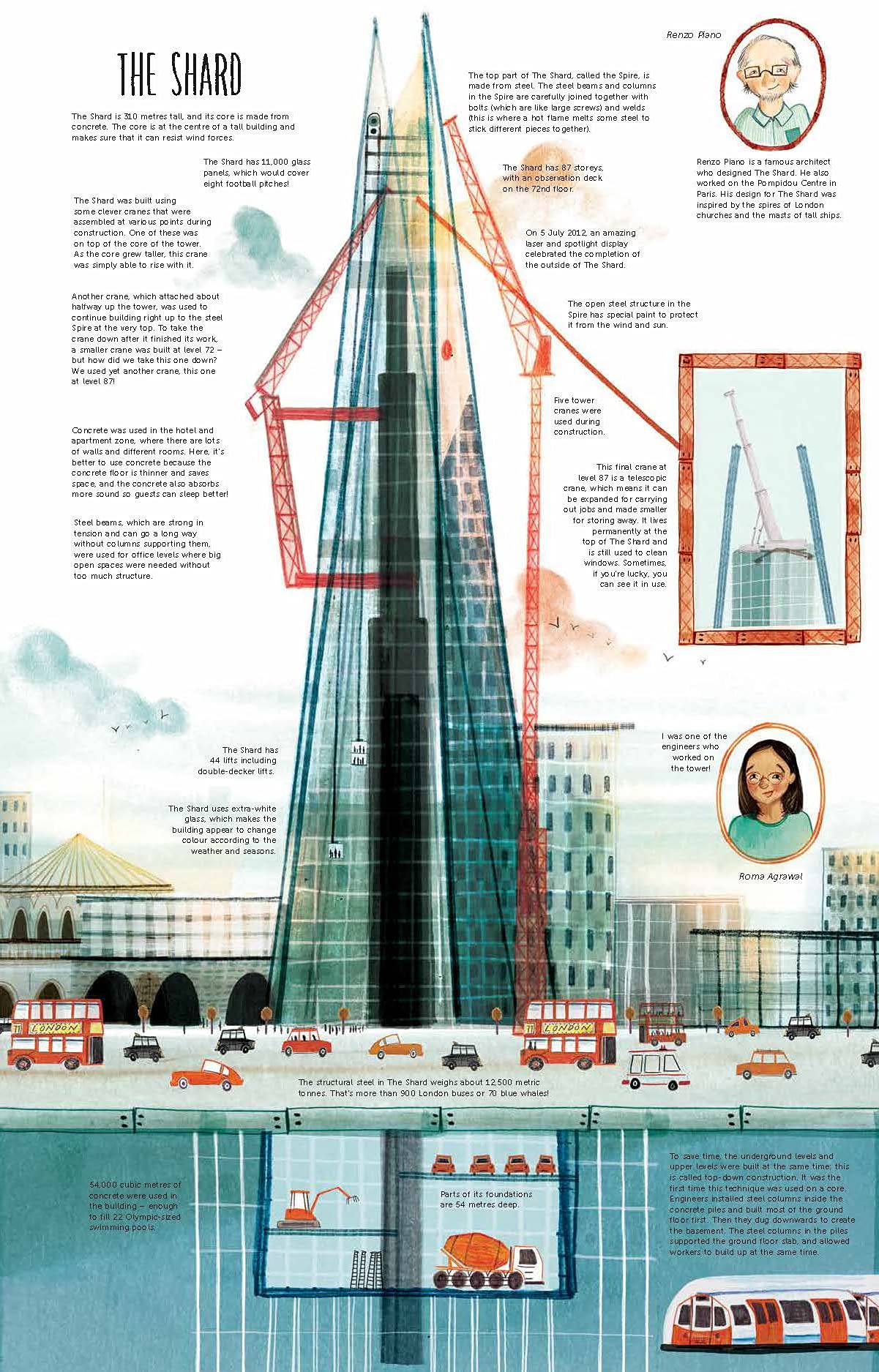
Roma has worked on many of the skyscrapers and bridges in the UK, including The Shard, the tallest tower in Western Europe. Her technical job is to ensure the structures are safe and stable. Her children’s book How Was That Built? The Stories Behind Awesome Structures was inspired by an adult book she wrote looking at how construction has evolved from the mud huts of our ancestors to skyscrapers of steel that reach hundreds of metres into the sky.
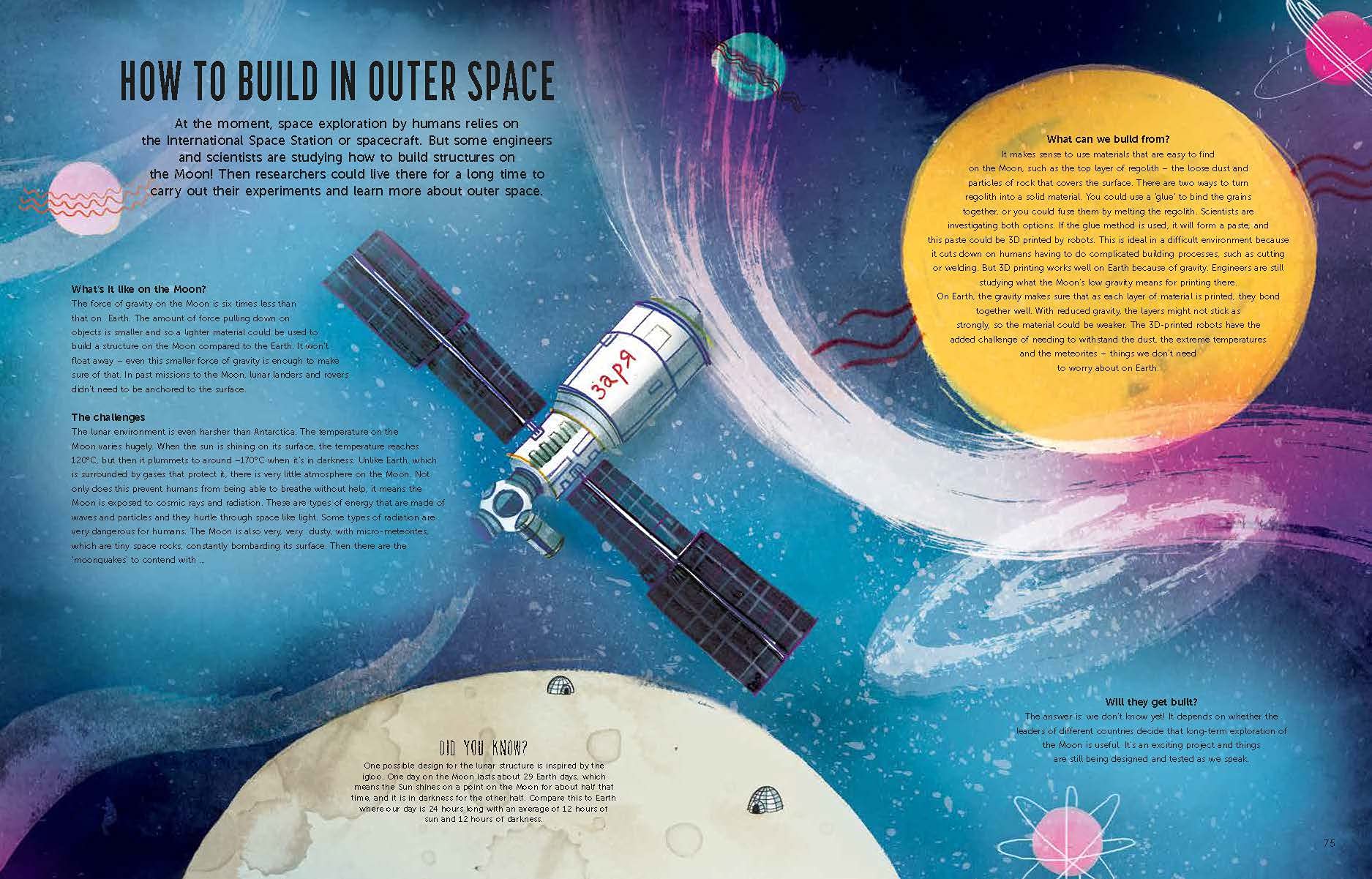
How Was That Built? The Stories Behind Awesome Structures is a concise look at how engineers build all sorts of structures and the ingenious methods engineers have come up with to enable us to build underground, underwater, on ice and even in space. Her illustrator was Katie Hickey who has brought a beautiful sense of wonder and playfulness to this book with her illustrations showing fascinating cross-sections, skylines and close-ups of engineering techniques in action, provide unique and illuminating perspectives of these awe-inspiring constructions.
How Was That Built? The Stories Behind Awesome Structures by Roma Agrawal
Roma told me her aim was to showcase a mix of well-known structures and also less familiar ones that would be accessible for young readers. She explained it was hard to narrow it down and started with a long list, in a spreadsheet, with structures from each continent from the categories – bridge, building, dam, tunnel, etc. After this she jotted down what fascinated her about each structure and what was the most compelling story behind it. In some cases, she said it was a story about a material, in others, its history.
“Some of the content between my book for adults and the adaptation for children overlaps but I wanted to ensure I covered structures from all seven continents and also in space, so I researched loads more stories. I thought about which structures and engineers might capture a young person’s imagination and create stunning visuals. It was a tough task trying to cut down the extensive list I first came up with.”
Roma Agrawal
Roma told me her favourite spread is the How to Build in Outer Space. It feels like science fiction, but it’s real research that scientists are doing right now.
She said she chose the particular engineers as they are all really inspiring and she wanted to feature people from different eras and from different places to show children that engineers are from all sorts of diverse backgrounds. So in the book she has included the more known names from the Industrial Revolution like Henry Bessemer, but also Emily Roebling, who ran the Brooklyn Bridge construction as a woman in the 19th century.
Roma revealed that when adapting her adult non-fiction book, Built, into a STEM non-fiction aimed at children the major change was restructuring the narrative to answer the sort of questions a young reader might have such as, How do you build tall? How do you build a long bridge? Or how do you build a watertight dam?
“I wanted to answer these questions with surprising examples from all around the world, and very importantly, include some of the pioneering engineers who made them possible. I also needed to figure out how to fit in all the information needed to understand a structure – this ranges from how particular materials are made, or how the ancient Romans built to how columns and beams work and how to design against forces like earthquakes.”
Roma Agrawal
She explained the trick was to find stories behind the complicated science or engineering and centre the information around them as this was important to humanise STEM. The book includes some incredible stories of people from all sorts of backgrounds that have made the world the way it is today, and proves to young people they too can change the world and make a contribution to something exciting.
Her advice to Writers’ Forum readers aspiring to write for children is to tell the stories. Even if you think there aren’t any, dig deep and find them. It’s never too late to learn to write. She told me she disliked even writing technical reports that were a part of my job, let alone creative writing. But she challenged herself and learned this invaluable new skill in my 30s.
Roma has another children’s non-fiction engineering book out in 2023 called, Nuts and Bolts: Seven Small Inventions that Changed the World (in a Big Way).
To read the complete feature you can purchase a copy of #237 Oct 2021 Writers’ Forum by ordering online from Select Magazines.
Today on my blog I am talking about an interview I did with Paola Totaro for my Research Secrets slot In this month’s issue of Writers’ Forum #248 26 Oct 2022. She explained how losing her sense of smell during Covid inspired her and her husband to co-write their non-fiction book, On the Scent.
On the afternoon of March 27, 2020, Paolo told me she went to the bathroom and after washing her hands and using her usual scented hand cream, she realised she had completely lost her sense of smell.
“I will never forget the moment because it was so sudden, so inexplicable and so utterly frightening. I’m driven by smell. I walk the park with the dog smelling flowers, the air, rain and being unable to smell anything was an existential shock. I felt as if I’d been put in a bubble and was missing a vital connection with the outside world.”
Paola Totaro
This inspired her to read more anecdotal reports of this mysterious, sudden smell loss to find out what was happening to her and what quickly also struck millions of others around the world. She found herself researching the cultural history of smell and how human perception and response to smells has changed over the centuries, from theories of miasma in which smell was said to be harbinger of disease to the use of changes in smell as diagnostic tools.
She told me she must have read hundreds of research papers that were being pre-published during Covid and also interviewed scientists from all over the world -neuroscientists in the US – to specialist ENT physicians in Germany and Switzerland – to philosophers in the UK and Spain.
“I reached out straight away to Professor Barry Smith, Director of the Institute of Philosophy at the School of Advanced Study, University of London who happened to have said something on Twitter about smell that day and he, bless him, sent me an incredibly kind email acknowledging just how awful the loss can be. Later, he would also help me onto the path to find the top global chemosensory specialists who might explain what was going on.”
Paolo Totaro
Paola revealed she even created a google alert on the word anosmia, which was enormously helpful as science and medicine were advancing at leaps and bounds in this area. She also spent a week immersed with young doctors and scientists who planned to specialise in otorhinolaryngology or olfaction research, at a summer school at the University of Dresden in 2021 run by Professor Thomas Hummel, known in this world of smell as the ‘grandfather of olfaction’.
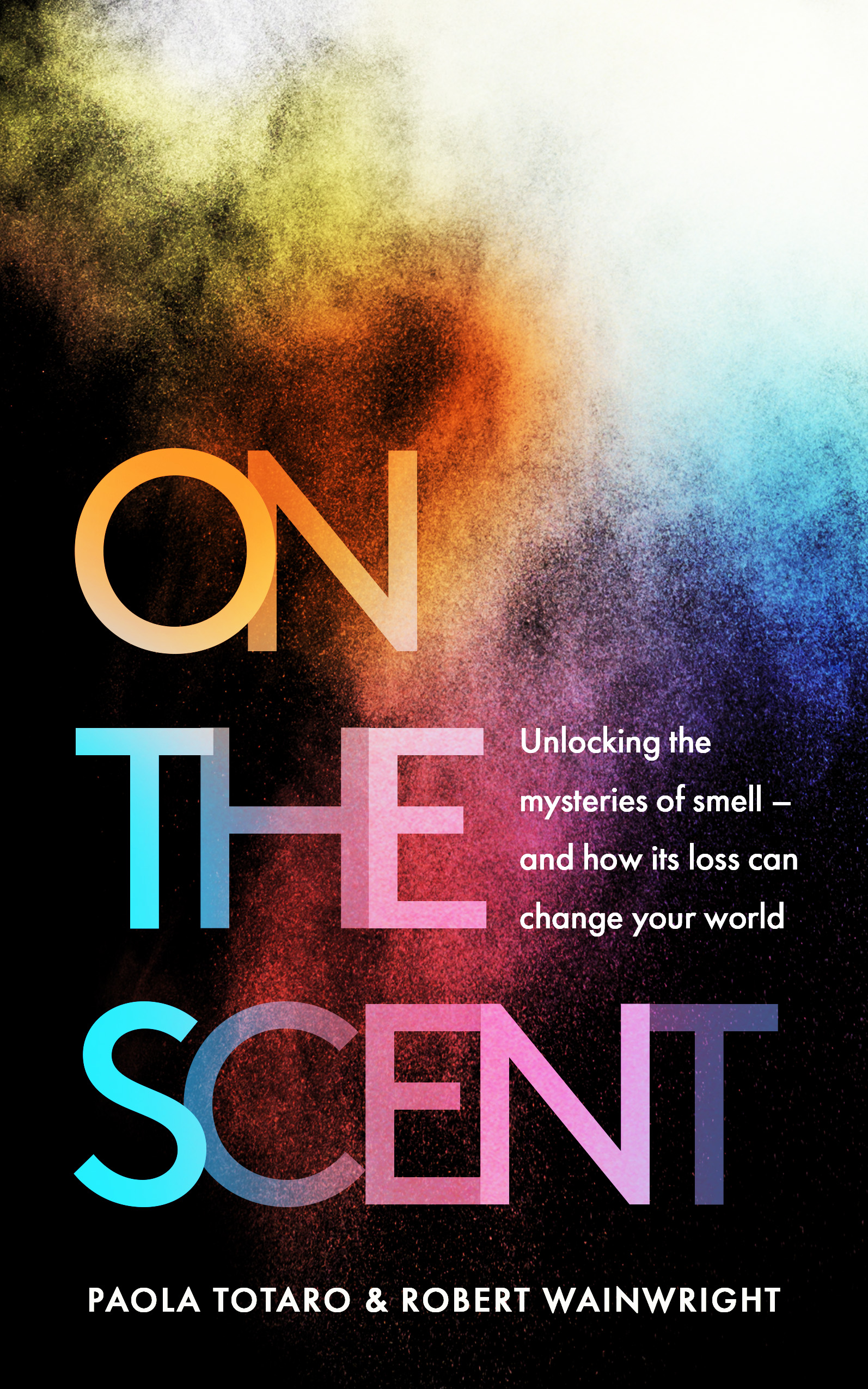
On the Scent by Paolo Totaro and Robert Wainwright
The resulting book, On the Scent – Unlocking the mysteries of smell – and how its loss can change your world, is a mix of Paolo’s personal memoir of her journey into dealing with her loss of smell integrated with all the scientific research she uncovered. Much of the book was written in lockdown so many of her interviews were conducted over Zoom. She also interviewed people who had been born without a sense of smell, others who lost the sense to virus or brain injury. Reading the bibliographies and footnotes of other published writers/authors on the topic of olfaction was also hugely helpful and Paolo reached out to some authors who were also helpful and generous.
Paolo explained her husband, Robert Wainwright who specialises in writing the biographies of interesting and important people lost in history wrote about people throughout history who had no sense of smell, such as the great nature poet, Wordsworth who was anosmic. He also contributed the story of INXS frontman, Michael Hutchence, who plunged into depression when he lost his sense of smell. She elaborated Robert was her slash and burn guy as were the editors at Elliott and Thompson.
“Throughout the writing process, I would read aloud to Robert each evening and if his eyes glazed over in the science bits, I’d wind them back. He did the same for me with his people chapters – but he’s much less long winded than me.”
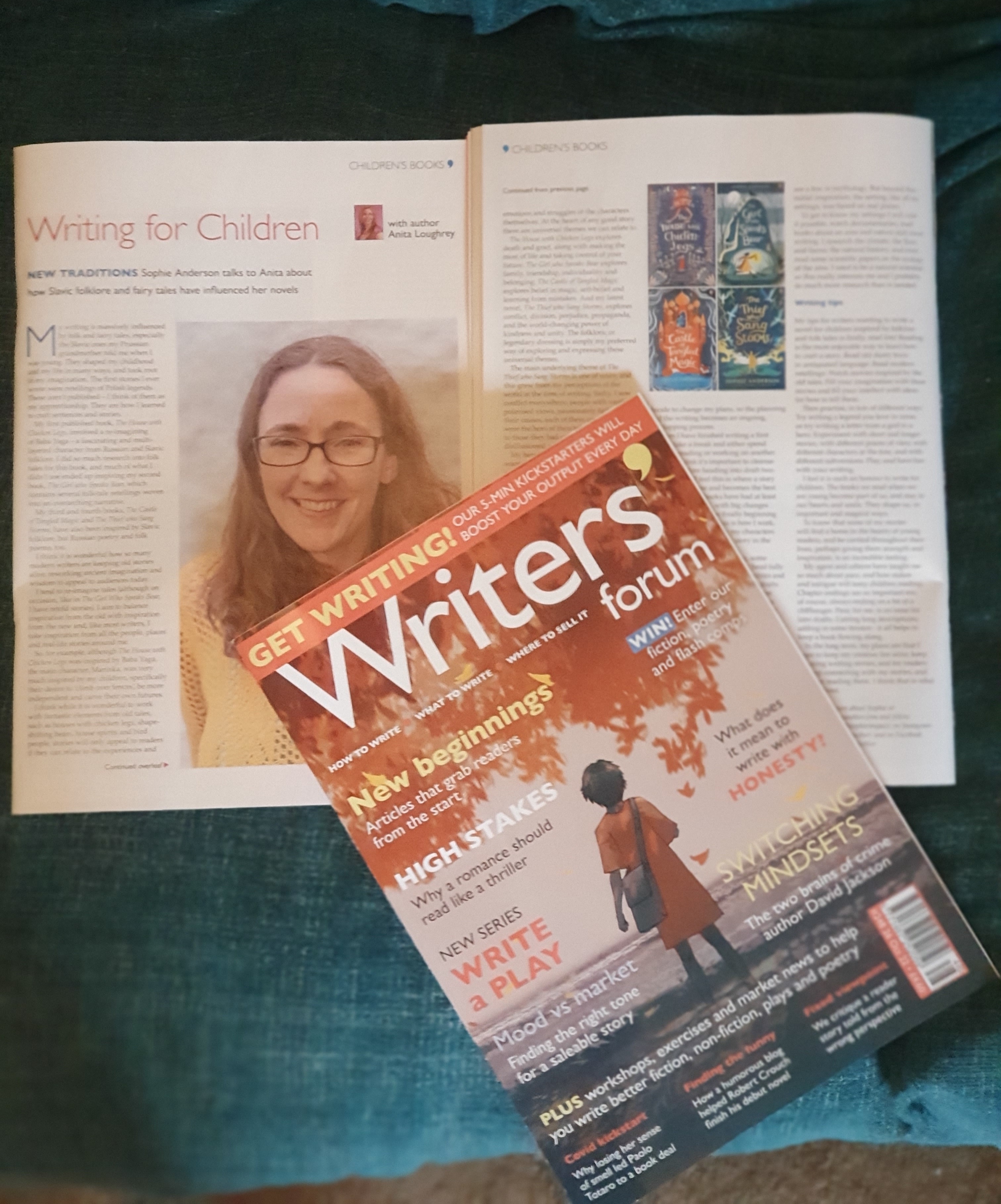
In the October issue of Writers’ Forum #248 Oct 22, I have interviewed Sophie Anderson for my Writing for Children double-page spread, about how Slavic folklore and fairy tales have influenced her novels.
Sophie told me her writing is massively influenced by folk and fairy tales, especially the Slavic ones her Prussian grandmother told her when she was young.
“They shaped my childhood and my life in many ways, and took root in my imagination.”
Sophie Anderson
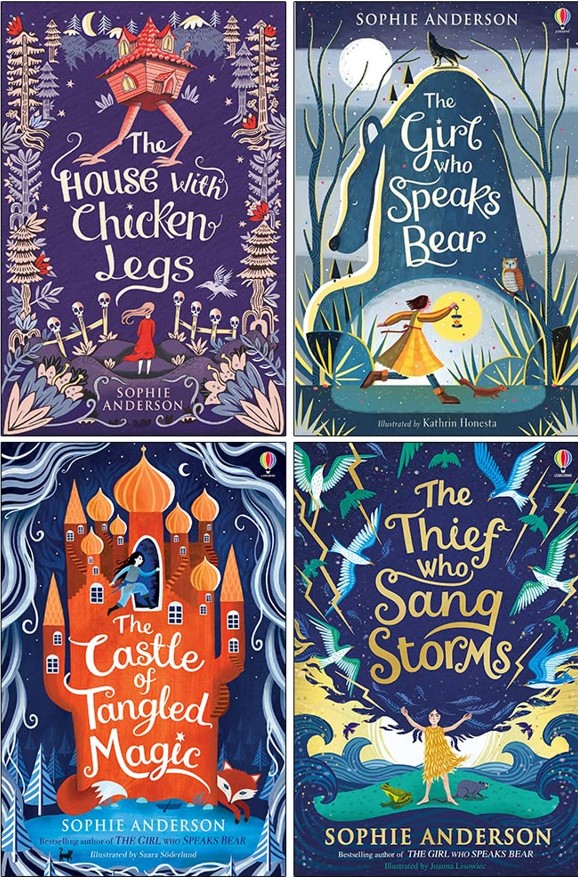
Sophie’s first published book was The House with Chicken Legs, which involved a reimagining of Baba Yaga – a fascinating and multi-layered character from Russian and Slavic folklore. She revealed she did so much research into folktales for this book, that much of what she didn’t use ended up inspiring her second book, The Girl who Speaks Bear, which contains several folktale-retellings woven into an overarching narrative.
Her third and fourth books, The Castle of Tangled Magic and The Thief who Sang Storms, were also inspired by Slavic folklore, as well as Russian poetry and folk poems.
“I think it is wonderful how so many modern writers are keeping old stories alive; retelling, reimagining and reworking ancient imagination and wisdom to appeal to audiences today. I tend to reimagine tales rather than retell them (although on occasion, like in The Girl Who Speaks Bear, I have retold stories). I aim to balance inspiration from the old with inspiration from the new.”
Sophie Anderson
Sophie explained she takes inspiration from all the people, places and real-life stories around her. The House with Chicken Legs was inspired by Baba Yaga, the main character, Marinka, was inspired by her children, specifically their desire to ‘climb over fences’, be more independent, and carve their own futures.
At the heart of any good story there are universal themes we can relate to. The House with Chicken Legs explores death and grief along with making the most of life and taking control of your future. The Girl who Speaks Bear explores family, friendship, individuality and belonging. The Castle of Tangled Magic explores belief in magic, self-belief, and learning from mistakes. The Thief who Sang Storms, explores conflict, division, prejudice, propaganda, and the world-changing power of kindness and unity. The main underlying theme is one of unity.
“I think whilst it is wonderful to work with fantastic elements from old tales, such as houses with chicken legs, shapeshifting bears, house-spirits, and bird-people, stories will only appeal to readers if they can relate to the experiences, emotions and struggles of the characters themselves.”
Sophie Anderson
She uses folklore and legends as a way of exploring and expressing these themes.
Linnet from The Thief who Sang Storms Illustrated by Joanna Lisowiec
Sophie revealed her planning process is messy and very paper-based. She told me she fills up notebooks with ideas and stream-of-consciousness free writing and ring-binders with maps and plans, character studies, notes on settings, lists of key events and plot points, and thoughts about possible themes and messages. Once she starts writing the chapters she inevitably changes her plans so it is an organic process. .
Sophie said if a character feels vague and not fully-formed she will do some exercises, like write letters or a diary from that character’s point of view. Or might interview them, take them out for an imaginary coffee for a chat, or write a scene that doesn’t end up in the book, where they are having a day out with a friend.
Her writing tips to writers wanting to write a novel for children inspired by folklore and folktales is firstly, read lots!
“Reading is the most enjoyable way to learn how to craft a story. Read old dusty texts in antiquated language. Read modern retellings. Watch movies inspired by the old tales. Fill your imagination with these stories and fill your intellect with ideas for how to tell them.”
Sophie Anderson
Then practice, in lots of different ways.
“Try writing a legend you love in verse, or try writing a letter from a god to a hero. Experiment with short and longer stories, with different points of view, with different characters at the fore, and with different subversions. Play, and have fun with your writing.”
For the September #247 21 Sep 2022 issue of Writers’ Forum I interviewed Donna Amey Bhatt about co-writing a children’s book with her husband, Vikesh. Donna was already a published author with her book, How To Spot a Mum.
Co-writing a book was something new for both of them and Donna was worried it might put a strain on their relationship but found in reality it bought them closer together. Although, the deadline for the book ended up being difficult, as their baby was due. It meant they needed to be much more organised.
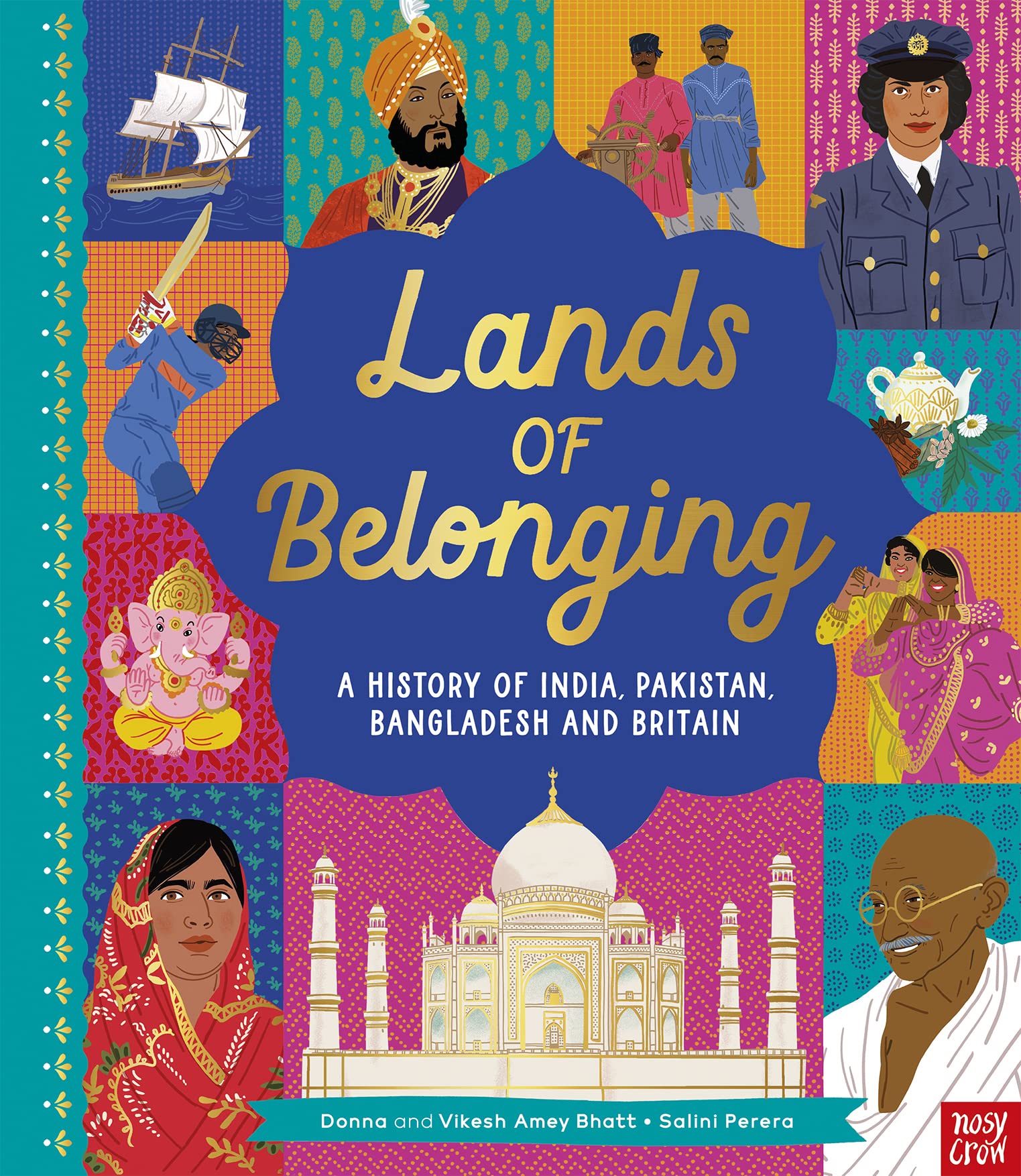
Donna told me Vikesh came up with the idea for Lands of Belonging: A history of India, Pakistan, Bangladesh, and Britain over lockdown, and together they fleshed it out and pitched it. Lands of Belonging is a thrilling exploration of the complicated history of South Asia and Britain, examining what it means to ‘belong’.
In the interview Donna explained one of the things that inspired the book was the fact Vikesh grew up without being told the full history as to why his family lived here. It’s a huge part of the UK’s story that is often overlooked in both schools and the media. They have also found through their work in marketing not many places truly embrace diversity. This is something Vikesh is passionate about changing, and educating the younger generation is where it really needs to start. It is especially topical this year, 2022 as it is the 75th anniversary of Partition.
Donna elaborated how the combined history is often glamourised, things like the Raj and ‘Britannia ruling the waves’ really don’t tell the story of them people from India, Pakistan, and Bangladesh who lived during those times. Their contributions to our country are so huge, and so brilliant they should be acknowledged and celebrated.
The book is split into two sections. The first looks at the past, and plots the beginning of Britain and India’s relationship, as well as looking at what India was like before it was colonised.
The second half is a look at modern Britain as shaped by Indian, Pakistani, and Bangladeshi people. It was important to Donna and Vikesh to include a diverse variety of Indian culture within the book. She told me that as well as fact checking with friends and family, Nosy Crow were incredibly thorough and provided two academics and many fact checkers to ensure all the information was 100% accurate.
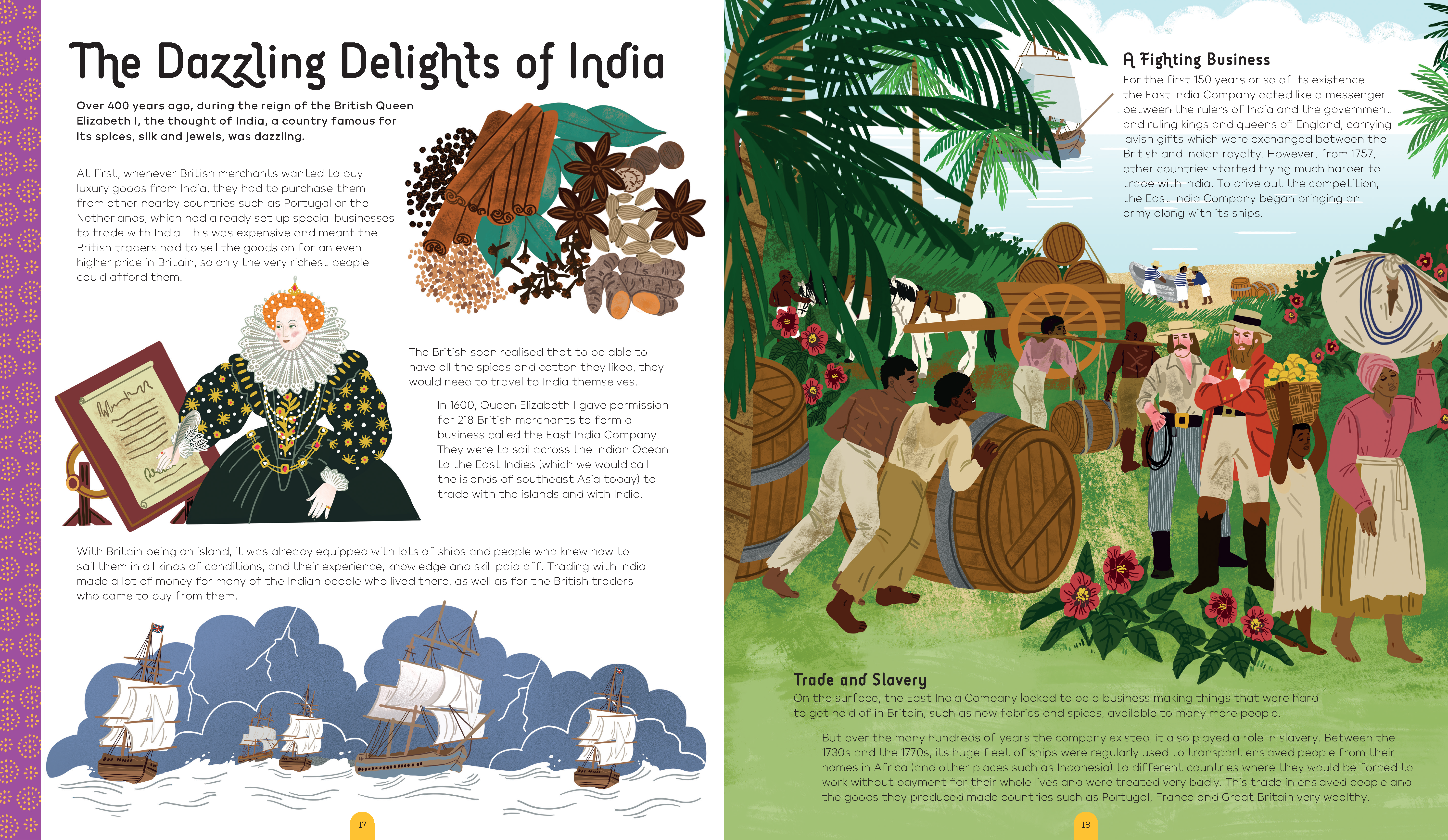
Key to them was the fact they had a brilliant illustrator, Salini Perera, who could show things so beautifully. So, things like talking about traditional dishes and costume didn’t need lengthy explanation. They trusted Salini’s skill and it paid off.
“One of our favourite pages explains a few types of yoga, and Salini has done a brilliant job of showing some of the positions.”
Donna Amey Bhatt
There are plenty of history books that solely tell you what happened in the past but there are not many that explain how these events effect our culture and the world today. Donna explained she believes looking at how the past has led to how we live today is often what draws readers (and potential publishers) in.
Her advice to other writers who want to write about the history of their culture is to try to think of how you can explain things interactively. Maybe there’s an activity you can include that makes your point, or you can use illustration to plot something instead of using too much text. The great thing about writing for children is there’s space to experiment, and many of the rules for writing can be thought more as suggestions.
They both hope Lands of Belonging serves as a helpful reference to people who don’t fully understand this part of history.
Donna’s latest book is How to Greet a Gran, published by Quarto. It’s a look at grans all over the world, tells you a little about granny customs in different countries, and vitally; what to call them.
How to greet a gran by Donna Amey Bhatt and Aura Lewis
You can buy copies of all Donna’s books from your local bookshop, or online at uk.bookshop.org, an organisation with a mission to financially support local, independent bookshops. It is also available at Waterstone and Amazon.
To read the complete feature you can purchase a copy of #247 21 Sep 2022 Writers’ Forum by ordering online from Select Magazines.
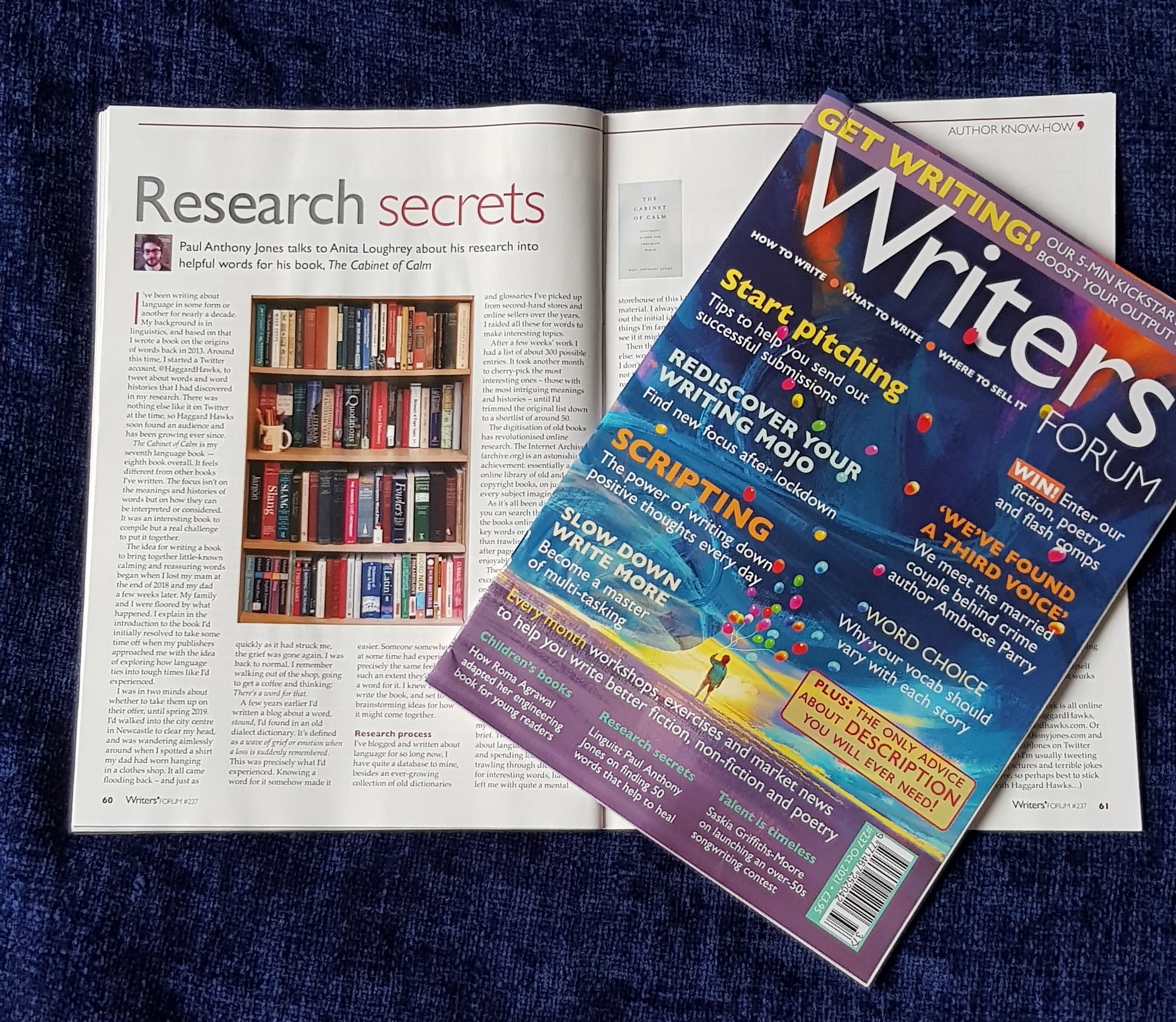
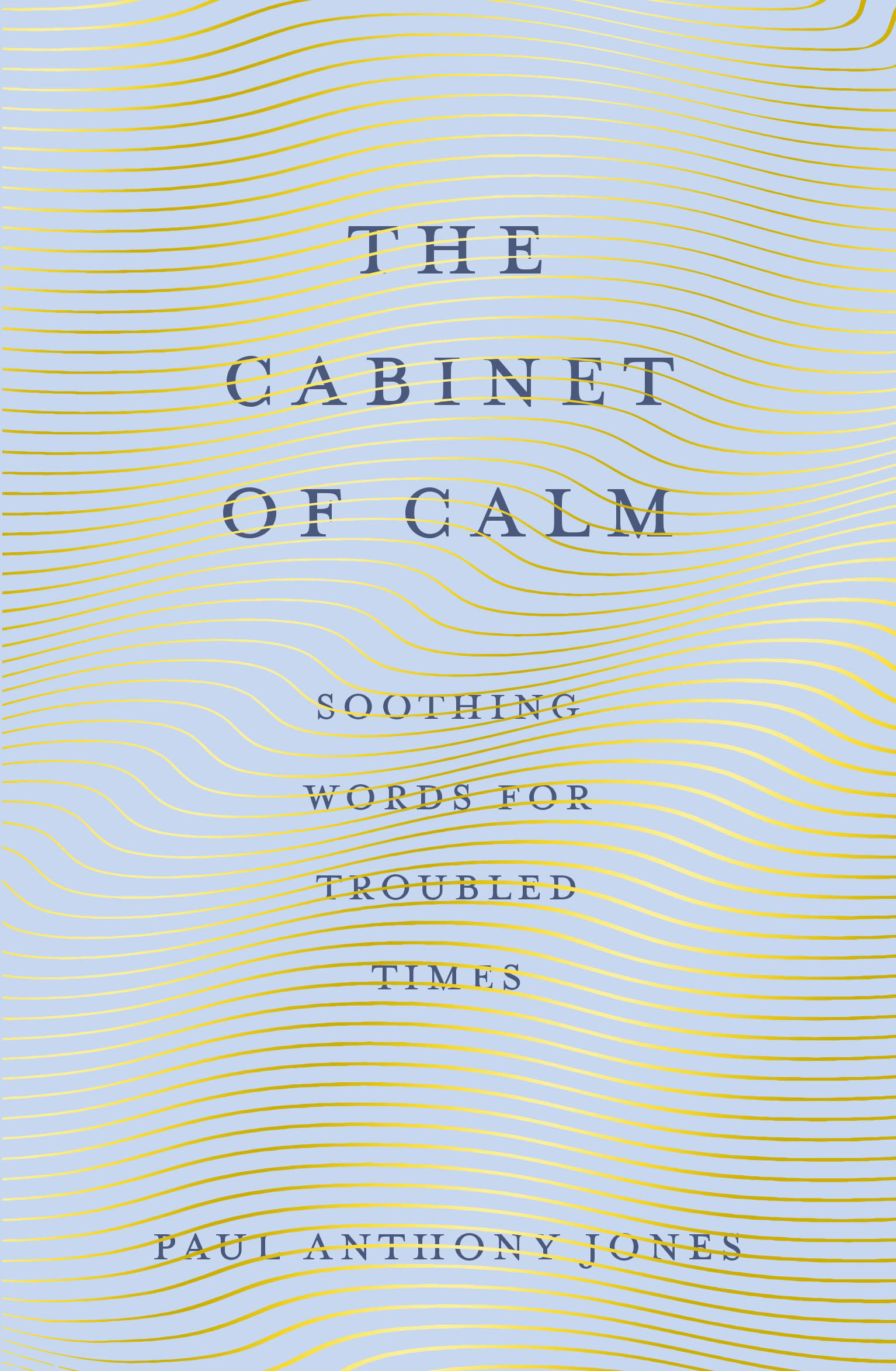
I interviewed Paul Anthony Jones about his research into positive words for his book, The Cabinet of Calm for the #237 Oct 2021 issue of Writers’ Forum.
Paul has been writing about language in some form or another for nearly a decade. His background is in linguistics, and based on that he wrote a book on the origins of words back in 2013. Around this time, he started a Twitter account, @HaggardHawks, to tweet about words and word histories that he had discovered in his research.
The Cabinet of Calm is his seventh language book – eighth book overall. He told me it feels different from other books he has written. The focus isn’t on the meanings and histories of words, but on how they can be interpreted or considered. Paul confessed it was an interesting book to compile but a real challenge to put it together.
“The idea for writing a book to bring together little-known calming and reassuring words began when I sadly, lost my mam at the end of 2018 and my dad a few weeks later at the start of 2019. I and my family were floored by what happened. I explain in the introduction to the book I’d initially resolved to take some time off when my publishers approached me with the idea of The Cabinet of Calm, exploring how language ties into tough times like I’d experienced.”
Paul Anthony Jones
Paul revealed he was in two minds about whether to take them up on their offer, until spring 2019 when he walked into the city centre in Newcastle to clear his head, and was wandering aimlessly around the shops when he spotted a shirt his dad had worn hanging in a clothes shop.
“It all came flooding back—and just as quickly as it had struck me the grief was gone again – I was back to normal. I remember walking out of the shop, going to get a coffee and thinking there’s a word for that.”
Paul Anthony Jones
A few years earlier he had written a blog about a word, stound, he had found in an old dialect dictionary. It’s defined as a wave of grief or emotion when a loss is suddenly remembered. He explained this was precisely what he’d experienced and knowing a word for it somehow made it easier because it meant that someone somewhere at some time had experienced precisely the same feeling, to such an extent they’d coined a word for it. It was at this moment he knew he had to write the book, and set to work brainstorming ideas for how it might come together.
Paul has blogged and written about language for so long now, he has accumulated quite a database to mine—besides an ever-growing collection of old dictionaries and glossaries he has picked up from second-hand stores and online sellers over the years.
One of Paul Anthony Jones’ bookshelves
He explained he raided all these for words to make interesting topics. After a few weeks’ work he had a list of about 300 possible entries. It took another month to cherry-pick the most interesting ones – those with the most intriguing meanings and histories – until he had trimmed the original list down to a shortlist of around fifty.
He divulged whenever he starts work on a new book, there’s three ways it comes together. First, something he already knows gives him the gem of the idea – in this instance the word stound. Secondly, there’s all the other words and etymologies he is already familiar with through his work to fit the same brief. Then there’s everything else: words and etymologies he does not already know, found from researching the new idea. Paul told me this is the best part and makes up the vast majority of material in the final draft. The initial idea forms the foundations, his research builds the rest of the book.
“In TheCabinet of Calm, the first chapter I wrote was actually for a word I found while searching specifically for topics to do with feeling overworked or overwhelmed: cultellation. I’d never spotted this word before; derived from an old surveyor’s tool, it describes the process of cutting a larger task into smaller more manageable jobs. It was the right mix of a brilliant-sounding obscure word, a perfectly appropriate meaning for what I was compiling, and a fascinating and very unexpected etymology.”
Paul Anthony Jones
Paul’s tip to anyone interested in writing about language or words is to track down reliable sources. It makes for much more rewarding research and raises the reliability not only of your work but of this genre of book as a whole. This makes the finished work more robust. You’ll know yourself what constitutes a reliable research source – even then, try to back everything up.
Paul explained The Cabinet of Calm went through quite a difficult draft period, with both himself and his publisher approaching the idea from two different angles. Initially, he wanted to bring together lots of much shorter dictionary-like entries, and divide the book in two halves—the first listing words for worldly problems, and the second for calming, reassuring words to act as their solution. His publisher had a different idea, and pushed him towards writing fewer chapters of more detail and content. It took quite a few attempts to get it right and Paul is happy how the final format works well.
The Cabinet of Calm: Soothing Words for Troubled Times by Paul Anthony Jones
He advocates, no matter how you find yourself researching, that’s the best way for you. Many writers – especially when they’re first starting out, are overly self-critical, and feel they are not taking their writing or research seriously if they don’t fit the romanticized idea all writers are forever carrying a notepad, jotting down ideas in coffee shops, and pouring over piles of books in libraries. If this is how you work, great! But if it isn’t, it’s fine too.
“Work out what works best for you, and stick with it. By all means take ideas or inspiration from other people, but don’t compare yourself unnecessarily to them. We all have our own ways of doing things, and your writing will be happier and more fruitful if you allow yourself time to figure out what works best for you.”
Today is my stop on the Phyllo Cane and the Magical Menagerie by Sharn W. Hutton blog tour.
Phyllo Cane and the Magical Menagerie by Sharn W. Hutton
Sharn W. Hutton is the author of The Adventures ofPhyllo Cane series, the first of which, Phyllo Cane and the Circus of Wonder, was hailed by the judging panel of The Booklife Prize to be ‘dizzyingly bewitching, articulate and intoxicating.’ The sequel, Phyllo Cane and the Magical Menagerie, was released on July 31st 2022.
In Magical Menagerie we Join Phyllo on his next apprenticeship with the Circus of Wonder – a brand new adventure with the fantastic beasts of the Magical Menagerie and a race against time to save their lonely dragon from destruction. But what if the fire-breathing dragon won’t come out of its pen to perform? What if the Ringmaster thinks it’s worth more in the apothecary chop-shop than as part of the troupe?
The Beast Whisperer of the Circus of Wonder must bring her beloved dragon back up to its performing peak fast, if she’s to save it, and she thinks she knows what to do. The unhappy creature needs a mate, but the male sand dragon is a rare beast indeed, and she’ll never be able to catch one alone. Time for Phyllo to become the Beast Whisperer’s apprentice…
Before venturing into the realms of upper middle grade/YA magical fantasy, Sharn wrote cosy mystery based around the irrepressible Angel Drake, in Angel Drake is Going Solo and the short story, Nothing Ventured. Her first novel, It’s Killing Jerry, was a standalone mystery.
Sharn W. Hutton
Based in Bushey, Hertfordshire, Sharn works from home in the tiny office at the back of the house, which makes up for what it lacks in size and warmth with a rather nice view of the garden. When she isn’t hitting the keyboard (laptop, not piano) she does enjoy a trip to the theatre or cinema and pretends to use the very expensive exercise machine rusting in the summerhouse. One day she plans to also learn how to play the piano.
I have interviewed Sharn W. Hutton about her Phyllo Cane series for my stop of the blog tour. So let’s take a look at what Sharn had to say:
*****
What inspired you to write a magical adventure series set in the circus?
I’ve always loved magical stories, Charlie N Holmberg, Pratchett, Gaiman and, of course, the Potters and when I decided that I wanted to create my own magical world, I knew I wanted it to be rich with detail. The circus is so full of possibilities. Death defying acts, incredible strength, impossible feats – it’s full of magic before you even get to any kind of wand waving.
I also knew that I wanted the Circus of Wonder to feel like it was from another time, travelling around today’s countryside, playing to charmed and ordinary audiences alike. That opens the stories up for all kinds of possibilities.
We live in such a ‘convenient’ world. Everything is available at the touch of a button. You can buy pretty much anything online and search the internet to find any information you need. The tradition of the circus pushes back against that. If you’re lucky enough to catch it, it comes to town once a year. You might get a ticket, if it’s not already sold out. The acts could be anything and they probably aren’t safe. I love how illusive, mysterious and dangerous it is.
Have you been on any literary pilgrimages and if so what were they?
I’m all about the research at the moment, plotting the next story, and have become a member of the British Library. Real life stories about the circus world are sometimes stranger than fiction and are an excellent source of ideas. I love books, really old ones and spanking new, you never know where what’s inside might lead you.
I bought a book about circus food which led me to discover Giffords Circus, which not only feeds the troupe in its restaurant tent, but a lucky few punters as well, if you can get yourself a seat. When I saw that Gifford’s route was going to come unbelievably close to where I live for the first time, what choice did I have but to book myself in for the show and some dinner?
Visiting Giffords felt a lot like visiting the Circus of Wonder. Small by the grand circus tent size terms we often see, but perfect to get enough people in the crowd for atmosphere in their themed and moodily lit big top. There were traditional acts where acrobats summersaulted on horseback and knife throwers terrified us with a crossbow. Then flyers who walked in the air above the crowd gripping silks, just like Ezio did in the Circus of Wonder. It was an incredible experience that felt totally real in a world of special effects and TV trickery.
The restaurant was a series of long plank tables with the only choice being vegetarian or not. Everyone had the same. People were served in groups, whether they knew each other or not and by the end of the evening we all felt like family. I’d go again in a heartbeat.
Perhaps a pilgrimage should take more effort – that particular one was a joy.
What are the underlying themes of your novel, Magical Menagerie?
In Magical Menagerie Phyllo learns about the impact of his society upon the natural world and about taking responsibility for his actions. I wanted to touch on this in a way that might inspire a reader to consider if the practises around them, considered to be the normal, are really worth their cost.
There are new characters introduced too, one of whom I am particularly enthusiastic about, Schlepper. He is Contraptionist (that’s an inventor of contraptions to you and me!) who, as a wheelchair user, invents leg alternatives for himself. He is a hugely positive and engaging character inspired by my father, who never once allowed his physical challenges to slow him down.
All this along-side a romping good adventure of course!
Do you think it is more difficult or easier to write a sequel?
I think that depends on your plan from the start. Before writing the ‘Adventures of Phyllo Cane’, I wrote a cosy mystery called ‘Angel Drake is Going Solo’. I fully intended for Angel Drake to be the star of a series of mysteries, but that first book was the entire story I had in my head at the time. Getting ready to write book two was difficult because I felt like I had to reinvent her.
With the ‘Adventures of Phyllo Cane’ it’s completely different. When I came up with the idea it formed as a series of stories, seven in total. When I finished book one, I knew that really the story was only just beginning. Don’t misunderstand me, I don’t have every single detail planned out, but I know broadly where we are heading and I’m excited to tell the next part of the story.
Now I’m plotting out the third and I don’t think that’s anywhere near as daunting as it might be otherwise.
What is the first book that made you cry?
I had to really think about this and honestly, I don’t read books that make me cry. I like to escape into my stories and if I think that place is going to be one of tears (or horror) then I’m not going.
Having said that, I did shed a tear when Phyllo completed his task with Tamer Venor and was flying home – it had all been such a struggle!
If you could meet your characters, what would you say to them?
I’d tell Phyllo not to give up or lose heart. He’s got a challenging road ahead.
I’d ask Tamer Venor to teach me how to meld with a dragon.
I’d ask Marvel to make me something in the Confectionary that brought back memories of rolling down grassy hills in the sunshine with my childhood friends.
What writing advice would you give to people aspiring to be a children’s book writer?
Know you audience and how they consume stories. I specifically sought out an editor with lots of experience in the area I wanted to write in. Their advice was invaluable.
Is there anything else you would like to tell readers about your books and writing for children?
Phyllo Cane is an imperfect hero. He’s struggling to meet the expectations of his troupe, but will never give up. He’s got kindness at his core and in the end that will be the making of him. The Adventures of Phyllo Cane are tales of growth, discovery, magic and adventure and I hope that they will resonate with young and older readers alike. They are suitable for children, yes, but I like to think of them as fantasy with a PG rating, rather than being babyish in anyway.
Thank you Sharn for agreeing to be interviewed on my blog today as part of your tour.
Thanks very much for taking an interest in my stories about Phyllo Cane. I really hope you enjoy them. Best, Sharn.
*****
The Adventures of Phyllo Cane are available as ebook for Kindle and are included in Kindle Unlimited. Paperbacks are available for order from Amazon, Barnes and Noble, Waterstones. Most book stores will be able to order it in. If you visit the Amazon pages you will be able to see full descriptions and the possibility of downloading a free sample for kindle. The international book link to the series is: mybook.to/PhylloCane
You can find out more about Sharn W Hutton and her book Phyllo Cane and the Magical Menagerie on her website: www.sharnhutton.com, Facebook: @SharnHuttonAuthor and Instagram: @sharnious
I would also like to thank Anne Cater from Random Things Through My Letterbox for organising this blog tour and inviting me to take part. Thank you.
You can visit the rest of the blog tour here:
My book review of Phyllo Cane and the Magical Menagerie by Sharn W. Hutton is scheduled to appear next month, on Wednesday 26th October, so please keep an eye out for it.
For the #247 21 Sep 2022 issue of Writer’ Forum I spoke to Roo Parkin about how research is core to success as a picture book writer.
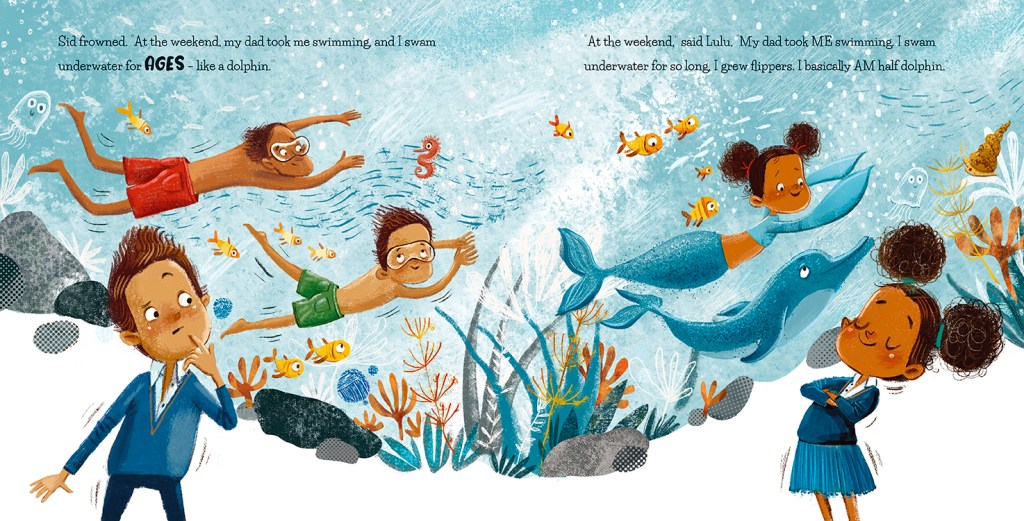
Roo’s debut picture book Sid’s Big Fib focuses on two children desperately trying to out-brag one another. While Sid’s pretty good at showing off, Lulu’s skills are simply stellar, driving Sid to launch a lie of epic proportions.
She explained a combination of things inspired the story’s themes: children’s propensity to wind up friends or siblings by claiming their ice cream is definitely the biggest, whippiest, chocolatiest etc and, secondly, the amount of ‘braggy’ truth distortions out there on social media platforms.
Roo said she realised a story exploring where showing off and fibbing could lead would resonate as much with parents reading the book to their children as it might with the children themselves. Her challenge was to make the brags, fibs and comeuppances themselves completely child centric.
When she started drafting Sid, she read some psychology articles on children bragging to help her understand what was motivating her characters. Through this research she discovered, Dr Susan Engel observed while younger children are happy to just imagine they are the fastest kid in the world, an older child realises it’s not good enough just to think that – they have to prove it. This really helped Roo escalate her story and push it into another phase. She elaborated that Sid and Lulu start off just boasting, but Sid takes things one step further, concocts an enormous lie and then gets himself into a big knot trying to prove the lie is real. from that point onwards her story’s plot and the extent of Sid’s fibs escalate.
Roo beleives doing proper research for picture books is as important as it is for any genre. Not only should length, word choices and structure fulfil expectations, but the content should be ‘correct’. That doesn’t mean you can’t create completely fantastical worlds and characters. They are great hooks but it is important not to mislead children and for the story to still makes sense.
She told me the importance of researching the content was drummed home quite dramatically.
“Sid concocts an outlandish story about his dad’s fictional space rocket and the things he brings home from those adventures. Dad is supposed to be going deeper into space with each trip as the lie evolves, but in actual fact, I had completely rearranged the galaxy with planets and moons quite randomly distributed in a nonsensical order. After researching the correct order, I quickly sorted this out.”
Roo Parkin
Another example or necessary research Roo told she required was for the part when Sid’s nemesis, Lulu, claims she can swim underwater for so long she grows flippers. she explained her art note requested she be depicted as half dolphin/half childbut when doing the art note research for her fantastic illustrator Irina Avgustinovich, she had a crisis about whether dolphins had flippers at all, or if they were actually called something else.
“I knew there was a TV series called Flipper but, really, I had no idea whether that was because the starring dolphin had them or because he could ‘flip’ in the air. A call to my young godson, whose animal knowledge is off the scale, sorted me out: ‘Yes, of course dolphins have flippers… and a fin, a fluke and a melon’. A fluke is apparently the tail, and the head bulge is the melon.”
Roo Parkin
Roo also explained it’s important to get character voice right because you need to hook the reader in straight away. Children simply won’t stick with a book, even one that’s being read to them, if they don’t identify with or recognise the characters in any way.
“Libraries are an absolutely brilliant resource for writers. I spend hours in my local library analysing picture book themes, characters and their voice, story arcs and endings. I was pleased to find that while there obviously were books in existence touching on similar topics as ‘Sid’, it wasn’t an overly cluttered market.”
Roo Parkin
One of her research tips to other writers is to havea good trawl through the internet to help widen your research of the genre you are writing. Ideally, you don’t want to be submitting something with the same title as another book or to a publisher who has just released something on an identical subject.
She also suggests children’s book writers should visit the fantastic children’s book exhibits available. There have recently been big, glitzy exhibitions in London on Alice in Wonderland, Paddington Bear and Beatrix Potter and her favourites are the small Dahl Museum and Story Centre in Great Missenden.
You can buy a copy of, Sid’s Big Fib by Roo Parkin and Irina Avgustinovich, direct from the publisher Maverick Publishing, from your local bookshop, or you can also purchase a copy online at uk.bookshop.org, an organisation with a mission to financially support local, independent bookshops.
I would like to thank Abi Reeves at Maverick for sending me a copy of Sid’s Big Fib by Roo Parkin and Irina Avgustinovich to review on my blog.
To read the complete feature you can purchase a copy of #247 21 Sep 2022 Writers’ Forum by ordering online from Select Magazines.
I interviewed Emily Ann Davison about how she developed her characters for her picture book, Every Bunny is a Yoga Bunny, for the #246 17 Aug edition of the UK national writing magazine, Writers’ Forum.
Emily told me as a child she enjoyed writing stories and songs, so it wasn’t really a huge surprise that as a grown up she returned to writing. She also worked with young children for many years, and this is where she discovered her enthusiasm for children’s books, in particular picture books. One day, a picture book idea popped into her head and she revealed now the ideas just won’t stop popping.
She explained the inspiration behind her debut picture book, Every Bunny is a Yoga Bunny which is published by Nosy Crow, came from working with children and being a mother. She understands just how wriggly young children can be, and felt there was a place for a book to help wriggly children feel calm. She wrote this story at a time when her daughter was finding it particularly hard to feel calm at bedtime, so Emily had started to try different relaxation techniques to help her. She discovered the main thing that helped was yoga!
“I’d previously written a draft picture book about a family of monsters doing meditation. Doing yoga with my daughter, reminded me about this story, so I dug it out and transformed it into a story about yoga, calm and mindfulness and features an excitable bunny called Yo-Yo!”
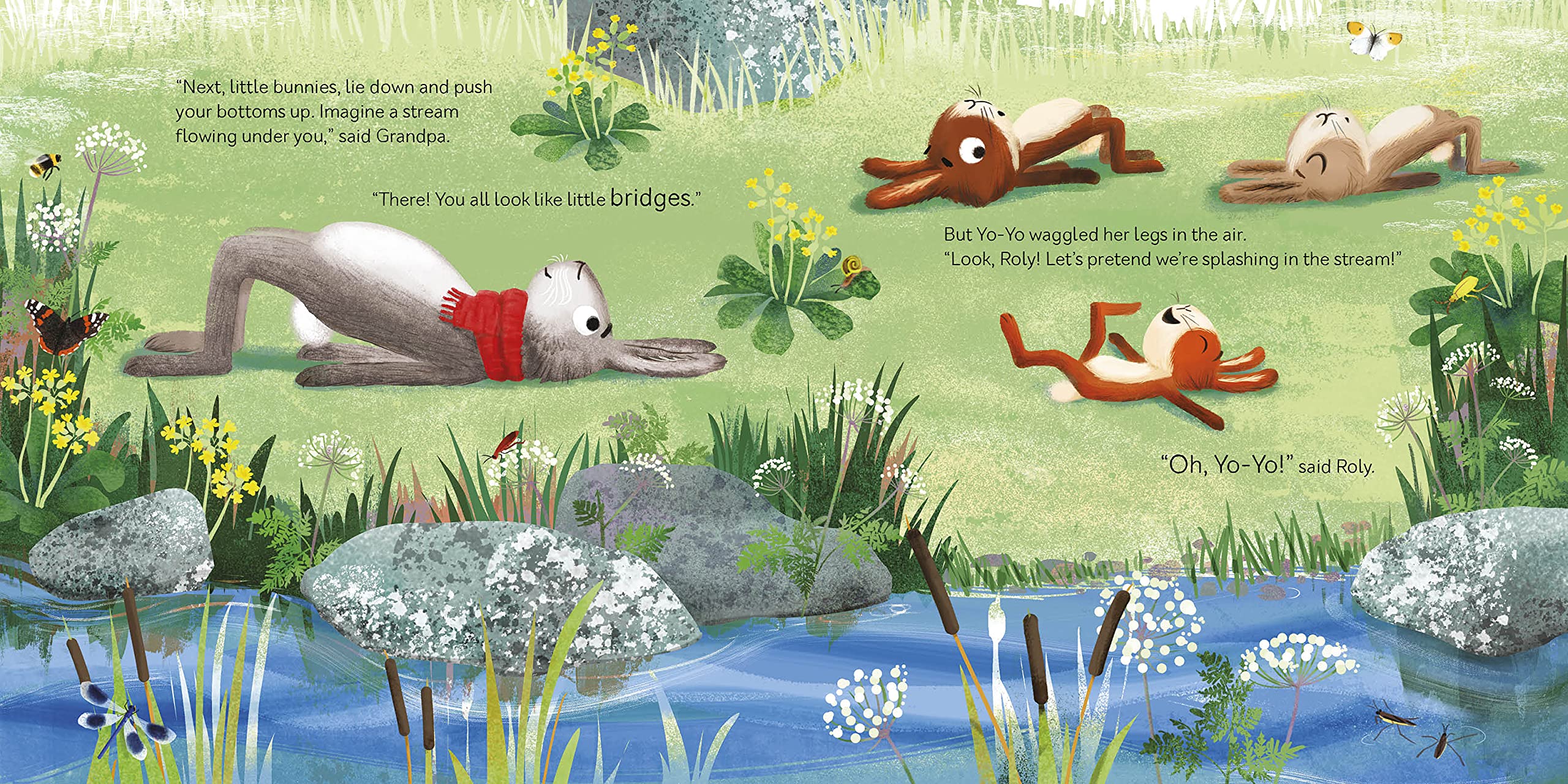
Yo-Yo is a fidgety, bouncy, can’t-sit-still-EVER type of bunny. Grandpa suggests the bunnies try yoga, but even that doesn’t stop her wiggling and giggling. Yo-Yo later finds herself lost and all alone in a shadowy forest. She feels panicky, but maybe Grandpa’s yoga will be able to help… At the end of the book, there are simple step-by-step instructions so children can stretch, feel calm and be a yoga bunny too.
Every Bunny is a Yoga Bunny by Emily Ann Davison and Deborah Allwright
Emily said when writing for young children, it’s important the characteristics or experiences of a character are relatable to a young child’s own life experiences. It was important to Emily, that at the end of the story Yo Yo was still wriggly and giggly, and found it tricky to sit still as she didn’t want the character to change her personality, she wanted Yo Yo to learn a method of feeling calm by using yoga.
Some stories are all about the setting. For Every Bunny is a Yoga Bunny, it is the concept that is most important. Emily told me when writing picture books it is often the characters and concept of the book that dictate the plot and theme.
“Young children have a very short attention span, so it is important to keep the pace going. You need to have some type of suspense in the story or some type of escalation throughout the book.”
She also revealed for a picture book, page turns are important. At each page, you want the child to HAVE to know what happens next. her suggestion is to think of page turns as a ‘flap’ in a ‘lift the flap’ book. The page turn can be used as a reveal.
Emily’s advice to other writers wanting their picture book manuscript published is – do the research. Research picture books. Research publishers and agents before submitting. Know as much about the world of picture books as you can and try to connect with other picture book writers. The journey is much easier when you have a network of writers around you, who you can share the highs and lows with.















 Much To Do About Writing