Category Archives: Writing 4 Children

An interview with… Kathryn Evans

In an interview for Writers’ Forum #195 Jan 2018, Kathryn Evans told me how a good agent supports you through the ups and downs.

She followed her agent, Sophie Hicks from Ed Victor Ltd when she set up her own agency, the Sophie Hicks Agency. Kathryn revealed Sophie was amazing at picking her up when she’s down and always fighting her corner.

Kathryn originally sent her a picture book, which she turned down. So she tried again with a YA novel called Skin. Sophie rang her to have a chat and when she offered to represent her, she was stunned . However, that book just didn’t sell – who knows why, sometimes things just aren’t quite right for the market or the moment. Kathryn wrote a couple of other things too – one of them Sophie wasn’t keen on and the other, Kathryn panicked about and asked her to withdraw as she had lost my nerve.

For a while Kathryn stopped writing. She told me she went to see Sophie about it and she was brilliant, she basically said she honestly believed they’d get there, she backed her 100%, which inspired her to set to work with an idea I’d had. That idea was the beginnings of More of Me.

More of Me by Kathryn Evans

Kathryn explained she wrote the first draft of More of Me quite fast. It is about a girl who replicates herself once a year and the version that is left behind is stuck at that age forever. She has to hand over her life to the new Teva – best friend, boyfriend and all her plans for the future. It makes for some interesting dynamics at home! She had a scruffy first draft within eight months of coming up with the idea. She revealed as part of her writing process she uses Scrivener to sort her first draft.

“Scrivener allows me to see what’s in each chapter and where it comes, at a glance. I have a header line and a brief synopsis for each chapter so I know what comes where – it makes it so easy to physically switch scenes around.  Also you can flag up issues by making notes as you go ‘more of x here’ or ‘go back and change x to fit with this’.”

Kathryn Evans

Kathryn told me she probably does four or five full edits before she sends the manuscript to Sophie. A pass for structure – is the pace right, is the tension right, has each chapter got a hook, is every scene driving the action forward. Then a pass for character and another for relationships and finally, one to see if she is really dealing with the heart of her story. She explained that in More of Me, it was ultimately about identity.

Whilst her agent submitted More of Me she got on with a new book. Kathryn explained it is the only way and important if you are intending to build up a career from your writing.

More of Me sold really quickly. It had taken so long, years and years, I could hardly believe it.  I ran out to find my husband then and cried all over him. He probably though the dog had died or something. It was an amazing mix of joy and relief and validation.”

Kathryn Evans

Kathryn proclaims having an agent who has faith in you, helps overcome any nagging doubts. Her advice to authors who have been taken on by an agent but are still waiting to be discovered is to be professional – trust your agent to get on with their job – selling your work – while you get on with yours – writing the best books you can.

“My writing really came together when I let myself be me. When you start out you’re trying lots of styles, it’s hard to find your own voice. I realised my own voice was exactly that – my own. The sum total of all I’d read and all I wanted to write about. I wrote it out as an equation for a blog post:

(Hardy5 + Bronte3) x (Asimov2 + Wyndham2) x Orwell5 + (King2/Rennison6) = Evans

And that’s me, my style: Contemporary thrillers with strong relationships, a sci-fi twist and a spoonful of horror.”

Kathryn Evans

You need to find your own voice by being yourself.

You can find out more about Kathryn Evans and her books on her website: https://kathrynevans.ink and follow her on twitter at: @KathrynEvansInk

To read the complete feature you can purchase a copy of #195 Jan 2018 Writers’ Forum by ordering online from Select Magazines.

To read my future Writing 4 Children or Research Secrets interviews you can invest in a subscription from the Writers’ Forum website, or download Writers’ Forum to your iOS or Android device.
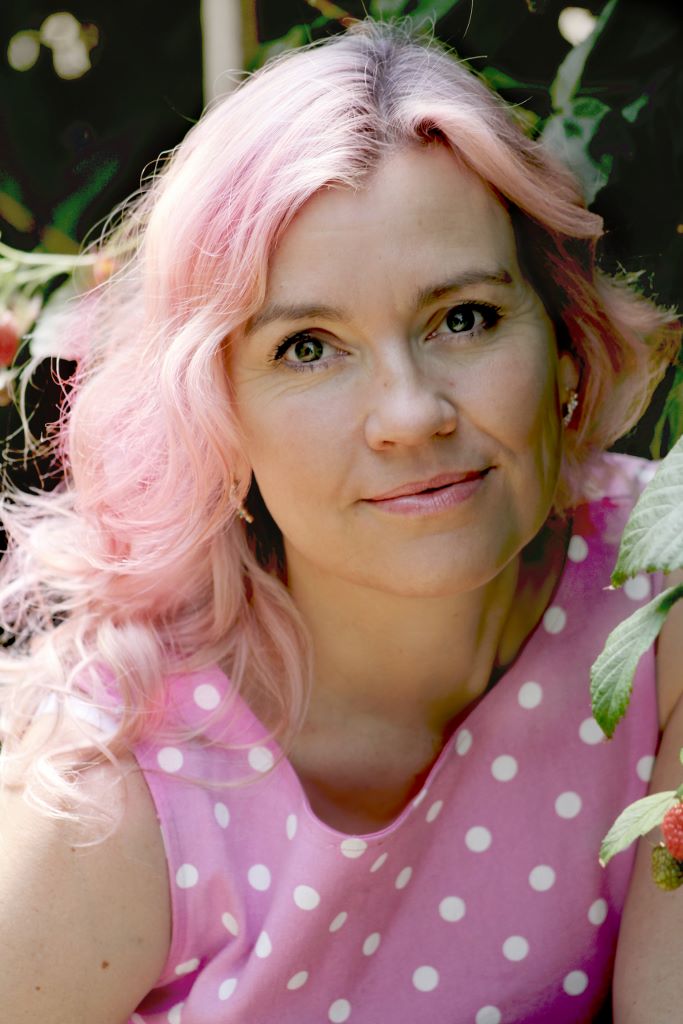
You can buy copies of Kathryn Evans’ books, More of me and Beauty Sleep from your local bookshop, or online at uk.bookshop.org, an organisation with a mission to financially support local, independent bookshops.

An interview with… Frances Tosdevin

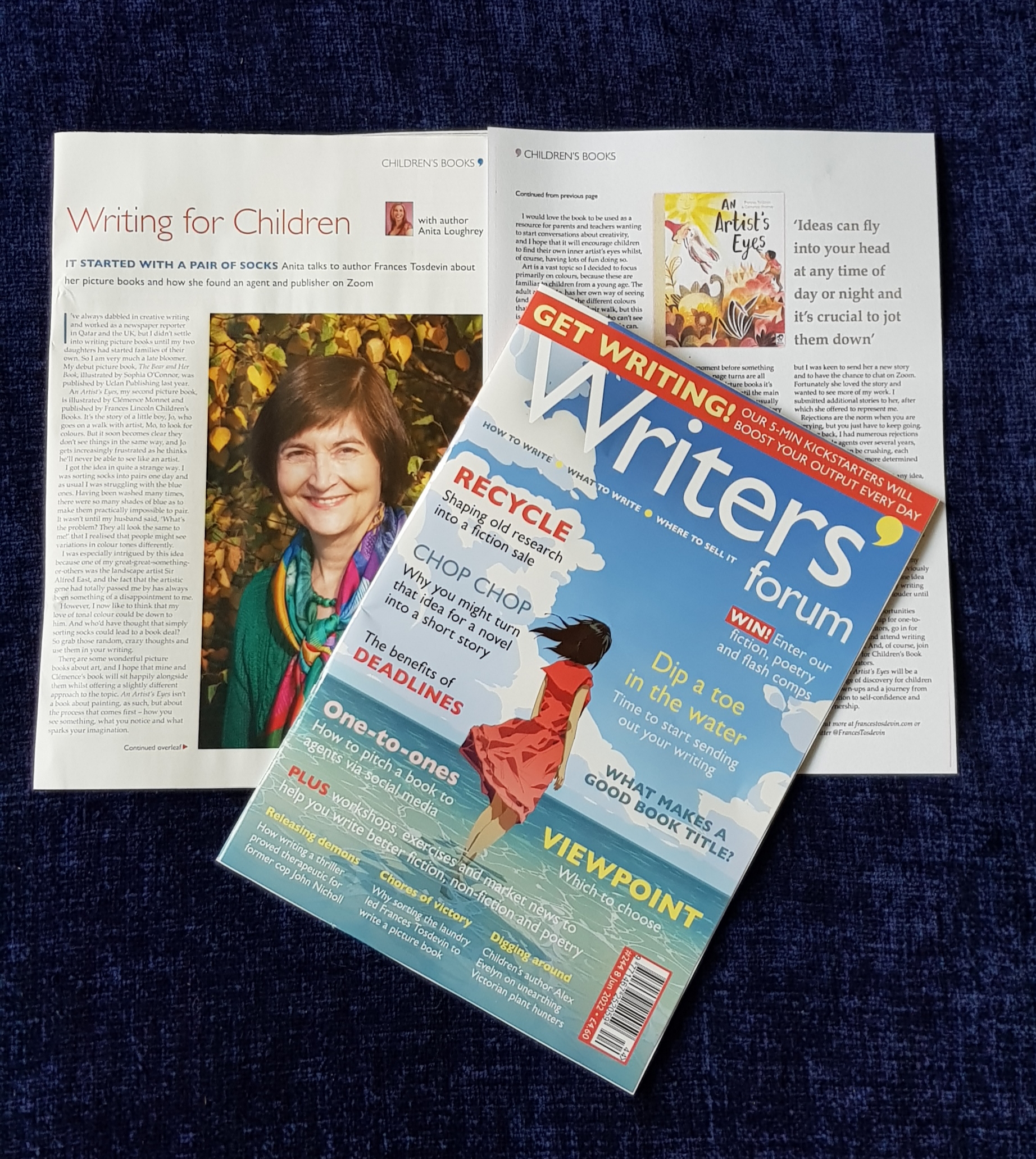
I interviewed Frances Tosdevin for the #244 8 Jun 2022 issue of Writers’ Forum about her writing process from conception to final draft for An Artist’s Eyes.

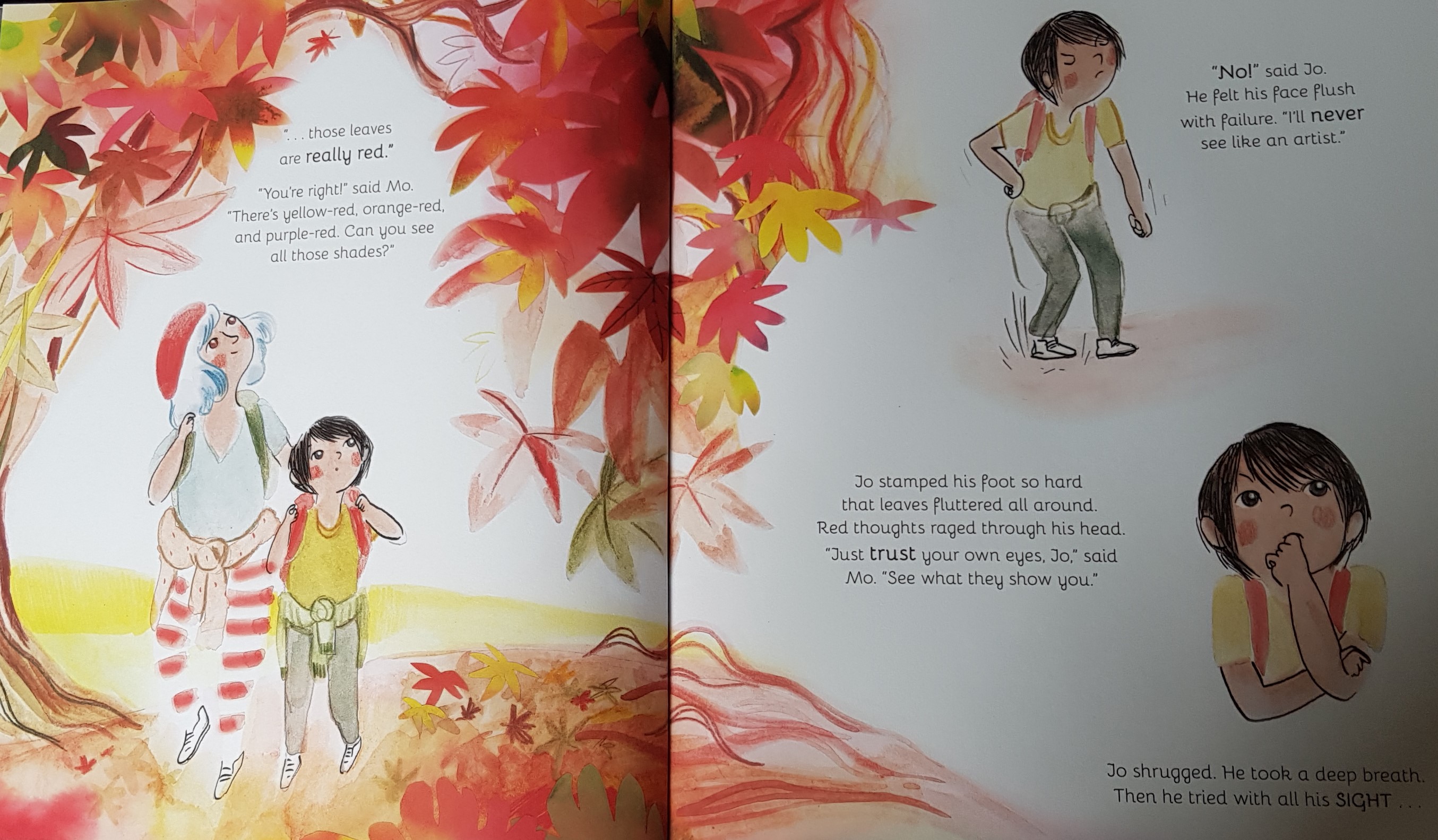
An Artist’s Eyes is illustrated by Clémence Monnet and published by Frances Lincoln Children’s Books. It is the story of a little boy, Jo, who goes on a walk with artist, Mo, to look for colours. But it soon becomes clear they don’t see things in the same way, and Jo gets increasingly frustrated because he thinks he’ll never be able to see like an artist.

It isn’t a book about painting, as such, but about the process that comes first — how you see something, what you notice and what sparks your imagination. Frances revealed she got the idea for an An Artist’s Eyes whilst sorting socks into pairs. The blue ones were so many shades of blue she found them impossible to pair. When her husband told her they all look the same to him, she realised people might see variations in colour tones differently.

Frances said all children’s book writers should grab these crazy thoughts, the ones that come at random times when you’re doing ordinary things, and use them in their writing. She told me she decided to focus primarily on colours because these are familiar to children from a young age.

An Artist’s Eyes is an empowering book – a clarion call to creativity, if you like – and I hope that it will help children to embrace their own unique way of seeing the world and all the wonderful things in it. I would love the book to be used as resource for parents and teachers wanting to start conversations about creativity and I hope that it will encourage children to find their own inner artist’s eyes whilst, of course, having lots of fun doing so.”

Frances Tosdevin

She elaborated that colour is also used in the artwork at key points to convey Jo’s feelings. For example, there is an almost totally black spread, scattered with tiny bursts of colour, to convey Jo’s increasing sense of frustration at not being able to see things in the way Mo can, whilst red is the key to his turning point, when he finally starts to believe in himself and to trust his own artist’s eyes. 

Frances explained she prefers to work on several picture book texts at once, because that way, if she hits a block with one and something needs to swirl around in my subconscious a little longer, she has other texts to be working on. She is often found pacing round the kitchen in the middle of the night, working out tricky plot points or strengthening characterisation.

“I love it when the house is dark and quiet, and it’s just me, my thoughts and two slumbering cats.”

Frances Tosdevin

She continued her stories go through numerous drafts, during which time they can change quite dramatically and she spends a good deal of time identifying, and replacing any word or phrase that sounds ‘flat’ to find a more exciting approach. She also roots out text that goes sideways, such as unnecessary details that slow down the story, rather than forwards.

Frances tries to think visually when writing, and pays special attention to page turns. to set up opportunities to surprise the reader. She explained it is a bit like delaying the punchline of a joke, or eeking out a spooky moment before something goes ‘Boo!’ Page turns are all about timing. Plus, in picture books it’s important to build tension until the main character’s lowest point (which is usually in Spread 9) and then to wrap up the story and provide the resolution quite quickly.

Frances warns all picture book writers rejections are the norm when you are querying, but you just have to keep going. She told me she had numerous rejections from multiple agents over several years, and although it can be crushing, each rejection just made hermore determined to write something better.

Her top tip is never to discount any idea, however small. Ideas can fly into your head at any time of day or night and it’s crucial to jot them down. Don’t delay, you might forget your idea. It doesn’t have to be a full-blown concept, it could simply be a pleasing phrase, a quirky title, or a character that demands attention. It could be a feeling you are experiencing, or a sense of place, or a funny situation.

An Artist’s Eyes by Frances Tosdevin and Clémence Monnet

She told me she currently has over 600 ideas on her phone, and a full notebook, as well. One of these idea often wriggles its way to the top of her writing brain and keeps making itself louder until she gives in and writes it. She recommends you take opportunities that come your way, sign up for 121s with agents and editors, go in for writing competitions and attend writing events whenever you can.

Find out more about Frances Tosdevin on her website: www.francestosdevin.com and follow her on twitter @FrancesTosdevin.

To read the complete feature you can purchase a copy of #244 8 Jun 2022 Writers’ Forum by ordering online from Select Magazines.

To read my future Writing 4 Children or Research Secrets interviews you can invest in a subscription from the Writers’ Forum website, or download Writers’ Forum to your iOS or Android device.
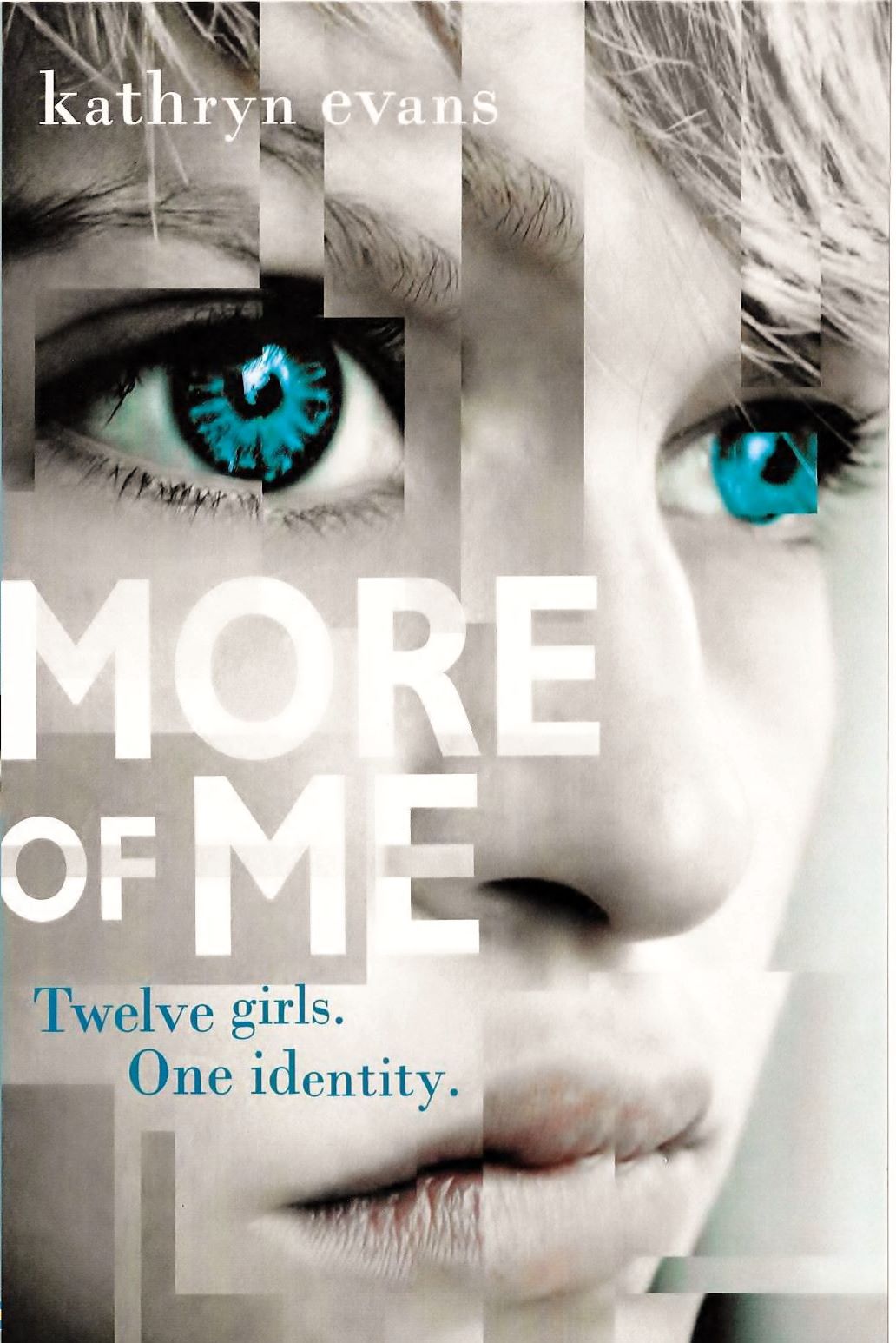
You can read my book review of An Artist’s Eyes by Frances Tosdevin and Clémence Monnet here: Book Review: An Artist’s Eyes.

An interview with… B B Taylor

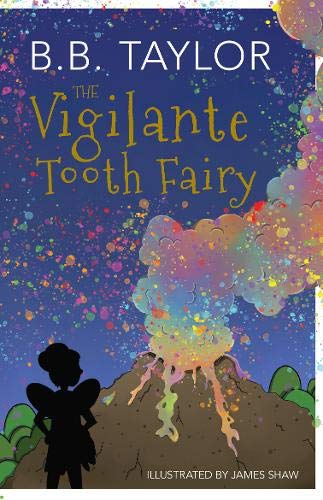
For my Writing for Children slot in #223 May 2020, I interviewed Birmingham based author, BB Taylor, about her middle grade novel, The Vigilante Tooth Fairy, published by Tiny Tree Books.

The Vigilante Tooth Fairy is a story about a determined little fairy called Mouse who wants to save magic in a world that’s stopped believing. Children have stopped leaving their teeth out for the fairies! No more teeth means no more magic and no more magic means no more fairies.

BB told me she didn’t intentionally start writing about a tooth fairy, it kind of wrote itself. She was in hospital in isolation and needed a distraction so decided to enter a competition to write the first 1000 words of a story. She wanted to write a story about magic and self-belief, to dream beyond the four walls of the hospital room she was in, so she began to daydream.

The Vigilante Tooth Fairy by B.B. Taylor and illustrated by James Shaw

Her aim was to write a fairy tale that wasn’t traditional but could still give hope and inspiration to readers. BB revealed it didn’t get anywhere in the competition and sat in a draw for about 2 years before she came across it again by accident. It was then she had a zing of an idea and that buzz of excitement that inspired her to totally rewrite her original 1000 word story.

BB explained that once she had a new first draft this was when the real work began and the editing stage is always the longest part of her writing process. As part of the process she often makes scrap books mapping out her locations and characters, so she can get to know them better and ensure they are as real and tangible as possible. 

She told me that when it is the best it can be she will send it to a friend – a writing buddy – for critique and waits for them to rip it apart so she can start the editing process all over again.

“Sometimes you’ll be so close to a story and see it so clearly in your mind you’ll miss things right in front of you on the page. Reading out loud, editing in different fonts and colours are all great ways to trick your mind into seeing any errors and editing more efficiently.”

B.B. Taylor

BB loves doing school visits and enthusiastically declares it is one of her favourite elements of being an author. She structures her visits in small bites so she can make a session as long or short as it needs to be and can adapt it for a range of ages. Her advice for anyone doing school visits is to do what feels natural to you.

“I get to dress up, have fun and build inspiration and energy in the audiences I work with. I will often bring props whether it’s a giant snail or a giant yeti I like to make my sessions as interactive as possible.”

B.B. Taylor

BB also does lots of Zoom or Skype visits. She explained the advantage of this is that you can virtually visit people all over the world. When she does a Skype visit it usually involves reading from my book a little chat about her work and then a Q & A with the audience, to give them chance to interact and learn a bit more whether it be about her books, or being an author in general.

“It can be quite frightening to look at how you present yourself and your work in the current climate. but we are so lucky that technology has evolved so much in the last decade enabling us to still reach out and connect with audiences.”

BB Taylor

Her tip on writing for children is to be yourself, don’t try and force yourself to write in the style, format or patterns of anyone else. Do what feels comfortable and write what feels good. You want that buzz when writing that readers will hopefully get when reading your work. You want to feel that excitement when exploring a new world or creating a new character that you can pass on to your readers.

“Find what works for you and you are comfortable with and nurture it and be consistent with it. Create a digital footprint that your audience can follow and connect with and use it to reach out to the world and engage with them in whatever platform you decide to use.”

BB Taylor

To book BB for an online event you can go through her website www.bbtaylor-books.com, or through her publisher Tiny Tree Books.

You can also follow BB on Twitter @bb_taylor_, Instagram @b_b_taylor, Facebook  @B B Taylor and YouTube @B B Taylor.

To read the complete feature you can purchase a copy of #223 May 2020 Writers’ Forum by ordering online from Select Magazines.

To read my future Writing 4 Children or Research Secrets interviews you can invest in a subscription from the Writers’ Forum website, or download Writers’ Forum to your iOS or Android device.
An interview with… Angela Kecojevic

This month, #243 4 May 2022 for my Writing 4 Children slot in the national writing magazine Writers’ Forum, I interviewed Angela Kecojevic about using the dramatic effects of climate change as the backdrop of her YA novel.

Angela told me the inspiration for Angela’s latest YA novel, Train published under the Aelurus Imprint (Untold Publishing Group 2022), struck during a visit to the Didcot Railway Centre in Oxfordshire. She said the smell of train engines, the grind of pistons, and the vibe from the old passenger trains was enthralling. It was also a time when dystopian fiction was riding high in the book charts.  The spark began to develop. What if a teenager boarded a train and went to the centre of the earth? How would a group of modern-day young people cope with such a task?

She remembered a book from French poet Jules Verne. His adventure into earth exploration listed him as a pioneer in science fiction writing. His visions were revolutionary; his books (Twenty Thousand Leagues Beneath the Sea, Journey to the Centre of the Earth, and Around the World in Eighty Days) awarded him critical success.  Angela’s aim was to bring this vision into the 21st century with a sci-fi spin.

In Train, seventeen-year-old Flint Wells (along with a group of international passengers) must board a futuristic train called Hero 67.  Their mission is complex: they must fix a tether at the centre of the earth, a journey that has already seen the disappearance of its predecessor, Hero 66. Yet just as Hero 67 slams into Earth, the passengers make a terrifying discovery about the Warehouses, giant bunkers littered around the globe.

Scientists, led by the mysterious ‘Conductor’, have taken a third of the population (the Vanished), and are testing them on their ability to survive worsening climate conditions. Flint’s family are also among the ‘Vanished’. It’s a race against time to save the planet and to stop the Conductor. 

“I wanted to highlight a world that had been destroyed because of its careless behaviour, and yet show a world that might care enough to fix. Young adults today are passionate about climate change. They care; they try to make a difference. I wanted this to reflect in Train.”

Angela Kecojevic

Angela is a member of the Climate Fiction Writer’s League, a group of international authors who use climate issues in their writing. Climate Fiction (Cli-Fi) is a piece of literature that brings climate science to the page. Issue of climate change are often at the forefront of her mind and this is reflected in Train. You can find out more about the Climate Fiction Writer’s League on their website: climatefictionwritersleague.substack.com

Train explores a frozen world that requires its characters to ice climb. Angela explained this was not an easy challenge.

“I stepped out of my comfort zone and booked in with a climbing lesson at Oxford Brookes Climbing Centre in Oxfordshire.  One of their expert climbers (Liz) showed me how to dry ice climb using indoor ice axes to loop and pull. This was physically demanding, and yet invaluable for my work.”

Angela told me how good plotting will highlight the pace of the story. She elaborated that she enjoys creating pace in her stories as it is one of her strengths.  She prefers to pick up the pace at the end of a chapter and thrust it over the finishing line into the next. She also enjoys creating tension in stories. She explained, YA, in particular, is a tough market to please as young people want powerful, adventurous characters. They want characters they can fall in love with. She took great care to make her characters sound fresh and interesting, and not to overthink their characteristics.

“I wanted Train to be something different. A sci-fi novel with a chilling twist.”

Angela Kecojevic

Angela revealed she finds writing for the YA market exciting as there is more freedom than writing middle grade, a genre she is also passionate about. She explained when the world was embracing romantic vampires and dystopian fiction, teens were picking up more books than ever before. This means something sparked their imagination. Exciting worlds, exciting characters, exciting plots.

Angela advocates if a story is well written, the readers will embrace the setting, however diverse. This is the beauty of the YA market. They are open to recommendations, they use social media to comment and promote, and they are open with their views.  Sure, it is a tough market to crack, yet their loyalty to a well written story is heart-warming.

You can follow Angela on Twitter @ajkecojevic and Instagram @angela_kecojevic

To read the complete feature you can purchase a copy of #243 4 May 2022 Writers’ Forum by ordering online from Select Magazines.

To read my future Writing 4 Children or Research Secrets interviews you can invest in a subscription from the Writers’ Forum website, or download Writers’ Forum to your iOS or Android device.

An Interview with… Chrissie Sains

I interviewed Chrissie Sains last year for the #236 Sept 2021 issue of Writers’ Forum. She talked about the character, setting and pace of her middle-grade novel, An Alien in the Jam Factory, published by Walker Books.

An Alien in the Jam Factory is the first book in a comedy adventure series starring Scooter the jam inventor and his top-secret alien sidekick for ages 6+. Chrissie told me the seed of the story began with the idea of an alien flying around in a jam tart. Her children suggested it looked like a little flying saucer and together they imagined an alien crash landing on earth and flying around in it.

As the has story developed, Fizzbee (the alien) became particularly important to the central theme of the book. Fizzbee never underestimates Scooter, who has cerebral palsy. She sees him for the incredible boy that he is. She also teaches Scooter not to underestimate her.

An Alien in the Jam Factory by Chrissie Sains
Illustrated by Jenny Taylor

“The idea to write a character with cerebral palsy was inspired by my goddaughter, Abigail. She has an amazing sense of humour. She’s smart, inventive and I’ve never known anyone so determined – she doesn’t let anything stand in her way. I really wanted to include those qualities in the hero of my book, together with her cerebral palsy.”

Chrissie Sains

Chrissie explained it was important to that cerebral palsy wasn’t the central focus of the book, nor did she want it to be tokenism.

“I don’t think there are enough books featuring a character who has a disability and goes on an adventure – I’d really like to see that change.”

Chrissie Sains

A lot of the humour in the book comes from Daffy and Boris, the villains of the story. Chrissie revealed the aim was to create two lovable but highly inept robbers, who come up with an absolutely ridiculous plan to rob the (highly secure) jam factory. They have a great relationship too. Daffy absolutely adores her bad-tempered pet guinea pig Boris, even though he’s not so fond of her.

Chrissie divulged that she finds with humour your characters need to be completely unaware they’re funny. They’re simply using any means necessary to achieve what appears to be an impossible goal. Be it breaking into the world’s most secure factory by trying to post your cantankerous pet guinea pig through the letterbox, to persuading that same pet guinea pig to wear a pink sparkly friendship pendant.

She told me when she started planning An Alien in the Jam Factory – there was no jam factory. She had the characters and an idea for a plot but no setting. After a little brainstorming with her children, the answer came to us: The most inventive jam factory in the world.

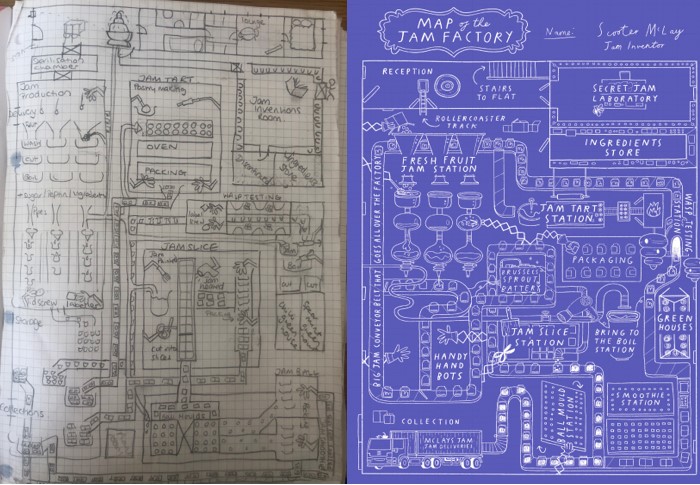
She spent weeks chatting to her children about jam inventions. Throwing random ideas out and jotting them down in a notepad. They started by thinking about exciting flavours of jam, before moving onto what else jam could be used to make. She drew a map of the jam factory which was recreated by Jenny Taylor the illustrator for the inside cover.

Chrissie’s sketch of the jam factory and Jenny’s final version for the inside cover

Chrissie explained that one of the most important elements of writing children’s books for her is the pacing. She likes to ensure every chapter has a real purpose in driving the story forwards. To achieve this she includes an element of action and humour within each chapter and end them all on a cliff hanger. Her tip is to give yourself time to plan and ‘percolate‘.

“I find a story can start off full of promise, only to meander aimlessly and lose its way if I haven’t planned it properly. I start with the idea, then let things percolate a little. I draw, brainstorm, free write & walk until the plot evolves and I have a clear understanding of the character motivations. The thinking time is just as important as the writing time. Plus, it makes the writing process a LOT quicker and easier.”

Chrissie Sains

She revealed once she starts writing the first draft, she just keeps writing without reading back at all. If there’s a particular part of the story that’s proving tricky to write, she adds a holding title in capitals, (e.g. FALLS IN A VAT OF JAM) then moves on to the next part. She elaborated writing is all about editing and it’s totally ok for the first draft to be a bit rubbish. Once you’ve got the first draft, you’ve got something to work on. Whatever stage you’re at, don’t give up.

The second book in the series was launched this month on the 7th April 2022.  A treasure map is discovered , revealing there’s a hoard of treasure buried under the jam factory, but Scooter and Fizzbee are not the only ones after the treasure.

The Treasure Under the Jam Factory by Chrissie Sains
Illustrated by Jenny Taylor

You can find out more about Chrissie Sains and her Jam Factory series on her website: www.chrissiesains.com, Twitter: @crsains, Instagram: @Chrissie_sains and Facebook: @chrissiesainsauthor.

To read the complete feature you can purchase a copy of #236 Sept 2021 Writers’ Forum by ordering online from Select Magazines.

To read my future Writing 4 Children or Research Secrets interviews you can invest in a subscription from the Writers’ Forum website, or download Writers’ Forum to your iOS or Android device.
You can buy copies of An Alien in the Jam Factory and The Treasure Under the Jam Factory by Chrissie Sains from your local bookshop, or online at uk.bookshop.org, an organisation with a mission to financially support local, independent bookshops.

An interview with… Katya Balen

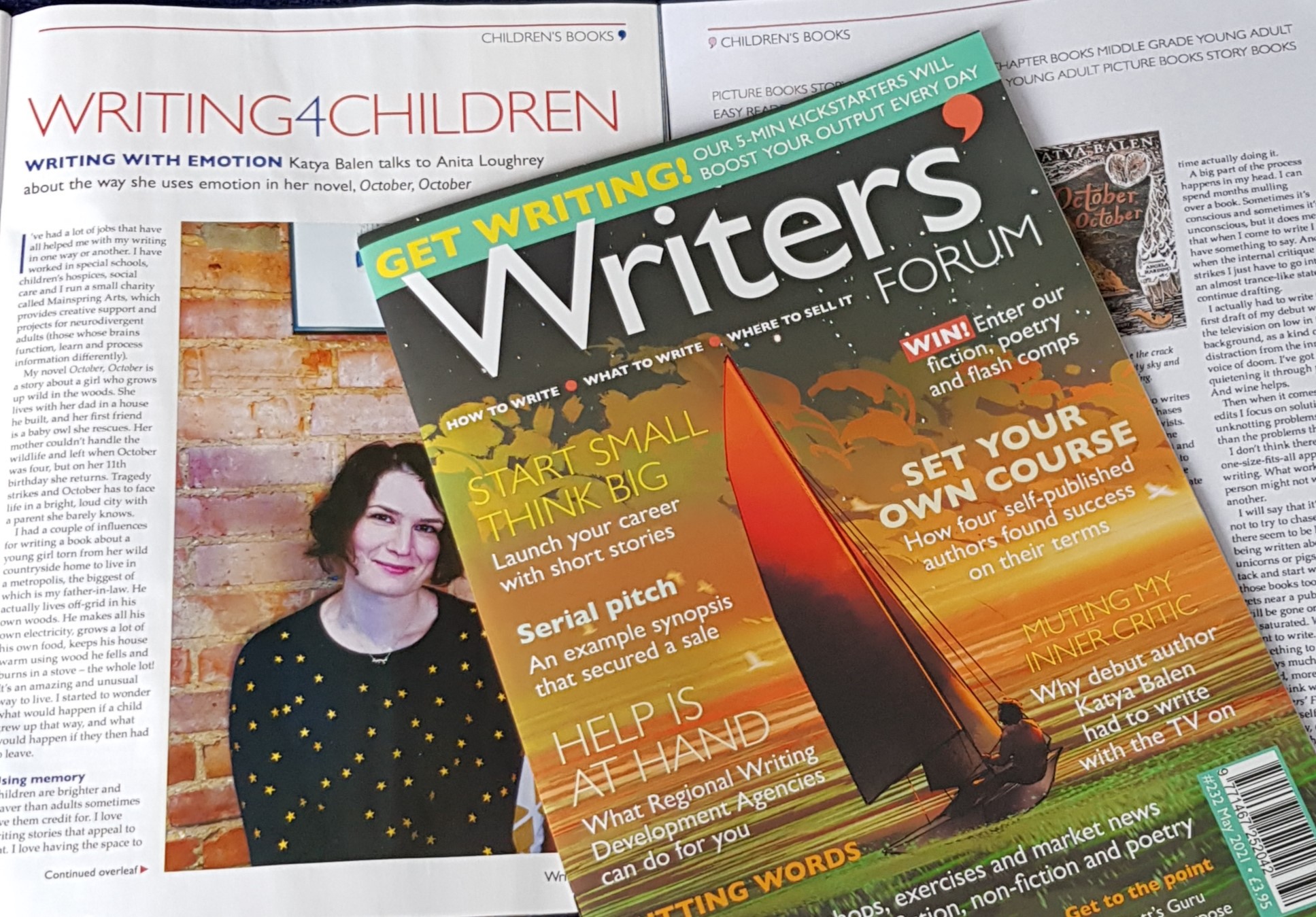
In the #232 May 2021 issue of Writers’ forum, I talk to Katya Balen about the way she uses emotion in her novel, October, October.

October, October is a story about a girl who grows up wild in the woods. She lives with her dad in a house he built, and her first friend is a baby owl she rescues. Her mother couldn’t handle the wildlife and left when October was four, but on her 11th birthday she returns. Tragedy strikes and October has to face life in a bright, loud city with a parent she barely knows.

Katya explained to me how children are brighter and braver than adults sometimes give them credit for – I love writing stories that appeal to that. She loves having the space to explore big feelings and deep meaning but also just have fun with stories and language. If you ask people which book has had the biggest impact on them, she has discovered most people say a book they read as a child. It’s wonderful to be a part of that.

Katya has very strong memories of being a child and she believes this ability to draw on her own memories makes it easier to create characters children can identify with – those small moments that feel so huge when you’re young – the things that mattered and the way those things made me feel. Those memories are so helpful in creating convincing characters.

Katya told me she thinks using a range of emotion in writing is important. She likes to use quiet moments to show the depth of complex feelings. She illustrated this for me with quotes from her novel, October, October.

‘The school term ends with an assembly where everybody sings songs without needing to read the words and I have to keep quiet until the same words start to catch in my brain and I whisper them into the swelling voices that reach up the roof.’

Extract from ‘October, October’ by Katya Balen

She also uses longer, uninterrupted sentences as my character races through a feeling – an almost stream of consciousness style.

 ‘I burn and scream and stamp and shout and I know why she told me when I was already in the car and I still try to claw the door open until my nails are ragged and raw just like my voice but I can’t unlock the handle and I throw myself at the window and scream and she stares ahead with bright eyes.’

Extract from ‘October, October’ by Katya Balen

Katya explained she prefers to focus on how the character feels bodily at that time – so many emotions give a physical reaction, especially in children.

‘I can feel a little spark of something start to fizz inside me for the first time since the crack and the suddenly empty sky and the whistle of Dad falling.’

Extract from ‘October, October’ by Katya Balen

She loves writing stories about quiet children. Children who are a bit different, interior, sensitive and perhaps even strange. I love exploring the way they see the world and telling their stories. Katya told me she doesn’t think there’s any ‘one size fits all’ approach to writing. What works for one person might not work for another.

Her tip for other aspiring children’s book writers is that it’s important not to try to chase a trend. If there seem to be lots of books being written about dragons or unicorns or pigs, don’t change tack and start writing one of those books too. By the time it gets near a publisher, the trend will be gone or the market will be saturated. Write what you want to write – books that mean something to the writer are always much better. Set yourself a word count every day, or three times a week, whatever fits. It’s really motivating to get a draft done.

You can follow Katya Balen on Twitter @katyabalen

To read the complete feature you can purchase a copy of #232 May 2021 Writers’ Forum by ordering online from Select Magazines.

To read my future Writing 4 Children or Research Secrets interviews you can invest in a subscription from the Writers’ Forum website, or download Writers’ Forum to your iOS or Android device.

An interview with… Claire Culliford

In the April issue of Writers’ Forum I talk to Claire Culliford about her series of climate-conscience children’s book, The Little Helpers

The Little Helpers series combines the different threads involved in my work, over almost a decade of writing and taking the books out to their target audience worldwide. The first few books have been translated into twelve languages (including Spanish, Chinese, French, Arabic and Portuguese) by incredibly supportive translation colleagues around the world. Early in 2020 I assigned worldwide rights for the series to London publisher University of Buckingham Press, which is a part of Legend Press. The series was relaunched in Autumn 2020. There are 30 books in total.

The books are designed to raise awareness of global environmental and social issues through fun, fictional stories in which animal main characters come up with a creative solution to a real-world problem. Claire’s aim is to foster children’s creativity and problem-solving skills through the medium of story, which is extremely powerful. She told me fedback from teachers and parents has consistently demonstrated the books can be used not only to promote a love of fiction and reading, but as a holistic learning tool, for everything from language acquisition to the teaching of geography, science and maths.

The first few stories in the series came along whilst Claire was working for a period with teenagers and young adults on charity projects combining education in the creative industries and on environmental and social issues. It became apparent through dealings with large organisations and governments there was a lack of means to raise awareness among young children about the same topics.

Claire revealed that her animal main characters ensure inclusivity and have the added benefit of enabling me to introduce species from around the world which are endangered and in need of protection. Her intention was to create a series with global appeal. She envisioned an environmental and social brand with an extremely positive message that would unite children everywhere for all the right reasons. She explained that with this in mind, it seemed logical to use the series to support the United Nations and its Sustainable Development Goals, which are designed to address the three dimensions of sustainable development worldwide – economic, social and environmental.

“I love creating characters that are novel and intriguing, and innovative and engaging solutions to the problems that they are presented with. I also focus on including age-appropriate language and subject-specific vocabulary and introducing linguistic features that children will come across in books as they get older: tools such as alliteration, repetition and onomatopoeia. It’s never too early to fall in love with language and what it can do. Think about what keeps you engrossed in a story and aspire to introduce the same into your writing.”

Claire Culliford

There is a different character for each book of Claire’s Little Helper series, as the stories are designed to represent settings, species and issues from all over the globe. In terms of consistency, which is important for a series and a brand, she take into account things like all the main character names having just two syllables in them and beginning with the same letter as the animal species concerned. She choose names which are authentic to the part of the world in which the story is set. The names are also tested to ensure they are easy for children to pronounce in most countries.

Claire told me the physical attributes of the characters are based on their real life traits. Both the story content and the illustrations are based very much on an accurate depiction of facts relating to the species involved and the issue being addressed, as well as the natural landscape in the part of the world concerned.

Her tips for writer’s who aspire to be children’s book writers are:

“Firstly, remember that in storyland anything is possible. Get rid of the restrictions and limitations that we place on things in the adult world. Secondly, make every line count. Children’s books, particularly picture books, are short. There’s no room for non-essential words or sentences. Simplicity is everything. You need to be able to say in ten words what might take a hundred or a thousand in a story for an adult. And thirdly, use your life experience, existing skills and knowledge to identify your niche then get as much feedback on your writing as possible – especially from children – along the way. Becoming a proficient writer in any genre is a journey and we all start somewhere. The best way to improve is to get your target audience to help you.”

Claire Culliford

Claire told me anything you write for children needs to be filled with creativity, light-heartedness and fun to read because good stories that fuel their imagination will make children smile .

Readers can find more information about Claire Culliford and her writing at:

To read the complete feature you can purchase a copy of #231 Apr 2021 Writers’ Forum by ordering online from Select Magazines.

To read my future Writing 4 Children or Research Secrets interviews you can invest in a subscription from the Writers’ Forum website, or download Writers’ Forum to your iOS or Android device.

An interview with… Anne Cassidy

In the #196 Feb 2018 issue of Writer’s Forum I interviewed YA author, Anne Cassidy, about why she believes it is important not to shy away from difficult subject matter such as rape, in young adult books.

Anne used two of her Young Adult books No Virgin and No Shame to illustrate how they sensitively deal with the issue of rape. No Virgin tells the story of Stacey Woods a seventeen-year-old girl from Stratford East London. She falls for a boy and finds herself used and exploited by an older man. In No Shame she goes to court to try and get justice for what has happened to her.

When writing about teenagers Anne explained it’s important to go back to your own teenage years and rediscover the teenager you were, the friends you had, the problems you had to overcame or otherwise. It’s key to remember how you felt about things. When I was a teenager I was very lonely. I was an only child and made friends easily but didn’t always keep them. The feeling of uncertainty, of needing to connect with people; those feelings can be used when writing about teenagers, whether they’re contemporary or from any other time in history.

The trappings may be different, the voices a bit louder, the technology mind boggling but the feelings are not different. Teenagers are struggling to become the kind of adult they want to be. That is the same in 2017 as it was in 1966. So, finding your ‘inner teenager’ is a must.

In No Shame Stacey, is very close to her best friend Patrice. She depends on her for lots of things. When it comes to the trial she has to stand on her own two feet. Stacey and Patrice have this thing about doing each other’s hair. When Stacey realises that she must act on her own she declines Patrice’s offer to style her hair and makes her own decisions about it. This is a statement about becoming more independent, something Anne explained that she went through as a teenager.

Teenagers deserve to read about serious and sometimes challenging subjects. I have always been interested in writing such stories. In No Virgin and No Shame I deal with the rape of young girl by an older man. Anne told me the first thing she had to do was to create my character and her family circumstances. She is a working class girl from Stratford doing her ‘A’ levels. She has a close friend and has had one boyfriend who she has had sex with. She is not a virgin and this is key to the situation she finds herself in.  Anne asked herself the question: “How would a young girl find herself in a situation where an older man felt he could override her feelings and have sex with her?”

The one explanation Anne had for this was that she is manipulated by someone else, someone she likes and trusts. So at the beginning of the novel she is swept off her feet by Harry, a boy from Kensington who she meets by chance. It is these elements which lead up to the situation where she is raped.

Anne did a lot of research on the internet for No Shame. She revealed there is a lot of information about rape procedures and trials, which will help to get the basic facts right. She also knew an expert in criminal law so she asked a few questions. Anne explained this was because the factual stuff was important but it was also important to get the emotional story right.

Occasionally ‘facts’ have to be sacrificed for narrative development. For example, Anne wanted her main character, Stacey, to meet up with the rapist at the trial – just the two of them accidentally bumping into each other. It was important for the readers to see them together. It’s unlikely this would happen in real life but she engineered the situation in the novel.

We all would want to keep our children young and safe. But they grow up and go out into the real world. Just as we tell them to be careful on the roads we must do the same about other things. We hope that parents will have these conversation, but we can’t be sure about that. It may come up in school but that’s not until much later (year 11 perhaps).

Young Adult literature is exactly the place where young people can read and grapple with these things. It has all sorts of things going for it. It’s accessible (in school libraries) It can be read alone – so no embarrassment factor. A story speaks to an individual in a way that nothing else can. They can make their own mind up.

Anne believes you can not just choose a subject and say you want to write about XYZ. You have to have strong feelings about it. Anne read a lot about rape cases in the newspaper as part of her research and was incensed at the coverage and the way the story was portrayed to make the victims look as if they were to blame. These feelings simmered for ages before she decided to write No Virgin the first book about Stacey Woods.

Her advice to writers who want to write about gritty subjects for theYA market is to think about subjects that you are interested in and genuinely have feeling about. It might be political or about refugees or climate change. Whatever makes you sit up and want to speak – that’s the subject you should write about for teenagers.

Before you write about a subject you have to find the teenager you want to write about. That teenage character will probably have some of YOU in them. It has to be a sincere attempt to write something real. Then the writing will be good, strongly felt, authentic. If it’s just about ‘jumping on the bandwagon’ the gatekeepers will know. They are sharp. If it’s good they have to support it.

Anne Cassidy is the author of over 50 novels for teenagers. You can find out more about her writing on her website: www.annecassidy.com or follow her on Twitter: @annecassidy6

To read the complete feature you can purchase a copy of #196 Feb 2018 Writers’ Forum by ordering online from Select Magazines.

To read my future Research Secrets or Writing 4 Children interviews you can invest in a subscription from the Writers’ Forum website, or download Writers’ Forum to your iOS or Android device.
A Year in Nature

Today is World Book Day and I am busy doing virtual visits using my book Rabbit’s Spring Gift, which is beautifully illustrated by Lucy Barnard and published by Quarto Publishing.

This delightful picture book about friendship and the changing seasons that includes activities, crafts and discussion points to develop an understanding of the natural world. It is the ideal book for virtual visits throughout the Spring Term with reception and Key Stage One children. Rabbit’s Spring Gift is a tender and reassuring story of sibling rivalry and gift-giving. Rabbit wants to give her brother a thank you gift but her brother tries to out-do-her at every turn.

A virtual visit would consist of a 30 minute session to include:

  • An introduction about me and my books
  • A little background information about writing Rabbit’s Spring Gift
  • A reading of the book
  • A discussion about spring and the kinds of things they do during the spring eg. spring walks, spring art, planting seeds, etc.
  • A spring activity.
  • Q+A

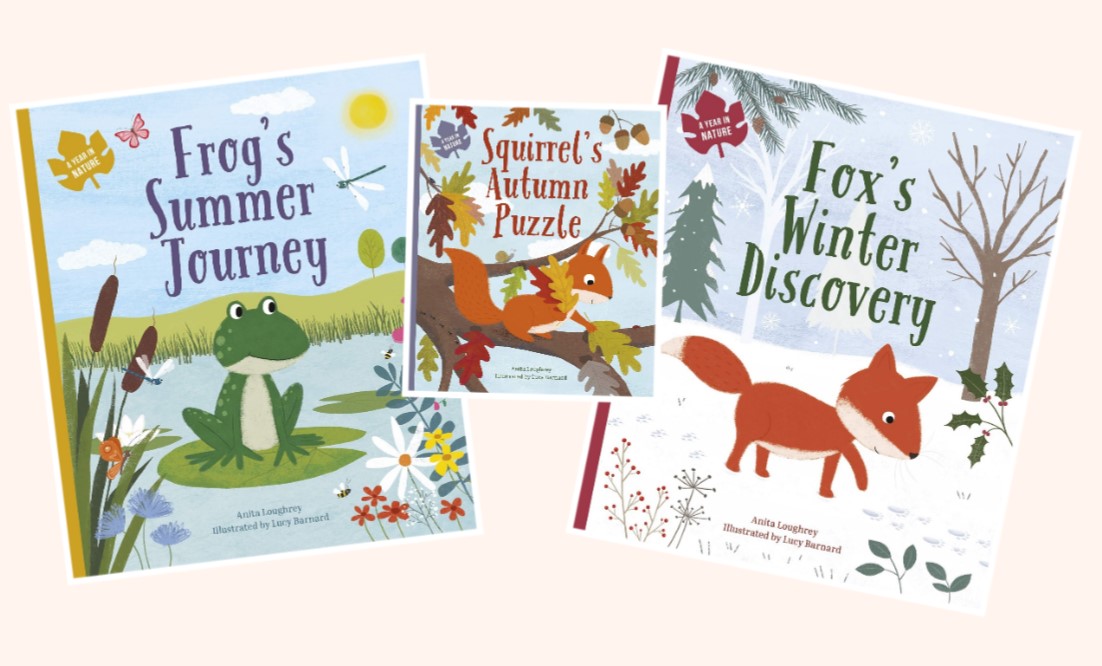
The other books in the series are Frog’s summer Journey which was launched with Rabbit’s Spring Gift last March at the beginning of the first lockdown in the UK. Squirrel’s Autumn Puzzle and Fox’s Winter Discovery will be launched this Autumn. All these fantastic picture books would be suitable to do similar virtual visits throughout the year.

If you are interested in booking a virtual visit to help with distance learning or enhance the children’s education in the classroom please get in touch through my website to enquire about prices and availability http://www.anitaloughrey.com

An interview with… Sophie Kirtley

In the latest issue of Writers’ forum I talk to Sophie Kirtley about how she created the fictional worlds in her debut novel, The Wild Way Home, which came out with Bloomsbury in July 2020.

The Wild Way Home tells the story of two very different children: Charlie, who is from our time, and Harby, a boy from the Stone Age. It’s a story of friendship, courage and adventure as Charlie and Harby journey together through the wild green Stone Age forest in search of Harby’s missing baby sister. You can read my review of this mid-grade novel here.

Sophie told me The Wild Way Home was inspired by her own childhood. When she was little she often played with her friends in a wood near where she lived; it was called Mount Sandel Forest. She vividly remembers the feeling of the place – its sense of mystery and seclusion… and wild freedom. Only years later did she realise that in this very forest archaeologists had found the remains of a Stone Age settlement, it was in fact the oldest human settlement in all of Ireland.

The idea that she’d played somewhere where children had been playing for millennia was the spark which ignited this story; it made her curious about the Mesolithic children who’d played in that forest so many years before she had. She started to imagine what might’ve happened if she’d actually met one of those Stone Age children and that’s how the story-spark ignited and the story-flames raged to become, eventually, The Wild Way Home.

Sophie told me creating a fictional world can be a bit of an overwhelming ask. She explained she works her way outwards from very small details towards creating a bigger picture or building a world. She love interesting objects or strange place names or curious graffiti or fascinating gravestones.

Once something small like this has caught her eye, she let herself interrogate it; asking lots of questions about the possibilities that the small-strange-something might have thrown into her mind.

“Little by little I build all these little details together into something bigger, kind of like creating a story patchwork. In The Wild Way Home I did this with Stone Age small things that fascinated me – artefacts from museums or from ancient sites.

The intricacies of the time-slip elements of The Wild Way Home took a lot of work in order to make the shift in time smooth and believable. The setting of the story really helped me; when Charlie ends up in the Stone Age a lot of the natural features in the landscape remain the same – the river, the cave, the cliff – these physical links plus having Charlie’s consistent narrative perspective helped to carry the story between worlds.”

Sophie Kirtley

Sophie revealed writing a book set in a specific period can be tricky. You’ll feel the weight of responsibility to ‘get it right’. She did oodles of reading and researching about pre-historic life, but even within that different sources can offer contradictory angles and Sophie is adamant that you should not to tie yourself in knots with the pressures of absolute accuracy.

“At the end of the day, this is fiction, and we’re writers aren’t we? And we’re definitely allowed to make stuff up. Well that’s what I told myself anyway as I picked through my research, magpie-like, choosing what I found fascinating and eschewing the less fun bits.”

Sophie Kirtley

Sophie explained when you’re writing for children anything really is possible. Children are accepting of adventures in a way that adults aren’t – it’s very liberating as an author. Child readers are also incredibly judicious and deserve the best – they’re a hard audience too, because if they’re not gripped they simply won’t read on. Just like they simply won’t eat peas or cheese or whatever the foible may be. Sophie loves the challenge of writing for children – delivering them something they like the taste of.

If you want to write for children then there are two main pieces of advice Sophie offered: Read and listen. Read as many contemporary children’s books as you can and read them as a writer, learning along the way. Also listen to kids you know, how they talk, what makes them laugh, what makes them grump… or even think back to you as a child and squeeze your big feet back into those small shoes.

And one final thing, writing is always going to have its ups and downs, its good days and bad days. Just keep writing and don’t give up.

You can discover more about Sophie Kirtley on her website: www.sophiekirtley.com and follow her on Twitter @KirtleySophie.

To read the complete feature you can purchase a copy of #230 Mar2021 Writers’ Forum by ordering online from Select Magazines.

To read my future Writing 4 Children or Research Secrets interviews you can invest in a subscription from the Writers’ Forum website, or download Writers’ Forum to your iOS or Android device.