Anita Loughrey's blog. This is my journal about my experiences and thoughts on writing. As well as news about me and my books, it includes writing tips, book reviews, author interviews and blog tours.
For more information about me and my books see my website: www.anitaloughrey.com. Follow me on Twitter @amloughrey, Facebook @anitaloughrey.author and on Instagram @anitaloughrey
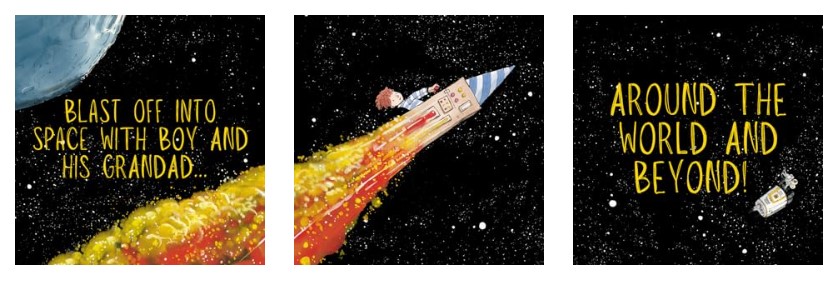
Zoom! is about a boy and his grandad who stay up all night and go on a space adventure. This is part of several series of books about the boy and his grandad. Other books include Free, Wild, Lost and Found. They complement more boy and his grandad stories: Storm, Sun, Snow and Rain.
The underlying themes include using your imagination and creativity with an emphasis on recycling. Throughout these series the boy and his grandad use their resourcefulness to mend, recycle and re-use to create a variety of favourite vehicles which take them on exciting adventures around the world and beyond.
The relationship between the boy and his grandad is well thought out and established which make the story of Zoom relatable and touching. Together they find a broken telescope and set about fixing it with the materials they can find in the house and see astronauts in trouble on the moon. The two ingenious heroes build a space rocket out of cardboard boxes to save them and jet off from the roof.
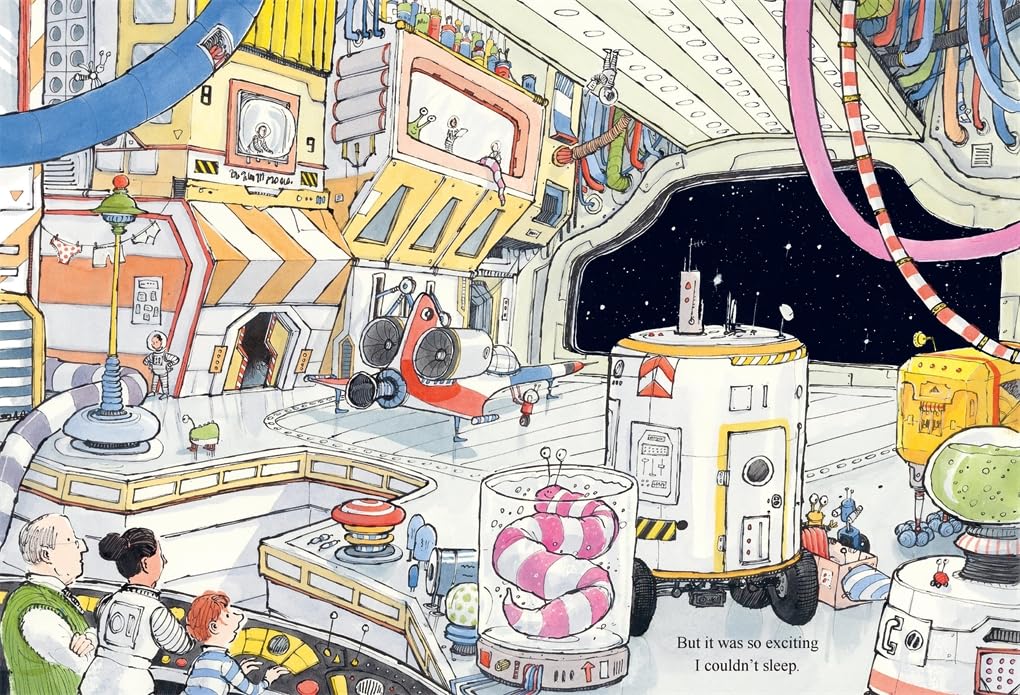
The illustrations are full of intricate detail for young children to explore which showcase Sam Usher’s watercolour and technical drawing skills. The subtle colours add to the feeling of warmth and togetherness of the book.
Zoom! supports STEM learning from an early age by introducing science and engineering facts in an engaging way.
A heart-warming tale suitable for bedtime and reading aloud in the classroom. This book would be an excellent resource for stimulating craft work and also inspiring the children to create their own adventures.
You can buy copies of Zoom! by Sam Usher from your local bookshop, or online at uk.bookshop.org which supports local, independent bookshops.
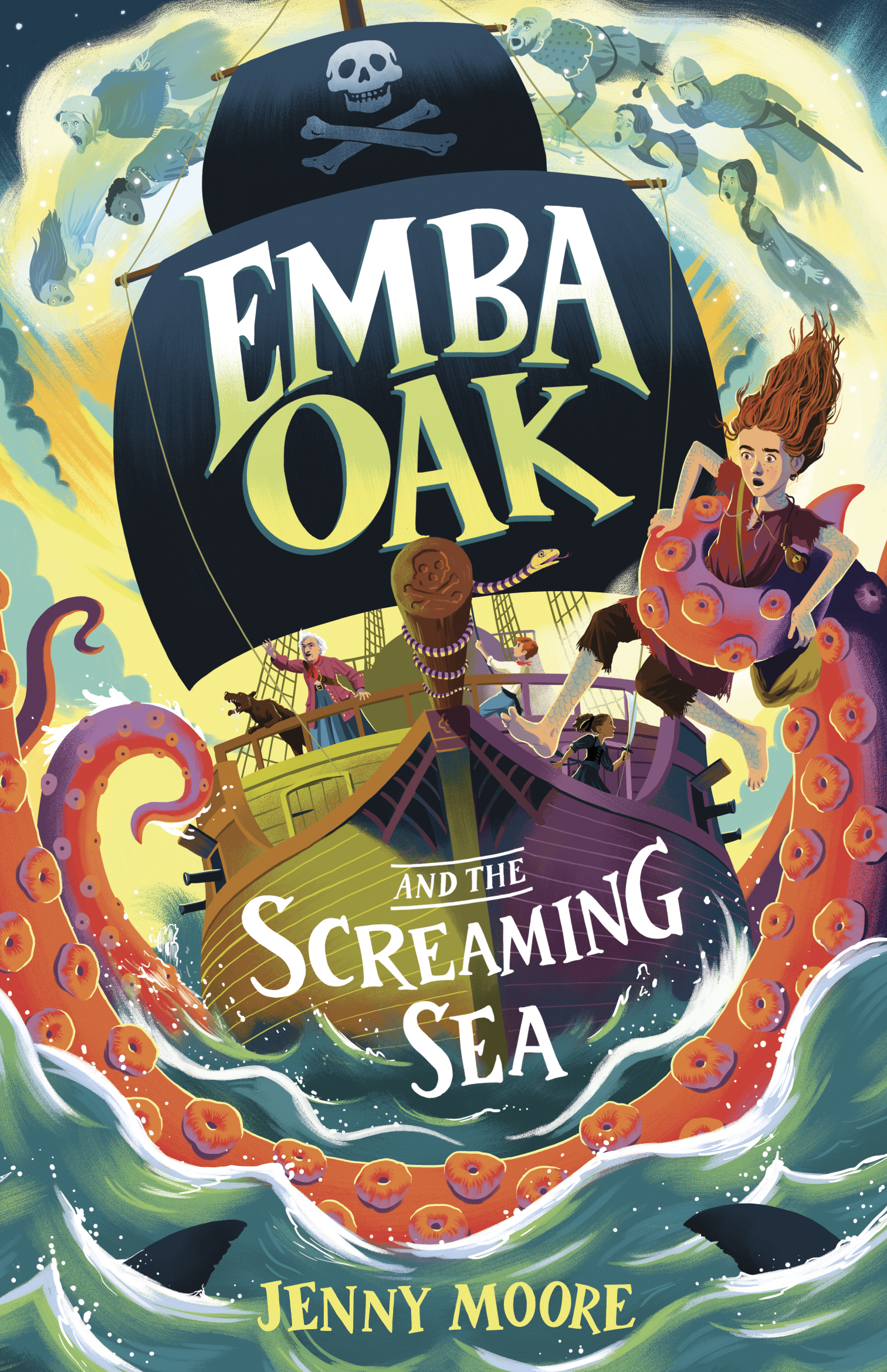
Today I am pleased to have Jenny Moore here on my blog to tell us a little about her latest book due for release on January 28th 2024, Emba Oak and the Screaming Sea. I have read the first two books in the series and I am looking forward to reading the third instalment.
Jenny Moore’s numerous funny children’s books (writing as Jenny Moore) are published by Maverick Arts Publishing and New Frontier Publishing. She was the first UK winner of the Commonwealth Short Story Competition and was previously shortlisted for the Greenhouse Funny Prize.
Untitled design – 5
Her short fiction and poetry have appeared in numerous publications on both sides of the Atlantic, including The Guardian, Mslexia, The First Line and Short Fiction. She has also written psychological thrillers The Woman Before and The Wilderness Retreat which are published by HQ Digital, Harper Collins.
********
Hi Jenny,
Welcome to my blog. To start please tell us a little about yourself and the inspiration for your Emba Oak series?
Many thanks for inviting me onto your blog.
I’m a full-time writer with two grown-up children and I’ve lived in Devon for the last twenty-four years. The brilliant editing team at Maverick approached me about writing a new middle grade series for them back in 2020 and I spent my summer holiday dreaming up potential ideas. We were due to go to Seattle and Vancouver that year, but due to the pandemic found ourselves in Wales, the beautiful land of dragons, instead. My thoughts turned dragonwards too and my first tentative ideas about a half-human, half-dragon girl flickered into life on the stunning Pendine Sands beach. A subsequent online meeting with the editing team helped hone those ideas into the beginnings of Emba’s story. It’s felt very much like a team project from the off which has been great.
How did you come up with the ingenious chapter headings? Talk us through your process when writing these.
I don’t remember many details from my Medieval English Literature paper at university, but the name ‘The Slough of Despond’ from Bunyan’s The Pilgrim’s Progress has always stuck with me. I suspect there might be a touch of Bunyan lurking behind chapters like ‘The Screeching Swamp of Slimebane Hollow’!
I love playing around with the sound of words and thought that the alliterative headings would add a tongue-in-cheek touch of drama. My trusty thesaurus has really come into its own while I’ve been working on this series, as you can probably guess! I usually start with the key chapter noun and then look for suitably dramatic, doom-filled words starting with the same letter.
I also had a lot of fun subverting the traditional chapter numbering system in places, by adding in unexpected extras such as ‘Almost Chapter One’, ‘Not Quite Chapter One’, and ‘Revisited Chapter Eight’.
How did you develop Emba’s character and her unique voice so readers are immediately inside her head?
I like to think of the opening passage of Emba Oak and the Terrible Tomorrows as the start of a film, with an omniscient voiceover setting the scene for a traditional fantasy adventure before the camera zooms in on Emba and her unique and slightly subversive place in the world of such adventures. By the time we hit ‘Actual Chapter 1’ the action has officially shifted to Emba’s point of view, with the reader following Emba’s own thoughts and fears in response to the strange thwumping noise coming from outside the cave.
I think early references to her physical and lifestyle quirks – the scales on arms and legs, the fact that she lives in a cave and eats squirrel stew, and the fact that she’s the only one who can see the ghostly dragon at the start of the book – all help to draw the reader in, while direct access to Emba’s internal thoughts add a level of intimacy and immediacy.
All your characters are so brilliant. Which of the characters in your Emba Oak series do you feel is most like you and why?
Thank you!
Hmm, that’s a tricky one. I think in terms of personality I’d have to go with Fred… a much younger version of Fred, obviously (!) and without her rather disgusting toenails. Shh, don’t tell her I said that!
I can also relate to the unnamed myopic man Emba meets on the way to Gravethorn Castle, and again at the Pool of Perilous Perception. I’d certainly struggle to see my one true desire/fear in the pool without my glasses on!
Thinking about the Emba Oak series, what was your hardest scene to write and why?
The final showdown in the crypt at the end of Emba Oak and the Beckoning Bones was a tricky one in terms of choreography (trying to keep tabs on who’s where, when) and there was lots of important information to fit in too without compromising the pace and drama of the scene. The editing team at Maverick were a big help here and after insightful feedback on the first couple of drafts it all came together.
Please tell us a little bit about Emba Oak and the Screaming Sea and how it continues on from Emba Oak and the Beckoning Bones. Is it the last book in the series?
Book 3, Emba Oak and the Screaming Sea, picks up immediately after the end of book 2. Emba’s adventures take her from the crypt all the way down to the titular screaming sea, with another dangerous rescue mission on the cards and the return of some old “friends” from Book 1. Readers can also look forward to some fun and feisty new characters, a terrible (and terrifying) sea monster and a whole new side to Emba’s developing powers. Emba Oak and the Screaming Sea is the penultimate book in the series and I’m currently working on edits for Emba’s fourth and final adventure.
What is the most valuable advice you’ve ever been given about writing?
I once read that instead of measuring your progress by comparing yourself to other writers, you should use your own previous career progress as a point of comparison, allowing yourself to see how far you’ve come in the last X number of years. Social media writing feeds are full of the high points of other people’s journeys – the agent signings, the big book deals, the competition wins – and it’s easy to feel despondent if your own journey isn’t at that stage yet. Looking back at your own progress is far healthier – if nothing else you’ll be a much stronger writer now than you were when you started.
I’m also very grateful to whoever first introduced me to the read-aloud feature on Word, which many of my writing friends refer to as a ‘robo read’ on account of the rather robotic delivery. Listening to your text being read aloud by someone else is invaluable at the proof-reading stage – it picks up all those little mistakes your eyes gloss over when you’re reading it yourself.
Is there anything else you would like to tell readers about Emba Oak and the Screaming Sea and the Emba Oak series?
Emba Oak and the Screaming Sea is due out at the end of January, with another fantastic, eye-catching cover by David Dean, and should be available to pre-order now. The series works best read in order but there’s still plenty of time to catch up with the story so far in the first two books! Meanwhile, Emba Oak and the Terrible Tomorrows has been longlisted for the James Reckitt Hull Children’s Book Award 2024, which I’m very excited about.
The Emba Oak series is also published in German by CBJ Kinder, Penguin Random House (translated by Anne Brauner), with a lovely new name for Emba: Ambra Flammenmädchen.
Thank you Jenny for taking the time to answer my questions and for giving us an insight into your unique chapter headings.
********
To read my reviews of the previous books in the series take a look at:
You can buy copies of all of Jenny Moore’s books from your local bookshops, which are always top of the list – if they don’t have the EmbaOak books in stock they’ll be able to order them in for you. Or you can purchase direct from the publisher Maverick Publishing, otherwise Jenny recommends Hive books or any of the usual online retailers, such as uk.bookshop.org, an organisation with a mission to financially support local, independent bookshops..
I would like to thank Abi from Maverick Publishing for organising this interview for me. Thank you.
Another gripping mystery adventure and the first of a new historical series for middle grade. Mysteries at Sea – Peril on the Atlantic is set in 1936 and our main protagonist, Alice is aboard the Queen Mary. Her father is the Staff Captain and is determined the Queen Mary should win the Blue Riband race for the fastest Atlantic crossing.
Alice witnesses an attack on one of the crew but the adults are too busy to listen, which prompts Alice and her friend Sonny to investigate, revealing a sinister plot which will put the Queen Mary in danger. They both need all their courage and investigation skills to solve the mystery of who is responsible for the sabotage that will prevent them winning the competition.
Full of twists and turns, anonymous letters and secrets to uncover we eagerly follow Alice as meets long-lost relatives to learn about her past. The plot reminded me of an Agatha Christie, Miss Marple mystery but for younger readers. A M Howell has ensured there is an exciting event or mysterious occurrence at every turn of the page. I particularly found the plan of the Queen Mary a useful addition to the novel.
With excellent world building, Peril on the Atlantic is most definitely a thrilling middle-grade adventure with relatable characters, which young mystery sleuths will love.
You can buy copies of Mysteries at Sea – Peril on the Atlanticby A M Howell from your local bookshop, or online at uk.bookshop.org which supports local, independent bookshops.
I would like to thank Bee from Kaleidoscopic Tours for organising a review copy of the book for me. Thank you.
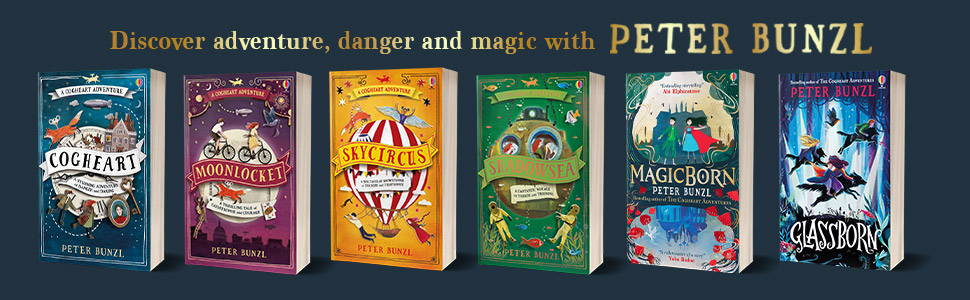
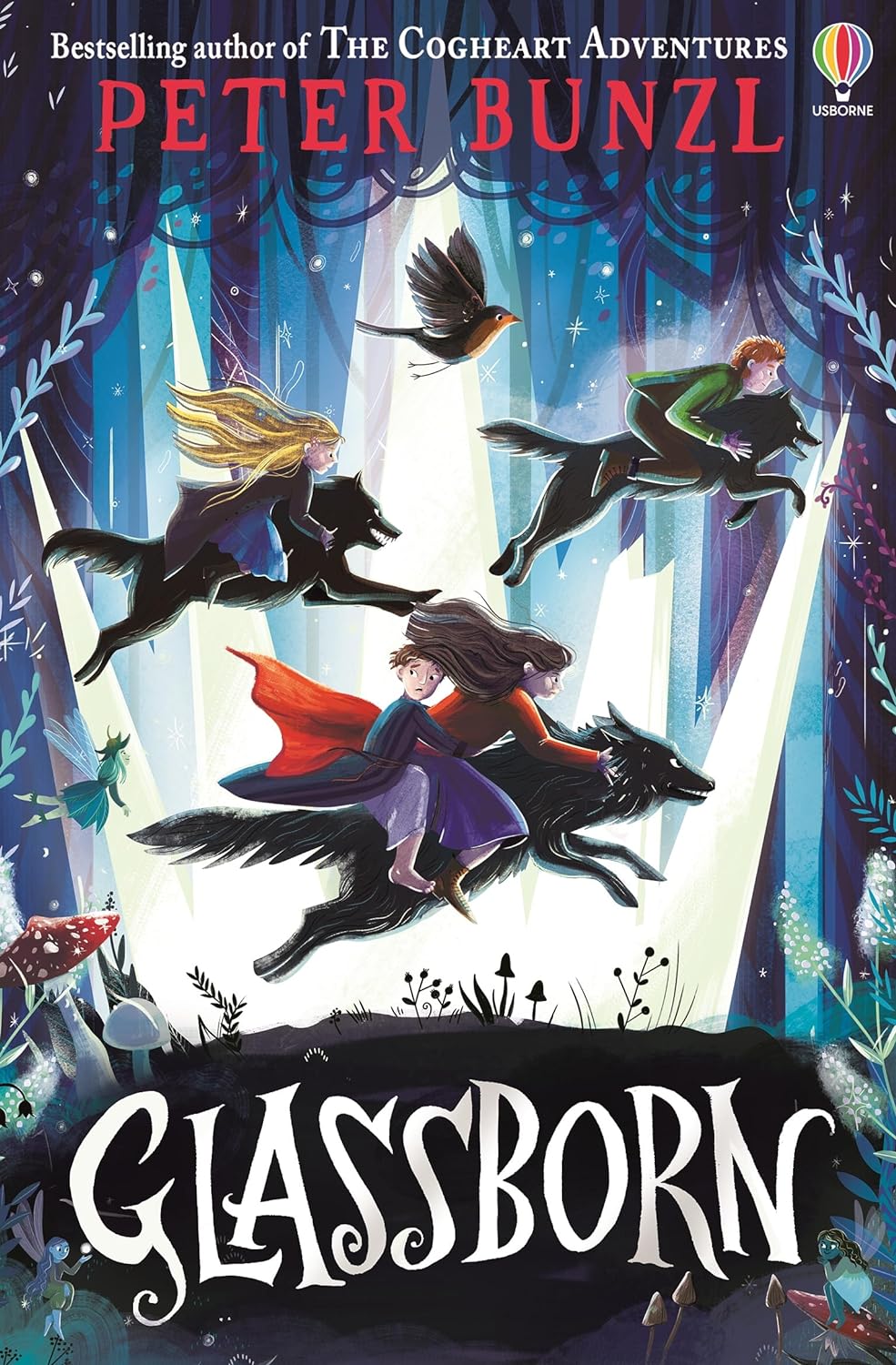
I am excited to be announce that today I am participating in the blog tour for Peter Bunzl and his latest book Glassborn, which has been beautifully illustrated by Katarzyna Doszla.
Glassborn was inspired by the imaginary worlds created by the Brontë sisters. When they were children Charlotte, Emily and Anne would make up stories about imaginary places called Glass Town, Gondal and Angria. They would write these stories down in fairy sized newspapers.
Here is the blurb to give you an idea of what the book is about:
Fairy Tree, tall and grand, open a path to Fairyland.
The year is 1826, and the four Belle siblings arrive at their new home in Tambling Village. Acton, the youngest member of the Belle family, immediately befriends a bright, red robin, leading him to discover a hidden key.
That night, when the clock strikes thirteen, Acton is called to Fairyland. For in finding the key, Acton has become the Chosen One and must steal the Glimmerglass Crown, for the cruel Fairy Queen.
When Cora, Elle and Bram realise their brother has been taken, they set out on a quest to rescue him. But Fairyland is full of dangers…and to overcome the Queen, and her deadly curse, they will need courage, cunning and a great deal of hope.
An enthralling tale of magic, riddles, and curses, from the bestselling author of The Cogheart Adventures.
Blurb for Glassborn by Peter Bunzl
Peter Bunzl is a bestselling children’s author who writes about clockwork, hope and magic. His books have been translated into 16 languages and sold nearly half-a-million copies worldwide. He’s been nominated for numerous awards, including: the Carnegie, the Waterstones Book Prize, the Branford Boase and the Books are My Bag Readers Award.
My stop on the tour takes the form of an author interview.
********
Hi Peter,
Welcome to my blog. I am thrilled to be part of your blog tour. I interviewed you for Writers’ Forum in 2021, about your writing process for the Cogheart series so it is really exciting to be able to interview you today on my blog.
Thank you for having me, Anita. And thank you for all your support for my books over the years.
Glassborn is the second book in your Magicborn series and is due for release on the 9th November 2023. Please tell us a little about Glassborn and how it continues on from Magicborn. What has happened in that 100 year gap?
Glassborn is a sort-of sequel to Magicborn, but, as you mention, it takes place 100 years later. For that reason, the two can also be read as standalone books, although they have a lot of magical and Fairyland characters in common. In the fantasy world of Magicborn Fairies live for hundreds of years, which means that some of the villainous and heroic fae from the first book are able to appear in Glassborn too. There are also some family connections with the human characters in the first book, but I don’t want to say much about that as it would be spoilers for the story.
How did you create such fantastically devious villains for the Magicborn series? Talk us through the planning process for your antagonist.
Both books have two villains, which is fun as you can have slightly different plots going on simultaneously. In Glassborn the two villains are the Fairy Queen and the King of the Dead. The children must face off against both of them to succeed in their quest. Both villains are not just evil, but also clever and tricksy; as Fairies are in these kind of tales often are. For the children, facing them is not a battle of strength but a battle of wits and intelligence, and of riddles and stories. It was important to me that the children succeed on these terms as the four of them are characters who are into words and fairytales.
Was it important to you to get the historical details of the real world correct in the series and if so what research did you do to ensure accuracy, if not how did you get round it?
Magicborn is set in the early Georgian period. Partly at Kensington Palace where the main characters, Tempest and Thomas, are brought to meet the King when it is discovered they have magic powers. That story was broadly inspired by a real Georgian boy called Peter the Wild Boy who was brought to meet King George I. So I researched that history before writing the book.
When it came to Glassborn, I wanted the characters to be based on real Georgian children too. I had read about the Bronte siblings and the stories and imaginative worlds that they created with each other growing up. I thought they’d be great figures to base my child characters on as there was so much information about them and their childhoods. To research their world I went to the Bronte museum in Haworth, and I also read some of their juvenilia. That content wasn’t suitable for my story, but a lot of their wider world was.
How did your create your fairy realm and the magical rules within it?
My Fairyland is inspired by the tricksy fairy realms of British folklore and literature, most especially Jonathon Strange and Mr Norrell by Suzanna Clarke. Magicborn was also inspired by The Ballad of Tam Lin, which is a Scottish folk tale and song. Glassborn was inspired by The Lion the Witch and the Wardrobe by C. S. Lewis, one of my favourite stories growing up, and the idea of mixing the four Bronte children up with the Penvensies and seeing what happened. Angria meets Narnia, if you like.
Which part of Glassborn was the most fun to write?
I like the scenes with Acton in the Dead Lands the best. I suppose it is a little bit His Dark Materials, but really all of those ideas come from Greek Myths originally. Orpheus, or The Odyssey. It is a setting and a mythology I have wanted to write about for a long time, and I was able to get some really good twists and turns in there for this story, so I was very happy with how it panned out.
What is your favourite children’s book series, or series author?
I will say Narnia, because it was a favourite growing up, and it has a really big influence on this series of books. The imaginative world building in those books is great. The character stuff not so much. Also Diana Wynne Jones. I love her magical worlds, which are more quirky and chaotic than C. S. Lewis’s. And her child characters are often more real and nuanced.
What writing advice would you give to people aspiring to write a middle grade series?
Don’t set out thinking that’s what you’re going to do. By that I mean, even if the series will have the same heroes in every story, write each book as a closed stand alone, rather than part of a bigger arc. This is for two reasons. One, Children like complete stories, not massive cliff-hanger endings that they have to wait a year to resolve. Two, you may not sell all the book you have planned in your series, so you want each story to stand alone and not be reliant on a multi-book arc that you may not get to complete. You may also want to take the story in a different direction after a few books in a way that you didn’t foresee when you first pitched a series. So it is always better to keep the connection between stories loose.
Thank you Peter. It has been brilliant having you on my blog as part of your blog tour.
********
You can find out more about Peter and his books on his website: www.peterbunzl.com or follow him on Instagram: @peterbunzlauthor and Tiktok: @peterbunzlauthor.
To follow the rest of the tour check out the schedule:
To read my interview with Peter Bunzl about his Cogheart series in Writers’ Forum take a look at: An interview with… Peter Bunzl
You can buy copies of all Peter Bunzl’s novels from your local bookshop, or online at uk.bookshop.org which supports local, independent bookshops.
I would like to thank Eve at Usborne Publishing for inviting me to take part in this tour. Thank you.
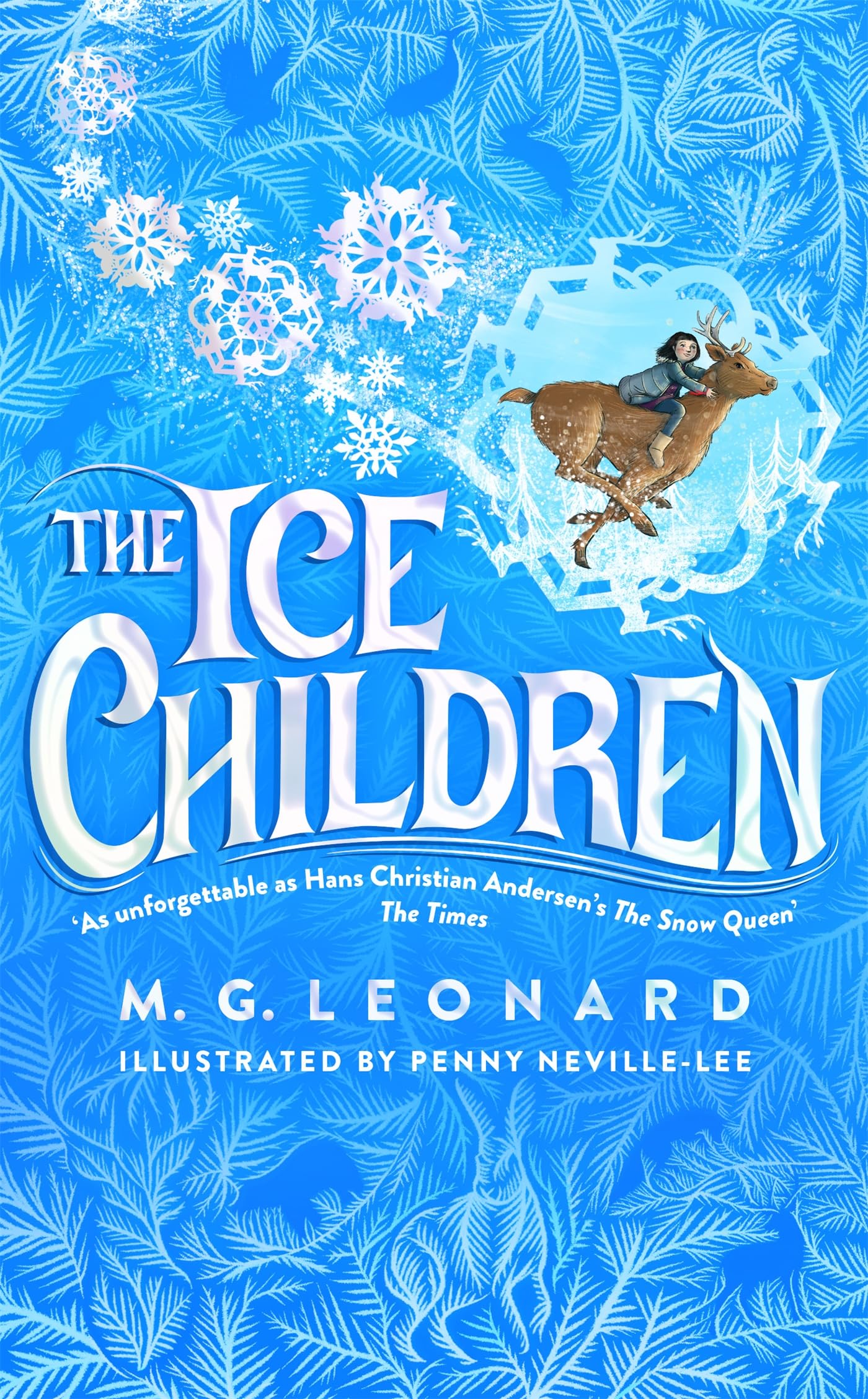
To celebrate the release of The Ice Children by M. G. Leonard tomorrow, Thursday 2nd November 2023, I have decided to post my review of this beautiful book.
********
Title: The Ice Children
Written by: M.G. Leonard
Illustrated by: Penny Neville-Lee
Published by: Macmillan Children’s Books
I requested to read this book from NetGalley because I enjoyed M.G. Leonard’s Beetle Boy books and the Twitcher series. I was not disappointed as I was instantly drawn in by the narrative of this modern day fairy tale.
M.G. Leonard explains in her acknowledgments how she was inspired by the familiar stories of The Snow Queen, Pinocchio, and The Selfish Giant to create an imaginative new story which will linger in your mind as do many timeless classics. The brilliant action-driven plot does not spend unnecessary time world building without moving the story forward. I can imagine The Ice Children making a lovely magical children’s Christmas movie.
The main character, Bianca has to use her detective skills to work out why more and more children are appearing as frozen statues in the park. She links the strange happenings to a mysterious silver book her brother discovered in the library. M. G. Leonard realistically portrays how children are not listened to in times of emergency and their ideas dismissed as childish fantasies.
The only option Bianca has is to stop the mysterious disappearances on her own and discover who is responsible for turning her brother and friends to ice. She uses the clues to transport herself to a wintery wonderland, highlighting how books really are doorways to other worlds. I particularly enjoyed reading about the different spirit animals each of the children had in the magical world. I wondered what my own spirit animal would be long before I reached the end. I decided it was probably a bear.
I adored the cover and illustrations by Penny Neville-Lee and believe they would be even more magnificent in a real book format rather than viewing on my kindle. They are beautiful and add to the magical atmosphere of this book. The short chapters made this a quick and easy read. I seemed to fly through the pages, devouring every word.
It was evident about half-way through there was no real antagonist. In fact the real villain of the book is us – the human race – whose extravagance and negligence has caused the global warming which the world is suffering from creating a world ‘where winter cannot survive.’
Bianca strives to show the children they can make a difference as they are the adults of the future. They have the power to make changes to build better habits which will help the environment. In this way, M. G. Leonard has pro-actively crafted a spell-binding novel, which successfully treads the thin line between conveying an important message and preaching. The Ice Children gives children the power to do something now to prevent climate change.
This book leaves you with hope that it will indeed touch people’s hearts and change the way they think.
********
This review of The Ice Children has been previously posted on NetGalley and Goodreads. I would like to thank Macmillan Children’s Books and NetGalley for organising me a digital review copy of the book. Thank you.
You can find out more about M. G. Leonard and her books on her website www.mgleonard.com and follow her on social media: Twitter @mglnrd; Instagram @mglnrd; Facebook @MGLnrd.
I have also reviewed Spark by M. G. Leonard on my blog in December 2022. To read this review take a look at: Book Review: Spark
I also had the pleasure of interviewing M. G. Leonard for the #219 Jan 2019 issue of the UK national magazine, Writers’ Forum about her research for the Beetle Boy series. You can read highlights from this Writers’ Forum interview here: An interview with… M. G. Leonard
Today I am pleased to welcome Miriam Halahmy to my blog to talk about her latest novel, A Boy From Baghdad, published by Green Bean Books.
********
Hi Miriam,
Welcome to my blog. It has been a long time since you have been featured on my blog so I am thrilled to have you back. Your novel, A Boy From Baghdad, was launched last month and I’m excited to find out more about it.
First please tell us a little about yourself and the inspiration A Boy From Baghdad.
I have been writing since childhood but I had a career as a teacher for 25 years, so most of my published career has been in the past ten years. A Boy From Baghdad is my tenth published novel. I write contemporary and historical realistic fiction for children, teens and adults and my interest is challenging themes which inspire and inform my readers.
For this book, I was inspired by the story of my husband’s family. They are an Iraqi Jewish family, who along with almost their entire community, were forced into exile between 1949-1951, after the government turned against this ancient Jewish community.
The community had been in Babylon/Iraq for two and a half thousand years and at the point of exile, the Jews made up one third of the population of Baghdad. Like most western European Ashkenazi Jews, I knew nothing about the Jews of the Middle East until I met my husband. It has been a huge and fascinating learning curve. Around one million Jews were ethnically cleansed from the Arab countries and Persia at the same time and they went mainly to the new State of Israel.
Their wealth was taken from them and they were stripped of their citizenship from countries they had lived in for thousands of years. Their story of exile has largely been ignored by the world. My novel is the first time this story has been told in English for children.
What are the underlying themes of your novel, A Boy From Baghdad?
Salman Shasha, 12 years, comes from a comfortable Jewish home in Baghdad and lives with his parents, older sister and younger twin brothers. Salman’s goal in life is to become a champion swimmer. He refuses to listen to talk of exile to the Promised Land and daydreams in his Hebrew classes.
Salman represents the Iraqi Jews who did not want to leave, despite the growing threat. However, against his will the entire family, all the grandparents, uncles, aunties and cousins, leave on a flight to Israel. They have been promised a land flowing with milk and honey, but this was far from the truth. Israel in the 1950s was a struggling new country and Salman and his family find themselves in a tent in a refugee camp, with little food and no work for the men. But much worse, the dominant Ashkenazi Jews looked down on the Jews from the Arab countries and did not treat them well.
This book covers themes of friendship and family working together to overcome huge difficulties, exile to another land, dislocation and culture clashes and racism towards newcomers. Threading through the book, like the River Tigris threading through Baghdad, is Salman’s determination to swim and to become a champion.
You have also addressed the very challenging concepts of racism and refugees in A Boy From Baghdad. Were these scenes hard to write?
I believe that writing is about truth and integrity. Over the length of my marriage, I have come to learn the difficult story of the Middle Eastern Jews and like all stories of exile and making your way as a refugee in a new country, there are uncomfortable truths which have to be faced. But I believe that unless we are honest about our history we cannot grow as individuals.
Gradually the Arab Jews became accepted into Israeli society and today Arabic food and music are very popular in Israel. But it is horrible that my husband and his community were not accepted from the outset. Yes, it was hard to write the scenes which tell these truths and also the plight of new refugees into Israel but it is a story which needs to be told.
What research did you need to do to make your setting of the ‘Promised land’ during 1951 feel authentic?
In a way I have been researching this book for the whole of my married life. I started by interviewing my husband’s siblings and making notes. Before this book I have written poems and articles about the community as well as reviewing several non-fiction books on their history and exile. I have also backed up all anecdotes with further research from documentary evidence, including publications, documentaries and attending lectures. It has been a fascinating journey. I lived in Israel for a year in the 1970s and learnt to speak Hebrew. This also gave me an insight into the early years of the country and the struggles they went through.
Do you have any writing rituals? Tell us a little about your writing process.
No social media on my laptop, which is where I write.
No music, sounds, etc, I like silence when I write.
I work after breakfast until lunchtime. I’m no good in the afternoon.
I have an initial loose plan :-
The inciting moment
The heartbeat of the story – crises, upbeat times, climax and resolution
I have a peculiar quirk – whenever I get to chapter 3 I write the final chapter. No idea why. But it works.
Cast list – I name all my main and secondary characters and write as much as I can about them, which often triggers the writing of entire scenes.
I daydream, go for walks, daydream some more, keep a notebook, and then daydream some more.
Once I have cracked the book and I’m on the final quarter, I write almost non-stop for a week or two and then I’m done.
I love editing both before I submit and then with an editor.
I’ve been writing for 65 years and I still love it.
I never run out of ideas – even when other writers steal my work. Nothing will ever suppress my creative writing.
What writing advice would you give to people aspiring to be a children’s book writer?
Read as widely as you can. I know children’s writers who claim they never read adult fiction. Big mistake. Read and read and read. That is how you will hone your craft. Write. Anything. Write a piece for your church, mosque or synagogue newsletter; write a blog post; write a letter; write and write and write. There is never a reason not to write just because you feel stuck on chapter 4.
If you are stuck here’s some tips :-
Walk away from the laptop. Get a piece of paper and a pen – or a big felt tip – or a crayon – something different. Write some words on your paper. Let the words trigger more words. It is the act of moving your pen which will stimulate the creative juices.
Ask yourself a question, e.g. What do I want to say? Answer it. Keep asking questions, even silly ones e.g. What colour is a penguin? Again, it is the act of writing which will free you up.
If you don’t get down to it, you won’t feel good for the rest of the day – well, you probably already know that. So decide to sit at your laptop for 30 minutes and write. Even if you only manage a paragraph – or a line or two, when you get up you will have done your writing for that day.
Is there anything else you would like to tell readers about A Boy From Baghdad and writing for children?
A Boy From Baghdad has been a very special journey, writing the story of the Iraqi Jewish community for my husband and his family, for our children and grandchildren and for all our wider family and friends. I have loved this special journey and I hope you will read the book and let me know what you think.
If you are an aspiring writer for children, you could not be in a better place and I wish you much joy and success.
Thank you for agreeing to be interviewed about A Boy From Baghdad. It has been such a pleasure having you back on my blog. Your tips for when you get stuck are especially helpful.
You can buy a copy of A Boy from Baghdad direct from the publisher Green Bean Books here , or from any good independent bookshop, or online at uk.bookshop.org which supports local, independent bookshops.
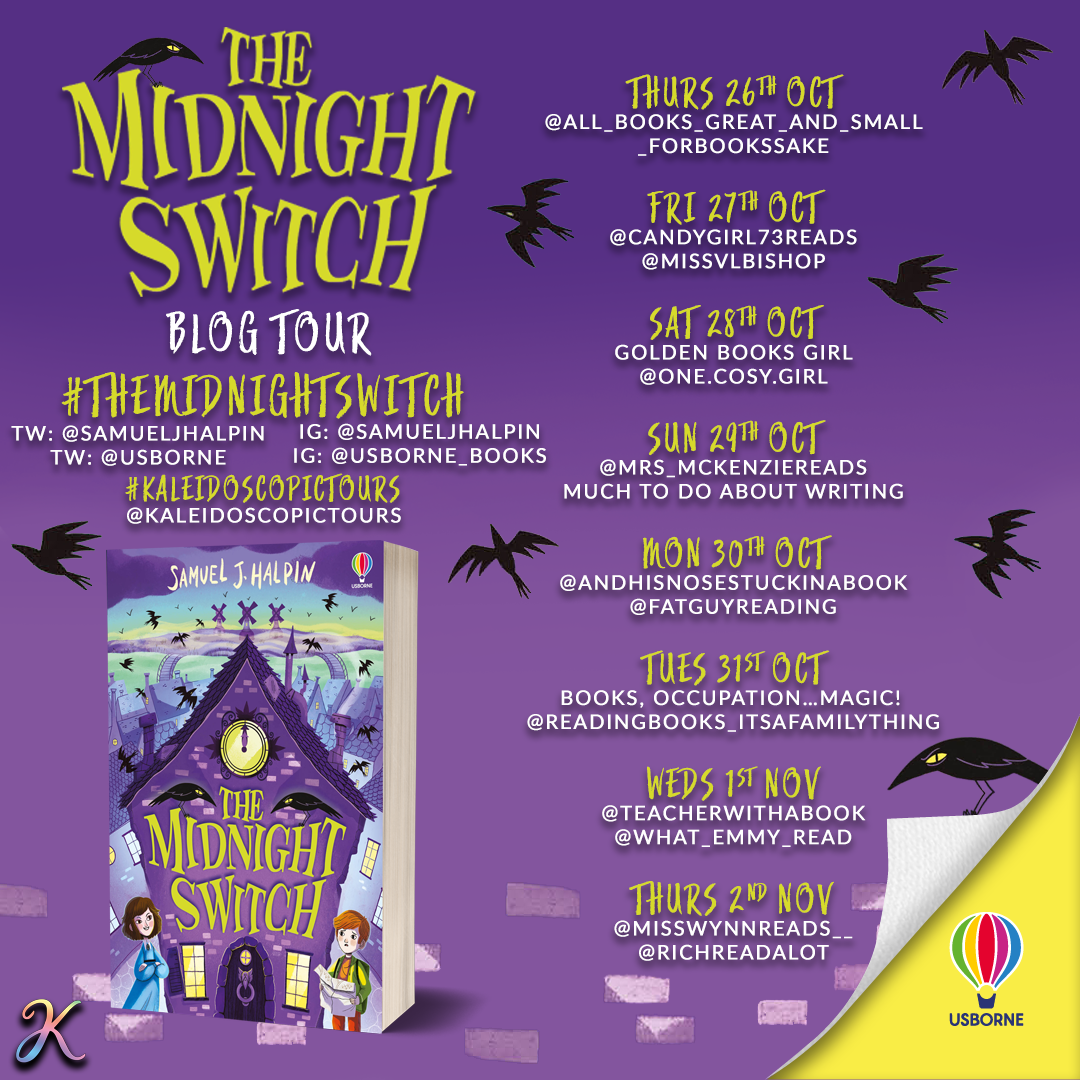
Today is my slot on the tour for The Midnight Switch by Samuel J. Halpin, published by Usborne.
Born in Tasmania with Irish roots, Samuel J. Halpin writes daily. Having studied journalism at the University of New South Wales, Samuel went on to take cinematography at AFTRS, the national Australian film school in Sydney before moving to London and working in comedy TV production.
His children’s books are his answer to a childhood raised on a hodgepodge of fairy tales, crowded bookshelves and cups of hot chocolate.
Summary:
A spooky, quirky adventure of curses and magic, perfect for fans of Malamander and A Place Called Perfect.
When Lewis’s family moves to a faraway town called Barrow, he can’t quite put his finger on what feels so strange about his new home. Everyone is obsessed with superstition, and an old story about floods and witches and a curse, while a mysterious bird watches his every move.
Then his family friend Moira arrives to stay. Only, there’s something peculiar about Moira too. She doesn’t know where she’s from, or even when she’s from, and strange things happen around her. Lewis and Moira are determined to figure out what’s going on in Barrow, but as they unravel secret symbols, riddles and stories of a midnight curse, they find that there might be some truth in the old town tales.
Time is running out, before magic switches up everything they know…
The Midnight Switch by Samuel J, Halpin
My stop on the tour takes the form of an author interview.
********
Tell us a little about yourself and the inspiration for The Midnight Switch
Well I most certainly can! My name is Samuel J. Halpin. The Midnight Switch is my second book – The Peculiar Peggs of Riddling Woods being my first. I’m an author with a feverish love for all things spine-prickling, and love nothing more than an adventure – be that one taking place in my head or high up a mountain. I love nature, folklore, ghouls, ghosts and the way all of these things collide and entangle with one another in the world around us.
What are the underlying themes of The Midnight Switch?
The Midnight Switch at a glance is about the power of friendship to heave us through sometimes terrifying sometimes downright painful circumstances. It’s about loss in some ways (no spoilers!) and how powerful it is to know someone and feel their influence upon you, despite the fact that you may not ever see them again. But its also about Lewis and his Dad. And how difficult it can be to navigate a relationship with a parent who may only want what’s best for you, but demonstrates it an overbearing way.
Are you a plotter or a pantser?
A little of both. A plotter when I know what’s good for me, but a pantser when a good idea strikes, and I shoot off in a particular direction like a renegade fire cracker. Then, when the firecracker idea has had some cold water put on it and it’s all fizzled out, I go back to plotting.
How do you ensure you keep children turning the pages?
By making sure that the twists and turns of the tale are fresh and truly unexpected. I also like to make sure that the themes I explore are relevant and can be understood from many different vantage points.
As an example, I think Lewis’s struggle to understand his Dad in this book is a theme that lots of us can relate to and observe, even if this isn’t our experience of our parent.
I also am a firm believer that children like to be scared. At least, as a kid, I most certainly did. Fear, particularly in books, is something you can play quite safely with and yet experience all the same sensations as if you were walking along a lonely road in the dead of night. Or stepping over somebody’s grave. Or thinking about what might be beneath as you tread deep water.
What is your favourite thing about writing for children?
It gives me the opportunity to go back and remember how different the world looks when you’re a kid. Sometimes that means it can be all the more frightening and overwhelming than when you’re an adult. But the sense of curiosity and wonder – not only for things that are fantastical, but also for people and the way they behave – is truly a thing of great beauty.
If you could spend a day with another popular author, whom would you choose?
Far too many to choose from. E. Nesbit would be up there. As I love the way she made ordinary things so very gripping and otherworldly. But I would like Stephen King to answer for some of my childhood nightmares. Dodie Smith for a punch of nostalgia. Neil Gaiman for…well…Neil Gaiman…it might have to evolve into a bit of a dinner party I’m afraid…is there enough time in this would-be day?
What writing advice would you give to people aspiring to be a children’s book writer?
Write often. And try being as much of a pantser as you can, because all the good ideas come flying out like bats from a belfry when you’re being a pantser.
Is there anything else you would like to tell readers about your books and writing forchildren?
I do love to hide little things in my books. Easter Eggs, of sorts. So if you spot them – do let me know!
There are a couple in The Midnight Switch if you know a thing or two about chess!
What are your social media links where can people find out about you and your books?
I’m @SamuelJHalpin on X/Twitter and SamuelJHalpinon Instagram. And as for finding out about me and my books – I love when people reach out to ask lovely questions. Please feel free to do so!
Where is the best place for people to buy your book?
Anywhere that sells the darn thing! But if you do have the privilege of being able buy it from a local bookshop of yours – I’m sure the booksellers there will be able to steer you in the direction of other wonderful titles too.
********
To follow the rest of the tour please take a look at the schedule:
I would like to thank Bee from Kaleidoscopic Tours for inviting me to take part in this tour. Thank you.
I am thrilled to announce today is my stop on the Ultimate Write Reads Tour for Pax and the Missing head by David Parker.
David Barker lives in Berkshire with his wife and daughter and has a passion for stories, sport and board games. In 2014, he attended the Faber Academy and from that had three climate-fiction thrillers published, The Gold Trilogy, Bloodhound Books.
He joined SCBWI in 2018 because as he wanted to shift his focus to a younger audience. HIs MG debut, Pax and the Missing Head published with Tiny Tree was released 12th October, 2023.
Pax and the Missing Head is a middle grade science fiction, dystopian adventure set in 2057.
Blurb
In a country beset by civil war, New London defends itself behind a giant wall. Inside the city, children are forced to work from an early age, except for the lucky few who train to be leaders in the re-purposed Palace of Westminster. 12-year-old orphaned Pax is brilliant at recycling old tech. He enjoys working on the verti-farms and just wants a bit of peace and quiet. But when that is taken away from him, his only hope is to pass a near-impossible exam and join the other students in Scholastic Parliament. There he’ll make new friends and new enemies. He’ll get tested like never before. And he’ll discover that not everything is quite what it seems under the mayor’s harsh leadership.
Blurb from the back cover of Pax and the Missing Head by David Barker
My stop on the tour will take the form of an author interview.
********
Hi David,
Welcome to my blog.
To start please tell us a little about yourself and the inspiration for your book Pax and the Missing Head.
I’ve been writing for over ten years now. I cut my teeth on the Faber Academy course in 2014 from which grew a trilogy of dystopian James Bond-like thrillers (The Gaia Trilogy, Bloodhound Books). I first started working on a draft of Pax in 2018. It was inspired (if that’s the right word!) by the deep political divisions in this country and in America following the Brexit vote and Trump’s election win. I began to wonder: what if these divisions led to another civil war in Britain? Pax & The Missing Head is set at a time when the initial fighting has died down and New London shelters behind a giant wall. My vision for this future borrowed heavily from my memories of George Orwell’s 1984. The final piece of the jigsaw fell into place when my enjoyment of Harry Potter fused with my interest in the Palace of Westminster and I wondered: what if this building were a school? Scholastic Parliament was born.
How much research did you need to do for Pax and the Missing Head? Tell us about the most unusual research you did.
The great thing about writing a story set in the future is that you can make stuff up! Most of the weird inventions are loosely based on current trends in technology. But I also deliberately set some trends backwards – the Civil War and New London’s isolation has come at a cost to its citizens. For research, I dug out a map of the internal architecture of the Palace of Westminster. But the oddest thing I researched was how to make a foaming blue snake out of fairy liquid and hydrogen peroxide – a chemistry lesson scene that got cut during the edits.
How do you develop your plot and characters?
Once I had the idea for Scholastic Parliament and a divided Britain, I needed a character. A peace-loving child (Pax is Latin for peace), with no parents (they just get in the way of a child-led plot!) and maybe few friends. I needed him to be excluded, at first, from the other pupils at the school, so I imagined a world when some babies were made in test tubes and used as a form of child labour, which is where we find Pax at first. Then I had to decide who the real villain of the story was and how this person threatened Pax’s hard-working but peaceful future. And since I love stories that have a competition at their heart (like Ender’s Game or Ready Player One), I added that as an element of the school curriculum.
Which of the characters do you relate to the most and why?
There are definitely aspects of myself in Pax, although I am must closer to Samuel than Pax when it comes to rules: Pax doesn’t mind bending them, Samuel is a stickler like me. But my favourite character is probably Roacher – a miniature pet robot that Pax builds once he is enrolled at Scholastic Parliament. I would love to own a Roacher for real!
Do you have any writing rituals?
Once I have figured out a setting, the main characters and a rough outline of a plot, I am ready to begin draft one. There follows an intense month or two of trying to write a chapter every morning. I try to leave the afternoon free for reading (keeping up with the current market and looking for inspiration!) or thinking about any knotty problems I’ve encountered with the plot thus far. The next morning, I’ll read over what I wrote the day before, give it a light edit and then I’m back in the zone to write another chapter.
Is there a particular place you like to write?
I wrote my first novel on the train during my commute home from work each evening. It look about 5 years to finish! These days, I write full time and work from home. I’m lucky enough to have a lovely study with a big desk and a nice view out of the window.
What writing advice would you give to people aspiring to write dystopian adventures?
Whatever aspect of a dark future you imagine, make sure it has some real consequences for the protagonist in your story. Make it especially relevant to that person. For example, maybe we all have to live in high-rise apartments because of rising sea levels and the hero is afraid of heights. And the other thing I always try to do (especially with children’s fiction) is to make sure there is hope. Let your readers see the protagonist making the world a better place. Show them we can all make a difference.
Is there anything else you would like to tell readers about Pax and the Missing Head?
I’m very excited to share my first children’s story with the world. I hope you all enjoy it and please remember to leave a review on Amazon, Waterstones or Goodreads. It makes a massive difference to debut authors. Thank you. And look out for book two next year.
Where is the best place for people to buy your book?
It should be available in all the usual places. Bookshop.org is a great website that supports independent book stores. To order Pax through them visit: Pax and the Missing Head.
Thank you David. I think it is so true that it is always good to be able to read a book that leaves you with a sense of hope. You are so right.
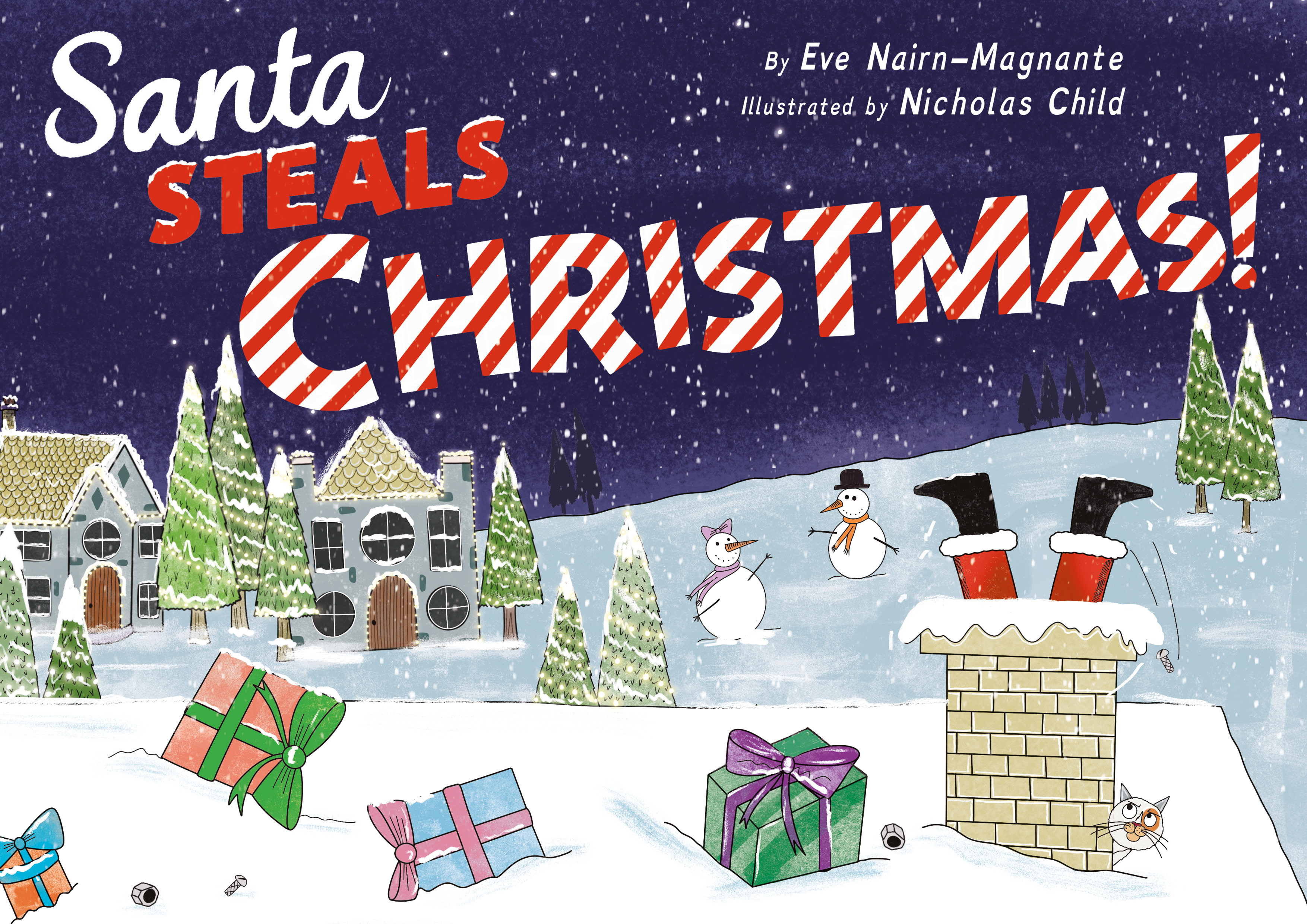
It is my stop today on the blog tour for Santa Steals Christmas audio book, written by Eve Nairn-Magnante.
Born 2009 in Edinburgh, Scotland, Eve Nairn-Magnante has been creating stories ever since she can remember. At the age of six, she recounted the first version of Santa Steals Christmas! to her father, Mark Magnante, who wanted to preserve it for her. He typed up the tale, as told to him by Eve, stowed it safely away and made plans to produce a single printed book as a surprise Christmas gift for when she was older.
It was one of Eve’s teachers who encouraged Eve to alongside an illustrator to achieve her vision of the story. So working closely with children’s book illustrator Nicholas Child, Eve provided initial sketches and creative direction for the look and feel of the characters, including sample drawings of the robots and input into the animal characters, Pretzel the dog and the two cats, Cookie and Basil.
Among the world’s youngest published authors, Eve is a passionate believer in diversity, equality and inclusion – she wants her stories to reflect the world she sees around her. That means characters of different ethnicities and abilities, as well as another of her passions: animals.
Eve has shown an incredible knack for storytelling. She is a believer in inclusivity and Santa Steals Christmas reflects her ethos in that it is written by a child for children everywhere. Recognised by Young Writers for her contributions, Eve continues to inspire and innovate.
My stop on the tour involves a book review.
********
Title: Santa Steals Christmas
Written by: Eve Nairn-Magnante
Illustrated by: Nicholas Child
Narrated by: Olicia Caw
Published by: EV3 Limited
Santa Steals Christmas is a dynamic mystery adventure that will hook young readers in the hunt for the naughty Santa imposter. The audio book is an extended version of the picture book with added details and observations. Some of these details seemed a bit too adult and I got the impression that although the audio book was based on Eve’s initial idea it has obviously been embellished by her father.
The narrator, Olivia Caw, has a mild Scottish lilt which added its own magical allure to the audio story. Her voice was easy to listen to and she read the story in an animated way with just the right amount of intonation to keep the listener focused on what was going to happen next, giving the Santa Steals Christmas audio book the lyrical tone you want in a Christmas story to create a memorable listening experience.
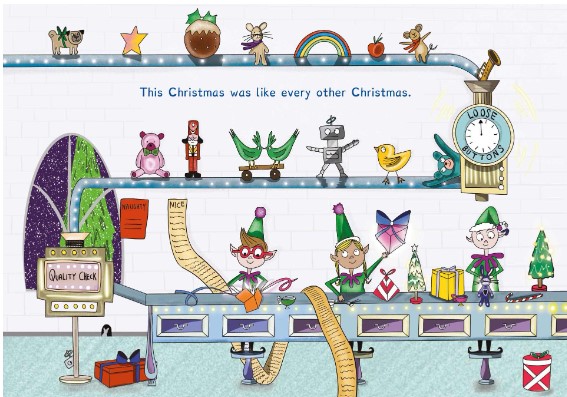
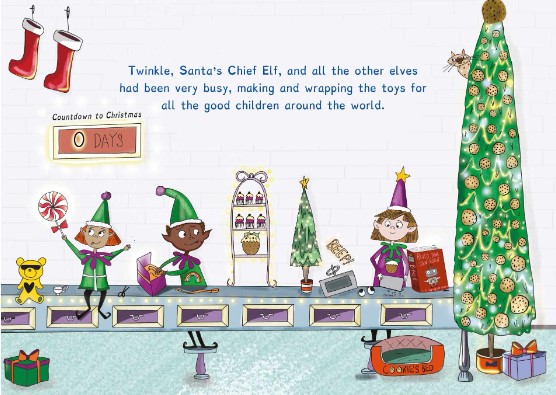
Nicholas Child’s illustrations in the supporting picture book were adorable. There are so many intricate details that will entice young children to browse the pages and discover where the Santa imposter is that is stealing the presents the real Santa has just finished delivering. Their colourful charm and humour will keep the children turning the pages.
I was impressed the typeface had been designed by a dyslexic for people with dyslexia to make the picture book accessible and inclusive to all readers. It was good to see 5% percent of the sales are being donated to Dyslexia Scotland and there is a lovely forward written by Cathy Magee the Chief Executive of Dyslexia Scotland to support the book.
It was also interesting that as well as donating 5% percent of the sales to Dyslexia Scotland, another 5% percent of sales will be donated to Scottish Autism, making this book a great way to help support these charities over Christmas.
The ending came out of the blue and I would have liked a little more foreshadowing to make it feel more credible. But on the whole this imaginative Christmas story has a satisfying Christmas message which encompasses the theme of family and togetherness. I particularly liked the subtle way readers are reminded Christmas is not all about the presents
So you can bet your biggest bunch of carrots this would be a lovely stocking filler, or book to cuddle up and listen to with your young children on Christmas Eve.
********
Santa Steals Christmas is available to buy in paperback, e-book and audiobook from Amazon.
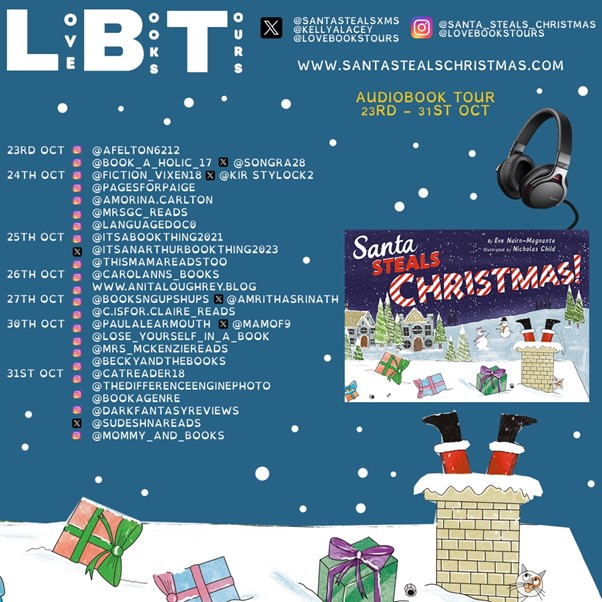
To see the other posts in the tour please follow the schedule:
I would like to thank Kelly from Love Book Tours for inviting me to take part in this tour. Thank you.
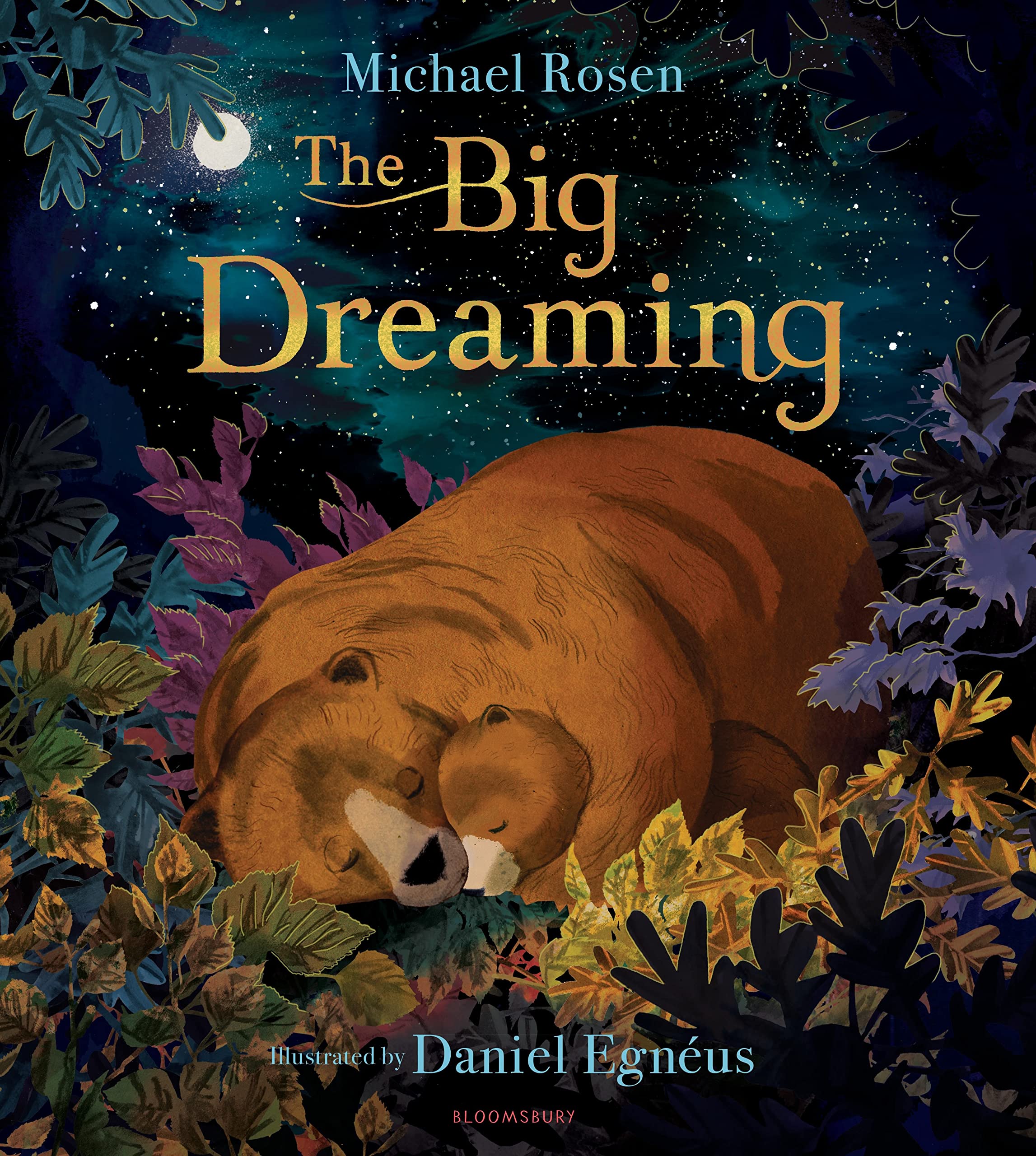
To celebrate the release of The Big Dreaming by Michael Rosen and Daniel Egnéus tomorrow, Thursday 26th October 2023, I am posting a review of the book.
********
Title: The Big Dreaming
Written by: Michael Rosen
Illustrated by: Daniel Egnéus
Published by: Bloomsbury Children’s Books
This book is stunning. The repeated four lined phrase/poem is easy to remember and children will love to join in, making the book an interactive experience. I can instantly see why this adorable picture book has been described as an ‘instant classic’. I must say I whole-heartedly agree.
It portrays a young bear cub who has his own worries about the forthcoming hibernation and perseveres to find a solution to his problem. Little Bear visits some of the other woodland creatures to find a dream that will last the whole of ‘the big sleep’. Each of the dreams have an uplifting conclusion and important message to convey. In this way The Big Dreaming is indeed ‘a story of hope and perseverance’.
Daniel Egnéus uses beautiful autumnal colours, which subtly change into winter setting the scene for the bears’ big winter sleep and they delicately change again when the bears awaken in the spring. The exquisite illustrations successfully reveals how we measure our lives in seasons and associate them with colours and feelings.
This is most definitely an enchanting picture book children will want to hear read again and again. It leaves the reader with a feeling of calm. It would make a great Christmas present for any young child.
********
This book was previously reviewed on NetGalley and Goodreads and would like to thank Bloomsbury Children’s Books and NetGalley for organising a digital copy of this book for me. Thank you.
I have interviewed Michael Rosen about the research he does for his writing in 2009, when he was children’s laureate. to read highlights from this interview take a look at: An interview with… Michael Rosen.
I have had the pleasure of reviewing another book illustrated by Daniel Egnéus. You can read the review here: Book Review – Moth.

















 Much To Do About Writing