An interview with… Sita Brahmachari

For my Writing for Children slot in the #239 Dec 2021 issue of Writers’ Forum I interviewed Sita Brahmachari about how she develops her characters and setting for her young adult books.

She told me how When Shadows Fall grew out of an interaction she had in her first workplace at the Royal Court Young People’s Theatre with children who had been excluded from school. They were children full of potential who had already decided that education wasn’t for them. She worked on location and they had a small space to work in and the adjacent outside area was not ‘safe’ because people threw things from the flats above. ‘Missiles miss,’ one girl explained.

“Certain children I’ve met in my work as a writer and through arts education have stayed with me. I think about them and hope they’ve found a way to untap their potential. This book is a symbolic passing of the pen to all of them.”        

Sita Brahmachari

Sita elaborated how when writing about life – grief and loss is always a constant presence. It’s always been a central theme in children’s literature and she likes toweave them into her stories. She believes keeping stories and realities from children is what creates monsters and nightmares. The task is to find the right tone and holding place for the age of reader who might find your story.  

She explained this is why she writes ‘rites of passage’ novels about grief and loss. In an exploration of loss she is also interested in diverse beliefs in what comes after. The timing of the publication of When Shadows Fall is one in which young people have suffered so many losses, not only of loved ones but also to their own liberty and potential.  
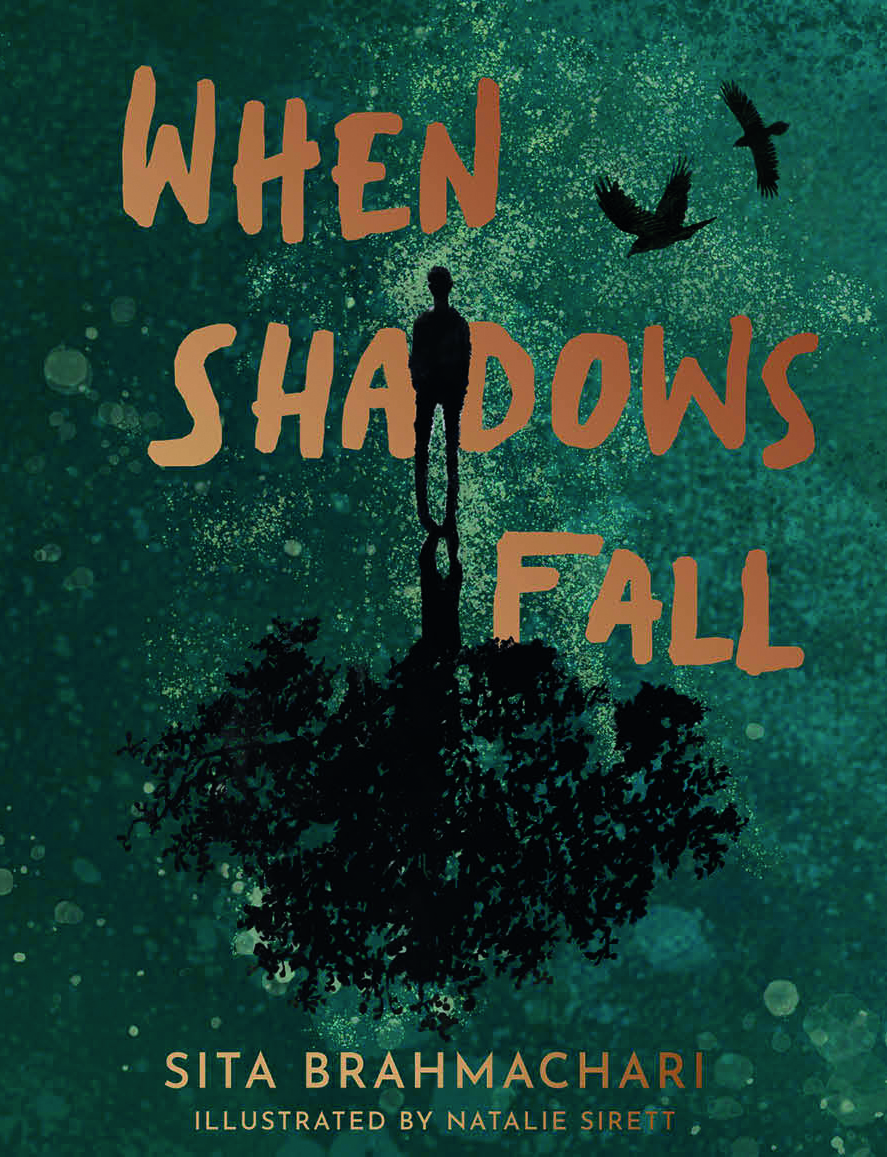
When Shadows Fall by Sita Brahmachari

Sita revealed her characters grow the story.

“The longer I live with the characters the more they become part of my life.  I have met and worked with thousands of young people during my work in community, youth theatre, novel writing and education. Aspects of character: a phrase, a look, a comment, a steely stare, a leaning back, a leaning in, a discovery that a child that won’t speak is a gifted artist… these memories glimmer as I write and ignite something in a character I’m exploring.”

Sita Brahmachari

She elaborated that at a certain point of writing the character emerges like a figure from clay, the features form and then everything in them speaks to you and drives the narrative.  Working with and writing for Young Adults requires curiosity, honesty and to be open to their realities. Sita likes to connect with the feelings of the young person she was. So whatever age character she writing will do a little writing exercise where she imagines meeting them when she was the same age and they have an imaginary conversation.  

“As a child I longed to see the diversity of characters who were my family and the people I met in life in the stories I read. So my stories have featured Diaspora characters from many cultures, histories and beliefs.  I’ve seen how powerfully young people have wanted and responded to these stories.”

Her advice to other writers is don’t wait for the story to come whole. Keep a sketch book.  Doodle, daydream, and write any thoughts, ideas, imaginings that come. Leave your ideas to prove and come back to them later to look for jewels.  Writing is a layering process. Have patience. Don’t rip work up but do be prepared to start again and re- layer, re-voice and re-write. Question. Be open to what editors and first readers say. Test material. Listen deep. Pay attention also to the twist in your gut that hasn’t untangled what you need to in the story yet.  Enjoy growing characters and let plot find you through them. Enjoy the flow when it comes like white water rafting or being in perfect balance on an imaginary high wire.

When it happens it’s exciting! Accept that sometimes there’s just a lot of heavy rowing to do. Keep going till you feel that what you’ve written could make some sense to someone else but don’t show your work too early.  If you feel it has a force of its own that could convey, feel the fear of putting it out in the world and do it anyway. Never react to feedback or start re-writes straight away… let the thoughts and comments mull. Whatever changes you make have to be true to your characters and story and to yourself.  

You can find out more about Sita on her website www.sitabrahmachari.com and follow her on Twitter @sitabrahmachari and on instagram @sita.brahmachari.

To read the complete feature you can purchase a copy of #239 Dec 2021 Writers’ Forum by ordering online from Select Magazines.

To read my future Writing 4 Children or Research Secrets interviews you can invest in a subscription from the Writers’ Forum website, or download Writers’ Forum to your iOS or Android device.

Special Guest Q & A with Kate Wiseman

I am excited to announce that today I have a special guest interview with the fantastic Kate Wiseman who is going to tell us a little about her latest novel, Icarus and Velvet.

Kate enjoys fantasy and dystopian fiction. She lists Suzanne Collin’s Hunger Games series and Station Eleven by Emily St John Mandel, among her all-time favourite novels. Icarus and Velvet is her first venture into writing fantasy. She is addicted to ghost stories and cites M R James high among the list of writers who have influenced her.

Thank you Kate for agreeing to be a special guest on my blog today. It is a great honour to have you here. Let’s glide straight into the interview.

********

Q & A with Kate Wiseman

Tell us a little about your novel, Icarus and Velvet.

Hi Anita, Icarus and Velvet is a new departure for me – a YA dystopian fantasy. It’s set in the future, many years after a catastrophe that changed the world forever. Much of the earth is now poisoned and the remains of humanity have split into two disparate groups and retreated to the extremities of the land. 

Icarus’ people, the Avians or angels, have fled to cliffs near the sea, and mountains. They learned to build wings and fly. Velvet’s people, the Subterraneans or moles, have built huge underground cities, topped by glass domes in which they are able to grow food. The domes also protect them from the terrifying creatures that roam the Wilderness beyond them. 

Their people are mortal enemies, but Icarus and Velvet are pushed together by fate and have to learn to trust each other in order to save both of their communities.

What inspired you to write a YA dystopian fantasy?

It was a conversation with Elaine, the Managing Director at ZunTold publishers. We were batting ideas around and I told her I’d be interested in writing a fantasy loosely based on Romeo and Juliet. She gave me the go ahead and then I had to start from scratch. I really enjoy fantasy and love The Hunger Games books, and Icarus and Velvet developed into an amalgam of both.

What comes first for you the plot or the characters? 

In this case it was the plot, or at least some of its  major events.The idea of the Subterranean community came next. I could really imagine what it would be like to live underground, in a busy city. Velvet developed more quickly than Icarus, which kind of suits their characters. Velvet is a lot more pushy than Icarus.

How did you select the names of your characters?

Icarus’ society is based on that of ancient Greece. I chose the name Icarus, from the Greek myth, because it carries with it connotations that would be especially challenging to a society that relies on flight for its very existence. Icarus has a special future mapped out for him, a future that he finds daunting, and his name seemed to be an additional layer of challenge.

In Velvet’s patriarchal society, women are traditionally named after fabric types. It reminds them of their place as home makers. But Velvet has a touch of luxury and sensuality to it, which marks her out as a little different. She refuses to conform.

Their names also echo those of Romeo and Juliet, which was a deliberate choice. 

Explain the two distinctively different environments of the ‘Avians’ and the ‘moles’ and how they were created.

The Clifflands, home of the Avians, is a place of freedom and learning. They make their homes, which are full of colour and light, on the edge of cliffs overlooking the sea. Although beautiful, their environment is barren, which makes finding food difficult. That causes enormous conflict with the Subterraneans. The Clifflands are bordered by the Glassfields, home to terrifying creatures called Shades who play an important part in the story. 

The domed city where Velvet lives is called Newtopia, an ironic name because it is a joyless, patriarchal society. The underground city is built in tiers, with the most influential citizens living on the top layer, nearest to the surface. The further from the surface you are, the more insignificant. The subs or moles keep slaves who are forced to live on level 4. They long for daylight. The vast domes that top the cities are given over to agriculture on land that the moles have reclaimed. Many moles never leave their dome: the wilderness beyond is a terrifying death trap.

Which part of the book did you enjoy writing the most?

I really enjoyed creating the disparate societies and working out what was needed to make them viable: things like the scented air purifiers, that are constantly whirring in the background inside the city of Newtopia. 

The other thing I really enjoyed was writing the chapters of legends and teachings from both societies. These form the backbone to their ways of life, and also tell us more about how both communities developed. 

What writing advice would you give to people aspiring to write a dystopian fantasy?

All I can say is don’t be too overwhelmed by the influential books that have been written before. Follow your own vision. Flesh it out, and trust in it.

********

Thank you Kate for agreeing to be interviewed on my blog today. Your book sounds brilliant and very intriguing.

To find out more about Kate Wiseman and her books take a look at her website: Katewiseman.uk. You can also follow her on her social media sites: Twitter: @KateWiseman, Instagram: kittywise999, FB: Kate Wiseman and on TIkTok: @katewiseman99         

Icarus and Velvet by Kate Wiseman is available to buy now from your local bookshop, or online at uk.bookshop.org, or you can purchase direct from Zuntold Publishers on their website: https://zuntold.com/

Blog Tour – The Complete Fairy Stories of Oscar Wilde

It is with great pleasure I join the blog tour for renowned author Oscar Wilde and the fantastic reprint of the compendium of his fairy Stories in The Complete Fairy Stories Of Oscar Wilde. It is such an honour to be included in this tour and I must thank Anne Cater from  Random Things Through My Letterbox for organising the tour and for ensuring I received the incredible collectors’ edition as a review copy.

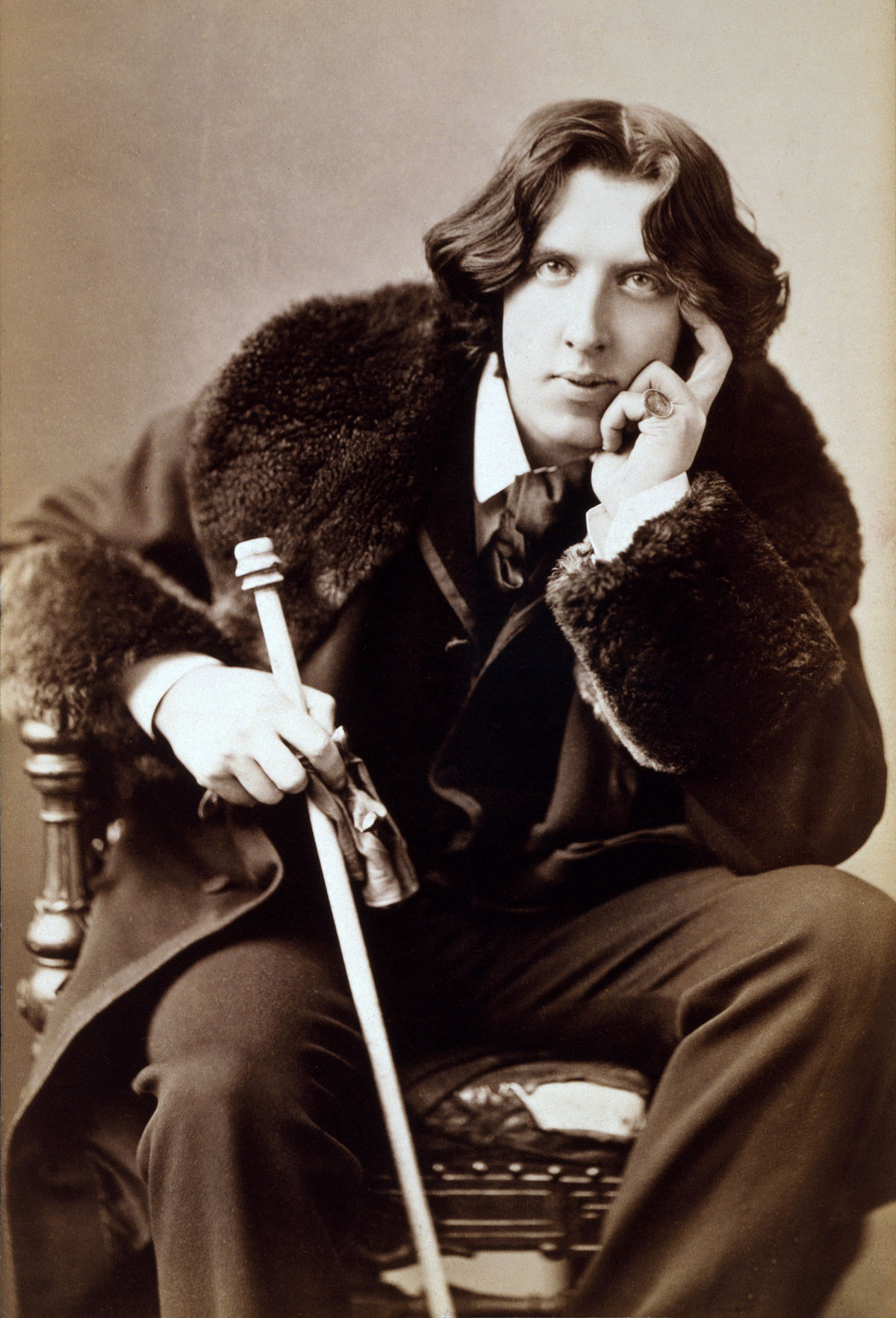
Born in Dublin in 1854, Oscar Wilde was an Irish wit, playwright and poet best remembered for his only novel, The Picture of Dorian Gray written in 1891. His social comedies includes The Importance of Being Earnest first performed in 1895. This is one of my favourite plays and one that I had the delight of acting in whilst I was in the sixth form at school. Oscar Wilde was educated at Trinity College, Dublin and Magdalen College, Oxford. In 1884 he married Constance Lloyd, and his two sons were born in 1885 and 1886. Oscar Wilde died in Paris in 1900.

My stop on the tour involves a book review of this beautiful new edition. It is not so much a review of the contents, as reviewing Oscar Wilde’s work as for nearly 150 years, the classic fairy stories of Oscar Wilde have been cherished by readers of all ages. This will be more a review of the magnificent book itself.

********

Title: The Complete Fairy Stories Of Oscar Wilde

Written by: Oscar Wilde

Illustrated by: Philippe Jullian

Published by: Duckworth Books

The Complete Fairy Stories Of Oscar Wilde is a stunning 70th-anniversary gift-edition of Duckworth’s treasured compilation. He originally published two volumes of beloved fairy tales – The Happy Prince and other stories, bought out in 1888 and A House of Pomegranates, published in 1891. Now we have the good fortune of being able to rediscover all nine of the stories in this beautiful new edition of Duckworth’s exquisite collection.

The first edition of the complete collection was first published in 1952 and the original copy contained over twenty original line drawings. These exquisite illustrations, created by the distinguished and celebrated artist and aesthete, Philippe Jullian, have been expertly reproduced for this gorgeous giftable edition of The Complete Fairy Stories Of Oscar Wilde.

The new edition is quarter-bound with intricate green foil cover and spine detailing. It has been divided into two sections to keep the original volumes together. This is a beautiful edition and one people will want to cherish forever. You know how sometimes you pick up a book and want to stroke the cover well this copy is highly strokeable.

Oscar Wilde’s stories themselves are as relevant today as they were in the late 1800’s. His insight into human character is perceptive and pertinent from, The Nightingale and the Rose, where the nightingale gives up his life for a selfish, ungrateful woman, to The Star-Child that portrays what a kind and just leader should be with the underlying message that evil is still out there

His deep Christian beliefs are also evident as can be seen in The Happy Prince where the statue and the Swallow devote their days to helping others and win their place in paradise, The Selfish Giant with the symbolic child who is Christ and The Fisherman and his Soul. There is also an afterword by Wilde’s son Vyvyan Holland, which explores the inspirations behind his father’s fairy stories and how they have roots in his devote Catholic beliefs and the influence of Irish folktales.

The Complete Fairy Stories Of Oscar Wilde would make the ideal Christmas of birthday present for all ages. If you have not read these stories I recommend that you do and if you have read them they are definitely worth re-reading. If you love Oscar Wilde’s writing and poignant comments on human nature as much as I do it is worth purchasing a copy as a celebrated collector’s item. head and shoulders above any other copy on the market.

********

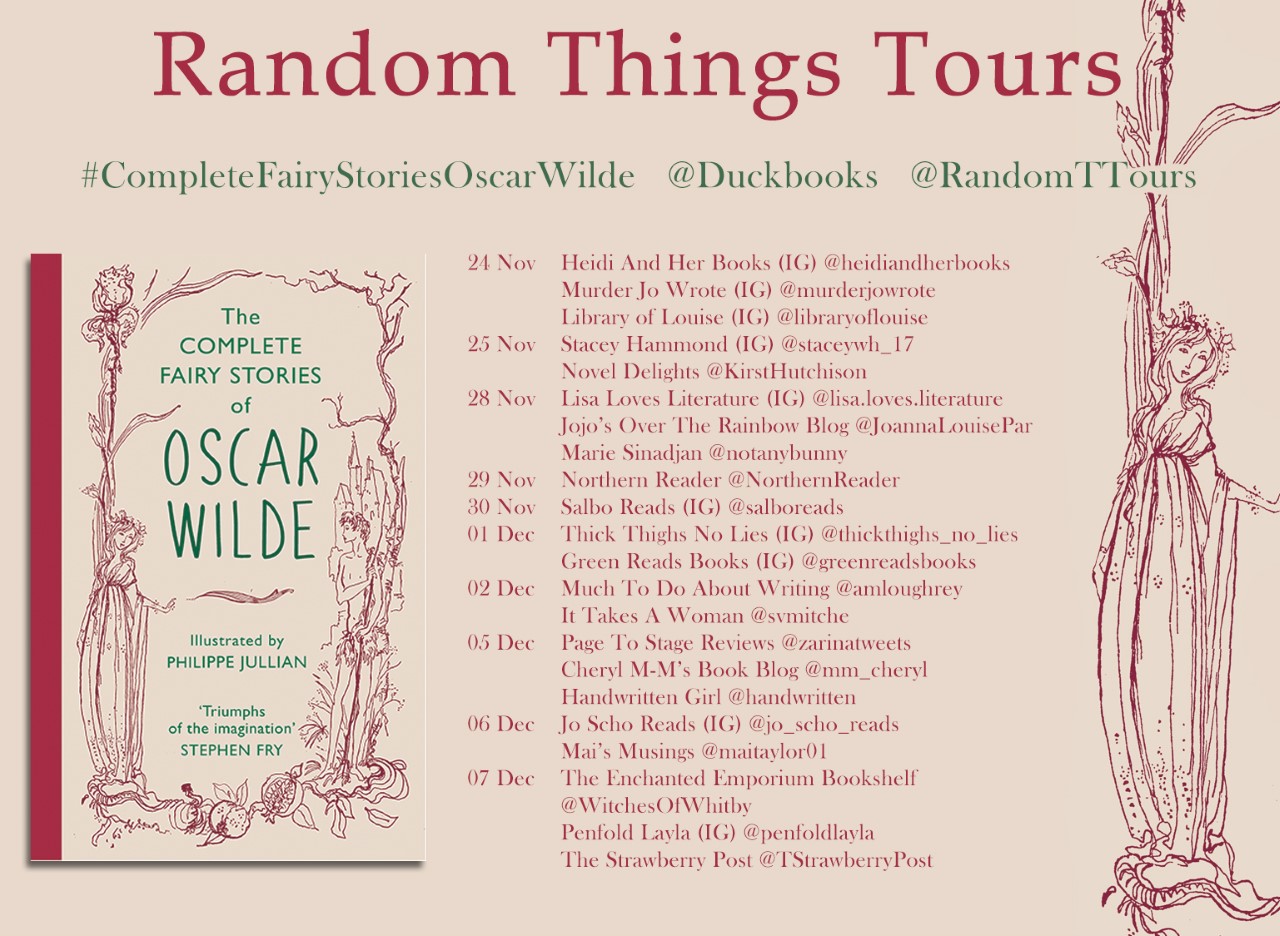
To join the other stops on the blog tour take a look at the schedule below: 

You can purchase a copy of The Complete Fairy Stories Of Oscar Wilde published by Duckworth Books from your local bookshop, or online at uk.bookshop.org

Thanks again to Anne Carter for inviting me to take part and also to the publisher Duckworth Books for producing such a lovely copy. Thank you.

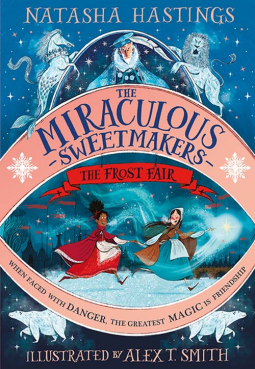
Book Review: The Miraculous Sweetmakers – The Frost Fair

Title: The Miraculous Sweetmakers – The Frost Fair

Written by: Natasha Hastings 

Cover illustrated by: Alex T Smith

Published by: Harper Collins Children’s Books

The Miraculous Sweetmakers – The Frost Fair
by Natasha Hastings 

An ingenious spooky story, full of intrigue and suspense. The book encompasses themes of family, friendship, loss, and overcoming grief.

Thirteen year old Thomasina feels responsible for the death of her twin brother Arthur. So when a mysterious, well-dressed man turns up in the family sweetshop claiming he is a conjurer and can bring Arthur back from the dead, she jumps at the chance. However, events spiral out of control putting not only her life at risk but also the lives of her friends and family.

I loved that the book was set in London 1683 when the River Thames froze over. Thomasina helps her father set up a sweet stall on the frozen river Thames. She makes friends with Anna who dreams of opening her own apothecary, which is a daring move in the 17th century for a young girl, despite the fact many young children would be expected to work at their age. I like the way Natasha Hastings’ characters challenge the male/female stereotypes that were prominent during this time. This was also evident in the way Natasha expertly tackled the subplot of her mother’s grief and neighbours wanting to lock her up as it was seen as female mental illness. I found it realistic for the times.

On the whole the plot was well researched and full of twists and turns. I would recommend this book for all middle grade readers who love history with a hint of magic.

I have previously reviewed this book on NetGalley and Goodreads.

An interview with… Sue Moorcroft

Today you can discover what Sue Moorcroft told me about her research into the seasons for her romance novels in the interview for the #240 Dec 2021 issue of Writers’ Forum.

Sue explained writing a summer novel and a winter novel each year makes weather a consideration. When she was writing about Switzerland she used an online snow-cam and other online resources for typical temperatures and daylight hours.

She also keeps my eye out for seasonal events or traditions that she could be used in her novels and keeps a note on any posters about seasonal events – a Christmas tree competition or an artificial beach in the local town centre during the school summer holidays, etc.

“I had a Christmas wreath made last year and the florist explained it was compostable so I brought that into Under the Mistletoe and found a demonstration of how to make one online.”

She revealed when writing a Christmas book she bears in mind Christmas can affect everything. For those who celebrate the season, things are worse or better if you tag ‘at Christmas’ onto a situation. He lost his job at Christmas. She found her long-lost sister at Christmas. Christmas affects what restaurants or pubs look like, menus, what shops sell, what’s on the radio or TV and how people spend their time. Even a Christmas gift is meaningful for both plot and characterisation.

“Ideas are like gold dust. When I get one, I write it down. I can usually make my ideas fit the season with a bit of plot dexterity but definitely an ice hockey player fits nicely into a winter book and a vineyard owner into a summer book.”

Sue Moorcroft

Sue told me people with knowledge are key to her research and she is always interested in what they have to say and will follow up with more questions. She revealed she often uses social media to find the people she needs. For Under the Mistletoe she needed help from a teacher on the subject of bullying and help from an artist, as it’s my heroine Laurel’s occupation. She explained people can be incredibly kind.

When writing Under the Italian Sun she saw a documentary on the subject of post partum psychosis and followed the filmmaker on Twitter. He was the subject of the documentary, too, as he’d lost his mum young and didn’t understand why there was such a mystery around it. Sue told him how much she’d enjoyed the documentary and she was writing a book that covered the same subject. He offered her a video chat where she could find out more information.

In Just for the Holidays a forced helicopter landing took place. The process is called autorotation, the skill of keeping the rotors moving using pitch and yaw when the engine cuts out – a bit like a sycamore seed twirling to earth. Sue had trouble finding a helicopter pilot who wanted to help but eventually, via a friend of a friend, she found one. He took her up in a helicopter and they ‘pretend crashed’.

“It was awesome! I absolutely loved it. We shot down to earth and then he just pulled it up and landed (this is called ‘flare and run-on landing). Chatting afterwards, although it had taken ages casting around to find him, it turned out he knew my auntie.”

Sue Moorcroft

Sue also loves to visit the countries she write about. She regularly goes to writing retreats and courses in Umbria, Italy and has used the setting for several of her novels. Under the Italian Sun and One Summer in Italy are both set there so she was able to use her extensive photo library as a resource.

I know a lovely Italian lady and I asked her if she could help with things that were hard to research from here, or are cultural, such as what kind of beer this person would drink or how people behave if they have nuns to lunch, and she answered every email. She also put the Italian phrases right for me. It gave me a lot of confidence in the authenticity of the setting and themes.

On a visit, Sue told me she tends to eat local food, especially any particular to the region. Menus are also helpful, and available online. Settings can help an author weave a romantic spell around the reader. Her tip is to pick a setting that heightens the emotional stakes and visit it.

Find out more about Sue Moorcroft on her website www.suemoorcroft.com and follow her on Twitter @SueMoorcroft and on Instagram @suemoorcroftauthor.

To read the complete feature you can purchase a copy of #240 Dec 2021 Writers’ Forum by ordering online from Select Magazines.

To read my future Research Secrets or Writing 4 Children interviews you can invest in a subscription from the Writers’ Forum website, or download Writers’ Forum to your iOS or Android device.
Book Review: A Year Full of Celebrations and Festivals

Title: A Year Full of Celebrations and Festivals: Over 90 fun and fabulous festivals from around the world!

Written by: Claire Grace

Illustrated by: Christopher Corr

Published by: Frances Lincoln

A Year Full of Celebrations and Festivals by Claire Grace and Christopher Corr

A Year Full of Celebrations and Festivals compiled by Christopher Corr and Claire Grace is a fantastic compendium of carnivals, festivals, historical commemorations, religious events and other special days, which are celebrated around the world. Each celebrations has a double page spread which has text on one side and a bright, vibrant illustration opposite that often bleeds across both pages. They have been collated into seasons with a brief introduction to each season to explains what that season has in common all over the world, however they mainly describe seasonal differences in the Northern hemisphere.

Each season is not organised in any particular order within the chapter. Spring opens with the Indian International Kite Festival, with the Japanese Cherry Blossom Festival Hanami in the middle and concludes with Martin Luther King Jr Day. Summer includes Palio de Siena the Italian horse race, the Edinburgh Fringe Festival and finishes with a spread about the different Summer Solstice celebrations across the globe. Autumn starts with the Mid-Autumn Moon festival celebrated in East Asia, Diwali in the middle and climaxes with the Pearly Kings and Queens Harvest Festival in the United Kingdom. Winter features Hanukkah first, The African Festival of Dancing Masks (FESTIMA) in the middle and finally New Year’s Eve Countdown across the world.

Claire Grace’s text provides a brief, concise explanation of the celebrations, which includes some of the history and pageantry involved. Scattered across each spread is an insightful information bubble or snippet that contains extra fun facts about that particular celebration to stretch and entertain readers. At the back of the book is a spread of glossary words that appear in the text.

This colourful non-fiction book would be a great reference book for teachers wanting to think of ideas for a school assembly that could be expanded and for children who are curious about the world and other cultures. The ideal book for children to dip in and out of during reading times.

This book was originally reviewed for Armadillo Magazine

An interview with… Tracy Darnton

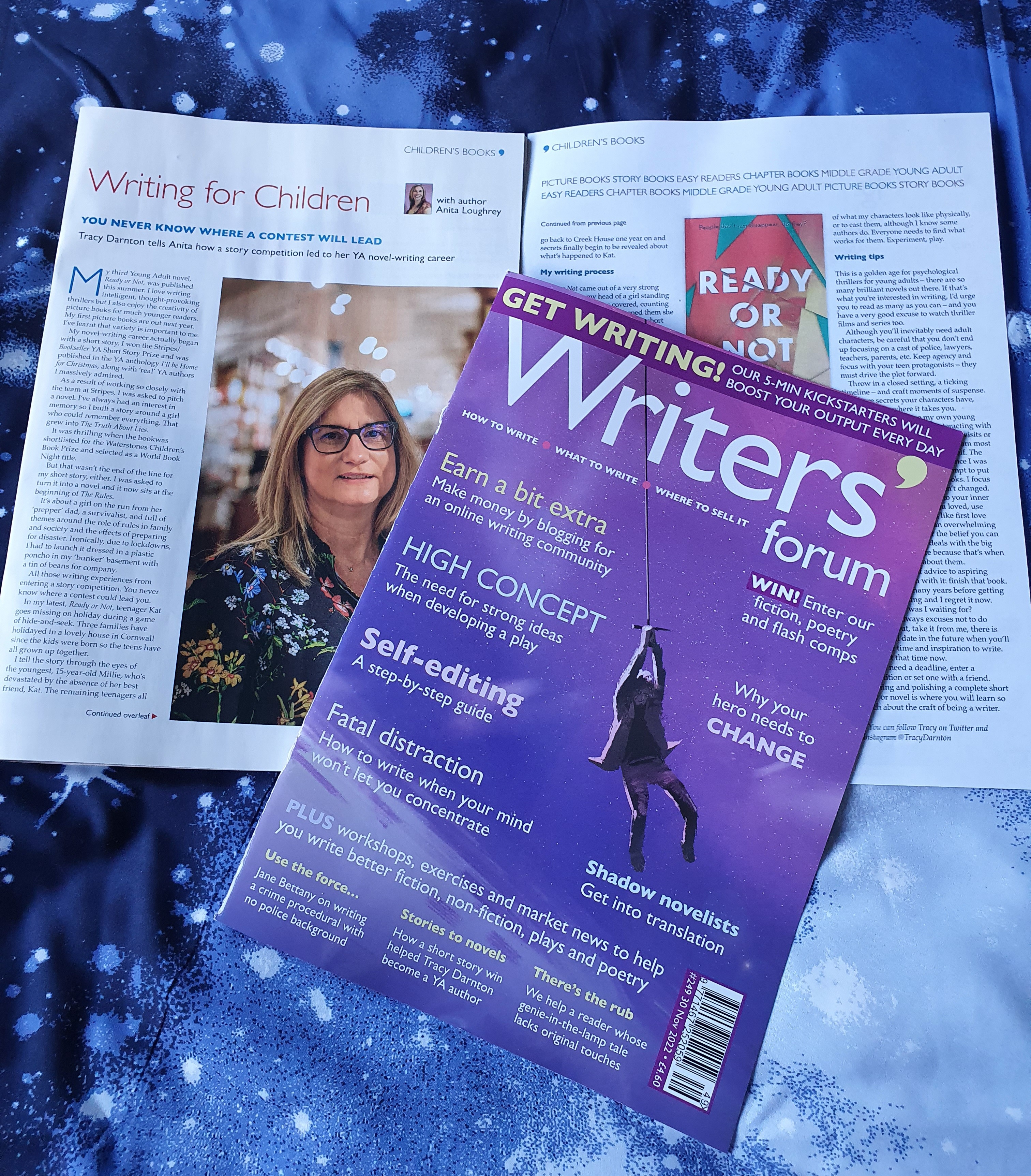
Today I am going to talk about my interview with YA author Tracey Darnton and her writing process and advice to aspiring children’s book writers. The full feature appeared in this months Writers’ Forum #249 30 Nov 2022.

Tracey’s novel writing career began with a short story when she won the Stripes/The Bookseller YA Short Story Prize which was published in the YA anthology I’ll be Home for Christmas.

As a result of working so closely with the team at Stripes, she was asked to pitch a novel which grew into The Truth About Lies. Tracy has always had an interest in memory so she decided to build a story around a girl who could remember everything. The Truth About Lies was shortlisted for the Waterstone’s Children’s Book Prize and selected as a World Book Night title.

The short story now sits at the beginning of The Rules. Full of themes around the role of rules in family and society and the effects of preparing for disaster, The Rules is about a girl on the run from her prepper dad. This proves you never know where a competition could lead you.

Tracy’s latest novel, Ready or Not is about a Teenager Kat goes missing during a game of hide-and-seek at a late-night party on holiday. Three families have holidayed in a lovely house in Cornwall since the kids were born so the teens have all grown up together. Tracy tell the story through the eyes of the youngest, 15-year-old Millie, who’s devastated by the absence of her best friend, Kat. The remaining teenagers all go back to Creek House one year on and secrets finally begin to be revealed about what’s happened to Kat.

Tracy explained that this novel came out of a very strong image she had in my head of a girl standing by a tree with her eyes covered, counting slowly. This image triggered many what if… questions such as, what if when she opened them she couldn’t find her friend? Tracy told me she wrote a short paragraph ending with the line ‘People don’t just disappear, do they?’ and built the story from there. That line ended up on the cover as the strapline.

“I usually set off writing with the beginning paragraph and a paragraph or two of the ending. I don’t plan before I write. Having that sense of the ending helps me work my way through the middle, heading for a clear target. I always brainstorm different possible endings and then try to pick something which falls between the lines. Endings are my favourite part of my books.”

Tracy Darnton

As you live and breathe a book for such a long time through the writing, editing and marketing processes, you certainly need to choose something which intrigues and interests you. Ready or Not has themes around friendship, obsession, privilege and game-playing – both the ones they sit down to play and the games played with other people’s feelings.

Tracy said engaging characters are key to a good YA thriller. The reader must really care about what happens to them for the high stakes to mean anything, and to keep turning the pages.

Tracy prefers writing in first person because it gives a more immediate strong voice and insight into what’s going on in the main character’s head. She revealed she often writes letters or diary entries in her character’s voice to get to know them better. In Ready or Not, Millie’s letters became an integral part of the story.

“I have a ‘Bible’ notebook for each novel where I set out the timelines and use this notebook to sketch out the location and collate any research notes. I used to be a solicitor and I can’t shake my attention to detail. I have a glossary of terms so that I can be consistent (over things like whether hide-and-seek has hyphens) and I pass that list on to the copy editor at my publisher.”

Tracy Darnton

Tracy elaborated everyone needs to find what works for them. She believes all writers should experiment and play with their writing. Her writing tip for other people wanting to write YA is to read as many as you can – and you have a very good excuse to watch thriller films and series too. Although you’ll inevitably have adult characters, be careful that you don’t end up focusing on a heavy cast of police, forensic scientists, lawyers, teachers, parents etc. Keep agency and focus with your teen protagonists – they must be driving the plot forwards. Throw in a closed setting, a ticking timeline – and craft moments of suspense. The more secrets your characters have, the better. See where it takes you.

But her main piece of advice to aspiring writers is to get on with it, finish that book.

“I waited far too many years before getting back to my writing and I regret it now. What on earth was I waiting for? There are always excuses not to do something but, take it from me, there is no mythical date in the future when you’ll have more time and inspiration to write.”

Tracy Darnton

Carve out that time now. If you need a deadline, enter a competition or set one with a friend. Finishing and polishing a complete short story or novel is where you will learn so much about the craft of being a writer.

You can follow Tracy on Twitter @TracyDarnton and Instagram @TracyDarnton

To read the complete feature you can purchase a copy of #249 30 Nov 2022 Writers’ Forum by ordering online from Select Magazines.

To read my future Writing 4 Children or Research Secrets interviews you can invest in a subscription from the Writers’ Forum website, or download Writers’ Forum to your iOS or Android device.
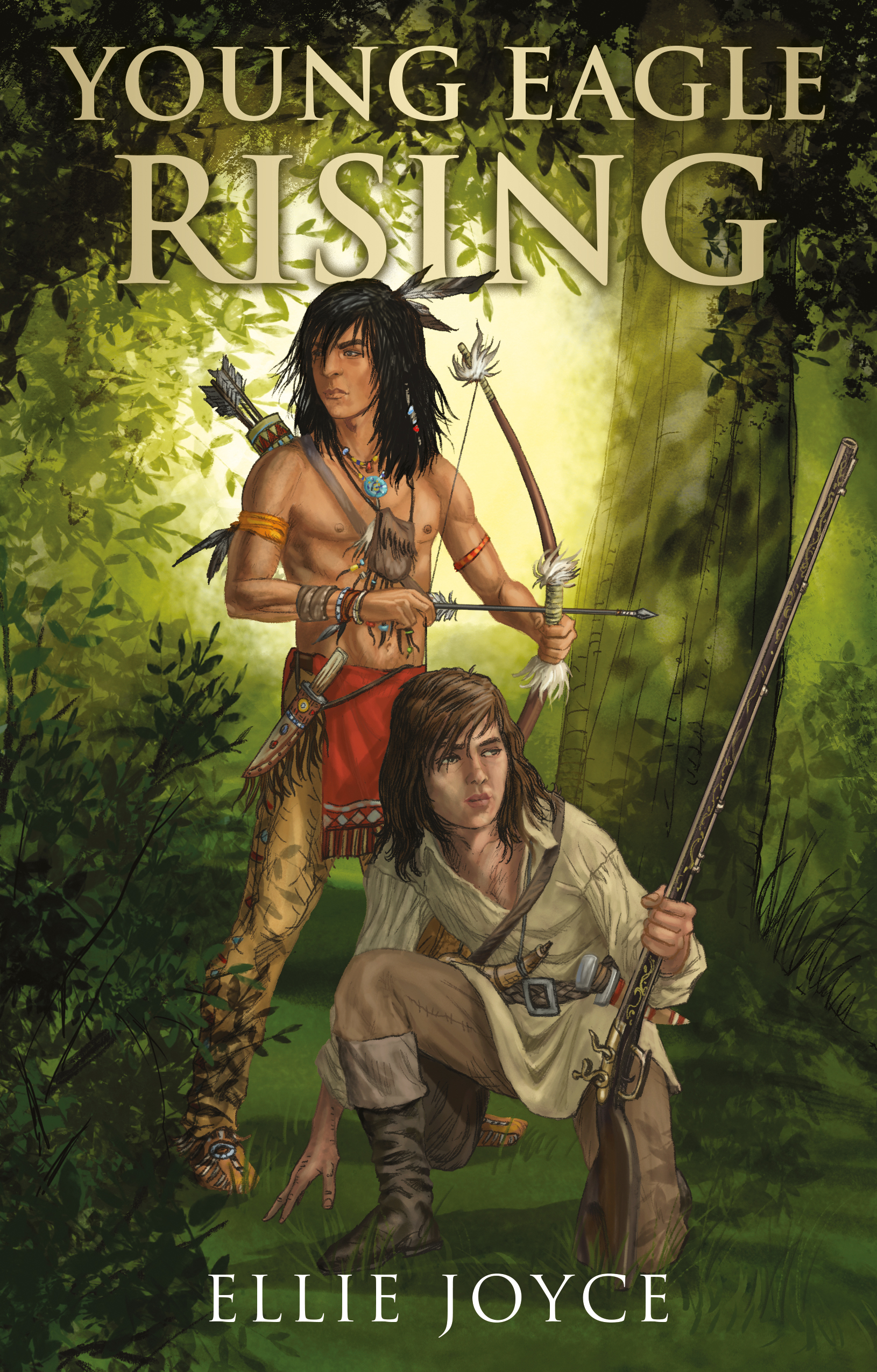
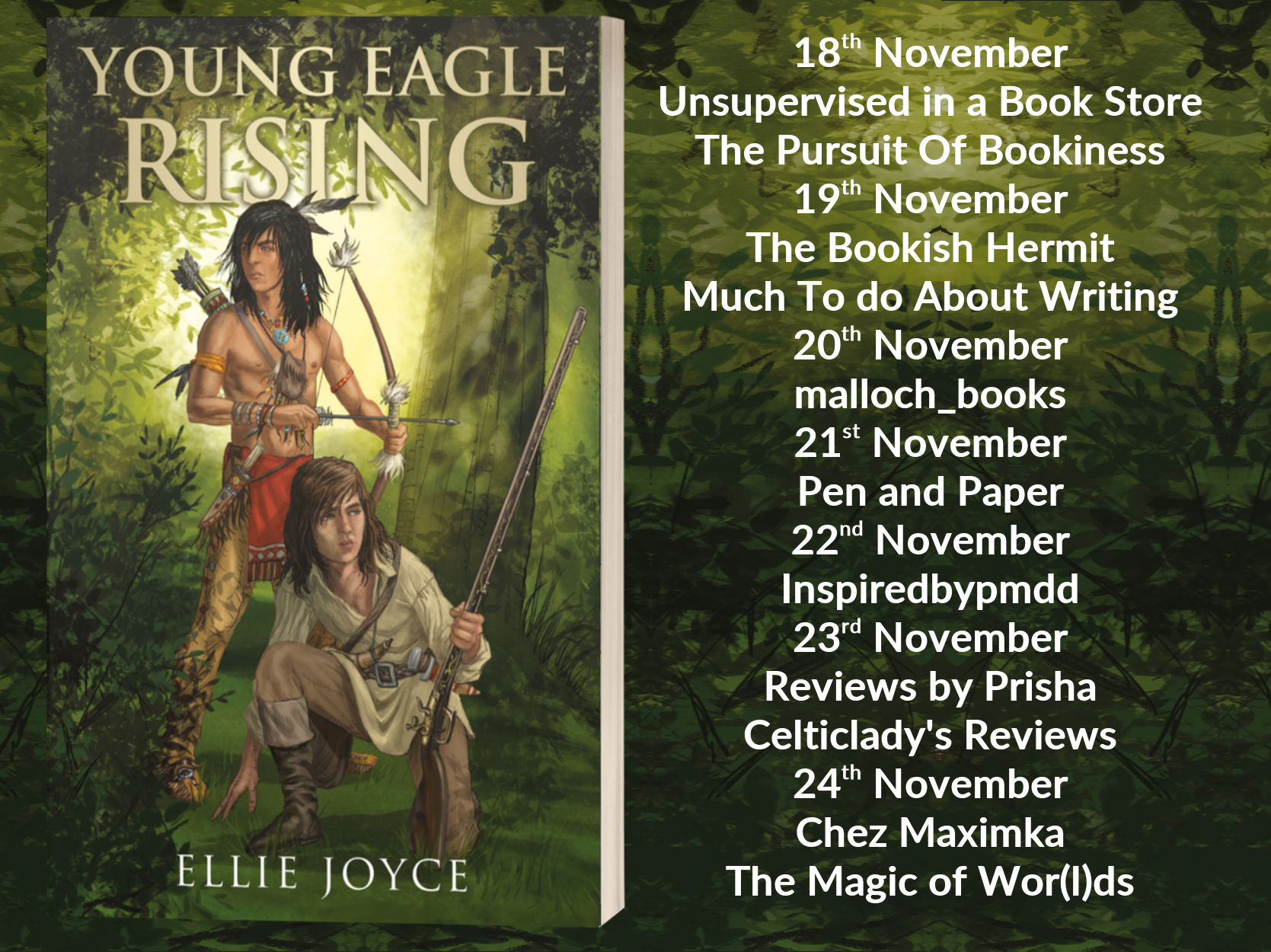
Blog Tour – Young Eagle Rising by Ellie Joyce

Join me today on the blog tour for Ellie Joyce and her debut YA novel, Young Eagle Rising.

Ellie Joyce was born and raised in Belfast. She holds an A.L.A.M. (Dip. Acting) from The London Academy of Music and Dramatic Art. She and her husband have four children and live in Leicestershire.

Young Eagle Rising is set in Ireland in 1735. Thirteen-year-old William Baxter has a grandmother with peculiar powers – so peculiar he believes she must be a witch. Taking this secret with him, he reluctantly sails with his family to the New World and the promise of a better life.

But Pennsylvania proves to be a savage, unforgiving place rife with warring tribes, slavery and dangerous animals. When William’s life suddenly takes a terrifying turn, he is thrust headlong into a battle for survival. Consumed with hatred for those responsible, he desperately wants to return to Ireland, but the coast is one hundred miles away and the trail runs through native territory. Alone and frightened, he sets out on what becomes the journey of a lifetime, determined to survive and have his revenge.

Young Eagle Rising is a coming-of-age story, a mix of fantasy, history, adventure and the enduring love of an old Irish witch.

To follow the rest of the tour please see the dates below:

You can discover more about Ellie Joyce and her writing on her website: www.elliejoyceauthor.com.

You can purchase a copy of Young Eagle Rising by Ellie Joyce at:

Book Guild – https://www.bookguild.co.uk/bookshop/book/429/young-eagle-rising/

Amazon – https://www.amazon.co.uk/Young-Eagle-Rising-Ellie-Joyce/dp/1915122953

Waterstones – https://www.waterstones.com/book/young-eagle-rising/ellie-joyce/9781915122957

Foyles – https://www.foyles.co.uk/witem/childrens/young-eagle-rising,ellie-joyce-9781915122957?term=9781915122957

WHSmith – https://www.whsmith.co.uk/products/young-eagle-rising/ellie-joyce/paperback/9781915122957.html

Book Depository – https://www.bookdepository.com/Young-Eagle-Rising-Ellie-Joyce/9781915122957

Bookshop.org ­– https://uk.bookshop.org/books/young-eagle-rising/9781915122957

I would like to thank Rachel at Rachel’s Random Resources for inviting me to take part in this tour. Thank you Rachel.

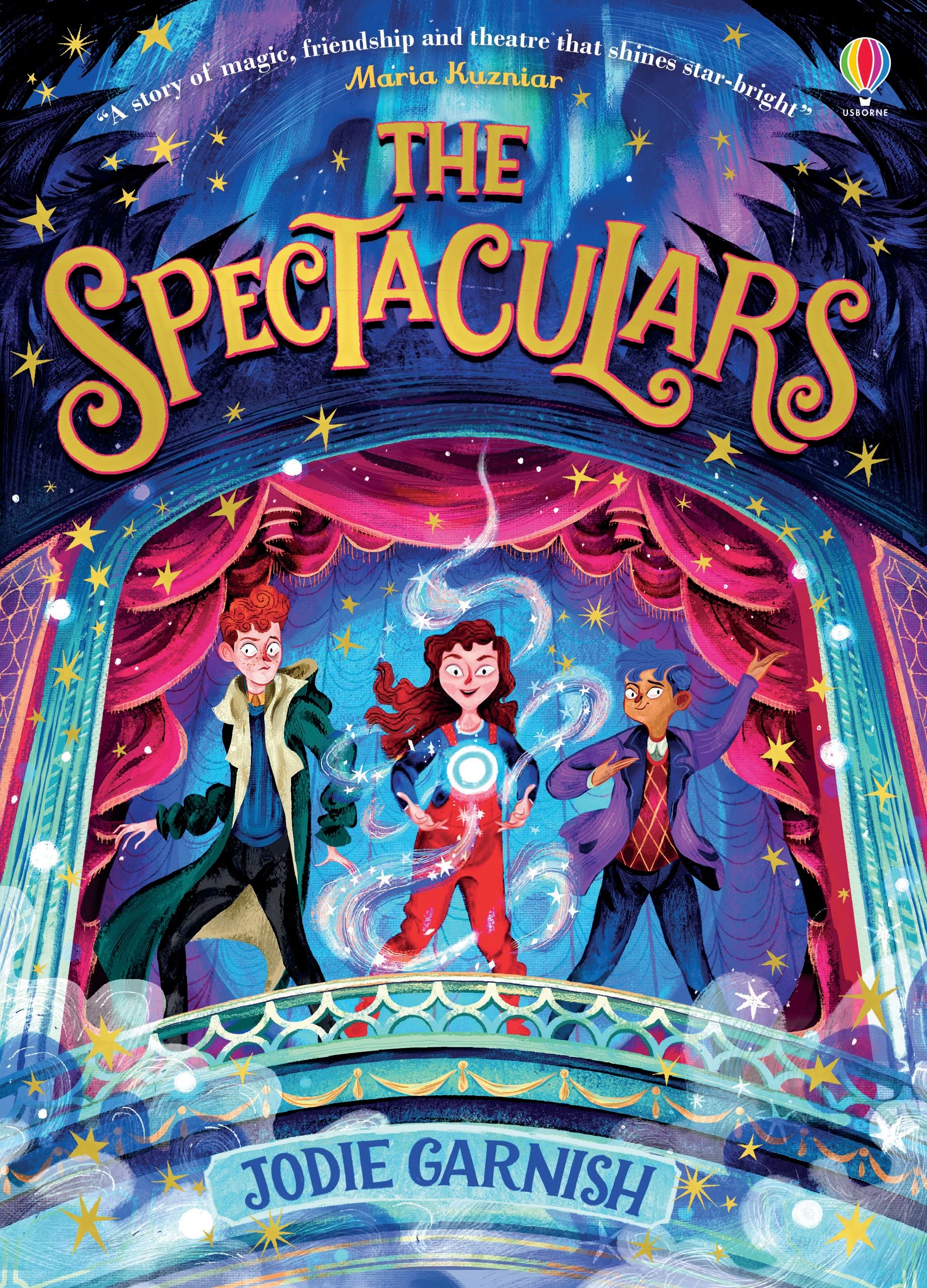
Book Review: The Spectaculars

Title: The Spectaculars

Written by: Jodie Garnish

Cover by: Nathan Collins

Published by: Usborne

The Spectaculars by Jodie Garnish

The Spectaculars is the first in a series of books about a group of magical performers with gifted special powers from the stars.  

I was enticed to read this book by the beautiful cover illustrated by Nathan Collins. However, it took me a while to get into the story and feel any rapport for the main protagonist, eleven year old Harper Woolfe, but after the first three chapters I was hooked.

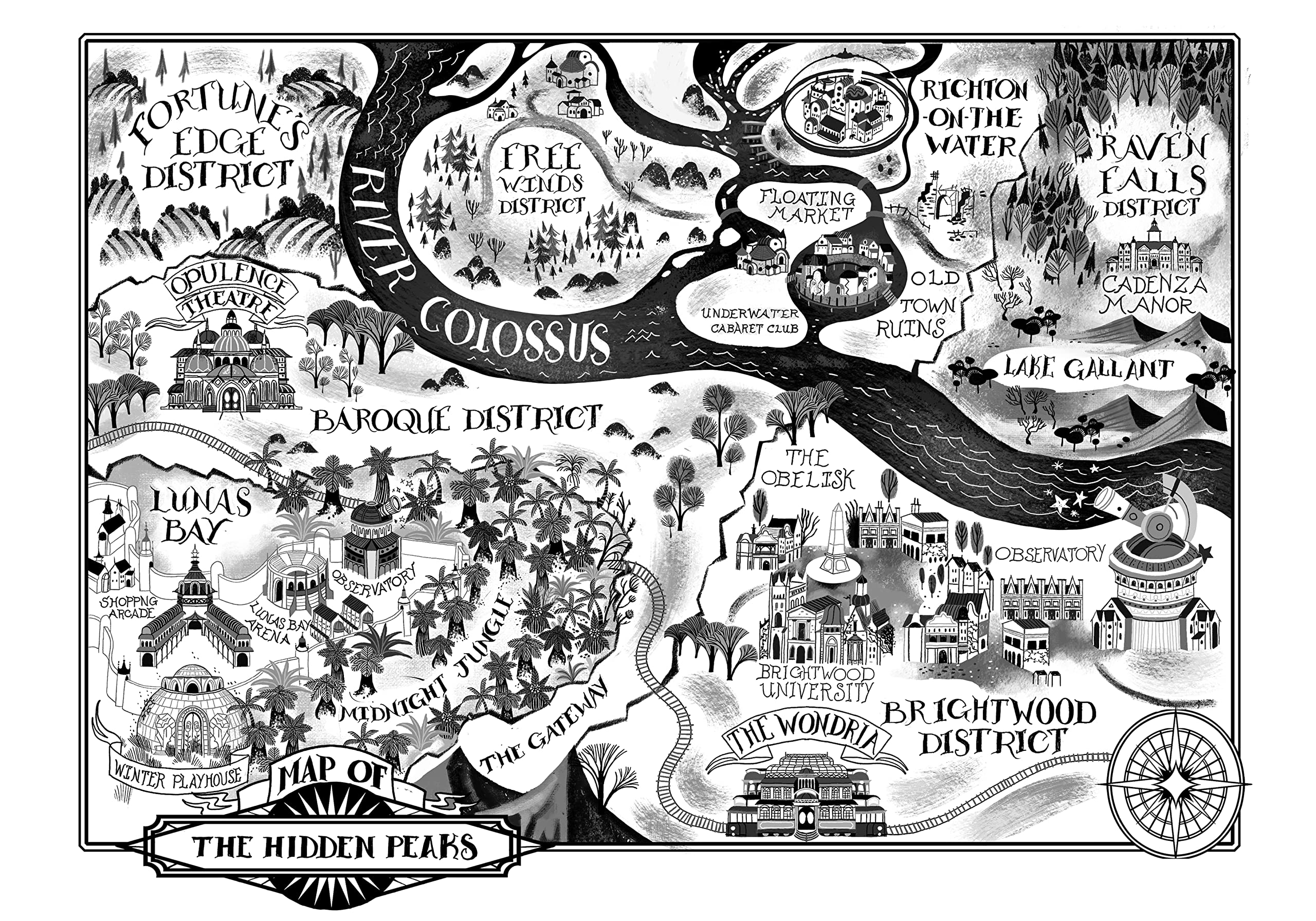
When three figures arrive at Harper’s window in a flying canoe, informing her that she is due to start her apprenticeship, Harper discovers she is a Spectacular. Harper is transported away in the canoe, from the rundown Theatre Borough of the Smoke to the amazing magical world of The Hidden Peaks, dressed only in her pyjamas and dressing gown. She arrives at a magical travelling theatre and boarding school, called the Wondria, which is in a tram and has a multitude of floors, an attic and a giant glass dome.

Like her mum Harper has a love of mechanics but has inherited her dad’s magical abilities to control stardust. One of the mysterious figures is blue-haired Trick who was her best friend before the ‘accident’ that killed her father but her mother had convinced her he was imaginary to spare her the truth of what she had lost. Trick is my favourite character and in a lot of the ways he carries the book. He comes across as mischievous, but he also has a calm and reassuring side to his nature. He is always very supportive of Harper.

She learns that on the day her dad died and the Spectaculars arrived through the Gateway, thirteen stars fell from the sky and were lost. These stars are being hunted for their magical powers.

This well-crafted story reminded me in places of Neil Gaiman’s Stardust and J. K. Rowling’s Harry Potter series but instead of a sorting hat there is a teapot, which brews the perfect tea for their character and instead of the fallen star being human they are animals.

This novel is a fascinating look at how superstition can lead to dramatic over-reactions. Harper is convinced by the spoilt Althea Reed that she is responsible for bringing Misfortune to the Wondria. The accidents and mysterious disturbances to theatre life continue until they threaten to close down the theatre for good. With Trick and new friend Thief the magician, Harper fights to save the theatre and help the fallen stars return home.

Jodie Garnish shows a real talent for creating imaginative worlds as well as some incredible, unique magical creatures, such as a ‘kobold’ called Helja, which can shape-shift into a broom and a mangle. Her  world building is elaborate and impressive. One of my favourite settings is the ingenious magical library where the bookshelves look like they are suspended in the air high above their heads.

The Spectaculars is a fantastic amalgamation of the world of theatre with the world of magic. This is a boarding school story with a difference containing some exceptional twists. I particularly enjoyed the excellent twist at the end when the real antagonist is revealed with a surprising secret.

Ideal for readers 8+. This book would be a beautiful addition to libraries and school bookshelves.

An interview with… Jane Bettany

For this month’s issue of Writers’ Forum #249 30 Nov 2022 I interviewed Jane Bettany about the research she does into murder and forensics when she has no police background.

Although Jane enjoys reading crime novels and watching TV police dramas she is not an ex police officer, nor has she worked in the legal profession To write her crime novels with no career background or experience to draw on, and no friends in the police force, she had to rely heavily on research.

Her debut novel In Cold Blood won the Gransnet and HQ novel writing competition in 2019. It features no-nonsense, 56-year-old Derbyshire detective, DI Isabel Blood, who is called to investigate the discovery of a body in the garden of her childhood home (the house in which she last saw her father four decades earlier). It the first in the DI Isabel Blood crime series. Book 2, Without a Trace, followed in 2021, and book 3, Last Seen Alive was published in the spring of 2022. She revealed over the course of her three books, she has learnt a lot about police procedures.

Before starting the research Jane will begin by making a note of what she needs to know. She told me that it’s easy to get bogged down and overwhelmed by researching too much information, so rather than taking a scattergun approach, she tries to be specific. To do this she creates a fictional scenario, and ask what facts she needs to check to make that scene authentic.

“I’ve found information online through websites such as www.police.uk, which is the national website for policing in England, Wales and Northern Ireland. The site has a section called Policing in the UK, where you can learn about crime investigations in action. There’s also a site called www.askthe.police.uk, which has frequently asked questions on topics such as road traffic offences, criminal damage, and court proceedings.”

Jane Bettany

Jane owns a large collection of reference books for crime writers. These include The Real CSI by Kate Bendelow, Criminal Poisoning by John Harris Trestrail, and Crime Writing: How to Write the Science by Brian Price. She also owns all of the Straightforward Guides by Stephen Wade and Stuart Gibbon. Jane explained the series co-author, Stuart Gibbon, is a former UK senior police detective. As well as writing books, he also offers a crime writing consultancy, gibconsultancy.co.uk, providing authors with information to help them write authentically about police procedures.

She now has a useful store of knowledge she can use for future books. Jane said one of the most significant things she discovered was police officers and detectives can’t just go around arresting people willy-nilly; there has to be sufficient evidence against a suspect to justify an arrest. A more likely scenario is a ‘person of interest’ will be asked to attend the police station voluntarily to be interviewed under caution. Anyone brought in for a ‘voluntary interview’ will be told in advance they aren’t under arrest, are free to leave at any time, and are entitled to have a solicitor present during the interview. Each of her books includes at least one ‘interview under caution’ scene.

Jane explained a real murder investigation can involve hundreds of people (detectives, uniformed officers, civilians, forensic teams, custody officers, profilers and so on). It would be impractical (and confusing for readers) to weave all of those characters into a novel. For dramatic and pacing purposes, it’s better to focus on a detective protagonist and his/her core officers. Whilst not strictly realistic, allowing a small team to solve the murder makes for much better reading.

Jane told me ensuring this authenticity has brought all sorts of research challenges. In the opening chapter of In Cold Blood, a skull is discovered. For the purposes of the story, it was important to quickly establish whether the skeleton (which hadn’t yet been fully unearthed by the CSI) was male or female. The only problem was, she knew next to nothing about human bones.

“I searched online for the difference between male and female skeletons. The results provided plenty of diagrams and information, including how to differentiate the sex of a skull based on the slope of the forehead, the prominence of the supraorbital ridges, and the shape of the eye sockets – information I was able to use in my novel.”

Jane Bettany

The setting for the DI Isabel Blood series is the fictional town of Bainbridge, which is based loosely on Belper, the Derbyshire town Jane grew up in. The reason she chose to fictionalise the location was to avoid having to adhere rigidly to the confines of a real place, which Jane found limiting. A fictional town allowed her narrative license and gave an opportunity to embellish the setting for dramatic purposes.

Although the main location of my books is fictional, her detectives travel to plenty of real places within Derbyshire and the East Midlands in the course of their investigations. In one book, there’s a scene where they drive through Matlock Bath – somewhere she has visited regularly all her life. Her first instinct was to mention only the obvious details of the place, but she decided to include some of the features of its topography to give a better feel for the location.

“To refresh my memory, I drove to Matlock Bath and walked its main street – but instead of concentrating on the things around me (the shops and cafes with which I was already familiar), I tried to take in the bigger picture. I gazed up at the hillside above the main parade of shops. I studied the flow of the river, and noticed the way the road followed its curve. I looked for the details the average tourist might miss.”

Jane Bettany

Crime writers are constantly on the lookout for new crime scenes, or mulling over innovative ways to investigate murder (and new ways to kill people!). Jane’s tip to writers planning to write a crime novel is to join one of the short criminology or forensic science courses on futurelearn.com.

If you search the site for ‘forensics’ or ‘crime’, you will find lots of courses on offer. Created by UK universities, these short courses can be joined for free with time limited access), or you can subscribe or buy a one-off course if you prefer. It’s a great way of learning online from academic experts. Who knows… one of these course might inspire your next crime novel?

You can find out more about Jane on her website www.janebettany.co.uk and follow her on Twitter: @JaneBettany and Facebook: @JaneBettanyAuthor

To read the complete feature you can purchase a copy of #249 30 Nov 2022 Writers’ Forum by ordering online from Select Magazines.

To read my future Research Secrets or Writing 4 Children interviews you can invest in a subscription from the Writers’ Forum website, or download Writers’ Forum to your iOS or Android device.