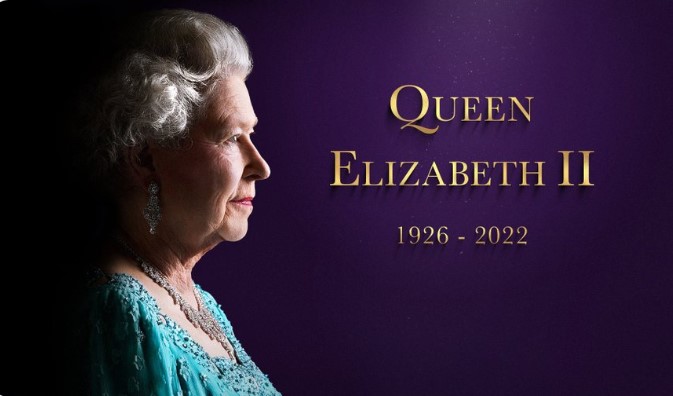
Such an inspiration to us all.

You will be sadly missed.
Such an inspiration to us all.
You will be sadly missed.
Title: Indigo Wilde and the Creatures at Jellybean Crescent
Written and Illustrated by: Pippa Curnick
Published by: Hachette Children’s Books

Indigo Wilde and the Creatures at Jellybean Crescent is the first of a new series from author/illustrator Pippa Curnick, aimed at the 7+ age range. The humour is similar to David Walliams books.
This ingenious story is about Indigo and her little brother, Quigley, who is deaf. Their parents are famous exploders who go on a lot of expeditions to the known and unknown lands leaving them home alone. They post Indigo a unique assortment of orphans and misfits, such as the yeti twins, pink Ollie and blue Umpf, whose luminous coloured fur make them highly conspicuous in the snow and the ferocious looking but kind-hearted Queenie, the sharp-clawed goblin. They all live in a massive house that is different to any of the other houses on Jellybean Crescent but none of the neighbours seem to notice. That is none but Madam Grey and her pet dog Pebbles who lives opposite.
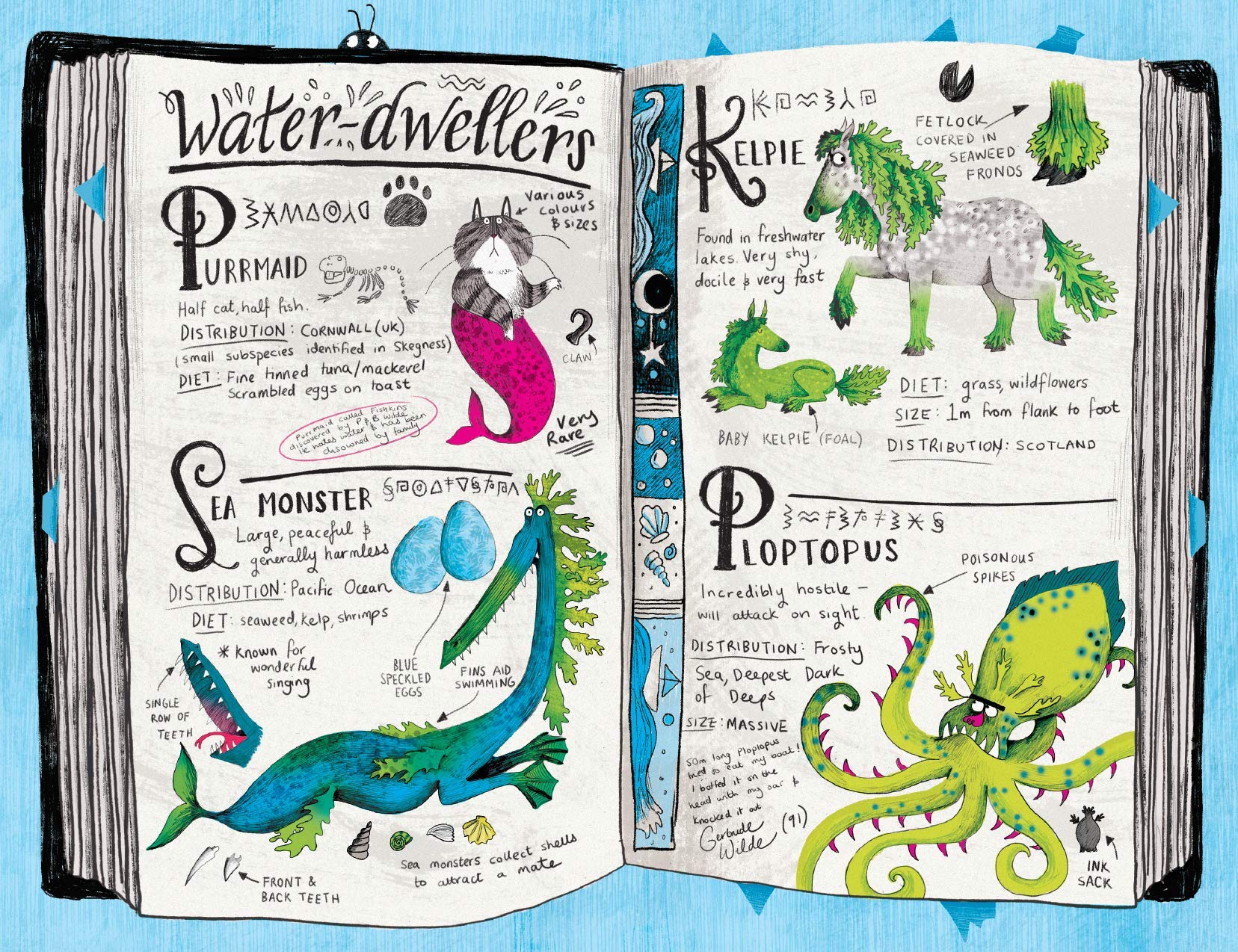
Forty-seven Jellybean Crescent is a sanctuary where the Monster Mail deliveries can belong without being bullied or afraid. They are all listed in The Abracadarium, an incredibly imaginative compendium of sketches with How To Train your Dragon style notations of Indigo’s observations on the magical creatures she has encountered.
The book opens with a newspaper style article of when the Wildes found Indigo. We then meet Indigo at the age of about ten when she receives some new Monster Mail that sends the comparatively peaceful household into chaos. All the inhabitants have to pull together to solve the problem of the missing creature and the complaints from the nosy neighbour.

Indigo Wilde and the Creatures at Jellybean Crescent is jam packed full of beautiful illustrations guaranteed to capture even the most reluctant readers attention and bring Pippa’s characters to life. There are some amazing double-page spreads for young readers to explore. This book would be ideal for all primary school book corners.
This book was originally reviewed for Armadillo Magazine
Today is my stop on the Phyllo Cane and the Magical Menagerie by Sharn W. Hutton blog tour.

Sharn W. Hutton is the author of The Adventures of Phyllo Cane series, the first of which, Phyllo Cane and the Circus of Wonder, was hailed by the judging panel of The Booklife Prize to be ‘dizzyingly bewitching, articulate and intoxicating.’ The sequel, Phyllo Cane and the Magical Menagerie, was released on July 31st 2022.
In Magical Menagerie we Join Phyllo on his next apprenticeship with the Circus of Wonder – a brand new adventure with the fantastic beasts of the Magical Menagerie and a race against time to save their lonely dragon from destruction. But what if the fire-breathing dragon won’t come out of its pen to perform? What if the Ringmaster thinks it’s worth more in the apothecary chop-shop than as part of the troupe?
The Beast Whisperer of the Circus of Wonder must bring her beloved dragon back up to its performing peak fast, if she’s to save it, and she thinks she knows what to do. The unhappy creature needs a mate, but the male sand dragon is a rare beast indeed, and she’ll never be able to catch one alone. Time for Phyllo to become the Beast Whisperer’s apprentice…
Before venturing into the realms of upper middle grade/YA magical fantasy, Sharn wrote cosy mystery based around the irrepressible Angel Drake, in Angel Drake is Going Solo and the short story, Nothing Ventured. Her first novel, It’s Killing Jerry, was a standalone mystery.

Based in Bushey, Hertfordshire, Sharn works from home in the tiny office at the back of the house, which makes up for what it lacks in size and warmth with a rather nice view of the garden. When she isn’t hitting the keyboard (laptop, not piano) she does enjoy a trip to the theatre or cinema and pretends to use the very expensive exercise machine rusting in the summerhouse. One day she plans to also learn how to play the piano.
I have interviewed Sharn W. Hutton about her Phyllo Cane series for my stop of the blog tour. So let’s take a look at what Sharn had to say:
*****
What inspired you to write a magical adventure series set in the circus?
I’ve always loved magical stories, Charlie N Holmberg, Pratchett, Gaiman and, of course, the Potters and when I decided that I wanted to create my own magical world, I knew I wanted it to be rich with detail. The circus is so full of possibilities. Death defying acts, incredible strength, impossible feats – it’s full of magic before you even get to any kind of wand waving.
I also knew that I wanted the Circus of Wonder to feel like it was from another time, travelling around today’s countryside, playing to charmed and ordinary audiences alike. That opens the stories up for all kinds of possibilities.
We live in such a ‘convenient’ world. Everything is available at the touch of a button. You can buy pretty much anything online and search the internet to find any information you need. The tradition of the circus pushes back against that. If you’re lucky enough to catch it, it comes to town once a year. You might get a ticket, if it’s not already sold out. The acts could be anything and they probably aren’t safe. I love how illusive, mysterious and dangerous it is.
Have you been on any literary pilgrimages and if so what were they?
I’m all about the research at the moment, plotting the next story, and have become a member of the British Library. Real life stories about the circus world are sometimes stranger than fiction and are an excellent source of ideas. I love books, really old ones and spanking new, you never know where what’s inside might lead you.
I bought a book about circus food which led me to discover Giffords Circus, which not only feeds the troupe in its restaurant tent, but a lucky few punters as well, if you can get yourself a seat. When I saw that Gifford’s route was going to come unbelievably close to where I live for the first time, what choice did I have but to book myself in for the show and some dinner?
Visiting Giffords felt a lot like visiting the Circus of Wonder. Small by the grand circus tent size terms we often see, but perfect to get enough people in the crowd for atmosphere in their themed and moodily lit big top. There were traditional acts where acrobats summersaulted on horseback and knife throwers terrified us with a crossbow. Then flyers who walked in the air above the crowd gripping silks, just like Ezio did in the Circus of Wonder. It was an incredible experience that felt totally real in a world of special effects and TV trickery.
The restaurant was a series of long plank tables with the only choice being vegetarian or not. Everyone had the same. People were served in groups, whether they knew each other or not and by the end of the evening we all felt like family. I’d go again in a heartbeat.
Perhaps a pilgrimage should take more effort – that particular one was a joy.
What are the underlying themes of your novel, Magical Menagerie?
In Magical Menagerie Phyllo learns about the impact of his society upon the natural world and about taking responsibility for his actions. I wanted to touch on this in a way that might inspire a reader to consider if the practises around them, considered to be the normal, are really worth their cost.
There are new characters introduced too, one of whom I am particularly enthusiastic about, Schlepper. He is Contraptionist (that’s an inventor of contraptions to you and me!) who, as a wheelchair user, invents leg alternatives for himself. He is a hugely positive and engaging character inspired by my father, who never once allowed his physical challenges to slow him down.
All this along-side a romping good adventure of course!
Do you think it is more difficult or easier to write a sequel?
I think that depends on your plan from the start. Before writing the ‘Adventures of Phyllo Cane’, I wrote a cosy mystery called ‘Angel Drake is Going Solo’. I fully intended for Angel Drake to be the star of a series of mysteries, but that first book was the entire story I had in my head at the time. Getting ready to write book two was difficult because I felt like I had to reinvent her.
With the ‘Adventures of Phyllo Cane’ it’s completely different. When I came up with the idea it formed as a series of stories, seven in total. When I finished book one, I knew that really the story was only just beginning. Don’t misunderstand me, I don’t have every single detail planned out, but I know broadly where we are heading and I’m excited to tell the next part of the story.
Now I’m plotting out the third and I don’t think that’s anywhere near as daunting as it might be otherwise.
What is the first book that made you cry?
I had to really think about this and honestly, I don’t read books that make me cry. I like to escape into my stories and if I think that place is going to be one of tears (or horror) then I’m not going.
Having said that, I did shed a tear when Phyllo completed his task with Tamer Venor and was flying home – it had all been such a struggle!
If you could meet your characters, what would you say to them?
I’d tell Phyllo not to give up or lose heart. He’s got a challenging road ahead.
I’d ask Tamer Venor to teach me how to meld with a dragon.
I’d ask Marvel to make me something in the Confectionary that brought back memories of rolling down grassy hills in the sunshine with my childhood friends.
What writing advice would you give to people aspiring to be a children’s book writer?
Know you audience and how they consume stories. I specifically sought out an editor with lots of experience in the area I wanted to write in. Their advice was invaluable.
Is there anything else you would like to tell readers about your books and writing for children?
Phyllo Cane is an imperfect hero. He’s struggling to meet the expectations of his troupe, but will never give up. He’s got kindness at his core and in the end that will be the making of him. The Adventures of Phyllo Cane are tales of growth, discovery, magic and adventure and I hope that they will resonate with young and older readers alike. They are suitable for children, yes, but I like to think of them as fantasy with a PG rating, rather than being babyish in anyway.
Thank you Sharn for agreeing to be interviewed on my blog today as part of your tour.
Thanks very much for taking an interest in my stories about Phyllo Cane. I really hope you enjoy them. Best, Sharn.
*****
The Adventures of Phyllo Cane are available as ebook for Kindle and are included in Kindle Unlimited. Paperbacks are available for order from Amazon, Barnes and Noble, Waterstones. Most book stores will be able to order it in. If you visit the Amazon pages you will be able to see full descriptions and the possibility of downloading a free sample for kindle. The international book link to the series is: mybook.to/PhylloCane
You can find out more about Sharn W Hutton and her book Phyllo Cane and the Magical Menagerie on her website: www.sharnhutton.com, Facebook: @SharnHuttonAuthor and Instagram: @sharnious
I would also like to thank Anne Cater from Random Things Through My Letterbox for organising this blog tour and inviting me to take part. Thank you.
You can visit the rest of the blog tour here:

My book review of Phyllo Cane and the Magical Menagerie by Sharn W. Hutton is scheduled to appear next month, on Wednesday 26th October, so please keep an eye out for it.
My stop on the Petra and the Sewer Rat by G J Kemp blog tour today, will take the form of a book review.
*****
Title: Petra and the Sewer Rats
Written by: G. J. Kemp
Cover illustrated by: Andrei
Published by: TB5 Publishing

A quick and easy read. Petra and the Sewer Rats is the story of a young girl who dares disobey the town of Fairacre’s rules to save its unwanted orphans. The town is ruled by men who treat women like property. Petra is a plucky and persistent character who has to deal with being entered into an arranged marriage and then discovers she is pregnant by another man.
This novella provides a fascinating peek into a dark and dangerous world. I found there were a lot of characters to keep track of in such a short book. These characters may have been more familiar to me and easier to identify with if I had read some of the other books. Most of the action is moved on by speech which moves at a rapid pace.
Petra and the Sewer Rats is a story of discovery and determination. I can imagine it as a play performed on the stage, Oliver Twist style.
I would like to thank Anne Cater from Random Things Through My Letterbox for inviting me to take part in this blog tour. Thank you.
You can follow the rest of the tour at the stops below:

You can find out more about G. J. Kemp on his website: www.gjkemp.co.uk and follow him on Twitter @tb5publishing, Instagram @tb5publishing and Facebook @tb5publishing.
Title: Am I made of Stardust?
Written by: Dr Maggie Aderin-Pocock
Illustrated by: Chelen Ecija and Jade Moore
Edited by: Frances Evans
Published by: Buster Books

Each double page spread of this hard-back, colourfully illustrated non-fiction book answers some of the greatest questions about space. It is packed with fabulous facts that will keep curious young minds engaged. The bold, eye-catching illustrations and backgrounds by Spanish illustrator Chelen Ecija will also keep young children flicking through the pages.
Author Dr Maggie Aderin-Pocock is a space scientist and pioneering figure in communicating science to children and adults alike. She has inspired generations of astronauts, engineers and scientists to follow their dreams. Her expertise and love of all things space orientated materialises form every page. I also like the addition of her robot assistant IQ and the useful glossary at the back of the book to provide definitions and extend the children’s science vocabulary.
In Am I Made of Stardust? the secrets of the solar system are revealed. You can follow the life of the International Space Station, be amazed at how stars can change into planets and discover why we don’t live on other planets yet, what would happen if I fell into a black hole and how to become an astronaut.

Aimed at key stage two, the writing style is accessible for readers from about 7+. there are over seventy questions in total split into three chapters. Starting with the wider picture there is a section on The Universe. We get closer to home with a section on Our Solar System. Then closer still with the final chapter Humans in Space, which covers such subjects as current space exploration and developments in the future with questions like ‘Could we grow plants in other planets?’, ‘Could I use my phone in space?’ and ‘Will everyone be travelling to space in 100 years from now?’
Am I Made of Stardust? will make an ideal gift for any child fascinated by space and all it entails. Children will enjoy discovering Astro facts and phenomenal ideas to try at home, which will inspire enquiring readers to explore and discover more about the earth and beyond.

This book would also be a great addition in the classroom to support a topic on space and/or technology and would be perfect for World Space Week on the 4th -10th October 2022.
I would like to thank Alice Furse from Michael O’Mara Books for sending me a hard-back copy of Am I made of Stardust by Dr Maggie Aderin-Pocock and Chelen Ecija to review on my blog.
For a change I am going to end this book review with a topical space joke:
Q. Why do restaurants on the moon get such bad reviews?
A. There’s no atmosphere.
Feel free to comment with some of your own space jokes.
I would like to thank Alice Furse from Michael O’Mara Books Limited for organising me a review copy.
For the #247 21 Sep 2022 issue of Writer’ Forum I spoke to Roo Parkin about how research is core to success as a picture book writer.

Roo’s debut picture book Sid’s Big Fib focuses on two children desperately trying to out-brag one another. While Sid’s pretty good at showing off, Lulu’s skills are simply stellar, driving Sid to launch a lie of epic proportions.
She explained a combination of things inspired the story’s themes: children’s propensity to wind up friends or siblings by claiming their ice cream is definitely the biggest, whippiest, chocolatiest etc and, secondly, the amount of ‘braggy’ truth distortions out there on social media platforms.
Roo said she realised a story exploring where showing off and fibbing could lead would resonate as much with parents reading the book to their children as it might with the children themselves. Her challenge was to make the brags, fibs and comeuppances themselves completely child centric.
When she started drafting Sid, she read some psychology articles on children bragging to help her understand what was motivating her characters. Through this research she discovered, Dr Susan Engel observed while younger children are happy to just imagine they are the fastest kid in the world, an older child realises it’s not good enough just to think that – they have to prove it. This really helped Roo escalate her story and push it into another phase. She elaborated that Sid and Lulu start off just boasting, but Sid takes things one step further, concocts an enormous lie and then gets himself into a big knot trying to prove the lie is real. from that point onwards her story’s plot and the extent of Sid’s fibs escalate.
Roo beleives doing proper research for picture books is as important as it is for any genre. Not only should length, word choices and structure fulfil expectations, but the content should be ‘correct’. That doesn’t mean you can’t create completely fantastical worlds and characters. They are great hooks but it is important not to mislead children and for the story to still makes sense.
She told me the importance of researching the content was drummed home quite dramatically.
“Sid concocts an outlandish story about his dad’s fictional space rocket and the things he brings home from those adventures. Dad is supposed to be going deeper into space with each trip as the lie evolves, but in actual fact, I had completely rearranged the galaxy with planets and moons quite randomly distributed in a nonsensical order. After researching the correct order, I quickly sorted this out.”
Roo Parkin
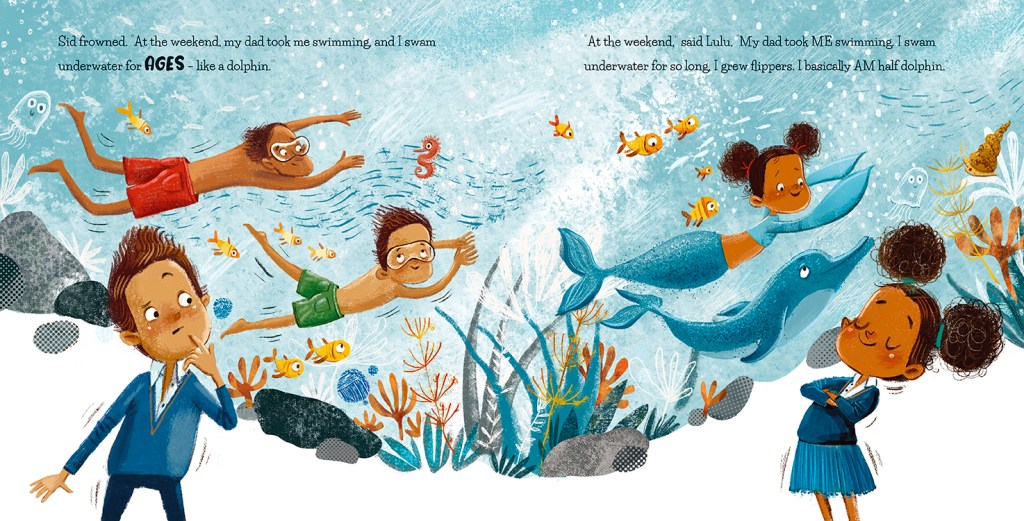
Another example or necessary research Roo told she required was for the part when Sid’s nemesis, Lulu, claims she can swim underwater for so long she grows flippers. she explained her art note requested she be depicted as half dolphin/half childbut when doing the art note research for her fantastic illustrator Irina Avgustinovich, she had a crisis about whether dolphins had flippers at all, or if they were actually called something else.
“I knew there was a TV series called Flipper but, really, I had no idea whether that was because the starring dolphin had them or because he could ‘flip’ in the air. A call to my young godson, whose animal knowledge is off the scale, sorted me out: ‘Yes, of course dolphins have flippers… and a fin, a fluke and a melon’. A fluke is apparently the tail, and the head bulge is the melon.”
Roo Parkin
Roo also explained it’s important to get character voice right because you need to hook the reader in straight away. Children simply won’t stick with a book, even one that’s being read to them, if they don’t identify with or recognise the characters in any way.
“Libraries are an absolutely brilliant resource for writers. I spend hours in my local library analysing picture book themes, characters and their voice, story arcs and endings. I was pleased to find that while there obviously were books in existence touching on similar topics as ‘Sid’, it wasn’t an overly cluttered market.”
Roo Parkin
One of her research tips to other writers is to havea good trawl through the internet to help widen your research of the genre you are writing. Ideally, you don’t want to be submitting something with the same title as another book or to a publisher who has just released something on an identical subject.
She also suggests children’s book writers should visit the fantastic children’s book exhibits available. There have recently been big, glitzy exhibitions in London on Alice in Wonderland, Paddington Bear and Beatrix Potter and her favourites are the small Dahl Museum and Story Centre in Great Missenden.
You can follow Roo Parkin on Twitter: @RooParkin and Instagram: @roogirl73.
You can buy a copy of, Sid’s Big Fib by Roo Parkin and Irina Avgustinovich, direct from the publisher Maverick Publishing, from your local bookshop, or you can also purchase a copy online at uk.bookshop.org, an organisation with a mission to financially support local, independent bookshops.
I would like to thank Abi Reeves at Maverick for sending me a copy of Sid’s Big Fib by Roo Parkin and Irina Avgustinovich to review on my blog.
To read the complete feature you can purchase a copy of #247 21 Sep 2022 Writers’ Forum by ordering online from Select Magazines.
To read my future Research Secrets or Writing 4 Children interviews you can invest in a subscription from the Writers’ Forum website, or download Writers’ Forum to your iOS or Android device.
Title: Secrets of an Undercover Activist
Written by: Nat Amoore
Cover illustrated by: James Lancett
Published by: Rock the Boat
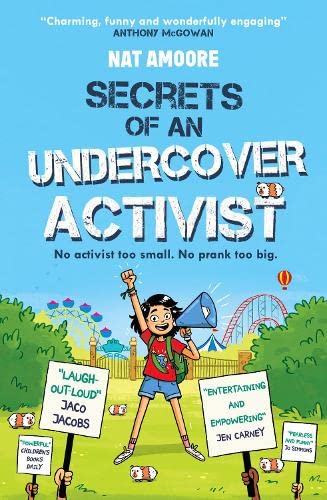
Secrets of an Undercover Activist by Nat Amoore is a great book to read aloud to an upper junior class. Nat’s energy definitely makes it such a fun read. Set in Australia the issues and the children’s reactions are easily relatable to children in the UK and the rest of the world. Nat Amoore has created three distinct voices worth listening to. Each character has well-developed motives and intentions. A very real and thoughtful novel with many underlying important themes:
“…how far is too far, grief, loss, family relationships, friendship and community, finding your tribe, disability representation, self-reliance, making yourself heard, standing up for what you believe in and the grey area between right and wrong.“
Nat Amoore quote taken from my interview with Nat for her blog tour on 15th July 2021.
You can read the full interview here: Blog Tour – Secrets of an Undercover Activist by
Our main character, Casey Wu, tries to stay out of the spotlight, which is why no one would suspect her of being the mastermind behind a string of attention-grabbing pranks at her school. Together with best friends Zeke and Cookie, she is part of Green Peas – a secret activist organisation, designed to make adults sit up and pay attention to important environmental issues. But when these three Year Six activists get wind of a major cover up in their town, things really start to get serious and so they stage their biggest prank yet.
Secrets of an Undercover Activist is an inspiring story, encouraging reader’s to stand up and do something positive to help the environment we live in and to ultimately help our planet. I love the way the dialogue flows so easily and the children voice their feelings freely about losing their local park. Casey Wu is truly an enigmatic character whose motives are direct from the heart to make the world a better place.
The Green Peas Manifesto is pure genius. I particularly like Rule 14:
Always listen to others. No idea is too crazy.
But my favourite rule must be Rule 25:
Always try to be a better person. But in the end, be the best you can.
This is a message we should all strive towards. This middle grade novel would be a brilliant starting point in a Year Five and/or Year Six class on things they can do to make a difference, no matter how small and also for discussing when a prank is no longer funny, viewing things from different character’s points of view – even Fiona Gill, the corrupt Mayor’s viewpoint. I really did laugh out loud at some of the Green Peas’ pranks. it reminded me of the humour in Gerald Durrell’s My Family and Other Animals.
It is not surprising Secrets of an Undercover Activist was the winner of the Environment Award for Children’s Literature in Australia and has been shortlisted for the Readings Children’s Book Prize 2021 as well as being shortlisted for the Young Australians Best Book Awards for Older Readers. It is good to let children know that they can make a difference. I would recommend this book to children aged 8+. A brilliant, fast-paced adventure that will have you laughing in your seats. The bright and alluring cover by James Lancett make it an easy book to pick up but the plot and characters make this an extremely hard book to put down.
********
I would like to thank Anne Cater from Random Things Through My Letterbox for organising not only the blog tour but also a review copy of the book. Thank you.
You can find out more about Nat Amoore on her website: https://www.natamoore.com/ and follow her on Twitter @nat_amoore on Instagram @nat_amoore and on Facebook @NatAmooreWriter. Check out her podcasts on YouTube at: Nat Amoore.
You can buy copies of Secrets of an Undercover Activist by Nat Amoore from your local independent bookshop, or online at uk.bookshop.org, an organisation with a mission to financially support local, independent bookshops.
I interviewed Emily Ann Davison about how she developed her characters for her picture book, Every Bunny is a Yoga Bunny, for the #246 17 Aug edition of the UK national writing magazine, Writers’ Forum.

Emily told me as a child she enjoyed writing stories and songs, so it wasn’t really a huge surprise that as a grown up she returned to writing. She also worked with young children for many years, and this is where she discovered her enthusiasm for children’s books, in particular picture books. One day, a picture book idea popped into her head and she revealed now the ideas just won’t stop popping.
She explained the inspiration behind her debut picture book, Every Bunny is a Yoga Bunny which is published by Nosy Crow, came from working with children and being a mother. She understands just how wriggly young children can be, and felt there was a place for a book to help wriggly children feel calm. She wrote this story at a time when her daughter was finding it particularly hard to feel calm at bedtime, so Emily had started to try different relaxation techniques to help her. She discovered the main thing that helped was yoga!
“I’d previously written a draft picture book about a family of monsters doing meditation. Doing yoga with my daughter, reminded me about this story, so I dug it out and transformed it into a story about yoga, calm and mindfulness and features an excitable bunny called Yo-Yo!”
Yo-Yo is a fidgety, bouncy, can’t-sit-still-EVER type of bunny. Grandpa suggests the bunnies try yoga, but even that doesn’t stop her wiggling and giggling. Yo-Yo later finds herself lost and all alone in a shadowy forest. She feels panicky, but maybe Grandpa’s yoga will be able to help… At the end of the book, there are simple step-by-step instructions so children can stretch, feel calm and be a yoga bunny too.

Emily said when writing for young children, it’s important the characteristics or experiences of a character are relatable to a young child’s own life experiences. It was important to Emily, that at the end of the story Yo Yo was still wriggly and giggly, and found it tricky to sit still as she didn’t want the character to change her personality, she wanted Yo Yo to learn a method of feeling calm by using yoga.
Some stories are all about the setting. For Every Bunny is a Yoga Bunny, it is the concept that is most important. Emily told me when writing picture books it is often the characters and concept of the book that dictate the plot and theme.
“Young children have a very short attention span, so it is important to keep the pace going. You need to have some type of suspense in the story or some type of escalation throughout the book.”
She also revealed for a picture book, page turns are important. At each page, you want the child to HAVE to know what happens next. her suggestion is to think of page turns as a ‘flap’ in a ‘lift the flap’ book. The page turn can be used as a reveal.
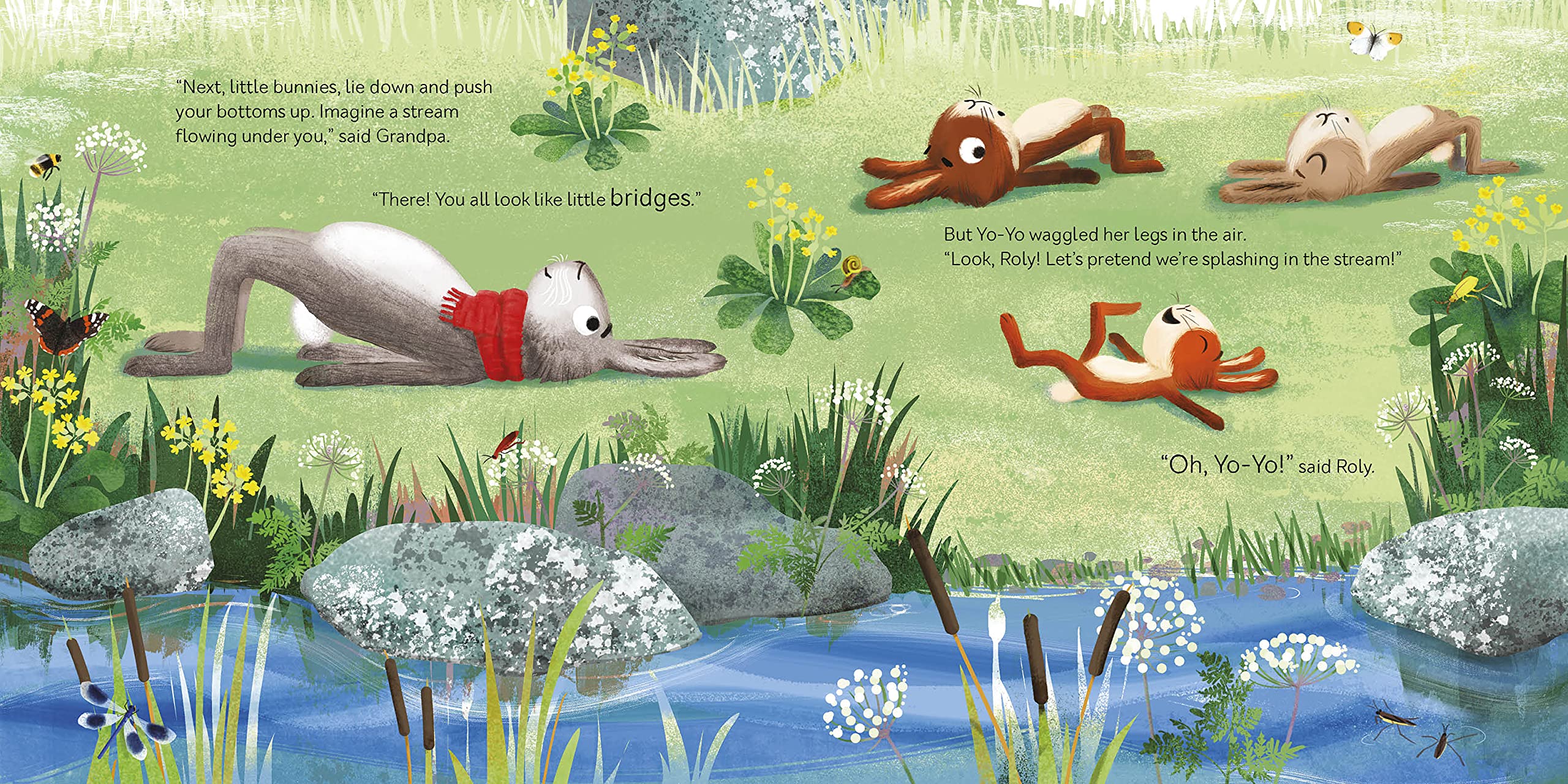
Emily’s advice to other writers wanting their picture book manuscript published is – do the research. Research picture books. Research publishers and agents before submitting. Know as much about the world of picture books as you can and try to connect with other picture book writers. The journey is much easier when you have a network of writers around you, who you can share the highs and lows with.
Find out more about Emily on her website www.emilyanndavison.com and follow her on Twitter @emilyanndavison and Instagram @emily.a.davison.
To read the complete feature you can purchase a copy of #246 17 Aug 2022 Writers’ Forum by ordering online from Select Magazines.
To read my future Writing 4 Children or Research Secrets interviews you can invest in a subscription from the Writers’ Forum website, or download Writers’ Forum to your iOS or Android device.
Title: The Crocodile Curse
Written by: Saviour Pirotta
Illustrated by: Jo Lindley
Published by: Maverick

The Crocodile Curse by Saviour Pirotta is an exciting fantasy adventure seeped in Egyptian legend and a definite page-turner that will keep young readers hooked from the start. It is the second of the Nile Adventures published by Maverick and continues on shortly after the first book, The Heart Scarab ended.
As with The Heart Scarab it is written from the point of view of two very different voices: Renni a young artist apprentice who specialises in decorating tombs and temples and his elder brother, Mahu, a farmer in the Black Lands, who dreams of becoming a sailor. It was trying to achieve this dream that catapulted them into their last adventure where they had to return the heart scarab to General Tatia’s tomb to defeat the evil visier, Paser. The visier is a fantastic devious and currupt villain who the readers will be willing to fail.
On a trip with their friend, Princess Balaal, to Shedet to witness the Choosing Ceremony of the Golden One, they discover the visier is plotting to overthrow Pharoah Ramesses to seize power for himself. Renni, Mahu and Balaal have to find a way to stop him. Jo Lindley’s lovely illustrations portray the characters just as Saviour Pirotta describes them and brings the Egyptian setting to life.
I particularly liked the dynamics of the relationship between the two brothers. It was believable and realistic. They both take their responsibilities very seriously. Renni wants to make his uncle proud of his artistic abilities and since their father died it is up to Mahu to support them and their mother.
The Nile Adventures are ideal books for supporting a KS2 topic on Ancient Egypt. There is a concise Egyptian glossary at the back of each book and information about some of the Ancient Egyptian gods and places mentioned in the book, which is enhanced by the map at the beginning of each book. However, I felt the map in The Crocodile Curse could have included the Valley of the kings where chapter one opens and it would have been nice if the Ipet-Isut temple was labelled. This would help the reader to get their bearings and make comparing it to the map in The Heart Scarab easier.
A great edition to any school libray.
The Crocodile Curse is due to be released next week on the 28th August. You can buy a copy of, The Crocodile Curse by Saviour Pirotta and Jo Lindley, direct from the publisher Maverick Publishing, from your local bookshop, or you can also purchase a copy online at uk.bookshop.org, an organisation with a mission to financially support local, independent bookshops.
I would like to thank Abi Reeves at Maverick for sending me review copies of both The Heart Scarab an The Crocodile Curse. Thank you.
For the #246 17 Aug edition of Writers’ Forum, Katherine MacInnes, explained the challenges of writing a biography for a fatal historical event from the viewpoint of the people who were left behind.

Snow Widows: Scott’s Fatal Antarctic Expedition by the Women Left Behind was Katherine’s way of showing the familiar story of these heroic husbands, fathers, sons and brothers who lost their lives on this epic expedition from the point of view of the women whose lives would be changed by it forever. Her aim was not to analyse, but to try to place the stories in their historical context and let the women speak for themselves.

Katherine told me how these women were truly inspiring.
“If I had chosen my subject on the basis of available material I would not have written Snow Widows. When I first started researching the Snow Widows over a decade ago, they were invisible. I was looking for inspiration at the time because my husband was about to climb Everest (our children were nearly five, nearly three and nearly one). He climbed it and came home, but by then I had discovered the treasures that are Oriana, Kathleen, Caroline, Emily and Lois. They have continued to be inspiring companions for me over the years as I hope they can now be for those who read my book.”
Katherine MacInnes
Katherine elaborated how Oriana Wilson, a true partner to the expedition’s doctor, was a scientific mind in her own right. She was a naturalist and partnered her husband on scientific expeditions to New Zealand. She was a recognised collector for the Natural History Museum and I discovered two species had been named for her.
Kathleen Scott, the fierce young wife of the expedition leader was also a renowned artist and sculptor She made portraits of most of the great and the good such as, George Bernard Shaw, Asquith and was a confidant during his time as PM.
The indomitable Caroline Oates was the very picture of decorum and everything an Edwardian woman aspired to be. She was very wealthy and sent funds to Cpt Oates. She’d been widowed before this expedition, and ran a large country estate. Increasingly private and cautioned the family not to talk to outsiders about Cpt Oates.
‘Empire’ Emily Bowers had travelled the globe as a missionary teacher. had travelled the globe as a missionary teacher. She was ‘Birdie’ Bowers’ mother. Her father had been a tailor, but she never admitted her lowly origins. Her daughter married co-op movement’s Sir William Maxwell, and became Lady Maxwell. She lived on the Isle of Bute, Scotland – so quite remote.
Lois Evans led a harder life than the other women, constantly on the edge of poverty. She was a talented and popular singer in South Wales. She wasn’t treated equally with the other wives – getting a much lesser amount of the funds raised for the families, (Evans was a rating, the others were officers). Evans was unfairly blamed for the mission’s downfall – he was assumed to have caused a fatal delay. Scott’s posthumously discovered diary says “loss of reason” but now thought to have had a head injury.
Her starting point was having the famous story as the obvious performance on the stage and the background people as the story in the wings and then she inverted it. Out of choice, she took a seat that gave her a clear view in to the wings of any theatre, the dancers warming up, the actors mastering their nerves. She wanted to see the back of the embroidery, an x-ray of that famous picture, the ‘making of’ at the end of a film.
Katherine told me one of the biggest challenges was researching the expedition from the women’s perspective as most of these women were intentionally invisible, almost self-erasing. Another challenge was giving these women equal balance within the book. Most of them burned their letters before their death (some of them burned their husband’s letters too). The only letters we have from Oriana Wilson are those that she sent out to friends where the friends kept them.
“I wrote articles in magazines and newspapers in the UK and NZ to ask if anyone had some in their attic. Several people did, including one sketch, the only one of hers that survives. It is, appropriately since her husband was Head of the Scientific Staff on the expedition, of two Emperor Pengiuns. Its rather moving. She drew it in April 1912 before she knew her husband was dead. In her sketch one of the penguins is walking away into the distance.”
Katherine MacInnes
She told me original documents have a special power – a link to the past. So she mined numerous sources including Kathleen Scott’s diary, housed at Cambridge University Library, various archives, family papers and books published by surviving expeditioners. She discovered much has been lost, including 50 letters from Taff to Lois, and Wilson’s correspondence, destroyed by Ory, fortunately after an early biographer had read it.
She also bought a book Edward Wilson, Nature Lover on Amazon. Until then everyone had thought that Kathleen and Oriana were not ‘focsle’ friends. But she found an inscription in that book in a hand she recognised as Kathleen’s. So they can’t have fallen out that badly after all. Handwriting gives us not only an indication of character but of emotion. When Kathleen Scott learns of her husband’s death nearly a year earlier, her normally wide rounded script (three words to a line) becomes small and pinched as she tries to master her emotions. It is a direct cipher to a state of mind in a way that carefully stoical, self-curated words may not be.
Her tip to other writers thinking of writing a biography is to buy file dividers and use them, religiously. And be really suspicious of existing photograph captions, especially if your protagonists were as overlooked as hers were. Katherine found so much mis-captioning even with mainstream photo libraries, archives and authorised biographies of the more famous protagonists.
To read the complete feature you can purchase a copy of #246 17 Aug 2022 Writers’ Forum by ordering online from Select Magazines.
To read my future Research Secrets or Writing 4 Children interviews you can invest in a subscription from the Writers’ Forum website, or download Writers’ Forum to your iOS or Android device.
 Much To Do About Writing