What makes a Children’s Book Great?

I think a great children’s book is one which views life through the eyes of the child so the characters come to life as real people. It doesn’t matter what genre it is, what point of view it is in, or what age it is aimed at, if the characters are believable and you can really live their experiences as you read each page, you’ve written a great book.

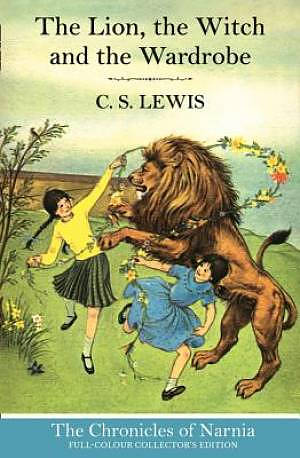
lion, witch and wardrobe

A gripping plot, strong characters and active narration and dialogue go a long way to making a children’s book a success. We all know a  good story is the battle between good and evil. It has to have characters you can like and introduce a new place. It should leave the child with a feeling of hope.

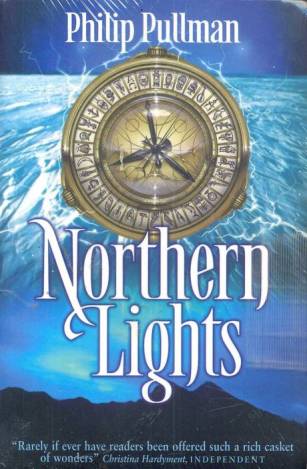
northernlights

Yes, you need great characters, you need atmosphere and emotional intelligence but it is the narrative drive that makes a great book, not the story. Narrative drive is the way the story is told as a whole package that includes character and plot. A great book plunges characters into terrible situations and draws you in to find out how they deal with them.

hunger games

Point of view can make the difference between whether the book is an adult or a children’s book. In picture books, it works well to put in something to keep the adult amused, especially if it meant to be a book to be read aloud at bedtime, or in the classroom. Adults can see the bigger picture. But remember as a writer you must still keep your eye firmly on the kids.

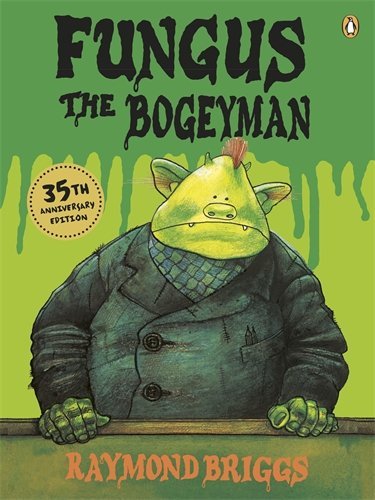
fungus the bogeyman

Publishing is led by fashion and there will always be a tension between what adults want for them and what children get from them. If you want to keep ahead of the game, you must analyse what is currently selling. Being aware of what sells is crucial for a writer, especially if you want to make a living out of it.

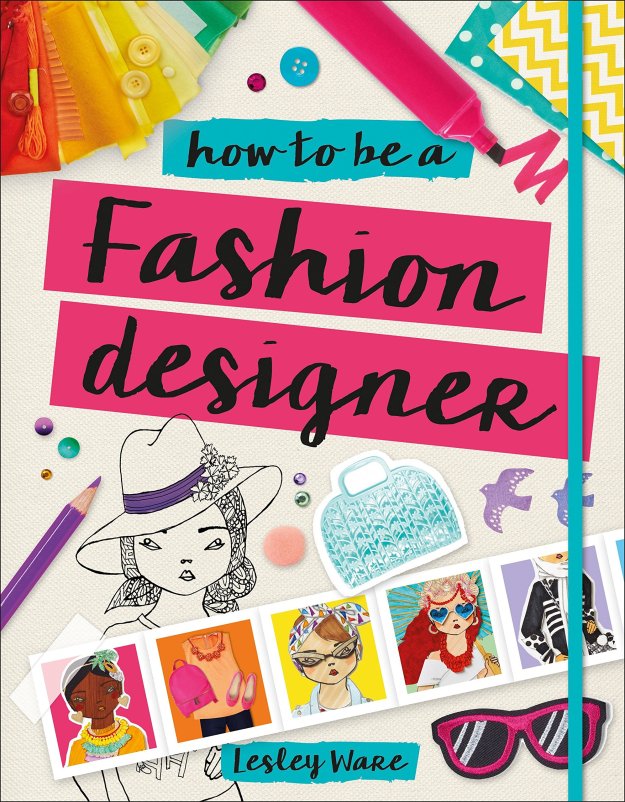
Book review – How to be a Fashion Designer

Title: How to be a Fashion Designer

Written by: Lesley Ware

Illustrated by: Tiki Papier

Published by: Dorling Kindersley

How to be a Fashion Designer

This is a revealing and practical book for anyone who is interested in fashion design. It outlines the difference between a designer and a fashion stylist and gives hints and tips on how to be both. This book encourages the reader to hone their constructive criticism skills in a fun way.

The author is the fantastic fashion designer and sewing teacher, Lesley Ware. She outlines how to produce your own mood board, how to make your own colour palette and how to create a design that suits your own personality. There are loads of hints and tips about materials, colours and where to get inspiration. At the back of the book she has set challenges to design different items of clothing and accessories such as tee-shirts, hats, bags and shoes.

The illustrations are fun and exciting and compliment the text perfectly. You can read small bites of information with a visually stimulating illustration, which will keep even the most reluctant reader interested in true Dorling Kindersley style.

The book is aimed at 7+ but I think it would make an ideal gift for someone who enjoys drawing at any age, or someone interested in doing textiles at secondary school. It would be a good addition to your school resource books and contains loads of ideas you could use within the classroom if you are a teacher at both secondary and primary level. An inspirational book that will ignite the imagination.

An interview with… Lucy Courtenay

Lucy Courtenay has over a hundred books ranging from young fiction all the way through to young adult romance. In May 2017, I interviewed her for the Papers Pens Poets blog about her love of stationery .

She told me her favourite pen at school was a fat-nibbed black Sheaffer fountain pen, which she took particular delight in changing the colour of her ink cartridges and watching the colour gradually bleed. In one notable essay on the Treaty of Versailles, from blue to purple to pink to purple to pink again. She also loves smelly gel pens.

fullsizeoutput_70d

Lucy revealed:

“With notebooks, it’s looks all the way. But looks come with a caveat. The prettier the notebook, the less likely I am to write in it. My favourite – a floppy green nubuck journal printed with brown birds and branches – is still pristine, because I can’t bring myself to make a single mark on its pages.” Lucy Courtenay

She explained she usually tries to make do with the ragbag stationery already in the house rather than buy new stuff. She admits that post-it notes litter her desk with odd words and phone numbers in a rainbow of colours and she likes folders too.

You can read the full interview on the Papers Pens Poets blog.

Find out more about Lucy and her writing  on her website www.lucycourtenay.com

Follow her on Twitter (@LucyCourtenay1), Facebook (@lucycourtenayauthor) and Instagram (@lucycourtenayauthor).

Why write a synopsis?

A few weeks ago on my blog, I talked about how a personal synopsis, or breakdown, of your novel can be a useful planning tool and map to help you complete your novel. See here. Last week I explained the difference between a synopsis for publishers and agents and a book proposal. See here.

Today I am going to talk about whether agents and publishers even read the synopsis. A question that is often asked at writing meetings and events is:

Do we need a synopsis?

This is a very controversial question. Romantic novelists, Dee Williams and Iris Gower, who I met at a Writers Holiday event many years ago, told me they had never had to write a synopsis.

writing1

Others, like Marti Leimbach, writer of contemporary fiction for adults and young adults, admitted writing a synopsis is often harder to write than the actual novel. Whereas, some very lucky people, like Lee Weatherly, claim they are easy to write. Unfortunately, I lost my notebook which had all my notes from the Lee Weatherly talk – I kept saying to myself it was bound to turn up but it never has. I may have left it on the train!

stickynotes

I have been told at a couple of SCBWI conferences by agents and publishers on various panels they don’t even read the synopsis. You should have heard me groan at that news. I spend hours and hours on mine and they’re not even going to read it. I could have stood up and screamed. Even at the recent SCBWI-BI Agent’s Party, three out of the five agents on the first panel said they do not look at the synopsis. Joanna Moult prefers a cracking first page and Kate Shaw will look at the cover letter and sample first. Zoe Plant from the Bent Agency does not even ask for a synopsis in the submission package.

So is a synopsis a waste of time?

NO! I do not think so. Other editors and agents, such as Chloe Seager, have said they do read the synopsis first and prefers to be told how the book is going to end. Some other agents have said if they don’t like the synopsis they don’t bother reading the rest. This is just as scary as I have always believed the most important thing is how strong your writing is.

What should we do?

I still think, the most important thing is how good your writing is but I also think we need a synopsis to show the editor or agent how well the story hangs together and prove it has a defined beginning, middle and end. So even though Megan Carroll does not like spoilers in the synopsis, my advice is persevere with your synopsis. It might help you to clinch the deal.

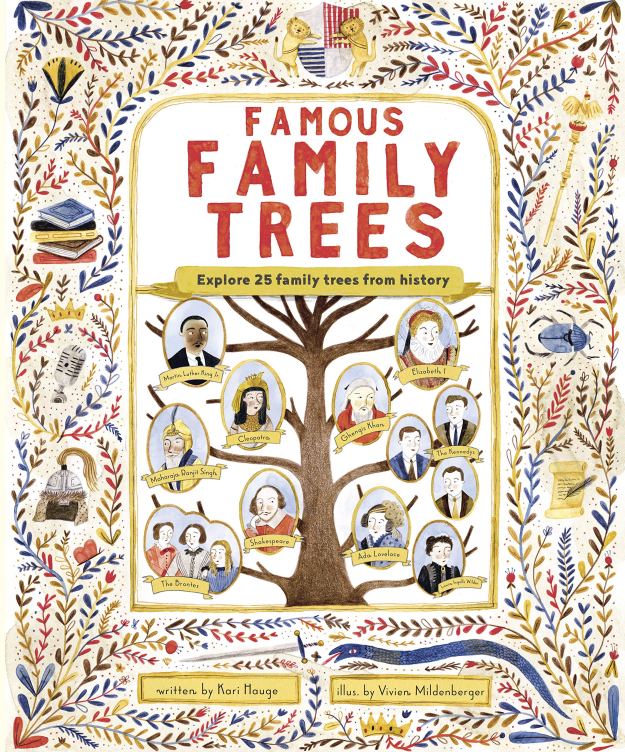
Book review – Famous Family Trees

Title: Famous Family Trees

Written by: Kari Hauge

Illustrated by: Vivien Mildenberger

Published by: Lincoln Children’s Books (an imprint of the Quarto Group)

Famous Family Trees

Kari Hauge has collated the family histories of 25 people who lived from 100BC to AD2013 into one magnificent book. Some, like William Shakespeare, have complicated trees stretching back hundreds of years. Others, like Cleopatra VII and Mahatma Ghandi, have ancestors who are only known through myths, or stories passed down orally over the years. Every spread reveals a treasure trove of information to explore and cherish.

Each person from Julius Caesar to Martin Luther King is covered by a double-page spread. The left hand page provides a brief concise historical profile of the person. The right hand page contains the elaborate family tree. The How to Use section is an essential part of this book. It explains how family trees work and how they have been laid out in this book to fit onto a single page.

 Famous Family Trees supplies the answers to such questions as:

  • Who did Cleopatra grow up with?
  • Did Marie Antoinette’s extravagance cause the French Revolution?
  • Where did Genghis Khan’s fierce nature come from?
  • What were Charlotte Bronte’s pseudonyms?
  • What was life like in the Kennedy household?
  • How did Annie Oakley stand up for women’s rights?

The beautiful, detailed illustrations by Vivien Mildenberger look as though they have been hand drawn with water-colour pencils to give each portrait a vintage, historical touch. The detail is incredible. Readers from 8+ to adult will love to pour over and trace through the intricate webs of all of the historical and literary figures’ ancestry.

This book would be a useful resource in the classroom to support learning about a significant historical person. It would also make the ideal present for a gifted and talented child.

An interview with… John Condon

In my Writing 4 Children slot in Writers’ Forum this month, picture book writer, John Condon, tells me how he discovered his love for writing picture books whilst he was working on a screenplay for a play he planned to direct.

Since then he has had two pictures book accepted for publication: The Wondrous Dinosaurium released by Maverick Arts, 2018 and illustrated by Steve Brown and The Pirates are Coming due to be released by Nosy Crow in 2020, illustrated by Matt Hunt.

John explained that even though The Pirates are Coming was accepted first, due to the backlog of pirate based stories The Wondrous Dinosaurium was published first. This is the nature of the publishing world. He is currently working on a whole load more picture books with his agent Felicity Trew.

In the feature he talks through his writing process and how he keeps the pages turning for young readers. John said:

“I use several tools to ensure readers continue to turn the pages – Action, unpredictability, and an active character the reader will care about. If a reader wants to know what happens next, you will keep them turning the pages.” John Condon

Some of his writing tips for new writers include getting someone else to read your story aloud to you to build a strong support network around you of people with similar writing interests.

To find out more about John take a look at his website www.johncondon.co.uk or follow him on Twitter @John_Condon_OTT

You can read the full interview in the #216 Oct 2019 issue of the national writing magazine, Writers Forum.

Book proposal

A few weeks ago on my blog, I talked about how a personal synopsis, or breakdown, of your novel can be a useful planning tool and map to help you complete your novel. See here. I mentioned that a synopsis for an agent or editor is slightly different and should be kept to an A4 side of paper. A book proposal for a non-fiction book is not the same as a synopsis. Today I thought I would explain how and why non-fiction book proposals are different.

books

When writing non-fiction books you do not necessarily have to finish the book before you submit your idea. If the idea has not been commissioned in-house you will need to give the publishers an idea of the layout of the book and why you are the best person for the job. In my opinion, the last bit is the hardest part.

Slushpile Challenge

Very recently, I was one of the winners of the July 2019 Slushpile Challenge. For the challenge we were asked to submit:

  • Outline of the book, including why you think there is space for it out there
  • Some market research on competing titles in the market-place, which might include publisher, pub date etc
  • Target readership, including (if applicable) any syllabus/key stage tie-in
  • Why you are the writer to tell this story
  • A sample of up to 2500 words of text (give or take) from your proposed narrative non-fiction title.

This is exactly the same sort of information you need to send to a publisher for a non-fiction book proposal, whether it is creative non-fiction or not.  I suggest you use these headings to help you. In the outline of the book I usually include a chapter breakdown.

Many of my books are published by QED one of the many imprints of Quarto.

Quarto provide submission guidelines online, which give an excellent idea of what you need to include in more detail. Each division has its own editorial focus.

If you don’t know what publisher might be best suited to the type of book you want to write, it is a good idea to take a look at the Writers & Artists Yearbook. There is a version specifically on writing for children.

Book review – Who are you calling weird?

Title: Who are you calling weird?

Written by: Marilyn Singer

Illustrated by: Paul Daviz

Published by: Word and Pictures (an imprint of the Quarto Group)

Who are you calling weird

This quirky and unusual non-fiction picture book for older readers (mid-grade+) contains an array of bizarre creatures that at first glance you would not be blamed for believing are the creation of science fiction. But all of the animals in this book are real and alive today. Marilyn Singer takes the reader on a fascinating journey to explore the strange and exotic wildlife that live in unique habitats all over the world. She describes their features and examines the purpose of their specific behaviours and adaptations.

Each double page spread has a bold, eye-catching illustration of each incredible creature. The kind of beautiful full-colour illustrations that make a book precious. Find out about the Aye-aye lemur from Madagascar, ponder over the incredible armoured Pangolin, be amazed by the hairy frog with claws like Wolverine and intrigued by the legends that evolved around the Narwhal, a real life unicorn.

This book could be used in the classroom to support work on biospheres, food chains and adaptations. One to treasure.

Who are you calling weird? is indeed a cornucopia of diversity every child will love to devour.

An Interview with… Francesca Capaldi Burgess

I have been told about such a wide range of resources that writers have used over the years I have been doing my Research Secrets slots in the national writing magazine Writers Forum. Resources are a writer’s best friend when researching for your writing and everybody has their own unique resource bank.

Francesca Capaldi writes short stories for anthologies and national women’s magazines such as My Weekly and The People’s Friend. In the October issue of Writers’ Forum she told me how she has gathered together a large selection of social history books, many secondhand, for her historical based research.

Research books

She explained books are not the only resources she turns to again and again. When researching locations her research always involves a map and sticking it on her whiteboard.

Old map Littlehampton

Francesca revealed:

“Back in my youth I did a history degree and discovered that there’s nothing better than first hand research, and even better if you’re using primary sources. I used to love sitting in the records’ office, wading through a census or tithe map, gathering information not necessarily found in a book. I love social history, that of ordinary, everyday folk.” Francesca Capaldi Burgess

Some other resources she talks about in the feature are: Google Maps, town websites, Pinterest, libraries, museums, local archives, ancestry.co.uk, newspapers, teh met office and documentaries. She said:

“If I’m at a talk or watching a documentary, I always take copious notes as I find I remember the details better. I also jot down ideas as I go along.”  Francesca Capaldi Burgess

Danger For Daisy by F Capaldi coverHer pocket novel for My Weekly, Danger for Daisy, came out on January 2019. It is about the newly single Daisy Morgan who is excited about celebrating her first Christmas away from home with her extrovert flatmates. Then she meets intriguing university lecturer Seth, who offers a completely alternative Christmas – an archaeological dig on a secluded island. As she gets to know the diverse bunch of people working on Sealfarne, and romance blossoms with Seth, she begins to enjoy her adventure. But a series of bizarre occurrences convince her all is not as it seems, and there may even be murder involved…

To read the complete interview check out the #216 Oct 2019 issue of Writers Forum.

You can follow Francesca on Facebook @FrancescaCapaldiAuthor or on twitter @FCapaldiBurgess

Paddington Station

My study can be a bit like Paddington Station. I do tend to leave the door open so my family walk in and out whenever they please. But, even if I shut the door they walk in and out anyway. I suppose, they all know that is where they will find me. In fact, I think they purposely wait until I am fully engrossed in a piece of writing before they walk in and interrupt me.

Paddington station

One of the other times they all like to congress in my study is when I’m on the phone. Yep, I can guarantee anybody who is in the house, not just the kids, will come into my study if I need to make a phone call.

phone

Trouble is it takes ages for me to start to write and just as long to get going again when I’m interrupted. I frantically try to finish the sentence before I stop to see what they want.

I use to worry the reason they interrupted me was because I was neglecting my children and maybe I shouldn’t be working or being distracted by my PC when they are home, after school and in the school holidays, etc. But, I do like it in my study. I used to believe they would not be competing for my attention like this if I just switched the computer off, or made the phone calls whilst they were at school, or in bed. Maybe, it is a problem of working from home? Organising the time around the children is easier said than done.

I was re-reading the other day a book called, Detoxing Childhood by Sue Palmer . In it Sue made some very valid points about being a parent in the 21st century. I wrote a review of the book for Write Away many years ago. See: Detoxing Childhood.

In the book, Sue points out the latest addiction, which she termed ‘pigeon post’. This is where in any spare moments people think, ‘Oh – I’ll just go and check the email.’ Then once logged on may spend ages on their correspondence, quite forgetting the family. I do this all the time. I am addicted.

pigeon

Sue Palmer compared this addiction to the experiments the psychologist, B. F. Skinner, did on pigeons. He found if you gave pigeons intermittent, unpredictable rewards, the pigeons would peck enthusiastically at a particular spot – even to the point some would peck their beaks totally blunt. Emails are my intermittent rewards. I am a pigeon and probably just as stupid as one in that I am not even sure I want to put it right. Getting emails makes me happy, especially if they contain good news.

I reassure myself by thinking back to when I was a child. I remember how I loved playing in the street, my parents never knew half the things I got up to, and I was always okay. In the same way, my now grown-up children are just as happy to be getting on with things on their own. Occasionally they just need to check that their mum is still okay.

So my top-tip today is if you are interrupted don’t try to finish the sentence just STOP! It is easier to get back into the flow if the sentence is half-way through.