Point of View

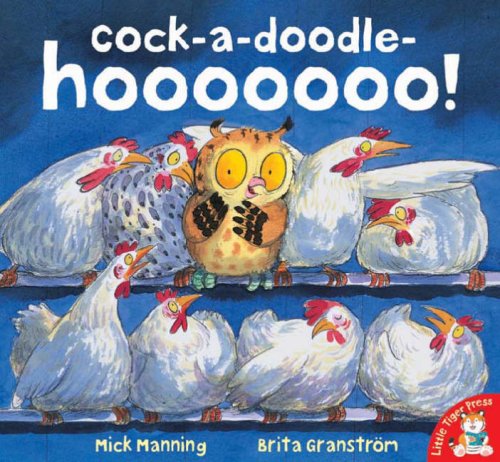
When I saw this it made me laugh. It highlights how different characters can see things from different points of view.  These two frames get the creative juices flowing for a whole host of stories. How did the characters get there? what’s going to happen now? Generally though a story should be told through the eyes of a single character, usually the main character.

point of view

I have found this myself when reading a novel, sudden shifts in the story’s point of view can jolt and disorient me, as the reader, out of the story. As a rule to keep it consistent, I tend to narrate only what my chosen character would know and nothing they wouldn’t. For example, other people’s thoughts, or something out of sight. although some stories work excellently with two point of views. For example, Philip Pullman’s, The Subtle Knife is one of my all-time favourite books and is told from the viewpoint of Lyra and Will. So like Philip Pullman, if you do need to switch to a different point of view, set up a separate section or chapter for it.

subtle knife

Written in third person, The Subtle Knife, immerses the reader in both characters’ voices in alternate chapters. The narrator’s voice is kept well out of the picture. This again should be a general rule when writing novels, unless you are writing fairy tales and folktales, which opens up for a whole new post.

Book Review – Mole’s Star

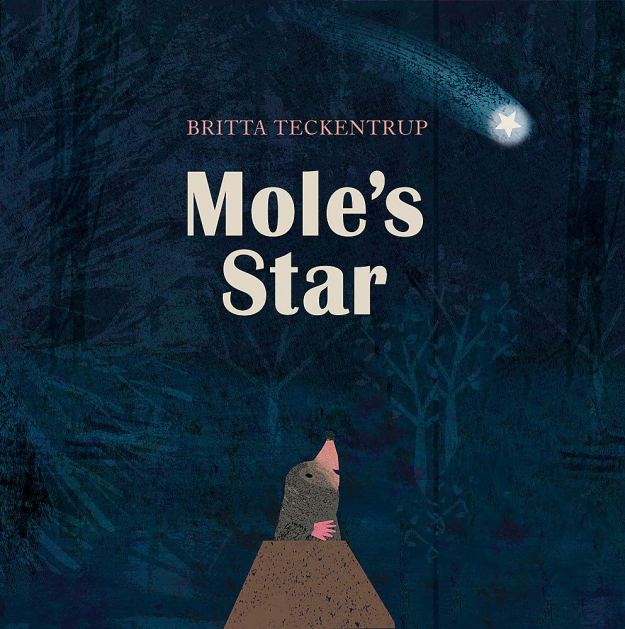
Title: Mole’s Star

Written and Illustrated by: Britta Teckentrup

Published by: Orchard Books

mole's star

Mole’s Star by Britta Teckentrup is a cosy picture book about sharing and empathy told in fourteen spreads. Each night Mole sits on his favourite rock, gazing at the twinkling stars. One day he sees a shooting star and makes a wish. He wishes he could own all the stars and his wish comes true. Mole fills his burrow with star light and loves it.

But after several days, Mole misses his favourite rock so pops out of his burrow and finds the world is in darkness. He is shocked to discover all the other animals are upset about this. When he made his wish, he had not considered the effect it would have on the whole forest and had not realised the other animals loved the stars as much as he did.

Mole finds the wishing star and sets about putting the stars back with the help of the other animals so they can all enjoy the magical star light together.

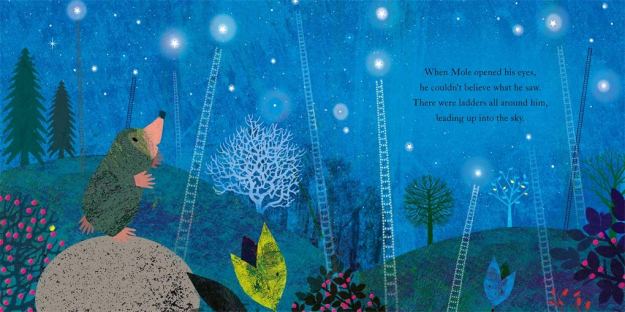
This is a book for sharing. I think every child will enjoy comparing the dramatic contrast of the night sky with and without stars, which Britta Teckentrup’s portrays in her delightful illustrations. I particularly like the way some of the ladders are made of tiny little stars.

inside mole's star

This timeless book about the night sky is ideal for reading at bedtime to children from birth upwards. It has an enchanting lyrical feel that will calm and relax your child ready for a good night’s sleep. It could also be used at Key Stage One as the basis of classroom discussion on sharing and considering other’s feelings.

An interview with… Chitra Soundar

In September 2016, I interviewed Chitra Soundar about her favourite stationery for the Papers Pens Poets blog.

DSC_6459 chitra

She told me she is not keen on pencils for her writing she prefers pens because she fears with pencils her writing may become blurred over time. This would be a disaster.

“…especially if I become so famous that there might be a museum and these notebooks will have to go on display. What if a young researcher who wants to read my writing finds it hard to read?”

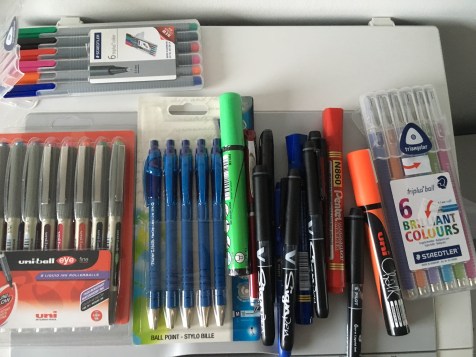
Her favourite pens are Pilot V-sign – especially the black and red hues. They are bright and will keep her words safe forever.

IMG_2043

As for notebooks Chitra prefers, plain paper rather than dots or lines, as she can scribble across and diagonally without the lines staring at me with disapproval.

In fact she is very fussy about notebooks and would rather have branded notebooks, such as Leuchtturm and Moleskine because of the thickness of the paper, the gorgeous vibrant colours of the covers and the options available – like hardbound vs leather covers vs cardboard covers. It’s the quality of paper that clinches it for her. The Moleskine Cahiers are journals with a flexible heavy-duty cardboard cover with visible stitching on the spine. For every new project she buys a new Cahier, which come in a pack of three. She likes the pastel coloured covers best. Chitra claims they look graceful.

“It’s not really about the brand – it’s more about the quality of paper. I recently found a A5 notebook in Paperchase which had same quality of paper and beautiful hardbound cover which I use as the “in-my-purse” notebook.”

IMG_1720

“I think buying a notebook is the same (but more important) as buying shoes or bags. Good functional quality and then design and looks. Then the price makes it either a “reward” buy or a mandatory buy. I absolutely cannot write my award-winning novel celebrating diversity without a French Cahier by British Moleskin written using Asian Pilot V-Sign.”

Chitra told me that when she was writing full-time on an empty stomach, she was not sure if she would choose wisely between a Cahier and a full meal. Just in case, she ended up choosing food, she was hoarding all her favourite notebooks so when the day came she had to suffer for her art, at least her art wouldn’t suffer.

You can read the full interview here.

You can find out more about Chitra and her books on her website: www.chitrasoundar.com Or follow her on Twitter  @csoundar. Or Facebook: www.facebook.com/ChitraSoundarAuthor

Building character

Now I’ve got your attention, the first port of call is to build the protagonist (your main character).

body building

The important traits of your protagonist should be:

  • They have a problem or need.
  • They have the ability to solve the problem, whether or not they know it (there’s usually more suspense if he doesn’t)
  • They have a character flaw to overcome to solve the problem, or win the reward.

Your main character should be someone the reader can identify and/or sympathise with. They should be near the top age of your intended readers. One exception  to this is in folktales. You should identify your characters with one or more telling details—a physical trait, a mannerism, a favourite phrase but a complete description is not really required.

Then, think about your secondary characters, which includes the main character’s friends and enemies.

Protagonist: Main character with flaws

Antagonist: Block the main character from reaching goals. (The Green Goblin in Spider-Man)

Allies: Assist the main character in reaching goals. (Robin in Batman)

Mentors: Wise characters that help the main character. (Obi-Wan Kenobi in Star Wars)

Jokers: Lighten things up! Often the main character’s best friend is a joker. (Donkey in Shrek)

You can combine different types of characters to make them stronger.

A funny villain like Dr. Evil in Austin Powers:

Dr Evil

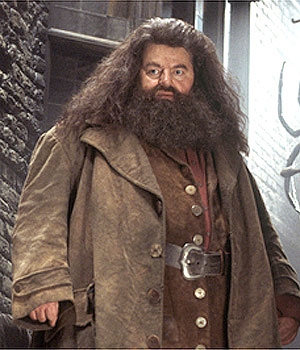
A mentor, like Hagrid from Harry Potter, who is also a joker:

Hagrid

A villain that becomes an ally and helps the main character solve the real problem such as Sloop from Spy Kids:

Floop

Strong secondary characters are important in all stories for all age ranges so it is worth spending time on creating them.

Book Review – The Buried Crown

Title: The Buried Crown

Written by: Ally Sherrick

Cover illustration by: Alexis Snell

Published by: Chicken House Books

The Buried Crown

The Buried Crown is set in WWII when Britain was on the brink of invasion. Londoner George has been sent to live in the countryside while his brother Charlie trains to be a spitfire pilot. But he’s far from safe, he’s been placed with Bill Jarvis a drunken bully, the policeman’s son picks on him because he’s from the city and Nazis are hiding across the river. His only friend is Bill Jarvis’s tortured dog and refugee Kitty, the granddaughter of a Jewish archaeologist who came to Suffolk on the Kindertransport.

This exciting historical adventure hits all the tick buttons for me. I enjoy ghost stories, I love history and I love mythology even more. The novel successfully and seamlessly weaves Anglo-Saxon mythology with real WWII history, Adolf Hitler’s love of mythical objects and the 1939 discovery of the Sutton Hoo archaeological site, where the famous early 7th century longship and its stunning treasure was found. It is believed to be burial ground of Redwald, King of the East Angles and High King of Britain.

Sutton Hoo treasure

The ship contained grave goods ranging from humble domestic items such as cups and buckets to some of the most stunning treasures ever discovered in northern Europe. Many of the most precious items, including the famous Sutton Hoo helmet, shield and sword belt, are decorated with dragons which the Anglo-Saxons believed liked nothing better than to sit beneath burial mounds jealously guarding the treasure hoards, as powerfully depicted in the Anglo-Saxon epic poem, Beowulf.

So when the fictitious, priceless Anglo-Saxon crown is stolen, George is plunged into danger. It’s up to him and Kitty to protect the crown before it’s too late and help the ghost of Redwald rest in peace. The characterisation is strong and believable.

It would be an ideal book to support a topic on WWII in the classroom. It demonstrates the emotional turmoil of both evacuees and refugees during the 1940’s. Ally Sherrick creates a real atmospheric feel for the era with her vivid descriptions. This book is an exciting and dramatic adventure full of twists and turns from the beginning to the end. A must read book.
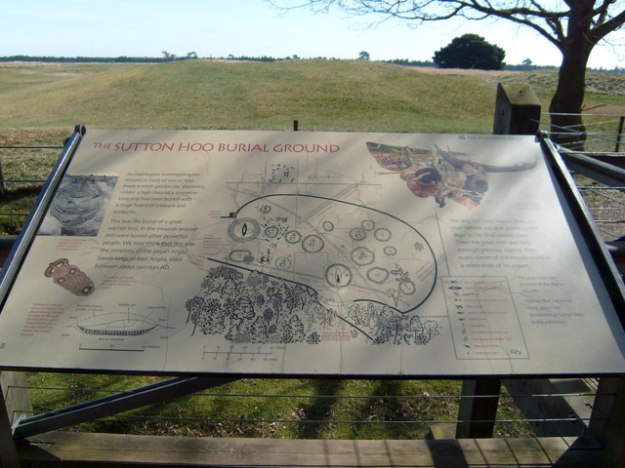
Sutton Hoo Burial Ground

The only thing that was really missing was a map. I would have really liked a map of the site, village and location of the army site as Ally Sherrick imagined it. The amount of times I checked for a map because I thought I must have missed it was unbelievable. So I ask, please add a map in the next edition.


Sutton Hoo Burial Ground2

An interview with… Jennifer Rees

To commemorate the centenary of women police force in the Metropolitan Police Jennifer Rees and her co-author Robert J Strange have written a fascinating and enlightening non-fiction book, Voices from the Blue: The Real Lives of Policewomen (100 Years of Women in the Met) .

Voices from the Blue cover

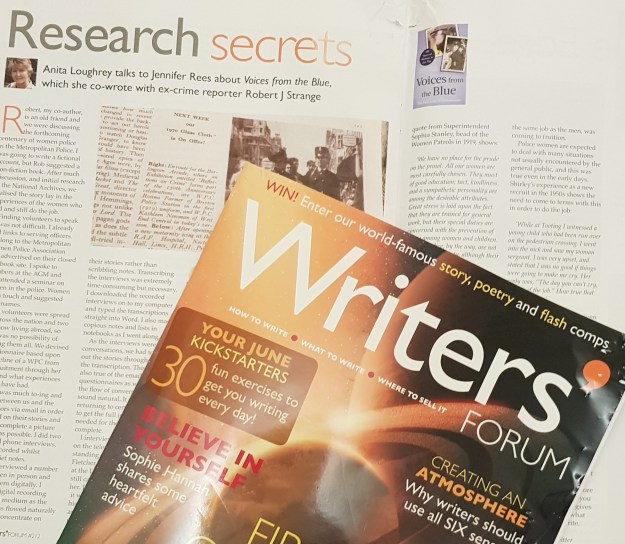
I interviewed Jenny Rees for my Research Secrets column in the national writing magazine Writers’ Forum. Jenny explained how archives were a great source of inspiration for their research. The National Archives hold many of the historical files for the Metropolitan Police. There was also the Metropolitan Police Archives in Camden, which hold the judicial histories of London and the London law courts.

Pic1

Jenny told me:

“Researching through the eras from those at the start of women in the Metropolitan Police to the complete assimilation of women into full integration with their male counterparts in 1973/4. The roles of women changed, they were expected to work alongside the men and deal with an increasing diversity of roles and crimes.” Jennifer Rees

Voices from the Blue tells the story of the hundred years of service of female police officers within the Metropolitan Police through the voices of the women who fought their way towards equality and won the respect of both their colleagues and the public. The authors have interviewed hundreds of former and serving policewomen and with the co-operation of the Metropolitan Police and the Women’s Police Association now have access to the files and stories of thousands of former officers who served over the past hundred years. Those police archives, together with material held by the National Archives and private libraries, provide a detailed and fascinating oral history of the challenges women police officers faced down the years.

Jenny explained:

“Context was the key factor for us. If the historical research brought context to the stories in a particular chapter we used them, but we were critical of each piece of research we used. Some were essential and made it into the finished version of the book, others unfortunately went by the wayside as we had a publisher word count constraint.” Jennifer Rees

You can read the full interview in the May 2019 #212 issue of Writers Forum.

You can follow Jennifer Rees and Voices from the Blue on Twitter @Namkha211

Writing Non-Fiction

There is a large market for non-fiction reference books based on topics taught in school. I recently ran a workshop all about writing for educational publishers. Today I thought I would share some tips.

course photo2

Writing for Educational Publishers workshop. Photo taken by Addy Farmer

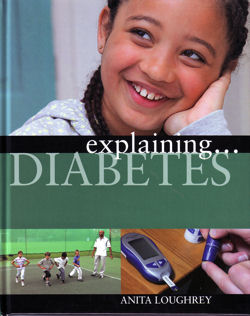
I think one of the main points is that educational publishers prefer to come up with their own ideas in-house or work through book packagers. I work a lot to commission. My book, Explaining Diabetes, which was published by Franklin Watts but, was commissioned by the book packager Bender, Richardson and White. It was one book in a series of books about illnesses and conditions.

explaining diabetes sm

When approaching publishers with unsolicited non-fiction it is better not to have a finished book. A one-page outline giving a brief breakdown of the chapters, target audience and potential market is generally what is required.

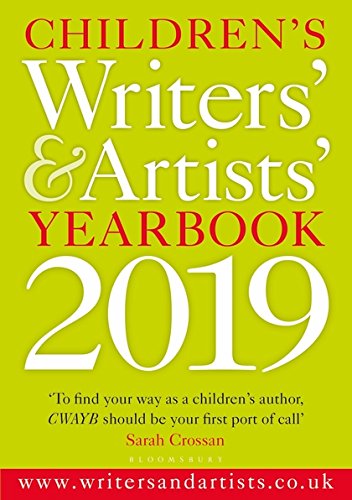
I suggest you market research the publishers you want to submit to as well. Check they publish books for the age range you want to write. There are different publishers for primary than secondary aged children. You can find out which publishers print what by checking out The Writers and Artists Yearbook.

W and A

It is wise to look at what books are out there and analyse them to see how each book is divided and what sort of things are included on each spread. Look for patterns as an indication of style and what might have been in the brief the author was given. Then try and use this as a template to plan your own book that would fit the series.

Why not try it for yourself. If you are successful please let me know.

Book Review – Go to Sleep, Monty!

Title: Go to Sleep, Monty!

Written and illustrated by: Kim Geyer

Published by: Andersen Press

Go to Sleep, Monty!

Every child wants a pet – right? Wouldn’t it be great to have someone to play with, someone to share things with, and someone to care for? Max gets the dog of his dreams, but he soon realises that looking after a puppy isn’t as easy as it looks! When Max gets the dog of his dreams, he soon finds out looking after a puppy isn’t as easy as it looks! How on earth can he persuade mischievous Monty to go to sleep?

A charming and funny picture book debut about the trials and tribulations of owning a boisterous puppy!

This is a heart-warming story which anyone who has had a puppy can identify with. Max does everything he can to persuade Monty the puppy to settle down to sleep. From an educational point of view, parents will also be able to identify with the story, as parallels can be made to trying to get a restless child to sleep.

This is a good story for reading to the class at the end of the day. The children will love looking at Kim Geyer’s beautiful illustrations and spotting what Monty is up to instead of going to bed.

This book review was previously published on the online Armadillo Children’s Book Review Magazine.

An interview with… Undiscovered Voices

In my Writing 4 Children column in the national writing magazine Writers’ Forum this month #212 Jun 2019, I discover more about the unique biennial competition for children’s book writers to get their manuscripts in front of agents and publishers.

UV photo

Undiscovered Voices is run by volunteers from the Society of Children’s Book Writers and Illustrators (SCBWI) and sponsored by fiction book packager Working Partners. The competition is open for submissions on the 1st June 2019. The winners will be included in the 7th anthology out in 2020. The anthology will  be sent to every agent and publishers in the world of children’s books in the UK and US. It is also available as a free download from www.undiscoveredvoices.com.

UV7_COVER

The feature contains excellent advice and tips for children’s authors who are considering entering the competition from each of the UK volunteer organisers: Catherine Coe, Jenny Glencross, Benjamin Scott, Simon James Green, Rosie Best and Sara Grant.

“Undiscovered Voices is not just a competition, but a supportive and friendly community. The UV team are aware it feels like an intimidating process, but want people to be reassured that the publishing industry is essentially just full of people who love books and who want nothing more than to discover new writers. Everyone is rooting for you to be successful.” UV team

The judges for the 2020 anthology are:

This is such an excellent opportunity for unagented and unpublished children’s authors. Don’t miss it.

Keep Going

These are my words of wisdom for today. I often feel disheartened with my writing and some days it is hard work just to keep myself sat at the computer. It’s not easy to get published but perseverance does pay off. Over the years this has become increasingly apparent and over 85 books later I am still persevering. This became dramatically evident when I was running a SCBWI-BI workshop last weekend for the Central North network on Writing for Educational Publishers.

I took a selection of books with me for the attendees to look at and analyse the different series and write their own book proposals. It dawned on me whilst I was teaching, not a lot of people could use their own books to do this as they have not written enough series for each group to go through. It was a proud moment.

Course photo

Writing for Educational Publishers workshop. Photo taken by Addy Farmer

There is a quote that springs to mind. I do not know who originally said this:

“Writing is one percent inspiration and 99 percent perspiration.”

And it is not just me. Other authors are still getting deal and books are still selling. During difficult times people turn to escapism through books and movies, so the market is out there.

Sweat-Miracle

I  know it’s difficult to keep going, especially if your aim is to write the next bestseller. Remember only a tiny majority of writers find fame and fortune but most make a slow steady income by doing what they love. So take small steps to move your self forward a centimetre at a time.

quote1

I’m definitely not saying set your sights lower – what I am saying is don’t let your nagging doubts stop you. All writers feel like this at some point in their careers. Don’t let other distractions get in the way of you reaching your goals. Only you can write your story so…

…keep going.