Combine Speech with Action

People rarely stand still and speak. They wave their arms, they pace, they scuff their feet, check their nails, get distracted or even make a cup of tea. I know these are all rather cliched examples but they serve the point. When writing dialogue have your characters do things whilst they speak.

child drinking

Spend some time people watching and observe for yourself the things they do when they talk. Keep in mind Anne fine’s words:

 “Don’t write about people you know, write what you know about people.” Anne Fine

And what better way to find out about people than to watch them.

“A rough estimate would be one third dialogue, one third action and one third introspection.” Diane Doubtfire

Introspection are the character’s inner thoughts.

“A character’s thoughts can greatly enhance a story: deepening characterisation, increasing tension, and widening the scope of a story.” Nancy Kress

So next time you are out and about observe some of the little actions people do that hint at their character. It all adds to the story.

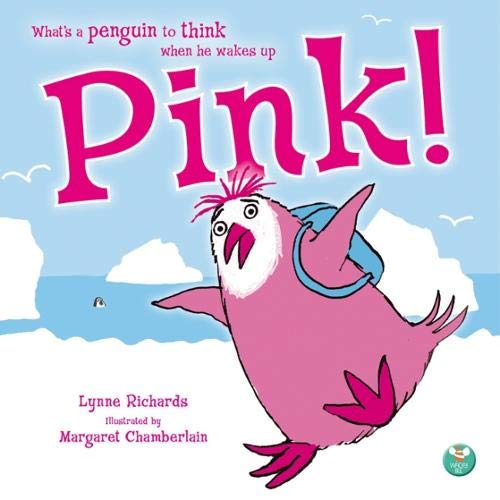
Book Review – Pink!

Title: Pink!

Written by: Lynne Rickards

Illustrated by: Margaret Chamberlain

Published by: Wacky Bee Books

Pink

Pink! is a heart warming picture book about challenging stereotypes. It would be a great way to stimulate a discussion about gender both for parents at home and teachers in school. Patrick the Penguin turns pink overnight. His parents try to reassure him that it is OK to be a boy who is pink, but the other penguins tease him.

Discussing the issue of teasing and bullying could be used to encourage compassion for others and also empathy for people who have experienced sudden change. Patrick was not born pink and it was not a gradual change of colour over time. He just woke up one morning and discovered he had turned pink. This must have been a very traumatic experience for Patrick. Suddenly he is different and not because he wanted to be different he just woke up different.

Patrick does not like being different, so he decides to run away to Africa to be with the pink flamingos. But he soon discovers he is not suited to the African environment so returns home where the other penguins are eager to learn about his adventures.

Again from a teaching point-of-view this book would be useful in the classroom to discuss animal adaptations and climates in different parts of the world. The children can compare the features of Antarctica’s penguins with African flamingos and how they are suited to their environment.

The book was first published in 2008 by Chicken House. Pink! Is also a musical. Pink! The Musical, written in collaboration with Hopscotch Theatre, has toured over 200 Scottish primary schools.

This book is empowering for children and demonstrates that the colour pink is for everyone regardless of gender. I believe it will encourage children to be more confident in themselves and the way they look.


An Interview with… Mo O’Hara

For the last few years I have been interviewing authors, illustrators, editors and fellow bloggers about their love of stationery for the Papers Pens Poets blog. The blog was not my idea it was my friend’s Jo Franklin‘s idea. But I am excellent at working to a brief so I have taken the idea and ran with it. Since March 2016,when we launched the blog, we have made — posts and most of them have been interviews.

In July 2016, I interviewed children’s book writer, Mo O’Hara. She told me:

“Like so many authors I am a bit of a stationary nerd.  I am notebook and file obsessed but pens aren’t really something that I gush over.  I’m definitely not a fountain pen girl (I’m far too messy).” Mo O’Hara

When she starts a new project she generally allows herself to splurge on a new notebook as a treat.

notebooks

Also if she is going to a conference or retreat she always start with a fresh notebook but she also takes her thought notebooks and her project notebooks along too. She said:

“It’s more about the feel of a notebook for me and not the look.  I always buy them in shops and not online because I need to pick up the book and hold it. I’m very kinaesthetic like that.” Mo O’Hara

little notebookss

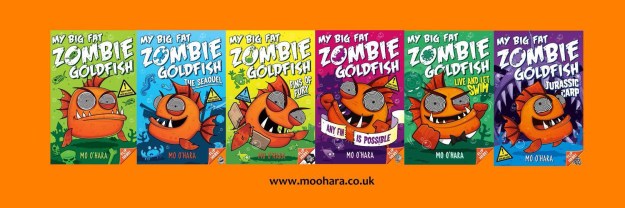
Mo O’Hara writes the My Big Fat Zombie Goldfish series, published by Macmillan.

All Zombie Titles Pic

She launched a brand new series My FANGtastically Evil Vampire Pet in September 2018. the second in the series, Space Cat-astrophe was released in February 2019.

space vampire

Mark is off to Evil Scientist Space Camp, which is being led by the totally epic evil astronaut Neil Strongarm who is looking for evil apprentices for his next space mission!

You can read the complete interview on the Papers Pens Poets blog.  You can find out more about Mo O’Hara and her books on her website is: www.moohara.co.uk and follow her on twitter: @Mo_OHara. 

More on Market research

When I first started out I found market research extremely difficult. But, the more I tried to do it the better I got. I have been published in several national magazines.

writers-forum-206-december-2018

The ones below are just a small selection. I now automatically pick up a magazine and look at the adverts, the letters page and the way the stories and articles are written, to get an idea of who the readership the magazine is aimed at, are.

I ask myself questions like:

  • Whose viewpoint is it from?
  • How long are the sentences?
  • How long are the paragraphs?
  • Is it in first or third person?
  • What tense is it written in?
  • How much dialogue is used?
  • Is slang used?
  • Is compression used (i.e. i’ll, we’ve)?
  • Are there any sentences beginning with And and But?
  • Are there any swear words?

I believe this was excellent training and has helped me to launch my career into writing for children because, although the writing and market is different you still need to consider who the target audience is and whether you are meeting the requirements of the in-house style.

So my advice is to anyone who wants to get published, whether it is in writing for magazines, writing for children, adults, your publisher, or a specific editor – do your market research. Know who you are writing for.

If you are interested in writing for magazines, get hold of the contributor’s guidelines. These are often available online.

Book Review – Adventures of the Steampunk Pirates

Title: Adventures of the Steampunk Pirates (series)

Written by:  Gareth P. Jones

Illustrated by: Artful Doodlers

Published by: Stripes Publishing

If you like pirates and you like robots you’re going to love this series of books. In fact, how can you not love robot pirates?

Captain Clockheart and his crew are renegade robot servants who have been liberated by the Admiral’s daughter. In The Leaky Battery Sets Sail, the first book of the series, the robot pirates take to the high seas and have to avoid being captured by the evil Iron Duke, who is human and not made of Iron at all. The Duke has his beady eyes on the king’s reward for the steampunk pirates’ capture.

In Clash of the Rival Robots they face their old nemesis the evil Iron Duke again but the Attack of the Giant Sea Spiders finds them facing a new antagonist, the dreaded Captain Inkybeard and his wife Nancy (who is a squid that Inkybeard carries around under his pirate hat).  In the Rise of the Slippery Sea Monster, the steampunk pirates get a taste of their own medicine when the Leaky Battery is raided by a sea monster that’s greedy for gold. This is just a taste of the wacky plot lines and characters in this dynamic series.

These fast-paced reads are littered with author asides. Gareth P. Jones takes you on a roller-coaster ride through waves of pirates’ escapades, fuelled by their desire for gold. I like the way each chapter is summarised at the beginning. The stories are enhanced by the brilliant sea shanties at the beginning and end of the books and the amusing illustrations by Artful Doodlers.

I enjoyed reading these books. They are fun! A must for every school book corner and library. Excellent bedtime reading for your children. If you crave excitement these are the books for you.

An interview with… Fiona Barker

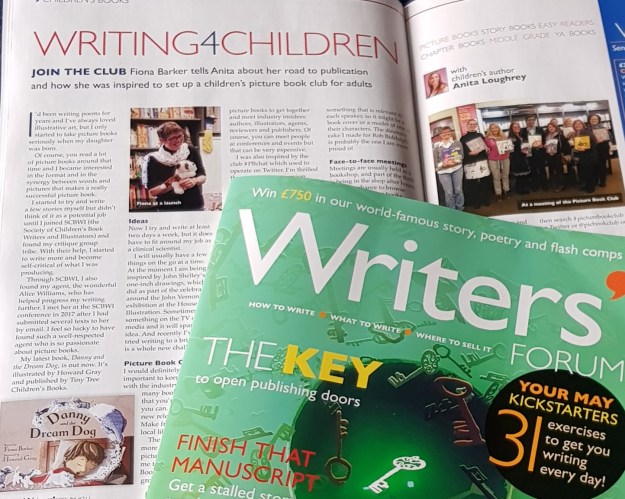
In the latest issue of Writers’ Forum I have interviewed picture book writer, Fiona Barker for my Writing for Children column. She talks to me about her road to publication and how she was inspired to set up a children’s picture book club for adults.

Writing 4 Children - Fiona Barker and Picture Book Club3

In the feature she mentions how she is inspired by John Shelley’s one inch drawings and #ukpbchat which meets online each month on Twitter. Fiona recommends that aspiring picture book writers should follow key children’s book bloggers such as Book Lover Jo, or even me.

The Picture Book club meetings are usually held in a bookshop, often Waterstones in Reading but they are moving around the country. they also broadcast the events live on the Picture Book Club Facebook page. To stay up-to-date with locations and dates the events are running you can follow the Facebook page @picbookclub

Fiona told me:

“At a typical PBC meeting, members pay £5 ‘membership’ on the door. This helps us to cover speaker expenses. We have a talk or discussion for 30-40 mins and then break for cake and a chance to chat informally. The cakes are a big feature of PBC. We try to make something that is relevant to each speaker, so it might be a book cover or a model of one of their characters. The dinosaur cake I made for Rob Biddulph is probably the one I am most proud of.”

PBC 14 1

To find out more about Fiona Barker and her books you can follow her @Fi_BGB on twitter, @FionaWritesBooks on Facebook and Instagram and her author website is www.fionabarker.co.uk.

Think About Theme

The theme of a book is an ‘abstract idea’ such as friendship, loyalty or a quest for identity.

Themes are different to morals. The theme should be subtle and strengthen your story by adding depth and meaning. Visit your local library and look at some of the classic picture books. Notice that although the text may be brief and tightly written there lay truths that are timeless. The story should leave readers with a residual feeling that stays with them.

Season collage

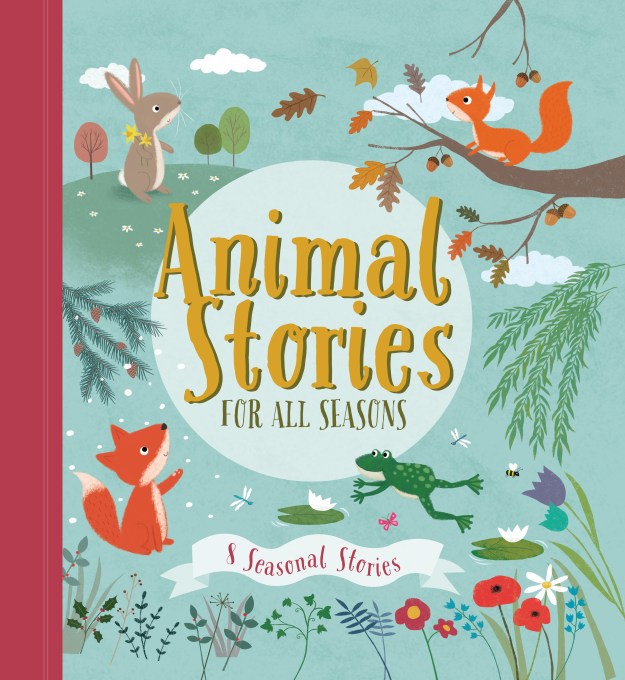
You should be able to sum up your theme in one or two words. The theme of the first series of Season books is friendship. I have written two more Season picture book series since then. This is a book with a compilation of my Animal Stories for all Seasons. They will also be available to buy individually.

Animal Season Treasury Cover (003)

Your characters should always carry the theme. It is important not to blurt out your theme but to let it emerge from the story. If you must come out and say it, do it in dialogue, not narration and whatever you do avoid preaching. Children’s stories should be explorations of life not Sunday school lessons.

In picture book you should keep your theme positive. If writing about difficult situations and feelings, offer constructive ways for your readers to cope with them.

Book Review – Practical Pop-Ups & Paper Engineering

Title: Practical Pop-Ups & Paper Engineering: A step-by-step course in the art of creative card-making

Written by: Trish Phillips and Ann Montanaro

Published by: Lorenz Books

practical pop ups

This book is not necessarily a children’s book but is all about a craft I associate with children’s books and would make a great art and craft teacher resource. My first experience of pop-up books was when I was teaching. My favourites were The Wheels on the Bus by Paul Zelinsky and The Wide Mouth Frog by Keith Faulkner and Jonathan Lambert.

With over 100 techniques and projects, in 1000 photographs to choose from, Practical Pop-Ups & Paper Engineering will inspire all ages to have a go at their own paper engineering projects. It is one of the best and most comprehensive paper-engineering books I have ever seen.

Practical Pop-Ups & Paper Engineering outlines the history of paper engineering from volvelles, which were pages of a book that had two or more round paper discs that rotated on a spindle secured to the page at the centre of the circle, to pop-ups that were used to entertain and celebrate. The book is full of fascinating facts, like pop-ups were not invented until the 19th century and how anatomical fold-up flap drawings were used in the 16th century to illustrate human anatomy as physically performing dissections was banned.

There is a chapter explaining what a paper engineer is and the materials, tools and techniques they use. Including making templates, cutting tips and troubleshooting. But the main feature of this book is the fact it provides step-by-step instructions for the beginner as well as intermediate and more advanced projects.

inside of pop-up book

Some of the beginner designs could be used in the primary classroom to make novelty cards celebrating special holidays and Mother’s Day. Or for the older age range they may inspire some ingenious craft and GCSE art work.

If like me, you decide to try any of these designs I wold be interested to know. You can leave a message here on my blog, or contact me through my website: www.anitaloughrey.com

You can find out more about Trish Phillips on her website: www.trishphillipsbooks.com or follow her on Twitter @trish_again 

To find out more about Ann Montanaro you can visit: www.movablebooksociety.org

An interview with… Julia Jarman

In any writing project, no matter what genre it is, I believe the most important part is the bit that comes first – the research. But where do you find the information you need and once you have gathered it how do you use it in your book? In my Research Secrets column in the national writing magazine Writers’ Forum I ask top authors to share their research tips.

In January 2009, I interviewed Julia Jarman about the how her research inspires her children’s novels. She often mixes genres, but history is usually part of this mix. Julia’s inspiration for her novels tends to come from her historical research. But, there is nothing that fires up her imagination like a good artefact. She likes to hold and feel an item.

Julia Jarman

Julia Jarman has written over twenty children’s novels and picture books for Anderson Press, including Peace Weavers and the Time-Travelling Cat series. The Roman Eagle is the third book in the Time-Travelling Cat series.

Julia explained:

“First, I have an idea, such as when I wanted to write a time-travelling cat book about the Romans. I had written other books in the series on the Egyptians and the Tudors but, the Romans have always fascinated me. I remembered someone had told me about Calleva Atrebatum, the deserted Roman town near Silchester, where the Roman wall still exists. I did some research on the Internet and then went to visit it. I found out many of the artefacts they had found during excavations were in Reading Museum. I went to Reading Museum to see some of the artefacts that were unearthed by the Victorian archaeologists.” Julia Jarmin

Julia had read of a Roman tile with a cat’s paw print embedded into it and came across a similar tile at Reading Museum from Calleva. She found out when the tiles were turned out of their moulds, they were left to dry before being fired in a kiln. They must have been left to dry on the ground because many have been found with footprints of people and animals that walked across them. A cat had walked across this tile while the clay was still soft. It must have been made by one of the first domestic cats in Britain, bought over by the Romans. This is the point she knew she wanted Ka, the time-travelling cat from her stories, to have made this paw print.

Whilst looking around the museum, she also came across a cast bronze figure of an eagle which inspired her. The wings of this bronze eagle were missing but, they would have been outstretched as shown on the book cover of the Time-travelling Cat and The Roman Eagle. The historians think, because of the way the bird’s claws were rounded, it was clutching an orb. It is believed that the eagle was probably part of a larger figure of an emperor or a god.

Time travelling cat

This set her imagination to work and a whole load of what if… questions started whirring in her head. What if… it was part of a staff used at the forum at Calleva and what if… this important symbol had been stolen by one of the tribesman.

“This is the way I work. I have a loose story idea then I see the artefacts and then I start to do some firm plotting. But, I don’t let the facts tie me down. I use them as a launch pad for my imagination. It is not so much what the object is, it is what it can be; it is the possibilities.” Julia Jarman

Again for Peace Weavers, she had her initial idea when she visited a school on an American airbase in East Anglia, where they had uncovered an Anglo Saxon burial ground during a recent archaeological dig. She was particularly interested to find out more about an Anglo Saxon warrior, buried with his sword, shield and horse. On the cover of the hardback, the bottom half of the picture shows these skeletons.

Peacewvrscover

At the same time they found the skeleton of a very tall woman nearby, hers was the tallest skeleton uncovered and her jewellery was very different from that of the other skeletons. This started Julia wondering about her and her jewellery and what sort of life she had.

“All stories are a mix of real life and imagination. You prime your imagination by asking yourself questions. I do my research at the beginning and if I need to know anything else I do more research. I don’t have a system but I just try to immerse myself in the subject. I just to love find things out, but once I’ve found my story I’m eager to get writing.” Julia Jarman

The librarian on the base introduced her to West Stow, a reconstructed Anglo Saxon village. In this village, the houses have been rebuilt complete with authentic style furniture and cooking utensils. Visitors can go into the houses, smell the wood smoke, feel the solid wood and imagine living in early Anglo-Saxon times. At certain times of the year, the village is used by groups of costumed Saxons who bring it to life with demonstrations of textiles, weaving, basket making and cooking.

Julia went to experience the food, the music and the atmosphere and it was there she found and bought replicas of the sleeve clasp and the brooch.

“I like to have something tangible in my hand to inspire me. Holding them was better than the pictures and an added bonus is they are good for showing on school visits. These artefacts engaged my imagination. The sleeve clasp in particular is key to my plot.” Julia Jarman

You can read the full interview in the January 2009 #88 issue of Writers Forum.

For more information about Julia Jarman and her books see her website: www.juliajarman.com where she shares her Writing Recipe for cooking up stories.


Use Slang Sparingly

This is not necessarily only good advice for writer’s writing for children. I think it is true for what ever books you are writing.

What we need to remember is the dialogue is not real conversation but has to create the illusion of a real conversation. Slang words and catch phrases can date a book and go out of fashion very quickly so it is best to avoid them. Remember you want you children’s characters to sound like children and not an adult pretending to be a child.

marvel-characters-comic-art

Consider your character’s patterns of speech rather than particular words. For example, an impatient character would use short sentences and not waste words whereas a dreamer might ramble on without care. Much like some of my blog posts.

So be careful with slang. It dates dialogue.

“It is best to get the flavour and texture of what you want to say without having to patronise or, worse still, getting it wrong.” Andrew Melrose

The idea is to keep dialogue short and concise. There is no room for lengthy descriptions in dialogue. The other characters would get bored and wander off. You should be able to sum it up in a few words.

groot

If you do want to use speech to convey important information it is better to begin the section of dialogue with the information or end with it. If you bury it in the middle of the dialogue it could get missed.

And avoid ellipses… unless absolutely necessary for effect. Don’t litter the page with dots.