Book Review – The Novel Inside You

Title: The Novel Inside You

Written and illustrated by: Paul Magrs

Published by: Snowbooks Ltd

The Novel Inside You is an autobiographical collection of writing tips collated into a unique how-to handbook suitable for aspiring writers and seasoned writers alike. It is a cross between Stephen Kings On Writing and Dorothea Brande’s Becoming a Writer.
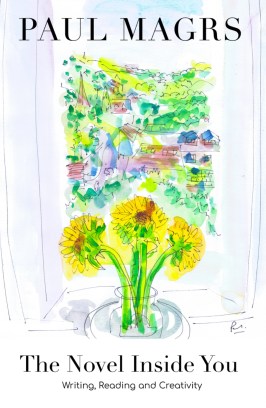
novel inside cover

This book is full of inspiring sentiments that are extremely quotable. The sorts of things I stick into the cover of my notebooks to motivate myself to keep going. Words that really resonate with me, such as:

“If you want to write the real stuff, then you have to know your real self.” (Paul Magrs)

And simple reminders such as:

“Make sure the reader knows exactly what is happening.” (Paul Magrs)

And epiphanies like:

“In order to write anything of lasting value you’ve got to reach deep inside yourself and pay attention to the person you set free when you give yourself permission to write completely freely.” (Paul Magrs)

Each page is constructed from vivid memories and entertaining anecdotes of Paul’s early life as a writer and creative writing teacher. He is telling his own stories in his own way with dramatic and inspiring effect. In between he has illustrated the book with his own artwork.
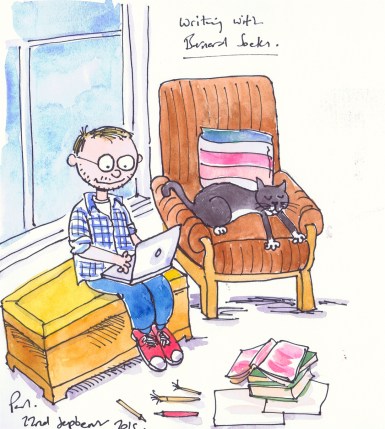
cartoon pm and socks the cat

I particularly enjoyed the way he shows (not tells) us how he gets his ideas for his stories by people-watching, analysing their behaviour, studying their interactions and jotting down conversations to develop his own characters and their voice. Paul does not say this is the way you should do it but more this is how I do it and demonstrates techniques that work for him, which as an inquisitive writer makes me want to try it for myself.

Weaved into his memoirs are practical exercises to try yourself from developing characters through your own observations to deciding your novels audience and what its structure should be. In this way, The Novel Inside You motivates you to start, continue and finish your writing whether it be a novel, poem, short story, or non-fiction. The ideas and exercise could also be used in your own teaching.

His advice to writers is honest and practical. It prompts you to re-evaluate your own writing and take a fresh look at your own writers’ toolbox.  It feels like having your own personal tutor sat with you whilst you work, helping you to analyse the process of developing good writing habits and create your own writing discipline.

I think Russell T Davis summed it up very neatly when he said:

“This is so much more than How To Write, its How To Live. Part-memoir and part-tutorial, this book asks Where do you get your ideas from? and, miraculously, finds an answer. From life. From memory, family, lovers, heartbreak, childhood, loss and joy, all captured beautifully in these pages” (Russell T. Davies)

The love for his family, friends, pets and partner, Jeremy, shines through. There is an underlying realisation that behind every writer is a great partner. (Very nearly a Eurythmics song). In the background it is the support of a strong, loving partner who helps us through the emotional turmoil of being a writer – all the fears and insecurities that our work is not good enough and a complete waste of time – and they are there at our side to share the triumph, relief and pleasure you can get from holding the, fresh from the press, latest book.

I will leave you with a final quote:

“There are two types of fiction. The good type, that you want to read and there’s the bad type that you don’t want to read. There are books that are crap and sound bogus. And there are books that ring true. Books that are about something. Books where the voices are alive.” (Paul Magrs)

I believe The Novel Inside You will help you to achieve the latter.
An interview with… Patrice Lawrence

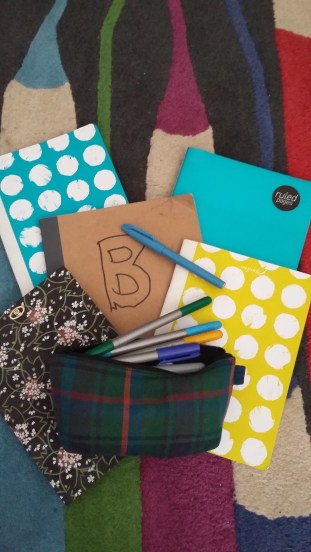
In July 2016, I interviewed award-winning novelist, Patrice Lawrence for the Papers pens Poets blog. She told me her most highly-prized stationery item, way above anything else, is her green tartan pencil case.

Patrice stationery

“It was a present from my daughter and came from Muji, a popular haunt for our stationery needs.  I can’t even remember having a pencil case at school, but I must have.  And I’ve certainly got one now.  It’s crammed full of Sharpies, promotional pens from charities and companies, a couple of cheap, sparkly ink pens that leak over my fingers and a lovely sky blue Pentel sign pen.  It says it on the side.  Sign.  So I did.” Patrice Lawrence

Patrice admits to being a bit of a notebook hoarder. She has leather-bound and fabric-covered that were much-needed presents. She has an assortment of black Cass Arts sketch books of all sizes, including a couple of A3 hardbacks she has used for planning books she hasn’t had time to write yet.  She even has three from post-Christmas Paperchase sales to secretly record interesting bus stations.

She told me:

“Orangeboy was written on and off over a few years, by keyboard and pencil, in random notebooks and occasionally the back of a conference agenda if the speakers weren’t quite doing it for me.” Patrice Lawrence

Her latest book Rose Interrupted, published by Hodder Children’s Books, is due to be launched in July, 2019. It is about 17-year-old Rose and 13-year-old Rudder who have escaped a strict religious sect with their mum. They are still trying to make sense of the world outside – no more rules about clothes and books, films and music, no more technology bans. But also no more friendship with the people they’ve known all their lives, no community and no certainty. This is the story about coming of age, slap-bang in the middle of a strange new world.

You can read the complete interview with Patrice here.

To find out more about Patrice Lawrence and her books, you can follow her on Twitter at @LawrencePatrice and on her blog at: www.patricelawrence.wordpress.com

Know Your Readers

It is essential for who ever you are writing for to have a good knowledge of your audience and have a target age in mind.

snoopy-reading

When writing for children remembering back to your own childhood is a starting point but you must keep in mind the modern child in today’s technology filled world. This does not mean every child in your book needs their own mobile phone or games console. In fact it is often better for tension if they are unable to call for help at a touch of the screen.

The best way to find out about your audience if you are writing for children is to observe them. Not in a stalkerish, creepy kind of way. If you have children, or have friends and relatives with children talk to them, find out what is going on in their lives. Ask about their likes and dislikes. Find out what books they love to read and their favourite characters. If you don’t have children talk to friends who have, or talk to your local children’s librarian.

Another good way to find out about children today is by watching children’s movies and television. Immerse yourself in the adventures, problems and emotions of the characters. They are likely to defy authority and will be outspoken with their own strong opinions. This may vary in intensity for reception, junior and secondary aged children but there should be a degree of independence.

Book review – Alfred and the Blue Whale

Title: Alfred and the Blue Whale

Written by: Mina Lystad

Illustrated by: Ashild Irgens

Translated by: Sian Mackie

Published by: Wacky Bee Books

Alfred and the Blue Whale

This beautifully translated Buzzy Reads story is about Alfred who is scared of lots of things, but he is especially scared about speaking in front of the whole class. So when Alfred is told he must speak about the Blue Whale in front of everyone, he just wants to run away and hide. However the more Alfred learns about the Blue Whale the braver he becomes.

Buzzy reads are of a similar length and style designed to bridge the gap between picture books and first chapter books. This particularly inspirational book is about finding courage and learning to believe in yourself and has been translated from its native Norwegian.

It would be an excellent book to use for discussing feelings and things children may be afraid of. Alfred manages to stand up to his fear by distracting himself with his research. This would be a great jumping point to find out other children’s coping methods and to inspire empathy.

I like Ashild Irgens, use of colour within the book. She uses blue to illustrate how shy and timid Alfred is with yellow to demonstrate the moments he is feeling happy and more confident.

Mina Lystad has divulged some brilliant facts about the Blue Whale which are conveyed in a simple and easy to understand way. The use of repetition reinforces these facts. The last two pages are dedicated to a Blue Whale fact file. In the classroom, this book could be used to encourage the children to research and create their own animal fact files. They could also find out what other animals are endangered and why.

Find out more about Buzzy Reads on the Wacky Bee website: www.wackybeebooks.com

An interview with… Catherine Coe

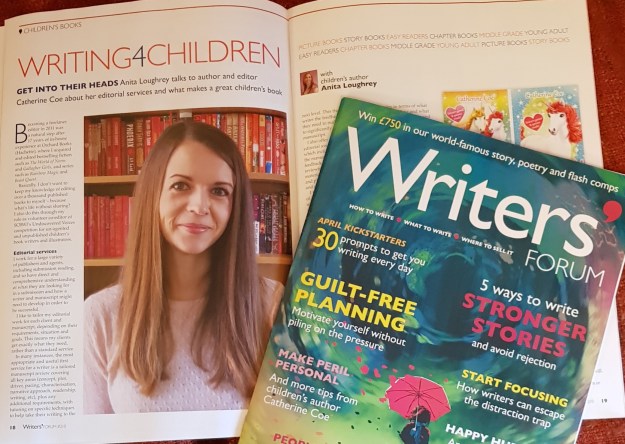
In my Writing 4 Children column this month I talk to author and editor, Catherine Coe about her editorial services and what makes a great children’s book.

Catherine Coe feature 1

Catherine explained how she takes on a select number of writers for long-term mentoring, which includes regular contact through video calls and feedback on work in progress. Many of he writers she has worked with have gone on to get publishing deals  with publishers such as Chicken House, David Fickling Books, Hot Keys, Hachette Children’s Group, Macmillan and Scholastic.

She strongly advocates that to write for children you need to get inside the child’s head, as you are more likely to engage your audience with appealing content, write in a style they enjoy and crucially, avoid speaking down to them. 

“I believe it is vital to remember what it was like to be a child and to channel those memories in terms of what you liked reading and what captured your attention and imagination.” Catherine Coe

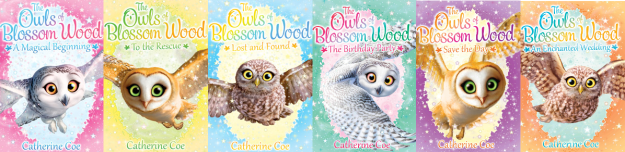
Catherine has written over 30 books for children, including the popular Owls of Blossom Wood series.

Owlsbooks1-6

Her writing tip is to ensure your book has an overarching problem or goal that drives the plot. One that is compelling to the reader and will keep them turning the pages.

“Any book that keeps a child up at night reading is a great one.” Catherine Coe

To find out more about Catherine Coe and her editorial services, visit her website: http://www.catherine-coe.com

You can also follow her on Twitter @catherinecoe

One More Step

confucius
I’m in a very philosophical mood today. The ancient Chinese philosopher Confucius said:
“Every journey of a thousand miles starts with a single step.”
He also said:
“Be not ashamed of mistakes and thus make them crimes.”
Confucius

Think of each step you write as a single incident, such as writing one paragraph, producing a character sketch or sketching a map of the location. It is a process of going through the layers.

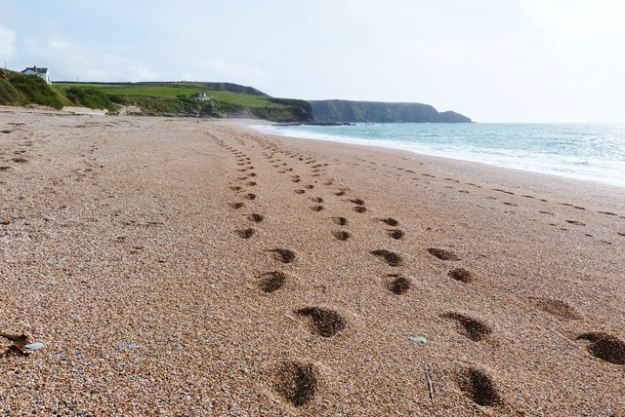
The process of writing itself, even for very experienced writers, can be difficult and frustrating. The choices involved in creating the text, selecting appropriate words, arranging these words into meaningful sentences and using these sentences to explain a flow of fast moving ideas is hard work. Writing is a physical activity:

footsteps

So take the first step…
Think what is it you want. Where you are now? Where do you want to go? What’s the first thing that you need to do to get moving? Don’t worry about making mistakes just get the story down on paper.

And keep taking steps….
Even if they feel like baby steps! We all have days where every step feels painful, or there is something else to do, or it’s just plain too difficult. This is the, ‘Don’t wanna’ tantrum. Go on, even if it’s something really easy, take that one step. Just open the file on your computer. It’s only a small step, but it proves your intent. After all, the files open now, you might as well do something with it.

And most importantly enjoy every step you take…
The psychotherapist and child psychologist Haim Ginott once said:

“Happiness… is not a destination: it is a manner of travelling.”

So have fun on your journey. Enjoy your writing and when you get there rather than moving straight to the next place, next goal, and next challenge, rest a while and glory in the fabulousness of what you have achieved.

But most importantly… Read it aloud and be proud of what you have written.

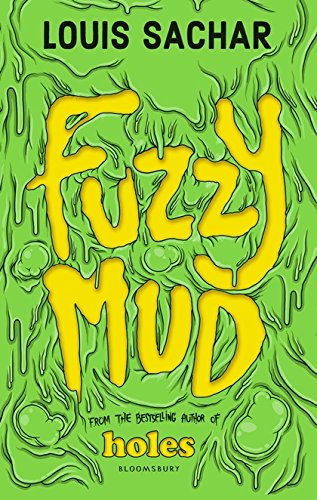
Book Review – Fuzzy Mud

Title: Fuzzy Mud

Written by:  Louis Sachar

Published by: Bloomsbury

Fuzzy Mud

A story of friendship, bullying, secrets – and toxic, itchy awful fuzzy mud. Everyday Tamaya and seventh-grader Marshall walk to school together. When they arrive at school they stop talking to each other – Marshall can’t be seen with a little kid like Tamaya, especially not with Chad around – Chad the bully, who makes Marshall’s life utterly miserable. But one day, Marshall and Tamaya take a detour through the woods to avoid Chad… And what awaits them is strange, sinister and entirely unexpected.

This novel is a gripping, heart-warming tale about the struggle for survival. Tamaya wants to be good but does not understand when the rules changed and it was good to be bad. She has to fight against peer-pressure to be more rebellious. Marshall has to overcome his fear of Chad, the school bully, and is surprised when he finds out the reason why Chad has been picking on him. Together all three must use all their courage and determination to save the whole town. Tamaya proves herself to be brave, regardless of her small stature and the detrimental effects of the fuzzy mud.

Louis Sachar is an expert at showing, not telling. I love how he uses imagery and dialogue within the story, so the reader can use their own imagination to fill in the gaps. I also like the way the micro-organism cell replication is pictorially represented in the illustrations at the beginning of each chapter.

The novel is left open-ended, with hints of a sequel… or maybe this is just my own wishful thinking!

This book review was previously published on the online Armadillo Children’s Book Review Magazine.


An interview with… Shahed Saleem

For my Research Secrets column this month I talk to Shahed Saleem about the in-depth research he did in the British mosque for his debut non-fiction book.

Shaded Saleem feature 1

This book presents the first overview of Muslim architecture in Britain, from the earliest examples in the late 19th century, to mosques being built today. Key architectural stages are identified and explained alongside the social history of Muslim settlement and growth. The mosques Shahed has written about represent a cross-section of the diversity of the Muslim population in Britain, and the types of mosque buildings that exist.

The British Mosque cover

Shahed explained:

“My core research methods for each mosque were building visits, oral histories, planning records and local history libraries.” Shahed Saleem

Gaining information from archive drawings was possible because of his background as an architect. Through planning records he could follow discussions and negotiation that took place around the design of the building. But his most informative primary source for researching was visiting each mosque and its surrounding area.

His research tip is to have a core research method you can use as a template for your particular project and then use more flexible methods around this which can be improvised depending on what you find out from that particular study.

To find out more about Shahed and his architecture practice take a look at www.makespace.co.uk 

Or follow him on Twitter @makespace_

Visualise Your Story

Writing can be a visual, multi-dimensional experience similar to painting, or designing a structure. I have always developed scrap books of my stories using pictures I have found to help me describe my character and setting.

20160630_140814

I once went on a Book Bound course led by Karen Ball of Speckled Pen. She made us rip out pictures from magazines that linked in some way to our character. We were not allowed scissors we had to use our hands and carefully tear out the images. At first, I found this difficult as I like order and conformity and this was a little too haphazard. But I soon got into the flow and found it quite freeing and inspiring.

It was fun. It didn’t help with the character I was working on at the time as she was quite dark so the magazines were not suitable. But it did help develop a new character from scratch. It can also help to develop key images within your story before they are drafted into scenes. I believe visualising your story is a great way of adding texture to your text. It is good to see the world from a different perspective. Let your imagination go wild.

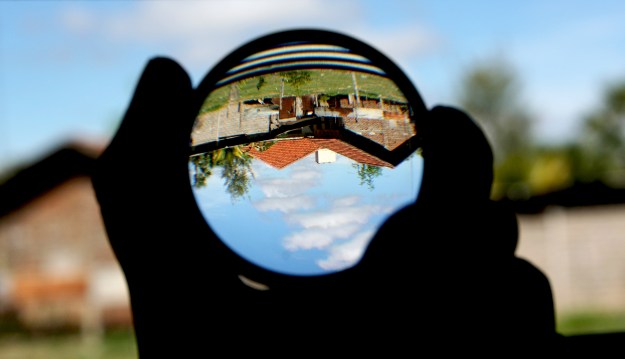
Convex_lens

I suggest you search the world wide web and magazines for images that inspire and help you develop your characters, setting and plot. Turn it into a collage. This could be done using sites like Pinterest, or software like Paint, or by hand-gluing pictures printed, or cut out of magazines onto large sheets of paper in the same way as Karen Ball made us do, although you can use scissors if you want. Don’t glue down the pieces too early so you can let your mind free-flow.

tree collage

You could even turn your writing space into a canvas. Sketch with words, post scenes form your novel and photos all around your study or writing space to sculpt them into a 3D-version of your book. Move things about, add some colourful phrases and quotes from your characters here and a touch of darkness there. Look where the light is coming from and then transfer this light into the pages of your story.

OK. Maybe I’m going over the top but writing is multi-tasking, and I am quite good at that.

Book Review – Tiz & Ott’s big draw

Title: Tiz & Ott’s big draw

Written and Illustrated by: Bridget Marzo

Published by: Tate Publishing

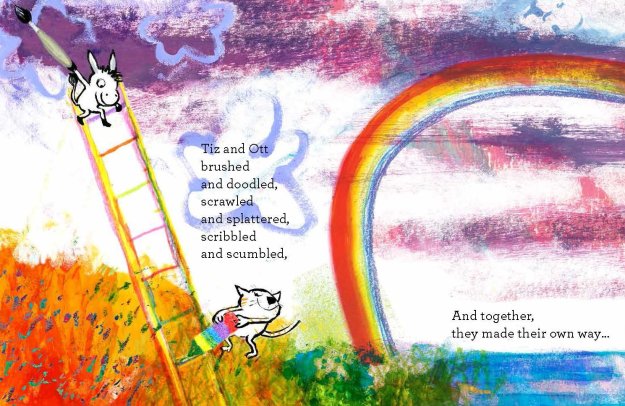
Tiz and Ott

Tiz & Ott’s big draw is an ode to the imagination and expressing yourself creatively. Children, parents and teachers will love this fun, creative way of introducing art to young people. This book reveals the multitude of different ways we can create marks, whilst showing the effects these marks can produce. Tiz and Ott demonstrate how to draw your way out of illustrator’s block.

This high-energy story is about Tiz the cat and Ott the donkey who are drawing themselves an exciting adventure. They have no idea what they are going to draw next they are just going with the flow where their imaginations take them. They start off small with a house here, a sun there and a rain cloud for shade and their adventure literally explodes right off the page.

Tiz and Ott2

Ott gets stuck in a scrape of orange sand and Tiz scritch scratches herself out of the hole with her multi-coloured crayon. The sky really is the limit. Bridget’s bold and colourful illustrations will capture the children’s imagination, encouraging them to try the ideas for themselves. At the end of the book, there are some step-by-step instructions on how to draw each of the characters and a recap of all the individual marks they used.

“Tiz and Ott is not just about creative block – getting carried away, landing in a hole and having to find a way out of it but also, oddly I realise high energy Tiz is a bit like my daughter, and my son says he identifies with low energy Ott.”

Bridget Marzo

This book is an ideal resource for stimulating art activities at home and in the classroom. It would be an excellent tool for encouraging children to express their imagination. Tiz & Ott’s big draw demonstrates there is so much more to painting and drawing than just painting and drawing. It epitomises the brilliance of free will.

To find out more about author-illustrator Bridget Marzo and her books see her website: www.bridgetmarzo.com or follow her on Twitter: @bridgimage