Tag Archives: Anita Loughrey

Special Guest: Q & A with Lorraine Gregory

I am thrilled to have Lorraine Gregory as a special guest on my blog today to celebrate the launch of her latest novel, Interdimensional Explorers.

Lorraine has had various jobs over the years including school dinner lady, chef and restaurant manager but she has always had a secret desire to be a writer. She writes middle grade fantasy, with zany characters, which zip off on adventures, fighting monsters and evil villains.

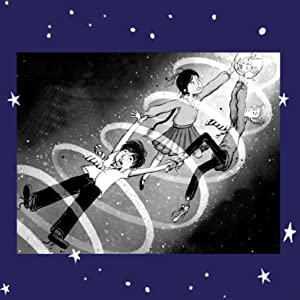
Interdimensional Explorers is the first in a brand-new sensationally spacey, action-packed adventure. Nothing exciting ever happens on twelve-year-old Danny’s estate. That is until he falls through a locker in his grandad’s workshop and finds himself in an Interdimensional Lost Property Office! And – even weirder – his new boss is a giant purple squid on a segway.

Now Danny, best mate Modge and annoying cousin Inaaya find themselves in charge of returning alien items to all corners of the universe. But someone – or something – is determined to stop them. And there’s NOTHING these evil aliens won’t stop at to achieve complete multi-dimensional domination, even trapping Danny and his friends on a planet a million light years away from Earth.

Now for the part you’ve all been waiting for… the interview.

********

Hi Lorraine,

Thank you for agreeing to be interviewed on my blog on the day of Interdimensional Explorers release, Thursday 8th June 2023.

The multiverse has been something that has fascinated and inspired me since I used to watch Sliders as a child, so when I heard about your latest book Interdimensional Explorers I just had to learn more about it.

So to start, please tell us a little about yourself and the inspiration for your book, Interdimensional Explorers.

Hi Anita, thanks for inviting me on your blog. I’m a mixed race kid brought up on a council estate and I never saw myself in books growing up. I wanted to give kids like me a story – not an issue story – but an amazing sci fi adventure.

Why did you decide to write a book about the multiverse for children?

Having a multiverse gives me so many options and opportunities for different worlds and ideas. It allows me to play around with world building as much as I like which is what I love to do. At the same time I hope it will spark children’s imaginations and encourage them to explore more sci fi.
What comes first for you the plot, or the characters, and why?

It’s always characters for me. I have to find them first and the plot grows around them. It’s important to me that the characters drive the story because their motivations and reactions are key to making any story believable.

What are the underlying themes of your novel, Interdimensional Explorers?

I think there are a few, loyalty, friendship and learning to believe in yourself no matter where you come from or what other people might think.

How much research did you need to do for your book? 

Because the sci fi in my book is more fiction than science not a huge amount! I did read up on some theories about multiverse’s but everything is quite vague so I felt happy to just let my imagination go wild!

If you could be a character in any of your books, who would you be?

That’s quite a tricky question. I write quite a lot of evil villains and I’m mean to most of my main characters! I’d maybe be Tingle from Maker of Monsters because she has the confidence of all cats and I’d love a bit more of that!

What writing advice would you give to people aspiring to be a children’s book writer?

Read as much as you can! You can learn everything about story structure from reading, and then write as much as you can. Try different genres and styles until you find one that works for you, explore different ideas till you find one that you can’t ignore and then polish it as much as you can. Then  try and find a crit group – online or in person – and get people to read your work and give you feedback, then start editing your work. Repeat the process.

How did you celebrate when you finished writing Interdimensional Explorers?

Interdimensional explorers was written during Lockdown and opportunities to celebrate were limited so I treated the family to a takeaway and a movie for putting up with me writing all the time!

Thank you Lorraine for taking the time to answer my questions for my blog, Much To Do About Writing, I am looking forward to reading the next book in the series.

Thank you for having me Anita and all the great questions. The next book will be heading to Earth in March 2024!

********

You can find Lorraine on twitter @authorontheedge and you can check out her website Lorraine Gregory Author: www.lorrainegregoryauthor.co.uk

Lorraine recommends the independent bookshops like https://chickenandfrog.com and https://rocketshipbookshop.co.uk as two of the best places to purchase her books. You can also order online at at uk.bookshop.org, an organisation with a mission to financially support local, independent bookshops.
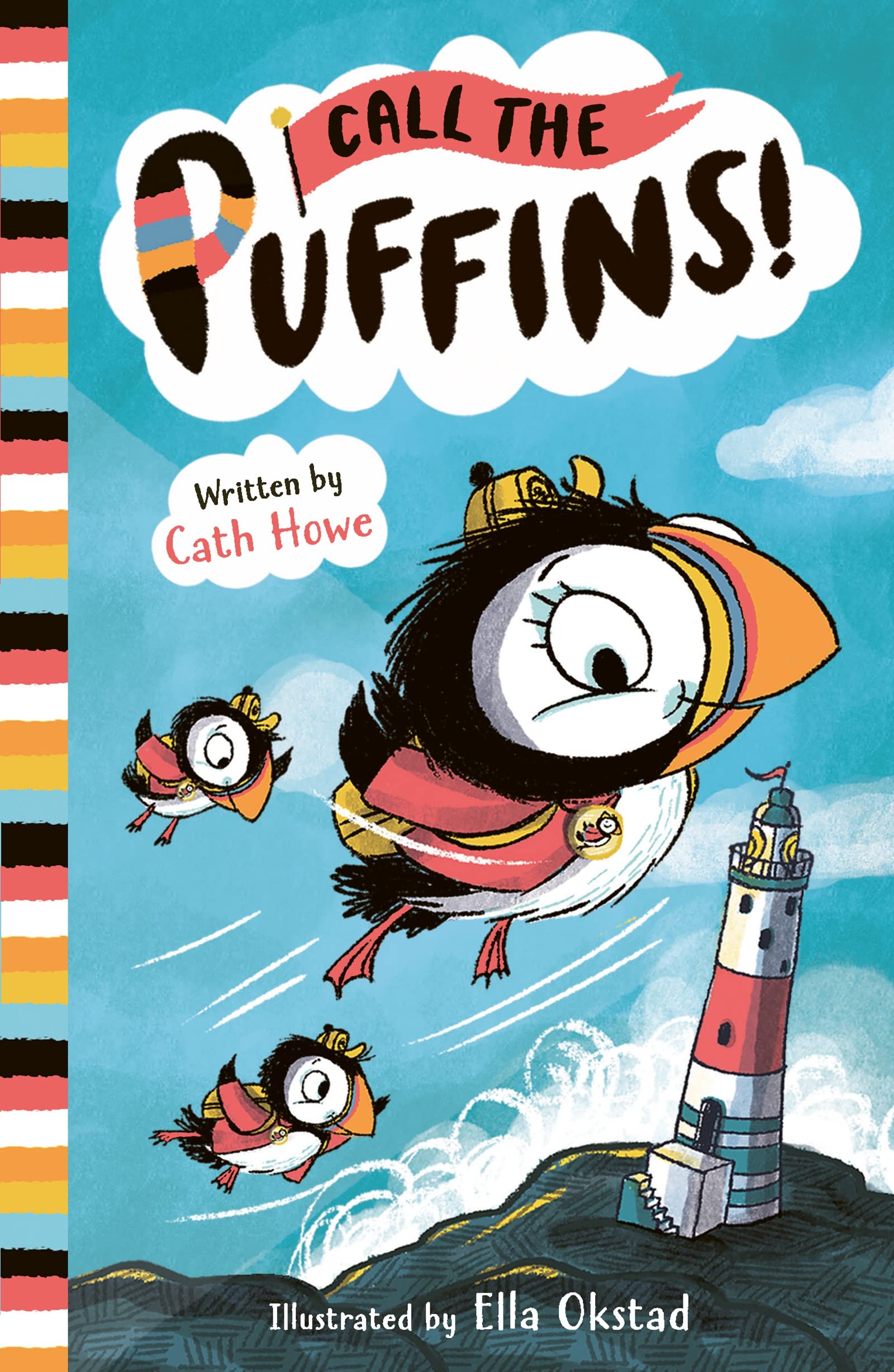
Book Review: Call the Puffins

Title: Call the Puffins

Written by: Cath Howe

Illustrated by: Ella Okstad

Published by: Welbeck Publishing

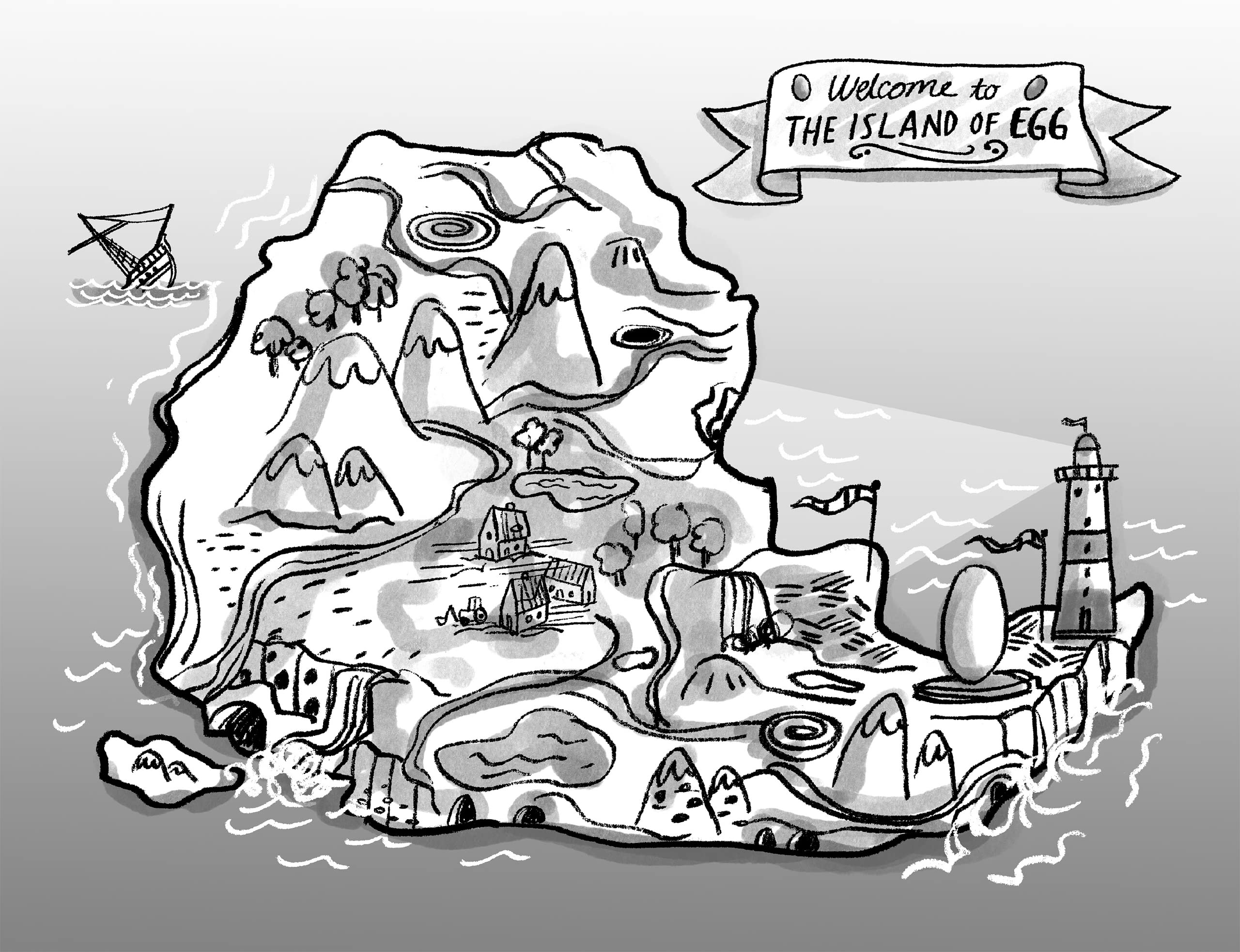
I have been a fan of Cath Howe and her writing for a long time and have particularly enjoyed her books for middle grade. Cath Howe’s book for younger readers does not disappoint. Call the Puffins is the first in a heart-warming series, complete with a map at the beginning and I really like maps of the story world.

This is a fun and enjoyable adventure for younger readers with themes of bravery, empathy and team work. It is Muffin the Puffin’s first day on the Island of Egg and she is apprehensive about the entrance test to join the Puffin Rescue Team, following in her dad’s footsteps. He explains her feelings are normal for everyone on their first day. Muffin is worried about her feet as they are different to the other puffins, as they turn up on the ends.

Muffin makes a new friend called Tiny who is also different. His wings are larger than normal which means he often gets caught by the wind. They work together with determination and perseverance to overcome their differences and prove they are just as brave and capable as the other puffins.

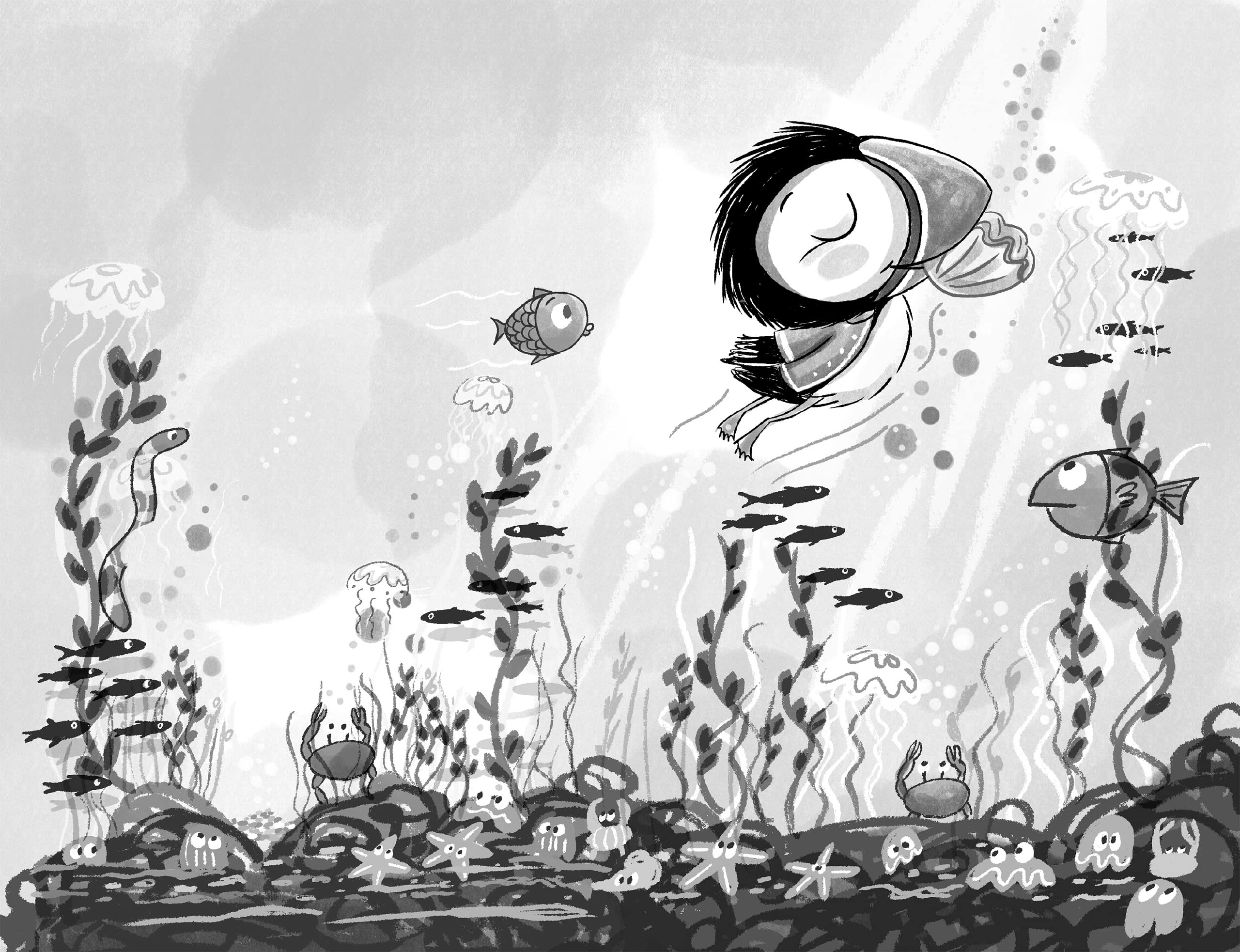
Ella Okstad’s black and white illustrations have they definitive ahhh factor. They are adorable not only because the puffins are extremely cute they also have movement and action.

The ideal book to share with the class at story time. A joy to read and explore.

I look forward to reading the second book in the series Tiny’s Brave Rescue due to be released October 2023.

I have also previously interviewed Cath Howe about her teacher resource, Let’s Perform for Writers’ Forum. You can find out more about this interview here: An interview with… Cath Howe

You can buy copies of Call the Puffins by Cath Howe and Ella Okstad from your local bookshop, or online at uk.bookshop.org, an organisation with a mission to financially support local, independent bookshops.

An interview with… Liz Flanagan

For the last ever issue of Writers’ Forum #254 May 2023 I interviewed Liz Flanagan about her inspiration and worldbuilding for the Wildsmith adventure series.

Liz explained the spark for the Wildsmith stories occurred in the strange quiet summer of 2020 when life was so starkly different from what we’d expected. Before her daily walk of those lockdown months, Liz had never realised how essential walking in the woods was for her mental health.

“Even in those dark and worrying times, as soon as I was outside under the trees, I started to feel better, and I’d return from my walk more able to cope.”

Liz Flanagan

She found writing was an anchor for her and tried new things to keep busy when her other work was cancelled. She discovered she enjoyed writing for younger children. Her agent, Philippa Perry, suggested writing a middle-grade series, full of magic and hope. It’s not a massive leap to see where Liz got the idea for a beautiful forest, fostering magical animals, and discovering the magical power to heal animals and speak to them.

Liz elaborated she had been fostering cats and kittens for an animal charity, and so had three unexpected additions to their household during lockdown – a very nervous young cat and her two kittens. She often wished she could speak to her foster animals to reassure them and to find out what was wrong when they were ill or scared.

She told me she believes fantasy lets us explore real-world problems in an oblique way that can be safe for young children. Perhaps all writers do this: taking the stuff of our lives and weaving it into stories, even if it’s not immediately apparent where each element came from?

Liz said she started sketching out ideas on a piece of paper – characters, issues, locations – and this grew into a detailed chapter by chapter outline. Her outlines tend to be about a quarter of my final word count as she thinks it is think easier to make changes to a plan than it is to rewrite a whole story. She created a map, and added to it as the series grew. She also did sketches of rooms and locations around Grandpa’s house to make sure it made sense on the page. Joe Todd-Stanton’s bought these places brought to life with his incredible art.

In terms of worldbuilding she needed to be clear on the magical attributes of her characters from the start. she explained it had to be consistent within the story world and also have limits – otherwise there’s no tension. But, the witches’ spells and the wildsmith’s magical healing were described in more detail quite late on in the writing process.

After writing the first two books Liz realised the passage of time was important. and decided that time passing at the rate of around one season per book should be a feature, which is highlighted on the covers. Book one has glorious green summery forest leaves, and book two has lovely autumnal shades.

The story developed with a longer-term conflict in the shape of the war, which begins in book one and is resolved by book four. Then each story has an individual problem to solve, connected with rescuing a particular magical creature (or being rescued by one in the case of book three). There are several baddies who re-appear, as well as friends whom Rowan isn’t sure she can trust.

Liz revealed it was a challenge to keep the conflict mainly happening ‘off-stage’ so it remained age-appropriate and not too scary, but early reviews from teachers have been really encouraging. Having short chapters helps to keep the children turning the pages. It gives you that structure and encourages a natural ‘cliff-hanger’.

“My protagonist needed to have a very clear goal throughout, even if this changes as the story develops. I’m used to having lots of action in my older books, so I wanted to make these younger books equally exciting. However, it was certainly a challenge for me, learning how to write simply while keeping the pace, learning what to leave out and what to keep in.”

LIz Flanagan

LIz’s writing tip for writing for children is to think back to your own childhood. She said one thing we know really well is the childhood we experienced and how we ourselves felt as a child of different ages. So we have this incredible resource, if we can access these memories.

“Having once been a bookish, animal-fixated child who loved to climb trees, I definitely think I wrote Wildsmith: Into the Dark Forest for the seven-year-old I once was.”

Liz Flanagan

And even if we can’t retrieve our own memories, we can observe the children around us. Liz found this a helpful place to start: instead of trying to please everyone, select a child you know, or the child you once were, and write to please them.

Liz Flanagan can be found at: https://lizflanagan.co.uk, Twitter @lizziebooks, Instagram @lizziebooks17

To read the complete feature you can purchase a copy of #254 May 2023 issue of  Writers’ Forum by ordering online from Select Magazines.

To read my future Writing 4 Children or Research Secrets interviews you can invest in a subscription from the Writers’ Forum website, or download Writers’ Forum to your iOS or Android device.

An interview with… Natasha Farrant

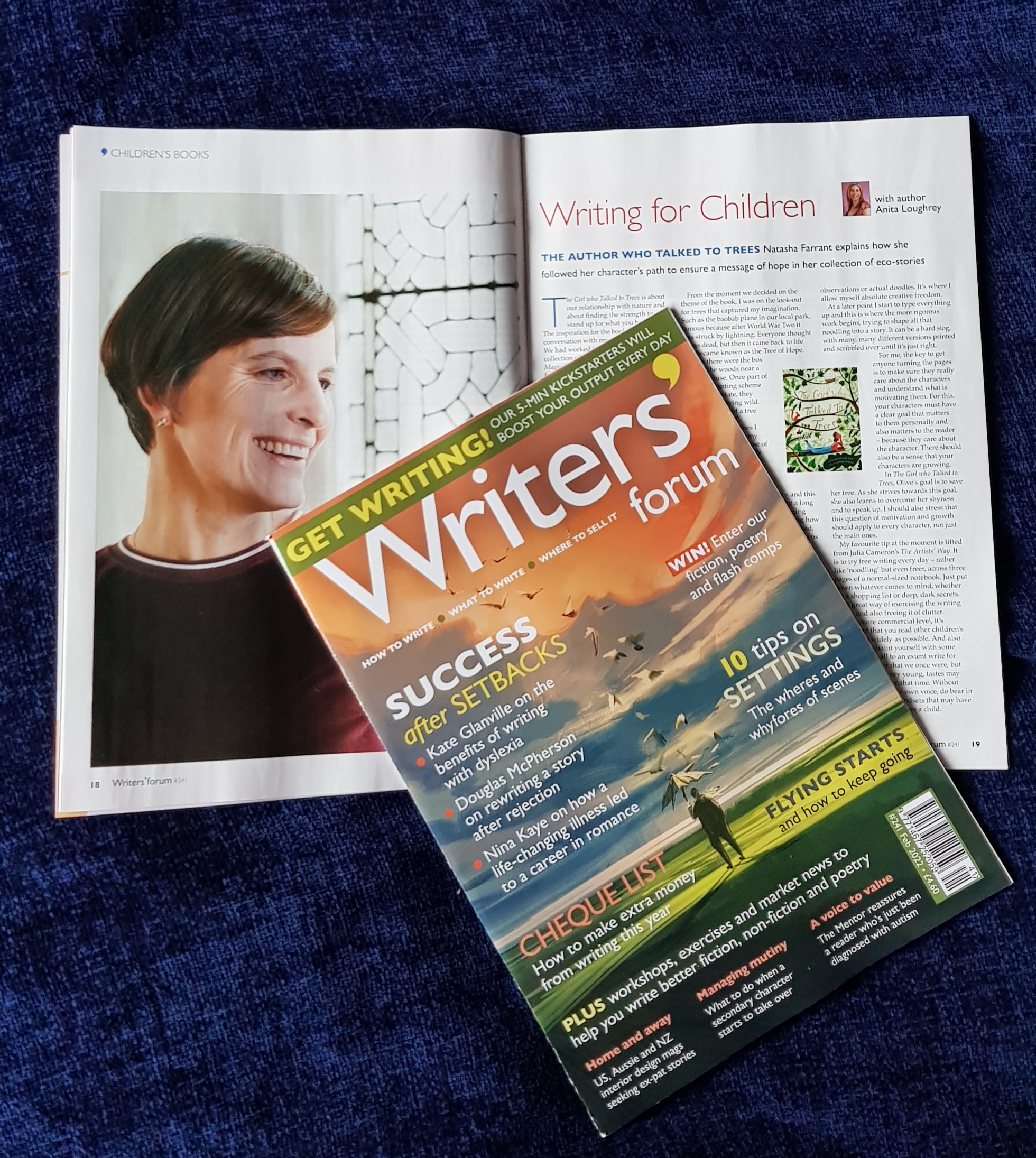
When I interviewed Natasha Farrant for issue #241 20 Jan 2022 of Writers’ Forum, she explained how she ensures there is a message of hope in her books for children.

At a fundamental level, The Girl Who Talked To Trees is about our relationship to nature and about finding the strength to stand up for what you believe in. The inspiration for the book was born of a conversation with her publisher at Zephyr. They had worked together on another collection of stories, Eight Princesses And A Magic Mirror and were thinking of ideas for a new book along a similar format. For a long time she had been thinking about how to respond creatively to the climate and ecological crisis.

She said it is so difficult to know how to do this for children – at an existential level, how do you balance the magnitude of the crisis with hope for the future? One of Natasha’s publishing friends suggested to do it through myth and fairy tale, and that really struck a chord with Natasha.

“I knew I wanted to write about the crisis but I also knew I wanted a book that would give hope for the future. I’m not saying trees are going to get us out of this mess, but they are a key part of the jigsaw – and such a relatively simple part.” 

Natasha Farrant

She continued there are two elements to the book: the major element is the stories themselves, but each story is introduced by a number of science facts. Natasha feels stories are such a powerful force in bringing about change, but without the science we’ll get nowhere.

As with all her books, though the themes are serious and the starting point in this case was so huge, the overall aim remained the same: to tell stories which would captivate and transport. She spent a long time thinking about Olive and getting to know her, wondering what traits I could give her that children could identify with.

So:

‘She was clever and kind and intensely shy and her best friend was a four-hundred-year-old oak.’

Extract from The Girl Who Talked To Trees

Which fits, because:

‘When you are so shy you dare not even look at anyone in case they want to talk to you – or worse, want you to talk to them – a tree is a very sensible choice for a friend.’

Extract from The Girl Who Talked To Trees

From the moment they decided on the theme of the book, Natasha was on the look-out for trees which captured her imagination, like the baobab plane in our local park, famous because after World War Two it was struck by lightning. Everyone thought it was dead, but then it came back to life and became known as the Tree of Hope. Then there were the box trees in the woods near one of her friend’s homes. Once part of a formal planting scheme on a grand estate, they were now growing wild. Natasha liked the idea of a tree that had escaped. 

Natasha revealed she prefers to write long hand, using a refillable fountain pen (no throwaway plastic) her husband bought her as a gift twenty years ago. She uses extra-large Moleskine notebooks because she likes their paper, and few things give her greater pleasure than the sensation of ink gliding across those smooth pages.

“This is a serious point: writing is hard, so it’s important to make those bits I can control as pleasurable as possible.”  

Natasha Farrant

The notebook writing is for doodling, or as a fellow writer calls it, noodling. Natasha sets herself a goal of three pages a day for a first draft, and tries not to think too much about what she is writing so it is more like exploring, free to go in any direction she desires. She writes on the right-hand page, leaving the left-hand page free for notes, observations or actual doodles. She allows herself absolute creative freedom.

At a later point she starts to type everything up. Natasha claims this is where the more rigorous work begins, of trying to shape all that noodling into a story. This can be a hard slog, with many, many different versions printed and scribbled over and retyped until it’s just right.

For Natasha, the key to get anyone turning the pages is to make sure they really care about the characters and understand what is motivating them. For this, your characters must have a clear goal, that really matters to them personally and – because they care about the character – also matters to the reader. There should also be a sense that your characters are growing.

In the case of The Girl Who Talked To Trees, Olive’s goal is to save her tree. As she strives towards this goal, she also learns to overcome her shyness and to speak up. Natasha stressed this question of motivation and growth should apply to every character, not just the main protagonists.

Natasha said, if you want to write for children, it’s important that you read other children’s authors as widely as possible. And also that you acquaint yourself with some children.  We all to an extent write for the child reader that we once were, but unless you are very, very young, tastes may have evolved since that time. Without losing sense of your own voice, do bear in mind trends and mindsets which may have changed since you were a child.

You can find out more about Natasha Farrant at www.natashafarrant.com, @NatashaFarrant1 (Twitter) and @natasha_farrant (Instagram)

To read the complete feature you can purchase a copy of #241 20 Jan 2022 issue of  Writers’ Forum by ordering online from Select Magazines.

To read my future Writing 4 Children or Research Secrets interviews you can invest in a subscription from the Writers’ Forum website, or download Writers’ Forum to your iOS or Android device.

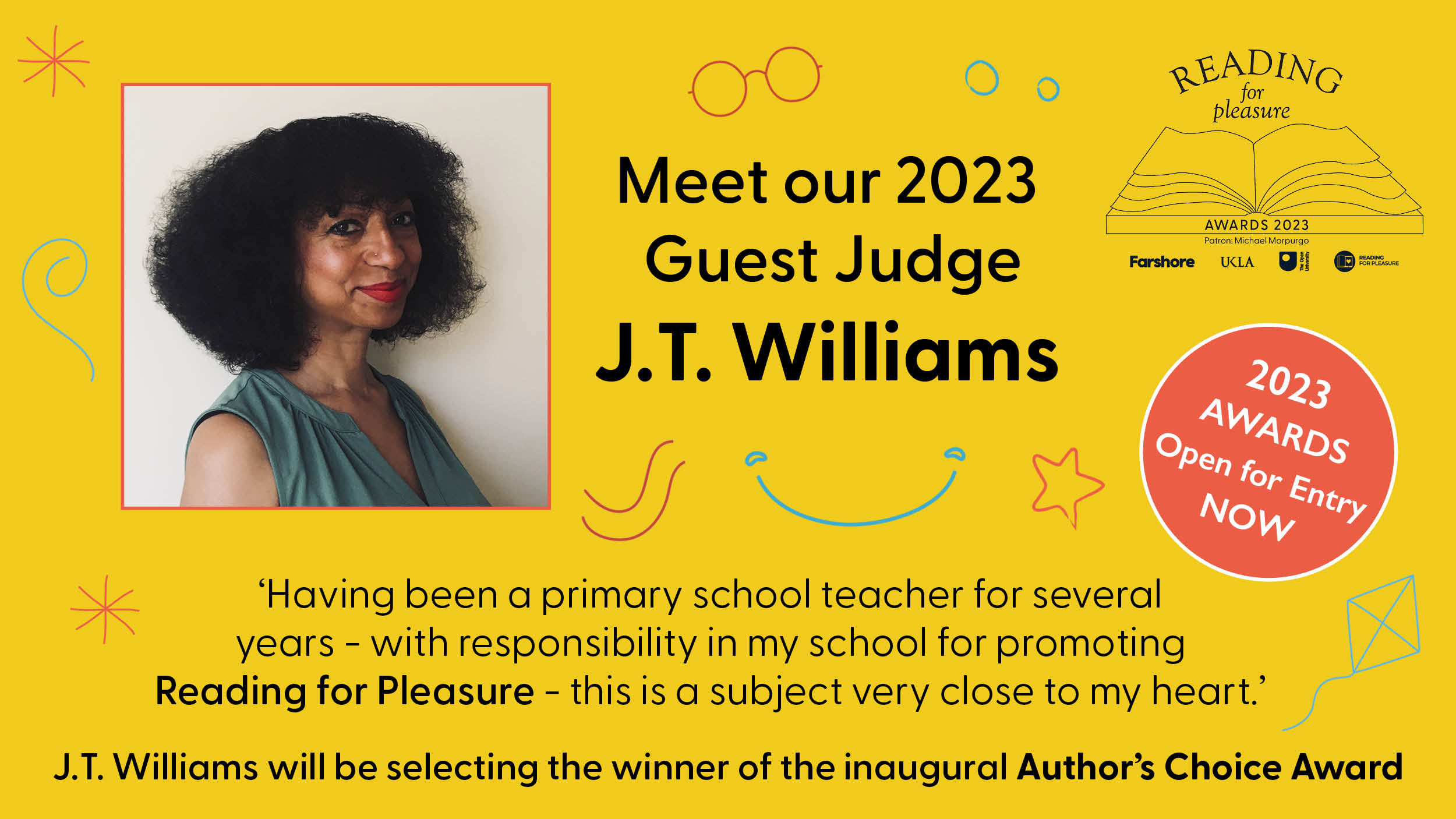
The Farshore Reading for Pleasure Teacher Awards 2023

I am excited to be able to help promote the Farshore Reading for Pleasure Teacher Awards 2023, in association with The Open University and the UK Literacy Association (UKLA). These awards are now open for entries. The Awards celebrate how teachers have found innovative ways to inspire reading for pleasure in the classroom.

Farshore’s purpose is to make all children proud readers through our broad portfolio of
inclusive, child-friendly books. To that end, we celebrate teachers who successfully promote and encourage children’s reading for pleasure, both within and beyond the school setting. They are collaborating with the Open University and the UK Literacy Association, who work together to research the significance of teachers being readers and identify ways to build reciprocal and interactive communities of readers. Both organizations are keen to profile and develop research-informed professional practice in this area.

The Award Categories are:
*Early Career Teacher (0-3 years in teaching)
*Experienced Teacher (3 years plus)
*Whole School
*School Reading Champion (e.g. Librarians/other educators)
*Community Reading Champion (immediate and/or wider community, from local area to local authority)

Submit your case study for an opportunity to be recognised by experts in children’s reading for pleasure.

DEADLINE: Midnight on Monday 5th June 2023.

The Award winners will be announced on Wednesday 18th October 2023 at the OU/UKLA Reading for Pleasure conference (or online) with the winner from each category receiving Farshore books to the value of £250 and 20 copies of Help Your Child Love Reading by Alison David.

The competition will be judged by:

– David Reedy, UK Literacy Association
– Joy Court, Co-founder: All Around Reading
– Teresa Cremin, Professor of Education, The Open University
– Alison David, Consumer Insight Director, Farshore
– Fiona Evans, Head of Schools Programmes, NLT
– Cally Poplak, Executive Publisher, HCCB and Farshore

Entry Criteria
Submit a research-informed case study on how children have been encouraged to read
for pleasure. It’s important to show context and the research that has inspired you. The
research you refer to can come from any source (including OU, UKLA, Farshore and
wider). Show your rationale, aims, outline of what you did, evidence of impact and finally your reflections.

The judges will pay particular attention to the following strands of the submission:
1.1) The importance of teachers’ knowledge of children’s literature and other texts.
1.2) The importance of bringing in wider voices and genres in recognition of the need
to improve diversity and inclusivity.
1.3) The importance of a child’s free choice of reading material and of offering a
range of texts to engage their interest, be it classics, series fiction, graphic
novels, picture books, comics and magazines, funny books, factual books etc.
2) The importance of reading aloud to children and its role in promoting children’s
motivation and their independent reading for pleasure.
3) The importance of building communities of readers by working with
parents/carers:

  • To promote the value of reading for pleasure
  • To support them in reading to their children
  • To establish reading for pleasure as a joyful and regular occurrence at home.

Top Tips From the Judges:

  • Follow the guidance.
  • Don’t go over the word count!
  • Select photos carefully, choosing only those that demonstrate your work.

Full entry details here.

The case study structure to be used can be found at: Share your practice – Reading for Pleasure https://ourfp.org/

Blog Tour – Interview with Blackbeard and Other Vicious Villains by Andy Seed

I’m thrilled to welcome Andy Seed to my blog today for the next stop of his Interview with Black Beard and Other Villains blog tour.

Interview with Black Beard and Other Villains is a creative non-fiction book illustrated by Gareth Conway and published by Welbeck Children’s Books. Perfect for fans of the Horrible Histories books, this series offers a fun, fresh take on history, featuring true stories from historical figures from across the world.

Readers can discover more about 10 famous villains who take a quick break from dastardly deeds to answer all sorts of (very nosy) questions about their actions and unique perspectives. Are they as wicked as we’ve been led to believe? Will Andy make it out alive? Discover the good, the bad, and the unexpected as each villain reveals the truth about their lives – and attempts to find out about the future.

In this fun and fact-filled book, bite-sized text in a question-and-answer format is paired with engaging illustrations, perfect for reluctant readers and humour-seeking history fans. Featuring interviews with Blackbeard, Ivan the Terrible, Nero and more – plus bonus facts about the time period and its events.

Andy Seed is a prolific author who writes for both adults and fiction, poetry and fun information books for children full of facts, figures, lists and true stories. He likes making things and his favourite food is cheese. He believes the world would be a better place if more people read more books. He is a Blue Peter award-winning author, based in Gloucestershire. He is the author of the popular Q&A Animals series: Interview with a Tiger and Other Clawed Animals TooInterview with a Shark and Other Ocean Creatures Too and Interview with a Kangaroo and Other Marsupials Too.

My stop on the tour will take the form of an author interview question and answer style just like the book.

********

Hi Andy,

Welcome to my blog. I must say a creative non-fiction book written up as interviews is such a great concept for a fact-filled children’s book. I wish I’d thought of it. You have been interviewing all these villains and now it is my time to interview you.

Please tell us a little about yourself and the inspiration for your book Interview with Blackbeard and Other Vicious Villains.

Hello! I’m the author of over 30 factual books for children and love to add a dash of giggle to the things I write. I live in a forest, which is handy because I write about wildlife a lot, and my other big interest is history. The past is a rich and bottomless bubbling well of remarkable people and strange happenings!

Interview with Blackbeard was inspired by the popularity of the series of animal Q&A books I have written for Welbeck beginning with Interview with a Tiger. I thought, if I can build a machine to enable me to chat to animals then why can’t I twiddle a few circuits and turn it into a time machine? It wasn’t easy but, it’s amazing what you can do with a some spare coat hangers and a Swiss Army Knife…. So, now I talk to anyone from the past. Nice.

Why did you decide to write a book about villains for children?

Villains do all the really bad things that most of us would never dare to do (because our mums would be FURIOUS). And they cause a lot of trouble. Trouble is interesting! There are plenty of well known baddies in history but also lots of really nasty people that we mainly don’t know – my book features a mix of the two. In an interview you can of course ask villains why they do the big bad crimes and it’s interesting to see things from their point of view.

Which of the famous villains in your book is your favourite and why?

I like Victor Lustig as a character because he was a clever trickster who sold the Eiffel Tower twice! Of course he didn’t own the tower but he was good at pretending he did, and he made a lot of cash out of it. But I think my overall favourite maybe the Chinese pirate Zheng Yi Sao. She was probably the most BOSS buccaneer in history. She led a fleet of 226 robber boats and had 17,000 pirates under her command at the age of just 30! OK, she did cut off my arm during the interview but I went back in time and managed to return with it still intact, hehe.

How do you keep the children turning the pages?

Ask good questions, make it fun, be a bit cheeky toward famous people and present the real facts of their lives in story form, picking out some juicy snippets. It’s an enjoyable way to bring history alive.

Do you have plans to write any more books in the same Q&A style as Interview with Blackbeard? If so, please tell us a little about them?

Yes! There is already Interview with Cleopatra and other Famous Rulers, but in the pipeline is Interview with Vincent Van Gogh and other Great Artists. We meet the top talent from the world of painting and they have some zinging tales to tell!

I like quiet and so I write at home but when it’s warm I sit outside on the patio in our garden which is next to a babbling brook. I can listen to the birds singing and our cat demanding food. I am very much an outdoors person.

Thank you Andy for agreeing to be interviewed as part of my blog. It has been great interviewing you. I hope you enjoyed being the interviewee rather than the interviewer for a change.😊

********

To find out more about Andy Seed and his book you can look at his website is www.andyseed.com and follow him on Twitter at @andyseedauthor.

You can buy copies of Andy Seeds books from most independent booksellers or online from uk.bookshop.org, an organisation with a mission to financially support local, independent bookshops.
To see the other stops on the tour take a look at the schedule below:

I would like to thank Antonia Wilkinson for inviting me to take part in this blog tour.

An interview with… Rachael Davis

I spoke to Rachael Davis about her experience of working with the children’s book packager Storymix, for the Writing for Children slot in Writers’ Forum issue #253 19 Apr 2023.

Rachael explained book packagers are companies that essentially put together books for publishers by pairing up the right talent with the right ideas. They are NOT a publisher. Once they create a book idea, they commission a writer to do a sample. This sample is submitted to publishers and the book packager will hope to get a ‘traditional book deal’. The writer may receive a percentage of the royalties the book packager is paid by the publisher, but this is not always the case. Sometimes the writers work for a fixed fee.

In some cases, a publisher may approach a book packager with an idea of the type of book/series they are looking for. The book packager will then work up a plot and outline, bring on an author to write the sample, and then the publisher will be given an exclusive first-look opportunity to acquire the series from the book packager. If that particular publisher doesn’t move forward with the project, the book packager would then have the right to try to sell the project to other publishers.

In all cases, it is important to realise that the intellectual property of the book/series belongs to the book packager, not the writer. The book packager is the creator of the series. The writer’s job is to bring their unique creative flare and voice to the project.

Jasmine Richards is the founder of Storymix. She isn’t a fan of the word ‘book packager’, she prefers ‘book incubator’. At Storymix, they have a unique mission to centre black and brown children in super fun, often fantastical adventure stories. Previously, Jasmine worked at a book packager called Working Partners, who developed Beast Quest and Rainbow Magic.

After working as an editor for 15 years, she founded Storymix to bring about positive change in the industry and make sure books on the shelves reflect all children. Jasmine works exclusively with diverse writers and illustrators, providing many of these unagented creatives with an unparalleled opportunity to work with the biggest publishers in the industry.

Rachael told me that back in November 2020, Jasmine reached out to Rachael’s agent to see if I might be interested in sampling for Storymix. She explained the opportunity as a ‘paid creative writing course’. It’s an opportunity to be paid to work with brilliant editors, learning about plot, characterisation. If the book is commissioned, you get to experience the publishing and editorial process. But it is not the same experience as getting a traditional book deal as there is less input at later stages. Jasmine told Rachael about a few different projects and as soon as she described Secret Beast Club she knew it was a project she wanted to be a part of. In Spring 2021, Jasmine commissioned Rachael to sample for Secret Beast Club.

“Thankfully, she loved my sample and it went on submission to publishers in the summer 2021. Puffin snapped up the series in a three-book deal. At this stage, Jasmine brought on the wonderful Clare Whitson to work as my editor who kept me updated with proofs and cover choices, alongside Puffin editor, Jane Griffin.”

Unlike with a traditional publishing deal, when you work with a book packager you don’t have the same level of responsibility for planning, plotting and story arc consistency. This is where the brilliant team at Storymix come into their own. As the writer, your role is to bring the voice and develop strong characterisation.

Often when working with book packagers, you receive less rights and lower royalties. However Rachael would absolutely recommend Storymix. She has found their rates and treatment of authors to be exceptional. But Rachael stressed this is not true of all book packagers and you should make sure you know what you are signing up for. While you can be unagented, having an agent or the Society of Authors check any contracts is important.

The Secret Beast Club series is written under the Pseudonym, Robin Birch. Rachael explained series developed by book packagers, particularly for young readers, are often written under a pseudonym. There are two reasons for this. Firstly, as mentioned the concept is the intellectual property of the book packager, not the writer. Secondly, if a series becomes successful additional writers may be brought in to write subsequent books.

Robin Birch is the collective pen name for children’s writer, Rachael Davis and series creator Jasmine Richards, who is the founder of Storymix and the Inclusive Children’s Fiction Studio. Together with their editors, Clare Whitston and Jane Griffiths. The Secret Beast Club adventure took shape and was brought to life by illustrator Jobe Anderson, designer Jan Bielecki and text designer Anita Mangan.

Rachael’s advice to writers wanting to work with a book packager is to work out who the book packagers are and what types of books they publish. Working Partners is a good place to start, and if you are a writer of colour (agented or unagented) she definitely recommends getting in touch with Storymix.

Some people can be a bit snobby about writers who work with book packagers, because the series plot is developed by the packager and not the writer. Rachael said this kind of collaboration is used all the time in other creative industries such as film and TV, and I personally have had a fantastic experience.

“Not only have I got to be part of a fantastic, ground-breaking chapter book series, but I have also had the opportunity to work with talented editors and hone my writing skills. I would highly recommend writers (agented and unagented, published, unpublished or self-published) consider whether working with a book packager is a good fit for them.”

Rachael Davis

Working with a book packager is not for everyone. Some writers will absolutely thrive, while others might find the lack of creative freedom to deviate from the book packager’s plot line constraining. You also have to be able to work to tight deadlines and not be precious about edits. It is not uncommon for a book packager to make changes to the text after the writer has completed their final draft.

However, if you can embrace the collaborative approach, working with a book packager can be a fantastic way to develop your skills as a writer, and go on to get traditional book deals later down the line. When you submit a sample to a book packager, they are looking for a fresh, original voice. Always keep in mind – what makes you the right writer for the project? Once the plot is created, technically any writer could write it, but what is it that your unique voice will bring to the project?

“At the heart of the Secret Beast Club series is friendship and teamwork, which is ever so fitting because this book has been a real team effort to create.”

Rachael Davis

The first book in the series Secret Beast Club: The Unicorns of Silver Street is out this month and Secret Beast Club: The Dragons of Emerald Yard is released later this year, in July 2023. At the heart of the Secret Beast Club series is friendship and teamwork, which is ever so fitting because this book has been a real team effort to create.

To discover more about Rachel Davis and her writing see her website: www.rachaeldavis.co.uk and follow her on Twitter @RachDavisAuthor & Instagram: @RachDavisAuthor

To find out more about Storymix go to: www.storymix.co.uk

To read the complete feature you can purchase a copy of #253 19 Apr 2023 issue of  Writers’ Forum by ordering online from Select Magazines.

To read my future Writing 4 Children or Research Secrets interviews you can invest in a subscription from the Writers’ Forum website, or download Writers’ Forum to your iOS or Android device.

An interview with… Barbara Henderson

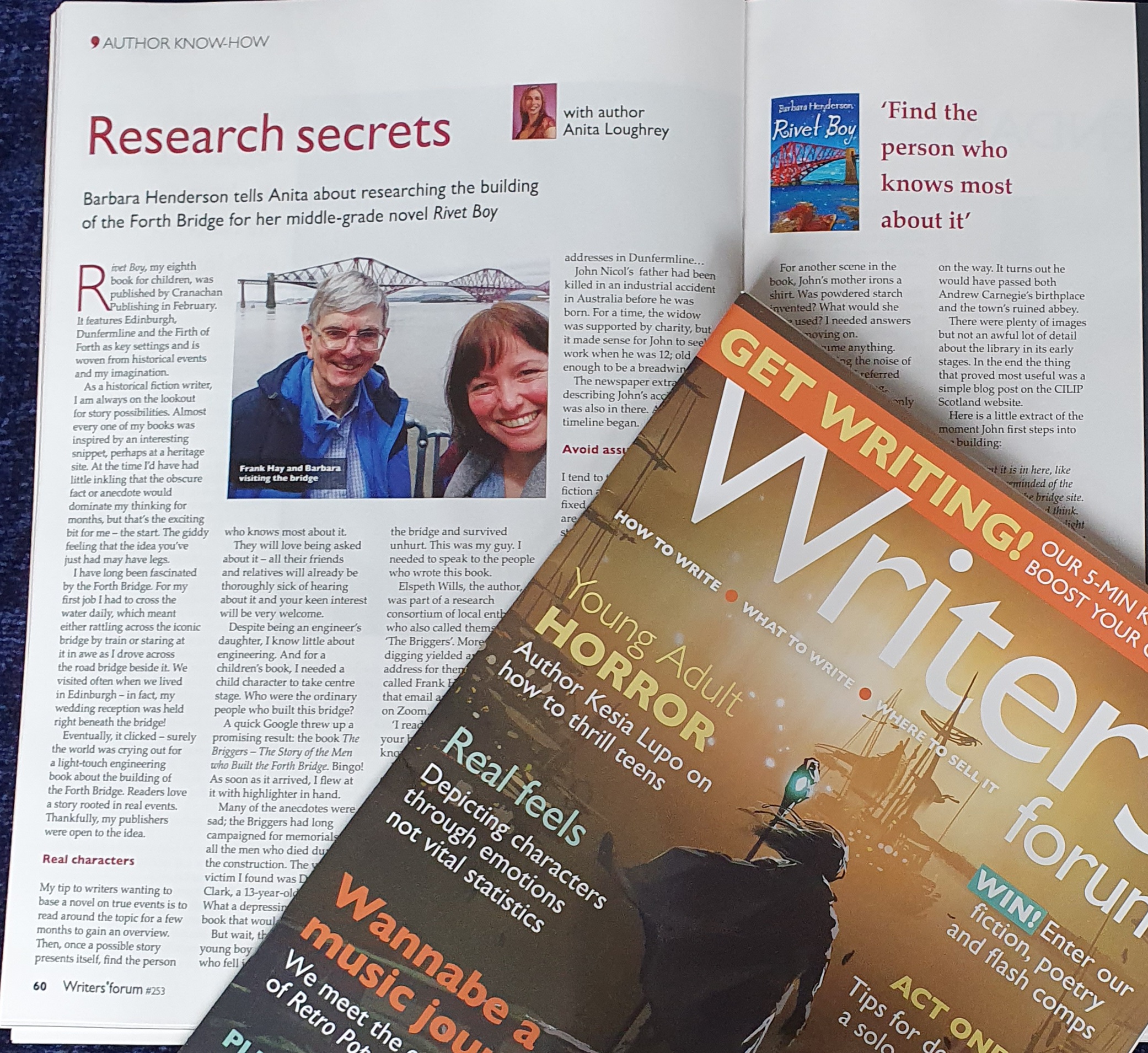
For my Research Secrets slot in this month’s issue of Writers’ Forum #253 19 Apr 2023, Barbara Henderson explained to me some of the research she did into the building of the Forth Bridge to Dunfermline for her middle-grade novel, Rivet Boy

Rivet Boy is her eighth book for children and was published by Cranachan Publishing on 16th February 2023. It features Edinburgh, Dunfermline and the Firth of Forth as key settings and is woven from historical events entwinned with her imagination.

As a historical fiction writer, Barbara is always on the lookout for story possibilities. Almost every single one of her books was inspired by reading an interesting snippet or visiting a heritage site. She told me she has been fascinated by the Forth Bridge for a long time. Her first job was across the Forth. She had to cross the water daily, which meant either rattling across the iconic Forth Rail Bridge by train or staring at it in awe as she drove across the road bridge beside it. In fact, her wedding reception was held right beneath the bridge. She said it eventually clicked – the world was crying out for a light-touch engineering book about the building of the Forth Bridge as readers love knowing a story is rooted in real events.

Barbara’s tip to other writers wanting to write a novel on true events is to read around the topic for a few months to gain an overview. Once a possible story presents itself, find the person who knows most about it. They will love being asked about it – all their friends and relatives will already be thoroughly sick of hearing about their pet interest and your keen interest will be very welcome.

Barbara explained for her children’s book, she needed a child character to take centre stage. So she researched the ordinary people who built this bridge and discovered a book called The Briggers – The Story of the Men who Built the Forth Bridge. However she found many of the anecdotes in this book of young people were depressing, and the Briggers had campaigned long for memorials to all the men who died during the bridge’s construction. The youngest victim she found was David Clark, a 13-year-old who fell and also a young boy called John Nicol who fell into the water from the bridge and survived unhurt, who became her main character.

Barbara hunted down the author, Elspeth Wills and found she was part of a research consortium of local enthusiasts who also called themselves ‘The Briggers’. More online digging even yielded an email address. Frank Hay answered her email and agreed to talk on Zoom. Barbara revealed her most valuable resource turned out to be Frank, and the others who had already studied the subject: ‘The Briggers’. When she asked for more information about John, the boy who survived, Frank spent a few days to look into it for her and sent her a ten-page document: He’d checked the census records, identified the most likely John Nicol, found his birth certificate, his parents’ marriage certificate and his two addresses in Dunfermline.

In addition, he discovered his father had been killed in an industrial accident in Australia before John was born. For a time, the widow was supported by charity, but it made sense for John to seek work when he was twelve, old enough to be a breadwinner. The newspaper extract describing John’s accident was also in there. Barbara was able to use this information to construct a timeline.

“I tend to think of historical fiction as a washing line. Your fixed events and real people are the pegs, pinning the story to the timeline. These are the things that are both true, incontrovertible and relevant to your story. In between, the washing can flutter in the wind of your imagination.”

Barbara Henderson

Construction was big for this particular book, so Barbara had to research the processes. She explained she finds it astounding that these Victorian engineers managed to calculate so accurately without the aid of modern computer technology. Much of the foundation work had to be conducted beneath the water. By the time her main character John begins his work on the bridge, the structure had emerged from the waves, but the fact that she feature so many details and incidents from real life meant that she had to constantly double and triple check that she had my order right.

In an early draft, she had the squirrel Rusty visit John on the bridge from North Queensferry – only to realise that it couldn’t have happened yet because the cantilevers weren’t connected at that point. Her tip is also not to assume anything. When describing the noise of the building site, she referred to a list along the lines of ‘hammering, drilling, scraping and shouting’ – only to be informed all drilling was done in the workshops, some way off and in advance. Many sounds added to the cacophony on the site, but drilling was not one of them.

Research can be a lonely business, as can writing. Her final tip is to join a writing group with similar interests to you. Barbara is part of the Time Tunnellers, a group of five historical fiction writers for children with weekly YouTube videos and blogs aimed at schools and historical fiction readers. Barbara told me she often learns something new from unexpected places – including my fellow Time Tunnellers’ posts.

You can discover more about Barbara Henderson and her books by following her on her website: www.barbarahenderson.co.uk, and follow her on Twitter @scattyscribbler and Instagram @scattyscribbler and @BarbaraHendersonWriter on Facebook.

To read the complete feature you can purchase a back copy of the #253 19 Apr 2023 issue of  Writers’ Forum by ordering online from Select Magazines.

To read my future Research Secrets or Writing 4 Children interviews you can invest in a subscription from the Writers’ Forum website, or download Writers’ Forum to your iOS or Android device.

An Interview with… Kesia Lupo

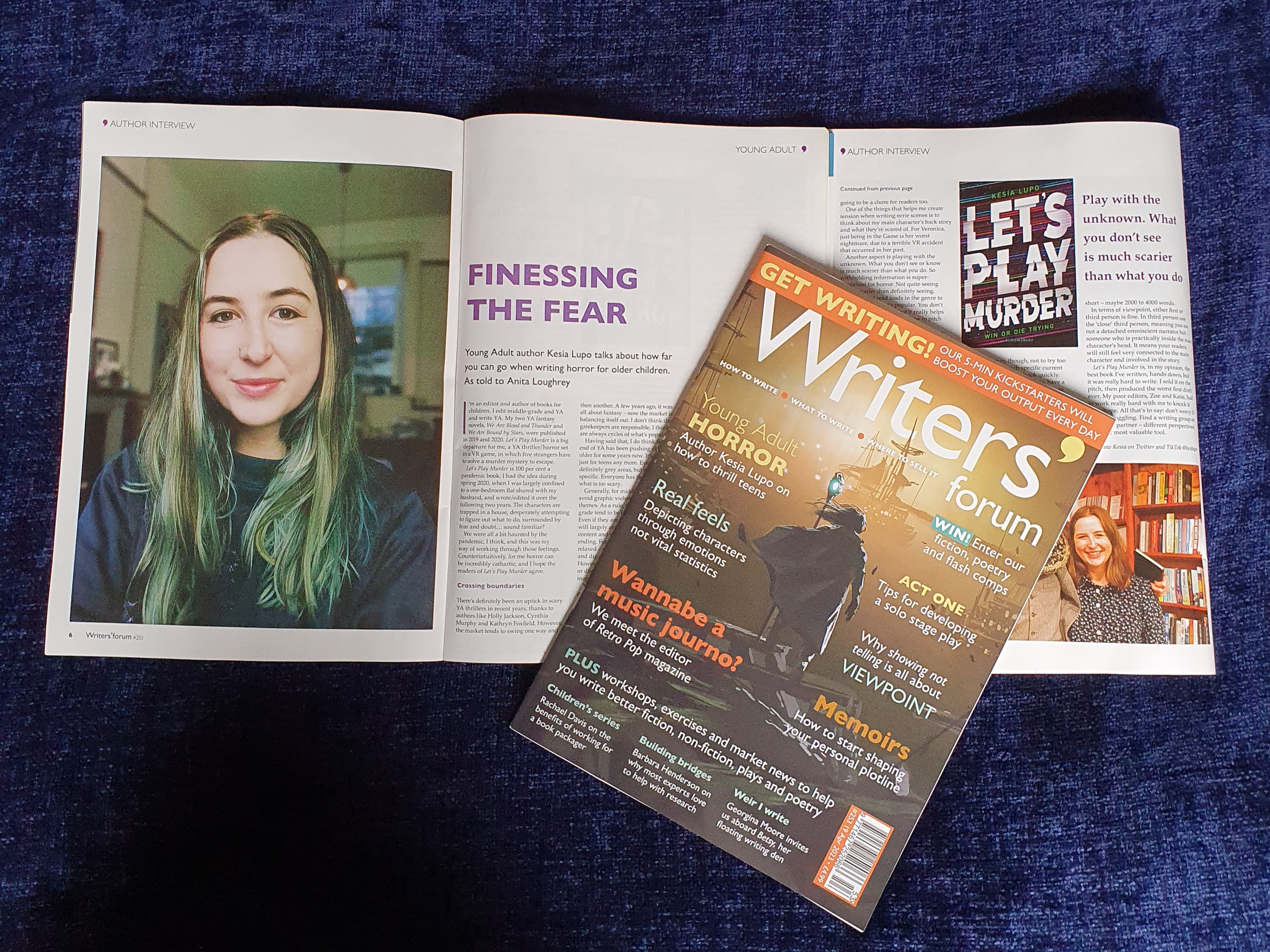
I interviewed Kesia Lupo for this month’s issue of Writers’ Forum #253 19 Apr 2023 about how far you can go when writing horror for children.

Kesia Lupo’s recent novel, Let’s Play Murder, is 100% a pandemic book. Kesia told me she had the idea during spring 2020, when she was confined to a one-bedroom flat shared with her husband, and she wrote/edited it over the following two years. The characters are trapped in a house, desperately attempting to figure out what to do, surrounded by fear and doubt… sound familiar? Kesia explained writing the book was a way of working through the feelings raised by living through a pandemic.

She said there’s definitely been an uptick in scary YA thrillers in recent years, thanks to authors like Holly Jackson, Cynthia Murphy and Kathryn Foxfield. However, the market tends to swing one way and then another – a few years ago, it was all about fantasy, now the market is balancing itself out. Kesia thinks the upper end of YA has been pushing older and older for some years now – it’s not really just for teens.

Even so there are definitely grey areas but it’s difficult to be specific. Everyone has their own sense of what is TOO scary. Generally, for middle-grade, Kesia recommends avoiding graphic violence and disturbing themes. She explained as a rule, thrillers for middle-grade tend to be focussed round a mystery – even if they are murder mysteries, they will largely avoid any truly difficult content and will generally have a happy ending. For YA, the boundaries are more relaxed – you can have violence, death and dig deep into atmospheric horror. However, there is a line: e.g. very graphic or disturbing violence will probably be inappropriate.

Kesia told me you can definitely include blood and gore – as she does in Let’s Play Murder. The first instance is where she describes, in detail, the corpse the players find at the beginning of the game… it’s pretty gross. There are multiple instances of violence on the page, too – for instance when some of the players are attacked by rogue zombies from a different game, or when certain other murders occur. Kesia believes this level of violence is appropriate for readers aged 12+.

The violence is always necessary for the story so isn’t gratuitous, nor is it of a truly disturbing nature, it’s never sexualised, and there’s no torture. Sometimes YA is classed as 14+ so may go a bit darker. Ultimately, if you’re not sure, Kesia suggests it is a good idea to share extracts with your writing group and gain other perspectives – especially if you have teachers/parents of teens to help you.

“One of the things that helps me create tension when writing eerie scenes is to think about my main character’s backstory and what they’re scared of. For Veronica, even being in the Game is her worst nightmare due to a terrible VR accident that occurred in her past. Another aspect is playing with the unknown – what you don’t see or know is much scarier than what you do. So withholding information is super important for horror. Not quite seeing is a lot scarier than definitely seeing.”

Kesia Lupo

Her tip to other writers wanting to keep teens turning the pages is to firstly, keep the story moving: in YA, every scene has to earn its place – no room for filler scenes. If she ever loses steam and finds herself writing a sort of ‘in between’ section, she ask herself: what’s the worst thing that could happen to her character at this time? Then, she makes it happen. Secondly, end every chapter on some kind of cliffhanger so that every time they take a break, your readers can’t wait to pick up the book again. And lastly, make sure YOU are enjoying writing the book. If you’re not, it’s probably going to be a chore for readers too.

“Let’s Play Murder is (in my opinion) the best book I’ve written, hands down, but it was REALLY hard to write. I sold it on the pitch, then produced the worst first draft ever. My poor editors, Zoe and Katie, had to work really hard with me to knock it into shape. All that’s to say: don’t worry if you’re struggling. Find a writing group or a critique partner – different perspectives are your most valuable tool.”

Kesia Lupo

She recommends if you aspire to write thriller/horror books for children should read loads in the genre to get a sense of what’s popular. You don’t want to follow trends, but it really helps to get a sense of voice and how to pitch your story for the age-group. Immerse yourself in the YA worlds. Also, it’s always fun to eavesdrop on conversations if you can, to pick up tips – if you’re sitting in front of a chatting teen couple on the bus, take note of how they interact. Beware, though, not to try too hard – using too much specific/current language will date the book quickly.

If you’re struggling for ideas, have a think about what really scared you as a teen – or even what scares you now. Sometimes it’s not as obvious as ghosts or vampires – it could be ‘being watched’ or ‘feeling trapped’. Can you build a story around that?

For teen or YA readers, kesia suggests 60k-80k as a rule of thumb. In terms of point of view, first or third person is fine – if third person, try to write a ‘close’ third person, meaning you are not a detached omniscient narrator but someone who is practically inside the main character’s head. This means that your readers will still feel very connected to the main character and involved in the story. Chapters should be relatively short – maybe 2k-4k.

You can follow Kesia Lupo on Twitter @keslupo and TikTok: @keslupo and on Instagram Instagram: @kesialupoauthor

To read the complete feature you can purchase a copy of #253 19 Apr 2023 issue of Writers’ Forum by ordering online from Select Magazines.

To read my future Writing 4 Children or Research Secrets interviews you can invest in a subscription from the Writers’ Forum website, or download Writers’ Forum to your iOS or Android device.

An interview with… Alyssa Sheinmel

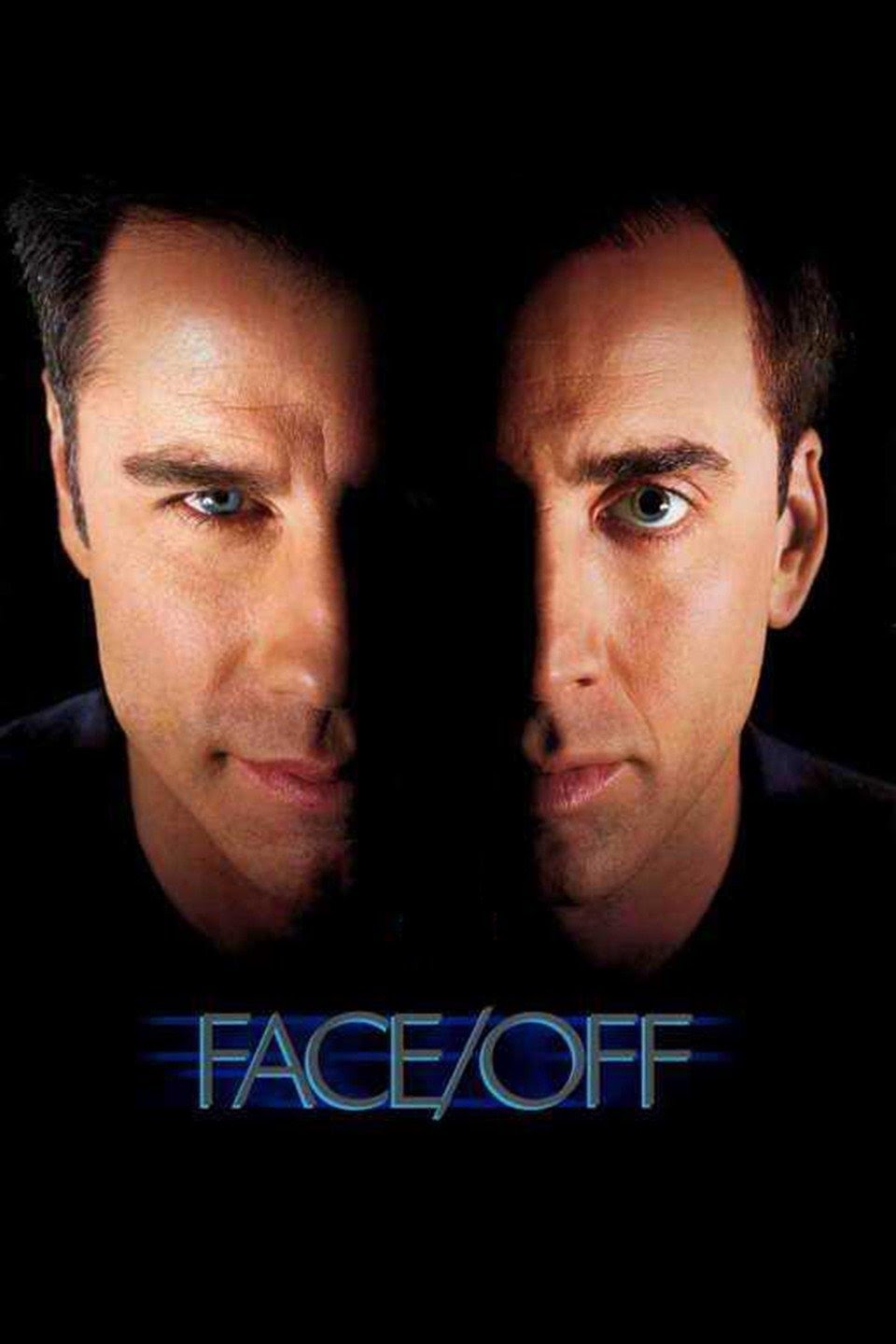
When I heard about Alyssa Sheinmel’s extraordinary research into face transplants for her novel Faceless, published by Chicken House, I was stunned the movie Face Off could have been based on reality. Face transplants are a real thing. Maybe not in the same way as in Face Off but still a possibility.

I was so intrigued to discover more I decided to interview best-selling YA author, Alyssa Sheinmel, for my regular Research Secrets section of Writers’ Forum, issue Aug 2016 #178.

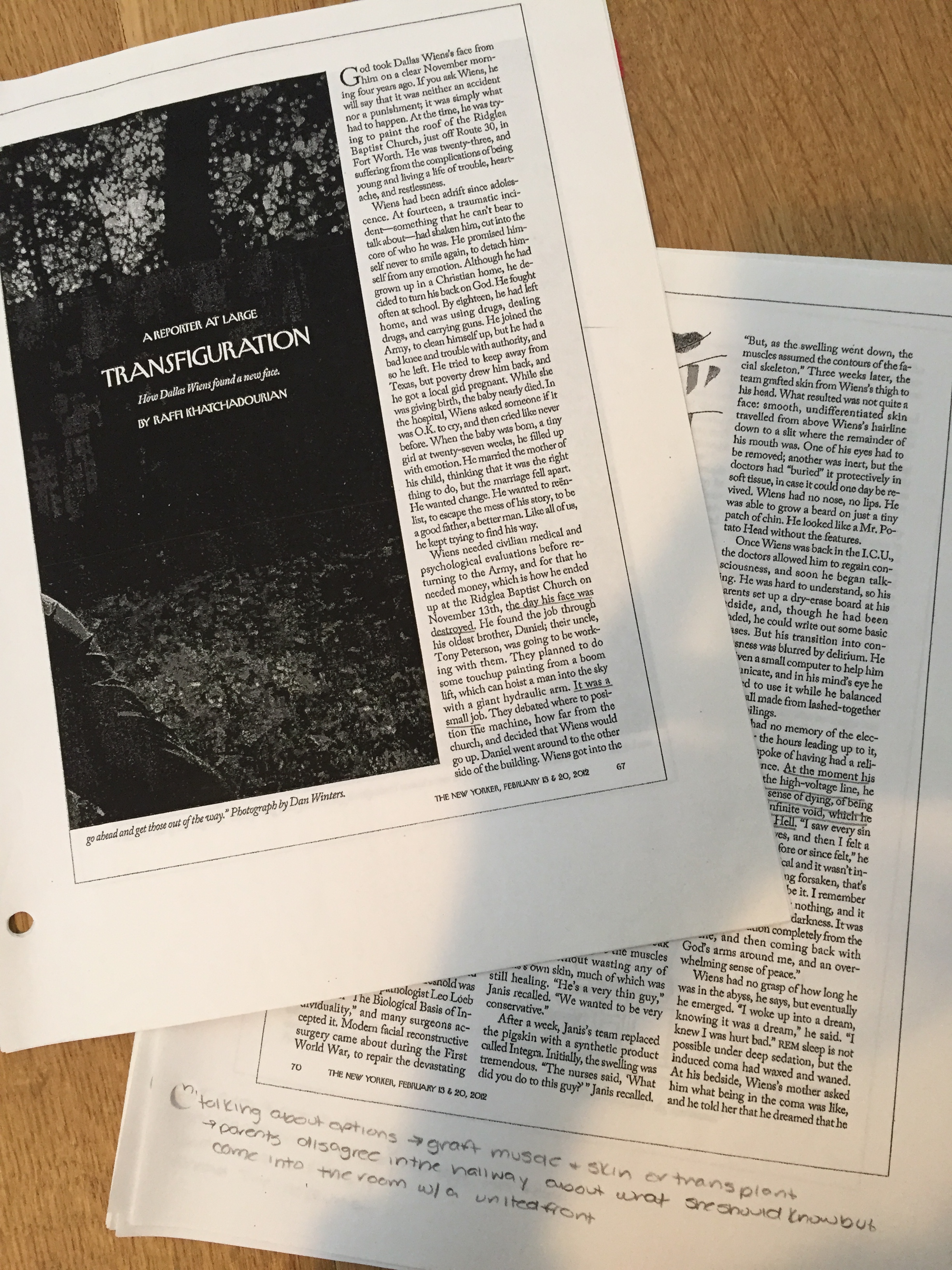
Alyssa told me she knew she wanted to write a book about a girl who was in a horrific accident, a girl who struggled to understand how much of who she was is tied to what she looked like and it was her American editor who suggested a girl for whom a face transplant was her best hope at having a normal life after reading an article in The New Yorker about a full face transplant.

“I’m pretty sure I underlined more of the article than I left blank! My favourite line came from a plastic surgeon, who explained that while other surgeons made you well by taking you apart – by cutting out the parts of you that are no longer functional, that are diseased, that have turned toxic – plastic surgeons make you well by putting you back together. (A version of that explanation made its way into Faceless.)”

Alyssa Sheinmel

She explained she began her research by reaching out to doctors she already knew – her general practitioner, a friend who’d gone to medical school and a friend of her sister who was a plastic surgeon that specialized in reconstruction who answered her myriad of questions.

In particular, she wanted to ensure Maisie’s injuries were realistic. For example, could she have been burned in such a way that she’d need to replace her cheeks, nose, and chin, but retain her jaw? This doctor explained that pretty much everything about these surgeries is unusual, so there were no hard and fast rules. He also provided Alyssa with a detail that really stayed with her: it takes a while for the nerves to grow into transplanted skin, so for a period after her surgery, Maisie’s face would feel like sort of a mask hanging off of her – it might actually feel heavy. This detail made its way into Faceless.

Even so, Alyssa revealed she was worried about taking up these doctors’ time with her incessant questions but found these experts often wanted to talk about their respective fields

“It’s challenging when you’re talking to such ‘important’ people – when I was interviewing a plastic surgeon, for example, I kept apologizing for taking up time that he could be spending with his patients. But he insisted that he was happy to give me his time and answer his questions.”

Alyssa Sheinmel

Like all transplant patients, face transplant recipients are put on immunosuppressive drug regimens. Alyssa revealed her editor had a few doctor and medical student friends who were incredibly helpful with these questions in particular. What were the side effects like? How many pills would she have to take? At sixteen, Maisie has already been told that she can’t carry a child because her medication could cause birth defects. She found what the pills looked like by searching on Google.

Alyssa explained the immunosuppressive regimen became a big part of Maisie’s journey. It’s difficult enough for Maisie that she doesn’t look like her old self, but being on these drugs keeps her from feeling like herself too. She’s tired, nauseated, achy. She’s a former straight-A student who can barely stay awake in class anymore.

For Alyssa there isn’t always a straight a line between my research and the story as everything she reads and watches teaches her something about how to tell a story. She told me as she was writing Faceless, she found herself thinking about stories she’d read and movies she’d seen that – on the surface, at least – didn’t really have much in common with her book. But they still were every bit as helpful as all the articles she read and doctors she spoke to about face transplants. There were also things going on in her life that influenced the story such as, a family member underwent surgery and her stay in the hospital and subsequent recovery impacted on Maisie’s experience, too.

The emotional aftermath of surgery was another one of those times when her unintentional research came in to play. Years ago – well before she started working on Faceless – she watched a documentary called The Crash Reel about American snowboarder Kevin Pearce. Heading into the Vancouver Winter Olympics, it looked like nothing would stop Kevin from bringing home a medal (except possibly, his long-time rivalry with fellow-snowboarder Shaun White). But during practice one day, a horrific crash sends Kevin to the hospital, where he’s treated for a traumatic brain injury. All Kevin wants to do is get back on his board, back to the life he knew before – but his friends and family are worried that snowboarding again could kill him.

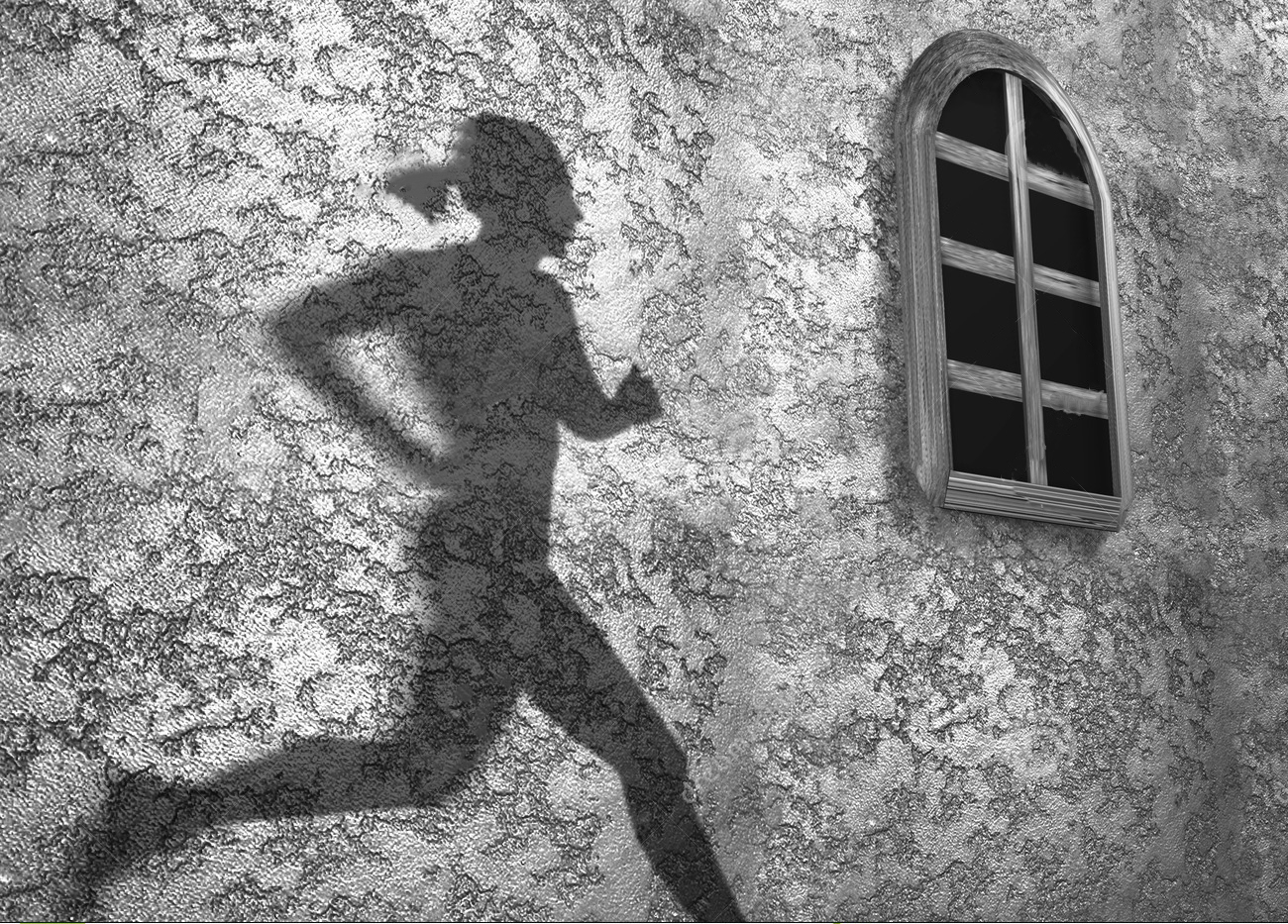
In Faceless, Maisie was a runner before her accident – she ran track on her school’s team, she ran alongside her boyfriend, she ran for fun. Running was a huge part of who she was, part of how she defined herself – and after her procedure, she can’t run the way she used to. In fact, she might never be able to run again. Just as Maisie has to give up running, in The Crash Reel, Kevin Pearce has to come to terms with his new reality – a reality that might not include snowboarding.

Another piece of unintentional research helped her with the aftermath of Maisie’s accident – a novel called The Ice Queen by Alice Hoffman, which I read years ago as well. It’s the story of an ordinary New Jersey librarian to whom the extraordinary happens: one day, she’s struck by lightning. Afterwards, the world looks different – literally: she can no longer see the colour red. Though Hoffman’s protagonist doesn’t have much in common with Faceless’s main character, Maisie (other than the fact that each have a run-in with lightning), they’re both characters whose lives are changed by somewhat random events, and they have to come to terms with a new normal.

“When I was a freshman in college, my psychology textbook taught me how to insert humour into a dry topic. Magazine articles have prompted (sometimes completely unrelated) story ideas. And certainly, when I watched a documentary about snow-boarding a few years ago, I had no idea it would someday influence a novel I wrote about face transplants.”

Alyssa Sheinmel

Alyssa’s tip to other writers when researching is to keep an open mind. She explains you never know where your next idea will come from, which book or article or essay will help you learn how to tell your story. Just keep your eyes and ears open, and learn as much as you can.

You can find out more about Alyssa Sheinmel on her website: www.alysasheinmel.com and follow her on Twitter: @alyssasheinmel.

To read the complete unabridged feature you can purchase a copy of the Aug 2016 #178 issue of Writers’ Forum by ordering online from Select Magazines.

To read my future Research Secrets or Writing 4 Children interviews you can invest in a subscription from the Writers’ Forum website, or download Writers’ Forum to your iOS or Android device.