Tag Archives: Chicken House

Book Review: The Ice Children by M. G. Leonard

To celebrate the release of The Ice Children by M. G. Leonard tomorrow, Thursday 2nd November 2023, I have decided to post my review of this beautiful book.

********

Title: The Ice Children

Written by: M.G. Leonard

Illustrated by: Penny Neville-Lee

Published by: Macmillan Children’s Books
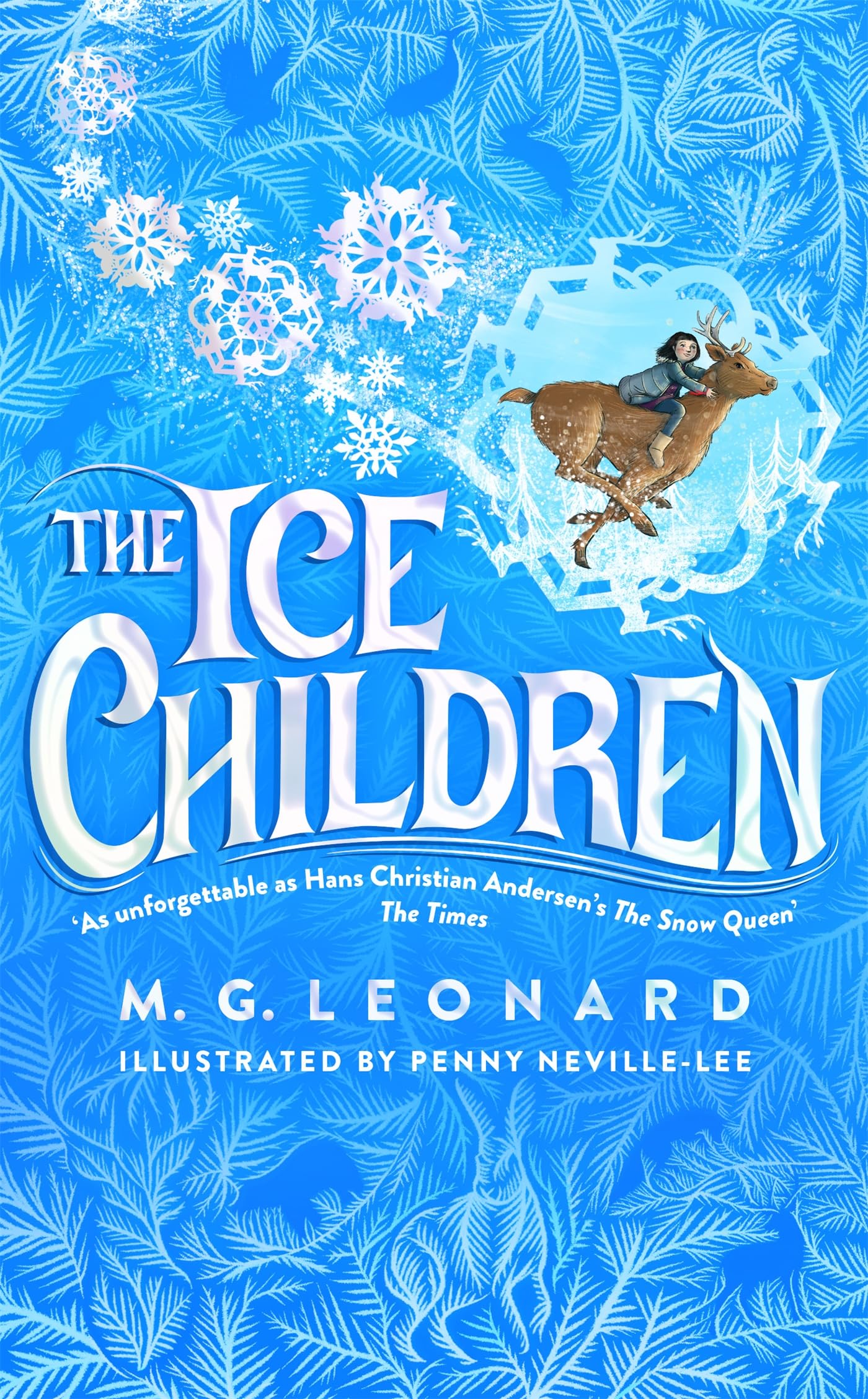
I requested to read this book from NetGalley because I enjoyed M.G. Leonard’s Beetle Boy books and the Twitcher series. I was not disappointed as I was instantly drawn in by the narrative of this modern day fairy tale.

M.G. Leonard explains in her acknowledgments how she was inspired by the familiar stories of The Snow Queen, Pinocchio, and The Selfish Giant to create an imaginative new story which will linger in your mind as do many timeless classics. The brilliant action-driven plot does not spend unnecessary time world building without moving the story forward. I can imagine The Ice Children making a lovely magical children’s Christmas movie.

The main character, Bianca has to use her detective skills to work out why more and more children are appearing as frozen statues in the park. She links the strange happenings to a mysterious silver book her brother discovered in the library. M. G. Leonard realistically portrays how children are not listened to in times of emergency and their ideas dismissed as childish fantasies.

The only option Bianca has is to stop the mysterious disappearances on her own and discover who is responsible for turning her brother and friends to ice. She uses the clues to transport herself to a wintery wonderland, highlighting how books really are doorways to other worlds. I particularly enjoyed reading about the different spirit animals each of the children had in the magical world. I wondered what my own spirit animal would be long before I reached the end. I decided it was probably a bear.

I adored the cover and illustrations by Penny Neville-Lee and believe they would be even more magnificent in a real book format rather than viewing on my kindle. They are beautiful and add to the magical atmosphere of this book. The short chapters made this a quick and easy read. I seemed to fly through the pages, devouring every word.

It was evident about half-way through there was no real antagonist. In fact the real villain of the book is us – the human race – whose extravagance and negligence has caused the global warming which the world is suffering from creating a world ‘where winter cannot survive.’

Bianca strives to show the children they can make a difference as they are the adults of the future. They have the power to make changes to build better habits which will help the environment. In this way, M. G. Leonard has pro-actively crafted a spell-binding novel, which successfully treads the thin line between conveying an important message and preaching. The Ice Children gives children the power to do something now to prevent climate change.

This book leaves you with hope that it will indeed touch people’s hearts and change the way they think.

********

This review of The Ice Children has been previously posted on NetGalley and Goodreads. I would like to thank Macmillan Children’s Books and NetGalley for organising me a digital review copy of the book. Thank you.

You can find out more about M. G. Leonard and her books on her website www.mgleonard.com and follow her on social media: Twitter @mglnrd; Instagram @mglnrd; Facebook @MGLnrd.

I have also reviewed Spark by M. G. Leonard on my blog in December 2022. To read this review take a look at: Book Review: Spark

I also had the pleasure of interviewing M. G. Leonard for the #219 Jan 2019 issue of the UK national magazine, Writers’ Forum about her research for the Beetle Boy series. You can read highlights from this Writers’ Forum interview here: An interview with… M. G. Leonard
An interview with… Alyssa Sheinmel

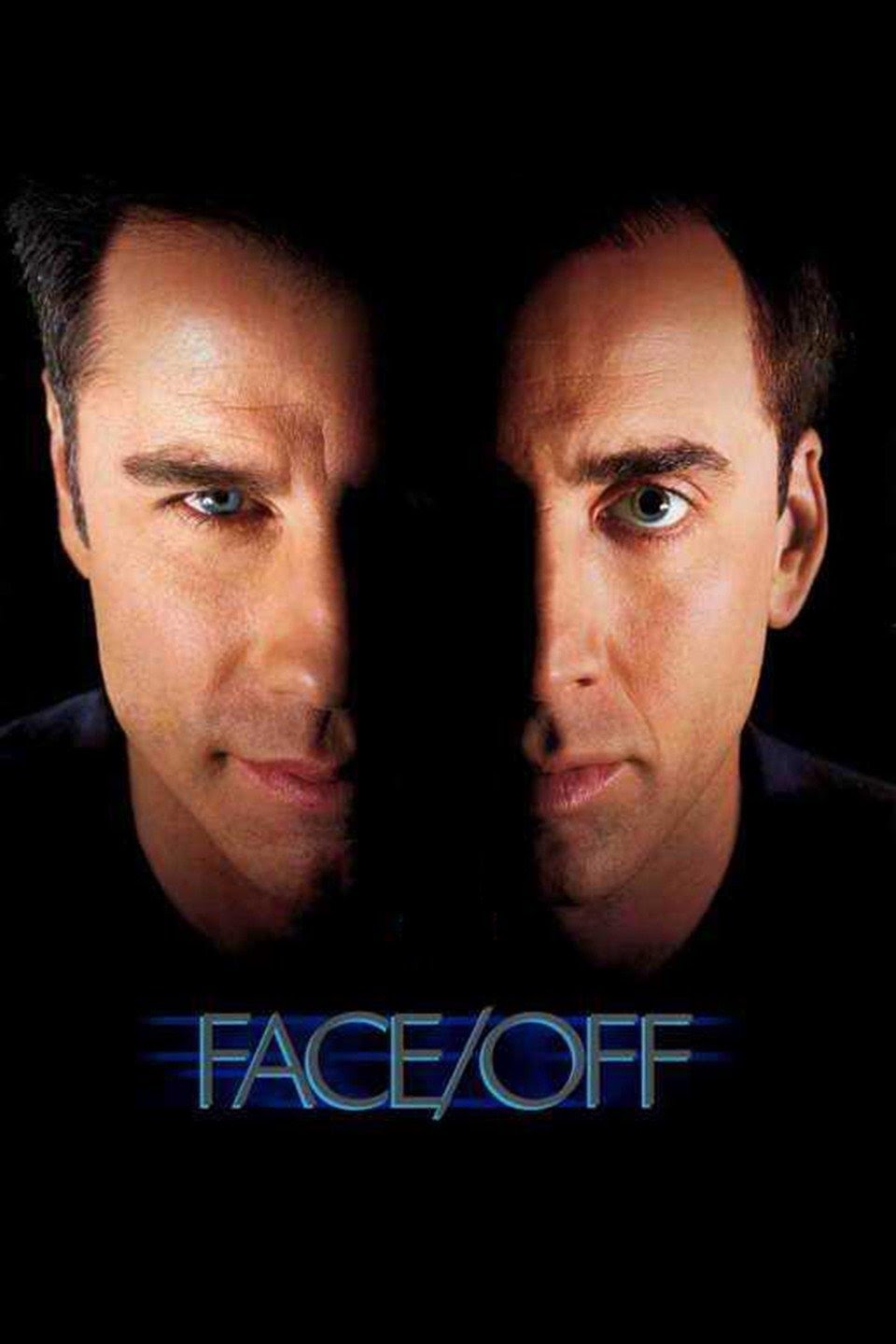
When I heard about Alyssa Sheinmel’s extraordinary research into face transplants for her novel Faceless, published by Chicken House, I was stunned the movie Face Off could have been based on reality. Face transplants are a real thing. Maybe not in the same way as in Face Off but still a possibility.

I was so intrigued to discover more I decided to interview best-selling YA author, Alyssa Sheinmel, for my regular Research Secrets section of Writers’ Forum, issue Aug 2016 #178.

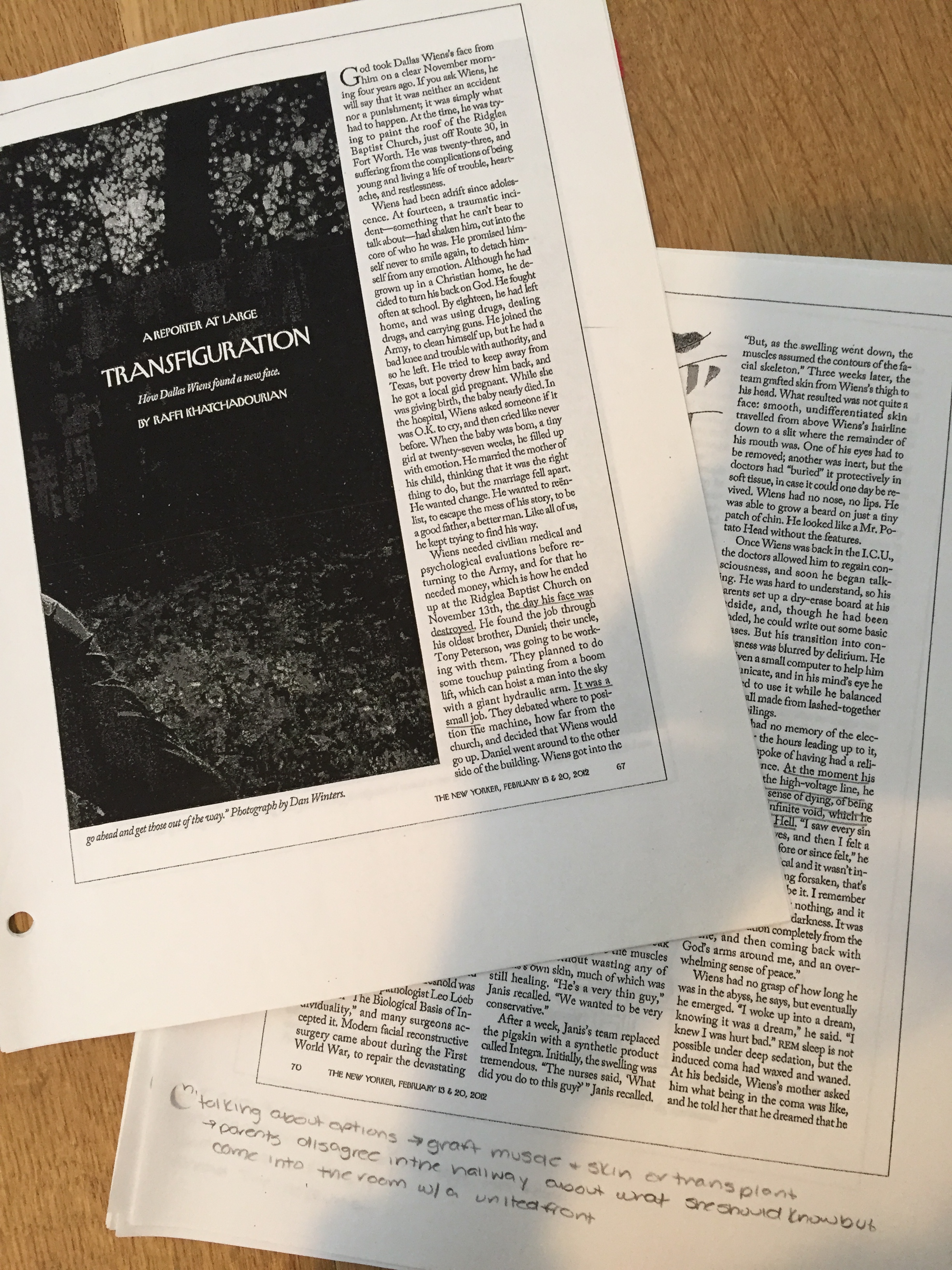
Alyssa told me she knew she wanted to write a book about a girl who was in a horrific accident, a girl who struggled to understand how much of who she was is tied to what she looked like and it was her American editor who suggested a girl for whom a face transplant was her best hope at having a normal life after reading an article in The New Yorker about a full face transplant.

“I’m pretty sure I underlined more of the article than I left blank! My favourite line came from a plastic surgeon, who explained that while other surgeons made you well by taking you apart – by cutting out the parts of you that are no longer functional, that are diseased, that have turned toxic – plastic surgeons make you well by putting you back together. (A version of that explanation made its way into Faceless.)”

Alyssa Sheinmel

She explained she began her research by reaching out to doctors she already knew – her general practitioner, a friend who’d gone to medical school and a friend of her sister who was a plastic surgeon that specialized in reconstruction who answered her myriad of questions.

In particular, she wanted to ensure Maisie’s injuries were realistic. For example, could she have been burned in such a way that she’d need to replace her cheeks, nose, and chin, but retain her jaw? This doctor explained that pretty much everything about these surgeries is unusual, so there were no hard and fast rules. He also provided Alyssa with a detail that really stayed with her: it takes a while for the nerves to grow into transplanted skin, so for a period after her surgery, Maisie’s face would feel like sort of a mask hanging off of her – it might actually feel heavy. This detail made its way into Faceless.

Even so, Alyssa revealed she was worried about taking up these doctors’ time with her incessant questions but found these experts often wanted to talk about their respective fields

“It’s challenging when you’re talking to such ‘important’ people – when I was interviewing a plastic surgeon, for example, I kept apologizing for taking up time that he could be spending with his patients. But he insisted that he was happy to give me his time and answer his questions.”

Alyssa Sheinmel

Like all transplant patients, face transplant recipients are put on immunosuppressive drug regimens. Alyssa revealed her editor had a few doctor and medical student friends who were incredibly helpful with these questions in particular. What were the side effects like? How many pills would she have to take? At sixteen, Maisie has already been told that she can’t carry a child because her medication could cause birth defects. She found what the pills looked like by searching on Google.

Alyssa explained the immunosuppressive regimen became a big part of Maisie’s journey. It’s difficult enough for Maisie that she doesn’t look like her old self, but being on these drugs keeps her from feeling like herself too. She’s tired, nauseated, achy. She’s a former straight-A student who can barely stay awake in class anymore.

For Alyssa there isn’t always a straight a line between my research and the story as everything she reads and watches teaches her something about how to tell a story. She told me as she was writing Faceless, she found herself thinking about stories she’d read and movies she’d seen that – on the surface, at least – didn’t really have much in common with her book. But they still were every bit as helpful as all the articles she read and doctors she spoke to about face transplants. There were also things going on in her life that influenced the story such as, a family member underwent surgery and her stay in the hospital and subsequent recovery impacted on Maisie’s experience, too.

The emotional aftermath of surgery was another one of those times when her unintentional research came in to play. Years ago – well before she started working on Faceless – she watched a documentary called The Crash Reel about American snowboarder Kevin Pearce. Heading into the Vancouver Winter Olympics, it looked like nothing would stop Kevin from bringing home a medal (except possibly, his long-time rivalry with fellow-snowboarder Shaun White). But during practice one day, a horrific crash sends Kevin to the hospital, where he’s treated for a traumatic brain injury. All Kevin wants to do is get back on his board, back to the life he knew before – but his friends and family are worried that snowboarding again could kill him.

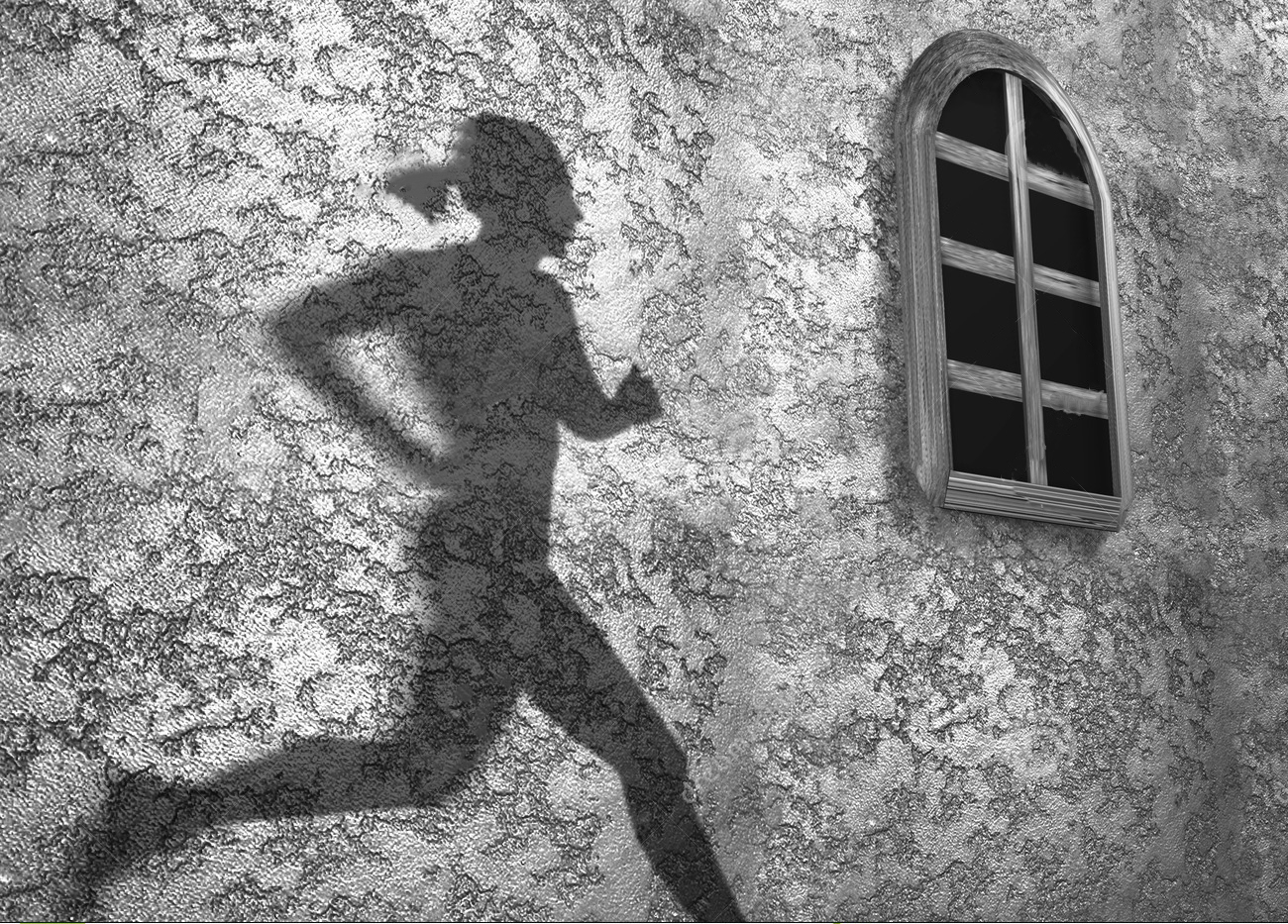
In Faceless, Maisie was a runner before her accident – she ran track on her school’s team, she ran alongside her boyfriend, she ran for fun. Running was a huge part of who she was, part of how she defined herself – and after her procedure, she can’t run the way she used to. In fact, she might never be able to run again. Just as Maisie has to give up running, in The Crash Reel, Kevin Pearce has to come to terms with his new reality – a reality that might not include snowboarding.

Another piece of unintentional research helped her with the aftermath of Maisie’s accident – a novel called The Ice Queen by Alice Hoffman, which I read years ago as well. It’s the story of an ordinary New Jersey librarian to whom the extraordinary happens: one day, she’s struck by lightning. Afterwards, the world looks different – literally: she can no longer see the colour red. Though Hoffman’s protagonist doesn’t have much in common with Faceless’s main character, Maisie (other than the fact that each have a run-in with lightning), they’re both characters whose lives are changed by somewhat random events, and they have to come to terms with a new normal.

“When I was a freshman in college, my psychology textbook taught me how to insert humour into a dry topic. Magazine articles have prompted (sometimes completely unrelated) story ideas. And certainly, when I watched a documentary about snow-boarding a few years ago, I had no idea it would someday influence a novel I wrote about face transplants.”

Alyssa Sheinmel

Alyssa’s tip to other writers when researching is to keep an open mind. She explains you never know where your next idea will come from, which book or article or essay will help you learn how to tell your story. Just keep your eyes and ears open, and learn as much as you can.

You can find out more about Alyssa Sheinmel on her website: www.alysasheinmel.com and follow her on Twitter: @alyssasheinmel.

To read the complete unabridged feature you can purchase a copy of the Aug 2016 #178 issue of Writers’ Forum by ordering online from Select Magazines.

To read my future Research Secrets or Writing 4 Children interviews you can invest in a subscription from the Writers’ Forum website, or download Writers’ Forum to your iOS or Android device.

An interview with… Naomi Gibson

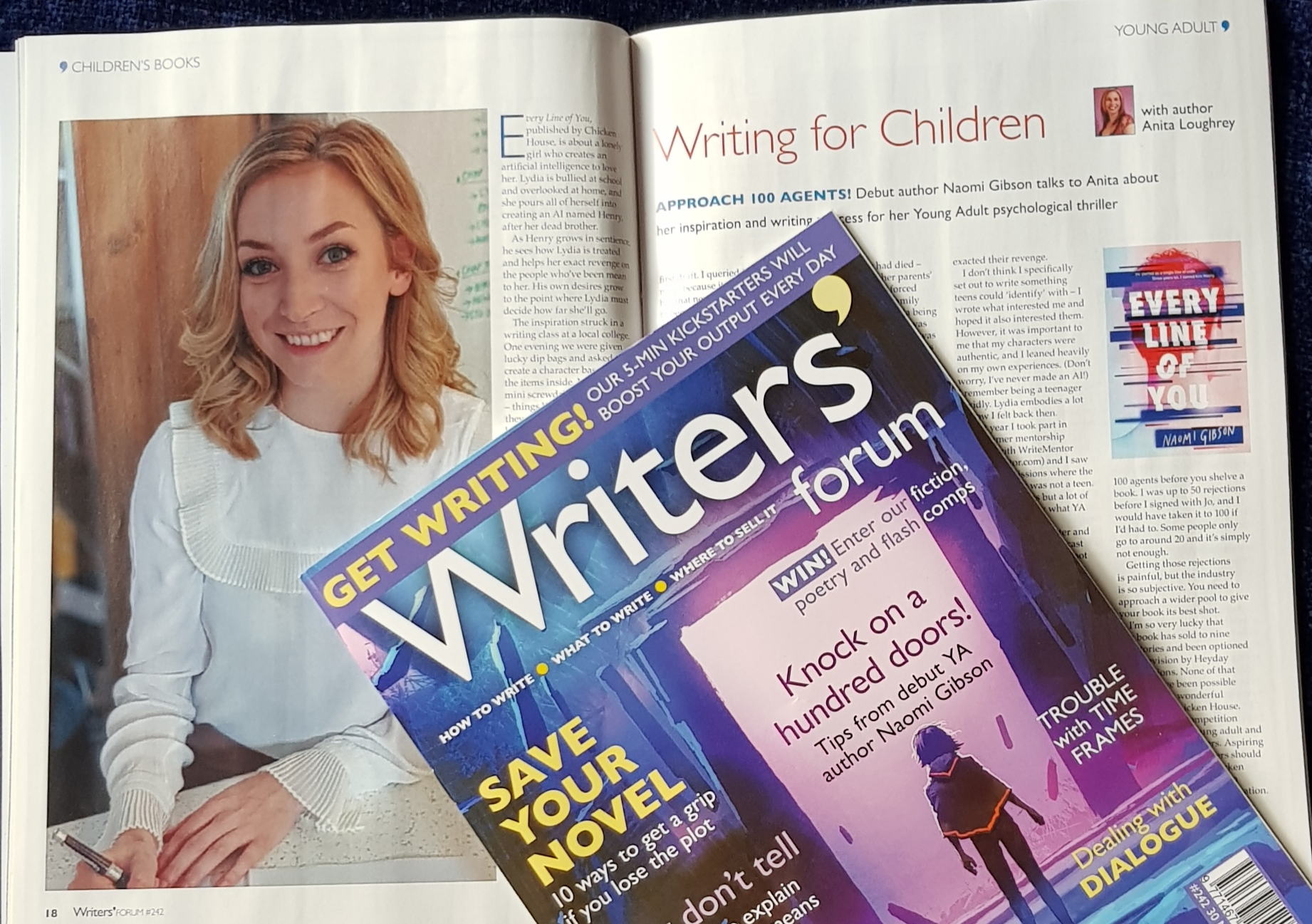
Every Line of You by Naomi Gibson and published by Chicken House, is about a lonely girl who creates her own artificial intelligence (AI) to love her. In the 24 Mar 2022 #242 issue of the national writing magazine Writers’ Forum, I interviewed Naomi about her inspiration and writing process for this YA psychological thriller.

The inspiration for Every Line of You struck in a writing class at a local college. One evening we were given lucky dip bags with items in and asked to create a character based on those items. Naomi’s had a mini screw driver, an adaptor – things like that which she decided belonged to a teenage hacker, and that’s how Lydia was born.

All the drafts

“The class left me so inspired I went home and I did a lot of character prep. I knew Lydia inside out so when I sat down to write, the plot came naturally to me because I knew what she wanted and what she feared. Then I wrote and wrote, sometimes until three in the morning, and didn’t stop until two weeks later when I had a first draft of around 60,000 words. I completed this first draft in a hot and messy two weeks back in 2017. I ended up re-drafting about seven times.”

Naomi Gibson

Naomi uses this method for all her books she told me as I long as she knows the character backwards, the plot drives itself. She prefer to write first thing in the morning rather than pulling an ‘all-nighter’ as ideas percolate whilst she sleeps and when she wakes up it feels like her brain has sorted through it all, making for an easier writing session.

She told me she didn’t set out to write a book about artificial intelligence – the book was driven by her main character. Lydia is bullied at school and overlooked at home, and she pours all of herself into creating an AI named Henry after her dead brother. As Henry grows in sentience, he sees how Lydia is treated and helps her exact revenge on the people who’ve been mean to her. Soon his own desires grow to the point where Lydia must decide how far she’ll go to help him. It made sense to me that a lonely but intelligent girl would create her own AI. Her loneliness and desire to be loved drives the plot.

First and foremost it deals with grief and the relationship between grief and technology On another level it addresses morality and humanity, and what leads us to make decisions that might be ‘bad’ but understandable, and how certain choices are defined by our humanity – or lack of.

It was important to Naomi her characters were authentic, and to do this she leaned heavily on her own experiences and memories of being a teenager. Naomi explained it was through the use of a character questionnaire, she discovered Lydia had a very sad home life. Then she piled the stress on her: her younger brother had died – an event that tore her parents’ marriage apart and forced her dad to leave the family home, resulting in Lydia being left with her mum who was barely coping herself. She was bullied at school and there was nowhere she got any respite.

Naomi revealed she found her agent, Joanna Moult at Skylark Literary, through cold querying. She said, Jo was the only agent who ever gave her proper feedback on her manuscript and offered her a revise and resubmit. It took her a while to make the changes she suggested because she was so emotionally invested in the manuscript, but eventually she did and she is so glad.

In terms of advice, Naomi suggests approach at least 100 agents before you shelve a book. She revealed she was up to 50 rejections before she signed with Jo, and would have taken it to 100 if she had to.

“Getting those rejections is painful but the industry is so subjective. You need to approach a wider pool to give your book its best shot. I’m so very lucky that my book has sold to nine territories and been optioned for TV by Heyday Productions. None of that would have been possible without my wonderful publisher, Chicken House. They run a competition every year for young adult and middle grade writers. My writing tip to all aspiring children’s book writers is you should look into the next Chicken House competition as an alternative route to publication.”

Naomi Gibson

You can find out more about Naomi Gibson on her website is www.naomigibsonwrites.com and on Twitter, Instagram and TikTok find her @naomigwrites on all three platforms.

To read the complete feature you can purchase a copy of 24 Feb 2022 #242 issue of Writers’ Forum by ordering online from Select Magazines.

To read my future Writing 4 Children or Research Secrets interviews you can invest in a subscription from the Writers’ Forum website, or download Writers’ Forum to your iOS or Android device.

Book Review: Orla and the Wild Hunt

Title: Orla and the Wild Hunt

Written by: Anna Hoghton

Illustrated by: David Dean

Published by: Chicken House

Orla and the Wild Hunt by Anna Hoghton

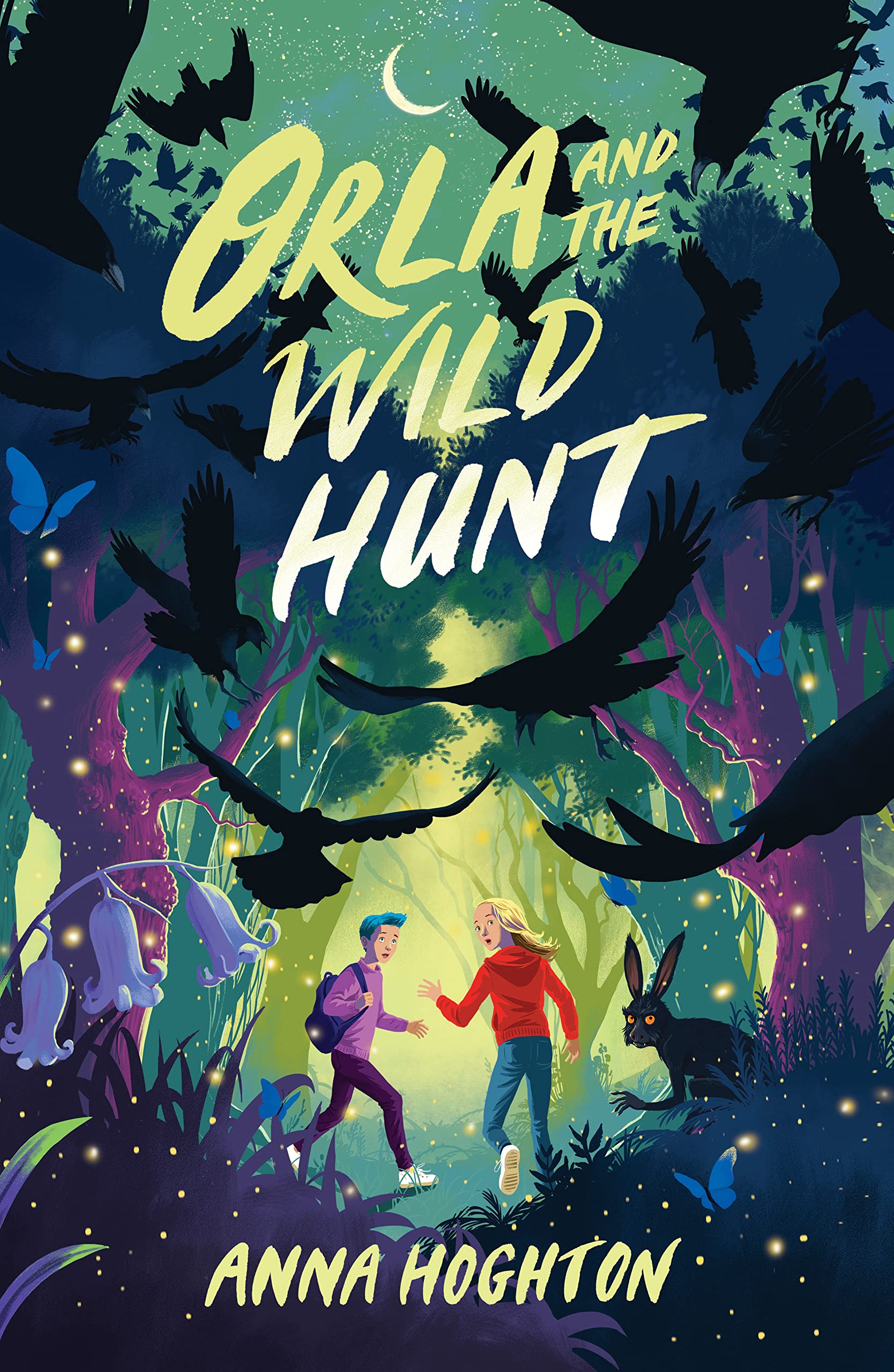
Orla and the Wild Hunt is an emotional middle-grade quest, which takes its inspirations from Irish folktales, myths and legends and is brimming with magic and suspense. The cover by David Dean is beautiful. I particularly like the fold out flaps giving a visual impression of the magical Fairy Kingdom in Tangled Woods inside the front cover and the underwater city of the merrows inside the back cover, which matched Anna Houghton’s descriptions perfectly.

The book is from the point of view of thirteen-year-old Orla who is grieving the death of her mother. She no longer sings as music reminds her of her mum and everything she’s lost. She has rejected everyone and is wallowing in this grief unable to move on, making her bitter and unhappy. She is especially angry at her younger brother, Apollo, who acts like things are ok and gets on well with everyone. This causes her to be very spiteful towards him.

She has happy memories of holidaying in Ireland with her Gran before her Mum died two years ago from an unstated illness. She reminisces about the freedom they had, the old-fashioned games they played, listening to Gran’s stories of magical creatures who live in the Tangled Woods near her house and best of all Gran’s home-cooked meals and cakes, especially the tiffin. This motivates her to choose to visit Gran in Ireland rather than go on holiday with her dad, new fiancée and her two sons. She is surprised her brother Apollo wants to come with her.

It riles Orla even more when they arrive in Ireland and her Gran is acting different. Apollo seems to have a special bond with her and Orla feels like an outsider. She can’t understand why Gran insists they keep the doors and windows locked at all times and won’t let them out after dark not even in the garden. It is the total opposite of what she used to be like. She discovers people have been going missing but believes her Gran is keeping secrets from her and is hiding something in the shed.

When Gran sneaks out one night, Orla climbs out the window and follows her to the fairies midsummer festivities where she discovers the Irish myths and legends told in Gran’s stories are all true. The thing stealing people away in the night is the Wild Hunt that feeds on people’s sadness. Gran asks the fairies to help her stop it. The fairies refuse. Orla wakes the next afternoon back in her bed and does not know how she got there. Her Gran has not been around all day. She is missing and Orla believes it is her fault, as she unlocked Gran’s bedroom window.

“…After three nights of being the Wild Hunt’s captives, mortal victims lose their minds. After three months their hearts lose all their love and the victims become Wild Hunt themselves.”

(Quote from page 35 of Orla and the Wild Hunt by Anna Hoghton)

Orla is determined to find and save her Gran from the Wild Hunt. Together with Apollo, a mysterious boy who claims he’s a friend of Gran called Connor, a rude pooka they find locked in the shed and the nonchalant giant Fionn the Pooka introduces them to in the hope Fionn will eat them, they have three days to rescue Gran, or she will become part of the Wild Hunt.

Anna Houghton cleverly explores the complexity of grief taking the reader through each stage of Orla’s emotional journey as they go on their quest to save Gran. We are shown her anger and how she is lashing out at her brother and then we see her sinking more and more into depression after the loss of her Gran. When she has to sing for the water sprites and has to give them a gift of her most treasured possession, she finally begins to accept her mother has gone and is able to move on to celebrate the good times they had spent together. It is a real journey of emotional discovery and growth.

All the characters are well portrayed, each with their own flaws that make them more endearing. I really felt for their loss of their mother and was swept away with their quest to save their Gran. The strong sibling bond between Orla and Apollo is very believable and is part of what makes this story so great. Through their quest, Orla learns they need each other and can face anything together.

This is the ideal novel for readers aged 9+. The text is well-written and flows smoothly, so suitable for reading aloud to the class, or at bedtime. It would be a great book to help young readers come to terms with grief and loss in their own lives. I would recommend this book for all readers who love fantasy adventures.

What it means to be published?

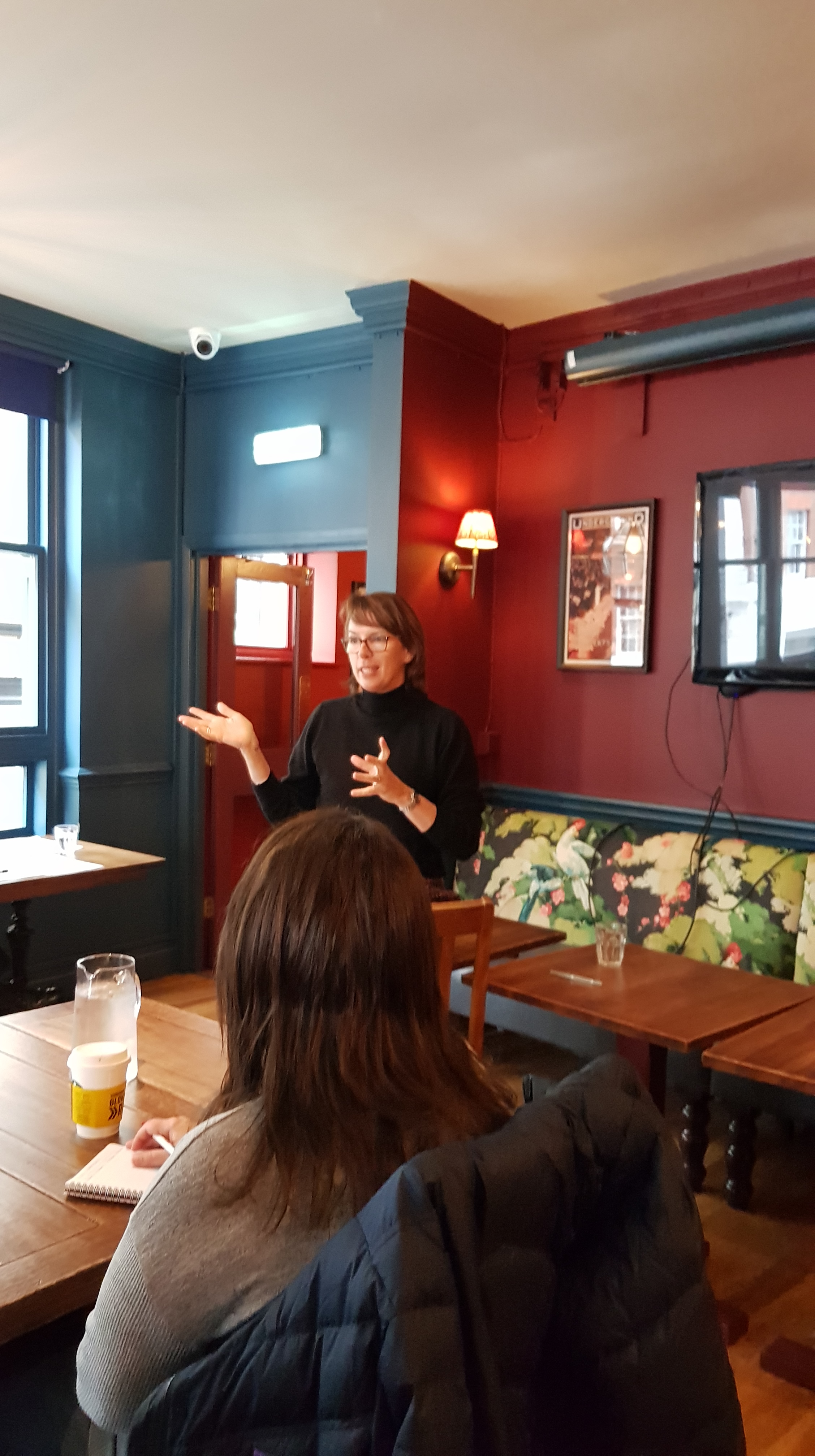
Last week I went to the SCBWI Masterclass featuring Rachel Hickman, children’s publishing director at Chicken House. She talked about What it means to be published – the good, the bad and the beautiful. Chicken House publishes 25 books a year and a small proportion of these are debut authors. It is there 20th anniversary this year. There are nine people in total working at Chicken House.

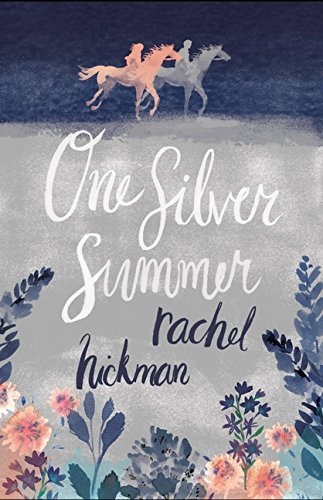
Rachel Hickman has worked with Judith Kerr, Roald Dahl and Michael Morpurgo. She grew up in Hong Kong and as a child was obsessed with pony stories. she spoke to us as both a publisher and an author.  Her novel One Silver Summer is published by Scholastic in the US and Old Barn Books in the UK.  She explained for her writing is a personal and immersive thing and sharing it can be tough.

One Silver Summer

Rachel revealed that the truth is about being a publisher is that they do not know what they are looking for. They want reinvented familiar ingredients done with distinctiveness. As a publisher she works for a worldwide market which spreads the risk. Chicken House is a bit maverick and tend to ignore the trends, weighing there acquisitions by instinct. The Chicken House list is culturally rich and selling all over the world. They think in terms of are they going to be able to sell this to oversea publishers.

She is aware that the gate keepers put there stamp on a book at each stage and at Chicken House they prefer to see the book before this happens. they want to find timeless stories that will not date in five years where lots of stuff happens with consequences, where grown-ups are absent or are unreliable or villains. The children win through and the reader is left with a sense of hope.

20200307_121806

Children like detail, tasting what you eat – all can taste the Turkish delight in The Lion, the Witch and the Wardrobe She believes all stories should have an element of humour. 

“Humour is delayed fear.” (Roald Dahl)

The book trade is like a tide with new beautiful shelves washing in and a lot of books get washed out. The reality is many books are gone in a few years as there is no room on th shelves for back list. At the moment there is a slump in YA. Rachel advises all writers to write form the heart. If you are serious about being published you have to realise what you put in is disproportionate to what you get out at the end. Writing is a great way to dream but not necessarily a dream career.

There is no guarantee of being published. Publishers make simple decisions based on their list. If you are successful you have to have another book available. Chicken House are only interested in authors they can invest in rather than single books. Publication is not a reason to write you need to enjoy the process. If you write for a child or for yourself it will show through.

Authors in Common

Rachel particularly looks for voice – a distinct spirit or style that inhabits the story you write and breathes life into it. this is why she likes to see manuscripts raw, without the voice muffled. she also needs to see obvious evidence of practical writing skills such as being able to plot and edit. an ability to use words that will speak to the children and let them identify with the story is essential.

You need to have confidence in your story and believe in your characters. knowing who they are and how they behave is important. They are looking for authors with more than one story to tell. Chicken House expect there authors to write at least three books for them. they also like authors who can perform. It is not enough to sit at home. You have to be able to pat your head and rub your tummy in front of over 100 children. All these things effect their decision.

Acquisitions

A lot of things come into Chicken House through agents, scouts and oversea submissions. They try not to be drawn into auction bidding and they are careful about showing they care too soon. There are two editorial directors an editor and a reader. Barry loves looking at manuscripts that have just come in and if something catches his eye he will pass it to Rachel and Eleanor, the rights director. they generally work form home and meetings are an ad-hoc process. they have scouts and oversea submissions.

It is a holistic process. They never publish something sooner than a year. Asha and the Spirit Bird (published 2017) came through the Chicken House /Times competition that asks for completed manuscripts form unagented authors. The shortlist is always one winner but 50% of the shortlist is usually published. Asha and the Spirit Bird was shortlisted for the Waterstones prize.

Rachel’s Tips on Getting Published

  1. Take time, there is no rush. Make your manuscript as good as you can. Solicit other views and take on board the things that resonate with your story. Remember they are just opinions. You need to use your judgement.
  2. Know what you’re writing, write form the heart and personal experience, know your setting and your protagonist.
  3. You do not need an agent. Chicken House run open coops where you can submit manuscripts. it is a one day event that is totally random. Sometimes they have a theme. The agents are a filter and will help you get noticed. remember they take 20% of your earnings. You need to decide if they are giving you sound business advice. A good agent will get you the best deal but not necessarily the most lucrative.
  4. Think who is going to edit you. Are they the best fit?
  5. The smaller the publisher the smaller the list, the bigger publishers have bigger lists but less time. Love the process of publication and editing.
  6. Think what the book might look like, seeing the book on the press and a warehouse full of your book.
  7. Travel with hope.
  8. Manage your expectations and sell yourself. Self-marketing is essential remember Waterstones only advertise one author a month. So you need to get at there and publicise yourself through schools and indie bookshops.
  9. know publishing is a level playing field. so many things can come form nowhere. Wimpy Kid started life as an adult humour title in the US. Your book may be small in the UK but it could be massive in another country, like Germany.
  10. You’ve got to have fun.
  11. You’ve got to be disciplined.
  12. You need to think about your title and your pitch to show you know your book well enough.
  13. Even if it is a series your book has to stand alone. Often a series can be because you are being too ambitious in the world building.
  14. Often beginnings and writing your way in to the story and will need to be edited at the end.

An interview with… M. G. Leonard

In my Research Secrets double page spread in Writers’ Forum M. G. Leonard explained how her research into beetles turned her fear of creepy crawlies into an obsession.

Front cover

She told me her, Beetle Boy book didn’t start out with a beetle as a central character and it wasn’t called Beetle Boy. M. G. Leonard revealed she knew there would be beetles in the story, but because she was scared of creepy crawlies and thought they were horrid and signified something bad it neveer occured to her to make them the protagonists. But when she started researching beetles she became obsessed .

She didn’t start keeping pet beetles until after Beetle Boy was published and was still nervous around live insects.

“Everything changed when I was invited to appear on Blue Peter for National Insect Week with lots of live beetles. I visited my entomologist friend, Dr Sarah Beynon, who has a bug zoo in Pembrokeshire. She spent a day getting me to hold insects, and I fell in love with rainbow stag beetles. They are so beautiful. I immediately bought myself a pair and took them home so that I could handle them every day and desensitize myself to my fear. I was at the beginning of a journey.” M.G, Leanard

Since then she has bought an adult pair of African flower beetles, which she claims are relatively easy to breed. Watching them grow, eat and eventually pupate, informed her descriptions of the rooms inside Lucretia Cutter’s villainous lair – the Biome deep in the Amazon jungle – featured in Battle of the Beetles.

MG Leonard’s tip if you are incorporating unusual pets into your stories, is to spend time with the living creatures. Peering at them in a zoo won’t give you a unique insight into the way they behave when they’re hungry, or horney, scared or resting.

The descriptions of what it feels like to hold a beetle, to hear a beetle flying, of how they express themselves, all comes from careful observation of her living pets. It’s because she keeps beetles she knows many species are nocturnal, none sleep, and they control their body temperature by burying into soil.

“I did so much research for the Beetle Boy series. There isn’t a book about beetles that I don’t own. I trawled the internet browsing every single website that contained information about beetles. I watched all the youtube videos, listened to BBC audio shows.” M. G. Leonard

M. G. Leonard told me that researching is like a treasure hunt. There’s no right or wrong way to do it. You find a clue and follow where it takes you. There’s no pattern to it. She believes that there is no greater resource to the researching writer than the internet. Google maps allow you to see any place on the planet and Wikipedia will give you information about it. Books would take years longer to write without them.

You can find out more about M. G. Leonard and her books on her website www.mgleonard.com and follow her on social media: Twitter @mglnrd; Instagram @mglnrd; Facebook @MGLnrd

To read the complete feature take a look at #219 Jan 2019 of Writers’ Forum magazine.

Book Review – Pink!

Title: Pink!

Written by: Lynne Rickards

Illustrated by: Margaret Chamberlain

Published by: Wacky Bee Books

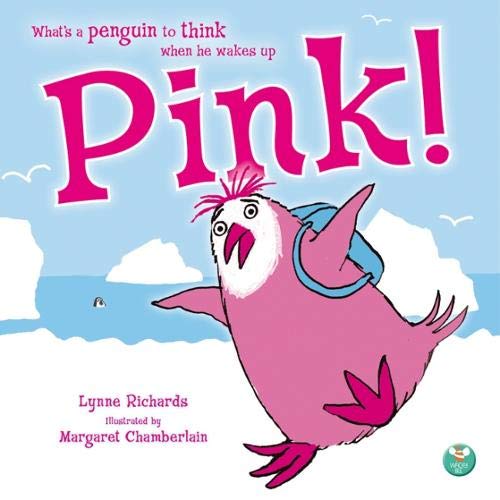
Pink

Pink! is a heart warming picture book about challenging stereotypes. It would be a great way to stimulate a discussion about gender both for parents at home and teachers in school. Patrick the Penguin turns pink overnight. His parents try to reassure him that it is OK to be a boy who is pink, but the other penguins tease him.

Discussing the issue of teasing and bullying could be used to encourage compassion for others and also empathy for people who have experienced sudden change. Patrick was not born pink and it was not a gradual change of colour over time. He just woke up one morning and discovered he had turned pink. This must have been a very traumatic experience for Patrick. Suddenly he is different and not because he wanted to be different he just woke up different.

Patrick does not like being different, so he decides to run away to Africa to be with the pink flamingos. But he soon discovers he is not suited to the African environment so returns home where the other penguins are eager to learn about his adventures.

Again from a teaching point-of-view this book would be useful in the classroom to discuss animal adaptations and climates in different parts of the world. The children can compare the features of Antarctica’s penguins with African flamingos and how they are suited to their environment.

The book was first published in 2008 by Chicken House. Pink! Is also a musical. Pink! The Musical, written in collaboration with Hopscotch Theatre, has toured over 200 Scottish primary schools.

This book is empowering for children and demonstrates that the colour pink is for everyone regardless of gender. I believe it will encourage children to be more confident in themselves and the way they look.


An interview with… Catherine Coe

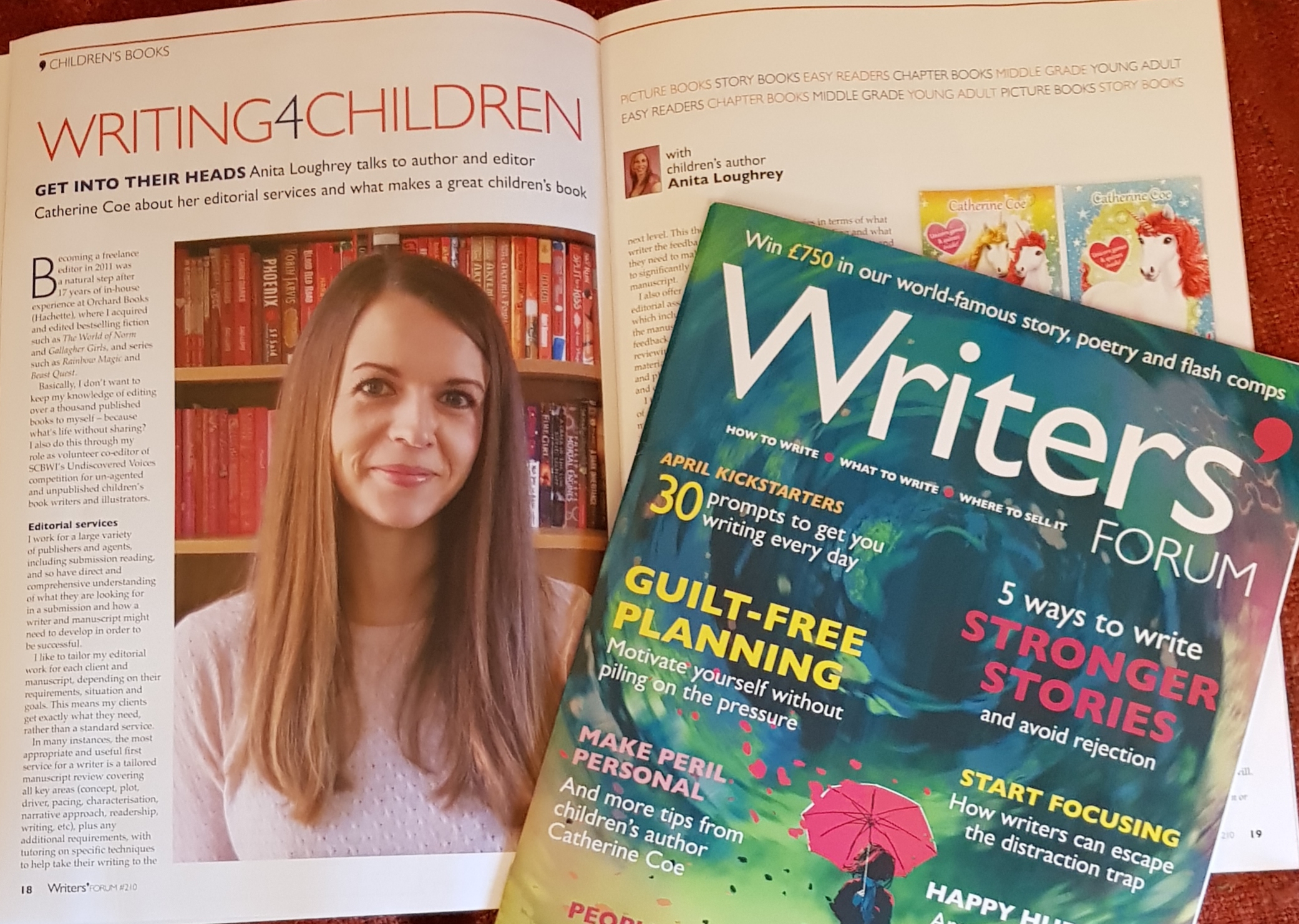
In my Writing 4 Children column this month I talk to author and editor, Catherine Coe about her editorial services and what makes a great children’s book.

Catherine Coe feature 1

Catherine explained how she takes on a select number of writers for long-term mentoring, which includes regular contact through video calls and feedback on work in progress. Many of he writers she has worked with have gone on to get publishing deals  with publishers such as Chicken House, David Fickling Books, Hot Keys, Hachette Children’s Group, Macmillan and Scholastic.

She strongly advocates that to write for children you need to get inside the child’s head, as you are more likely to engage your audience with appealing content, write in a style they enjoy and crucially, avoid speaking down to them. 

“I believe it is vital to remember what it was like to be a child and to channel those memories in terms of what you liked reading and what captured your attention and imagination.” Catherine Coe

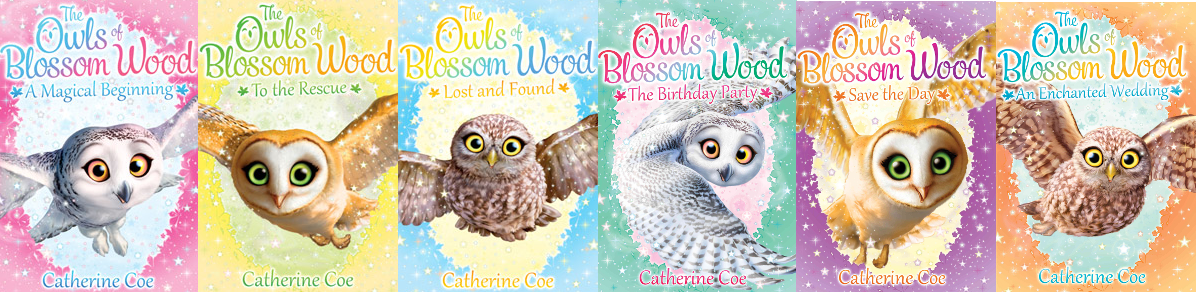
Catherine has written over 30 books for children, including the popular Owls of Blossom Wood series.

Owlsbooks1-6

Her writing tip is to ensure your book has an overarching problem or goal that drives the plot. One that is compelling to the reader and will keep them turning the pages.

“Any book that keeps a child up at night reading is a great one.” Catherine Coe

To find out more about Catherine Coe and her editorial services, visit her website: http://www.catherine-coe.com

You can also follow her on Twitter @catherinecoe

Book Review – The Hurting

Title: The Hurting

Written by: Lucy van Smit

Cover and interior design by: Helen Crawford White

Published by: Chicken House

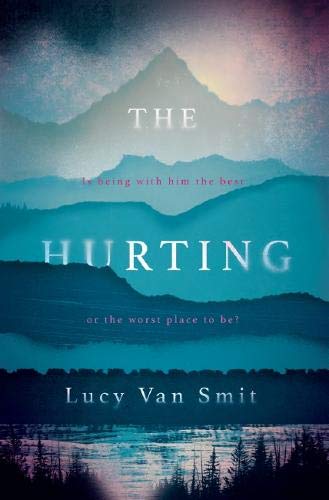
the hurting

The Hurting is the compelling story of revenge and the desire for independence. This young adult Scandinavian noir thriller that will have you turning the pages to devour more. The protagonist Nell has a sister called Harper who has leukaemia. Nell is her main carer as their mother left and their father is an alcoholic. They have moved away from their home in Manchester to live in Norway, so Harper can go to the world centre for epigenetics in hope of being able to turn off the cancer gene causing her atypical leukaemia. At first, I was shocked at Harper’s behaviour and manipulation of her sister but on reflection I realised this really does reflect the reality of sibling relationships that many books fail to convey.

All the characters and their motivations are realistic. Nell always puts her sister’s needs before her own at the expense of applying to Brit school and realising her own dreams of becoming a singer, song-writer. Her life is on hold until her sister can miraculously get better. When she meets Lukas Svad, the adopted heir to a Norwegian oil fortune, she decides to take a chance and run away from her life just like her mother had, or so she thinks.

Lukas is able to manipulate Nell – just like her sister – using love as a weapon. In his grey-blue wolf skin coat he immortalises the dark and dangerous wolf-boy. Together they kidnap Ulv Pup and embark on a soul-wrenching adventure through the Norwegian mountains, stalked by wolves. The novel is full of lyrical prose and descriptions that evoke dramatic images of the Norwegian mountains and fjord backdrop in such a way the whole area takes on a menacing character of its own, foreshadowing the events to come. In the end, after many bad decisions, Nell learns the truth about Lukas, her mother and the baby.

Lucy van Smit’s debut novel is full of twists and turns fuelled by the need to feel loved.