Anita Loughrey's blog. This is my journal about my experiences and thoughts on writing. As well as news about me and my books, it includes writing tips, book reviews, author interviews and blog tours.
For more information about me and my books see my website: www.anitaloughrey.com. Follow me on Twitter @amloughrey, Facebook @anitaloughrey.author and on Instagram @anitaloughrey
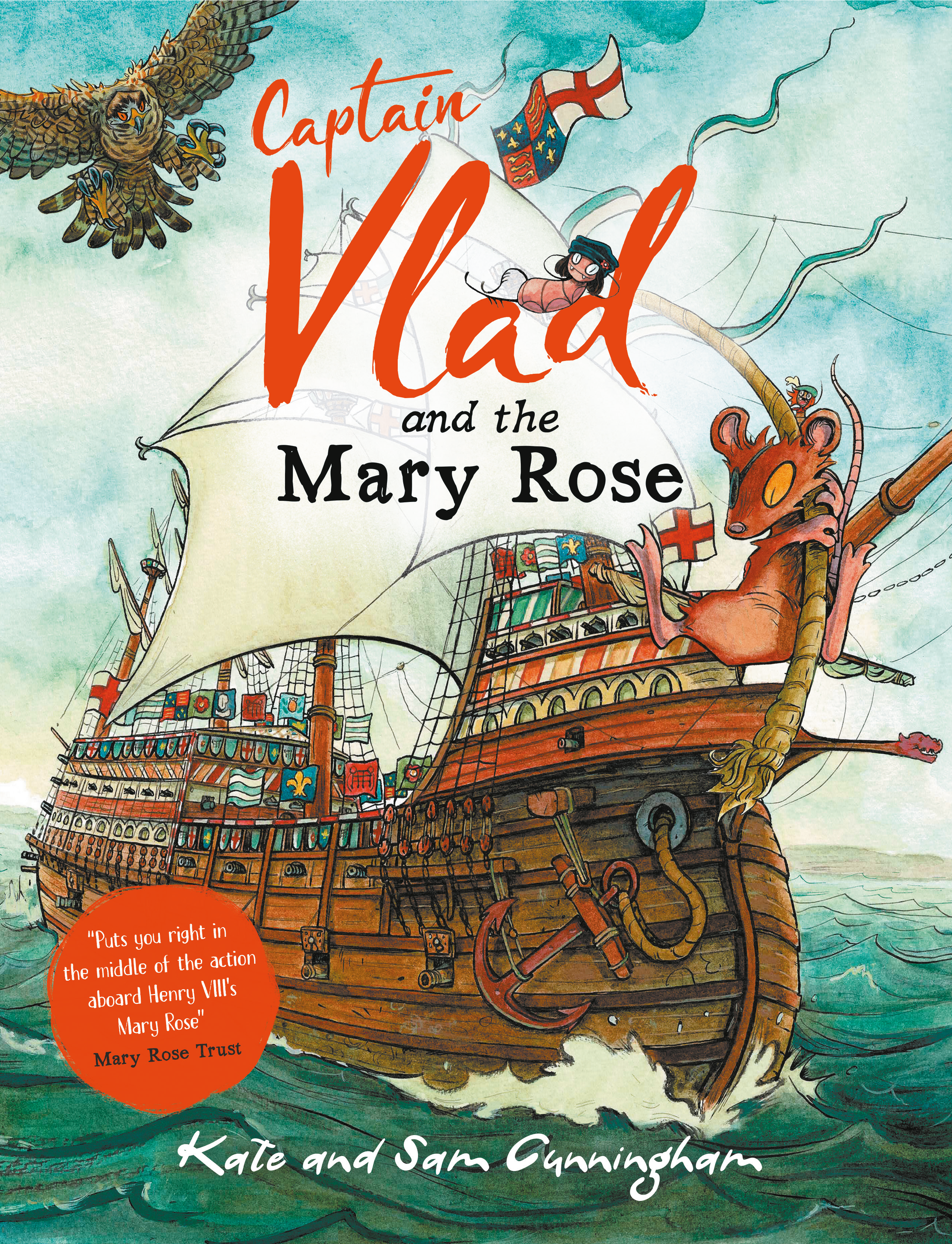
It is my turn on the blog tour for Blog Tour: Captain Vlad and the Mary Rose by Kate and Sam Cunningham, published by Reading Riddle.
Kate Cunningham was a primary school teacher for nine years, before writing and publishing the first Vlad flea book in 2016. Reading Riddle grew out of her passion for books and a belief that children learn best when they are enjoying themselves. She is married to historian, Sean Cunningham, and Sam is the eldest of her three sons. In between writing books Kate does school and library visits.
Sam Cunningham graduated from Gloucestershire University. He produced the murals for the Family Corner in the Florence Nightingale Museum and images for The Carpenter’s Tale and The Scaffolder’s Tale in the National Archives graphic arts project e-book.
My spot on this tour takes the form of a book review.
********
Title: Captain Vlad and the Mary Rose
Written by: Kate Cunningham
Illustrated by: Sam Cunningham
Published by: Reading Riddle
Captain Vlad and the Mary Rose is a glorious picture book outlining the exploits of Vlad the Flea onboard the Mary Rose in 1544, during the third French War, a year before this iconic ship sunk. This book is written and illustrated by a mother and son team and is part of a series that follows Vlad the Flea throughout history. Other books in the series include Vlad and the Great Fire of London, Vlad and Tutankhamun’s Tomb and Vlad and the Roman Triumph, which all have accompanying activity books.
The detail in the illustrations are just stunning. The bright bold colours will appeal to young children and the readers will love to explore the inner workings of the Mary Rose and its crew, whilst hunting for dangers onboard, such as the addition of a dog and the threat of a hawk hovering above. The plot is fast paced, which will grip the reader’s attention. The ship’s rats all have humorous names to help identify them.
At the back of the book there is a brief history of the Mary Rose outlining when it sank, which helps to place the story on the timeline. It was evident that a lot of historical research had gone into writing this book.
Captain Vlad and the Mary Rose would be ideal for the classroom to support a topic on the Tudors and will provide the class with a great overview of what life was like on board a Tudor war ship.
A fun book that will spark young children’s imaginations and foster a love of history.
********
You can find out more about Kate Cunningham and her books on her website:
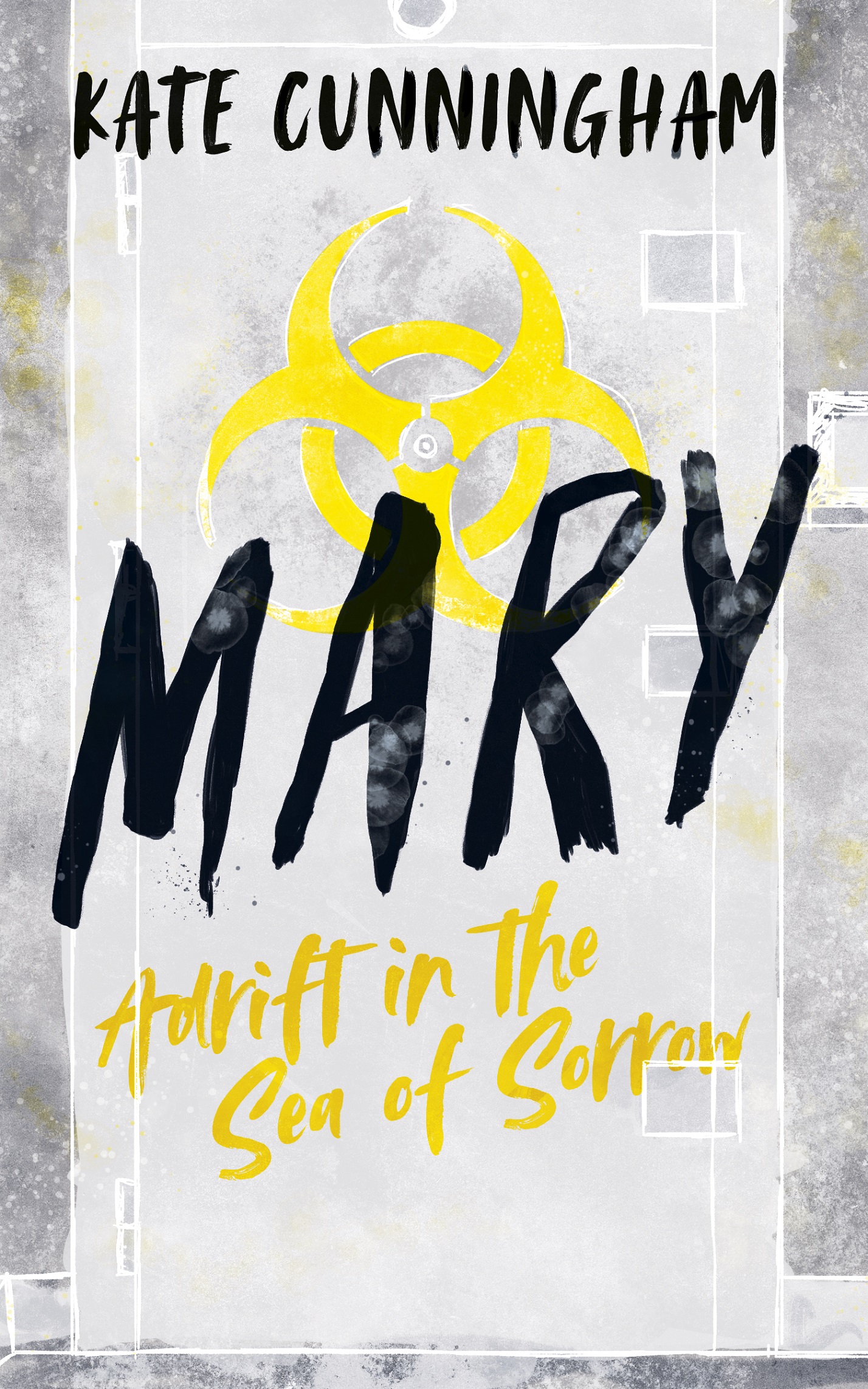
I have also had the pleasure of reading and reviewing Mary : Adrift in the Sea of Sorrow by Kate Cunningham, also published by Reading Riddle. To read this review of her multi-viewpoint, plot driven, YA novel set in a dystopian post-pandemic world, take a look at: Book Review: Mary: Adrift in the Sea of Sorrow.
Mary : Adrift in the Sea of Sorrow by Kate Cunningham
This multi-viewpoint, plot driven, YA novel is set in a dystopian post-pandemic world. Kate in her acknowledgements explains she wrote the first draft of Mary: Adrift in the Sea of Sorrow before Covid but completed her edits during the lockdowns.
This topical novel portrays a realistic insight into human nature. It is about a young girl known as Mary who has lived her whole life in a laboratory where everything was white. She has been kept alone apart from the testers who take samples from her dressed in full hazmat gear. The rest of society is run by five distinct groups.
“The five wealthiest men of the time of the plague had hidden away in their bunkers, then swooped in to take control as the old order crumbled, floundered and failed to grasp the seriousness of the situation until it was too late.”
Extract from page 34 of Mary: Adrift in the Sea of Sorrow by Kate Cunningham.
The five are:
Howner who ran the power supply
Charris who managed transport and medical supplies
Wuchenoge who organised security
Dansy who was head of housing.
Girin who controlled the orphan child-labour workforce who lived in the child bank.
The majority of the people live in poverty and many find themselves in situations where the only way for them to survive is to sell off a child to the child bank to live with the orphans. These children spend the rest of their lives working off their debt for being housed and fed.
Vander is one of the children from the child bank and was recently given the job as a tester in the Charris facility with responsibility for taking the samples from Mary. He feels sorry for her. He has lived through the Red Plague and seen the choices families had to make to survive. His feelings about her captivity and the desire to make a connection with someone leads him to release Mary. His actions trigger events that spiral out of control and change countless lives. Mary must decide what price to put on her new found freedom.
Each chapter is relatively short making it a hard novel to put down. At first I found it a little disconcerting as there is no one character the reader can identify with as we jump in and out of everybody’s head. Also a lot of, seemingly at first, main characters die. However, this multi-viewpoint approach did not put me off and I believe most YA readers will cope with this style of writing and will enjoy the novel for the intriguing and compelling plot, that lingers in your mind long after the book is finished.
There is a strong desire to know how it is going to end. Kate has plotted some brilliant twists and turns that keeps you guessing until the end. I think Mary: Adrift in the Sea of Sorrow would make an excellent movie.
You can buy copies of Mary: Adrift in the Sea of Sorrow by Kate Cunningham through all bookshops, large or small, and all the usual outlets online. Kate also has a free short story, linked to Mary, which is available through the newsletter on her website: www.readingriddle.co.uk.
I would like to take this opportunity to thank Anne Cater from Random Things Through My Letterbox for sending me a review copy of the book to review on my blog.
I am delighted to welcome you to the next stop of the Mary : Adrift in the Sea of Sorrow Blog Tour, the fantastic new book published by Reading Riddle and written by Kate Cunningham.
Kat Cunningham
Mary is kept in a locked white room – alone apart from the testers who take samples from her. Vander was recently given the job as a tester and feels sorry for her. He has lived through the Red Plague and seen the choices families had to make to survive. When he releases Mary his actions trigger events that spiral out of control and change countless lives. Mary must decide what price to put on freedom.
Mary : Adrift in the Sea of Sorrow by Kate Cunningham
Thank you Kate for agreeing to be interviewed on my blog today as part of your Mary : Adrift in the Sea of Sorrow blog tour. Your book is a real eye-opener into human nature and quite poignant in the aftermath of the corona pandemic. I am fascinated to find out more about your writing process for this novel.
********
So tell us a little about yourself and the inspiration for your book Mary: Adrift in the Sea of Sorrow.
I always wanted to be a writer but it never seemed to be something an ordinary person could do, so I’ve had a few different jobs over the years, including working for a development charity and ten years teaching in large primary schools in London. In hindsight those jobs gave me the skills and knowledge I use now, and I carried on writing throughout that time, joining writing groups in the evening and at weekends. I’m married to historian Sean Cunningham, so at home a lot of our conversations revolve around research and documents, what they tell us and what they might mean for interpreting events.
Mary is inspired by a real person, Mary Mallon, more commonly known as Typhoid Mary. Many years ago I read about her and wondered what would happen if she was around now. The real Mary lived at the start of the 20th century in New York. She was employed as a cook by wealthy families, and after a number of outbreaks of typhoid, it was concluded that she was the common factor and the source of the infections, some of which resulted in deaths. She was confined to North Brother Island, in New York’s East River for many years, but refused to believe that she was responsible for spreading the disease. She was eventually released, but disappeared again. Once more she started working as a cook, and once more infections followed her. She ended up back on the quarantine island but never accepted responsibility for the outbreaks or the deaths. My Mary is also infectious, and in denial.
What comes first for you the plot or the characters and why?
Mary is unusual for me, as I normally write within the framework of a real historical moment, which in turn means I build the plot to fit around that. This is the first time my story has sprung from a person rather than event, and is set in the future rather than the past. This time it was very much character-driven and I really enjoyed having the freedom to go in any direction I (or my characters) chose.
What is a significant way your book has changed since the first draft?
The first draft focussed on Mary telling the story in the first person, with the idea that she was an unreliable narrator. However, I needed other perspectives and more characters to drive the plot and give a wider view. Mary starts from a very limited place, physically, mentally and emotionally, so her narration would have had a lot of gaps that I felt would become frustrating. The final version is told in the third person, but I am writing a few short side stories that will be shared through my newsletter and I am tempted to explore some first person reports of the events that unfold.
If your book were made into a movie, which actors/actresses do you imagine playing your characters?
Anya Taylor-Joy would be wonderfully mesmerising while taking Mary on her journey, and Head of the Facility was the easiest choice for me, with Tilda Swinton as Marinda. Dafne Keen would be a suitably spiky Barb and I think Idris Elba would definitely be broody and do what needed to be done as Frank, with the more gentle Amir Wilson as his son, Max. Finally, Alex Lawther would be Vander and Timothee Chalamet (with an English accent) as Shaw.
Do you have any writing rituals?
My week has a pattern with visits to schools at the start of the week and writing at the end, as I’ve found that I’m more productive with solid chunks of time to work on a manuscript. On writing days, I hustle the rest of the family out of the house to work or school, and then brew a huge mug of tea and set up my computer. If it’s been a particularly chaotic morning (or week), I play one game of patience, a version called Gaps or Montana, but it has to be with real physical cards, and just one game to clear my head.
This game involves laying out all the cards in a grid and the act of shuffling and dealing the pack sort of clears my brain of lost bus passes and arguing with my teenage son over whether he will need a coat that day. I did wonder if I was just making excuses for doing this, but there are articles about games being relaxing and releasing endorphins, so I’m feeling less guilty about it now. Computer patience absolutely does not work – that only leads to prevarication and kills productivity!
Is there a particular place you like to write?
I write at the kitchen table. It is six feet long, so has lots of space to spread papers, books, mugs of tea and all the other debris that gathers as the day goes on. It is by a glass door that looks out at our garden – which is a small bricked yard full of lots of pots and planters. We have a growing number of regular bird visitors, including the magpie who tries to get into the bathroom and has succeeded in flying off with a few things left on the windowsill.
What writing advice would you give to people aspiring to be a children’s book writer?
The core advice is to read a broad range of current children’s books, but linked to that is to support your local library and build a relationship with them. It gives you access to books and people who love books, plus libraries are essential to supporting and nurturing our future readers.
********
That has been fascinating. It has been brilliant being able to get a peek into the way the book developed and find out more about your vision whilst writing it. Thank you for agreeing to be interviewed as part of your book tour on my blog.
Mary : Adrift in the Sea of Sorrow by Kate Cunningham is available to buy through all bookshops, large or small, and all the usual outlets online. Kate also has a free short story, linked to Mary, which is available through the newsletter on her website www.readingriddle.co.uk.






 Much To Do About Writing