Tag Archives: Research Secrets

An interview with… Jennifer Rees

To commemorate the centenary of women police force in the Metropolitan Police Jennifer Rees and her co-author Robert J Strange have written a fascinating and enlightening non-fiction book, Voices from the Blue: The Real Lives of Policewomen (100 Years of Women in the Met) .

Voices from the Blue cover

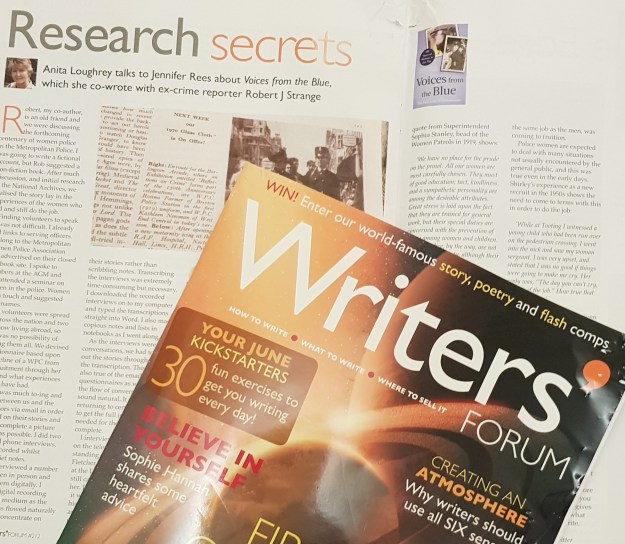
I interviewed Jenny Rees for my Research Secrets column in the national writing magazine Writers’ Forum. Jenny explained how archives were a great source of inspiration for their research. The National Archives hold many of the historical files for the Metropolitan Police. There was also the Metropolitan Police Archives in Camden, which hold the judicial histories of London and the London law courts.
Pic1

Jenny told me:

“Researching through the eras from those at the start of women in the Metropolitan Police to the complete assimilation of women into full integration with their male counterparts in 1973/4. The roles of women changed, they were expected to work alongside the men and deal with an increasing diversity of roles and crimes.” Jennifer Rees

Voices from the Blue tells the story of the hundred years of service of female police officers within the Metropolitan Police through the voices of the women who fought their way towards equality and won the respect of both their colleagues and the public. The authors have interviewed hundreds of former and serving policewomen and with the co-operation of the Metropolitan Police and the Women’s Police Association now have access to the files and stories of thousands of former officers who served over the past hundred years. Those police archives, together with material held by the National Archives and private libraries, provide a detailed and fascinating oral history of the challenges women police officers faced down the years.

Jenny explained:

“Context was the key factor for us. If the historical research brought context to the stories in a particular chapter we used them, but we were critical of each piece of research we used. Some were essential and made it into the finished version of the book, others unfortunately went by the wayside as we had a publisher word count constraint.” Jennifer Rees

You can read the full interview in the May 2019 #212 issue of Writers Forum.

You can follow Jennifer Rees and Voices from the Blue on Twitter @Namkha211

Write What Interests You

This is the opposite of write what you know. I don’t believe writers have to write what they know. You should write about what interests you and then find out more about it. In theory, if a topic interests you it will interest others.

I have a column in Writers’ Forum and authors and their research. These authors have not just written what they know they have taken interesting themes and topics and find out more through their research. In fact, some who have initially started out writing what they know have found after starting researching around the subject they did not know as much about it as they thought.

Just like mystery writer, Helen Moss, you should research around the subject and get a feel for the current theory and practice.

Helen Moss feature

When you are interested in a subject it shows in your writing. The passion and enthusiasm shines through. You might think, ‘most people are not interested in the things I am,’ but a passionate piece of writing will capture their hearts and entice them in.

Author, Nick Cook, is not a quantum physicists but it is a subject he is fascinated with. For his trilogy he used Twitter to find out the information he required to make his story believable and authentic.

Nick Cook snip

He said:

“I realised I needed to find out more about tornadoes and storm chasing to write my book. This was key… but how do you get in contact with a real expert dealing with an area that you are writing about? I tried all sorts of things, but was getting nowhere fast. What finally worked was sending out a call for help via social media, namely Twitter. Before long someone tweeted back to tell me there was this man that I should really talk to if I wanted to learn more about the storm chasing world. A few emails later Jesse agreed to do an interview with me. ” Nick Cook

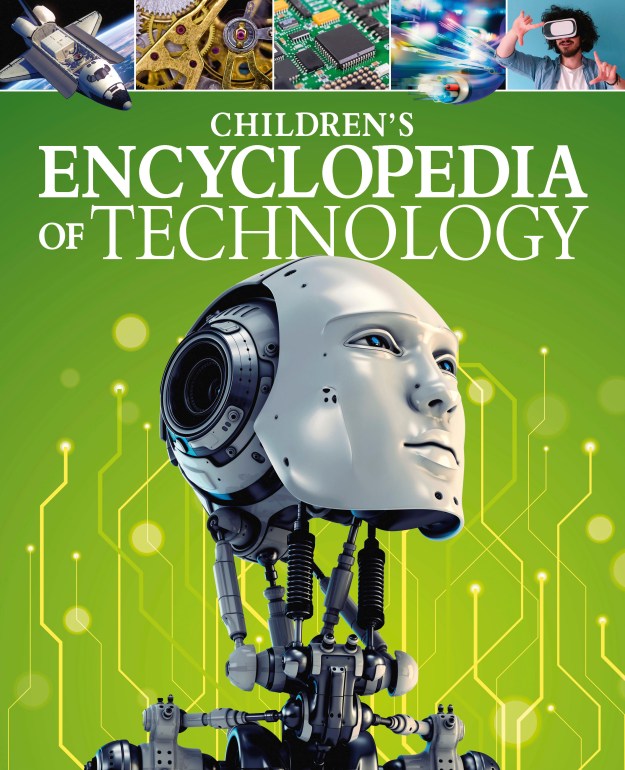
I get asked to write to commission about many subjects that I previously have very little knowledge about such as information on body technology for the Children’s Encyclopedia of Technology (co-written with Alex Woolf). In this case, specifically RFID chips, which are like business cards inserted under the skin. They can transfer contact details to smartphones and provide links to complex medical data. And Clustered Regularly Interspaced Short Palindromic Repeats (CRISPR), which exploits bacteria, in order to make changes to DNA and possibly cure genetic diseases.

ChildrensEncyclopediaOfTechnology-280x225-Cover_F-17May18

I also wrote in-depth information about ten scientists and ten great inventors for my graphic novels Heroes of Science which includes the stories of Nicolaus Copernicus, Charles Darwin, Marie Curie and Albert Einstein and Heroes of Discovery, which includes the stories of Ada Lovelace, Nikola Tesla, Tim Berners-Lee and Elon Musk.

Through extensive research I manage to write these books and I am very proud of them. I retain the knowledge for a limited time but then I seem to have a mind wipe to make way for any new information I need to know for my next book.

The message of this blog post today is if you are stuck for ideas think what you are interested in even if you don’t know anything about it and write about that.

You can find out more about me, my books and my writing career on my website: www.anitaloughrey.com or follow me on Twitter @amloughrey or Instagram @anitaloughrey

An interview with…NJ Crosskey

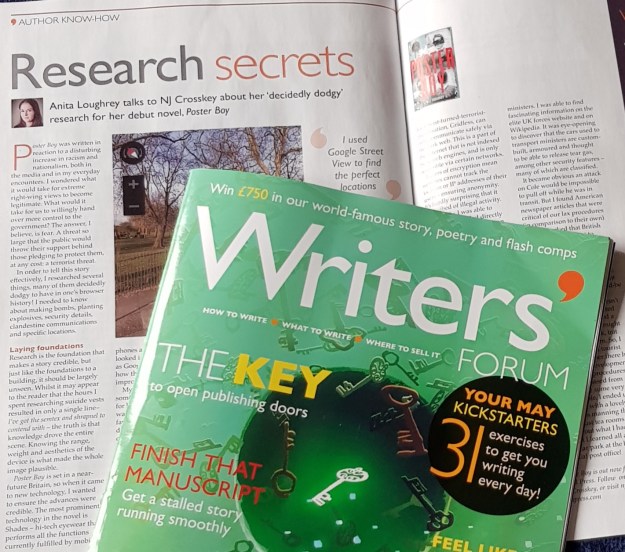
In my Research Secrets column in the national writing magazine, Writers’ Forum, this month I interview NJ Crosskey about her ‘decidedly dodgy’ research for her debut novel, Poster Boy.

Research Secrets - N J Crosskey photo2

Poster Boy is about Rosa who is at her brother’s funeral with a bomb strapped to her chest. The story unfolds as a flashback showing Rosa growing up with her brother Jimmy and the events that led up to his death and ultimately turning him into a reluctant hero. This novel demonstrates how easy it is to manipulate and spin opinion using social media and fake news and how Rosa is able to see through the lies and the fear they are purposely creating.

NJ Crosskey explained to write this book she needed to know about making bombs, planting explosives, security details for government ministers, clandestine communications and specific locations. She told me:

“Research is the foundation that makes a story like Poster Boy credible. But just like the foundations to a building, it should be largely unseen. Whilst it may appear to the reader that the hours I spent online researching the construction and effects of suicide vests resulted in only a single line:

‘I’ve got the semtex and shrapnel to contend with.’

The truth is that knowledge drove the entire scene. Knowing the range, weight, and aesthetics of the device is what made the whole image plausible.” NJ Crosskey

She used Google street view to find perfect locations which she knew little about and was able to talk to experts by asking around amongst friends and on online writing forums. Her advice to other writers is to think outside the box when it comes to researching your novel. Facts are important, of course, but real human experiences and opinions are equally vital for ensuring your story comes across as authentic – no matter how fantastical your plot!

“There are so many tools these days for writers seeking information, we really are spoilt! As well as all the obvious places to find information (Google searches, newspapers and journals, text books etc), there are a whole host of other resources. You can find TED Talks by experts on almost any subject online, Ancestry.com is invaluable for those writing historical fiction, and sites such as Quora allow you to ask questions that can be answered by experts all over the world.” NJ Crosskey

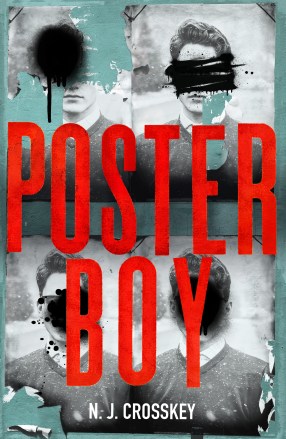
Poster Boy_High res (1)

Poster Boy was published April 1st 2019 by Legend Press.

You can find out more by NJ Crosskey by following her on Twitter @NJCrosskey, or visiting her blog: https://njcrosskey.wordpress.com/

An interview with… Stephen Potts

In Dec 2008, I interviewed award-winning screenwriter and novelist, Stephen Potts, about the research he did for his books and screenplay adaptations.

Pullman and Potts

(c) Stephen Potts

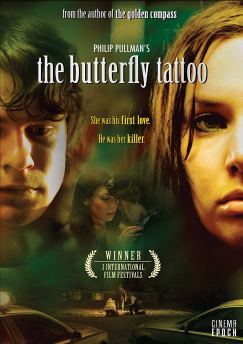
In 2007, he was commissioned to adapt Philip Pullman’s 1992 novel of doomed teenage romance, The Butterfly Tattoo, as a feature film. It was directed by Phil Hawkins. The film toured festivals in 2008, winning several awards (including Best Adaptation at the New York Independent Film Festival), and reaching 75 on IMDb’s moviemeter, before a US/UK cinema. The DVD was released in 2009.

BT DVD

Stephen told me:

“I’m aware I write visually (hence my interest in screenwriting). Unless I see a scene in my head I can’t write it.” Stephen Potts

He does not have a set method for research as he believes it should be appropriate to the task. It was interesting to discover that adapting The Butterfly Tattoo didn’t require visits to Oxford, where it’s set, as he had lived there for eight years. But it did require him to read and re-read the book, every interview Pullman had given where it was discussed, and every review of the book he could find.

Stephen explained:

“The questions here, in adaptation, were different: what was Pullman trying to achieve? What was the essence of the story? What are the inessential features, which could be changed to fit the different form of a feature film?” Stephen Potts

Stephen emphasised how the temptation, when you’ve invested time, money and effort in your research, and you’ve unearthed interesting nuggets, is to crowbar it all in to what you’re writing. He revealed he had to tell himself repeatedly that he was not writing history, but a story. If a piece of information served a story purpose, and was interesting to boot, all well and good: but he was adamant that the story must never serve as a showcase for More Interesting Facts.

“In writing, you must kill all your darlings.” William Faulkner

Stephen Potts has been nominated twice for the Carnegie Medal (Hunting Gumnor, 2000; Tommy Trouble, 2001) and short-listed for the inaugural Branford-Boase Award (Hunting Gumnor, 2000) and Askews Prize (Compass Murphy, 2002).

You can read the full interview in the December 2008 #87 issue of Writers Forum. You can find out more about Stephen Potts and his books on his website.

An interview with… Carole Matthews

My Research Secrets column was launched in the national writing magazine, Writers’ Forum, in October 2008. It has been running for just over ten years. To celebrate the tenth anniversary of my column I wanted to tell you about my very first interview that launched Research Secrets.

The very first interview was with Carole Matthews who writes romantic comedy.


Carole Matthews’ favourite research tools in 2008 were:

  • The Little Book of Baby Names – it’s where most of her character ‘s names come from.
  • IMDB –Internet Movie Database imdb.com – which is useful for all movie related questions.
  • Amazon – to keep up with what’s coming out.

Her research tip was to go and do what you’re writing about if you can.  She had set one of her books in a library, so she did some volunteer work in her local library for a few days. She also advises if you splash out to visit somewhere take masses of photos, notes, video.  Work on the premise that you’re never likely to go back.

I always visit the area I am writing about. I have a file drawer for every area we’ve ever visited – complete with local info, hundreds of photographs (or a CD these days) and probably a video too.

For writers who want to write chick-lit, she suggested you organise a girl’s night with your best mates once a month.  Drink lots of wine.  Tell lots of stories and try not to drink so much wine that you forget all the stories in the morning.

happiness for beginners

Carole Matthew’s new book, Happiness for Beginners, is released in February 2019. To find out more about Carole Matthews and her books take a look at: www.carolematthews.com

Or follow her on Twitter at: @carolematthews