Tag Archives: Writers Forum

An interview with… Undiscovered Voices

In my Writing 4 Children column in the national writing magazine Writers’ Forum this month #212 Jun 2019, I discover more about the unique biennial competition for children’s book writers to get their manuscripts in front of agents and publishers.

UV photo

Undiscovered Voices is run by volunteers from the Society of Children’s Book Writers and Illustrators (SCBWI) and sponsored by fiction book packager Working Partners. The competition is open for submissions on the 1st June 2019. The winners will be included in the 7th anthology out in 2020. The anthology will  be sent to every agent and publishers in the world of children’s books in the UK and US. It is also available as a free download from www.undiscoveredvoices.com.
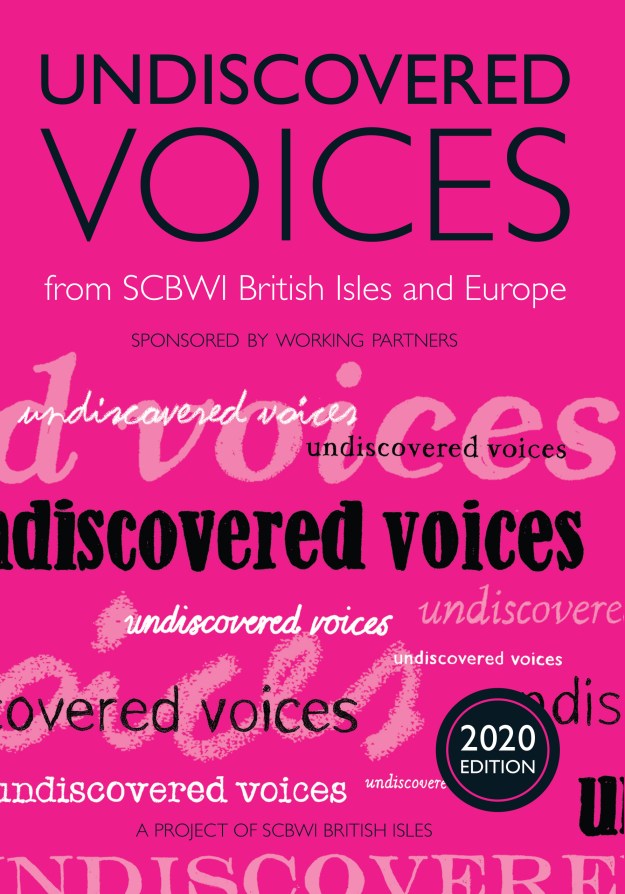
UV7_COVER

The feature contains excellent advice and tips for children’s authors who are considering entering the competition from each of the UK volunteer organisers: Catherine Coe, Jenny Glencross, Benjamin Scott, Simon James Green, Rosie Best and Sara Grant.

“Undiscovered Voices is not just a competition, but a supportive and friendly community. The UV team are aware it feels like an intimidating process, but want people to be reassured that the publishing industry is essentially just full of people who love books and who want nothing more than to discover new writers. Everyone is rooting for you to be successful.” UV team

The judges for the 2020 anthology are:

This is such an excellent opportunity for unagented and unpublished children’s authors. Don’t miss it.

Write What Interests You

This is the opposite of write what you know. I don’t believe writers have to write what they know. You should write about what interests you and then find out more about it. In theory, if a topic interests you it will interest others.

I have a column in Writers’ Forum and authors and their research. These authors have not just written what they know they have taken interesting themes and topics and find out more through their research. In fact, some who have initially started out writing what they know have found after starting researching around the subject they did not know as much about it as they thought.

Just like mystery writer, Helen Moss, you should research around the subject and get a feel for the current theory and practice.

Helen Moss feature

When you are interested in a subject it shows in your writing. The passion and enthusiasm shines through. You might think, ‘most people are not interested in the things I am,’ but a passionate piece of writing will capture their hearts and entice them in.

Author, Nick Cook, is not a quantum physicists but it is a subject he is fascinated with. For his trilogy he used Twitter to find out the information he required to make his story believable and authentic.

Nick Cook snip

He said:

“I realised I needed to find out more about tornadoes and storm chasing to write my book. This was key… but how do you get in contact with a real expert dealing with an area that you are writing about? I tried all sorts of things, but was getting nowhere fast. What finally worked was sending out a call for help via social media, namely Twitter. Before long someone tweeted back to tell me there was this man that I should really talk to if I wanted to learn more about the storm chasing world. A few emails later Jesse agreed to do an interview with me. ” Nick Cook

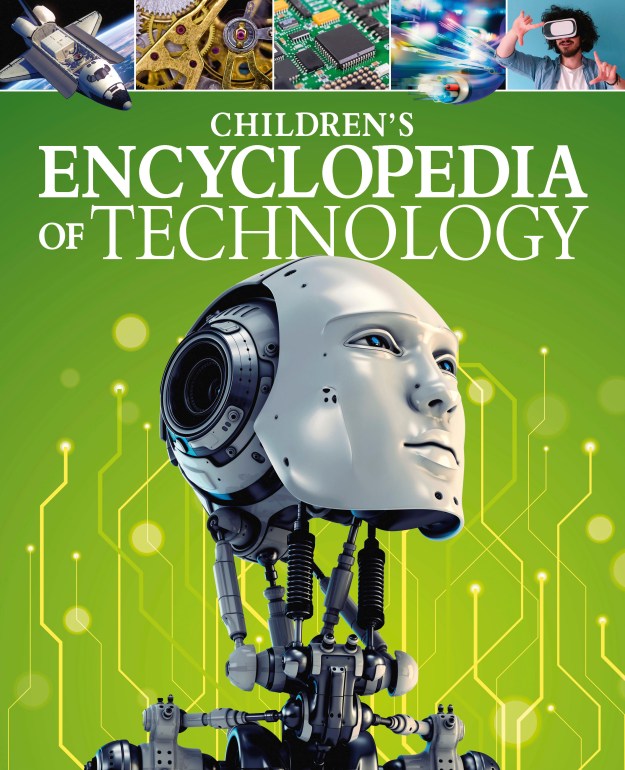
I get asked to write to commission about many subjects that I previously have very little knowledge about such as information on body technology for the Children’s Encyclopedia of Technology (co-written with Alex Woolf). In this case, specifically RFID chips, which are like business cards inserted under the skin. They can transfer contact details to smartphones and provide links to complex medical data. And Clustered Regularly Interspaced Short Palindromic Repeats (CRISPR), which exploits bacteria, in order to make changes to DNA and possibly cure genetic diseases.

ChildrensEncyclopediaOfTechnology-280x225-Cover_F-17May18

I also wrote in-depth information about ten scientists and ten great inventors for my graphic novels Heroes of Science which includes the stories of Nicolaus Copernicus, Charles Darwin, Marie Curie and Albert Einstein and Heroes of Discovery, which includes the stories of Ada Lovelace, Nikola Tesla, Tim Berners-Lee and Elon Musk.

Through extensive research I manage to write these books and I am very proud of them. I retain the knowledge for a limited time but then I seem to have a mind wipe to make way for any new information I need to know for my next book.

The message of this blog post today is if you are stuck for ideas think what you are interested in even if you don’t know anything about it and write about that.

You can find out more about me, my books and my writing career on my website: www.anitaloughrey.com or follow me on Twitter @amloughrey or Instagram @anitaloughrey

An interview with…NJ Crosskey

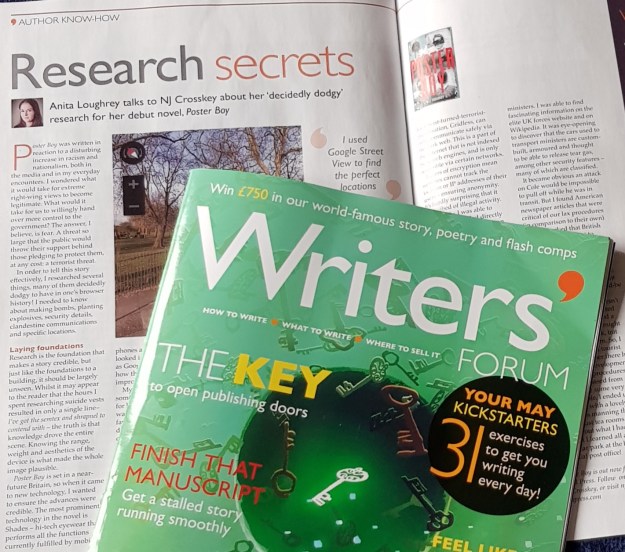
In my Research Secrets column in the national writing magazine, Writers’ Forum, this month I interview NJ Crosskey about her ‘decidedly dodgy’ research for her debut novel, Poster Boy.

Research Secrets - N J Crosskey photo2

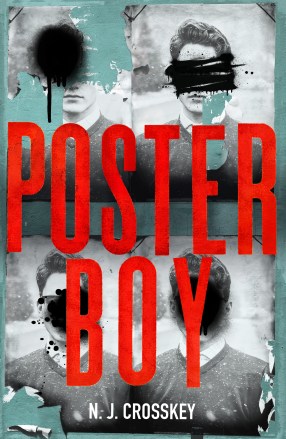
Poster Boy is about Rosa who is at her brother’s funeral with a bomb strapped to her chest. The story unfolds as a flashback showing Rosa growing up with her brother Jimmy and the events that led up to his death and ultimately turning him into a reluctant hero. This novel demonstrates how easy it is to manipulate and spin opinion using social media and fake news and how Rosa is able to see through the lies and the fear they are purposely creating.

NJ Crosskey explained to write this book she needed to know about making bombs, planting explosives, security details for government ministers, clandestine communications and specific locations. She told me:

“Research is the foundation that makes a story like Poster Boy credible. But just like the foundations to a building, it should be largely unseen. Whilst it may appear to the reader that the hours I spent online researching the construction and effects of suicide vests resulted in only a single line:

‘I’ve got the semtex and shrapnel to contend with.’

The truth is that knowledge drove the entire scene. Knowing the range, weight, and aesthetics of the device is what made the whole image plausible.” NJ Crosskey

She used Google street view to find perfect locations which she knew little about and was able to talk to experts by asking around amongst friends and on online writing forums. Her advice to other writers is to think outside the box when it comes to researching your novel. Facts are important, of course, but real human experiences and opinions are equally vital for ensuring your story comes across as authentic – no matter how fantastical your plot!

“There are so many tools these days for writers seeking information, we really are spoilt! As well as all the obvious places to find information (Google searches, newspapers and journals, text books etc), there are a whole host of other resources. You can find TED Talks by experts on almost any subject online, Ancestry.com is invaluable for those writing historical fiction, and sites such as Quora allow you to ask questions that can be answered by experts all over the world.” NJ Crosskey

Poster Boy_High res (1)

Poster Boy was published April 1st 2019 by Legend Press.

You can find out more by NJ Crosskey by following her on Twitter @NJCrosskey, or visiting her blog: https://njcrosskey.wordpress.com/

An interview with… Fiona Barker

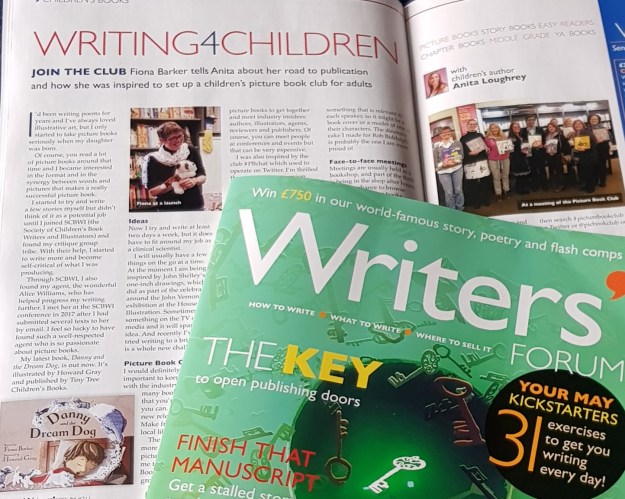
In the latest issue of Writers’ Forum I have interviewed picture book writer, Fiona Barker for my Writing for Children column. She talks to me about her road to publication and how she was inspired to set up a children’s picture book club for adults.

Writing 4 Children - Fiona Barker and Picture Book Club3

In the feature she mentions how she is inspired by John Shelley’s one inch drawings and #ukpbchat which meets online each month on Twitter. Fiona recommends that aspiring picture book writers should follow key children’s book bloggers such as Book Lover Jo, or even me.

The Picture Book club meetings are usually held in a bookshop, often Waterstones in Reading but they are moving around the country. they also broadcast the events live on the Picture Book Club Facebook page. To stay up-to-date with locations and dates the events are running you can follow the Facebook page @picbookclub

Fiona told me:

“At a typical PBC meeting, members pay £5 ‘membership’ on the door. This helps us to cover speaker expenses. We have a talk or discussion for 30-40 mins and then break for cake and a chance to chat informally. The cakes are a big feature of PBC. We try to make something that is relevant to each speaker, so it might be a book cover or a model of one of their characters. The dinosaur cake I made for Rob Biddulph is probably the one I am most proud of.”

PBC 14 1

To find out more about Fiona Barker and her books you can follow her @Fi_BGB on twitter, @FionaWritesBooks on Facebook and Instagram and her author website is www.fionabarker.co.uk.

An interview with… Catherine Coe

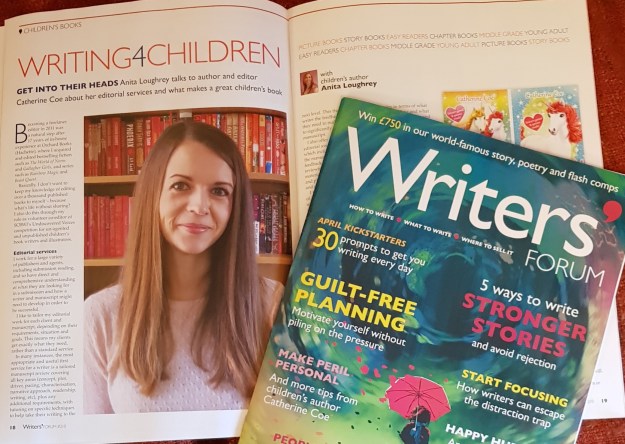
In my Writing 4 Children column this month I talk to author and editor, Catherine Coe about her editorial services and what makes a great children’s book.

Catherine Coe feature 1

Catherine explained how she takes on a select number of writers for long-term mentoring, which includes regular contact through video calls and feedback on work in progress. Many of he writers she has worked with have gone on to get publishing deals  with publishers such as Chicken House, David Fickling Books, Hot Keys, Hachette Children’s Group, Macmillan and Scholastic.

She strongly advocates that to write for children you need to get inside the child’s head, as you are more likely to engage your audience with appealing content, write in a style they enjoy and crucially, avoid speaking down to them. 

“I believe it is vital to remember what it was like to be a child and to channel those memories in terms of what you liked reading and what captured your attention and imagination.” Catherine Coe

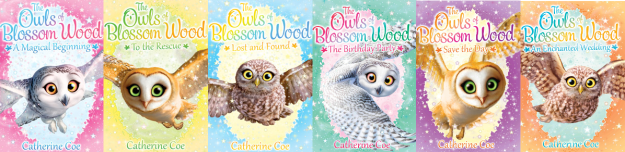
Catherine has written over 30 books for children, including the popular Owls of Blossom Wood series.

Owlsbooks1-6

Her writing tip is to ensure your book has an overarching problem or goal that drives the plot. One that is compelling to the reader and will keep them turning the pages.

“Any book that keeps a child up at night reading is a great one.” Catherine Coe

To find out more about Catherine Coe and her editorial services, visit her website: http://www.catherine-coe.com

You can also follow her on Twitter @catherinecoe

An interview with… Sarah Stewart

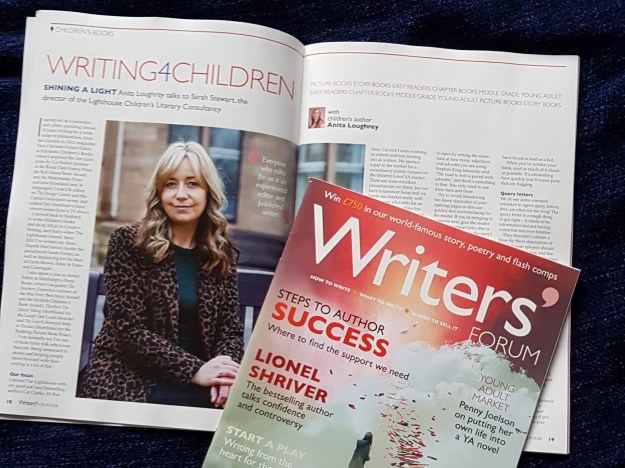
In the February Issue of Writers’ Forum I have interviewed Sarah Stewart the director of the Lighthouse Children’s Literary Consultancy about her career and the services she offers to children’s and YA book writers.

writing 4 children - lighthouse4

She started The Lighthouse with her good friend, Cat Clarke, when they were both working as editors. Sarah was the UK editor of The Hunger Games at Scholastic and has also worked for the excellent Edinburgh based publisher, Floris Books.

The feature contains valuable advice about opening lines and query letters. They also link up writers with agents  when they feel they’ve read a good, strong submission.

Some of Sarah’s advice includes:

If you’re writing for younger children, a sense of immediacy is a bonus in an opening; I like a bit of meandering description when I am read adult fiction, but not if I’m looking at something aimed at seven year olds.

You can read the full interview in the Feb 2019 #208 issue of Writers Forum. To find out more about the Lighthouse Children’s Literary Consultancy and their services you can view their website: www.lighthouseliterary.co.uk or follow them on Twitter at: @thelighthouseuk 

An interview with… Savita Kalhan

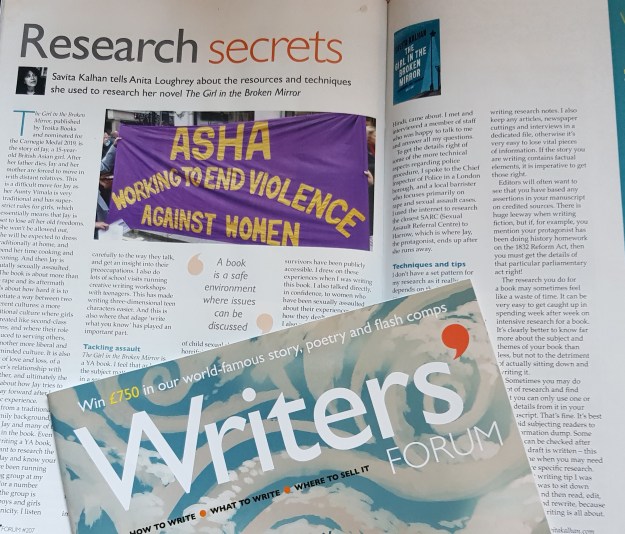
Savita Kalhan’s latest novel The Girl in the Broken Mirror published by Troika Books and nominated for the Carnegie Medal 2019 is the story of Jay, a 15-year-old British Asian girl who is raped. Savita told me all about the resources and techniques she used to research this YA novel for my Research Secrets column in the national writing magazine Writers’ Forum.

Savita Kalhan6

Savita explained:

Sadly, as the #metoo and #timesup movements have illustrated in recent times, the incidence of sexual assault is much more prevalent than once thought, and stories of survivors have been publicly accessible. I drew on these experiences of survivors when I was writing this book. I also talked directly, and in confidence, to women who have been sexually assaulted about their experiences and how they dealt with them. I also spoke to friends and relatives of victims.

Savita does not have a set pattern for her research but her tip to other writers is even though you can get caught up in your research and you may feel you have wasted your time it is better to know far more about the themes and subject of your book than to know less. But the best tip she was ever given was:

The best writing tip I was ever given was to sit down and write, and then read, edit, fact-check, and rewrite, because that’s what writing is all about.

You can read Savita Kalhan’s Research Secrets feature in the January issue #207 of Writers Forum.

You can find out more about Savita and her books on her website www.savitakalhan.com

Or follow her on Twitter @savitakalhan


An interview with… Jon Mayhew

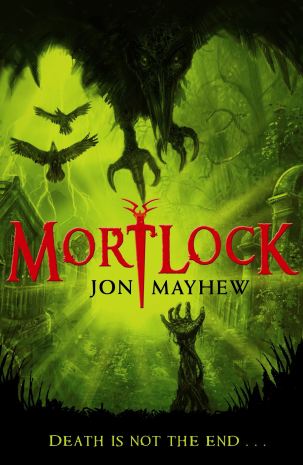
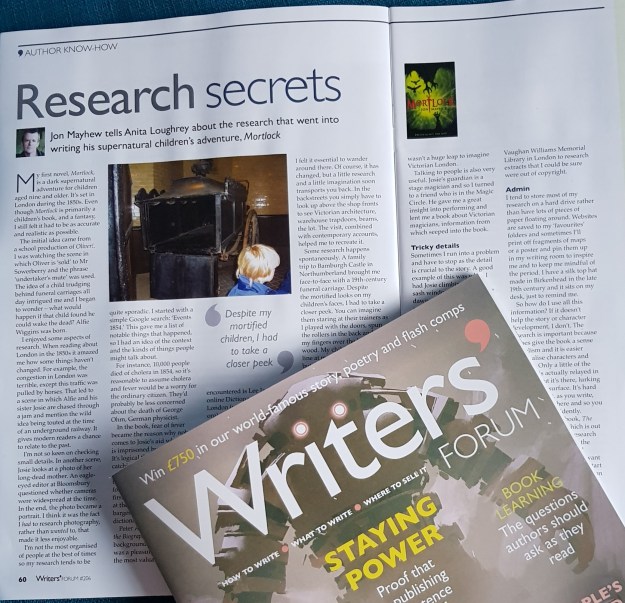
Featured in my Research Secrets column this December is YA writer Jon Mayhew. He told me about the research that went into writing his supernatural adventure, Mortlock.

Mortlock3

His initial idea came from a school production of Oliver.

I was watching the scene in which Oliver is ‘sold’ to Mr Sowerberry the undertaker and the phrase ‘undertaker’s mute’ was used. The idea of a child trudging behind funeral carriages all day intrigued me and I began to wonder what would happen if that child found that he could wake the dead. Alfie Wiggins was born and so the story began.

He spent time researching the streets of the Seven Dials in London to observe the Victorian architecture and recreate the atmosphere in his novel. A trip to Bamburgh Castle where he had the opportunity to view a funeral carriage, the Dee estuary and childhood memories of Liverpool all helped to create a realistic and evocative Victorian London backdrop.

RSJM2

His publisher, Bloomsbury needed Jon to check all the extracts from traditional ballads that preface each chapter were out of copyright. Even though Jon is well-versed in traditional music he was able to check the songs were in the public domain with a trip to the Vaughan Williams Memorial Library in London.

Jon’s advice to other writers is to enjoy your research but enjoy your writing more and don’t let any of those fiddly details get in the way of a good story. He said:

The research is important because it does give the book a sense of realism and it is easier to visualise characters and settings. I like to think of the research used in a book as the tip of an iceberg. Only a little of the research is actually relayed in the book but it’s there, lurking beneath the surface.

This particular interview was first published in Writers Forum in May 2010. You can read the full interview in the Dec 2018 #206 issue of Writers Forum.

You can find out more about Jon Mayhew and his books on his website: www.jonmayhew.co.uk of follow him on Twitter @MayhewJ 

An interview with… Miriam Halahmy

In May 2016, I interviewed Miriam Halahmy for the Papers Pens Poets blog – the place where writers and illustrators come together to share their love of stationery.

Miriam

Miriam explained she always writes in pen because she worries pencil will rub out and she’ll lose something important. She prefers fibre tip pens and the Muji range are her favourite. Miriam told me:

I usually write in black or blue but sometimes I enjoy writing in green or purple. The pen has to flow easily for me and have a reasonable grip.

Miriam also likes small, lined notebooks and insists the lines can’t be too far apart. She  starts a new notebook for each novel. One of her favourite gifts is a fancy notebooks with heavy cover. She uses them as diaries when she is on holiday.

She uses a lot of plastic folders and plastic pockets to keep things in order during her writing process.

I need files for my filing cabinet to keep things in some kind of order, but when I’m working away my desk literally becomes a rising mound of books, papers, slippery slidy plastic pockets, and pens which have been discarded.

You can read the whole Papers Pens Poets interview here.

Miriam COVER HIGH RESWhen I interviewed Miriam for the blog she had just launched The Emergency Zoo, a novel which  focuses on a little known fact that during WWII there was a huge culling of the pets. Her book asks:
When war breaks out, who will save the animals?

In The Emergency Zoo the children spirit their pets away from the grownups and even end up caring for a baby cobra.

Hidden book cover

I have also previously interviewed Miriam for my columns in the national writing magazine, Writers’ Forum. The first time was in 2011 about her research secrets for her first novel Hidden, which is about racial bullying and set on Hayling Island. Hidden, has been the Sunday Times Children’s Book of the Week and was nominated for the Carnegie Medal in 2016.


Miriam told me how her Hayling archive fills a whole bookshelf at home in her study. She also said she found lots of interesting snippets of inspiration by talking to the local sailors, coastguards and lifeboat men. This also helped to develop her understanding of the beaches, tides, currents and waters around Hayling.

I have swum in the sea in summer and winter and paddled in all seasons and I have walked all over the Island, taking photos, writing notes and talking to anyone who has a moment, from birdwatchers to houseboat owners, to teenagers in the skate park near the funfair.

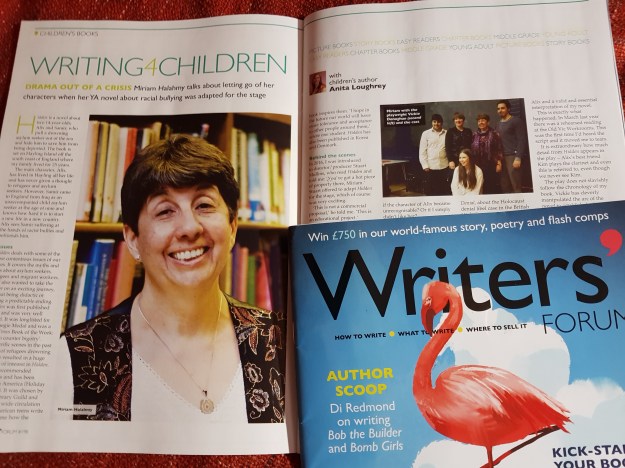
In the April 2018 issue of Writers’ Forum, I interviewed Miriam for my Writing 4 Children column and she told me how her YA novel, Hidden, has been adapted for the stage by playwright Vickie Donoghue.

Writing 4 Children - Miriam Halahmy1

Find out more about Miriam on her website: www.miriamhalahmy.com Facebook author page : Miriam Halahmy – Writer and Twitter: @miriamhalahmy

An interview with… Tim Bouquet

I interviewed investigative reporter, Tim Bouquet, about his research methods way back in 2008 for my Research Secrets slot in Writers’ Forum .

Tim specialises in investigative narrative story telling for a variety of magazines including The Times MagazineTelegraph MagazineEsquire, Reader’s DigestMelbourne Age and the Irish Times. He is the co-author, with Byron Ousey, of Cold Steel Britain’s Richest Man and his Billion Dollar Battle for Global Empire (Little Brown). Cold Steel is about Lakshmi Mittal and an epic, dirty and sometimes racist, takeover battle he fought to take over the world’s second biggest steel company. This creative non-fiction thriller, reads like fiction.

Cold Steel

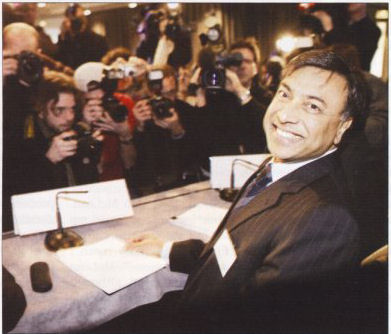
Lakshmi Mittal, a Calcutta-born industrialist, raised himself up from humble beginnings to become the world’s fourth-richest man. He proposed a friendly merger with rival Arcelor, a pan-European company whose interested parties include the governments of Spain, Luxembourg and Belgium. Arcelor’s mercurial CEO, Frenchman Guy Dolle, firmly refused the merger. The scene is set for a massive hostile takeover involving billions of dollars of finance, government and shareholder manoeuvring, and accusations of jingoism and double-dealing. Cold Steel brings to life the cut and thrust of big business at war.

Lakshmi Mittal

As part of their research for Cold Steel, Tim and Byron interviewed 55 people face-to-face in six countries. Tim told me:

I organise all my research by chronology and character. From here I sketch out the basic building blocks and tipping points of the story. These may change but at least it’s a starting point.

He always tries to talk to people in places where events in his writing take place because he feels it helps to paint a picture of the setting and reminds the people he is interviewing where they were physically when certain key events happened. I feel this is excellent advice and if possible it is worth meeting the people you are interviewing at a set location for your book or novel. Tim explained to me how he visited all the places they wrote about in Cold Steel. He said:

If you want to set a scene in an operating theatre you need to visit one. I always visit the places I write about. If you haven’t been there or somewhere like it, how can you take your reader there?

In Cold Steel, they listed people who had helped them set up interviews in the acknowledgements and they listed all the people they had talked to and  played leading roles in the story in a section called The Players.

My advice to other writers is check and double check. Don’t believe everything people tell you!

To find more information about Tim Bouquet, his co-author Byron Ousey and their book Cold Steel, visit the website: www.coldsteelbook.com