Tag Archives: writing for children

Investigate Viewpoint

No matter what the viewpoint you need to think:

Is that my character speaking, or is it me?

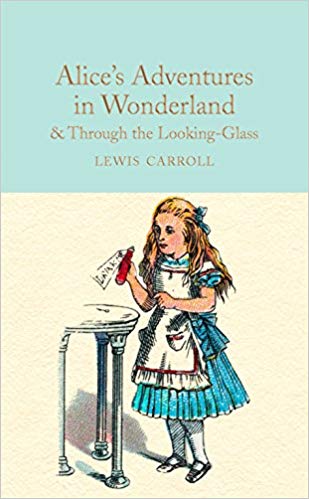
If you change a text into the present tense it could become more immediate and subtly changes the feel of the story. Try it yourself and then compare this to a more traditional narrator style viewpoint, like Lewis Carroll in Alice in Wonderland.
Alice2

In an action-packed writing scene, it is easier to use third person, as there is not so much reflection and interpretation to stop the flow of the action. The reflection requires prior knowledge of what is going on and tells the reader how they should feel about this. We need to avoid telling the reader what to think.

A tighter viewpoint helps the reader to see and feel the action. The actions needs to go at the speed of the character – seeing what they see, in the order it happens. Strangely, the third person, even if it is written in the past tense gives the experience of reading it as it happens. In intense danger scenes, a tighter viewpoint adds more tension but, you can pull back this tension in other scenes to let the reader reflect.

Student Reading a Book

With viewpoint I think it is better not to be overtly original but, to let your story do the talking. A lot of YA books are written in first person. When writing in the first person and present tense you have to consider how much the reader is supposed to know at any one time.

The omniscient narrator, such as the Victorian, ‘My dear reader’, can work in a different way but it distances the reader. The omniscient narrator where you don’t even change scenes to change viewpoint might suit a big saga but I think it is distracting in a children’s book. When using the omniscient narrator, it is important to make sure the character is mentioned before you change viewpoint.

A character narrating back-story can slow the pace. When adding back-story, the writer needs to seriously consider if it is really needed. In my opinion, it is better to take out this narrator intrusion. It slows the tension and you may find you do not need all the detail. Ask yourself:

Why you are putting it in?

It is good to experiment with viewpoint within a story as it is such a large part of the story as a whole. But remember it is often better to read a book and not remember what person it is written in – it is the essence of the story that is remembered – the viewpoint is so entwined and so good it disappears.

Dream a little dream…

Does anyone else out there dream their stories?

sleep
Well, I have very vivid dreams and more often than not I remember them when I wake up. I can dream whole plot lines. When I was stuck on a plot of a recent book I was writing I would read where I’d got to in the story just before I went to bed and somehow when I woke up I had a vague story line. Granted I think the story probably needs a lot more work and maybe a lot more sleep.

20160630_140748

I keep a notebook by my bed most nights and often write down the stories I have dreamt. One day, I am going to write them all up as different novels. Right after I finished the commission I am working on at the moment. But for now, I can officially say I am still working even when I am asleep.

Building character

Now I’ve got your attention, the first port of call is to build the protagonist (your main character).

body building

The important traits of your protagonist should be:

  • They have a problem or need.
  • They have the ability to solve the problem, whether or not they know it (there’s usually more suspense if he doesn’t)
  • They have a character flaw to overcome to solve the problem, or win the reward.

Your main character should be someone the reader can identify and/or sympathise with. They should be near the top age of your intended readers. One exception  to this is in folktales. You should identify your characters with one or more telling details—a physical trait, a mannerism, a favourite phrase but a complete description is not really required.

Then, think about your secondary characters, which includes the main character’s friends and enemies.

Protagonist: Main character with flaws

Antagonist: Block the main character from reaching goals. (The Green Goblin in Spider-Man)

Allies: Assist the main character in reaching goals. (Robin in Batman)

Mentors: Wise characters that help the main character. (Obi-Wan Kenobi in Star Wars)

Jokers: Lighten things up! Often the main character’s best friend is a joker. (Donkey in Shrek)

You can combine different types of characters to make them stronger.

A funny villain like Dr. Evil in Austin Powers:

Dr Evil

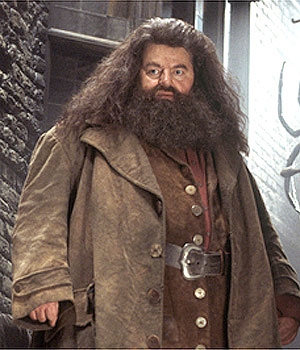
A mentor, like Hagrid from Harry Potter, who is also a joker:

Hagrid

A villain that becomes an ally and helps the main character solve the real problem such as Sloop from Spy Kids:

Floop

Strong secondary characters are important in all stories for all age ranges so it is worth spending time on creating them.

Writing Non-Fiction

There is a large market for non-fiction reference books based on topics taught in school. I recently ran a workshop all about writing for educational publishers. Today I thought I would share some tips.

course photo2

Writing for Educational Publishers workshop. Photo taken by Addy Farmer

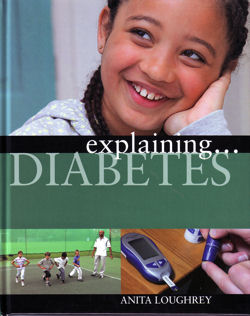
I think one of the main points is that educational publishers prefer to come up with their own ideas in-house or work through book packagers. I work a lot to commission. My book, Explaining Diabetes, which was published by Franklin Watts but, was commissioned by the book packager Bender, Richardson and White. It was one book in a series of books about illnesses and conditions.

explaining diabetes sm

When approaching publishers with unsolicited non-fiction it is better not to have a finished book. A one-page outline giving a brief breakdown of the chapters, target audience and potential market is generally what is required.

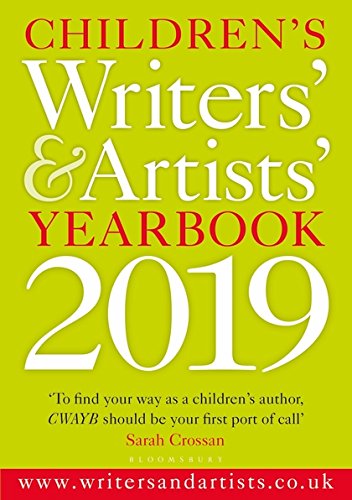
I suggest you market research the publishers you want to submit to as well. Check they publish books for the age range you want to write. There are different publishers for primary than secondary aged children. You can find out which publishers print what by checking out The Writers and Artists Yearbook.

W and A

It is wise to look at what books are out there and analyse them to see how each book is divided and what sort of things are included on each spread. Look for patterns as an indication of style and what might have been in the brief the author was given. Then try and use this as a template to plan your own book that would fit the series.

Why not try it for yourself. If you are successful please let me know.

An interview with… Undiscovered Voices

In my Writing 4 Children column in the national writing magazine Writers’ Forum this month #212 Jun 2019, I discover more about the unique biennial competition for children’s book writers to get their manuscripts in front of agents and publishers.

UV photo

Undiscovered Voices is run by volunteers from the Society of Children’s Book Writers and Illustrators (SCBWI) and sponsored by fiction book packager Working Partners. The competition is open for submissions on the 1st June 2019. The winners will be included in the 7th anthology out in 2020. The anthology will  be sent to every agent and publishers in the world of children’s books in the UK and US. It is also available as a free download from www.undiscoveredvoices.com.

UV7_COVER

The feature contains excellent advice and tips for children’s authors who are considering entering the competition from each of the UK volunteer organisers: Catherine Coe, Jenny Glencross, Benjamin Scott, Simon James Green, Rosie Best and Sara Grant.

“Undiscovered Voices is not just a competition, but a supportive and friendly community. The UV team are aware it feels like an intimidating process, but want people to be reassured that the publishing industry is essentially just full of people who love books and who want nothing more than to discover new writers. Everyone is rooting for you to be successful.” UV team

The judges for the 2020 anthology are:

This is such an excellent opportunity for unagented and unpublished children’s authors. Don’t miss it.

End Each Chapter With a Cliffhanger

Cliff hangers keep your readers reading by building up the story’s tension. They literally leave your reader hanging.

cliff hanger

Cliff hangers should always involve your characters:

  • A character arrives
  • A character feels something
  • A character forgets something
  • A character is jolted into action
  • A character leaves
  • A character makes an important decision
  • A character makes an urgent demand
  • A character reacts badly
  • A character reacts internally to events
  • A character remembers something

Your reader has to turn to the next chapter to find out what happens to resolve the tense situation you have created.

Combine Speech with Action

People rarely stand still and speak. They wave their arms, they pace, they scuff their feet, check their nails, get distracted or even make a cup of tea. I know these are all rather cliched examples but they serve the point. When writing dialogue have your characters do things whilst they speak.

child drinking

Spend some time people watching and observe for yourself the things they do when they talk. Keep in mind Anne fine’s words:

 “Don’t write about people you know, write what you know about people.” Anne Fine

And what better way to find out about people than to watch them.

“A rough estimate would be one third dialogue, one third action and one third introspection.” Diane Doubtfire

Introspection are the character’s inner thoughts.

“A character’s thoughts can greatly enhance a story: deepening characterisation, increasing tension, and widening the scope of a story.” Nancy Kress

So next time you are out and about observe some of the little actions people do that hint at their character. It all adds to the story.

Use Slang Sparingly

This is not necessarily only good advice for writer’s writing for children. I think it is true for what ever books you are writing.

What we need to remember is the dialogue is not real conversation but has to create the illusion of a real conversation. Slang words and catch phrases can date a book and go out of fashion very quickly so it is best to avoid them. Remember you want you children’s characters to sound like children and not an adult pretending to be a child.

marvel-characters-comic-art

Consider your character’s patterns of speech rather than particular words. For example, an impatient character would use short sentences and not waste words whereas a dreamer might ramble on without care. Much like some of my blog posts.

So be careful with slang. It dates dialogue.

“It is best to get the flavour and texture of what you want to say without having to patronise or, worse still, getting it wrong.” Andrew Melrose

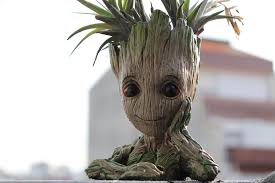
The idea is to keep dialogue short and concise. There is no room for lengthy descriptions in dialogue. The other characters would get bored and wander off. You should be able to sum it up in a few words.

groot

If you do want to use speech to convey important information it is better to begin the section of dialogue with the information or end with it. If you bury it in the middle of the dialogue it could get missed.

And avoid ellipses… unless absolutely necessary for effect. Don’t litter the page with dots.

Know Your Readers

It is essential for who ever you are writing for to have a good knowledge of your audience and have a target age in mind.

snoopy-reading

When writing for children remembering back to your own childhood is a starting point but you must keep in mind the modern child in today’s technology filled world. This does not mean every child in your book needs their own mobile phone or games console. In fact it is often better for tension if they are unable to call for help at a touch of the screen.

The best way to find out about your audience if you are writing for children is to observe them. Not in a stalkerish, creepy kind of way. If you have children, or have friends and relatives with children talk to them, find out what is going on in their lives. Ask about their likes and dislikes. Find out what books they love to read and their favourite characters. If you don’t have children talk to friends who have, or talk to your local children’s librarian.

Another good way to find out about children today is by watching children’s movies and television. Immerse yourself in the adventures, problems and emotions of the characters. They are likely to defy authority and will be outspoken with their own strong opinions. This may vary in intensity for reception, junior and secondary aged children but there should be a degree of independence.

Visualise Your Story

Writing can be a visual, multi-dimensional experience similar to painting, or designing a structure. I have always developed scrap books of my stories using pictures I have found to help me describe my character and setting.

20160630_140814

I once went on a Book Bound course led by Karen Ball of Speckled Pen. She made us rip out pictures from magazines that linked in some way to our character. We were not allowed scissors we had to use our hands and carefully tear out the images. At first, I found this difficult as I like order and conformity and this was a little too haphazard. But I soon got into the flow and found it quite freeing and inspiring.

It was fun. It didn’t help with the character I was working on at the time as she was quite dark so the magazines were not suitable. But it did help develop a new character from scratch. It can also help to develop key images within your story before they are drafted into scenes. I believe visualising your story is a great way of adding texture to your text. It is good to see the world from a different perspective. Let your imagination go wild.

Convex_lens

I suggest you search the world wide web and magazines for images that inspire and help you develop your characters, setting and plot. Turn it into a collage. This could be done using sites like Pinterest, or software like Paint, or by hand-gluing pictures printed, or cut out of magazines onto large sheets of paper in the same way as Karen Ball made us do, although you can use scissors if you want. Don’t glue down the pieces too early so you can let your mind free-flow.

tree collage

You could even turn your writing space into a canvas. Sketch with words, post scenes form your novel and photos all around your study or writing space to sculpt them into a 3D-version of your book. Move things about, add some colourful phrases and quotes from your characters here and a touch of darkness there. Look where the light is coming from and then transfer this light into the pages of your story.

OK. Maybe I’m going over the top but writing is multi-tasking, and I am quite good at that.