Tag Archives: writing tips

Am I Writing in a Vacuum?

No one can hear you scream in space
(paraphrased from Barbara Gips’ tag line for Ridley Scott’s 1979 film Alien)

<a href="https://stockcake.com/i/astronaut-lost-in-space_1426235_953649">Astronaut lost in space</a> by <a href="https://stockcake.com">StockCake</a>

Over the past few weeks I’ve been experimenting with Substack. My first post was about writing in a vacuum, which is what I feel like I’ve been doing on my blog for years. There was little communication and no feedback, and I began to wonder if anyone was reading my posts at all.

But to be honest, I’ve started to wonder whether writing in a more enclosed environment like Substack can become its own kind of vacuum. Blogging on the wider internet once felt like standing in a windy, unpredictable landscape. Substack feels quieter. More contained.

If you want to read the full post about stepping out from behind the scenes and what I was writing in the vacuum, you can find it on my Substack here: Anita’s SubstackWhat I Was Writing in the Vacuum.

Reading this again has made me think about the visibility of my posts.

I have come to realise content published on Substack does not contribute to the search engine optimisation of my own WordPress blog, Much To Do About Writing. It lives on Substack’s domain and like any platform, Substack is designed to keep readers inside its own ecosystem. It is not built to send traffic back to my own independent space.

By contrast, posts in theory should strengthen my long term search presence. It has already grown as an archive of my book reviews, author interviews and writing achievements. It is a discoverable home for my writing.

Discoverability matters to me. Substack is already crowded with reflections on being a writer and updates on works in progress, so it can be difficult to stand out or to reach beyond an already engaged circle. This does not make Substack redundant, it simply changes its role.

I think if I use it thoughtfully, it can complement my WordPress blog. I can republish selected posts on my blog to reach new readers, while also sharing blog posts on Substack to encourage subscribers to explore the depth of material on my site. The goal is to build conversation and deepen engagement with readers who are genuinely interested in what I have to say.

For me, the real question now is how to make both platforms work together as a writer: to grow an audience who is interested in my work and to learn from other authors who have found ways to make it work for them.

However, this brings up a bigger question: Am I wasting my time? Writing only has impact if it is seen, read and responded to. A blog without responses feels more like a private diary than a conversation.

********

Anita Loughrey writes for children and young people. Her debut YA novel is Who Is Moira Miller?.

Narrative Style and Pace

Your style is unique. Do not change it. If you try to write in the style of someone else, you are changing your individuality.

street style

The pace is governed by the time frame of the story. In long stories, such as sagas, you need to find the level of the story, which has the greatest continuation of plot and have the rest in flashback. In this way, it is possible to condense three generations into a weekend. If writing thrillers, narrow it down to a week or a year. If writing a children’s book all the action could happen in a day.

roller-coaster

Get the reader feeling they are on a roller coaster, if you drag it out too much the reader will get confused. Dialogue is a good way for bridging time. Your characters could easily pick the phone up and ask someone.

room

Avoid lengthy description. It slows the pace. Take a look at the colour supplements in the newspapers because they have good examples of brief descriptions of rooms, people and moods. They sum it all up in a thumbnail. A good exercise is to go through these supplements with a highlighter pen.

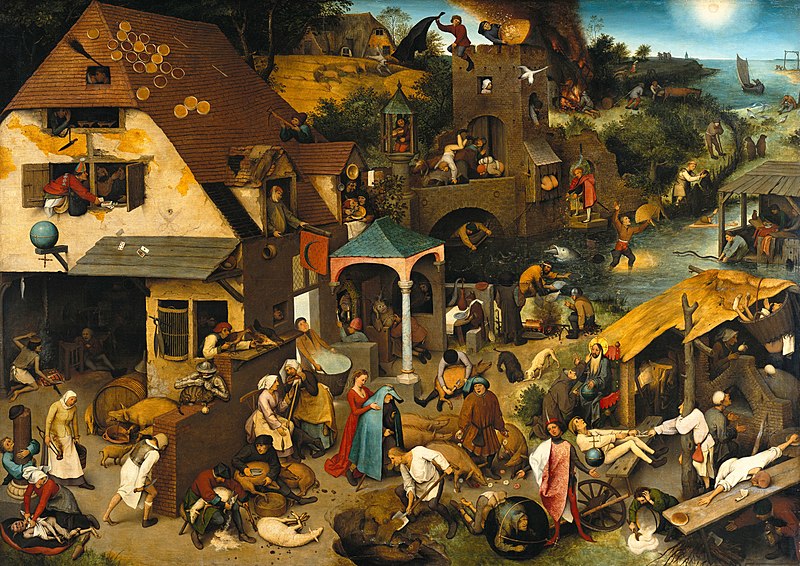
Pieter_Brueghel_the_Elder_-_The_Dutch_Proverbs

The picture should be created by character and dialogue, not by lengthy description.

An interview with… Cathy Cassidy

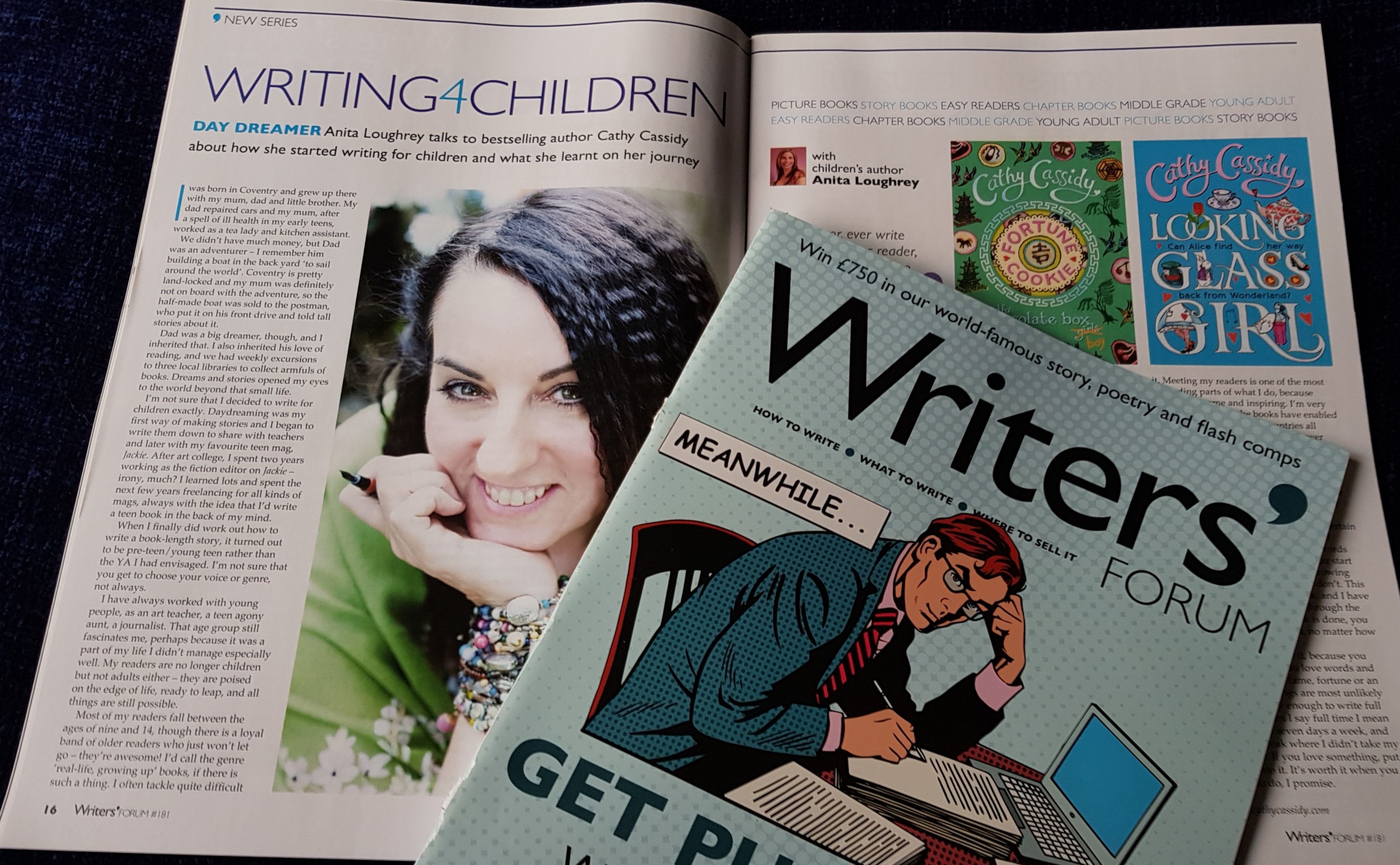
I interviewed Cathy Cassidy for my Writing 4 Children double page spread in the national writing magazine, Writers’ Forum, in 2016. She revealed some of her writing secrets and tips.

WF-CC5

Cathy explained to me writers do not really get to choose the voice or genre they write, it is more of an organic process.

I’m not sure you get to choose your voice or genre… not always, anyway. I have always worked with and for young people, as an art teacher, a teen mag agony aunt, a journalist etc… that age group did and still does fascinate me, perhaps because it was a part of my life I didn’t manage especially well. When I finally did work out how to write a book length story, it turned out to be young teen rather than the YA I had envisaged. 

Cathy Cassidy

Most of Cathy’s readers fall between the ages of nine and fourteen and she calls the genre, ‘real-life, growing up’ books, as she often tackles quite difficult themes. But generally her books are about family, friendship and fitting in.

Cathy told me that she thinks the most important thing for any writer is to find your own voice and find your story, and then stay true to it

Don’t assume that children’s books are somehow less important than those aimed at adults, because that’s not the case. Often, the books we read as children are the ones that shape us, the ones we remember forever… let’s make them awesome!

Cathy Cassidy

Her top tip on writing for children is to write from the heart, and put everything you have into what you’re writing. If this means re-arranging your to-do list for the day, do it – writing has to come first, for the duration of the book at least. Set yourself a challenge to write a certain amount each day – it may just be 1000 words, but if you stick to it, those words will soon mount up. And when you start to doubt yourself and feel like throwing your laptop out of the window, don’t. 

Her message is write because you love it, because you can’t help it, because you love words and stories. Don’t do it for fame, fortune or an easy life, as those things are most unlikely to happen.

I’m lucky enough to write full-time now, but when I say full-time I mean it… sometimes it is seven days a week, and I can’t recall a break where I didn’t bring my laptop with me. If you love something, put all have into it… it’s worth it when you love what you do, I promise.

You can find out more about Cathy Cassidy and her books on her website: www.cathycassidy.com

Re-evaluate setting

Today’s blog post is a continuation of evaluating your work in progress. I have talked about re-evaluating your characters and re-evaluating your plot. Today I am concentrating on setting. A lot of work goes into the beginning of the story before the writing begins but sometimes a story can loose its way. What I am proposing is if you feel like you have lost your way stop writing and take a look at what you have written so far. 

edinburgh castle

  • Make sure your facts are accurate, such as if you are using real places you have not got your characters driving the wrong way up a one-way street.
  • Make your own sketch-map of an area it is a good working tool whether, you setting is real or imaginary.
  • Remember the information out at the time may be different form what we know now in hindsight. Pears encyclopaedias give details relevant to the year and can be collected quite cheaply from boot sales.
  • Contemporary stories with flashback in time must be accurate. Double-check everything.
  • Never take one source, do a lot of crosschecking. Where possible use library and university sites, museums and book searches where you can type in a keyword and find a lot of good reference books.
  • The best research is unobtrusive. You don’t need to put everything in to prove you know your subject. Drop things in casually to set the scene and let the reader know a little background. You can paint a picture using the information this way. You have the research in your mind but only have to use a couple of lines.
  • Use research to feed motivation and plot. It is no good your character having a glamorous job if you’re not using the job to move the story forward.
  • Describe clothes and period costume by using action. Use the description and research as part of the action. All the time something should be happening.
  • Check your setting compliments other areas of the plot. If you are trying to create an atmosphere with your research, it must work within the confines of the plot.
  • Can your setting and the research you have done into it be used to create tension, conflict or theme? Could it be used to draw comparisons?
  • If you are going back in history, do not forget to use all your senses. Think taste, smell and sound. Think like a photographer.

living room

A good exercise is to go through your novel and list the settings you use. Consider how many and are they too similar or even too unrealistic. Would your character really live here? Examine their characteristics of the room, street, or forest. This kind of in depth look can help you find the right path back onto the road of completing your novel.

Paddington Station

My study can be a bit like Paddington Station. I do tend to leave the door open so my family walk in and out whenever they please. But, even if I shut the door they walk in and out anyway. I suppose, they all know that is where they will find me. In fact, I think they purposely wait until I am fully engrossed in a piece of writing before they walk in and interrupt me.

Paddington station

One of the other times they all like to congress in my study is when I’m on the phone. Yep, I can guarantee anybody who is in the house, not just the kids, will come into my study if I need to make a phone call.

phone

Trouble is it takes ages for me to start to write and just as long to get going again when I’m interrupted. I frantically try to finish the sentence before I stop to see what they want.

I use to worry the reason they interrupted me was because I was neglecting my children and maybe I shouldn’t be working or being distracted by my PC when they are home, after school and in the school holidays, etc. But, I do like it in my study. I used to believe they would not be competing for my attention like this if I just switched the computer off, or made the phone calls whilst they were at school, or in bed. Maybe, it is a problem of working from home? Organising the time around the children is easier said than done.

I was re-reading the other day a book called, Detoxing Childhood by Sue Palmer . In it Sue made some very valid points about being a parent in the 21st century. I wrote a review of the book for Write Away many years ago. See: Detoxing Childhood.

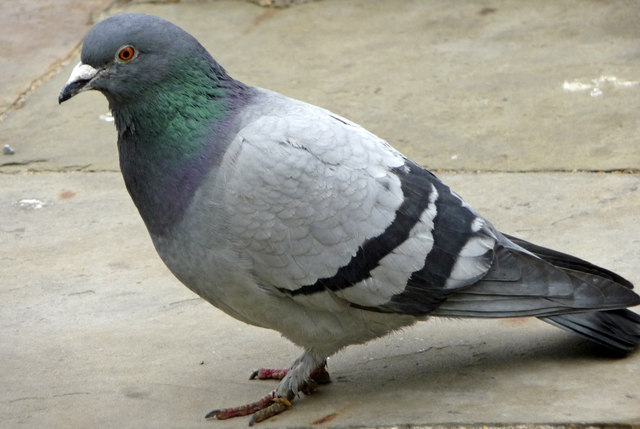
In the book, Sue points out the latest addiction, which she termed ‘pigeon post’. This is where in any spare moments people think, ‘Oh – I’ll just go and check the email.’ Then once logged on may spend ages on their correspondence, quite forgetting the family. I do this all the time. I am addicted.

pigeon

Sue Palmer compared this addiction to the experiments the psychologist, B. F. Skinner, did on pigeons. He found if you gave pigeons intermittent, unpredictable rewards, the pigeons would peck enthusiastically at a particular spot – even to the point some would peck their beaks totally blunt. Emails are my intermittent rewards. I am a pigeon and probably just as stupid as one in that I am not even sure I want to put it right. Getting emails makes me happy, especially if they contain good news.

I reassure myself by thinking back to when I was a child. I remember how I loved playing in the street, my parents never knew half the things I got up to, and I was always okay. In the same way, my now grown-up children are just as happy to be getting on with things on their own. Occasionally they just need to check that their mum is still okay.

So my top-tip today is if you are interrupted don’t try to finish the sentence just STOP! It is easier to get back into the flow if the sentence is half-way through.

An interview with… Nicola Morgan

One of the first interviews I did when my Writing 4 Children column launched in 2016 was with the esteemed Nicola Morgan. She is one of my writing idols.

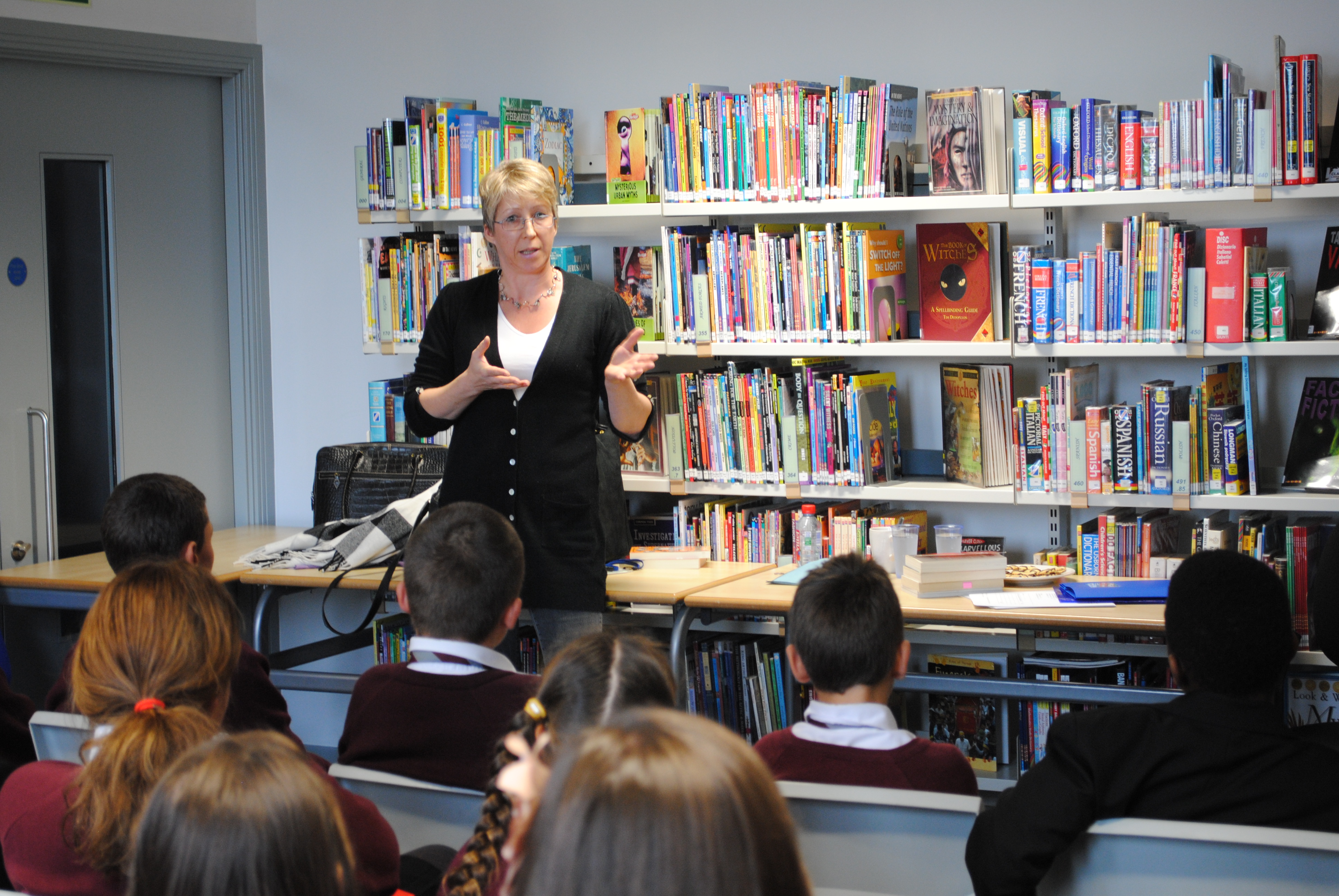
At St Pauls Manchester

She had a strong, realistic  message to tell people who wanted to write for children as a full time career.  Nicola said:

You will have to do school events

They are exhausting, can be demoralising and will sometimes test your resilience beyond its max. They can also be soul-nourishing, highly rewarding and are almost always eye-opening, which is good. Try to take all their benefits and learn to love your audiences by focusing on the vast majority of the students who are listening avidly. And when something undermining happens, laugh (afterwards, not at the time).

You will be seriously underpaid for almost all your children’s/teenage writing

If you want to earn a lot, you need to write a certain sort of book, usually a trilogy/series (though many of those fail before they’ve started.) And you’ll still need luck. Make sure you are paid for events because they can be your only way to survive financially.

Bad things, small or big, will happen in your career

They will often be things you have to keep to yourself or a close circle of friends. This is true for all artists who put their heart and soul out into the world to be judged by others. So value those friends, as they will support you in those bad times. And realise that all the multi-garlanded, apparently uber-successful authors you’ve been following on Twitter etc also have moments (if they’re lucky or incredibly thick-skinned) and months (the rest of us) of darkness and gloom, that we all have angst and inadequacy written through our veins, and that there are more ways to get under the skin of a creative person than there are ways to write a novel. But the emotional rewards are huge. Being published and read is worth the pain.

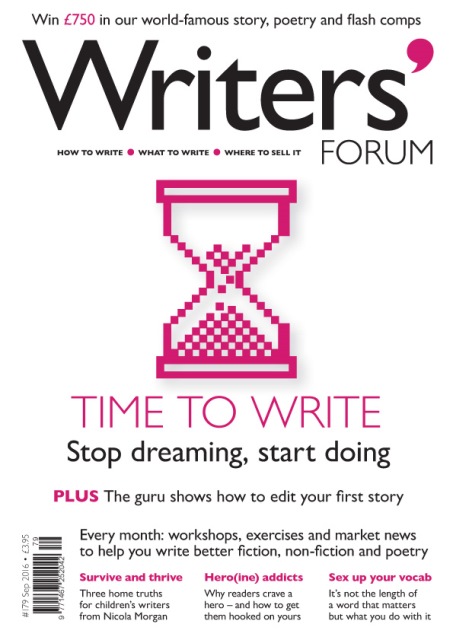
wf179-september-2016

Nicola’s tips for children’s book writers were read a lot of modern children’s books and if your book has a message keep it hidden.

You can read the full interview in the #179 Sept 2016 issue of the national writing magazine, Writers Forum.

Find out more about Nicola Morgan and her writing at: www.nicolamorgan.com or on Twitter @nicolamorgan

Keep Focused

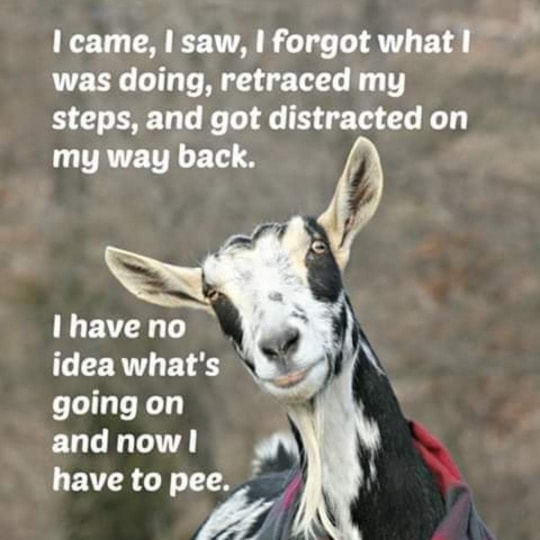
This is a real problem for me. I am very easily distracted. Today I saw this post on Facebook and thought it really summed me up. I can’t remember who posted it now but thank you.

keep focused

Over the years I have developed strategies to help me keep focused on my writing. I thought I would share a few of them with you today.

I have found making lists of what I need to do helps. But I have narrowed it down to three things a day. Each day I ask myself:

“What three things do I want to achieve by the end of today?”

This helps me prioritise and makes my goals manageable. I have even started messaging my now grown-up children three tasks they should concentrate on each day. My daughter has even messaged me on occasions to ask what her tasks for the day are.

However, it is no good if you make the task too large such as: ‘Write a picture book’. This is not helpful. The task for writing a picture book needs to be broken down into smaller parts such as:

  1. Brainstorm ideas for a picture book.
  2. Decide who is going to be the main character.
  3. Think about what the main character wants to achieve.

This may be enough for one day’s work.

The other thing I have found that helps me to concentrate is tidying my study.  When I have been working on a commission I tend to accumulate books, printed research and pieces of paper with rough notes doodled on them that pile up on the desk and the floor. Before I can start a new commission I clear everything away so I can start fresh with no potential distractions. A tidy environment helps me to keep a tidy mind.

I hope you find these ideas helpful.

Investigate Viewpoint

No matter what the viewpoint you need to think:

Is that my character speaking, or is it me?

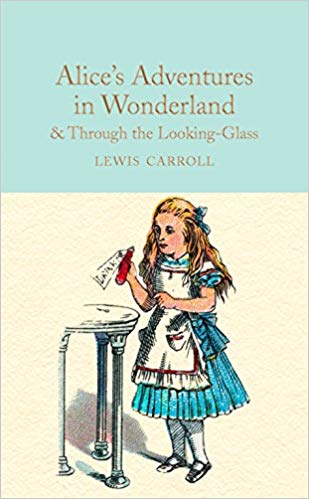
If you change a text into the present tense it could become more immediate and subtly changes the feel of the story. Try it yourself and then compare this to a more traditional narrator style viewpoint, like Lewis Carroll in Alice in Wonderland.

Alice2

In an action-packed writing scene, it is easier to use third person, as there is not so much reflection and interpretation to stop the flow of the action. The reflection requires prior knowledge of what is going on and tells the reader how they should feel about this. We need to avoid telling the reader what to think.

A tighter viewpoint helps the reader to see and feel the action. The actions needs to go at the speed of the character – seeing what they see, in the order it happens. Strangely, the third person, even if it is written in the past tense gives the experience of reading it as it happens. In intense danger scenes, a tighter viewpoint adds more tension but, you can pull back this tension in other scenes to let the reader reflect.

Student Reading a Book

With viewpoint I think it is better not to be overtly original but, to let your story do the talking. A lot of YA books are written in first person. When writing in the first person and present tense you have to consider how much the reader is supposed to know at any one time.

The omniscient narrator, such as the Victorian, ‘My dear reader’, can work in a different way but it distances the reader. The omniscient narrator where you don’t even change scenes to change viewpoint might suit a big saga but I think it is distracting in a children’s book. When using the omniscient narrator, it is important to make sure the character is mentioned before you change viewpoint.

A character narrating back-story can slow the pace. When adding back-story, the writer needs to seriously consider if it is really needed. In my opinion, it is better to take out this narrator intrusion. It slows the tension and you may find you do not need all the detail. Ask yourself:

Why you are putting it in?

It is good to experiment with viewpoint within a story as it is such a large part of the story as a whole. But remember it is often better to read a book and not remember what person it is written in – it is the essence of the story that is remembered – the viewpoint is so entwined and so good it disappears.

Dream a little dream…

Does anyone else out there dream their stories?

sleep
Well, I have very vivid dreams and more often than not I remember them when I wake up. I can dream whole plot lines. When I was stuck on a plot of a recent book I was writing I would read where I’d got to in the story just before I went to bed and somehow when I woke up I had a vague story line. Granted I think the story probably needs a lot more work and maybe a lot more sleep.

20160630_140748

I keep a notebook by my bed most nights and often write down the stories I have dreamt. One day, I am going to write them all up as different novels. Right after I finished the commission I am working on at the moment. But for now, I can officially say I am still working even when I am asleep.

Face Your Fears

I am sure I am not the only one who has got to a point in my writing and lost confidence in what I am doing. I often get about half way through and realise there is still so much to do and  the end is still unclear and a muddle in my mind. Then I think what I’ve done so far is all utter rubbish and is only fit for the bin.

Maybe your manuscript is also full of gaps and glitches and your desk is like mine and covered with strange notes and ramblings that have lost all meaning because you – like me – are overwhelmed. Is the dreaded question storming through your head too?

How am I ever going to finish?

doubts

It is easy to lose faith and wonder whether it is actually worth the effort. The hard part is remembering this is NORMAL. It is how you know you are a real writer. We all get tired and disheartened. The trick is to take a deep breath and carry on.

The only way you can get over the hump is to face your fear and nagging doubts and get on with it anyway.

Force yourself to work through it.

Don’t think about it! Go on Try it!