
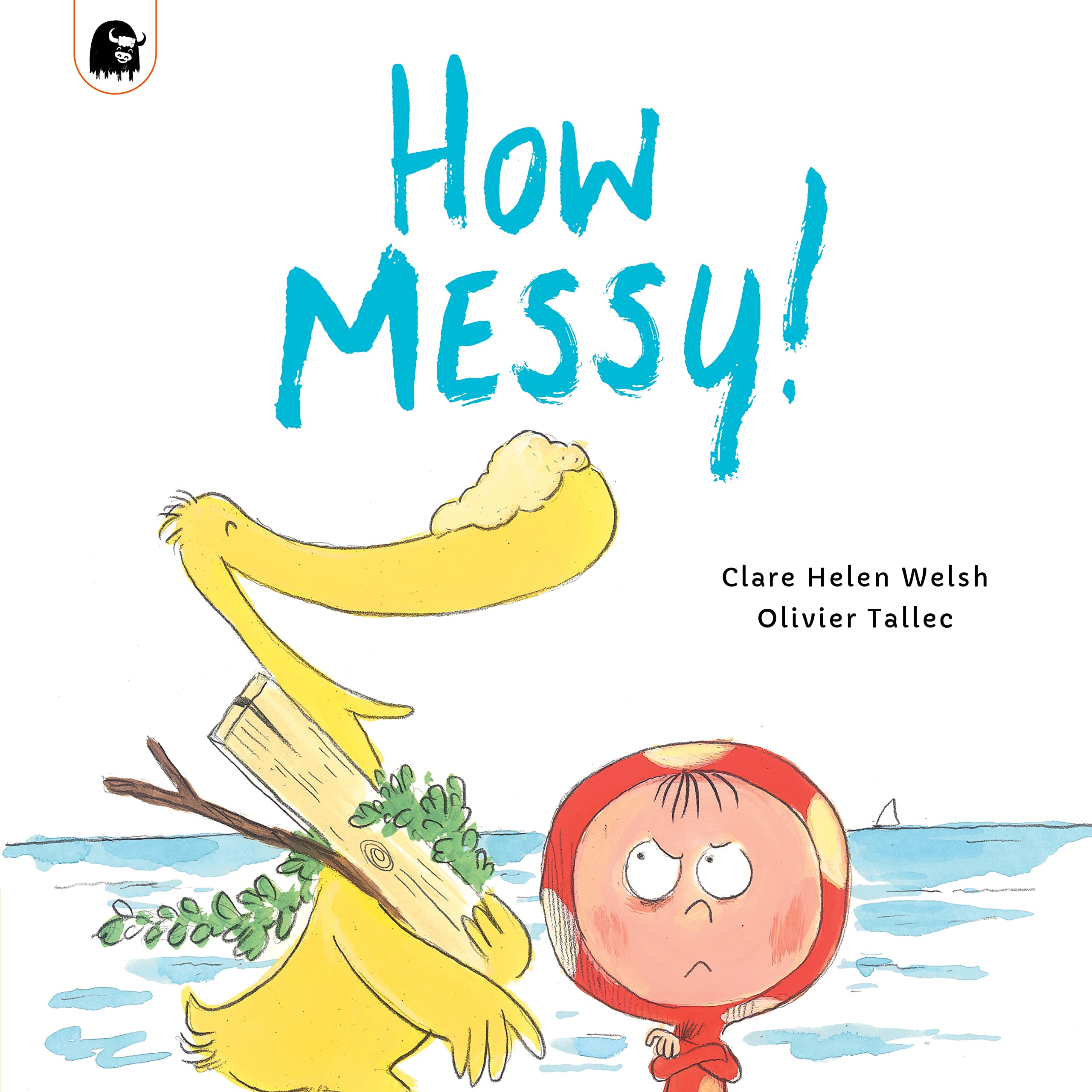
It is with great pleasure and excitement that I host my first ever blog tour. The blog tour is for renowned picture book writer Clare Helen Welsh who will be telling us about her latest book, How messy!

How messy! is the first in the Dot and Duck series written by Clare Helen Welsh and illustrated by Olivier Tallec. More titles in the series include How Rude! and How Selfish! and they are published by Happy Yak, an imprint of Quarto Publishing. How Messy! is about Duck’s very untidy habits, much to his best friend Dot’s despair.
********
Q&A session with Clare Helen Welsh
Thanks so much Clare for being the first ever of the blog tours featured on my blog. I love your picture books. This is the last stop of your tour so we have a lot to live up to. Let’s get started with the first question…
Tell us a little about the book and your inspiration.
How Messy! is the third book in the Dot and Duck series, illustrated by Olivier Tallec and published by Happy Yak, an imprint of Quarto. It features two characters – Dot who hates mess and Duck who hates tidy! In the story, the friends learn the importance of teamwork and to embrace each other’s differences.
The book started out life as a title! When the first book in the series went to acquisitions, I was asked to suggest some follow up ideas if the books were a hit (Happily there were!)
The Dot and Duck books are very much inspired by family life and my time as a school teacher. In How Messy, which is set near the beach – I love the beach! – Dot and Duck are partly modelled on my husband and me (although I shan’t tell you who is who!) There’s also a lot of younger me in Duck, too. My family often tell me I was messy when I was growing up, but I always (usually?!) knew where everything was. It was creative, organised mess that made perfect sense to me!
Do you have a favourite spread in the book?
That’s a hard question to answer – I love all of Olivier’s artwork! There’s a twist at the end, which I think has been brought to life wonderfully. But to avoid spoilers, I’ll choose the spread where Duck is making pancakes but wearing most of the mixture. It feels very authentic to me!

Tell us about some of the other books in the Dot and Duck series.
How Rude! is the first book in the Dot and Duck series. Dot invites Duck to a tea party, but from the moment Duck enters the house, the tea party descends into chaos; from licking sandwich fillings to spitting tea, Duck gets ruder… and ruder… and ruder.

This book was followed by How Selfish! in which Dot and Duck find a stick. But Dot thinks it’s a sword and Duck thinks it’s a flag. Dot refuses to share the new toy and goes to any lengths to make sure Duck doesn’t try to take it. Both books have simple, funny, but ultimately touching arcs that we hope will appeal to any child who is learning what it means to be a true friend.

What was your writing process for the Duck and Dot series?
When Dot and Duck initially went on submission, the text was called ‘Luke and the Penguin Problem.’ Before that it was called ‘Don’t Poke the Penguin.’ It was written back in 2016 when I had a lot to learn (I still do, of course!) By the time we had signed contracts with Quarto, I had rewritten the text from first person, into third person, into dialogue only AND changed the animal and main character! I think there’s a lot to be said for being flexible with early ideas. How Selfish! Was the first story, but when I was asked to pitch alternative titles if the book were to be made into a series, the team felt How Rude! would be the stronger title to lead with.
With all the books in this series, I’ve known the ending before I begin writing and I start by jotting down a pitch line to sum up the takeaway, thinking of scenes that build to this point. My original pitch line for How Messy was ‘Dot hates mess and Duck hates tidy. On holiday together, can they find the perfect compromise?’ This helps keep me focused and allows me to see clearly what to put in and what to keep out. My pitch lines often evolve as the book is written, but there isn’t any space for waffle in a picture book so I find this helps.
Do you have any writing rituals?
How I write a book usually depends on the type of book, how well thought-through the idea is and if there is a deadline for it or not! These days I tend to start on the Notes pages on my phone, where there is less white space and less pressure to create something perfect. I always write in spreads and sometimes jump to the end or the crisis point – not necessarily writing in order. Then I email these notes to myself and beautify them in a word document. It’s less intimidating as far as first drafts go.
Is there a particular place you like to write?
I’m quite flexible as a writer and I can write pretty much anywhere – in bed, on the sofa, on the beach, in a traffic jam… I’ll refrain from saying on the toilet… in the bath! At the moment, I’m very productive in my living room, which is my office in the daytime. I have all my essential to hand – blankets, snacks, a drink, background noise and a pooch for company.
What writing advice would you give to people aspiring to be a picture book writer?
It’s not a new piece of advice unfortunately, but an important one. READ! Read books like the ones you want to write. Read the books you wish you’d written. Read books you like and books you don’t. Read unpublished texts such as those of your peers. Do read for enjoyment but also read critically. Join a critique croup and get into the practice of analysing what works and why and what works less well. These skills will help you in your own writing and will also give you a sense of the industry, so you can find your way in.
Anita, thank you SO much for having me on your blog. I’ve really loved answering your thought-provoking questions – a very lovely way to celebrate How Messy!
And thank you Clare for giving us such a useful insight into the world of writing picture books. I love getting a peek into an author’s writing process. It has been fun being the last stop of your How messy! blog tour.
********
You can find out more about Clare Helen Welsh and her books on her website: www.clarehelenweslsh.com, on Twitter @ClareHelenWelsh and on Facebook: Books by Clare Helen Welsh.
Take a look at the schedule below to catch up with the other blog stops that have hosted Clare’s How Messy! tour.
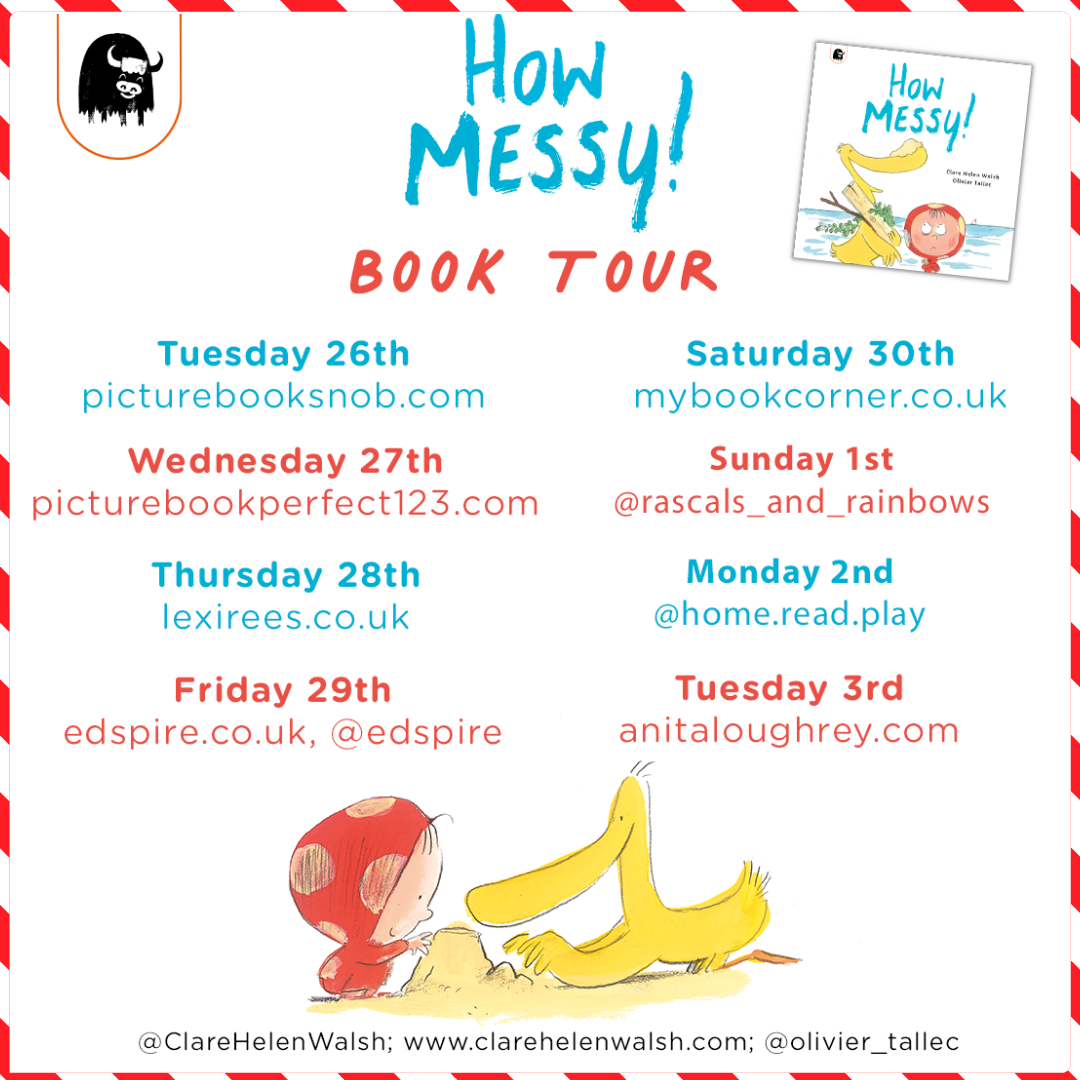
How messy! and the rest of the Dot and Duck series is available to buy now from your local bookshop, or online at uk.bookshop.org, an organisation with a mission to financially support local, independent bookshops.
I have previously reviewed The Perfect Shelter by Clare Helen Welsh and Åsa Gilland. You can read the review here: Book Review: The Perfect Shelter.


 Much To Do About Writing