Category Archives: Anita says…

Book proposal

A few weeks ago on my blog, I talked about how a personal synopsis, or breakdown, of your novel can be a useful planning tool and map to help you complete your novel. See here. I mentioned that a synopsis for an agent or editor is slightly different and should be kept to an A4 side of paper. A book proposal for a non-fiction book is not the same as a synopsis. Today I thought I would explain how and why non-fiction book proposals are different.

books

When writing non-fiction books you do not necessarily have to finish the book before you submit your idea. If the idea has not been commissioned in-house you will need to give the publishers an idea of the layout of the book and why you are the best person for the job. In my opinion, the last bit is the hardest part.

Slushpile Challenge

Very recently, I was one of the winners of the July 2019 Slushpile Challenge. For the challenge we were asked to submit:

  • Outline of the book, including why you think there is space for it out there
  • Some market research on competing titles in the market-place, which might include publisher, pub date etc
  • Target readership, including (if applicable) any syllabus/key stage tie-in
  • Why you are the writer to tell this story
  • A sample of up to 2500 words of text (give or take) from your proposed narrative non-fiction title.

This is exactly the same sort of information you need to send to a publisher for a non-fiction book proposal, whether it is creative non-fiction or not.  I suggest you use these headings to help you. In the outline of the book I usually include a chapter breakdown.

Many of my books are published by QED one of the many imprints of Quarto.

Quarto provide submission guidelines online, which give an excellent idea of what you need to include in more detail. Each division has its own editorial focus.

If you don’t know what publisher might be best suited to the type of book you want to write, it is a good idea to take a look at the Writers & Artists Yearbook. There is a version specifically on writing for children.

Paddington Station

My study can be a bit like Paddington Station. I do tend to leave the door open so my family walk in and out whenever they please. But, even if I shut the door they walk in and out anyway. I suppose, they all know that is where they will find me. In fact, I think they purposely wait until I am fully engrossed in a piece of writing before they walk in and interrupt me.

Paddington station

One of the other times they all like to congress in my study is when I’m on the phone. Yep, I can guarantee anybody who is in the house, not just the kids, will come into my study if I need to make a phone call.

phone

Trouble is it takes ages for me to start to write and just as long to get going again when I’m interrupted. I frantically try to finish the sentence before I stop to see what they want.

I use to worry the reason they interrupted me was because I was neglecting my children and maybe I shouldn’t be working or being distracted by my PC when they are home, after school and in the school holidays, etc. But, I do like it in my study. I used to believe they would not be competing for my attention like this if I just switched the computer off, or made the phone calls whilst they were at school, or in bed. Maybe, it is a problem of working from home? Organising the time around the children is easier said than done.

I was re-reading the other day a book called, Detoxing Childhood by Sue Palmer . In it Sue made some very valid points about being a parent in the 21st century. I wrote a review of the book for Write Away many years ago. See: Detoxing Childhood.

In the book, Sue points out the latest addiction, which she termed ‘pigeon post’. This is where in any spare moments people think, ‘Oh – I’ll just go and check the email.’ Then once logged on may spend ages on their correspondence, quite forgetting the family. I do this all the time. I am addicted.

pigeon

Sue Palmer compared this addiction to the experiments the psychologist, B. F. Skinner, did on pigeons. He found if you gave pigeons intermittent, unpredictable rewards, the pigeons would peck enthusiastically at a particular spot – even to the point some would peck their beaks totally blunt. Emails are my intermittent rewards. I am a pigeon and probably just as stupid as one in that I am not even sure I want to put it right. Getting emails makes me happy, especially if they contain good news.

I reassure myself by thinking back to when I was a child. I remember how I loved playing in the street, my parents never knew half the things I got up to, and I was always okay. In the same way, my now grown-up children are just as happy to be getting on with things on their own. Occasionally they just need to check that their mum is still okay.

So my top-tip today is if you are interrupted don’t try to finish the sentence just STOP! It is easier to get back into the flow if the sentence is half-way through.

Writing a Synopsis

If you are having problems with your plot and find that your story is meandering all over the place with no real purpose you may benefit from writing a personal synopsis.

This does not mean writing pages and pages of detail, outlining the whole story before you begin. A synopsis can be a few simple sentences, or a couple of paragraphs that sketches the timeline of the beginning, middle and end of your story. This is not the same as the synopsis you use when submitting your work to agents and editors. A submission synopsis is usually written when you have finished the book and should outline the main plot points including the ending.

A personal synopsis should be the kind notes that serve as memory joggers.

railway track

Often beginner writers do not think the entire story through. They start on a high with a brilliant idea but then they hit a cul-de-sac. An outline synopsis will ensure you have a clear idea of where your characters are going and what their problems are. Ask yourself: Who, What, Where, When, Why and How.

6 W's

Having an ending for the main plot line in mind that you can aim for will keep you on the road to complete your novel, picture book, short story or non-fiction book. Giving yourself a rough framework to work to prevents you from being tempted to go off on a tangent and will help to avoid a weak and coincidental conclusion.

A fiction submission synopsis should also include the 6 W’s. Yes, I know How does not begin with a W but… anyway! It should also give an agent or editor an indication of your unique selling point, whether it is your character, your voice, setting or even scientific / historical / mythological connections.

A non-fiction synopsis is totally different and for editors and agents it is more of a book proposal than a synopsis.

Working title

If I have not been given a title by the publisher who has commissioned the book, I often start by giving my books a working title just so I can have something written on the page. A blank page is daunting and I always write something to start myself off even if I go back and change it later.

Inkedblank book_LI

It is better not to get too attached to your working title as publishers often want to change them anyway. I learnt this the hard way and it was definitely a case of killing your darlings. Nowadays I never expect the same title to be on the finished published article, short story or book. I have written quite a few short stories for a variety of national women’s magazines and most of them were published under different titles.

However, it never hurts to give the title of your stories, features and books some serious consideration as this will be the first words the editors and publishers read when looking at your submission, whether it has been commissioned, or not. First impressions are important. A title that stimulates interest or intrigue stands out more amongst the competition, especially if it is on the slush pile. 

books

A good working title will  open up the meaning of the story, revealing layers of character, theme and subtext that goes beyond the actual plot. It will also give the editors and publishers an idea of what the book is about and the tone of the book.

A working title should inspire you to write, fill you with confidence and help you to get your words onto paper because it focuses you on the story. This will give you the momentum to move forward.

When I first started out writing for children I took my first three chapters to a critique group meeting and they got so hung up on the working title even though  I explained it was just a way to focus me on the themes of the book, they did not really give me any advice on the essential first three chapters.

Emotional reaction

Emotional reaction is key to producing 3D characters in your writing.

snake

To make your protagonist and antagonist come alive you need to show their reactions to other characters and events. this will show the reader what frame of mind they are in and help to engage their sympathy and understanding. Even the bad characters can become loved if their reactions are based in emotional motivation.

Emotional reaction is a powerful tool. It helps you as the writer get to the heart of the characters and their problems. This can often be achieved in just a few well structured words.

Think about all your characters and how they would react to seeing a snake – would they scream and run away, would they pick up a stick and try and fight it off, would they freeze and be unable to move, or would they try to talk to it and befriend the snake, or would they react in an entirely different way.

How would these characters react to seeing a snake?

Each of these reactions portrays their different personalities. 

Now think about how these characters would react if they came across a snake.

How would your characters react to a snake? Would all your characters act in the same way? Or do they each have their own particular way of reacting?

And yes… you are right… it does depend on the snake and the snake’s own personality.

Consider the Environment

People do not develop in isolation they are shaped by the world in which they live and grow.

Multiethnic Diverse People in a Circle Holding Hands

There are so many factors that can influence a person’s character and beliefs, such as:

  • their family background and structure,
  • social class,
  • available opportunities,
  • encouragement and ridicule from peers and family,
  • how they were raised and by whom,
  • their friends and how they were raised,
  • money,
  • outlets for their talents and skills,
  • pets,
  • school,
  • subjects chosen to study,
  • the politics and structure of the society they grew up in,
  • whether they grew up in times of peace or war.

All these things should be considered when developing your own characters for your writing. Everybody is different. It is what diversity is all about.

I often spend hours creating character sheets about my characters and not just the main protagonist. I want to know everything about them and I think how these things would influence what they say and how they react. It is more than just jotting down their physical detail.

what sayin

My writing group once laughed at me when I showed them my five-side character sketch for my main protagonist.

After I have developed the character I try to think of scenarios (not necessarily to do with the story I am writing) and jot down how they would react if they were angry, happy, sad, etc. I really want to delve into their mind, know what they are thinking and how they would phrase things in different states of mind.

Try it for yourself and see what happens.

Keep Focused

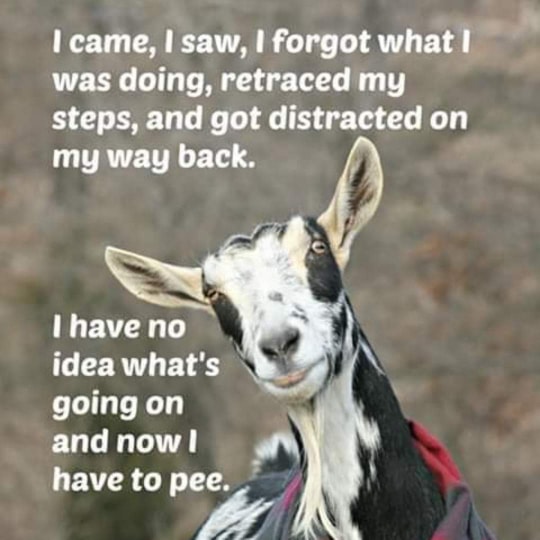
This is a real problem for me. I am very easily distracted. Today I saw this post on Facebook and thought it really summed me up. I can’t remember who posted it now but thank you.

keep focused

Over the years I have developed strategies to help me keep focused on my writing. I thought I would share a few of them with you today.

I have found making lists of what I need to do helps. But I have narrowed it down to three things a day. Each day I ask myself:

“What three things do I want to achieve by the end of today?”

This helps me prioritise and makes my goals manageable. I have even started messaging my now grown-up children three tasks they should concentrate on each day. My daughter has even messaged me on occasions to ask what her tasks for the day are.

However, it is no good if you make the task too large such as: ‘Write a picture book’. This is not helpful. The task for writing a picture book needs to be broken down into smaller parts such as:

  1. Brainstorm ideas for a picture book.
  2. Decide who is going to be the main character.
  3. Think about what the main character wants to achieve.

This may be enough for one day’s work.

The other thing I have found that helps me to concentrate is tidying my study.  When I have been working on a commission I tend to accumulate books, printed research and pieces of paper with rough notes doodled on them that pile up on the desk and the floor. Before I can start a new commission I clear everything away so I can start fresh with no potential distractions. A tidy environment helps me to keep a tidy mind.

I hope you find these ideas helpful.

Flat fees v Royalties

This is a very old debate in the world of writing educational resources. These books were written by me and my editor at the time Steve Rickard. He wrote the non-fiction at the front of the book and I wrote the stories at the back of the book. They were published under the pseudonym Cathy West. I am very proud of these books. I received 5% royalties as they were co-written. I do not think I have made much from these titles although, they are excellent for school visits.

Starstruck Collage

In the Society of Authors’ magazine The Author, Winter 2006 issue, Jenny Vaughan said amongst other things:

You should ensure you’re not being taken advantage of.

This is good advice. It is so easy for all authors to undersell themselves. However, both forms of payment have their advantages and disadvantages.

On the plus side, flat rate fees are very useful as you can receive an often vital income quickly, whereas royalties provide a more long-term gain. But sometimes, you can spend ages writing a book, which is to be paid by royalties only and have very little come back if it does not sell well. Whereas, with flat rate fees it often means you sign your rights away and you are usually writing to a very specific and tight brief. I wrote these books for a flat fee. I am very proud of these books too. They have been sold all over the world in many languages and are still in print. Sometimes I wonder how much money I could have made if I were getting royalties.

Season collage

Remember you should re-negotiate your fee on second editions. The publisher should pay a top-up fee and you should check the rights revert back to the author if the book goes out of print. The NUJ provides a very useful Freelance Fees Guide.

Investigate Viewpoint

No matter what the viewpoint you need to think:

Is that my character speaking, or is it me?

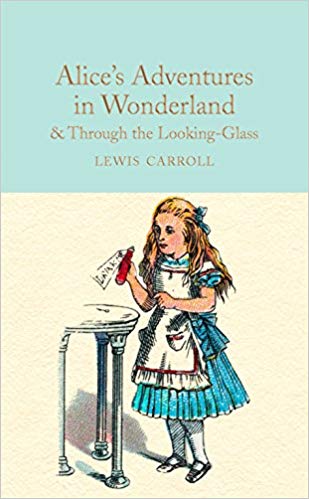
If you change a text into the present tense it could become more immediate and subtly changes the feel of the story. Try it yourself and then compare this to a more traditional narrator style viewpoint, like Lewis Carroll in Alice in Wonderland.

Alice2

In an action-packed writing scene, it is easier to use third person, as there is not so much reflection and interpretation to stop the flow of the action. The reflection requires prior knowledge of what is going on and tells the reader how they should feel about this. We need to avoid telling the reader what to think.

A tighter viewpoint helps the reader to see and feel the action. The actions needs to go at the speed of the character – seeing what they see, in the order it happens. Strangely, the third person, even if it is written in the past tense gives the experience of reading it as it happens. In intense danger scenes, a tighter viewpoint adds more tension but, you can pull back this tension in other scenes to let the reader reflect.

Student Reading a Book

With viewpoint I think it is better not to be overtly original but, to let your story do the talking. A lot of YA books are written in first person. When writing in the first person and present tense you have to consider how much the reader is supposed to know at any one time.

The omniscient narrator, such as the Victorian, ‘My dear reader’, can work in a different way but it distances the reader. The omniscient narrator where you don’t even change scenes to change viewpoint might suit a big saga but I think it is distracting in a children’s book. When using the omniscient narrator, it is important to make sure the character is mentioned before you change viewpoint.

A character narrating back-story can slow the pace. When adding back-story, the writer needs to seriously consider if it is really needed. In my opinion, it is better to take out this narrator intrusion. It slows the tension and you may find you do not need all the detail. Ask yourself:

Why you are putting it in?

It is good to experiment with viewpoint within a story as it is such a large part of the story as a whole. But remember it is often better to read a book and not remember what person it is written in – it is the essence of the story that is remembered – the viewpoint is so entwined and so good it disappears.

Dream a little dream…

Does anyone else out there dream their stories?

sleep
Well, I have very vivid dreams and more often than not I remember them when I wake up. I can dream whole plot lines. When I was stuck on a plot of a recent book I was writing I would read where I’d got to in the story just before I went to bed and somehow when I woke up I had a vague story line. Granted I think the story probably needs a lot more work and maybe a lot more sleep.

20160630_140748

I keep a notebook by my bed most nights and often write down the stories I have dreamt. One day, I am going to write them all up as different novels. Right after I finished the commission I am working on at the moment. But for now, I can officially say I am still working even when I am asleep.