Category Archives: Anita says…

Write Like What You Talk

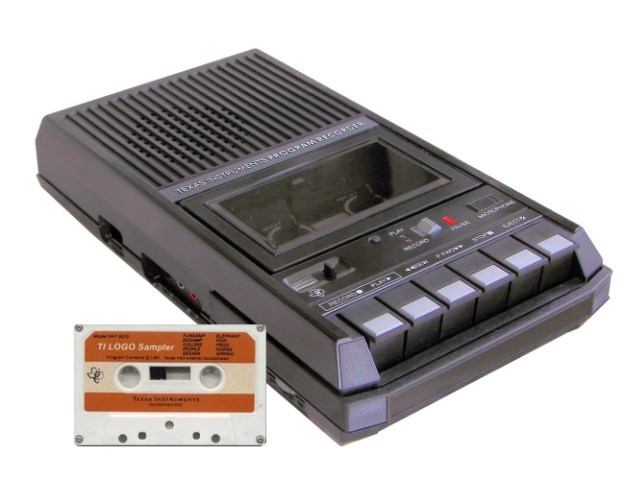
You can cheat the eye but you can’t cheat the ear, so always read your story aloud. Stories are oral and this is why voice is important. So write like you talk. It really is as simple as that. Say something. Then write it. Record it so you can really listen to what you have written.casette recorder
If it sounds stilted or wooden, stop and think about what you’re trying to say. Say what you want to convey aloud. Then write it down. A group reading or performance is even more useful since each reader, like an actor, will deliver their lines of dialogue at a different pace. When writing dialogue less is more, so use limited speech tags.

However, it is not only the way the characters talk that is important, spend time trying to understand why your characters say the things they do, and how they feel about it. Think about the characters and their motives:

  • What would she do?
  • What happens next?
  • What would she say?

Make these motives plausible. Get into the body of your character.
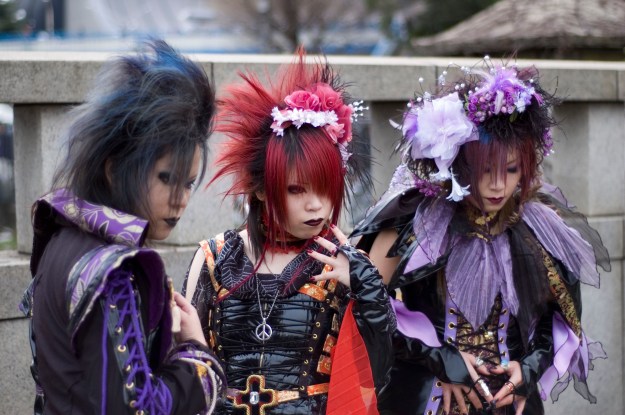
costume

Create character sketches and think about their off the page activity so you can step into your characters shoes and know how they would react and speak in a given situation.

  • Where do they live?
  • How do they talk?
  • What non-verbal mannerisms do they have?
  • What food do they like?
  • What is their taste in music?

All these things can contribute to developing your character’s voice. I spend many hours talking aloud to myself and acting out bits of my WIP just to see how it sounds and works with the action. Oh yes, and don’t forget to use the correct punctuation so your reader knows how it should sound. A quick speaking exercise you can try is to say these three sentences aloud. Notice how the emphasise is on different words in each sentence.

You’re going to be in Strictly Come Dancing.

You’re going to be in Strictly Come Dancing!

You’re going to be in Strictly Come Dancing?

This doesn’t mean your whole book should be full of exclamation marks though. Too many exclamation marks is off putting and in my opinion lazy writing!
Market Research

One of the most difficult things about breaking into children’s writing is finding the right market for your manuscript. Many new writers are in such a hurry to be published they send their manuscript out to as many publishers as they can and often before it has even been edited properly. This is a big mistake.

It has also been recommended that you don’t write a word until you have a firm contract. In practice this often does not work as for educational writing, the deadlines are so tight the contract often does not arrive until halfway through a project or even after you have finished writing the book. Getting a commission before you start to write may be true of educational work but, less true for fiction. Even so, if you are interested in writing for the education market, it is worth writing and asking for any writer’s briefs. That’s information about projects they are developing and not their underwear.

pants

Don’t send picture book manuscripts to publishers that only print educational non-fiction, or primary school educational non-fiction to a publisher that focuses on secondary education. I know this seems obvious, but we hear over and over how writers send their work to inappropriate markets. It’s important to research your markets regularly as sometimes publishers who used to publish picture books may only be concentrating on mid-grade now.

OLYMPUS DIGITAL CAMERA

Research the different publishers and what they produce. Look at their catalogues online, or go to book fairs and pick up a copy of their new catalogue, or go to an independent bookstore and browse.  Your local library will have books publishers have previously published, which you can browse and get a feel for the publisher’s style.

Make lots of notes. Look at the titles and the title page with current editorial contact information on. Pay close attention to the focus of the books. The more time you spend on this preliminary research, the more likely you’ll be to find the right publisher for your work.

Meeting Deadlines

One of my plus points is that I am good at multi-tasking. An important requirement of multi-tasking is setting deadlines.

Whenever, I start a new job I always ask, ‘When do you want it done by.’ Often the reply is as soon as possible but, I find this is not helpful. I prefer to have someone say ‘I want it by next Tuesday,’ or ‘Ten o’clock tonight at the latest.’ This keeps me on track and helps me to organise my workload. If I don’t set myself these time limits I find myself procrastinating and time-wasting by staring out the window or my worse vice, playing computer games.

clock

Deadlines have to be reasonable, whether I’m setting them for myself or they’ve been set by an editor. Some deadlines are tight; rush jobs come up, emergencies occur, and then the pressure is on. Most of the time, it’s possible to merge tasks, working for a while on one thing and then a few days on something else and get it done without undue stress. Sometimes I just need time out from a job and I am pleased I can work on something else to take a break.

WP_20170709_17_17_16_Pro

When I have deadlines set for me, I always break them into smaller tasks, giving myself my own time limit for each chapter or section. It’s nice to give myself a little reward when I achieve it too but, often the personal satisfaction of knowing I achieved what I wanted to do is reward enough. I work within the time available and I’m an organisation freak so this method of working suits me fine.

I would be interested to know how you do it. Do you find it easier to write to deadlines?

My Writing Tips

Here are some more writing tips that you may find useful. They are not in any particular order.

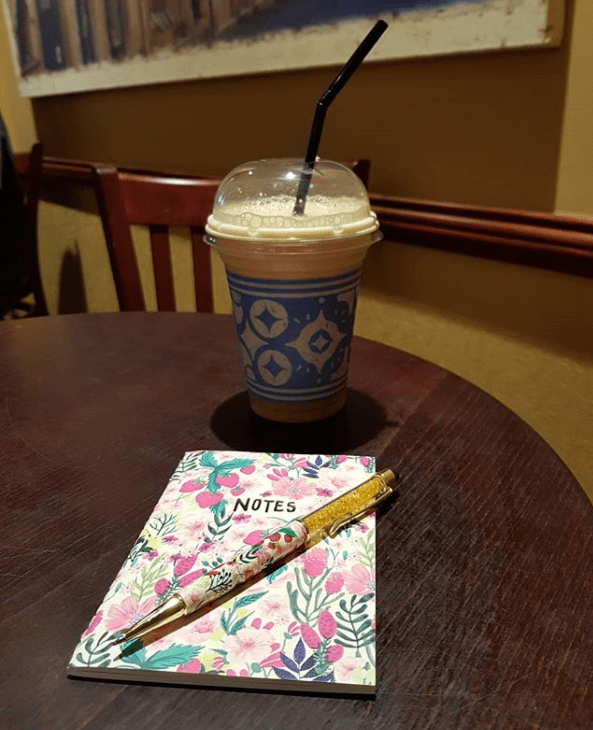
notebook and pen2

  • If you want to write a big book, pick a big theme.
  • Write rich characters with rich backgrounds (and I’m not talking about money.)
  • Finish each chapter on a cliffhanger.
  • The plot must race along at breakneck speed.
  • Mix fact with fiction so that the reader does not know where the truth ends and the fiction starts.
  • Be clear of all the underlying themes and what is going on in the background.
  • Look at the opening – does it grab you?
  • Think about the title.
  • A good story has a great plot and loads of action.
  • Be careful the ending is not an anti-climax.
  • Make up your own secret society if you want.
  • The ‘What if…?’ button, is the most important key on the keyboard.

Characterisation

Something that has always interested me is characterisation.

When I write fiction I always start with the character. I decide who my protagonist is going to be and what interesting character traits that could have. For me, character comes before plot. I always do a character questionnaire that I have devised to get all my ideas down on paper before I forget them. The questionnaire is designed to make me think more deeply about my characters. I use it in my creative writing workshops.

I am very aware that in a children’s book the protagonist needs to be a child. but, not any old child – it needs to be a child who is pro-active, brave and can use their initiative. This is true of all fiction. The characters can’t just sit there and expect other people to sort out their problems.

Alice

I have learnt over the years to trickle information about character into my writing rather than write blocks of character description. Andrew Melrose, the senior lecturer at King Alfred’s University in Winchester, once said in a workshop at a SCBWI Conference in Winchester, many years ago:

“Make your characters whole, make them real, make them people. Leak the clues deliberately and at a good pace. Let them evolve.” Andrew Melrose

I like this quote it is written in a few of my notebooks so I come across it regularly. I have always tried to follow this advice. However, I have also found that sometimes you need to state the obvious, as it is not always obvious to the reader. When you get to know your characters it is easy to forget that everyone else does not know as much as you do.

Ideas! Ideas! Ideas!

Apparently authors are always being asked where do you get your ideas from. You know what? I have never been asked this. Maybe because I am constantly spouting weird ideas, they are too scared to ask me.  I do have a rather vivid imagination.

But just in case you were interested here is a list of places I often find ideas. I put them in an idea cloud using: www.wordart.com

idea cloud2

There are loads of places brimming with ideas to be scribbled down. Sometimes I am like a tree with spreading branches reaching out into the far corners of the world, storing each idea on my leaves ready to drop them into a new book.

spreading branches.jpg

There are millions of ideas waiting to be explored. Some days though, it seems every topic imaginable has already been done, or that my ideas are too obscure for anyone else to be remotely interested. But, maybe that has more to do with the mood I’m in rather than the actual flow of ideas.

From the day I decided I want to be a writer, I started to carry a notebook on me. I write down everything, as my memory for trivia is awful. Talking to children, and listening to children, also gives me loads of ideas. Although, I am no longer teaching I am lucky, as I have three children who liked to get into mischief and that triggered lots of ideas too. My children are all grown up now but they are still a great source of new ideas.

Sometimes, I really have to make myself notice what is going on around me, as when I am working on a project, I find I mull it over in my mind and walk through real life in a daydream. Not such a good idea when you’re driving or trying to explain why you’ve reversed into the tree at the edge of the driveway… again.

tree

I tend to get my best ideas for things that I’m already working on when I’m reading something else. Surprisingly, it never has anything to do with what I’m actually reading. I think it might have something to do with cognitive processes. I did a degree in Behavioural Sciences, so I can say things like ‘cognitive processes’ and know what I’m talking about. Pity no one else does.

But what do you do with these ideas once you’ve got them? Often an idea needs time to grow and sort itself out in my head. I tend to draft scenarios in my notebook, then re-write them on the computer and print them off. You can tell if something is really rubbish when you see it in print. I also pretend I am the character and act out the scenes blow by blow in m,y study, or sometimes I act out little scenes in my head.

Opps! There’s that tree again.

The Book Selling Debate

Over the last few years more and more big bookshops have merged. I believe this reduces the range of books being sold. When I walk into a bookshop like W. H. Smiths and Waterstones I see the same old children’s books on the shelves and almost the same stationery too.

whsmithbookshelf

Specialist books are not getting the publicity or shelf space they have previously had. This is why educational publishers tend to sell direct to schools and libraries rather than to bookshops.

One thing is clear the retailing of books has changed dramatically over the past few years. Supermarkets, such as Tesco, sell books at discount prices and buying books over the Internet, as e-books or second hand, has meant it pays to shop around for the best deal. This is not good for the reader.

As a reader, if you prefer YA trade fiction, sports books or cooking books the contraction in range won’t affect you, as prices will remain low. But, if you prefer more specialist books, your choice will be drastically diminished and the prices will rise. And if you’re someone who just likes to browse, your browsing range is restricted to the choice Waterstone’s, and W. H. Smith’s have decided to offer. This has a knock on effect. It means new authors will find it increasingly difficult to place their books with publishers, as mainstream publishers are concentrating on finding and promoting the ‘big hits’.

To combat this, we should be supporting our smaller local, independent bookstores. OK it may be easier, and more convenient, to buy books online, or to buy them with the weekly supermarket shop but it is reducing your choice as a reader. If books were sold at fixed prices, I do not believe it would change this buying trend.

This is my opinion. What are your views?

The Publishing World

A big consideration is what the big booksellers want, as if they wont stock the book it wont sell. The book cover can sell the book so how good or enticing the book cover is look is an important part of an editors job. It is the cover that will give the book an edge with the booksellers. It is quite scary the impact the big bookstores have on the publishing world and when you realise they monopolise over 70% of the book selling market it is understandable why writing for children has become more competitive.

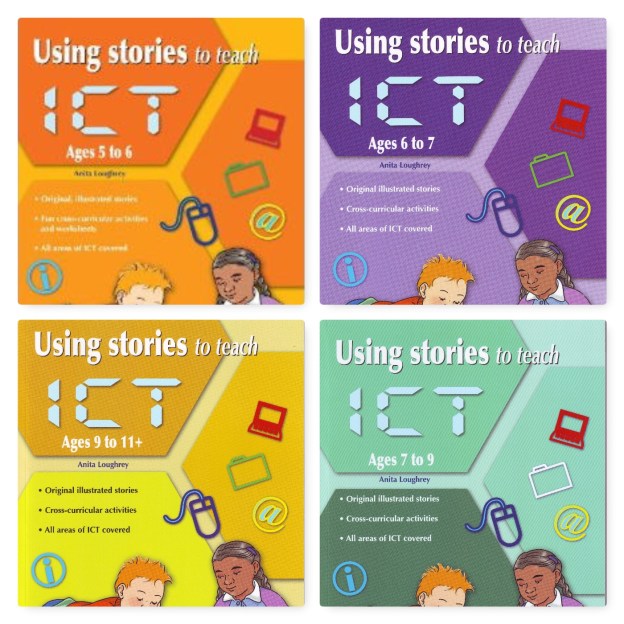
Using story to teach ict collageBook publishing is becoming more commercial and it is true, the big publishing companies increasingly will not back a book unless it is a sure bet. This may be why more authors are self-publishing – to prove they have a viable product. Publishing houses spend a lot of money on marketing. They budget for each book but the author has to get involved with marketing too. Once the book is released you don’t instantly become a best seller.

Nowadays, more gimmicks are being used to sell their books, such as collectable web cards and glitsy book covers that catch your attention on the shelf. Statistics show thin books, for the six-to-eight age range, did not sell as well as thicker books, because they were not so easy to see on the shelf. So publishing houses started to make fatter books. As you can imagine, this makes production more expensive. My Adventure Passport series were packaged in cute little suitcases.Adventure Passports Collage
Editors are an important role in publishing your book, whether you are writing for children, adults, education or trade. But they don’t have the scope to build a writer up over a number of books in the way they use to. Their job is to see the book all the way through not just to edit it. So be an original voice. Remember you are sending your manuscript to someone who reads over 500 a year. Ask yourself: Would an editor or agent jump off a bridge for your book? To spend so much time on a book, you have to be a fan.

Writing Pitfalls

These pitfalls are relevant to all novel writing, no matter what genre or age group you are writing for. They are also a great reminder for our writing at the beginning of a New Year.

falling

  • Positive characters. How can this be a pitfall? All characters need flaws. By the end of the book they discover a side to themselves they were never aware of and become a better person.
  • Not enough characters. Two characters are not enough; you need three so they can have a relationship.
  • Too many characters. More than four or five characters are difficult to monitor. The reader needs to understand how they feel about each other. Always have a main protagonist and sub-plot the others.
  • Over complicated set-ups. Great stories are simple with one great character, one great goal and good secondary characters. Whatever the set-up is at the beginning of the story it needs to be resolved.
  • Character has no influence on plot and vice versa. Events should escalate until the hero’s problem appear unsolvable. The aim of the protagonist is to restore life back to normal. Each event must be there for a reason. If it does not move the protagonist toward – or away – from their goal in some way, it needs to be cut.
  • Reliance on plot and coincidences. If the characters are not deep enough, they will not be able to resolve their problems.
  • Tension plateaus. There needs to be rising levels of tension.
  • Trust yourself to cut. The work and research is important and will still be there behind the story, like an iceberg.
  • Try not to control your writing too much. You can analyse too much. Trust your instinct. Often a fear of failure can hinder. Writers can be their own worse enemies.

I have used these ideas as a checklist whilst writing and editing my children’s books to keep me on track. I hope you find them as useful as I have.

What if…

We have just finished Christmas and I have been watching Christmas movies since early November. I love all the old favourites, especially the different renditions of A Christmas Carol.

EbenezerScrooge

The man who inspired Charles Dickens’, Ebeneezer Scrooge, real name was Ebeneezer Scroggie, a Scottish merchant who died in 1836. Scroggie’s tombstone was moved during redevelopment work and his real identity was temporarily lost and forgotten. His grave, lay unmarked just off the city’s Royal Mile for many years until Edinburgh authorities put up a memorial statue in his memory.

Dickens stumbled upon Scroggie’s tombstone in Canongate Cemetery in 1842, whilst visiting Edinburgh for a lecture. It was the inscription on this tombstone that gave birth to the mean, miserly Scrooge in Dickens’ brilliant novel, A Christmas Carol.

But, in reality, the tombstone read ‘meal man’ rather than ‘mean man’, which referred to Scroggie’s job as a successful corn merchant. The real Ebeneezer was well-known for his generous nature and often enjoyed a good party.

So why was the name and personality of the now most famous Christmas character in history, changed in this way? Maybe, Dickens wanted to protect himself from possible litigation by purposely changing his antagonist’s name, or maybe he simply misread the name on the tomb. We will never know. What we do know is, Dickens wrote in his notebook:

“To be remembered through eternity only for being mean seemed the greatest testament to a life wasted.”

So, was Ebeneezer a victim of Dicken’s poor research? Or were the changes more to do with the wild imaginations of a great writer who thought, ‘What if…’?