Category Archives: Book review

Book Review – Escape from Shadow Island

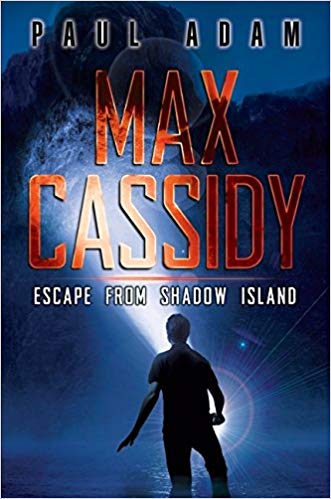
Title: Max Cassidy: Escape from Shadow Island

Written by: Paul Adam

Publisher: Corgi Books, Random House

Max Cassidy Escape from Shadow Island

At first it made me smirk when I read the Random House warning in the front of the book telling the readers not to try any of the stunts as home, as escapologists have had years of training before they attempt them… and then I read the first page. The hero Max is handcuffed, chained, put in a sack and lowered into a tank of cold water. He has thirty seconds to escape, or freeze to death. Red lights flashed in my head as I thought of my own sons and I honestly considered writing to Random House to tell them to put the warning in CAPITAL LETTERS.

This is the first Max Cassidy adventure in the trilogy. Max’s Houdini-style stunts have the reader gripped from the start. When Max finds out his father may still be alive, you are carried into one impossible situation after another and you can’t help wondering, ‘How on Earth is Max going to escape from this?’ There are several clever twists and the characters are very believable. This murder-mystery thriller action-adventure will have boys gasping for more.

This book review was previously published on the online Armadillo Children’s Book Review Magazine.

Book Review: Mustafa’s Jumper

Title: Mustafa’s Jumper

Written by: Coral rumble

Illustrated by: Charlotte Cooke

Published by: Wacky Bee

Mustafas Jumper

Mustafa’s Jumper is based on a poem of the same name also by Coral Rumble. The poem won the prestigious Caterpillar Poetry Prize in 2018. Rewritten in prose this story gives a child’s point of view of having a refugee who speaks no English, temporarily in your class at school and how they feel when the child is sent back to the country they were trying to escape from, which is highlighted by the single school uniform jumper that is left behind in the cloakroom.

It is written in Milo’s point of view, a quiet introvert boy whose best friend, Eddie, is the total opposite. Eddie get chosen to look after the new boy but has no idea what to say or do with a boy who can’t speak his language. Milo understands what it is like to feel like an outsider so he does what he can to include him: he plays with him, shows him what to do and where to go, and invites him home to tea. Milo and Mustafa become good friends.

Throughout the book it highlights patience and kindness by showing how Milo helps his new friend. The ‘show not tell’ plot is ideal for demonstrating and developing empathy in young children.

This is a great book for triggering discussion in the classroom about immigration, asylum seekers and refugees. There is a page at the back that talks about reasons why people have to leave countries and how sometimes people leave their homes because of war, a natural disaster or terrorism means it is too dangerous to stay. It also highlights how difficult it can be starting from scratch in a new country and explains some people like Mustafa are sent back. Could be used for discussion in both KS1 and KS2.

Book Review – Magnetic First Words

Title: Magnetic First Words – Days Out

Written by: Michelle Trowell

Illustrated by: Barry Green

Published by: Top That! Publishing

Magnetic First Words - Days

This hard-board book contains over 100 magnetic first words around the theme of Days Out. It has been designed to promote literacy skills, help hand-eye coordination and to encourage parent-child interaction. The pages are magnetic so the words and numbers do not easily fall off and the pages can be turned leaving the magnets in place.

Barry Green’s bold, double-page spread illustrations contain a lot of action, ideal for prompting discussion whilst matching the words to the pages. The children can also invent their own sentences linked to the lively pictures which include children playing by the lake, at the fair and on the beach.

The book contains many of the high frequency sight words the children are required to learn from reception upwards. In my opinion the book will make learning fun and will definitely help with sight recognition of these high frequency words (such as: we, she, look, on, can, etc.) as they have to search through all the words provided for the correct word to match.

Suitable for children aged three upwards, I think they would also make an ideal activity for KS1 children in a reading corner. You will need a pretty little pot to keep all the magnets in though once you have taken them out to use.

Book Review – Refugees

Title: Refugees

Written by: Brian Bilston

Illustrated by: José Sanabria

Published by: Palazzo

Edited by: Gemma Farr

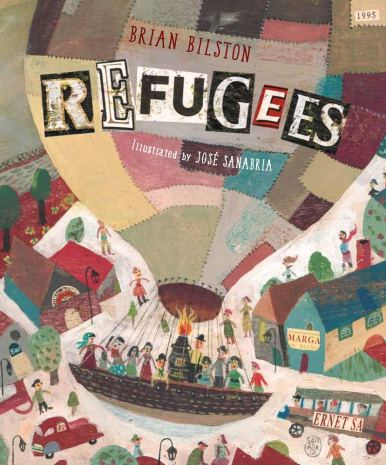
Refugees

For my 200th blog post I have blogged my review of Refugees by Brian Bilston and José Sanabria.

This is ‘cleverly crafted book picture book that highlights prejudices and bigotry. The poem can be read both forwards and backwards to show two opposing views about refugees. The provides a brilliant opportunity for discussion and a way to talk about fear and hate and the need for compassion, understanding and empathy. I particularly like the way the poem is laid out on the left of the spread when read forward and on the right side when it is re-written backwards in the second half of the book.

The colours used for the illustrations also help to convey the different moods and feelings, with dark sad-faced images to show the fear and mistrust and brighter, colourful images with happy smiling faces to demonstrate people from different races and cultures are all the same all around the world, doing the same jobs, same activities and everyday routines. An excellent book to promote debate.

The book would be ideal for PSHE classes not only at KS1 or KS2 but also KS3 and KS4 as the opposing views are relevant for all ages. It would also be interesting to have children craft their own similar poems to show opposing views on this and other subjects, such as climate change, conservation and even Brexit.

This book review was previously published on the online Armadillo Children’s Book Review Magazine.

Book Review – Great Buildings

Title: The Picture History of Great Buildings

Written and illustrated by:  Gillian Clements

Published by: Frances Lincoln

Great Buildings

Gillian Clements detailed illustrations are a fantastic introduction to the wide variety of architectural styles throughout history across the whole world. The writing is concise and informative providing a wealth of information to satisfy the most inquisitive of minds. This book would be great for dipping into as well as for looking in-depth at the history of specific buildings, their designers and the impact the buildings have on architecture today.

From a teaching point of view, Great Buildings, would be an ideal book for the classroom to supplement history topics on the Romans, Greeks, Aztecs and the Egyptians, as well as supporting technology topics on bridges, skyscrapers and ICT modelling. The book could even inspire a Religious Education topic on churches. I particularly like the way it has been organised in chronological order starting with the first homes, cities and ancient monuments right through to postmodern building, contemporary and beyond.

Great Buildings is unique in that it provides excellent timelines to show what other buildings were being constructed at the time in different parts of the world, to give an overall picture, which I have not found anywhere else.

This book review was previously published on the online Armadillo Children’s Book Review Magazine.

Book Review – How to be Extraordinary

Title: How to be Extraordinary

Written by: Rashmi Sirdeshpande

Illustrated by: Annabel Tempest

Published by: Puffin Books

How to be Extraordinary

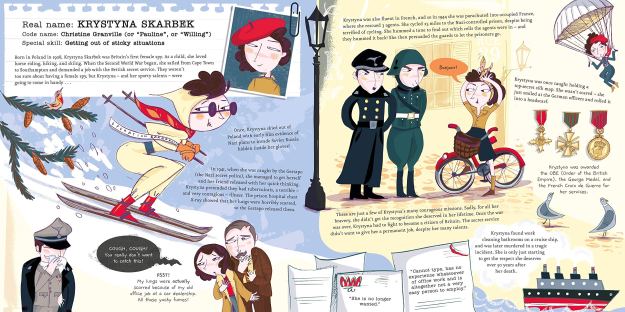
How to be Extraordinary is a non-fiction picture book containing the real-life stories of 15 extraordinary people from all over the globe, who have made incredible achievements. There is a good mix of well-known and lesser-known males and females from a wide range of nationalities and backgrounds. Each person is presented in a double-page spread, which outlines where they are from, their childhood, beliefs, jobs and their greatest accomplishments despite all obstacles, with inspirational quotes to encourage others to follow their dreams. My favourite quote is:

“What would you like to be remembered for?” (Abdul Kalam)

It is aimed at ages 5-7 years (KS1) and meets the requirements of the history programmes of study for KS1 as it documents the lives of significant individuals who have contributed to national and international achievements. The illustrations are bold and colourful. They catch the eye and will keep young readers turning the pages. But the vocabulary and size of the text is very advanced for this age range so they would mostly need adult support to get the most out of this book unless they are particularly talented and able.

How to be Extraordinary inside

I personally think How to be Extraordinary being will be more popular with children ages 7-11 years (KS2). I feel that more picture books of this high-standard containing narrative non-fiction are needed for the older primary age range, especially as the snippets of information do not have to be read in any particular order, which is great for children with low attention spans who prefer to dip in and out of the book.

This book would provide an excellent springboard for encouraging pupils to research their own extraordinary person, which could be stuck into a class book or encyclopaedia with their own illustrations or photos printed from the Internet. Throughout the book the emphasises is on how with determination and hard work anything is possible.

This book review was previously published on the online Armadillo Children’s Book Review Magazine.

Book Review – Rayne and Delilah’s Midnite Matinee

Title: Rayne and Delilah’s Midnite Matinee

Written by: Jeff Zentner

Published by: Anderson Press

Rayne and Delilah’s Midnite Matinee

Originally, Delia was going to host a TV show with her best friend Jesmyn, but she moved to Nasville, leaving Josie to fill her shoes. Josie’s ambition is a dream career on mainstream TV with her flawless teeth, long honey-blond hair and Scarlett Johansen voice, but she knows absolutely nothing about horror movies. In contrast, Delia is a horror movie fanatic but lousy at TV. Together they make a great team. Every Friday night they become Rayne Ravenscroft and Delilah Darkwood hosts of their own public access TV show, Midnite Matinee, on the local cable station TV Six. They dress as vampires, perform crazy stunts involving skeleton raves and dog weddings, they show low budget horror movies which used to belong to Deliah’s dad and roast viewers letters about the show with the help of their trusty puppet, Frankenstein W. Frahn-ken-shteen.

Written in two voices, Josie and Deliah’s, this novel has a theme of loyalty and friendship verses following your dreams. Josie and Deliah are at a crossroads in their lives. It is their last year at school and they have some big decisions to make. Deliah is searching for her Dad who walked out on her and her mum ten years ago. Her last connection to him are the horror movies they show on Midnite Matinee, which they used to watch together before he left. She has hired a private investigator to find him. She believes, if Midnite Matinee becomes a success, her dad might see it and get in touch and Josie won’t leave for university and to get experience on the national Food Network. Josie is torn between staying and pursuing her television dreams in a new city. Meeting Lawson, one of the show’s guest performers, a talented MMA fighter with weaknesses for pancakes, fantasy novels, and Josie, is making her tough decision even harder.

Jeff Zentner’s snappy dialogue is brilliant. He epitomises the character’s quirks and idiosyncrasies perfectly. I laughed out loud several times, especially at the Idiot twins, Colt and Hunter McAllen who only have a bit part, but in my opinion deserve their own book. The story gallops full speed ahead in an eclectic mix of narrative, emails, texts and letters that conveys a realistic picture of society today and how social media and instant communication rules over our lives.

A fun read that encompasses all the twists and turns of modern family life in a small American town.

This book review was previously published on the online Armadillo Children’s Book Review Magazine.
Book Review – The Woman who Rode a Shark

Title: The Woman who Rode a Shark and 50 more wild female adventurers

Written by: Ailsa Ross

Illustrated by: Amy Blackwell

Published by: AA Publishing

The Woman who Rode a Shark

This hardback book features 50 amazing women and their achievements through history, from 200BC in Ancient Illyria when Teuta the pirate queen stood up to Ancient Rome, to Svetlana Alexievich, the Nobel prize winning journalist in Ukraine today, who is giving a voice to the survivors of conflict and disaster.

The book is split into six sections: the artists; the pioneers; the scientists; the activists; the athletes and the seekers. Each section features around 7-10 amazing women from all over the world 0rganised from eh earliest to the most recent. Each double spread consists of a single page of fascinating facts with a corresponding full page portrait in bold vibrant colours that instantly capture the reader’s imagination. Each section also has a map showing where each of the woman is from.

Every page of The Woman who Rode a Shark contains a rich, diverse message that women all over the globe, throughout the ages have had a positive impact and legacy on society, from Jeanne Barret the first woman to sail around the world from 1740 -1803, to Sacagawea who helped chart North America in 1785-1812. She did everything the men did and she did it all carrying a baby on her back.

The Woman who Rode a Shark inside

There are also snippets of information to ignite every female adventurers’ imagination, such as it is said that pirate Teula’s treasure is still buried in the hills somewhere above the Adriatic Sea and whilst Diana Nyad swam from Cuba to Florida for 52 hours without sleeping she passed the time by dreaming of dancing Foxtrot on Dancing with the Stars. These snippets are accompanied by inspirational quotes such as:

“I’s rather dream large and fail than shoot for mediocre and never discover my limits.”

(Diana Nyad).

I think one of my favourite bits of the book is that at the bottom of each spread there are the names and dates of even more women who have also made achievements in similar fields for the reader to research and find out more. Proving the list of dynamic women is endless.

A must have book for all young girls who are not going to let anyone hold them back.

This book review was previously published on the online Armadillo Children’s Book Review Magazine.
Book review – Photo Adventures

Title: Photo Adventures

Photographs by: Jan Von Holleben

Text by: Monte Packham

Published by: Thames & Hudson

Photo Adventures

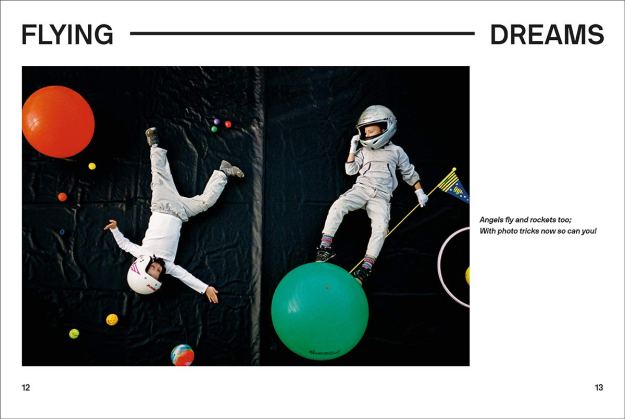
Ingenious! Such as brilliant idea. This book is full of fun ideas for children to enjoy experimenting with. It is not just a book about photography, it is a book about stretching your imagination to transform everyday objects and settings into incredible, zany and magical at. The children are encouraged to create scenes such as, flying through the air as a superhero, floating in space amongst the stars, deep-sea diving after treasure, swinging through a tropical jungle to growing extra arms and legs and dissecting your brain.

Jan Von Holleben is a professional photographer and his photographs throughout the book will inspire any child to step away from their games console or tablet. The only thing the child needs is digital camera or smartphone. A great way to keep the children amused and happy on rainy days whilst encouraging them to be creative. All the suggested ideas can be achieved in three to five easy steps.

Photo Adventures inside

The text is written by Monte Packman to support the photographs. It is often written in rhyming couplets, which helps to set the tone and adds to the entertaining nature of the book.

Photo Adventures is recommended for children aged 7 upwards (KS2) and some of the activities will need adult supervision. I believe it would be possible to adapt some of the activities for KS1, or nursery with more helpers. There is a photo school chapter at the end of the book, which is ideal for older children who have been inspired to take their interest in photography a step further.

This book review was previously published on the online Armadillo Children’s Book Review Magazine.

Book Review – A Postcard to Ollis

Title: A Postcard to Ollis

Written by: Ingunn Thon

Illustrated by: Nora Brech

Translated by: Sian Mackie

Published by: Wacky Bee

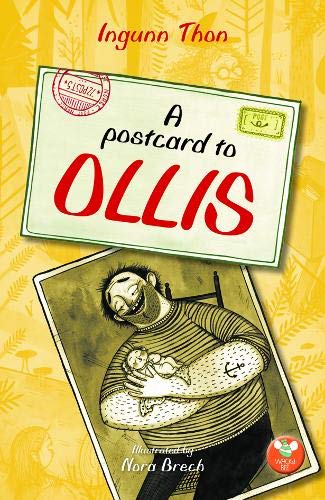
A Postcard to Ollis

A story of friendship and family loyalties, written in third person and present tense. Ingunn Thon develops full and engaging characters with very different personalities. Ten-year old Ollis is inquisitive, inventive and determinedHer best friend and neighbour, Gro, is cheeky, quick-witted and impulsive. Ollis is named after five women who played important roles in Norwegian history. She likes to invent things, which often do not go to plan. Her mum has a new baby and announces her plans to get married to the baby’s father, who has recently moved in. Ollis is jealous and disappointed as she can not see her own father, especially when she discovers her name is not on the invitations.

Ollis’ and Gro, go on a bike ride and stumble upon a yellow letterbox mounted on a crooked post. They look inside and its empty. They hear a whumph-thunk-clang and in true Lake House style, a postcard addressed to Ollis appears in the letterbox. The friends return everyday to see if there are any more postcards. It is not until they meet Borgny, that Ollis finally discovers a hundred and one postcards addressed to her with drawings of places all around the world. She works out these postcards have been sent for ten years. Ollis believes they are from her father and embarks on a quest to find him.

This chapter book won the Nynorsk Prize 2017 for Excellent Prose and was shortlisted for the Italian Premio Strega 2018 literary prize, which is the equivalent of the Carnegie Medal.

A Postcard to Ottis is full of witty banter and distinct, diverse characters that capture your heart. I loved the wacky Borgny and was pleasantly shocked at Ollis’ father’s reaction to her. However, I found the present tense rather difficult to read and in places it jolted me out of the story. I also felt there was too much unnecessary description that was not relevant to the plot. The characters make you laugh, cry and scream with frustration. Full of twists and surprises this book really makes you think about what ‘family’ is and the many different types of family relationships.