Category Archives: Book review

Book Review – Fuzzy Mud

Title: Fuzzy Mud

Written by:  Louis Sachar

Published by: Bloomsbury

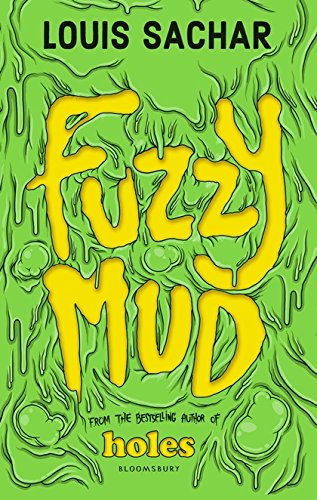
Fuzzy Mud

A story of friendship, bullying, secrets – and toxic, itchy awful fuzzy mud. Everyday Tamaya and seventh-grader Marshall walk to school together. When they arrive at school they stop talking to each other – Marshall can’t be seen with a little kid like Tamaya, especially not with Chad around – Chad the bully, who makes Marshall’s life utterly miserable. But one day, Marshall and Tamaya take a detour through the woods to avoid Chad… And what awaits them is strange, sinister and entirely unexpected.

This novel is a gripping, heart-warming tale about the struggle for survival. Tamaya wants to be good but does not understand when the rules changed and it was good to be bad. She has to fight against peer-pressure to be more rebellious. Marshall has to overcome his fear of Chad, the school bully, and is surprised when he finds out the reason why Chad has been picking on him. Together all three must use all their courage and determination to save the whole town. Tamaya proves herself to be brave, regardless of her small stature and the detrimental effects of the fuzzy mud.

Louis Sachar is an expert at showing, not telling. I love how he uses imagery and dialogue within the story, so the reader can use their own imagination to fill in the gaps. I also like the way the micro-organism cell replication is pictorially represented in the illustrations at the beginning of each chapter.

The novel is left open-ended, with hints of a sequel… or maybe this is just my own wishful thinking!

This book review was previously published on the online Armadillo Children’s Book Review Magazine.


Book Review – Tiz & Ott’s big draw

Title: Tiz & Ott’s big draw

Written and Illustrated by: Bridget Marzo

Published by: Tate Publishing

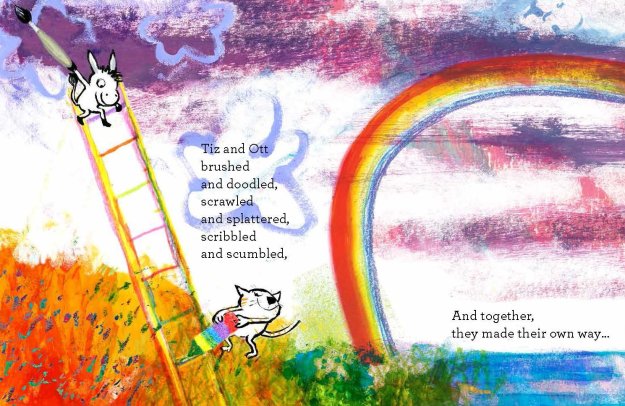
Tiz and Ott

Tiz & Ott’s big draw is an ode to the imagination and expressing yourself creatively. Children, parents and teachers will love this fun, creative way of introducing art to young people. This book reveals the multitude of different ways we can create marks, whilst showing the effects these marks can produce. Tiz and Ott demonstrate how to draw your way out of illustrator’s block.

This high-energy story is about Tiz the cat and Ott the donkey who are drawing themselves an exciting adventure. They have no idea what they are going to draw next they are just going with the flow where their imaginations take them. They start off small with a house here, a sun there and a rain cloud for shade and their adventure literally explodes right off the page.

Tiz and Ott2

Ott gets stuck in a scrape of orange sand and Tiz scritch scratches herself out of the hole with her multi-coloured crayon. The sky really is the limit. Bridget’s bold and colourful illustrations will capture the children’s imagination, encouraging them to try the ideas for themselves. At the end of the book, there are some step-by-step instructions on how to draw each of the characters and a recap of all the individual marks they used.

“Tiz and Ott is not just about creative block – getting carried away, landing in a hole and having to find a way out of it but also, oddly I realise high energy Tiz is a bit like my daughter, and my son says he identifies with low energy Ott.”

Bridget Marzo

This book is an ideal resource for stimulating art activities at home and in the classroom. It would be an excellent tool for encouraging children to express their imagination. Tiz & Ott’s big draw demonstrates there is so much more to painting and drawing than just painting and drawing. It epitomises the brilliance of free will.

To find out more about author-illustrator Bridget Marzo and her books see her website: www.bridgetmarzo.com or follow her on Twitter: @bridgimage 

Book Review – Creative Writing

Title: Creative Writing: How to unlock your imagination and develop your writing skills

Written by: Adèle Ramet

Published by: How To Books

How To Books

This book is ideal for the beginner writer who wants an overview of the different genres whether they are writing for children or adults. It covers both fiction and non-fiction and has chapters on character, setting, dialogue, using personal experiences and how to submit to publishers.

Following the familiar how to book format, each of the ten chapters concludes with a handy checklist and an assignment to help you develop your skills and put what you have read into practice. There is also a very useful list of addresses for writing organisations and societies, as well as lists of websites and further reading where you can find more information.

I also have some of Adèle Ramet’s other books on my bookshelf:

Creating a Twist in the Tale: How to Write Winning Short Stories for Women’s Magazines

Writing Short Stories and Articles: How to Get Your Work Published in Newspapers and Magazines

And I have had the pleasure of attending one of her ‘Writing a Twist in the Tale’ workshop. I found her no-nonsense, direct to the point style was reflected in Creative Writing: How to unlock your imagination, develop your writing skills and get published.

Adele Ramet does not ‘tell’ you how to write better, she ‘shows’ you through concise, easy-to-understand examples. By following her advice, you’ll be able to recognise the areas that need sharpening in your own writing and know how to improve them. It is the kind of book you’ll want to refer to time and time again. Packed full of useful ‘insider’ tips on creating professional, potentially lucrative manuscripts it provides a comprehensive guide on how to write on a variety of topics.

It is full of essential tips to hone your skills and help you decide which area of writing you want to concentrate on, or specialise in. In my opinion, Creative Writing is a useful addition to the bookshelf and an invaluable tool for all aspiring authors.

This book was sent to me by the How to Books publishers to review on my blog. There is always a worry when I review books what happens if I don’t like it but, I must say I really like the format of the How to Books. I like the way they use case studies and checklists and they have assignments, so you can practice. A couple of my favourite books published by How To Books are the Pamela Cleaver books on writing for children:

Writing A Children’s Book: How to Write for Children and Get Published

Ideas for Children’s Writers: A Comprehensive Resource Book of Plots, Themes, Genres, Lists, What’s Hot and What’s Not

Book Review – Moth

Title: Moth

Written by: Isabel Thomas

Illustrated by: Daniel Egnéus

Published by: Bloomsbury

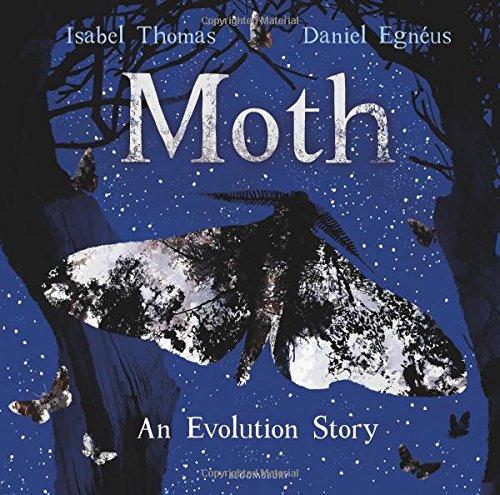
Moth

This creative non-fiction picture book tells the story of the tiny peppered moth and its quest for survival. Against a lush backdrop of lichen-covered trees, the peppered moth lies hidden until the world begins to change. Moth by Isabel Thomas introduces the concept of natural selection and adaptation in a fun and visually stimulating way.

The theme of light and dark are encompassed throughout the moth’s story of how it negotiates the dangers of life, from the blue tits and other predators, to human interference. Learn how the moth adapts over the centuries to survive the pollution of the industrial revolution. Landscapes change as cities grow and people’s magnificent machines stain the land with soot yet the peppered moth struggles on. The illustrations are spectacular stencils in keeping with the light and dark theme.

It is a clever, thought-provoking way of introducing evolution. A great book for teaching camouflage to young children and ideal for inspiring the children’s own art work linked to camouflage.

This book review was previously published on the online Armadillo Children’s Book Review Magazine.

Book Review – Benny’s Hat

Title: Benny’s Hat

Written by: Juliet Claire Bell

Illustrated by: Dave Gray

Published by: Pomelo Pip

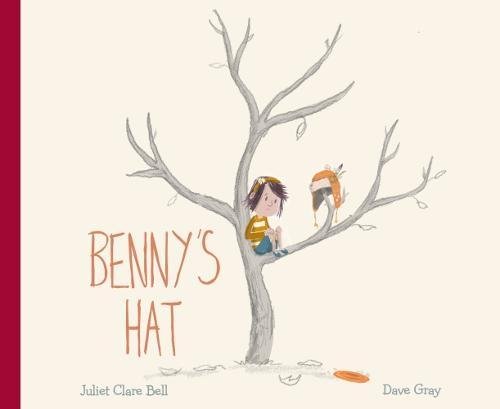
Benny's Hat

This is a picture book about empathy and surviving despair at the loss of a loved one. A book definitely made for sharing, Benny’s Hat will have you weeping from start to finish.

It is about a young girl called Lizzy (nicknamed Friz) whose brother, Benjamin is terminally ill. It is told from Friz’s point of view. This book deals with a sibling dying in a subtle way, through Friz’s actions and reactions to the deterioration of her brother. It may be delicate, understated storytelling but Juliet Claire Bell’s exceptional ‘show not tell’ skills have a dynamic impact on the reader and their emotions from how Friz gets her nickname to hiding Benny’s hat. The brother and sister exchanges are spot on and despite the tears, brought a little smile to my face.

Juliet Claire Bell’s text and Dave Gray’s illustrations work in perfect unison. The use of pastel shades for the background contrast the orange of Benny’s hat. The layout of the page panels and the vignettes lead you into the bold black page when Friz finds out her brother has died. I particularly liked the use of the trees which start off green and full of leaves and become stark, empty branches to depict Friz’s mood. Then at the end a few green leaves are beginning to grow at the far tips of the branches to symbolise, maybe there can be hope to survive such a traumatic loss.

Benny's Hat2

At the back of the book, there is a note for parent’s by child bereavement counsellor Sue Dale. She provides tips on talking about Benny’s Hat and links to organisations that can help. There are also activities to try that may help children going through bereavement.

I would recommend this book to all parent’s and teachers whether they are helping a child through grief, or not. I strongly advocate it is important to talk about such issues even if it may never be within the child’s experience. If it ever did happen they are more likely to discuss their thoughts and feelings before they get out of hand and understand the way they feel is perfectly normal. I think this book is written sensitively enough to achieve this.

Benny’s Hat is a great way in for discussing and teaching children about compassion and for talking about feelings. If you are a writer, for children or adults alike, it is also the ideal book to study to discover how to evoke emotion in your reader in just a few words.

£2 from each book sold is donated to Edward’s Trust, a children’s bereavement charity,  based in Birmingham.

To find out more about Juliet Claire Bell and her books visit her website: www.julietclarebell.com

To find out more about illustrator, Dave Gray, check out: www.iamdavegray.com

Book Review – There’s Only One Kind of Duck

Title: There’s Only One Kind of Duck

Written and Illustrated by: Heather Kilgour

Published by: Heather Kilgour

there's only one kind of duck

This creative non-fiction book encompasses some fascinating, eye-opening facts about ducks within the story of Lee and Alex who are going to the pond to feed the ducks.

Alex insists there is only one kind of duck, but Lee knows better. The author – illustrator, Heather Kilgour, introduces us to a multitude of different species of duck, consolidated by an ingenious duck fact file in the last three spreads. This charming picture book was inspired by the Wetlands Centre in Barnes, London.

Heather’s passion for conservation shines like a beacon on every page. Her superb illustrations demonstrate each duck’s uniqueness and diversity. A duck is simply not just a duck. There are so many different species, that live in different habitats with very different diets. There’s Only One Kind of Duck, carries a very important message for children and their parents – ducks should not eat bread. It makes them ill and pollutes the water.

This book would make the ideal educational gift for your budding conservationist.

“This is a story of diversity that will open your child’s eyes to the richness of the natural world.” Heather Kilgour

It would also provide an excellent introduction into conservation and caring for animals in their natural environment and be used in the classroom to support a topic on animals and their habitats.

To find out more about Heather Kilgour and her illustrations visit her website: www.heatherkilgour.com


Book Review – Is it a Mermaid?

Title: Is it a Mermaid?

Written by: Candy Gourlay

Illustrated by: Francesca Chessa

Published by: Otter-Barry Books
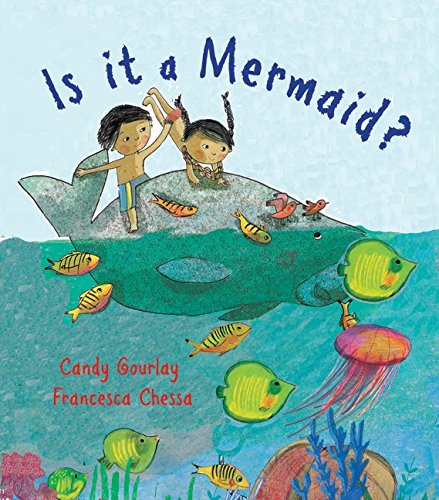
is it a mermaid

This book is full of interesting facts about the dugong and its history. Bel and Benji meet a dugong whilst playing on a beach in the Philippines. The dugong insists she is a mermaid. Bel is swept away by her imagination and instantly believes this. After all, in Malay the word for mermaid is ‘duyong’. Benji is harder to convince. He does not believe in mermaids and tells the dugong she is nothing but a Sea Cow. Understandably, this upsets the dugong. It is lucky that mermaids are so forgiving. By the end of the book even the most sceptic reader will believe in mermaids.

The story is enhanced by Francesca Chessa’s beautiful Monet-style illustrations. The colours take you on a journey through time, from the morning, to midday and then the glorious sunset and finally the deep blues of twilight when they have to pack up their fun day on the beach to go home. Even the end pages are illustrated as part of the story.

On the surface the themes of Is it a Mermaid? are friendship and kindness but this book carries a deeper message about how the dugong’s habitat of seagrass is under threat.

“They have been listed as vulnerable to extinction by the International Union for Conservation and Natural Resources (IUCN).” Candy Gourlay

Seagrass are flowering plants that live in shallow sheltered areas along coastlines all over the world. They are different from seaweed, have bright green leaves and are very important for the biodiversity around our planet.

  • Seagrass meadows act as a natural sea defence by trapping sediment and slowing down currents and waves.
  • They provide a home for many baby fish, including Cod, Plaice and Pollack around our shores.
  • Seagrass meadows absorb and store large amounts of carbon and are vital in the fight against climate change.
  • They absorb nutrients, pollutants and bacteria and help to keep our coastal waters clean.”

Project Seagrass

In the British Isles there is over 22,000 hectares of seagrass that is threatened by pollution and human damage such as boat propellers and chain moorings that can hinder its ability to produce new growth. Two species of seahorse depend on shrimp which inhabit the British Isles seagrass meadows and cuttlefish lay their eggs in these underwater fields.

I love the fact that Candy Gourlay ends the book with this educational message and points readers in the direction of an app called SeagrassSpotter designed by the charity Project Seagrass.

“SeagrassSpotter is a conservation, monitoring and education tool to help us better understand seagrass meadows around our coat.

By using SeagrassSpotter and becoming a Citizen Scientist with Project Seagrass, you can help us learn more about the seagrass meadows in your area, so that together, we can protect them.” Project Seagrass

This book would be ideal to use in the classroom to support work on habitats and conservation.

Is it a Mermaid? is a book to treasure.

To find out more about Candy Gourlay and her books visit www.candygourlay.com or follow her on Twitter @candygourlay and Instagram @candygourlay

To find out more about Francesca Chessa and her illustrations visit https://francescachessa.format.com/hello  or follow her on Instagram @hollysredboots and Twitter @hollyredboots

To find out more about Project Seagrass visit www.projectseagrass.org

To find out more about the app SeagrassSpotter visit www.seagrassspotter.org or search in the App Store or Google Play.
Book Review – The Salvation Project

Title: The Salvation Project

Written by: Stewart Ross

Published by: Blean Books

salvation project

A fast-paced, exciting dystopian set in a world with no adults. This novel is the conclusion to the Soterion Mission trilogy where a very contagious mini-flu mutated everyone’s DNA, accelerating the ageing process so the human race only live a few weeks after their nineteenth birthday. A scary but brilliant concept. This young adult novel is full of tension and emotion.

With no education and no technology, the population split into two fractions: Zeds and Constants. The narrative unfolds into an emotional roller-coaster of totally believable reactions to such an apocalyptic disaster. A skilful and commendable modern version of William Golding’s Lord of the Flies with hints of Mad Max.

The characters are heart-wrenchingly realistic but coming into the story at the last book I couldn’t help feeling I was missing something. Stuart Ross does provide a very comprehensive ‘previously…’ prologue but I would recommend reading all three books in order to get the full impact of the story and all its complexities.

The haunting ending hits home as it encompasses the fundamental truth that resistance to change is human nature. As with all good books, I was thinking about the conclusion and the character’s struggles to get there, long after the book was finished.

Book Review – The Poo that Animals Do

Title: The Poo that Animals Do

Written by: Paul Mason

Illustrated by: Tony DeSaulles

Published by: Wayland

The Poo that Animals Do

Are jellyfish smelly fish? What does it mean if a rhino kicks up a stink? How can elephant poo fuel a house? Find out many fascinating facts about animal poo, from modern day use to funny animal habits.

This is an innovative and informative book that will catch the eye of even the most reluctant reader. The Poo that Animals Do is full of exceptional snippets and fun facts all about different animal’s poo. The illustrations compliment the facts perfectly and add their own touch of humour.

There are three things I challenge the reader NOT to do when they flick through the pages of this book:

  1. I challenge you NOT to laugh;
  2. I challenge you NOT to hunt for the poo;
  3. I challenge you NOT to learn something.

A child may pick this book up because they think it is fun, silly or even a little bit naughty and they may spend their whole time giggling whilst they read, but when they finally put the book down they really will definitely have learnt something. It may be whether or not jellyfish poo, or how poo is used as camouflage, or even what humans use poo for. What they do with these impressive facts, I’ve no idea!

I believe this is an essential book for class book corners all over the world.

This book review was previously published on the online Armadillo Children’s Book Review Magazine.


Book Review – The Hurting

Title: The Hurting

Written by: Lucy van Smit

Cover and interior design by: Helen Crawford White

Published by: Chicken House

the hurting

The Hurting is the compelling story of revenge and the desire for independence. This young adult Scandinavian noir thriller that will have you turning the pages to devour more. The protagonist Nell has a sister called Harper who has leukaemia. Nell is her main carer as their mother left and their father is an alcoholic. They have moved away from their home in Manchester to live in Norway, so Harper can go to the world centre for epigenetics in hope of being able to turn off the cancer gene causing her atypical leukaemia. At first, I was shocked at Harper’s behaviour and manipulation of her sister but on reflection I realised this really does reflect the reality of sibling relationships that many books fail to convey.

All the characters and their motivations are realistic. Nell always puts her sister’s needs before her own at the expense of applying to Brit school and realising her own dreams of becoming a singer, song-writer. Her life is on hold until her sister can miraculously get better. When she meets Lukas Svad, the adopted heir to a Norwegian oil fortune, she decides to take a chance and run away from her life just like her mother had, or so she thinks.

Lukas is able to manipulate Nell – just like her sister – using love as a weapon. In his grey-blue wolf skin coat he immortalises the dark and dangerous wolf-boy. Together they kidnap Ulv Pup and embark on a soul-wrenching adventure through the Norwegian mountains, stalked by wolves. The novel is full of lyrical prose and descriptions that evoke dramatic images of the Norwegian mountains and fjord backdrop in such a way the whole area takes on a menacing character of its own, foreshadowing the events to come. In the end, after many bad decisions, Nell learns the truth about Lukas, her mother and the baby.

Lucy van Smit’s debut novel is full of twists and turns fuelled by the need to feel loved.