An interview with… Michael Lawrence

For the #97 Sept 2009 issue of Writers’ Forum I interviewed children’s book writer Michaew Lawrence. Michael told me he does not like to specialise. His first book for children came out in 1995. Since then he has published around 50 more of various kinds, from first picture books to young adult novels.

Michael Lawrence

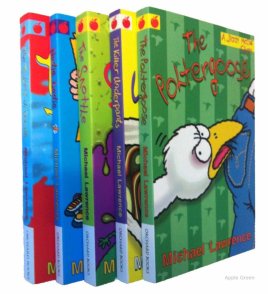
His most popular books are the Jiggy McCue novels, which include The Killer Underpants, the Toilet of Doom, The Meanest Genie and The Iron, the Switch and the Broom Cupboard. He publishes one of these a year.

Jiggy McCue books

Michael explained he does not research the Jiggy McCue stories at all, or even attempt to reflect the times the kids live in to any great extent. Mobile phones, DVDs, famous film stars and so on are mentioned, but Jiggy and Co’s school experiences are essentially his own from over half a century ago. He bases their lessons on the lessons that he still remembers so well, and some of their teachers were his actual teachers he even uses their real names. You might think this would date the books, but Micheal said that children can’t have changed as much as we imagine, because a great many of them write to him to say the books are so much like their world.

Ideas for books often come to Michael in unexpected ways and often in unlikely places. Michael told me that one very wet Sunday in August 2008, he was in Tintagel, Cornwall, walking up the hill to the site of an Arthurian battle re-enactment, when the thought came that Jiggy’s parents might be visiting or taking part in just such a show and Jiggy is either whisked back in time or a knight from the past comes forward into his time. But almost at once he dismissed this as too obvious.

Plenty of bizarre things happen in Jiggy’s world, but time travel seemed unlikely to be one of them. But then he thought, suppose someone very like Jiggy lived in a century when men wore armour, fought with swords and jousted, and by the time he got to the re-enactment the spin-off series idea was born. It will be called Jiggy’s Genes, and each book is about an ancestor of Jiggy’s who bears not only the same nickname as him, but has similar attitudes, in spite of the time he is attached to.

He bought himself a hefty hardback Le Morte d’Arthur, a new copy of Roger Lancelyn Green’s King Arthur and His Knights of the Round Table (fondly remembered from childhood) plus various books and pamphlets about life and conditions in the 15th century and also trawled the Internet for alternative insights.

In the first book Jiggy’s Magic Balls, Thomas Malory has just escaped from gaol and has an idea for a saga about knights, great battles and quests. He asks for Jiggy’s help with ideas. The Arthur that Jiggy points out to Malory is a shifty little pickpocket, and Merlin is a shyster lawyer who specialises in divorce cases. Michael explained Malory uses their names but does something rather ambitious with their characters…

For the second book in the series,Jiggy and the Witchfinder, his 17th century hero meets Matthew Hopkins, the Witchfinder General, who wants to hang Jiggy’s Nan as a witch. Michael told me:

“Any Jiggy book must have a goodly quota of laughs, but the England of the period was beset by war, disease and poverty, and saw the execution of a great many innocent people at the hands of dreadful men like Hopkins, so it hasn’t been easy keeping the story light as well as realistic.” (Michael Lawrence)

Michael’s trilogy, The Aldous Lexicon (A Crack in the Line, Small Eternities and The Underwood See) and Juby’s Rook are all set in the ruined village of Rouklye, which is based on Tyneham in southern Dorset. He used his first house as the model for Withern Rise in Small Eternities: The Aldous Lexicon 2.

ML's first house (model for Withern Rise in The Aldous Lexicon) (2)

ML’s first house (model for Withern Rise in The Aldous Lexicon) (2)

“My research for the trilogy has been literally life-long, as the setting is the house and village I was born in. In the three years it took me to write the books I returned there constantly, and during the writing my desk was littered with photographs of the house, the stretch of river on whose bank it stands, and the village and attached market town.” (Michael Lawrence)

In 1943, Churchill’s War Office requisitioned the Tyneham Valley for troop training and weapons testing, evacuating everyone who lived there. They promised to return it when the war was over but never did, and today Tyneham. It is still ‘owned’ by The Ministry of Defence and is a sad, haunted ruin of a place. Juby’s Rook is set in 1999 and is about an elderly man (Juby Bench) who was a teenager in the village when everyone was turfed out.

jubys rook

He returns every August to take note of the extent of the decay and walk his old haunts. Michael has walked all of these haunts, during which, over several visits, he made extensive notes and took hundreds of photographs. Michael told me the completed book took about nine years to sell. If you haven’t heard of it, it’s because it sank without trace or a single review. Yet Juby’s Rook is one of the books he is most pleased to have got into print.

To read the complete feature you can purchase a copy of #97 Sept 2009 Writers’ Forum by ordering online from Select Magazines.

To read my latest Research Secrets or Writing 4 Children interviews you can invest in a subscription from the Writers’ Forum website or download Writers’ Forum to your iOS or Android device.

Creating suspense

Over the years of my writing career I have been on many courses and workshops for different aspects of writing by a wide variety of well known published writers not only those who write for children. Some of my favourite writing talks are crime ‘noir’ conferences where I have discovered a wide range of writing tips and techniques.

writing suspense

One of the main things I have realised is that suspense, tension and conflict are all finely linked. You create one by ramping up the other and have to balance these factors with the final resolution. Here are a few of the things I have learnt and have found useful, which may help you to achieve this.

  1. Make achieving their goal a race against time. There is nothing like a deadline for keeping the adrenaline pumping around the body. The greater the need to achieve the goal and the less time available to achieve this the higher the stakes, the tension and the suspense.
  2. Lull the reader into a false sense of security by using longer sentence just before you reveal the shock of the unexpected.
  3. In contrast, short, sharp sentences mimic the disjointed thought patterns of fear and urgency.
  4. Make your readers root for your characters safety by ramping up the danger.
  5. Using the present tense at the highest points of tension will make the narrative more immediate.
  6. Make the source of the fear a surprise to the reader.
  7. To make your readers care and worry about the main character make your protagonist vulnerable in some way.
  8. Use foreshadowing to rank up the danger by letting your readers know of these vulnerable attributes such as allergies or phobias early on in the story and then make it inevitable they have to face these situations later in the story.
  9. In a similar way, give your character a desire, wound or internal struggle your readers can identify with and then use your reader’s empathy and concern for the impending danger to escalate the tension.
  10. View the world though the protagonists eyes so the reader can identify with your main character and experience what they are feeling.
  11. Use all the senses to get your readers to hear, touch, smell and taste the action.
  12. Initially the less people who believe the protagonist and who do not understand their fear of the antagonist and the seriousness of the threat, the more suspense is created.
  13. As you progress through the story more people should become worried, afraid, sad or curious. This will increase the tension.
  14. Strip the protagonist of something essential to their safety.
  15. Use the power of three. Have small alarming things happen three times to reinforce the conflict, so the concern is mentioned, then it is reinforced and then people begin to realise there is a problem.
  16. Use familiar things, people and situations in different contexts to make your readers feel uneasy.
  17. Let the reader know more than your characters do. So they can see the villain metaphorically creeping up behind your main character before the main character is aware.
  18. Use superstitions even if your character is not superstitious to rank up the suspense and tension, such as making the meeting at number thirteen, accidentally walking under a ladder or a black cat crossing their path.
  19. Delay what is really happening by having a small worrying event which your character ponders and tries to fix this when something bigger happens they need to solve and then have a final climax at the end of the chapter. This will help keep the readers turning the pages to find out what happens next.
  20. Think carefully about your word choices. You can create a dark, spooky atmosphere by using gloomy and macabre words rather than happy, sunny words.

I hope these ideas help you and if you have any more ways of creating suspense, you would like to share, please leave a comment.

Keep it simple

Writers need to interest and entertain their readers. To do this, they have to make sure every word is understandable by using plain, simple language and concrete words. Obscure technical terms, foreign phrases, long unpronounceable names and jargon may make sense to those in the know but not to the majority. It puts up an unnecessary barriers that will deter your readers.

barrier brickwall

Inspiring some children to read is difficult enough as it is, so why make it more difficult for them? My advice is don’t hesitate to break the rules if the alternative is to write something that looks and sounds contrived or ugly. To avoid badly constructed sentences that grate on the ear read what you have written aloud. Record it if you have to and listen back.

ear

Your aim should be to get the meaning across directly without using artificial and over literary sentences. This will help your stories understand the turn of events and keep your readers turning the pages. To achieve this try to put yourself in the shoes of the readers. 

boy reading cartoon

Before putting your pen to paper ask yourself:

  1. What am I trying to say?
  2. What words will express it?
  3. What images will make it clearer?
  4. Is this image fresh and original enough to have an effect?

Choose precise words and invent your own images to make your meaning clearer. We have been told by countless people that the use of hackneyed similes, metaphors and other phrases is pure lazy writing. So when editing your work check if you are using original descriptions.

child editing

Metaphors like: ‘you win some, you lose some’, ‘a fish in troubled waters’, ‘hard as nails’ and ‘snow-white’ are over-used and dull. It is better to invent your own metaphors and similes to add colour and imagination to your writing.

Avoid using long words where a short one will do. If it is possible to cut a word out then cut it. You can often find words that can be cut without losing meaning. The word ‘that’ is the ideal example. Cutting adverbs and adjectives can also strengthen your writing.

Book review: Farmer Falgu Stays at Home

Title: Farmer Falgu Stays at Home

Written by: Chitra Soundar

Illustrated by: Kanika Nair

Published by: Karadi Tales

Farmer Falgu Stays at Home

This superbly written story will help to encourage both children and adults to find fun things to do at home during the pandemic.

Farmer Falgu’s daughter, Eila, is fed up of staying indoors as she misses her friends and wants to play and explore outside. She doesn’t understand why everyone has to stay at home. Through a simple to read and easily relatable text, Chitra’s main character, Farmer Falgu, explains sensitively that staying home is the only way we can keep everyone safe.

I particularly like how Chitra has included the fact that sometimes the adults have no choice about going out, as in when they need to buy, or sell food. The book could be used to trigger discussion on why they can’t go with them. I know from experience this has been a difficult issue for lots of young children to understand when they are used to accompanying their parents to the shops and now they are not allowed.

I also like the message for children that we are also trying to avoid making other people ill too. In this way, Farmer Falgu Stays at Home promotes empathy and understanding of how we can all do our little bit to help and it does not need to be boring. Eila discovers there are fun and exciting things she can do at home without having to travel further than her front door. The final spread gives useful advice for parents to encourage their children to wash their hands, maintain social distancing and avoid getting ill.

The ideal book to read to your child during the current lock down. You can find details on how to get hold of this free e-book here

An interview with… Jo Franklin

In issue #182 Dec 2016 of Writers’ Forum I spoke to my friend, Jo Franklin, about why she prefers to write about children who feel they are on the edge of society.

Jo Franklinwood_0100

She explained that for most of her childhood she lived on a small farm in rural Sussex with hardly any social life. When she was eleven she was sent to boarding school. It was a very strange combination – the claustrophobic all female environment during term time and the boredom of the farm during the holidays. She never felt that she belonged in either place so felt very isolated. She read books as my means of escape and this led her to Sylvia Plath.

“I totally related to Esther in The Bell Jar. It was a revelation to me that Sylvia Plath could write so openly about her deepest feelings, thinly disguised in a novel and she got recognition for it. I knew that was what I wanted to do.” (Jo Franklin)

Jo joined a creative writing class at The City Lit in London and started putting words down on paper – stories about teenagers struggling with first love and identity; taking bits of her tortured soul and refashioning them into words on paper.

She discovered the important thing about writing for children is to find your inner child and reconnect to it so that your writing is convincing and real. Jo advises authors who want to write for children to ‘write who you are’ as if you can channel some of your own experience into the characters they will be rounder.

Jo found herself writing about characters who are on the edge of the society they live in – tomboys, geeks and outsiders. Some of her misfit characters wonder what they should do to fit into the mainstream. Others are more confident with who they are and the stories show that maybe society should open their hearts to the fringe characters in our world. Exploring the issues that children face is actually a way of exploring your own issues.

In her book, Help I’m an Alien, Dan feels such a misfit that when his sister tells him he’s an alien, he believes her. In Help I’m a Genius (the second title in the series) Dan is so intimidated by the brain power of the rest of his family, that when he is selected to represent the school in a National Brainiac Competition, he is convinced he is going to humiliate himself. He recognises that he doesn’t fit in and the stories explore how he feels about that. I’m interested in the range of emotions that go with searching for your own identity.

Jo doesn’t write specifically for girls or boys as she believes children’s books should be universal . 

“I hope that my stories are accessible to everyone regardless of whether the main character is male or female.They are written with a broader outlook, but publishers sometimes get hung up on which slice of the market they are focusing on selling the books to. My worst fear is a publisher giving one of my books a girlie pink cover. I was a tomboy growing up and I still hate pink.” (Jo Franklin)

Jo told me a great children’s book needs to be written from a child’s heart and soul. The voice has to resonate as true. It doesn’t matter whether a book is funny, exciting or mysterious it somehow has to lead the characters on a thrilling journey of self-discovery and include emotional insight as well as enthralling action. Some of the facts of children’s lives are different now – technology dominates their lives – but they still face the emotional journey we all went through.

Her advice is if you want to give writing for children a go, a good way to start is to work on a memory and see where it takes you. How did you feel the first time you saw your mother/father cry? Remember that time you did something wrong and you passed the blame onto someone else with disastrous consequences? What did it feel like to walk into your new school aged eleven? Choose one of these and write for fifteen minutes. See where it takes you.  Enjoy it. Don’t worry about anything other than your joy at putting words on paper.

The next step is to join a writer’s circle, critique group or creative writing class. It’s a great way to begin learning your craft and meeting like-minded people. Perseverance is the thing which differentiates a published author from the many aspiring but unpublished writers.

You can find out more about Jo Franklin, her books and writing life on her website www.jofranklinauthor.co.uk and follow her on Twitter @jofranklin2

To read the complete feature you can purchase a copy of  Writers’ Forum issue #182 Dec 2016 online from Select Magazines.

To read my latest Research Secrets or Writing 4 Children interviews you can invest in a subscription from the Writers’ Forum website or download Writers’ Forum to your iOS or Android device.

The diversity of writing for children

The great thing about writing for children is that the jobs are always varied and interesting. You never know what varied work you will be asked to write. The idea is to keep your options open make yourself available, even if it means tight scheduling on your side to get it done. All the examples below are ideas for opportunities which you could also pursue to add that extra arrow to your quiver.

Over the years, I have written school text books and homework books, picture books, activity books, text for sticker books, graphic novels, photocopiable worksheets, science investigations, maths puzzles, a children’s booklet for a local wildlife park, book reviews, encyclopaedias, non-fiction books, comprehension and model non-fiction texts for online teacher resources, early readers for reading schemes, high-low readers and my poetry has been featured in teacher resource packs and poetry books.

poetry anthology

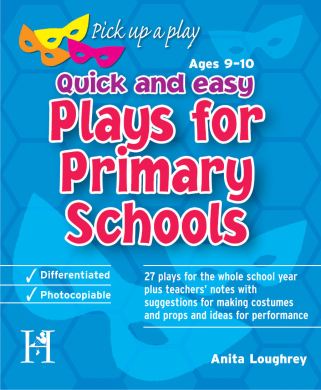
A couple of years ago, I was commissioned to write 27 differentiated play scripts that can be used for guided reading or for performance on stage. They cover the themes of childhood experiences, traditional stories and stories from other cultures. Each play is accompanied by detailed teachers’ notes that provide suggestions for making costumes and props as well as performance ideas.

PUP 9-10

I have also been commissioned to write audio book texts, including six discs of classic fairy tales where I adapted twenty much-loved stories by Hans Christian Andersen, The Brothers Grimm and Carlo Collodi for young listeners.


These stories are read by Tamsin Greig (Green Wing, Episodes, Friday Night Dinner) and Stephen Mangan (Green Wing, Episodes, Dirk Gently).

Other writing jobs include writing story adventure books and online resources for toy companies.

A really fun and exciting project to work on was the Adventure Passport series designed to inspire ages 5+ with a love of our culturally diverse world. Each of the four mini suitcases represents a different continent and contains six letters from six different countries the main characters have visited, a passport, six stickers sheets (one for each country), twelve photos, two finger puppets, a regional map and six fun activity sheets for your children to complete. 

Adventure Passport project

These suitcase would be an entertaining way to keep KS1 aged children happy and amused during long rainy days at home or during the lock down.

You can find out more about the books and writing I have done on my website: www.anitaloughrey.com 

Book review: Fantastically Great Women who saved the Planet

Title: Fantastically Great Women who saved the Planet

Written and Illustrated by: Kate Pankhurst

Published by: Bloomsbury

Fantastically Great Women who saved the Planet

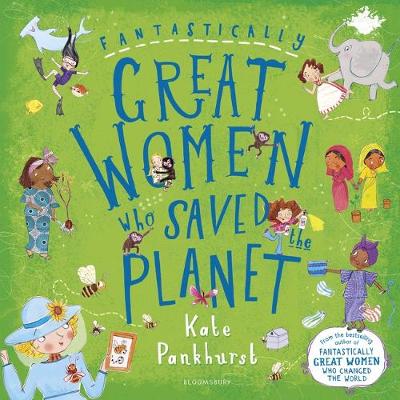
Fantastically Great Women who saved the Planet by Kate Pankhurst is a fun, creative non-fiction book containing snippets of interesting facts about thirteen inspirational women from all over the globe who have dedicated their lives to studying and protecting planet Earth and all its living things, making significant contributions towards improving the environment. It is part of a series of books celebrating female achievements.

Each of the women is presented in a double-page spread, which outlines where in the world they are from, their environmental beliefs and inspiration for their achievements, from the ‘shark lady’, Eugenie Clark, who inspired people to learn about the oceans and respect all underwater creatures; to Isatou Geesay who highlighted the problems of using plastic bags and encouraged people to recycle and use reusable packaging; and Daphne Sheldrick whose love and devotion to animals in Kenya inspired her to care for young elephants in the wild and go on to found The Sheldrick Wildlife Trust.

The illustrations and characterisations are bright and imaginative bringing the characters alive. They catch the eye and will keep young readers turning the pages. Throughout the book the emphasises is on how with determination and hard work anything is possible. Every page of the book contains the message that everyone can make a difference if they put their mind to it.

Fantastically Great Women who saved the Planet supports primary teaching in STEM and meets the requirements of the history programmes of study as it documents the lives of significant individuals who have contributed to national and international achievements. This book would provide an excellent springboard for encouraging pupils to research their own exceptional women, which could be made into a book or encyclopedia with their own illustrations or photos printed from the Internet. 

The snippets of information can be read in any order which is ideal for the child with short attention span who prefers to dip in and out of a book. At the back there is a glossary of words ideal for helping young enquiring minds with useful definitions with examples of using the words in context helping them to use accurately environmental vocabulary and give them a greater understanding of the related concepts.

It highlights important environmental messages in a fun and motivating way and would be the ideal gift for any child interested in the environment and an excellent resource to support topics on green issues, recycling and conservation. It could also be used for triggering discussion and encouraging empathy at home and in the classroom.

An interview with… Jake Hope

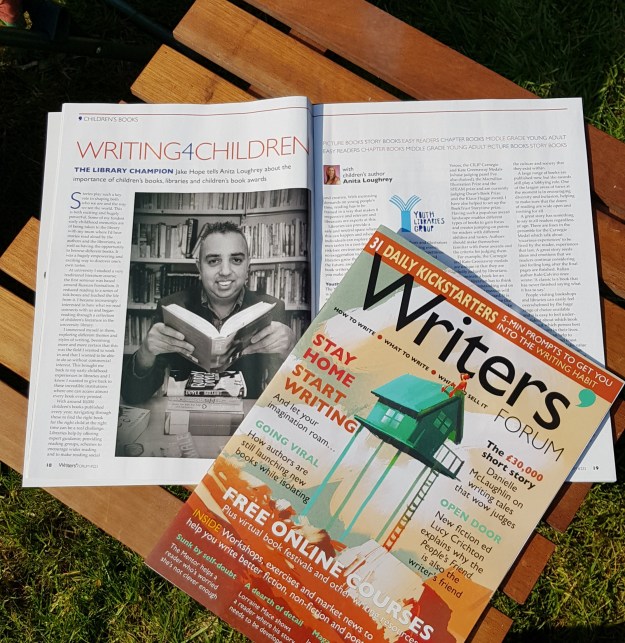
Jake Hope (Chair of CILIP’s Youth Libraries Group and Chair of the CILIP Carnegie and Kate Greenaway Awards Working Party) talked to me about the importance of children’s books, libraries and children’s book awards. He talked about how stories play such a key role in shaping both who we are and the way we see the world.

Jake_Hope feature 4

Some of his fondest early childhood memories are of being taken to the library with his mum where he would listen to stories read aloud during story times by the authors and the librarians, as well as having the opportunity to browse different books. He explained exploring and experimenting in this way is a hugely empowering and exciting way to discover and widen one’s own tastes.

Throughout his life Jake has immersed himself in exploring different themes and styles of writing. With around 10,000 children’s books commercially published every year, navigating through these to find the right book for the right child at the right time can be a real challenge. Libraries help by offering expert guidance, providing reading groups, schemes to encourage wider reading and to make reading social and creative. With increasing demands on young people’s time, reading has to be framed in a way that makes it responsive and relevant and librarians are experts at this.

Libraries can provide a safe and neutral space where this can happen and where individuals can explore their own tastes in a cost-free, risk-free environment. It is no exaggeration to say that libraries grow the readers of the future and as children’s book writers and illustrators you make this possible.

Youth Library Group

YLG logo jpg

Jake told me that the Youth Libraries Group is all about connections. They are one of the special interest groups of CILIP (the library and information association) and have over 1,500 members. The membership is comprised of librarians working with children and young people in public libraries, in school libraries and for school library services – these are organisations who tailor collections of books to meet curriculum needs and who work to provide support and advice on reading for pleasure and library provision to schools.

The Youth Libraries Group is an extraordinary collective of highly committed and knowledgeable experts who share a unique passion for reading and for library provision for children and young people. The connections the group have means we are able to support through giving advice on what has been published in the past and present, providing access to groups of young readers who can often test manuscripts or provide insight into their reading tastes. They support authors and illustrators through organising events, promotions and competitions to bring greater focus and profile to creators.

Children’s book awards

Print

Children’s book awards play a role in helping to make sure that certain types of book do not go unrecognised. Humorous writing, for example, does not always get the most recognition through awards, though funny books play such an important role in reading for pleasure. Awards like the Roald Dahl Funny Prize, as was, and the Laugh Out Loud awards, the LOLLIES, help to make sure these titles don’t get overlooked.

Jake has been a judge for many book awards such as: the Blue Peter Book Awards, the Costa, the Branford Boase, the Diverse Voices, the CILIP Carnegie and Kate Greenaway Medals (whose judging panel I’ve also chaired), the Macmillan Illustration Prize and the STEAM prize and am currently judging Oscar’s Book Prize and the Klaus Flugge award. He also helped to set up the BookTrust Storytime prize.

Having such a populous award landscape enables different types of books to gain focus and creates jumping-on points for readers with different abilities and tastes. Awards remain responsive to the culture and society that they exist within. Jake advises authors to make themselves familiar with these awards and the criteria for judging them.

“A large range of books are published now, but the awards still play a lobbying role. One of the largest areas of focus for this lobbying at the moment is in encouraging diversity and inclusion, helping to make sure that the doors of reading are wide open and are inviting for all.” Jake Hope

Jake elaborated that a great story has something to say to all readers regardless of age. Criteria are a useful way for book awards to appraise a range of different titles and styles of writing, but it’s important not to downplay the overall impact that language, characterisation, plot and style can have on a reader too.

“By working together and creating critical mass we can support one another and build new opportunities. With our combined skills and knowledge we can experiment and excite new generations of readers.” (Jake Hope)

People can easily feel overwhelmed by the huge range of choice that is available and it is easy to feel under-confident about which book might suit which person best at which point in their lives. Book awards can help to build awareness and boost confidence. In spite of the value of awards, it is important not to downplay the fact that every time a reader picks up a book and connects with it, this is the biggest win of all.

The present is not an easy time either for libraries or for authors and illustrators.  Challenging times can present real opportunities for innovation and imagination, however, and by working together and creating critical mass we can support one another and build new opportunities. With our combined skills and knowledge we can experiment and excite new generations of readers.

To find out more about Jake Hope visit his website: www.jakehope.org and follow him on Twitter @jake_hope

To find out more about the Youth Libraries Group visit: www.cilip.org.uk/ylg and follow them on Twitter @youthlibraries

To read the complete feature you can purchase a copy of #223 2020 Writers’ Forum online from Select Magazines.

To read my latest Research Secrets or Writing 4 Children interviews you can invest in a subscription from the Writers’ Forum website or download Writers’ Forum to your iOS or Android device.

My radio debut

On Wednesday 8th April, I was invited to talk about my new books on the 24-hour Internet radio station covering UK National & International, Chat and Spin radio station.  Their Head Office is based in Washington, Tyne And Wear. They have over 30,000 listeners each week. They have been interviewing authors from all over the world about their new books and where people can purchase them. My time slot was at 7:50 pm.

You can listen to a recording of the show I was on about 40 minutes in here:

I am talking about my new picture books, Rabbits’s Spring Gift and Frog’s Summer Journey. They are part of the A Year in Nature series of seasonal animal led picture books published by Quarto Educational (QED) and they have been illustrated by Lucy Barnard.

Spring and Summer books2

The release of the other two books in the series, Squirrels’ Autumn Puzzle and Fox’s Winter Discovery, have been postponed until September 2021.

After the show they invited me back for another interview on Saturday 18th April at 11:20 am. Here is  a recording of the show:

I am about 2 hours 20 mins in. This is now going to be a regular slot over the next few weeks during the corona virus lock down. You can tune in every Saturday at 11:20 to listen to me talking about my books.

You can listen to the show live on the Chat and Spin radio website: www.chatandspinradio.com

You can find out more about me and my books on my website: www.anitaloughrey.com

Or follow me on Twitter @amloughrey and Instgram @anitaloughrey

Book Review: The Crayon Man

Title: The Crayon Man The True Story of the Invention of Crayola Crayons

Written by: Natascha Biebow

Illustrated by: Steven Salerno

Published by: Houghton Mifflin Harcourt

The Crayon Man

An ingenious narrative non-fiction book about Edwin Binney the inventor of Crayola Crayons. This book examines the history of children’s writing implements and the inspiration behind creating something children could write and draw with that did not smudge or rub off and was perfect for producing coloured pictures.

Aimed at children between the ages of 6 and nine years old, the text has a fun chatty tone ideal for reading aloud with the added bonus of a more fact based information box added to the lower left corner of some of the spreads.  In the story, Natascha recalls how Edwin Binney experimented with different ideas to create his top secret formula –  emphasising a trial and error methodology where he learnt from his mistakes. She also reveals how they came up with the new word ‘Crayola’ to name the crayons.

The illustrations by Steven Salerno are bold and colourful. I like the way they contrast to emphasise the colour of the outside world compared to the carbon factories where black printing inks and shoe polish are made. Through his illustrations Steven gives us a real sense of how the introduction of colour transformed education and learning.

I believe this book would be enjoyed by older children who like biographies and also younger aged children with adult support, so could be used in the classroom, or for home schooling, for both KS1 and KS2, as the book supports science, in that they are discovering how Edwin Binney developed a useful new material and it encourages children to think about the properties of materials that make them suitable or unsuitable for particular purposes as well as any unusual and creative uses for these materials. It supports design technology and the history national curriculum in that they are learning how a key inventor has  helped shape the world and could also be used to inspire children’s creative art work.

At the back of the book Natascha has listed some of the names given to each colour. this could be used to stimulate children to invent their own imaginative names for each colour. There are also step-by-step photographic instructions on how crayons are produced from the transporting the paraffin wax to being packaged and shopped to stores. This could be used as a sequencing activity in the classroom. The additional single page biography of Edwin Binney could be used to encourage children to research and write their own biographies of a significant person who has made an inventive contribution to society. i particularly like the inclusion of a selected bibliography listing research resources suitable for children to find out more information that includes books, interviews, articles, websites and videos.

All in all The Crayon Man The True Story of the Invention of Crayola Crayons is a well-crafted book that is informative and educational is a fun and inspiring way.