Book Review – Christmas Special

Those of you who are interested in buying a Christmassy book for a child or to treasure for yourself. I have put together a few that might make that ideal stocking filler or pre-Christmas gift.

christmas stockings

Title: How Winston Delivered Christmas

Written and Illustrated by: Alex T. Smith

Published by: Macmillan Children’s Books

How Winston delivered Christmas

A mouse called Winston takes Oliver’s letter to Santa that he found in the snow to the North Pole. It’s not an easy journey, but Winston finally makes it – and there’s an unexpected reward at the end of the story for him, too.

How Winston Delivered Christmas is written in 24 and a half chapters designed to be read, one a day, from the 1st to 24th December, with the half chapter at the end to be read on Christmas Day.

Like an advent calendar counting down to Christmas, each day features festive things to make and do – you can write a letter to Father Christmas and make mince pies, make party invitations, build a snow globe and a pom-pom robin and there is even a creating a guide to random acts of kindness. The perfect gift for leading up to Christmas.


Title: Father Christmas and Me

Written by: Matt Haig

Illustrated by: Chris Mould

Published by: Canongate Books

Father Christmas and Me

Let the battle for Christmas begin . . .

Amelia lives in the magical town of Elfhelm, newly adopted by Father Christmas and Mary Christmas. When the very jealous Easter Bunny launches an attack to ruin Christmas, it’s up to Amelia, her family and the elves to fight off the forces of evil.

But can they keep Christmas alive?

Other Christmassy books in the series are:


Title: A Very Corgi Christmas

Written by: Sam Hay

Illustrated by: Loretta Schauer

Published by: Simon & Schuster Children’s UK

A Very Corgi Christmas

Pip turns up and whisks Belle the Royal Corgi off on a wonderfully romantic whirl around the sights of London. All too soon it’s time to head home, but when the couple finally work out how to get back into the palace . . . Pip disappears.

Will Belle ever see him again? Perhaps . . . with the help of a special royal couple, who might just bring Belle a wonderful Christmas surprise.

For dog-lovers everywhere, this Lady and the Tramp-esque romp around London at Christmas is full of heart . . . and waggy tails!


Title: The Last of the Spirits

Written by: Chris Priestly

Published by: Bloomsbury

Last of the Spirits

Sam and Lizzie are freezing and hungry on the streets of Victorian London. When Sam asks a wealthy man for some coins, he is rudely turned away. Months of struggle suddenly find their focus, and Sam resolves to kill the man. Huddling in a graveyard for warmth, Sam and Lizzie are horrified to see the earth around one of the tombs begin to shift, shortly followed by the wraith-like figure of a ghostly man. He warns Sam about the future which awaits such a bitter heart, and so begins Sam’s journey led by terrifying spirits through the past, present and future, after which Sam must decide whether to take the man, Scrooge’s, life or not.

A perfectly layered, tense and supremely satisfying twist on one of Dickens’ most popular books, cleverly reinvented.


Title: Once Upon A Wild Wood

Written and Illustrated by: Chris Riddell

Published by: Macmillan Children’s Books
Once Upon a Wild Wood

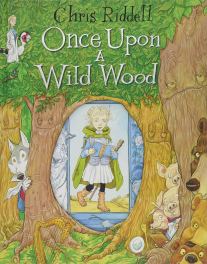
Little Green Raincape is on her way to Rapunzel’s party, deep in the wild woods. The way is long and dark, but Green is a smart girl. Smart enough to turn down apples offered by kindly old ladies, smart enough to turn down travel advice from helpful wolves, and above all, smart enough to solve a wealth of classic fairy tale problems – not least mend a lovelorn beast’s broken heart.

Once Upon a Wild Wood is a richly imagined story jam-packed full of familiar fairy tale characters as you’ve never seen them before. Including Red Riding Hood, Thumbelina, Rapunzel, Beauty and the Beast, Cinderella, the three bears, the seven dwarfs and many more!

A visual feast on every page, illustrated with warmth and humour and full of witty details to discover – this is Chris Riddell at his picture book best!


Title: The Snowman: Inspired by the original story by Raymond Briggs

Written by: Michael Morpurgo

Illustrated by: Robin Shaw

Published by: Puffin

The Snowman by Michael Morpurgo

Inspired by the timeless tale, Michael Morpurgo and Robin Shaw have created the perfect Christmas story for the whole family. One December morning, James is thrilled to wake up to see snow falling.

He spends the whole day making his perfect snowman; he has coal eyes, an old green hat and scarf and a tangerine nose… just like the snowman from his favourite story. That night, something magical happens- the Snowman comes to life! He and James take to the skies on a magical adventure where they meet someone very special.


Title: The Christmasaurus Audiobook

Written by: Tom Fletcher

Illustrated by: Shane Devries

Read by: Paul Shelley

Published by: Puffin
Christmasaurus

First released in 2016 this audiobook has been repackaged again this year just in time for Christmas.

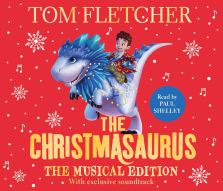
The Christmasaurus is a story about a boy named William Trundle and a dinosaur, called as the title would suggest the Christmasaurus. They meet one Christmas Eve and have an extraordinary adventure where they discover their heart’s true desire, and learn the impossible might just be possible. The theme is friendship and family wrapped up in a glittery parcel of sleigh bells, Santa, singing elves, flying reindeer, music and magic.

The disc includes 14 original songs all written and performed by Tom Fletcher, accompanied by a full orchestra with performances by Giovanna Fletcher, Carrie Hope-Fletcher and Santa Claus! And listen out for newcomer Max Reader singing ‘Someone More Than Me’ and Harry Judd on drums in ‘Afraid of Heights’.


Title: Going Home

Written by: Cliff McNish

Illustrated by: Trish Phillips

Published by: Doomspell Books
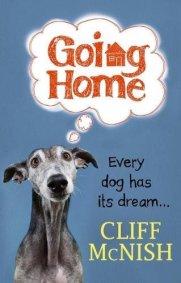
going home

A dog may not be for Christmas but this book certainly is. Children who love animals will adore it.

Going Home is about the Happy Paws Dog’s Home where some of the dogs have been labelled ‘no-hopers’ on the ground of their looks, phobias and general behaviour. When the Dog’s Home reviews its policy of never putting a dog down the story takes you on a roller-coaster of emotions. One minute there are tears of laughter. The next you are on the edge of your seat, turning the page, hoping the dogs will find a home of their very own before it is too late.

It will give any child a fairly realistic view of the psyche of a dog and how their needs are more than just a roof over their heads. Not only is the story a real feel-good, tear-jerker but the illustrations by Trish Phillips are adorable and will melt even the hardest of hearts.
An interview with… Sue Wallman

Papers Pens Poets is a blog where writers, book bloggers and illustrators can share their passion for all things stationery. It was the brain child of children’s author Jo Franklin. The blog contains reviews, articles, and weekly interviews with a wide range of authors, covering books of all age ranges and genres. Jo set up the blog and I did the majority of the author interviews.

The second interview I did for Papers Pens Poets was with YA author Sue Wallman. She has three YA books published by Scholastic.

In the interview, she revealed she is a real pen fanatic. Her love of pens was probably triggered by winning a Crackerjack pen. Yes! Sue was on the television reciting a poem dressed in a home-made costume and won herself an amazing Crackerjack pen. I am totally envious. I would have loved a Crackerjack pen. What’s a Crackerjack pen, you say? Well I’m afraid you just missed out! Here is a picture of it for you instead:

Crackerjack pen

But Sue’s favourite pen and she admits it may just be her favourite all-time possession, is an old Parker fountain pen which was her mum’s. It was a gift from her grandparents to her mum who used it for her O-level exams in the Fifties. Out of the blue, when Sue was a student, she gave it to her. The nib has never been changed – the way Sue and her Mum both hold it must be similar because the pen writes smoothly for both of them. Sue used this pen to sign her first book contract.

Parker pen

Sue also has a whole drawer full of Sharpies. Whatever colour you need, she has it. She loves the sound of the click when the lid snaps on. She also loves to share her passion for pens with her friends and family. At her book launches, she had pens printed with her book titles and web address as take-home presents.

 LALS pens

Sue told me:

When it comes to notebooks, I have a new one for each project and I don’t like going bigger than A5 because then it’s awkward to carry around. I’m a fan of the Asda notebooks that look like Moleskines and cost £3. I go expensive occasionally: I have a little notebook from Liberty that’s faded to a lovely purple and has beautiful striped elastic.

To find out more information about Sue Wallman and her books check out her website: www.suewallman.co.uk or follow her on Twitter @SueWallman

This article is adapted from an original interview on the Papers Pens Poets blog. You can find out more about Sue and her stationery there. It was also previously published on the SCBWI British Isles online magazine Words and Pictures.

If you are a published author of any age range (0 – Adult) or genre, or an illustrator, or a book blogger, or a librarian and would like to be featured on the Papers Pens Poets blog, please get in touch.

The Art of Story

As previously mentioned I love to go talks and workshops given by other writers. I am very much a course ‘junky’ and believe you always learn something new and it can’t be bad to reinforce what you already know.

Tony Bradman is one of my writing heroes. I particularly like him because he remembers who I am when we meet. In May 2006, I went to a SCBWI-BI Professional Series where author, Tony Bradman, was talking about story and what it is. His advice has always rung true with me and has had a big influence on my own writing.

IMG_0480

Tony Bradman has been writing children’s fiction for over thirty-five years. He has written hundreds of books and edited many anthologies. He summed up story very neatly:

“A story is about the problems people face and how they overcome them. It is part of everyone’s life and can be told in different forms: film, plays and poems. Story is a form with a structure of its own. Very few people know what a story is and how to do it.”

The Art of Story
Tony explained:

“Often, when you start out as an author, you don’t know if a story works or not. This is a stage all writers go through. A writer needs to understand everyone reaches a stage where they don’t know if it is any good.”

Tony revealed he often struggles with stories he is working on. He claims it is very rare for him to write something and have the confidence it is as good as he can make it.

“In story, we concentrate on the pivotal point in which a character makes an action and the world reacts differently than expected. The essence of great story is surprise. The characters have flaws that influence the plot and the plot will have conflict, which changes the characters. It is a two-way process.

There are things that you can do that will help you through the problems of story. If you get half way through and get stuck, tease out the structures that might already be there. Step outlines and synopsis are stages of story that can help with a scene you are struggling with.”

Tony Bradman’s Approach
Tony said:

“All my stories start with a single idea that needs to be developed. Often if left, a story will reveal itself.”

When he starts a new story, he makes notes and descriptions of what the story is going to be. He likes to get to know his characters. When he begins to hear the dialogue he knows he is ready to write. If he knows it is not working and he is not happy, he will revise over and over again, often waking up in the night. After editing, he can look at it and know it is complete. By the time he has finished, he knows his stories word to word.

Tony prefers to edit his writing himself. He loves the challenge. He considers that one of the things that taught him most about writing is when he worked as an editor. He used the lessons he learnt from editing other people’s work in his own writing.

Tony told us:

“I have been known to write a 20,000-word summary, for an 1800 word story.”

He revealed that he writes the whole story without dialogue and puts a one-line description of each scene, highlighting the beginning, middle and the end, or as Philip Larkin says, a beginning, a muddle and an end. This way he can expose any weaknesses in the plot, any digressions and lack of tension. Tony believes it is the same technique for 100 as 100,000 words.

“Story is divided into three acts, sometimes more, never less. Each act can be broken into scenes, and each scene can be sub-divided too. In a typical scene, the protagonist embarks on a difficult task; only to discover that what is required of him is far more demanding than he first thought. It is under these testing circumstances that ‘deep character’ is revealed.”

Tony stressed:

“The two most important aspects of story are character and plot and of the two, character always comes first.”

Creating Strong Characters
Tony believes character is key to any story. He said:

“If a story is not working it is often the character that is wrong. Take a good look at your characters. Why do you like them? What do they want? They should want to solve the problem. This is the spine of the story. The key thing is to get the reader to engage with the character, so they want to know how they solve the problem.

“You need to think what is the best thing a character can get in life and how could this also be the worse thing. When people want something and do not understanding it is wrong for them it is known as a reversal. Story is a great way to explore this.”

A good example of reversal can be seen in Tony’s book, Under Pressure, where Craig, one of the thirteen-year-olds at the soccer school, wants his dad to love him and be involved in his life and when he is involved, he betrays his son by using him as a way to get money. Reversal is also evident in the sequel, Bad Boys, where Lee fights to make his own decisions, only to realise he made the wrong choices.

Tony advocates avoiding passive characters.

“Children are often powerless to do anything about the situations they find themselves in, such as parent’s divorce or moving home, but they should strive to deal with the problem on their own level. They have to come to terms with the fact that this event has happened and carve a new life out for themselves. The characters should always be striving for a goal. Even in 1500 words, the story problem is big and even though the child’s world is smaller, the child still tries to solve the problem.”

Tony thinks hard about the character and the world they live in. He needs to find out what their problem or conflict is and starts with the problem and develops the story from that. He said:

“Character is revealed in the choices a human makes under pressure. There has to be something about your main protagonists character that resolves the problem in the end.”

Tony believes the greatest stories have characters that have two levels: what you see on the surface and the flaws underneath. All great characters are flawed, part of the problem is learning about these flaws.

He said:

“Writing picture books is hard. It is less easy to explore the characters, as there are fewer words.”

You can see how important characterisation is in Tony’s books, such as the Dilly the Dinosaur series, about the world’s naughtiest dinosaur and The Happy Ever After stories, which explore what happens after the fairy tale ending. Do they really live happily ever after? Does the frog prince enjoy his life at the palace with his new bride, or would he really prefer to be living in that muddy old pond? How does Cinderella cope with the Queen as a mother-in-law? This is why Tony’s books appeal not only to young readers but their parent’s as well.

What About Plot?
Tony explained plot in a way that I will never forget. His words are always on my mind whilst I am writing.

“Plot is about life and human condition. If the plot doesn’t work, you can fix it but if your characters aren’t working you haven’t got a story. Nobody is going to read 250 words of character description.

Plot is the action in your story and should never be resolved by a coincidence. Everything within the story must be there for a reason. If it does not move the story forward in some way, it needs to be cut. It may be a great scene, but is it meaningless in the structure of the story?

The protagonist is an ordinary person, whose life is changed by an extraordinary event. This is the ‘inciting incident’. Life is chaos and every time you do some thing, it gets worse and worse. This is true of good story. Events must build up until the hero’s problem appears unsolvable.

The story then concerns the efforts of the protagonist to restore their life to normal. Inevitably, in the course of doing this they discover a side to themselves they were never aware of and become a better person.

Story, as a quest, has the hero’s journey in mind. It is about overcoming your greatest inner fear – your inner demon. In film, this is usually outside of the protagonist, but to overcome their fears they have to work out their inner problems. Once the problem has been overcome, they get their reward, as in the grail quest. There is usually one last great battle before the evil is destroyed and the protagonist achieves their aim.

The structure of story is always there. In the beginning, you meet the character and find out what the problem is. In the middle, the problem gets worse. In the end, the problem is resolved one way or another.”

This was one of the most inspiring talks I have been on and has helped me a lot in my own writing career. If you are interested in finding out more about Tony Bradman or booking him for one of your own events take a look at his website: www.tonybradman.com or follow him on Twitter @tbradman 


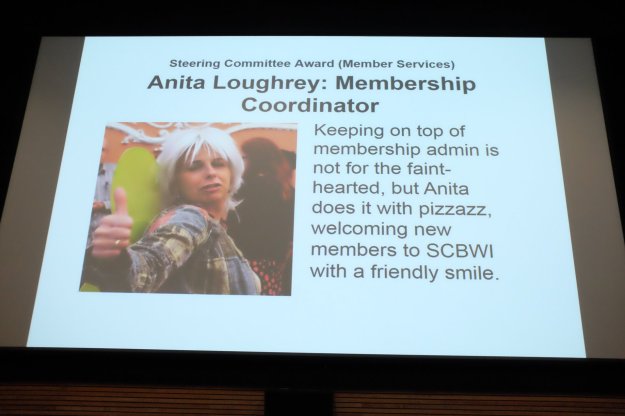
SCBWI Outstanding Contribution Award 2018

At the SCBWI Winchester Conference 2018 I received an Outstanding Contribution Award for the work I have done within SCBWI as a Volunteer. Unfortunately, I was unable to attend the conference this year but the award arrived in the post this week. Thank you 🙂

OCA 2018

Here is the citation:

Anita Loughrey has served as our Membership Coordinator for too many years to count! She remembers times when we didn’t have the networks or even online sign-ups… when keeping on top of membership admin was not for the faint-hearted. Anita is often the first welcoming contact for new members, sending out the welcome pack and answering their queries about SCBWI. She works closely with the Networks and events organizers to provide updated monthly membership lists and follows up on renewals. As many will know, she also served for many years as the Networks Coordinator for London and the South East, forging many personal contacts with members, too. Anita is a shining example of a volunteer who is willing to tackle admin with all-important reliability and always with a smile.

OCA 2018 citation

I have been a member of the Society of Children’s Book Writers and Illustrators (SCBWI) since October 2002, sixteen years ago. I first started volunteering in an official capacity in April 2006, when I became Network Organiser for London. This involved planning monthly socials for members at different venues around London with a special guest each time. I also introduced the monthly London SCBWI brunches which were run by Miriam Craig and the monthly London SCBWI Write-ins. I don’t and have never lived in London but I did the job for ten years before handing the job over to the very capable hands of Tania Tay,  who has built on what I started and made the London network a strong and cohesive group.

In October 2011, I also took over the SCBWI British Isles membership coordinator role from my wonderful friend Sue Hyams. Over the seven years I have been doing this role I have streamlined the whole membership system for the British Isles and introduced our own British Isles membership pack jam-packed full of useful information on how to get the most out of your membership. I also campaigned to add a dropbox to the online joining form so people could select their network area. Before this was introduced the Network Organisers had to sort out which members were theirs themselves.

One of the highlights for me as a volunteer was going to the Bologna Children’s Book Fair in 2012 to represent the SCBWI British Isles and showcase our members published books. It was fun.

aBologna2012 British Isles stall

In 2016, I became the South East Network organiser. During the two years I did this job I visited critique groups in Oxford and Southampton and I ran a weekly write-in in Newbury every Wednesday morning. I passed on the mantle at the beginning of this year to Fiona Barker.

Over the twelve years I have been volunteering for SCBWI I have achieved and done quite a lot. I am looking forward to continuing this work. I would also like to say a big congratualtions to all the other SCBWI volunteers who received a SCBWI British Isles Outstanding Contribution Award this year. Well done 🙂

Book Review – Veronica Twitch the Fabulous Witch

Title: Veronica Twitch the Fabulous Witch

Written and Illustrated by: Erica-Jane Waters

Published by: Wacky Bee Books

veronica twitch

Veronica is Editor-in-Chief at her very own Twitch magazine that is full of exclusive interviews with the latest bands and film stars, famous writers and artists and fashion designers. Veronica also loves stationery so ranks very highly in my estimation.

Along with her friends Figgy and Pru she is always on the look out for a good story. So they are off to Raven Heights to interview the most awesome and exciting girl band in the whole of Witch City, Double-Bubble. But trouble strikes! Double-Bubble are kidnapped. Veronica suspects Belinda Bullfrog from her rival magazine Nosy Toad.

Follow Veronica into a quest of magical mystery mayhem as she attempts to uncover what has happened to the girl band and find out if  Belinda Bullfrog could really have turned them into crows and locked them away forever.

This story is a fast fun-packed adventure and I love the black and white illustrations with a hint of witchy purple. Ideal for Halloween and for girls that love mystery books. This book will take you on an emotional roller coaster cackling with delight and booing with despair at the ghastly Belinda Bullfrog.

To find out more about Erica-Jane Waters, her writing and her illustrations take a look at her website: www.ericajanewaters.com and follow her on Twitter: @Ericajanewaters 

An interview with… Cath Howe

In the November 2018 edition of Writers Forum I have interviewed Cath Howe about her book Let’s Perform! She explained how her love of drama for children was developed into the ideal educational resource for schools.

CH4

Cath Howe has written books for children for many years, which include books of plays, educational readers and commercial fiction.

Let’s Perform! is an accumulation of 10 years experience of using monologues, duologues and poems for children to perform. Each script has suggestions for performance and creative suggestions for pupil’s own writing. Learning by heart is part of the UK National Curriculum and this book meets the target whilst encouraging children to develop a keen interest in performance.

Let's Perform good version

When she first wrote the plays and others scripts she was not trying to get them published . The audience was the school full of parents and children she was working at. All the scripts have been tried and tested at schools and festivals. Cath says:

It was important that the book uses scenarios, language and humour that children can really relate to and make their own, because this helps to get them excited about the prospect of performing. I wrote each script with the idea of showing a child or two characters in a dilemma or puzzling over a problem. I chose everyday things.

In the interview, Cath advises new writers for children to get feedback on their work in an environment where they will be encouraged and not to give up doing what you love. You can read the full interview in the Nov 2018 #205 issue of Writers Forum.

Since then Cath has told me:

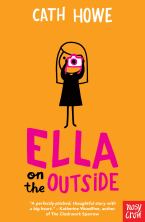
Ella on the Outside2When I wrote Ella on the Outside, which was published in May 2018, I was very influenced by my interest in drama and my long connection with running drama clubs and workshops. There’s something about the way children relate to one another, especially the subtle power play of groups, which really fascinates me. I like to write duologues where one character is much more powerful than another and get children up on their feet acting these out.  Ella on the Outside is a lot to do with the power play of the playground, especially between girls.

You can find out more about Cath Howe and her books here: www.cathhowe.com

Or follow her on Twitter @cath_howe

Working With Editors

I’ve worked with lots of different editors at a wide range of publishers and thought I would share with you today some of the things I have learnt.

notebook and pen

Here are my Do’s and Don’ts of what to do when working with editors. Most I have gleaned from personal experience or chatting with editors and other writers. Most of this advice has been reinforced on various courses I have attended and I must admit I’ve been a bit of a ‘writing course’ junky in my time.

DO

 smiley face

  • Be professional at all times. Your editor is not your friend, although you should be friendly. Always remember it is a working arrangement.
  • Let the writing speak for itself. At the beginning of the project send samples to check you are on the right lines even if they don’t ask for them.
  • Discover what you can do to make the editor’s job easier by finding out what the editor wants. This is easier said than done because a lot of the time the editor does not know what they want until they’ve seen what they don’t want.
  • Be willing to work with the editor on requested changes, even when they change their mind again and again and again.
  • If an editor goes to the trouble of saying something to you, take it very seriously.

DON’T

sad face

  • Don’t use a fancy font. I have never done this but I’ve heard a story about someone who did and the editor was not amused as it takes time out of a very busy schedule to change it.
  • Don’t miss the deadline. I try very hard to keep to my deadlines and prefer to submit something earlier than late. When an editor gives you a deadline, it means money is involved. If you think you are going to miss a deadline get in touch with the editor as soon as you know so they can rearrange the schedule. Remember everything has a knock on effect.
  • Don’t be afraid to call your editor to ask questions or talk about issues concerning the manuscript. That’s what they’re there for.

Book Review – An Atlas of Imaginary Places

Title: An Atlas of Imaginary Places

Written by: Mia Cassany

Illustrated by: Ana de Lima

Published by: Prestel Publishing

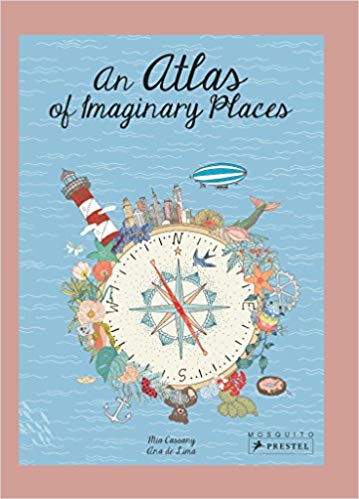
An Atlas of Imaginary Places

This unusual and beautifully illustrated atlas transports the reader into a fantastical world that nestles between reality and dreams. Children will discover mountains that grow upside-down, paper boats that transform into donut and cake islands, a city that floats on a whale, animals that change in appearance every time they sneeze and volcanoes that spit out bubblegum lava.

Author, Mia Cassany, has created the ideal picture book for older 5+ readers that will spark every child’s imagination. The pastel-coloured illustrations by Ana de Lima are jam-packed with interesting and thought-provoking images. The reader needs time to explore and think about each spread as they sail the wonderous journey through the Atlas of Imaginary Places.

I believe this book will make a great teaching resource, as each spread could be used as a story starter, as well as inspiring art creations and displays in the classroom. The maps on the end papers are ingenious. They encourage the children to develop not only their imagination but their observation skills. A great book for the class book corner and the ideal book for sharing with your child before bedtime.

This book review was previously published on the online Armadillo Children’s Book Review Magazine.

An interview with… Alex Woolf

On the 25th April 2016 me and my friend Jo Franklin launched a unique blog where I interviewed authors about their love of stationery, called Paper Pens Poets. The site has been running for over two years and there has been a new author interview featured on the site almost every week.

The very first author interview was with children’s book writer Alex Woolf and went out on the 6th May 2016. Alex could not really say he had a favourite stationery item. He told me:

I hunted around my desk to see if anything there sparked a particular affection. I eyed my blue Paper Mate® ball points, which I certainly appreciate, as I do my Avery® Jam-Free Laser Address Labels – they fulfil their assigned functions perfectly, though they don’t exactly set my pulse racing or bring a lump to my throat.

Then he saw his trusty old stapler. This is an item I myself have always taken fore-granted but Alex proudly proclaims that this is his favourite stationery item. You can see the full interview here.

Alex Woolf

To find out more about Alex Woolf and his books take a look at his website: www.alexwoolf.co.uk or follow him on Twitter: @RealAlexWoolf

You can also follow Alex on the innovative Fiction Express website.

Editing

Reading through the posts on this blog, I’ve noticed I often make silly mistakes, miss out words or have extra letters in words that should not be there because I’ve hit the wrong keys whilst typing. It has highlighted to me how important editing is.

With a blog it is easy, as you can go back and correct the posts. But you can’t correct the automatically shared posts to Twitter and Facebook, which is just embarrassing. Notice how I’m talking like a seasoned blogger and I’ve only been blogging on a daily basis for a few weeks.

editing1

Good editing means making wise choices. What words should you use? What order do you put them in? There is never a single correct answer. The best sentences are sturdy and straightforward. The reader can understand them easily, without having to reread them. Sentences become difficult to read for two main reasons: the sentences are too long, or the sentences are poorly constructed.

One of the most informative talks on editing I’ve ever been to was given by John Jenkins, who was the editor of Writers’ Forum. There were three main rules to editing that he pointed out.

The first thing he suggested, is to take out all the adjectives. I found the easiest thing to achieve this was to use the ‘Find and Replace’ application in the Edit menu of Microsoft Word and search for all the -ly words and delete them. More often than not, they were not needed and if I desperately wanted to keep one I could, because I’d whittled them down to only a few.

By combining the verb and adverb into one more descriptive verb, I not only cut the word count but was being more precise. For example, if a person was walking slowly, they could be described as sauntering, meandering, or strolling. So, ‘she walked slowly toward me’ would become, ‘she sauntered toward me’, or ‘meandered toward me’. Controlling adverb/verb combinations, allows me to set the tone and communicate the emotion of a scene.

Lots of adverbs and adjectives slow the pace and jar the reader out of the action. What I did, was look at some of the children’s books I admire and enjoyed reading and found that adverbs and adjectives were used very sparsely and also got an idea of the type of strong verbs used to replace them.

Next, John Jenkins said be active not passive. If you find yourself using forms of ‘be’ such as: are, is, was, becomes, became, you are using the passive tense. I find this the most difficult but, it is important especially when writing articles. I’ve used ‘become’ in a paragraph above, but I think it needs to be there.

dictionaries1

The third rule was to remove all waste words. This included: them, that, began, started, about, all, along, and, away, before, after, down, up, out, in, even, ever, just, little, now, only, over, really, so, some, sort, such, felt, feel, back, returned, instead, to the, to be, there, was, suddenly and very. Again, I use the ‘Find and Replace’ application in Microsoft Word. Then I check to see if any of these words need to be added back in. You’ll be surprised how few do. I replace only the ones that are essential.

I hope this advice is as useful to you as it has been to me. But, remember before you start editing, put the manuscript away and do something else. This will allow you to look at it with fresh eyes and see the mistakes more easily.