Tag Archives: Anita Loughrey

The diversity of writing for children

The great thing about writing for children is that the jobs are always varied and interesting. You never know what varied work you will be asked to write. The idea is to keep your options open make yourself available, even if it means tight scheduling on your side to get it done. All the examples below are ideas for opportunities which you could also pursue to add that extra arrow to your quiver.

Over the years, I have written school text books and homework books, picture books, activity books, text for sticker books, graphic novels, photocopiable worksheets, science investigations, maths puzzles, a children’s booklet for a local wildlife park, book reviews, encyclopaedias, non-fiction books, comprehension and model non-fiction texts for online teacher resources, early readers for reading schemes, high-low readers and my poetry has been featured in teacher resource packs and poetry books.

poetry anthology

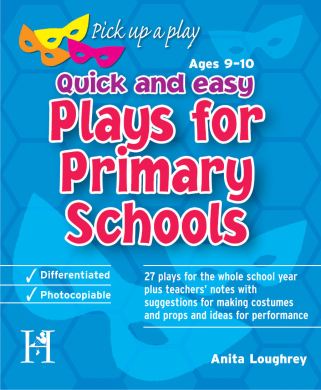
A couple of years ago, I was commissioned to write 27 differentiated play scripts that can be used for guided reading or for performance on stage. They cover the themes of childhood experiences, traditional stories and stories from other cultures. Each play is accompanied by detailed teachers’ notes that provide suggestions for making costumes and props as well as performance ideas.

PUP 9-10

I have also been commissioned to write audio book texts, including six discs of classic fairy tales where I adapted twenty much-loved stories by Hans Christian Andersen, The Brothers Grimm and Carlo Collodi for young listeners.


These stories are read by Tamsin Greig (Green Wing, Episodes, Friday Night Dinner) and Stephen Mangan (Green Wing, Episodes, Dirk Gently).

Other writing jobs include writing story adventure books and online resources for toy companies.

A really fun and exciting project to work on was the Adventure Passport series designed to inspire ages 5+ with a love of our culturally diverse world. Each of the four mini suitcases represents a different continent and contains six letters from six different countries the main characters have visited, a passport, six stickers sheets (one for each country), twelve photos, two finger puppets, a regional map and six fun activity sheets for your children to complete. 

Adventure Passport project

These suitcase would be an entertaining way to keep KS1 aged children happy and amused during long rainy days at home or during the lock down.

You can find out more about the books and writing I have done on my website: www.anitaloughrey.com 

An interview with… Jake Hope

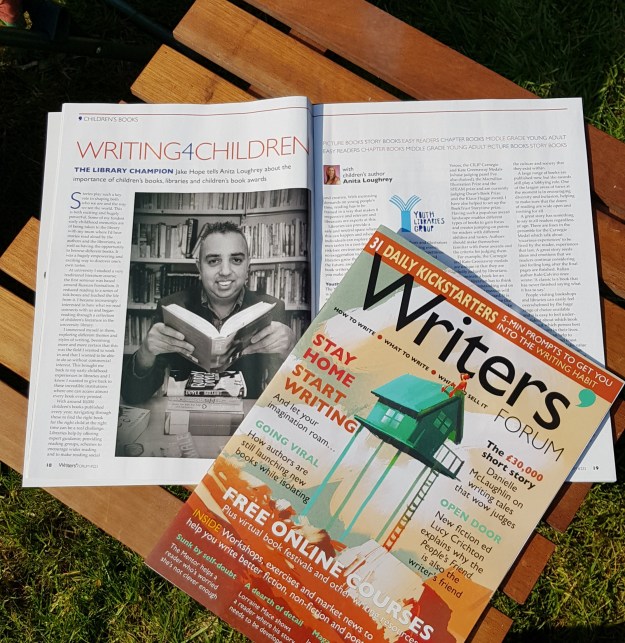
Jake Hope (Chair of CILIP’s Youth Libraries Group and Chair of the CILIP Carnegie and Kate Greenaway Awards Working Party) talked to me about the importance of children’s books, libraries and children’s book awards. He talked about how stories play such a key role in shaping both who we are and the way we see the world.

Jake_Hope feature 4

Some of his fondest early childhood memories are of being taken to the library with his mum where he would listen to stories read aloud during story times by the authors and the librarians, as well as having the opportunity to browse different books. He explained exploring and experimenting in this way is a hugely empowering and exciting way to discover and widen one’s own tastes.

Throughout his life Jake has immersed himself in exploring different themes and styles of writing. With around 10,000 children’s books commercially published every year, navigating through these to find the right book for the right child at the right time can be a real challenge. Libraries help by offering expert guidance, providing reading groups, schemes to encourage wider reading and to make reading social and creative. With increasing demands on young people’s time, reading has to be framed in a way that makes it responsive and relevant and librarians are experts at this.

Libraries can provide a safe and neutral space where this can happen and where individuals can explore their own tastes in a cost-free, risk-free environment. It is no exaggeration to say that libraries grow the readers of the future and as children’s book writers and illustrators you make this possible.

Youth Library Group

YLG logo jpg

Jake told me that the Youth Libraries Group is all about connections. They are one of the special interest groups of CILIP (the library and information association) and have over 1,500 members. The membership is comprised of librarians working with children and young people in public libraries, in school libraries and for school library services – these are organisations who tailor collections of books to meet curriculum needs and who work to provide support and advice on reading for pleasure and library provision to schools.

The Youth Libraries Group is an extraordinary collective of highly committed and knowledgeable experts who share a unique passion for reading and for library provision for children and young people. The connections the group have means we are able to support through giving advice on what has been published in the past and present, providing access to groups of young readers who can often test manuscripts or provide insight into their reading tastes. They support authors and illustrators through organising events, promotions and competitions to bring greater focus and profile to creators.

Children’s book awards

Print

Children’s book awards play a role in helping to make sure that certain types of book do not go unrecognised. Humorous writing, for example, does not always get the most recognition through awards, though funny books play such an important role in reading for pleasure. Awards like the Roald Dahl Funny Prize, as was, and the Laugh Out Loud awards, the LOLLIES, help to make sure these titles don’t get overlooked.

Jake has been a judge for many book awards such as: the Blue Peter Book Awards, the Costa, the Branford Boase, the Diverse Voices, the CILIP Carnegie and Kate Greenaway Medals (whose judging panel I’ve also chaired), the Macmillan Illustration Prize and the STEAM prize and am currently judging Oscar’s Book Prize and the Klaus Flugge award. He also helped to set up the BookTrust Storytime prize.

Having such a populous award landscape enables different types of books to gain focus and creates jumping-on points for readers with different abilities and tastes. Awards remain responsive to the culture and society that they exist within. Jake advises authors to make themselves familiar with these awards and the criteria for judging them.

“A large range of books are published now, but the awards still play a lobbying role. One of the largest areas of focus for this lobbying at the moment is in encouraging diversity and inclusion, helping to make sure that the doors of reading are wide open and are inviting for all.” Jake Hope

Jake elaborated that a great story has something to say to all readers regardless of age. Criteria are a useful way for book awards to appraise a range of different titles and styles of writing, but it’s important not to downplay the overall impact that language, characterisation, plot and style can have on a reader too.

“By working together and creating critical mass we can support one another and build new opportunities. With our combined skills and knowledge we can experiment and excite new generations of readers.” (Jake Hope)

People can easily feel overwhelmed by the huge range of choice that is available and it is easy to feel under-confident about which book might suit which person best at which point in their lives. Book awards can help to build awareness and boost confidence. In spite of the value of awards, it is important not to downplay the fact that every time a reader picks up a book and connects with it, this is the biggest win of all.

The present is not an easy time either for libraries or for authors and illustrators.  Challenging times can present real opportunities for innovation and imagination, however, and by working together and creating critical mass we can support one another and build new opportunities. With our combined skills and knowledge we can experiment and excite new generations of readers.

To find out more about Jake Hope visit his website: www.jakehope.org and follow him on Twitter @jake_hope

To find out more about the Youth Libraries Group visit: www.cilip.org.uk/ylg and follow them on Twitter @youthlibraries

To read the complete feature you can purchase a copy of #223 2020 Writers’ Forum online from Select Magazines.

To read my latest Research Secrets or Writing 4 Children interviews you can invest in a subscription from the Writers’ Forum website or download Writers’ Forum to your iOS or Android device.

My radio debut

On Wednesday 8th April, I was invited to talk about my new books on the 24-hour Internet radio station covering UK National & International, Chat and Spin radio station.  Their Head Office is based in Washington, Tyne And Wear. They have over 30,000 listeners each week. They have been interviewing authors from all over the world about their new books and where people can purchase them. My time slot was at 7:50 pm.

You can listen to a recording of the show I was on about 40 minutes in here:

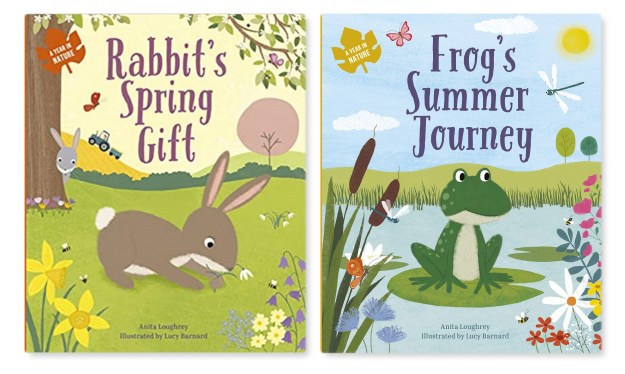
I am talking about my new picture books, Rabbits’s Spring Gift and Frog’s Summer Journey. They are part of the A Year in Nature series of seasonal animal led picture books published by Quarto Educational (QED) and they have been illustrated by Lucy Barnard.

Spring and Summer books2

The release of the other two books in the series, Squirrels’ Autumn Puzzle and Fox’s Winter Discovery, have been postponed until September 2021.

After the show they invited me back for another interview on Saturday 18th April at 11:20 am. Here is  a recording of the show:

I am about 2 hours 20 mins in. This is now going to be a regular slot over the next few weeks during the corona virus lock down. You can tune in every Saturday at 11:20 to listen to me talking about my books.

You can listen to the show live on the Chat and Spin radio website: www.chatandspinradio.com

You can find out more about me and my books on my website: www.anitaloughrey.com

Or follow me on Twitter @amloughrey and Instgram @anitaloughrey

Book Review: The Crayon Man

Title: The Crayon Man The True Story of the Invention of Crayola Crayons

Written by: Natascha Biebow

Illustrated by: Steven Salerno

Published by: Houghton Mifflin Harcourt

The Crayon Man

An ingenious narrative non-fiction book about Edwin Binney the inventor of Crayola Crayons. This book examines the history of children’s writing implements and the inspiration behind creating something children could write and draw with that did not smudge or rub off and was perfect for producing coloured pictures.

Aimed at children between the ages of 6 and nine years old, the text has a fun chatty tone ideal for reading aloud with the added bonus of a more fact based information box added to the lower left corner of some of the spreads.  In the story, Natascha recalls how Edwin Binney experimented with different ideas to create his top secret formula –  emphasising a trial and error methodology where he learnt from his mistakes. She also reveals how they came up with the new word ‘Crayola’ to name the crayons.

The illustrations by Steven Salerno are bold and colourful. I like the way they contrast to emphasise the colour of the outside world compared to the carbon factories where black printing inks and shoe polish are made. Through his illustrations Steven gives us a real sense of how the introduction of colour transformed education and learning.

I believe this book would be enjoyed by older children who like biographies and also younger aged children with adult support, so could be used in the classroom, or for home schooling, for both KS1 and KS2, as the book supports science, in that they are discovering how Edwin Binney developed a useful new material and it encourages children to think about the properties of materials that make them suitable or unsuitable for particular purposes as well as any unusual and creative uses for these materials. It supports design technology and the history national curriculum in that they are learning how a key inventor has  helped shape the world and could also be used to inspire children’s creative art work.

At the back of the book Natascha has listed some of the names given to each colour. this could be used to stimulate children to invent their own imaginative names for each colour. There are also step-by-step photographic instructions on how crayons are produced from the transporting the paraffin wax to being packaged and shopped to stores. This could be used as a sequencing activity in the classroom. The additional single page biography of Edwin Binney could be used to encourage children to research and write their own biographies of a significant person who has made an inventive contribution to society. i particularly like the inclusion of a selected bibliography listing research resources suitable for children to find out more information that includes books, interviews, articles, websites and videos.

All in all The Crayon Man The True Story of the Invention of Crayola Crayons is a well-crafted book that is informative and educational is a fun and inspiring way.

An interview with… Matt Gaw

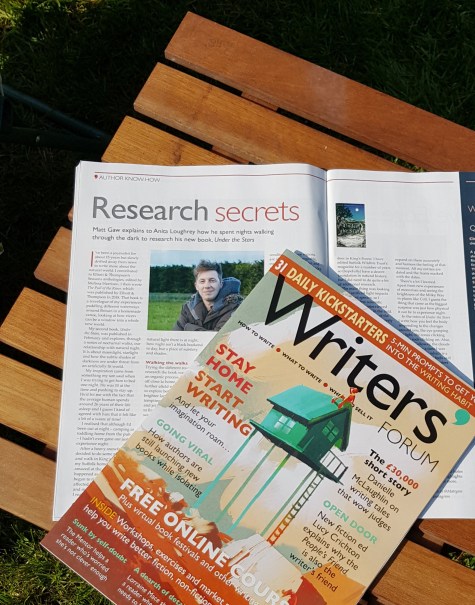
In this month’s issue of Writers’ Forum I have interviewed Matt Gaw about his research for his second book, Under the Stars, which was published by Elliott & Thompson in February this year. It is about moonlight, starlight and how the subtle shades of darkness are under threat from an artificially lit world, exploring through a series of nocturnal walks, our relationship with natural night.

Matt Gaw 6

Matt’s inspiration to write Under the Stars came from something his son said when he was trying to get him to bed one night. He was 10 at the time and pushing to stay up. His son told him the average human spends around 26 years of their life asleep and felt like this was a waste of time. Matt realised that although he had been out at night – camping or toddling home from the pub – he had never gone out just to experience night.

Under the Stars jkt

So when day after a heavy snow fall, he decided to do some research and walk in King’s Forest near his home in Suffolk. Matt was amazed at the changes that happened as darkness slowly began to rise, changes that affected both the landscape and his own body.

“I think I realised then how much natural light there is at night; how night isn’t a black bookend today, but a place of subtlety and shades.” (Matt Gaw)

Matt explained walking the different routes to research the book was an organic process. He started off close to home and then started to go further afield when he wanted to explore both darker and brighter landscapes because he feels it is important for people to experience the nightscape close to home.

“It’s about being honest I guess, showing people that there are problems but there is action that can be taken and beauty to be found.” (Matt Gaw)

Matt told me he realised he felt safer the darker it was as once your senses have adapted to darkness, it is easy enough to navigate.

“It’s strange really, in some ways your world is made smaller – you operate in this reduced bubble of visibility – but in other ways it is infinitely bigger. At night you experience not only space, but time; the light from the stars has often been travelling for thousands of years before it reaches your retina.” (Matt Gaw)

Matt explained that wildlife is most active at dusk and dawn and I was lucky enough to see an otter hunting in Scotland and had some memorable encounters later with a huge, galloping herd of deer in King’s Forest and nightjar on Dartmoor. He has edited Suffolk Wildlife Trust’s magazine for a number of years so has an excellent foundation in natural history, but discovered he also needed to do quite a bit of additional research.

The main thing was looking at how artificial light impacts on different species, so he read quite a few scientific papers and also interviewed academics working in the field. For example, Travis Longcore, one of the first people to write extensively about artificial light and ecology was very generous with his time and illustrated to Matt how our perception of darkness is a world apart from that of nocturnal species. He recounts parts of this conversation in Chapter 5, while exploring the night close to his Suffolk home.

His research tip to other travel writers is to read everything on your topic or location – local guides, national stories, folk stories, blogs, scientific papers – then rip it all up and write your own. Matt tries not to over plan his trips, he has a rough idea of where he will start and where he wants to go, but he prefers to be adaptable to prevent being  closed off to the actual experience. If you’re just marching from A to B Matt believes you will lose something.

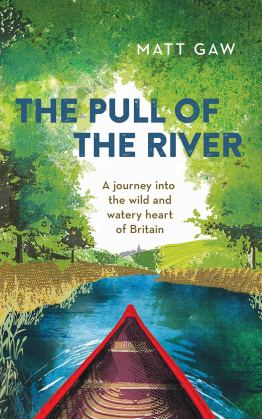
Matt’s has also written The Pull of the River where he explores Britain’s waterways with his friend James in a canoe, to give a new insight into nature, place and friendship.

Pull of the River

To find out more about Matt Gaw and his writing you can look at his website www.mattgaw.com, and follow him on Twitter @Mattgaw and Instagram @mattgaw

You can read the complete feature in #223 2020, which is available to buy from Writers’ Forum online at Select Magazines.

To read my latest Research Secrets or Writing 4 Children interviews you can invest in a subscription from the Writers’ Forum website or download Writers’ Forum to your iOS or Android device.

Book Review: The Austen Girls

Title: The Austen Girls

Written by: Lucy Worsley

Published by: Bloomsbury

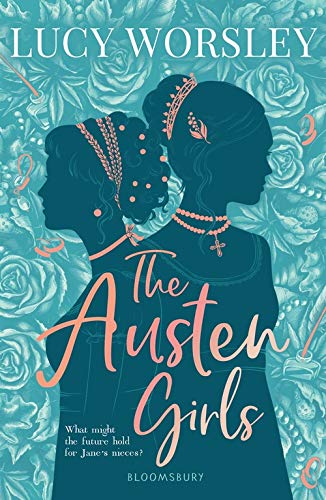
The Austen Girls

An expertly written historical YA novel that weaves real people and places with fictional events that portray the realities of Georgian England. Fanny Austen is the eldest of eleven children. She is the niece of the infamous Jane Austen and is about to be launched at her debut ball in order to find a husband who can support her and take the burden off of her family. Both Fanny and her cousin Anna are frequently told their futures depend on finding a husband with money.

Although, I am aware these were the attitudes of the time and is no reflection on author and historian, Lucy Worsley, I personally found the opinion that women need to be married made my skin prickle and could feel myself getting angry and defensive. It drummed home how the majority of people are much more enlightened than they were over 200 years ago. Lucy skilfully portrays her characters to consider these attitudes and make up their own minds about their reasons for marriage.

We follow Fanny through her trials and tribulations of feeling obliged to find a suitable husband without ever really knowing what her heart truly desires and the emotional ups and downs of life changing events. We also see through Fanny’s eyes how her cousin Anna deals with finding a suitor and views it as a means of escape from her own life.

Yet the only man who Fanny truly enjoys dancing with is the clergyman Dominic Drummond and she has been told clergymen do not earn enough money so are not good prospects. He is then conned and whisked away to a correction centre. Fanny is left to prove his innocence and with the help of her Aunt Jane adopts the role of a thief-taker, which is similar to a detective.

Lucy Worsley’s thorough research and knowledge shines through every page with her cleverly entwined details of rooms within Godmersham Park and other locations. The reader has a distinct idea of the era and the characters are all well formed and leave you wanting to learn more about the Austen girls, their families and their futures.

An interview with… Jane Borodale

In Dec 2009, I interviewed historical novelist and short story writer Jane Borodale for my Research Secrets column in the national writing magazine Writers’ Forum #98.

B Jane Borodale

She explained to me how she steeped herself in the period by reading widely, including contemporary commentary such as Thomas Turner’s diary of 1754-65 and the enclosure and rural social change, prostitution, illegitimacy, parish relief, the bills of mortality. She also listened to music; Handel, Rameau, Thomas Arne, secular street ballads and poured over maps of the period like John Rocque’s famous map of London, and images of daily life from Hogarth to Paul Sandby, to get a clear idea of clothes worn at the time.

A THE BOOK OF FIRES

Whilst researching the chalk downland area for her novel, The Book of Fires, published by Harper Collins, Jane Borodale realised what a rich resource the Weald and Downland Open Air Museum was. Historic buildings, rescued from destruction and rebuilt to their original form on the Museum’s site in Sussex, demonstrate examples of vernacular homes, farmsteads and rural industries from the 13th to the 19th centuries. They’re presented in a historically precise way which also strongly evokes their individual setting and period, and they seemed ripe for exploring with the fluidity of fiction.
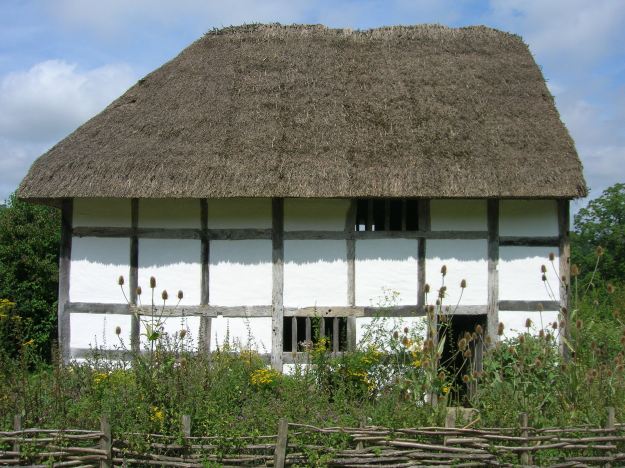
C Poplar Cottage Washington

“Studying the buildings closely has made an enormous difference to the scale of the way I see history – its human intimacy – and I have learnt much about using texture and atmosphere. The library for researchers at the Museum is a small goldmine – with an authentic 14th-century draught blowing over the flagstones under the thick oak door – and filled to the brim with books about vernacular architecture, building techniques and social history that relates to the Weald and Downland collection.” (Jane Borodale)

Jane explained that it was important to her to involve all the senses so she went to a butchery day one cold November, to discover what the smell of fresh pig fat was like; cooked recipes from Hannah Glasse that always seem to start ‘take a little bit of butter rolled in flour’; sat on the north scarp of the chalky Downs and looked inland, imagining her character Agnes creaking on the carrier up to London before the turnpikes had reached Sussex and grazed endlessly on the internet.

D Interior detail Bayleaf

She told me:

“I love research; it’s a huge privilege to spend time finding a trail through the wilderness of something fascinating – and call it work! I always think that looking at history is like putting your hand into a huge barrel for little fistfuls of stories – whatever comes up.” (Jane Borodale)

Researching the fireworks history was more specific, and Jane had the delicious feeling of eavesdropping on a faintly illicit scene to which she wasn’t initiated. She looked at both contemporary and modern fireworks material – the latter partly to verify the former, as many of the grubby fireworks manuals of the early 19th century were full of inaccuracies. She explained it was very exciting to order up little pamphlets at the British Library that had clearly been used over the years, blackened with thumbprints, offering recipes for detonating balls, silver rain, honorary skyrockets, serpents.

Many original documents are now digitised and searchable for free if you access them from your local library or records office – www.ancestry.com offers all census returns for England, Scotland, Wales and Ireland from 1841 to 1901, among other things, or you can subscribe for access from home.

The language of the 18th-century chemistry was also rich and poetic, with its roots still firmly planted in the work of the alchemists. Jane even had fireworks propped up in her workroom, in her desk drawers, and went to displays, rubbed gunpowder between her thumb and forefinger, visited a fireworks expert to talk about his pyrotechnic work (who also demonstrated an explosion for her in his garden).

For Jane, each of her projects has a different organising solution, but she tends to sort notes, maps and copying into a stack of variously coloured Manila folders, usually according to subject, though sometimes to place or period of time. She finds the activity of regularly sifting through helps her to remember what she has, and keeps it all current in her head when she’s working on something. She explained she has separate notebooks for different aspects – one for topographical on-site notes; one for useful scraps, and a (usually) smaller one that she always carry in case of sudden unexpected bursts of inspiration on the bus.

When a notebook is full she transcribes the best bits onto the computer, striking lines through the pages as she goes, and these notes tend to be a kind of halfway house towards the writing itself. At a records office or library she writes out her notes on sheets of unlined A4 and includes the reference of what she’s looking at the top of every page, which she also numbers as it really helps when she gets home and tries to make sense of all the pencilled, frantic scribbling. She finds the use index cards quite constricting.

Her writing tip for other historical writers is to actually go to the places your are writing about. Seeing for yourself the particular scale of an environment, the prevailing wind, light quality, smell, the tilt of the land or the narrowness of a street, where the sun goes down – distinctive things that can’t be got easily on the internet. Even a few, isolated hours makes all the difference. Also (and this is quite boring) she always tries to note down the full reference details of every tiny fragment that might be useful – it is hugely frustrating to be unable to follow up something half-remembered at a later date.

To read the complete feature you can purchase a copy of #98 Dec 2009 Writers’ Forum online from Select Magazines.

To read the latest research secrets interview you can invest in a postal subscription.

To find out more about Jane Borodale check out her website: www.janeborodale.co.uk
An interview with… Cas Lester

In September 2017, I interviewed Cas Lester about some of the differences between writing a children’s TV series and writing a children’s book series.
Cas Lester author picture

Cas explained for both children’s dramas for CBBC and her children’s books she always looks for a fresh idea or contemporary ‘spin’ on an existing idea. For example, Mischievous fairy Nixie wears ‘doc martin’ style boots and keeps a wand in one and a spanner in the other because she’s better at DIY than she is at magic. Her Harvey Drew books are based round the contemporary topic of space trash. 

When she is developing her characters and their world she researches the story territory and then does a huge amount of playing around with the idea – she revealed usually way more than is strictly necessary. She wrote a post-it note to make herself actually start to writing the first Harvey Drew manuscript, which she stuck to her laptop. It read: Stop mucking about and write the book.

Cas told me she plans everything as she is not one of those brave writers who can simply start writing and see where the story takes them. She believes this is because she is used to multi-episodic TV dramas where there are multiple writers and they all have to go in the same direction. All the episodes have to head towards the series finale, and the various subplots can’t conflict or be inconsistent. She also writes lots different scenes and chunks of dialogue until she can see the world and hear the characters speak. She explained she can’t write unless she can run the scenes in her head like an animation or a movie.

“I always write a series bible. For the Nixie books I included a calendar of events, the fairy realm, the fairies’ characters, jobs, and catchphrases, what their little houses were like and, crucially, the rules of magic. I am fanatical about consistency of rules. Again, I think this is because of my experience of creating multiple storylines with multiple writers. Inconsistency irks me, and I can’t bear it if rules are broken or fudged for narrative convenience. It’s cheating! My books are inspired by children – sometimes my own.” (Cas Lester)

Cas siad that one of the great things about writing children’s books is that they’re often illustrated. This can help fix the characters and the settings in your head. But not when you write the first book in any series, of course. She think in pictures. So she downloads images to help her get a handle on her characters, settings and key locations.

Cas loves subplots. She explained this is because when you’re making a children’s drama series, the UK law limits the hours a child can work on any day (and rightfully so). So you have a good proportion of scenes without your central protagonist.  Inevitably, this usually means having at least a B and probably a C plot too. Children’s books seem to be more linear.

“My writing is powered by chocolate – not always my own!” (Cas Lester)

do you speak chocolate

She told me how one of the big differences in writing children’s books rather than children’s TV is that the characters on the pages don’t age the same way real children do. She elaborated:

“The fabulous Dani Harmer was, I think, 12, when we cast her to play 10-year-old Tracy Beaker. With every following series she, and the entire child cast, grew a year older. We had to reflect this in the writing. Four series on, you couldn’t have 14-year-old Tracy behaving like a 10-year-old. It also meant we had to add some new, younger, characters in the following series in order to keep the age pitch right for the audience. It was always a nightmare when the children came to the first rehearsals of any follow up series. The boys changed more than the girls. Sometimes they’d shot up several inches, their voices had broken and they’d started shaving.” (Cas Lester)

In her book series there is no passage of time between the books. The characters don’t get older. They stay exactly the same, which Cas finds a lot easier. But she does have an ongoing story line. In the Harvey books it’s the on-going story line about Harvey trying to get home to Earth. With Nixie it’s about how Adorabella the Goody, Goody Fairy is always getting her into trouble with the Fairy Godmother.

When she is pitching an idea for a series, she drafts several story lines – even if only to convince herself that the idea really does have ‘long legs’.

“I always pitch at least two or three more books in the series.  It’s important to show that the subsequent books won’t be formulaic and that there is sufficient (ideally endless) fresh territory to plunder. Interestingly, when OUP commissioned the four Nixie books they wanted one for each season of the year, to tie in with publication dates, which isn’t something that would have occurred to me.” (Cas Lester)

Her tip for other writers interested in writing for children, whether for print or TV, is to remember to write for children as they are NOW and not as they were when you were a child.

To read the complete feature you can purchase a copy of #191 Sep 2017 Writers’ Forum online from Select Magazines.

To read my latest Research Secrets or Writing 4 Children interviews you can invest in a subscription from the Writers’ Forum website or download Writers’ Forum to your iOS or Android device.

You can find out more about Cas Lester and her books on her website, www.caslester.com and on Twitter @TheCasInTheHat

Rabbit’s Spring Adventure

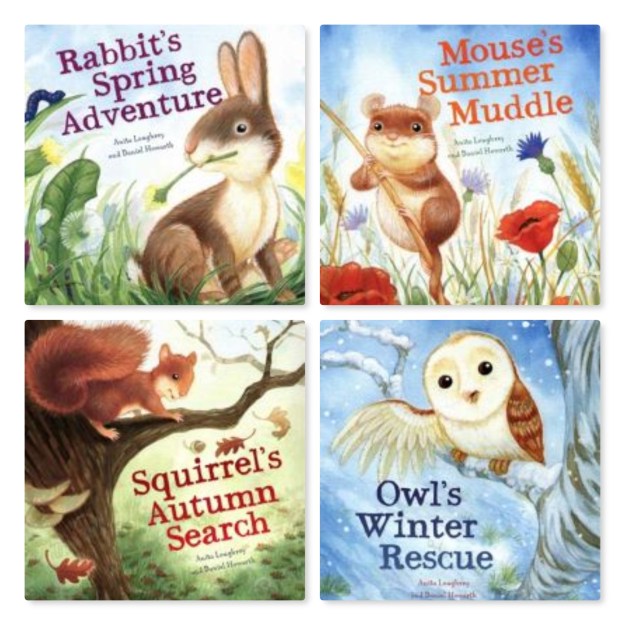
In 2012, I wrote a series of picture books based around the seasons which were part of the Animal Seasons series. They are published by QED and illustrated by Daniel Howarth.Season collage

You can listen to a reading of Rabbit’s Spring Adventure read by Jessica Zumhingst on YouTube. Jessica is a Kindergarten Teacher at North Park Elementary.

This year I have had the first two picture books also based on the seasons released just last month. They are part of a new series called A Year in Nature that compliment the previous series. They are also published by QED but this time they are illustrated by Lucy Barnard.


An interview with… Eve Ainsworth

In December 2017, I interviewed award winning children’s author, Eve Ainsworth, about the issues she covers in her YA books and how she develops the different voices for her YA characters.

wf2

She explained:

“My YA books focus mainly on issues I experienced when I was working in schools, or issues I remember facing myself as a teen. I explore topics such as bullying, mental health, toxic relationships and self-harm.” (Eve Ainsworth)

In Damage the themes of self-harm, grief and alcoholism are explored. These are quite dark topics. In my child protection role, I had dealt with self-harm cases within the school and was trained in this area. I had regularly spoken to young people who had harmed and had been taught why so many chose to do so.

Eve told me how she had experienced a recent grief in the loss of her father and how this made the writing process extremely difficult. She’d also had direct experience of alcoholism as my older brother died of drink related illness.

Eve’s aim is to increase awareness and understanding by raising these themes and hopefully help to support those struggling.

“I know when I was young, I felt isolated at times and books helped me to tap into the feelings and emotions I was experiencing. It helped me and ultimately I hope I can help others.” (Eve Ainsworth)

Her favourite thing about writing for young adults is the characters’ voices. She love the way they are vibrant, questioning and constantly encouraging her, pushing herto break down the boundaries she might have set herself.

She reads her pieces out loud and if something sounds out of place or too adult, she’ll delete it immediately. In her head her characters have a total back story, she can tell how they’ll react to something or judge an action. She explained this is because they are part of her for a long time.

“It’s quite a strange process and difficult to describe to non-writers. They often look at me as if I’m mad.” (Eve Ainworth)

She told me that characters often send her in a new direction she wasn’t quite expecting – which is both an exciting and fairly stressful event. She discovered from a conversation in her head with Gabi she was even more vulnerable than she first thought and a lot of her pain and fears were hidden in a deep dark place within her. Eve knew she was going to be feisty and headstrong at the start of the book – but it was only through development and conversations she worked out this was just her ‘front’. Her way of preventing anyone coming too close and hurting her anymore. This is particularly evident in her relationship with her mum. Eve didn’t plan for it to be a difficult relationship. Gabi led me that way.

This information created more plot layers for Eve, so her novel became more than just about ‘self-harm’ – it was now also a book about identity and about relationships. Gabi’s relationship with her Mum became key – as the two are very similar in the way they deal with grief and pain. As the plot evolved it was clear to Eve that Gabi and her mum had to work through their demons together in order to move on and heal.

Eve explained:

“Voices come from having strong, relatable characters. Once you have a well-defined character in your mind, their voice should be unique –and as I mentioned before, the voice will be with me – in my head, like an old friend nagging at me.” (Eve Ainsworth)

Eve told me that to ensure her characters’ voices are different from each other she uses subtle differences in the writing – phrasing and sentence structures to make the characters stand out. She asks ‘would he say that?’ ‘how would she react to this’? The differences become magnified once the characters are fully formed. Development of character is key. Only once you have a strong character can you have a strong voice. Her tips to other writers who want to get the voice of their characters write is to either ‘hot seat’ or write out a questionnaire asking your character several questions.

Think how would they react to a given situation, or how would they feel if this happened? Consider how your character responds – tone, body language, facial expressions and make notes – all these factors will help you to create their unique voice.

Eve suggests you could get your characters to write to each other, a couple of letters each to help develop their different style. Or write a short monologue in the voice of one character – telling their version of a story (whether it be the one you are writing or something completely new). Then, get your other character to tell their version of events. Read both pieces out loud. Do they sound like two individuals, or the same person? If it’s the latter, tweak – look at the words used again, the sentence structure. The tone. Make them different and stand apart.

A final good exercise that Eve shared with Writers’ Forum readers is is to listen to other peoples’ conversations more. Eavesdrop. Notice how voices are unique and make notes about what people are actually saying to each other, how they say it and what they don’t say. Buses and trains are great places for this, and it’s the reason why I carry my notebook everywhere. You never know what you might discover or overhear. Writing is the perfect excuse to be a nosy beast.

You can find out more about Eve Ainsworth’s books on her website: www.eveainsworth.com and Twitter @eveainsworth