Tag Archives: Anita Loughrey

Planning a picture book

Last week in my ‘Anita says…‘ writing tips regular blog I talked about Planning a novel. This week I thought I would talk about planning a picture book. As you know I had two new books out on the 17th of this month but how do I actually go about planning ALL the picture books I have had published?

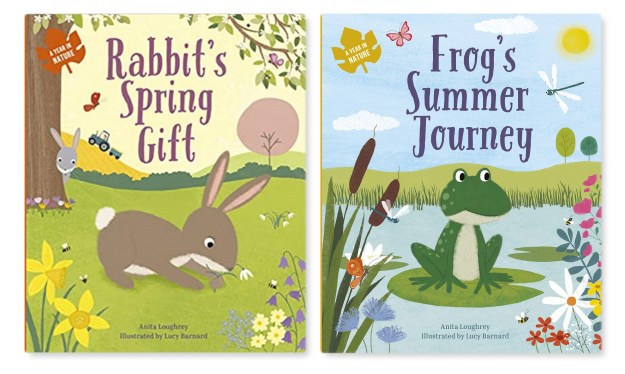
Spring and Summer books2

A good picture book is not just written it is constructed. Every word counts. When I plot a picture book I think carefully about the beginning, middle and end. My first task is to jot down a brief sentence or two of what I want to happen in each of these three sections. These are my key points. It is important to me to know how the story is going to end before I start writing so I know exactly where the story is going.

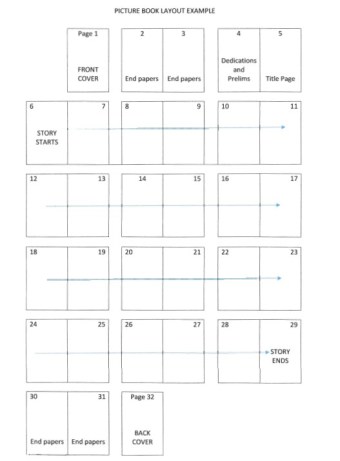
My next task is to think carefully about the structure of the book. There are 32 pages in a picture book:

Picture book page breakdown

As you can see this is briefly broken down as:

Page 1 – Front cover

Page 2 and 3 – End papers. These are the pages that appear immediately after you turn over the front cover. Sometimes they include themed illustrations.

Page 4 – Prelims and dedication. It includes information about the publisher, the printer, the ISBN number, copyright notices and sometimes the author or illustrator’s dedication.

Page 5 – Title page. This features the title, series, author, illustrator and publisher’s logo.

Pages 6 – 29 – The story. 12 double-page spreads. Pick up a picture book and count them.

Pages 30 – 31 – End papers

Page 32 – Back cover. The blurb, price, ISBN number and bar code.

The part you have to write is twelve double-page spreads. Sometimes they can be slightly different formats but usually they are 12 double-page spreads. Most songs, nursery rhymes and fairy tales are built upon the rhythm of this magical number three. Take a look at how a familiar fairy-tale such as, Goldilocks and the Three Bears,  fits to this picture book structure.

Picture book page breakdown with Goldilocks example

Notice how there are three bears, three scenes – porridge, chairs and going to sleep on the bed. The Power of three is an important tool when writing children’s books, especially picture books. In the case of picture books THREE really is the magic number that young children can identify with. Think about it… the rhythm of the day has three parts – morning, noon and night – there are three main meals in a day – breakfast, lunch and dinner. The rhythm of growing has three stages: baby, child and teen.

When I plan a picture book I always try to think of the plot, which goes into the middle section of the book, in three parts too. I also try to keep in mind Michael Hauge’s six stage plot structure and the story arc. I outlined both of these ideas in my blog post on The Art of Plotting.

Just as for a novel the stakes have to get higher and higher. I keep these in mind and think carefully what I would like on each of the twelve spreads. I use this planning sheet to help me as part of the rough sketch phase of my planning. Again I just jot down a few words for each section.

My picture book plannerWhen the plan is in place and I am happy with it, I start to write the picture book. My recommendation to you if you are just starting out is to try and use this format. I hope you find it helpful. Of course if you use other methods of planning I would really be interested to find out more. Please let me know.

Book birthday

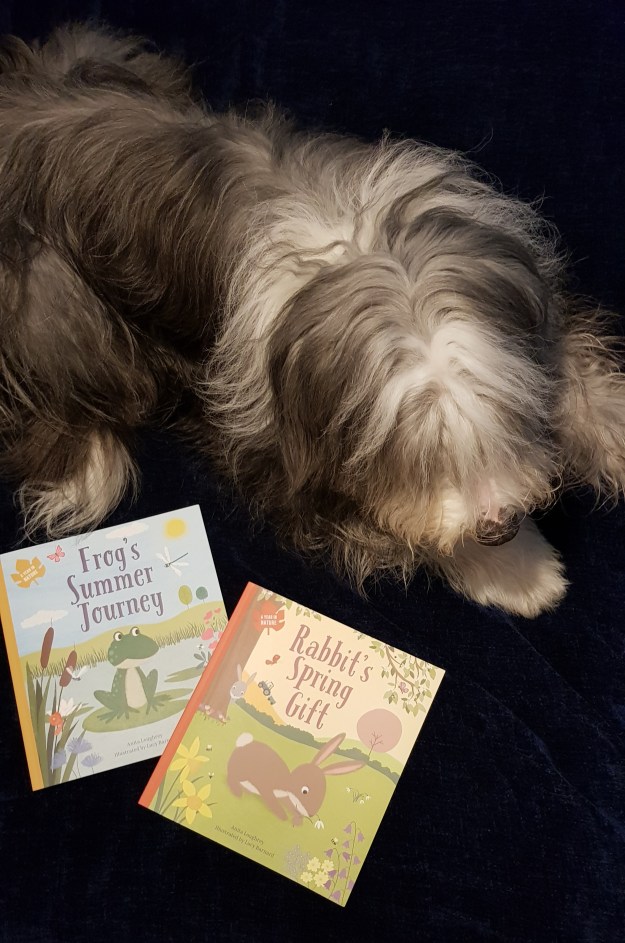
Today I have not one but two new books out: Rabbits’s Spring Gift and Frog’s Summer Journey. They are part of the A Year in Nature series of seasonal animal led picture books published by Quarto Educational (QED). The other two book  in the series are released in September. The beautiful illustrations are by Lucy Barnard.

20200316_105509

Rabbits’s Spring Gift has a theme of sibling rivalry set around the concept of spring. Rabbit wants to give her mum a thank you gift, but her brother tries to out-do her at every turn. Take a look and discover if Rabbit can find the ideal gift. The book intertwines family relationships and the changing seasons.

Frog’s Summer Journey was inspired by the ‘grass is greener’ proverb and is set during summer. Frog is looking for somewhere new to live but none of the places he visits on the pond are just right. You can follow Frog on his journey and discover all the signs of summer on your way.

At the back of each book I have included seasonal activities, crafts and discussion points to help develop a child’s understanding of the natural world. these books could be used in schools, nurseries and at home to support topics on the seasons and animals. The gorgeous illustrations give the perfect ahhh-factor.

These books compliment my previous Animal Seasons series picture books also published by Quarto but illustrated by Daniel Howarth.

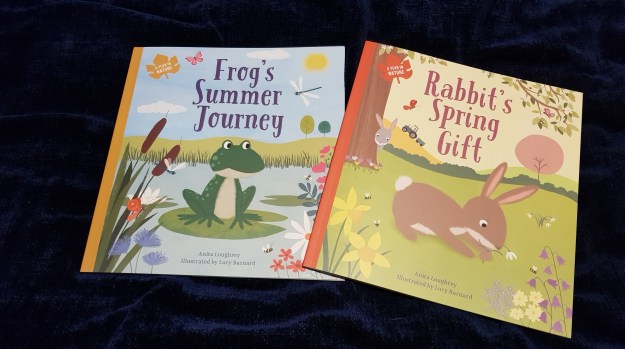
Here are the new books being modelled by my dog, Logan.

20200316_105711

You can find out more about me and my books on my website: www.anitaloughrey.com or follow me on Facebook: @anitaloughrey.author  Twitter @amloughrey  and Instagram: @anitaloughrey

You can find out more about Lucy Barnard on her agent’s website: www.advocate-art.com or follow her on Facebook @lucybarnardillustration Twitter @barnard_lucy and Instagram @lucybarnardillustrates

Another interview with… Sue Wallman

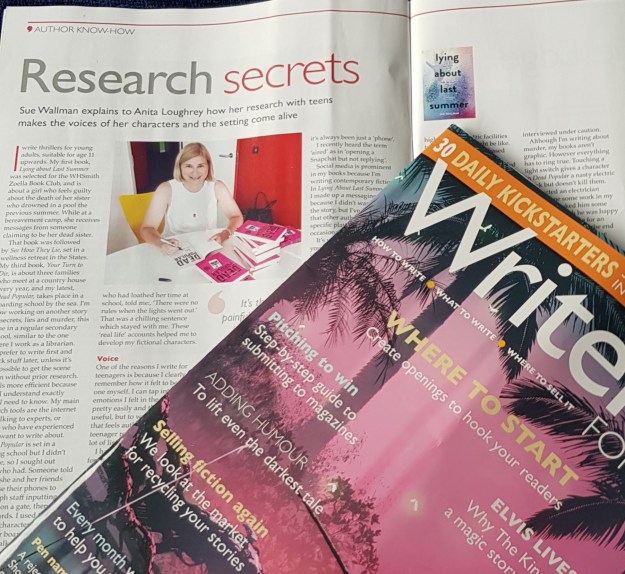
This month for my Research Secrets column I have interviewed Sue Wallman about her research for her award-winning YA thrillers. I have previously interviewed and blogged about Sue Wallman before when I interviewed her for Papers Pens Poets. Take a look at: An interview with… Sue Wallman

20200309_131758

Her first book, Lying about Last Summer was selected for the WHSmith Zoella Book Club, and is about a girl who feels guilty about the death of her sister who drowned in a swimming pool the previous summer. While at a bereavement camp, she receives messages from someone claiming to be her dead sister. That book was followed by See How They Lie, set in a luxurious wellness retreat in the States. My third book, Your Turn to Die, is about three families who meet every year to stay in an old house, and my latest, Dead Popular, takes place in a boarding school by the sea. They are all published by Scholastic in the UK.

Sue told me that when she is researching:

“I prefer to write first and check later, unless it’s impossible to get the scene down without prior research. It feels more efficient because then I understand exactly what I need to know.” (Sue Wallman)

Her main research tools are the internet and talking to experts, or people who have experienced what she wants to write about. For example, Dead Popular is set in a boarding school. Sue didn’t go to boarding school, so she sought out people who had. Someone told her how she and her friends would use their phones to photograph staff inputting a PIN on a gate, then zoom in afterwards. She used this information when her characters to crept out of their boarding house. Such ‘real life’ accounts help Sue to develop her story.

“One of the reasons I write for teenagers is because I clearly remember how it felt to be one myself. I can tap into the emotions I felt in the 1980’s pretty easily and that’s very useful, but to write in a voice which feels authentic to today’s teenager requires me to do a lot of listening.” (Sue Wallman)

Sue listens to how her own children speak with their friends, and it’s often different to how they speak to adults. She loves teenage slang and find it fascinating but does not to use too much of it in her novels because it dates, and can be particular to a certain region.

As a school librarian Sue is well placed to listen to teenage speech patterns. She listens to the way the students start their sentences with “Wait,” or “Also” and end it with “right?” and writes down phrases which appeal. Recent ones include “Don’t kill my vibe” and “If you’re interested, hit me up.” If she is not sure how to phrase something, she simply asks but is aware the danger is when you don’t know what question to ask.

Sue told me that her characters really come alive for her when she is discussing them with others as if they’re real. She explained this is because the voice is not just about the words – it is young people’s sense of injustice about situations they have no control over, loyalty to friendship groups, anxieties about how they are perceived, and their opinions on a diverse range of topics.

In the interview, Sue explained how setting is especially important in thrillers because it builds suspense. She describes her thrillers as claustrophobic. She revealed that  bereavement camps like the one she wrote about in Lying About Last Summer don’t actually exist but regular activity ones do, and there are also various charities which run holidays for teenagers, so she meshed them together. She also makes use of experiences she has had in different areas of her life – for example, one of my daughters had a paint-balling party so I used paint-balling as an activity in the bereavement camp.

Her research tip to other thriller writers for children is to think about the sorts of phrases your own characters use. Type them into the search line of your search engine and a blog or article may come up, written by someone with those views and experiences that you can use as good background knowledge for your novel.

To read the complete feature you can purchase a copy of #222 Apr Writers’ Forum from your nearest good newsagents or order online from Select Magazines.

Find out more about Sue and her books on her website: www.suewallman.co.uk, or follow her on Twitter or Instagram @suewallman.

What it means to be published?

Last week I went to the SCBWI Masterclass featuring Rachel Hickman, children’s publishing director at Chicken House. She talked about What it means to be published – the good, the bad and the beautiful. Chicken House publishes 25 books a year and a small proportion of these are debut authors. It is there 20th anniversary this year. There are nine people in total working at Chicken House.

Rachel Hickman has worked with Judith Kerr, Roald Dahl and Michael Morpurgo. She grew up in Hong Kong and as a child was obsessed with pony stories. she spoke to us as both a publisher and an author.  Her novel One Silver Summer is published by Scholastic in the US and Old Barn Books in the UK.  She explained for her writing is a personal and immersive thing and sharing it can be tough.

One Silver Summer

Rachel revealed that the truth is about being a publisher is that they do not know what they are looking for. They want reinvented familiar ingredients done with distinctiveness. As a publisher she works for a worldwide market which spreads the risk. Chicken House is a bit maverick and tend to ignore the trends, weighing there acquisitions by instinct. The Chicken House list is culturally rich and selling all over the world. They think in terms of are they going to be able to sell this to oversea publishers.

She is aware that the gate keepers put there stamp on a book at each stage and at Chicken House they prefer to see the book before this happens. they want to find timeless stories that will not date in five years where lots of stuff happens with consequences, where grown-ups are absent or are unreliable or villains. The children win through and the reader is left with a sense of hope.

20200307_121806

Children like detail, tasting what you eat – all can taste the Turkish delight in The Lion, the Witch and the Wardrobe She believes all stories should have an element of humour. 

“Humour is delayed fear.” (Roald Dahl)

The book trade is like a tide with new beautiful shelves washing in and a lot of books get washed out. The reality is many books are gone in a few years as there is no room on th shelves for back list. At the moment there is a slump in YA. Rachel advises all writers to write form the heart. If you are serious about being published you have to realise what you put in is disproportionate to what you get out at the end. Writing is a great way to dream but not necessarily a dream career.

There is no guarantee of being published. Publishers make simple decisions based on their list. If you are successful you have to have another book available. Chicken House are only interested in authors they can invest in rather than single books. Publication is not a reason to write you need to enjoy the process. If you write for a child or for yourself it will show through.

Authors in Common

Rachel particularly looks for voice – a distinct spirit or style that inhabits the story you write and breathes life into it. this is why she likes to see manuscripts raw, without the voice muffled. she also needs to see obvious evidence of practical writing skills such as being able to plot and edit. an ability to use words that will speak to the children and let them identify with the story is essential.

You need to have confidence in your story and believe in your characters. knowing who they are and how they behave is important. They are looking for authors with more than one story to tell. Chicken House expect there authors to write at least three books for them. they also like authors who can perform. It is not enough to sit at home. You have to be able to pat your head and rub your tummy in front of over 100 children. All these things effect their decision.

Acquisitions

A lot of things come into Chicken House through agents, scouts and oversea submissions. They try not to be drawn into auction bidding and they are careful about showing they care too soon. There are two editorial directors an editor and a reader. Barry loves looking at manuscripts that have just come in and if something catches his eye he will pass it to Rachel and Eleanor, the rights director. they generally work form home and meetings are an ad-hoc process. they have scouts and oversea submissions.

It is a holistic process. They never publish something sooner than a year. Asha and the Spirit Bird (published 2017) came through the Chicken House /Times competition that asks for completed manuscripts form unagented authors. The shortlist is always one winner but 50% of the shortlist is usually published. Asha and the Spirit Bird was shortlisted for the Waterstones prize.

Rachel’s Tips on Getting Published

  1. Take time, there is no rush. Make your manuscript as good as you can. Solicit other views and take on board the things that resonate with your story. Remember they are just opinions. You need to use your judgement.
  2. Know what you’re writing, write form the heart and personal experience, know your setting and your protagonist.
  3. You do not need an agent. Chicken House run open coops where you can submit manuscripts. it is a one day event that is totally random. Sometimes they have a theme. The agents are a filter and will help you get noticed. remember they take 20% of your earnings. You need to decide if they are giving you sound business advice. A good agent will get you the best deal but not necessarily the most lucrative.
  4. Think who is going to edit you. Are they the best fit?
  5. The smaller the publisher the smaller the list, the bigger publishers have bigger lists but less time. Love the process of publication and editing.
  6. Think what the book might look like, seeing the book on the press and a warehouse full of your book.
  7. Travel with hope.
  8. Manage your expectations and sell yourself. Self-marketing is essential remember Waterstones only advertise one author a month. So you need to get at there and publicise yourself through schools and indie bookshops.
  9. know publishing is a level playing field. so many things can come form nowhere. Wimpy Kid started life as an adult humour title in the US. Your book may be small in the UK but it could be massive in another country, like Germany.
  10. You’ve got to have fun.
  11. You’ve got to be disciplined.
  12. You need to think about your title and your pitch to show you know your book well enough.
  13. Even if it is a series your book has to stand alone. Often a series can be because you are being too ambitious in the world building.
  14. Often beginnings and writing your way in to the story and will need to be edited at the end.

An interview with… Joy Court

In November 2017, I interviewed librarian Joy Court, about some of the children’s book awards she was involved with for my Writing 4 Children slot in Writers’ Forum. Joy is a professional librarian and was the Chair of the CILIP Carnegie and Kate Greenaway Medals – the oldest and most prestigious children’s book awards in the world of children’s literature.

Joy Court photo

The Carnegie Medal

The Carnegie Medal was introduced by the Library Association 80 years ago and is awarded for outstanding writing for children and young people. It is named after Andrew Carnegie, a self-made industrialist who made his fortune in steel in the USA. His experience of using a library as a child led him to resolve:

‘…if ever wealth came to me it should be used to establish free libraries.’

Andrew Carnegie

He set up more than 2800 libraries across the English speaking world and, by the time of his death, over half the library authorities in the UK had Carnegie libraries. He must be turning in his grave with the current shocking spate of library closures.

One misconception of the Carnegie Medal is that it has been taken over by teenage and YA publishing. There is only one definition of a children’s book – it is published on a children’s list (technically listed on the Neilsen database). Until the industry differentiates between children and teenage publishing we cannot.

A book can be great for many different reasons. For the purposes of the Carnegie we are looking for a book of outstanding literary quality.

“The whole work should provide pleasure, not merely from the surface enjoyment of a good read, but also the deeper subconscious satisfaction of having gone through a vicarious, but at the time of reading, a real experience that is retained afterwards.”

Past winners include: Tanya Landman with Buffalo Soldier, published by Walker Books; Sarah Crossan with One, published by Bloomsbury and 2017’s winner was Ruta Sepetys with Salt to the Sea, published by Puffin.

The Kate Greenaway Medal

The Kate Greenaway Medal was created 60 years ago to award outstanding illustration for children and young people and was named after one of our most iconic British illustrators.

Previous winners include: William Grill with Shackleton’s Journey, published by Flying Eye Books; Chris Riddell with The Sleeper and the Spindle, published by Bloomsbury and 2017’s winner was Lane Smith with There is a Tribe of Kids, published by Two Hoots.

Judging

Both medals are unique as they are judged by librarians and are completely devoid of any commercial influence. Neither publishers, nor authors can submit their books and the judging is not influenced in any way by sales or publicity. She read every single book nominated for them but does not get to vote. Joy’s job was to ensure every book got a fair chance and all the procedures were followed correctly.

In the early days, judging was carried out by men in suits behind closed doors (the Library Association Council). Now the judging process is under the control of children’s librarians from the 12 regions of the UK including Scotland, Wales and Northern Ireland. They are elected for a two-year-term by their regional Youth Libraries Group committee, thanks to the pioneering work of Eileen Colwell, the first specialist children’s librarian and founder of the Youth Libraries Group. She must also be turning in her grave at the loss of specialist posts.

Gradually the system of nominations, election of judges and the criteria has been honed and improved to keep pace with new developments in the world of children’s publishing. You have to be a member of CILIP to be able to nominate and can then nominate two books for each award. Unlike many other awards we publish our judging criteria on our website.
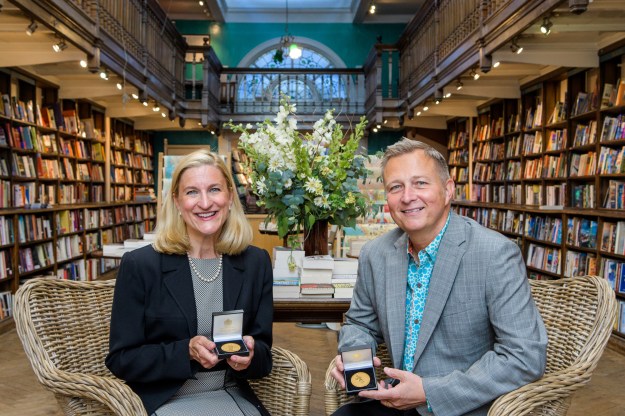
CKG Medal-5948, 16281

2017 winners

Impact

These awards have a huge impact on the world of children’s literature because of the enormous shadowing scheme. There are around 5000 groups shadowing the awards each year, with hundreds of thousands of young readers reading and commenting on the shortlisted books. This means a lot of shortlisted books will be sold and figures show an ongoing increase in sales from winning the medal.

The medals have always been international in outlook. Books first published elsewhere in the world can be eligible providing they are published in the UK within 3 calendar months of original publication. In 2014, books in translation (first English translation published in the UK) became eligible. We can genuinely say that the medal awards the best writing in the world.

You only have to look at the list of winners to see they have become classic titles that are always available in bookshops. I believe 80 years of ‘they all want to win the medal’ has led to the development of the UK ‘world-beating’ publishing industry we have today.

UK Literary Association Book Award

Joy is also a Trustee and National Council member of UKLA and helps to manage their book awards. They are nicknamed the ‘Teacher’s Carnegie’ as they are the only awards judged by teachers. The 60 teacher judges involved in the initial shortlisting are selected from around the geographical area where the next UKLA international conference will be held – 2018 is Cardiff.

UKLA invite publisher submissions according to three age categories 3-6, 7-11 and 12-16. A publisher can submit 3 books per imprint. A publisher like Penguin Random House has many imprints: Jonathan Cape, Bodley Head, Corgi, Puffin, Red Fox, etc.

In 2017, the winning book in the 12-16 category was The Reluctant Journal of Henry K Larsen by Susin Nielsen, published by Andersen Press. In the 7-11 category the winner was The Journey written and illustrated by Francesca Sanna and published by Flying Eye Books. The winner for the 3-6 category was There’s a Bear on MY Chair by Ross Collins, published by Nosy Crow.

As the conference moves around, we are gradually infecting the UK with teachers hooked on reading quality books. The impact in their schools and upon the young people they teach has been positively awe inspiring.  And of course books recommended by teachers are very popular with schools and parents. I strongly recommend authors to ensure their publishers are aware of the UKLA awards, which may be only 9-years-old but are growing in influence all the time.

 Other Awards

There are many awards for children’s books in existence today and the Writers’ and Artists’ Yearbook is probably the best source of information about them. Many are administered by the Booktrust so it is worth looking at their website and others are linked to children’s book writing festivals. Some awards require a submission fee from the publisher, so it can be very difficult for an individual author to influence this. It can be a marketing budget based decision.

In the feature, Joy recommended researching local awards in your area run by your local library service. Becoming well known in your local area – visiting schools and doing local bookshop signings is a good way to get your books noticed and considered for such awards.  Once over the hurdle of submissions / nominations every award will have a different system of judging and / or voting, often by the children readers themselves.

The Coventry Inspiration Book Awards, which she created, has a tense system of Big Brother style voting. The book with the least number of votes is voted off each week until we get a winner. This ensures readers keep voting to keep their favourites in.

Anything which raises the profile of books and reading has to be a good thing. We all know that bookshops can have a bewildering array of titles and something having an award sticker can make a huge difference to sales. The most important thing about children’s book awards is the pursuit of excellence.

Joy Court can be found on Twitter: @Joyisreading

An interview with… Julie Cohen

Julie Cohen writes romantic comedy for Headline’s Little Black Dress imprint and novels for the Mills & Boon’s Modern Heat imprint and is a Richard and Judy bestselling author. I interviewed her for my Research Secrets column in the #92 May 2009 issue Writers’ Forum.

She told me she loves research because it means she gets to do stuff she wouldn’t normally do. She has ridden roller coasters repetitively for a roller-coaster designer hero; gone to famous restaurants for a celebrity chef hero; rode on the back of a BMW motorcycle at 80 mph down the M4 for a motorcycling hero; ran from South Street Arts Centre in Reading to the station in high heels just to see how fast it could be done; visited art deco cinemas, retro diners, art galleries, cities and parks to research settings for her books. But, Julie believes the best resource is to get out there and talk to people.

Her original sources are all people. She explained talking to them is utterly inspirational and helps her get into the heads and lives of my characters. She has also met some really cool people who she has looked up online, in the phone book, or through research books.  Usually she emails or pick up the phone and rings. She has found that most people are happy to talk to you about what they know and told me their opinions are just as useful as the facts for developing characters.

She explained it is always important to acknowledge experts who have taken time to help or whose expertise you’ve used extensively. She like to send a thank-you email or note and often sends them a signed copy of the book when it comes out.

It is not until she is about half to two-thirds of the way through a book that she begins to see what information she actually needs.  That’s when she starts making lists of questions to ask, and that’s generally when she start calling experts and asking for interviews.  Because her books are more focused on the characters and the story than on research details, she does not see the point in getting huge amounts of information she probably won’t need.  Instead, she pinpoints what she has to know for the story and only uses (and often only find out in the first place) what’s vital to the story, or what seems to add vital flavour.

“I’m not a plotter when I write, and generally my first forays into research are pretty vague.  I use the internet first – and then the local library and bookshop. I’ll just dabble around in a subject finding out some stuff to see if any of it inspires me. My books centre round people and relationships rather than facts.” (Julie Cohen)

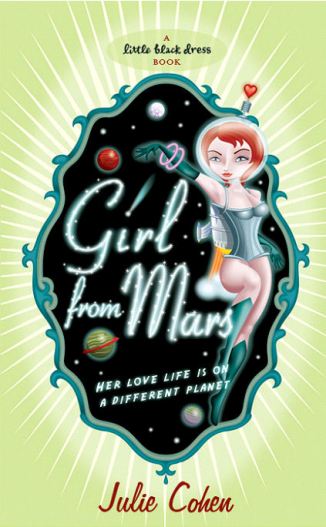
Julie told me that quite often, doing her research, she will find a central metaphor that she can use and examine through the whole book. For example when researching comics for Girl from Mars, she was intrigued by the concept of the gutter, which is the name for the blank spaces between panels.

girlfrommarslge

Because comics are static but portray action, the reader actually fills in the action between panels. The blank gutter is extremely important to make this happen. In her story, it became a metaphor for change happening when you’re not looking, for filling in the blanks, which are both key themes to the story.

You can find out more about Julie Cohen and her books on her website: www.julie-cohen.com

To read the complete feature you can purchase a copy of #92 May 2009 Writers’ Forum online from Select Magazines.

Writers’ Holiday

Last weekend I went for my annual weekend away to Wales on the Writers’ Holiday to concentrate on my writing. I took my Work In Progress and (spoiler alert) got absolutely loads done. I’ve been to Writers’ Holiday for several years as the atmosphere is so brilliant and I always manage to come back with a few thousand words written.

If you have not been to Writers’ Holiday you don’t know what you’ve been missing. It was set up in 1986 by Anne Hobbs, is run by writers, for writers and receives no financial assistance from any source whatsoever, wrapped up in a totally informal and relaxed setting. It’s up to you what you choose to do but it’s all there for you just take what you want. You get to choose a wide selection of courses or you can use the time to work on your own WIP, or if you prefer just to chill and relax.

One of the great things about Writers’ Holiday it is not too much money. In fact, you get a lot for your money.  The fee includes breakfast, lunch and dinner, all weekend workshops and collection / return to Fishguard and Goodwick train stations.

The venue is The Fishguard Bay Hotel which nestles in rich woodland above Fishguard Harbour and overlooks some of the most beautiful and spectacular coastline in Wales, guests can view the lower town in the distance across the bay.

20200226_172615

This was setting for Dylan Thomas’ Under Milk Wood, when stars like Glynis Johns, Richard Burton, Peter O’Toole and many others stayed here. It was also the base for the filming of Moby Dick. In 1979, this former Great Western Railway hotel was designated as a building of historic and architectural interest. Set in a commanding position overlooking Cardigan Bay, the hotel offers an atmosphere second to none with oak panelled walls, high ceilings and an air of Victorian splendour.

I set off in plenty of time, having started my packing a few days before. It was hard as my son was home that week from University but as my husband and boys planned to paint the hallway, stairs and landing walls, it was probably better I was out of it.

The course I choose to do was Get your Non-fiction Book Written and Published with Simon Whaley. I’ve done Simon’s courses before and they are always inspirational and motivational. So I did not research the course as much as I would have done a new course or venue. Even so, I decided to write down a few questions of things I wanted to know about writing non-fiction books to make my life easier. The last thing I wanted was to not ask and get home and wish I did . I’ve learnt the hard way not to be afraid of asking questions.

I also thought about what I really wanted from the course. Was I just looking for a fun weekend away or did i have a goal in mind I had a goal or two, firstly I am on a tight schedule with my latest commission so needed to get a lot of work done and the ideal time was on the train there and back. The other reason is that although I have written some non-fiction books, I have a few more non-fiction book ideas I want to write. My aim was to kick start myself into doing it. It was a small group which is often nicer as you can get more from a course this way.

It wasn’t all work there is also some fantastic meals you get a buffet breakfast and a choice from three starters, main meals and puddings for lunch and dinner.

There is also a book room where both the course leaders and delegates can bring there own published books to sell.

20200223_084850

You’ll be pleased to know, I managed to work on three non-fiction book ideas and developed them and also my latest commission which I had given myself a daily schedule. Now all I have to do is carry on the momentum and make an effort to write the book.

Book Review: Mustafa’s Jumper

Title: Mustafa’s Jumper

Written by: Coral rumble

Illustrated by: Charlotte Cooke

Published by: Wacky Bee

Mustafas Jumper

Mustafa’s Jumper is based on a poem of the same name also by Coral Rumble. The poem won the prestigious Caterpillar Poetry Prize in 2018. Rewritten in prose this story gives a child’s point of view of having a refugee who speaks no English, temporarily in your class at school and how they feel when the child is sent back to the country they were trying to escape from, which is highlighted by the single school uniform jumper that is left behind in the cloakroom.

It is written in Milo’s point of view, a quiet introvert boy whose best friend, Eddie, is the total opposite. Eddie get chosen to look after the new boy but has no idea what to say or do with a boy who can’t speak his language. Milo understands what it is like to feel like an outsider so he does what he can to include him: he plays with him, shows him what to do and where to go, and invites him home to tea. Milo and Mustafa become good friends.

Throughout the book it highlights patience and kindness by showing how Milo helps his new friend. The ‘show not tell’ plot is ideal for demonstrating and developing empathy in young children.

This is a great book for triggering discussion in the classroom about immigration, asylum seekers and refugees. There is a page at the back that talks about reasons why people have to leave countries and how sometimes people leave their homes because of war, a natural disaster or terrorism means it is too dangerous to stay. It also highlights how difficult it can be starting from scratch in a new country and explains some people like Mustafa are sent back. Could be used for discussion in both KS1 and KS2.

An interview with… Holly Rivers

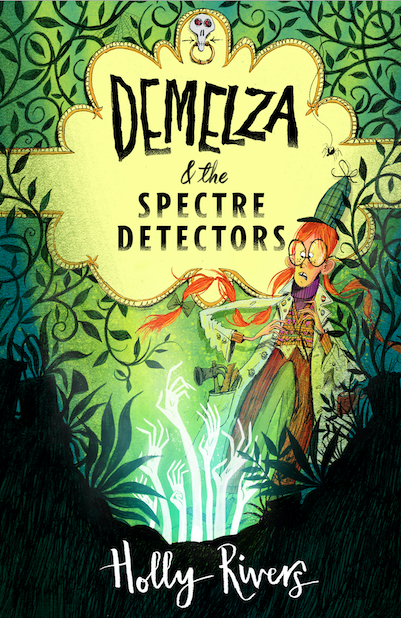
In my Writing 4 children column this month (issue #221 Mar of Writers’ Forum) Holly Rivers, explained what inspired her to write a story about a stubborn young inventor called Demelza.

Holly Rivers2

The idea struck her in 2016 and she put pen to paper immediately and very quickly realised she never wanted to stop writing.

“I could see her clearly from the very beginning: her red hair, her cosy attic room, her quirky inventions, and her thinking hat.” (Holly Rivers)

For the first time in her life she had found something she wanted to do every single day for evermore. Holly believes this realisation massively changed her life for the better, and revealed sitting down to write always makes her heart beat a little faster. She explained that she spent a year writing the (very long and very messy) first draft of Demelza and the Spectre Detectors, before spending a further year honing the manuscript on The Golden Egg Academy’s Foundation Course.

Holly told me the fact she is absolutely fascinated by anything spooky, macabre and ghostly inspired her to explore how a logical, science-minded character such as Demelza would react to finding themselves in a mysterious supernatural environment.

“Having an inquisitive stem-girl protagonist was really important to me, and I think there’s quite a lot of young Holly in Demelza. A few of her inventions were things I actually attempted to make as a child — namely the ‘Magnificent Belly Button Cleaner’” (Holly Rivers)

A lot of her inspiration comes from the sci-fi and fantasy books/films she enjoyed as a child such as: Ghostbusters, E.T, Labyrinth, Chitty Chitty Bang Bang, the books of Roald Dahl, The Goonies, Pippi Longstocking, Teenage Mutant Hero Turtles.

This slideshow requires JavaScript.

Many of her characters are inspired in part by real people, for example Grandma Maeve’s eccentricity, warmth and humour all stem from her own wonderful grandmothers. Ms Cardinal was also inspired by someone, but she wouldn’t say who. Holly said that so much great material can be mined from keeping your ears and eyes open, and I can often be found jotting down snippets of conversations that I’ve overheard, making notes of an unusual mannerism, or sketching an interesting outfit that somebody is wearing.

Demelza jacket lowres

The children she works with are huge inspirations too  and Holly has no doubt that bits of their brilliant (and often mischievous) personalities have found their way into Demelza, Percy and Miranda, and she believes this has made their characters all the richer.

She has also spent a lot of time in Mexico, where Dia de Los Muertos is the annual holiday celebrating the dead and observing the way that different cultures mark death was also a big inspiration for her book.

“Some people can have such a sombre, stiff and austere outlook on death, so I wanted Demelza and the Spectre Detectors to hopefully open up the conversation around death to a young readership in a ‘lighter’ and more accessible way.” (Holly Rivers)

Her writing tip for other children’s fiction writers is to read:

“I try and read or listen to at least one book a week, and I make sure that the titles are diverse and genre-crossing. One week I might be reading a quirky middle grade such as Beetle Boy by M G. Leonard or the latest YA from Frances Hardinge; the next I might be listening to an old Agatha Christie on audio book, and the next I might be dipping back into the Tank Girl comics (for the umpteenth time!)  I feel that most of my own development as a writer has come through exploring, savouring and digesting other people’s work.” (Holly Rivers)

To read the complete feature you can purchase a copy of #221 Mar Writers’ Forum from your nearest good newsagents or order online from Select Magazines.

Find out more about Holly and her books on her website: www.hollyrivers.co.uk, Twitter: @hollyrivers_lit and on Instagram: @hollyriversauthor

John Condon’s book launch

Last week Thursday, I went to John Condon’s book launch for his latest picture book, The Pirates are Coming written by John Condon and illustrated by Matt Hunt.

The Pirates are Coming

This is an ingenious picture book all about a little boy who keeps a look out everyday for pirates in a similar vain to the boy who called wolf but as John’s son, Eddie, explained the boy is not being naughty because he really believes it is a pirate ship he sees.

On arrival I was greeted by the staff of Queen’s Park Books, London, who offered me a drink, red wine, white wine and rum, which made it really difficult for me not to take an alcoholic drink as dark rum is one of my favourites. After much deliberation, I drank mango juice and managed to restrain myself from mixing it with rum. There were also some delicious pirate cupcakes.

The first person I met was John’s son, Eddie, who pointed out he was the boy in the cover of the book and indeed he was – right down to the red sash and the bell. Some of the guests also dressed up as pirates, including myself. This is a picture of me with author Matt Killeen and another of author, Cath Jones in her pirate costume. I interviewed Cath for the January 2020 issue #219 of Writers’ Forum see: An interview with… Cath Jones

John was also dressed up and he was the spitting image of he dad in the book. The likeness was uncanny. I was wondering if Matt did this intentionally.

During the launch we were entertained by violinist, Frank Biddulph, and John read the book with the help of his son Eddie who got the timing perfect and even managed an improvised squawk of the parrot.

I have also previously interviewed John about his writing process for the #216 Oct 2019 issue of the national writing magazine, Writers Forum. I have blogged about the interview here: An interview with… John Condon. In the interview John explained that even though The Pirates are Coming was accepted to be published first, due to the backlog of pirate based stories his other picture book The Wondrous Dinosaurium (illustrated by Steve Brown) was published first.

All in all a very successful book launch for another excellent picture book. I can’t wait for the next one.

To find out more about John take a look at his website www.johncondon.co.uk or follow him on Twitter @John_Condon_OTT