Tag Archives: Anita Loughrey

An interview with… Sarwat Chadda

Sarwat Chadda’s first novel, The Devil’s Kiss, was released by Puffin in May 2009 and was quickly followed by the sequel, The Dark Goddess. He has also written a breathtaking action adventure series for children aged 8-12 years, called Ash Ministry and writes under the pseudonym Joshua Kahn. He is currently working on a project with Rick Riordan. I interviewed Sarwat about his research in 2009 for my Research Secrets column.

He explained that for him the research comes before the writing because he loves reading about history, mythology and fairy tales way back when he was an engineer. He likes to start something on a whim and then explore the area, culture and background until he reaches a saturation point. This gives him enough information to sound convincing and have all the key characters and locations in place.

Ultimately, his books are about the character and feels everything else is scene setting. To help create his characters he looks into his life and projects how he was at the age of his protagonist. He said the core needs come from there.

Sarwat insists research shouldn’t be a chore it should be part of the fun.

“We’re not just putting words down on paper we’re offering readers our unique take on the world. If you’re finding it hard work constantly, question why you’re doing it. Writing is about passion, life’s too short to be wasted on something you don’t love.” (Sarwat Chadda)

Most of his research is done through books. In fact, he admits that his biggest cost is books, but he was buying them before he decided to become a full time writer. Sarwat believes that libraries are our greatest resource. I agree. Use them or lose them. He explained:

“The Internet has its place, but nothing beats getting really into a subject in a library and second hand book shops. They’re great since you’ll come across stuff that’s years old and since I’m writing about mythology, those sort of books just set the mood perfectly.” (Sarwat Chadda)

He said the danger is over-research and getting yourself trapped by it. But he does not have a system for the way he does his research. because he feels the best thing about writing is the license to mix it all up how you like. His tip to other writers is not to stack your books in a too organised manner. Mix them up and see what happens as you’ll come across connections otherwise impossible to see if it’s all logical.

Sarwat explained sometimes the ‘official’ version doesn’t work and you have to tweak it. This happens a lot in historical fiction, especially with combining characters and moving dates. But that’s why it’s called FICTION. In his adventures he admits he makes up all the difficult and dangerous stuff.

OLYMPUS DIGITAL CAMERA

For all that sort of practical detail on the ‘day in the life of a warrior’ he got in touch with various re-enactment societies and visited shows around England. Since his books are based on the Knights Templar, he found their working understanding of the practical nature of the arms and armour of a medieval knight, very useful.

“They explained the nitty-gritty of the sword hilt, the practicalities of the weight of armour, its properties and the weapons designed to overcome mail or plate. It’s all these details that make the story breathe with a sense of reality.” (Sarwat Chadda)

To find out more about Sarwat Chadda and his books take a look at his excellent website: http://www.ashmistry.com or follow him on Twitter: @sarwatchadda 

To read the complete feature you can purchase a copy of #93 June 2009 Writers’ Forum by ordering online from Select Magazines.

What makes me want to keep reading?

Over the past few weeks I have been thinking increasingly about this question. I am the type of person that if I get bored with a book I will not carry on. I have a very short attention span and my mind wanders very easily into my own little worlds. I have read several books where I have been told, if you get past chapter five it is great you can’t put it down, because I have stopped reading during chapter two.

Room by Emma Donoghue and Timeline by Michael Crichton are two of these books. I have started again with these books and forced myself to read on and consequently really enjoyed the books and have since, read them again. So did I give up too soon? Why did I stop reading in the first place (especially as both of these books have such brilliant concepts)?

After a lot of thought, I think that there was too much backstory for me from the onset. I know as authors we should release the thread slowly, but these books for me, in the first few chapters, were too slow. The stories felt as if they were going nowhere. Even the dialogue did not seem to me to propel the story forward. In fact, dare I say it of two best-selling authors but the beginnings were rather self-indulgent. I didn’t get the cliff-hanger or unanswered question at the end of the chapter to make me want to read on. I have posted about writing cliff-hangers before: End Each Chapter With a Cliffhanger

I’ve heard it a thousand times on creative writing courses and I know I’ve said it myself and have more than likely written it in one of my blogs before but honestly if it doesn’t move the story forward, leave it out. I will block quote that:

If it doesn’t move the story forward, leave it out.

When I come to edit a chapter book, I always re-read each chapter (which is usually a scene) separately and ask myself these questions at the end:

  • Does the chapter trigger my curiosity?
  • Has the chapter developed the characters and/or the plot?
  • Is this something I would read if I only had a few minutes to spare?
  • Would it effect the story if the whole scene was cut?

These questions really help me to focus my mind.

I love reading books, which make me want to skip parts to find out the answers before I carry on from where I left off. It is frustrating when a book ends and it says… to be continued. I actually feel really cross at the author. This is what happened to me with Teri Terry’s first book in her Slated series.

But this technique did make me buy the next book in the trilogy as soon as it was released and they are still one of my favourite all-time series of books. I have also bought and read every other book she has written – so they’ve got to be good. I think Teri Terry’s books really hits it on nail – so here is my epiphany I wanted to share with you all:

To make me want to keep reading you have to make me care about the characters from the start and keep on making me want to find out what happens to them.

It really is that simple. I hope this helps you when writing and editing your own books.

An interview with… Helen Fry

In 2009, I interviewed British historian and historical non-fiction writer, Dr Helen Fry,  for my Research Secrets feature in the #94 July 2009, issue of Writers’ Forum.
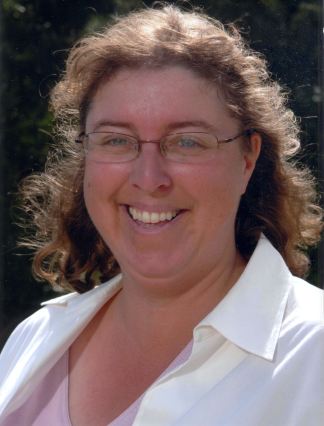
Helen photo

Helen Fry specialises in history books, specifically refugees in the British forces in the Second World War; as well as English Jewish community history. But she co-wrote with James Hamilton under the pseudonym of  J. H. Schryer for her first novel, Goodnight Vienna. It is a love-triangle within MI6 British operatives, set against Hitler marching into Vienna in March 1938, based on authentic background research which she did for some of her history books.

For example: on 10 May 1933 Hitler ordered the burning of Jewish books in Berlin, including those of Sigmund Freud. As each book was hurled into the burning pile, a ritual chant was said by the SS, SA men and students. In our novel Goodnight Vienna, we have a scene of burning of books in Vienna in 1938, this time one of the central characters, a young headstrong anti-Nazi student hurls a copy of Hitler’s Mein Kampf into the fire. It never happened in reality, neither were books burned in Vienna, but one historical event in 1933 sparked the idea for a powerful fictionalising of it in a scene for the novel.

Goodnight Vienna came out in June 2009. The sequel, Those who Avenge, came out in March 2010.

Helen enjoys interviewing war veterans, many of whom have not told their stories before. The main focus of her writing and research was refugees from Nazism who fought for Britain in the Second World War. She feels there seems to be no other historian taking down their stories, which will very soon be lost and cannot be reconstructed from official government papers.

“It is important to me to capture the human dimension of what it was like in the war. I also enjoy searching through unpublished documents and material in national archives. Shaping a wealth of diverse material into a book is an art and skill.” (Helen Fry)

A number of her books are based on the oral testimony of war veterans. She rings them up after they have replied to a search notice in a paper or journal, and arranges to visit them. Helen explained it is important that they feel relaxed and are not pressurised to tell what they find too painful. You have to build up trust and their confidence. This often necessitates two or three visits. It is a lengthy process but makes it easier if you need to interview them for a sequel book because they then have your trust.

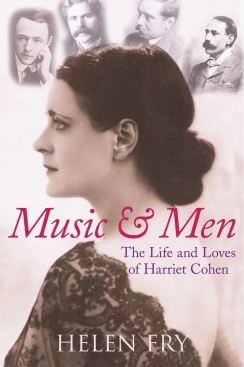
When researching, she often uses unpublished documents, papers, memoirs and the Sound Archive at The Imperial War Museum or the British Library. A prime example of this was for her book Music and Men: The Life and Loves of Harriet Cohen in which she used the archive of 3,000 letters which Harriet Cohen bequeathed to the British Library.
4817 Harriet FCP.indd

Sometimes Helen will visit the area she is writing about. For example, for Music and Men: The Life & Loves of Harriet Cohen after she discovered Harriet Cohen’s ashes were interred at Stoke Poges Memorial Park in Buckinghamshire she felt the need to go and see her final resting place, especially after having written what was an intensely emotional book, working through all her love letters. Helen discovered her final resting place was totally in character with her life. She is on her own tiny rockery island in the water garden, alongside her sister. Everything in her life was imbued with deep meaning and emotion, Helen felt this was no ordinary burial place, and so typical of her.

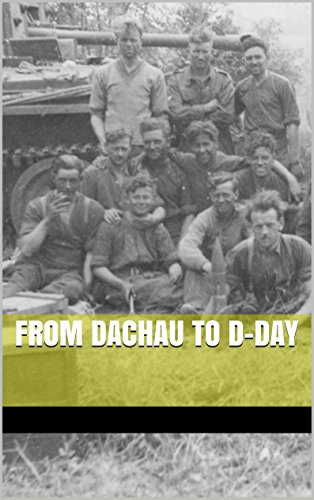
Many of her original sources are found in museum and government archives as well as specialist libraries, so for example when she was writing her book From Dachau to D-Day, it’s the story of a tank driver (originally a refugee from Nazi oppression), she used the official war diaries from D-Day to the end of the war at the Public Record Office, Kew. She also consulted the archivist at The National Tank Museum.
Dachau to D-Day

Helen revealed the Sound Archive at The Imperial War Museum was especially useful when she was adding research to my existing material from veteran interviews she had conducted. The Sound Archive contains masses of veteran interviews, some of which are specific to refugees who served in the British forces in WWII.

Helen told me she rarely, almost never, conducts research using the internet, as she believes this is how historical inaccuracies creep in.

“I believe that historians should use primary archives and sources and not rely on the internet, except to search for people who can help them with something specific. I am wary of online encyclopaedias.” (Helen Fry)

The key to her success as an author is being highly organised and methodical. Once she has carried out an interview with notes in her notebook, she types it up chronologically according to a veteran’s life story and asks the veteran to check it for errors. Then she files it in a single clear document wallet. Each veteran is given their own wallet which is then filed in a box file. Helen explains this makes it easy to retrieve when she comes to the writing-up process. She has gathered an archive of several box files of original interviews with war veterans, plus copies of photographs from their personal albums.

It is important to keep the reader’s attention throughout your book even if some of the material is heavy.
5112 Freud FCP.indd

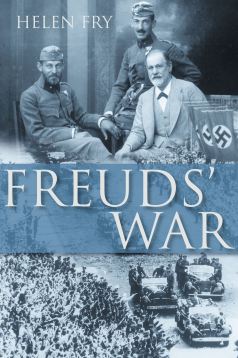
For example, material for Freuds’ War could have been overwhelming, but she came across some wonderful quotes which just summed up the moment – so used them in the text. She explained:

“I wrote something about how Sigmund Freud was wrestling with the biblical character of Moses whilst he and his family were waiting for exit visas to leave Nazi-occupied Vienna in 1938. Freud was working on his final publication before his death called Moses and Monotheism. He wrote to one of his friends Ernest Jones: “Moses haunts me like a ghost not laid.” A brilliant quote which I incorporated into the relevant chapter because it captures the voice of the person you are writing about (in this case Sigmund Freud) and lifts the text. It gives one’s writing a lively flare.” (Helen Fry)

Helen told me one of the most unusual, or seemingly obscure, research she has done was about Jews in North Devon during the Second World War. She discovered that over 4,000 Jewish refugees were in North Devon during the war and they were all the intellectuals of German and Austrian society who had volunteered for the British army and were training there. This inspired her to produce a detailed book with over 250 black & white photos. It was awarded Devon Book of the Year, was made into a mini documentary for BBC South-West and has led to commissions for over six more books published since 2007.

most_loyal_jacket

“Books once they are published take on a life of their own. They can do extraordinary and unexpected things which are fun, like a mini documentary or radio programme. Few authors are lucky to have their books made into a blockbuster film, but there are other ways in which books can make their mark, sometimes beginning in small ways. The most important point is to get published. Then one can build on what is already in print to raise the profile.” (Helen Fry)

Her tip for other historical writers is to always have an acknowledgements page in your books, to firstly thank the people who have helped you, and also for the reader to see that the research behind the book is thorough and credible.

Find out more about Helen Fry on her website: www.helen-fry.com Or follow her on Twitter @DrHelenFry

To read the complete feature you can purchase a copy of #94 July 2009 Writers’ Forum by ordering online from Select Magazines.

Do we need Celebrity Authors?

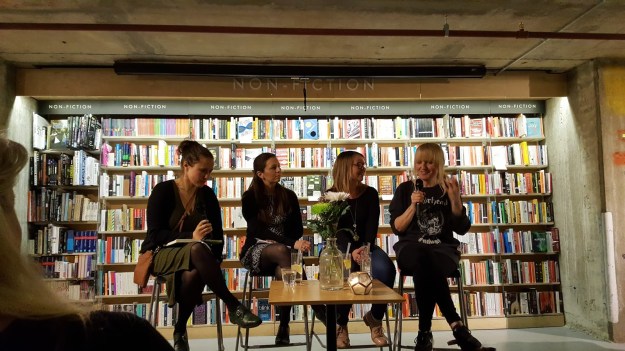
In May, 2017 I went to a very interesting Children’s Book Circle Event discussing the increase in the amount of celebrities writing children’s books. The panel consisted of:

  • Children’s reading consultant, freelance editor and blogger, Clare Zinkin
  • Award-winning picture book author, Michelle Robinson
  • YA author and ghost-writer, Siobhan Curham

CBC May panel

Children’s editor of the Bookseller magazine, Charlotte Eyre was the chair. She explained publishers are actively seeking out celebrities to write books and this is not isolated to only books for children. She told us that if a publishing house has success with a gimmick such as a celebrity author the trend is for the others to follow as it brings in the money. It was quite significant that there were no celebrities or publishers on the panel.

We must never forget that publishing is a business and all businesses want to make money. Although, whether they make money is dependent on age-group and who the celebrity is. David Walliams’ books sold over 56 million books last year whereas Chris Hoy did not even sell 5000 copies. As authors we should want our publishing houses to do well as it means there is more money to spend on debut authors.

However, the marketing can be frustrating. It is disheartening when celebrities are higher in the charts because they are getting bigger budgets and higher billing at events and festivals. In a way it is cheating because the stars are being given a head start. Authors like David Walliams are always in the review round-ups regardless. It is sad that even the Summer Reading Challenge book sorter mostly recommends celebrity books and traditional best sellers like Roald Dahl and Jaqueline Wilson. In the same way, large book shops like WH Smith and Waterstones tend to stock only the big name authors. But Michelle is proud she has got to where she is ‘the hard way’.

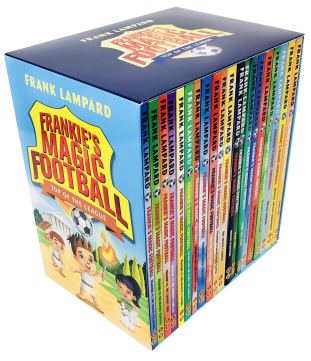
Frank Lampard

On the whole, books by sports people and other celebrities are a good thing because it gets children reading; many who may never have picked up a book before. Celebrity books tend to be light-hearted middle grade with a great illustrator. The children do not care that it is a celebrity without a background in writing all they want is a great story with amazing characters to read.

We are getting to a stage where there may be a saturation of the market with celebrity books and some are not making out their large advances. There has been a tendency for publishers to depend too much on celebrity authors. There is also a fear that because a gold medallist can also write a book in their spare time it makes writing seem easy and not hard work at all. Claire compared it to being like the celebrities creating a perfume. We need to remember Literature is a craft and we should see it as a craft. It is true many celebrities are actually writers with a proven track record and those who are not tend to have a ghost writer. As a ghost writer Siobhan sees her role as helping the celebrities tell their story.

zoesugg

Many authors in the audience felt that if a book had been written by a ghost writer they should put the ghost writers name on the books to make it clear who has written them. Siobhan explained ghost writers do not care if their name is not on the book, it is the nature of the job and anything that gets a book into a child’s hands is a good thing.

There was an overall feeling from the audience that celebrities should do more to get involved in the industry. They should make an effort to mix with other children’s book authors. It was suggested that in the same way as there are ghost writers, celebrities could advice authors on performing at events or make book recommendations to increase sales of all books and not just their own.

So my answer to the heading of this post, do we need celebrity authors, is…

…NO …we do not need celebrity authors. What we do need is great stories for children no matter who has written them.

Interview with… Lucie Whitehouse

In my Research Secrets this month, I interview Lucie Whitehouse who revealed how she weaves fact and fiction into her psychological thrillers, so she doesn’t jolt the reader out of the story.

Lucie Whitehouse2

Lucie told me her latest novel, Critical Incidents, launched this month had an unusual beginning. She was working on her previous novel in Brooklyn Central Library one morning when a TV producer in the UK emailed to ask if she had an idea for a female lead investigative character. She replied straight away and said she was thinking about a woman in her thirties, a single mother of a teenage girl, who’s been booted out of her job as a senior homicide detective at the Met and returns in disgrace to her hometown, Birmingham. After she hit send she sat back in surprise. She’d never consciously had the idea. Evidently, though, her subconscious had been hard at work.

Critical Incidents

In Critical Incidents, Robin, the main protagonist, is technically off the job so for Lucie, it was a gentle introduction to writing procedurals. Her first four novels were psychological suspense and she felt had a lot to learn.

She explained she researched the structure of the Met’s Homicide Command online, reading up about Major Incident Teams, what rank of officer would lead one (a DCI) and how many officers each comprises.

“The police are quite transparent, and a lot of information can be found on a force’s website. For specific queries, you can contact them directly via their site. Forces’ Facebook and Twitter accounts are great resources.” (Lucie Whitehouse)

Lucie said the trick with research is to reassure the reader that you know your stuff without boring his or her pants off, and information dumps because great chunks of undigested information will pull a reader right out of the story.

To get her facts right she does a lot of on-the-ground research in concentrated bursts when she is in the UK. She spends days in Birmingham visiting or finding locations, taking photographs, collecting flyers, pamphlets, café menus, bus tickets and perusing the local history shelves of bookshops (Waterstones on the High Street has a great range). Lucie has found that buying local history books is better done on location than on Amazon, as shops often stock things from local presses.

“Birmingham’s rich history is one of the reasons I wanted to write about it and I read several books not only about the city itself but more broadly its role in the Industrial Revolution. My favourite was A History of Birmingham by Chris Upton.” (Lucie Whitehouse)

Lucie loves stitching in little bits of her own family history. A photo of the Whitehouse Flexible Tubing helped her with the visual details. This is the factory, where her father was Managing Director. It still operates out of this building.

Whitehouse Flexible Tubing

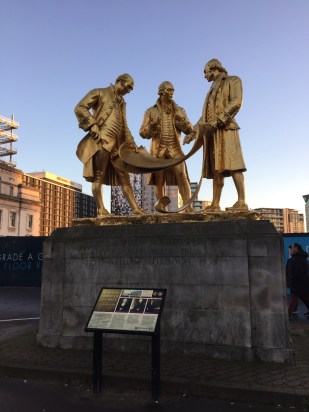
She also enjoys going to the places her characters would go, such as Moor Street Station, the Custard Factory, Stratford Road where Gamil’s bakery is located. She told me Dunnington Road, where Robin’s parents live, is fictional but based on a real street in Hall Green that she walked up and down repeatedly on a sweltering July day and one of her favourite is The Golden Boys statue, known locally as Boulton, Murdoch and Watt, three giants of Birmingham’s proud history as a hub of the Industrial Revolution.

The Golden Boys statue

Lucie explained:

“Ninety percent of my research never comes close to the page but doing it allows me to know the world of my book properly and write with confidence. It’s wool-gathering in both senses – by researching, I collect the raw materials but I’m also creating a mental space where I can spin them into something new.” (Lucie Whitehouse)

You can find out more about Lucie and her books at https://www.facebook.com/lucie.whitehouse.9 and on Twitter @LWhitehouse5 and Instagram @lwhitehouse5

To read the complete feature you can purchase a copy of #220 Feb Writers’ Forum from your nearest good newsagents or order online from Select Magazines.

Another interview with… Mo O’Hara

In my Writing 4 Children column this month, I interview children’s book writer Mo O’Hara about writing comedy for middle grade series books. I have previously interviewed and blogged about Mo O’Hara before when I interviewed her for Papers Pens Poets. Take a look at: An Interview with… Mo O’Hara

Mo O'Hara5

She explained that she was inspired to start writing children’s books after she took a course in writing for children. Now My Big Fat Zombie Goldfish series are bestsellers here and in the US and her new series My Fangtastically Evil Vampire Pet is doing quite well too.

Mo told me:

“I definitely draw on my own experiences for all my writing – comedy included. Remembering all your embarrassing moments is a great place to start.” (Mo O’Hara)

In the feature, Mo explains how written comedy is different to stand up.  For Mo the story and the characters come first and then the jokes come out of the situation. She always starts with characters that are funny.

Mo with toys of her book characters

She did this for her graphic novel launching this year – Agent Moose. Originally the main character was a mouse who is a master of disguise. But the idea wasn’t working and did not seem funny at all She put it away and one day it hit her – a 7 foot tall moose that can hide anywhere is just more funny. The comedy just fell in place because of the character.

Agent Moose

Mo’s writing tip for other writers who want to write comedy is to write with a knowledge of the vocabulary of the age range of your reader. Kids are capable of getting the meaning of a word through context and they love funny words too – ‘Discombobulate!’ for instance. Also repeated words that are explained through context are funny sometimes. 

“If you get a kid to laugh it’s because at that moment, they had a genuine reaction and thought it was funny. That’s the emotional response I want. That’s why writing funny for kids is more rewarding for me.” (Mo O’Hara)

Her most important tip is ALWAYS read all comedy aloud. She explained that sometimes what you think is funny when it’s written loses something when spoken. It pulls up the flaws in timing.

Find out more about Mo O’Hara and her books on her website: www.moohara.co.uk and on Twitter @Mo_Ohara

To read the complete feature you can purchase a copy of #220 Feb Writers’ Forum from your nearest good newsagents or order online from Select Magazines.

An interview with… Tracey Mathias

In an interview with Tracey Mathias she told me all about how her children’s fantasy series was first published in Germany and how she got it into children’s hands in the UK.

tracey author pic

She started writing in 2005 and as a crime fiction addict and had a vague ambition to write but no real direction or conviction. That summer, whilst she was working at a children’s music school she found herself writing some last minute song lyrics, and had the sudden inspiration that she wanted to write for children.

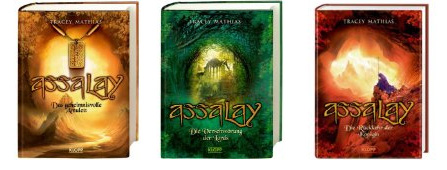
At the same time, she had an idea for a story that wouldn’t leave her alone. Over a week of sleepless nights she sketched out a rough plot for a whole novel and gave herself a year to work on the story. By the end of the summer term, she had completed the first draft of A Fragment of Moonswood, and her brain was seething with plans for volumes two and three of the Assalay trilogy – an otherworld fantasy about a land with a hidden past, facing political and ecological breakdown. She wrote the other two volumes – The Singing War and Weatherlord – over the next three years.

books german covers

The first volume of the trilogy went on submission in the UK and overseas in mid-2007. In one of the most bizarre couple of weeks of her life, she got a quick succession of offers from three German publishers. Her agent was hopeful that this would be quickly followed by a UK deal – but over the next months, rejection followed rejection, including a couple of annoyingly near misses. Tracey explained:

“I was left with an odd sense of half success, half failure. Yes, I was a published author (and unpacking your first box of author copies is thrilling whichever language they’re in!) but I was dogged by a sense of unfinished business that didn’t go away. Friends kept asking when they could read my books in English. ‘Why not self-publish?’ was a frequent suggestion, but for a long time, I clung to the hope of a conventional UK deal. “Tracey Mathias

Then, in 2015, Tracey was invited to speak to a school workshop on fantasy writing. She read the opening of A Fragment of Moonswood to a class of year 6 children, and at the end of the session, one of the boys came up to her, handed her a scrap of grubby paper for her autograph, and asked, ‘Miss, when can I read your book in English? Because I really like books like that…’

Tracey told me that this was a bit of a lightning moment! She decided pretty much on the spot just to go ahead and pursue the option of self-publishing and started to research options.
“Self-publishing is definitely a demanding route to take. It’s great to be independent and in control – but the flip side of that is having to tackle a wide variety of often quite technically detailed tasks that call for very different skills. Some of them suited me. Others, emphatically, didn’t.” Tracey Mathias

Tracey’s tip for children’s book authors who are considering self-publishing is to start by taking a long, hard look at what this is going to involve. It’s important to have a clear sense of how ‘self-publishing’ breaks down into different tasks, and how you’re going to tackle each, where you want or need help, and where you want to devote your energies.

The Assalay trilogy is published by Erika Klopp – part of the Oetinger group in Germany and can be ordered in any bookshop and on Amazon in the UK and is also available to buy from Barnes and Noble in the US.

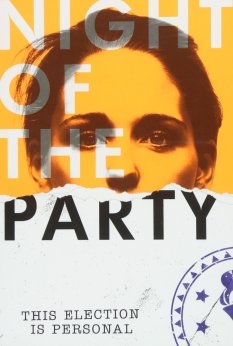
In 2018, Tracey got a traditional publishing deal with Scholastic with her very topical novel Night of the Party. It is about withdrawing from the EU and Britain is governed by a far-right nationalist party. Its flagship policy is the British Born edict, which allows only those born in Britain to live here. Everyone else is an ‘illegal’, subject to immediate arrest and deportation. ‘

Tracey Mathias

You can find extracts and links to Tracey’s books on her website: www.traceymathias.com and follow her on twitter @traceymathias. 

You can read the complete feature in Writers’ Forum #190 Aug 2017, in my Writing 4 Children column. 

Children’s non-fiction

Over the last few years there have been many changes in children’s non-fiction and how it is presented and used in the classroom. Today teachers use a more interactive model of non-fiction, which in my opinion makes learning more exciting and fun.

“The Internet changes the way we think about information. The fact that we do not know something that exists in the extant expansive commons of human knowledge can no longer intimidate us into reticence. If we do not know something, someone else does, and there are enough ways around the commons of the Internet that enable us to get to sources of the known.” Raqs Media Collective (Edge.org)

New technology has allowed multi-media texts to be used with moving images to enhance children’s learning. So, we can actually see a digestive system working or what the night sky would look like on a specific day at a specific time. The non-fiction information is often embedded into a story with diverse characters solving problems that keep the children engaged.

But, does this advancing technology mean parents are less likely to buy their children a non-fiction book, preferring them to do their research on the Internet? This is a worry for the children’s non-fiction writer and many new books have appeared on the market to make the non-fiction books more appealing.

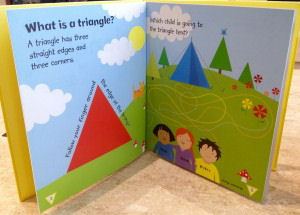
Print books have started to become more spectacular themselves not only do they include links to downloads to compliment the printed text but the illustrations are active and visually stimulating bleeding to the edges of the page. There are puzzles and games in the books so children can discover new concepts and reinforce their learning such as in my Colour and Shape books.

atrianglesopen

There has been a rise in children’s biographical accounts told in a more creative and stimulating way than simple text and portrait picture and a move to more comic book style, such as Kate Pankhurst’s Fantastically Great Women series.

“Kate Pankhurst’s Fantastically Great Women series (Bloomsbury Children’s), including Fantastically Great Women Who Changed the World and Fantastically Great Women Who Changed History, have sold a combined 92,634 copies since the start of 2018.” The Bookseller

But, what is the next step? What non-fiction books are going to survive the electronic age?

Happy New Year to you All

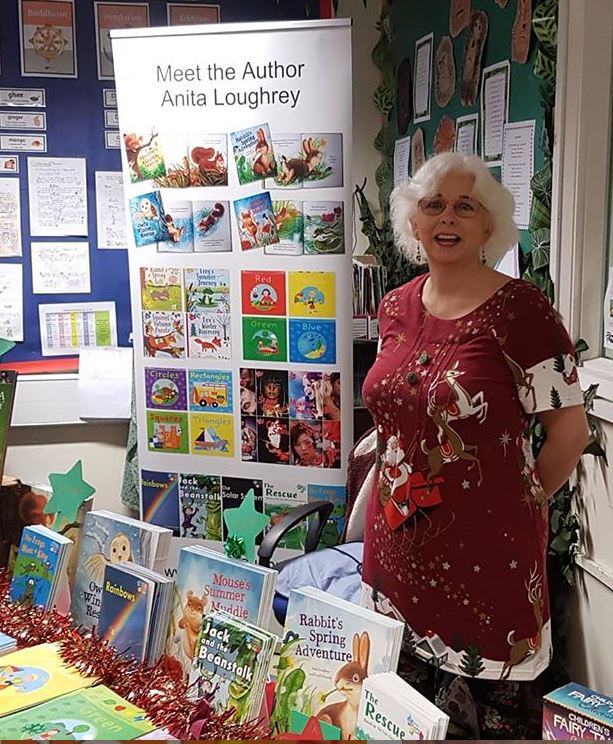
My goal for 2019 was to build-up my author platform by blogging regularly and hopefully creating a following. I feel I have achieved this to some degree. I have blogged regularly, I have done several Christmas fayre’s to sell my many books and have continued doing school visits many at schools I have been to before. It is always lovely when the staff and children want you back.

christmas fayre photo

This year I hope to continue growing my followers and publicising my books. If you would like to help me with this goal please follow my blog and follow me on Facebook, Twitter and Instagram. You can also follow my dogs Instagram account here.

New Year 2020

This year I will be celebrating the launch of my new picture books. So keep an eye out for them.

I hope 2020 brings everything you wish for.

Happy New Year

champagne

Book Review – A Postcard to Ollis

Title: A Postcard to Ollis

Written by: Ingunn Thon

Illustrated by: Nora Brech

Translated by: Sian Mackie

Published by: Wacky Bee

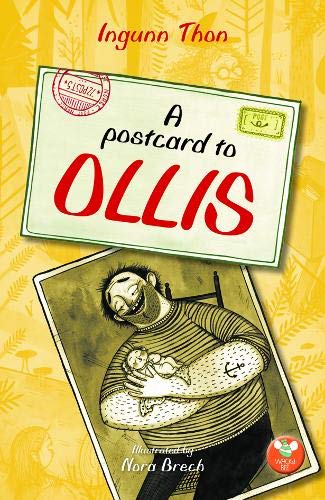
A Postcard to Ollis

A story of friendship and family loyalties, written in third person and present tense. Ingunn Thon develops full and engaging characters with very different personalities. Ten-year old Ollis is inquisitive, inventive and determinedHer best friend and neighbour, Gro, is cheeky, quick-witted and impulsive. Ollis is named after five women who played important roles in Norwegian history. She likes to invent things, which often do not go to plan. Her mum has a new baby and announces her plans to get married to the baby’s father, who has recently moved in. Ollis is jealous and disappointed as she can not see her own father, especially when she discovers her name is not on the invitations.

Ollis’ and Gro, go on a bike ride and stumble upon a yellow letterbox mounted on a crooked post. They look inside and its empty. They hear a whumph-thunk-clang and in true Lake House style, a postcard addressed to Ollis appears in the letterbox. The friends return everyday to see if there are any more postcards. It is not until they meet Borgny, that Ollis finally discovers a hundred and one postcards addressed to her with drawings of places all around the world. She works out these postcards have been sent for ten years. Ollis believes they are from her father and embarks on a quest to find him.

This chapter book won the Nynorsk Prize 2017 for Excellent Prose and was shortlisted for the Italian Premio Strega 2018 literary prize, which is the equivalent of the Carnegie Medal.

A Postcard to Ottis is full of witty banter and distinct, diverse characters that capture your heart. I loved the wacky Borgny and was pleasantly shocked at Ollis’ father’s reaction to her. However, I found the present tense rather difficult to read and in places it jolted me out of the story. I also felt there was too much unnecessary description that was not relevant to the plot. The characters make you laugh, cry and scream with frustration. Full of twists and surprises this book really makes you think about what ‘family’ is and the many different types of family relationships.