Tag Archives: Anita Loughrey

An interview with… M. G. Leonard

In my Research Secrets double page spread in Writers’ Forum M. G. Leonard explained how her research into beetles turned her fear of creepy crawlies into an obsession.

Front cover

She told me her, Beetle Boy book didn’t start out with a beetle as a central character and it wasn’t called Beetle Boy. M. G. Leonard revealed she knew there would be beetles in the story, but because she was scared of creepy crawlies and thought they were horrid and signified something bad it neveer occured to her to make them the protagonists. But when she started researching beetles she became obsessed .

She didn’t start keeping pet beetles until after Beetle Boy was published and was still nervous around live insects.

“Everything changed when I was invited to appear on Blue Peter for National Insect Week with lots of live beetles. I visited my entomologist friend, Dr Sarah Beynon, who has a bug zoo in Pembrokeshire. She spent a day getting me to hold insects, and I fell in love with rainbow stag beetles. They are so beautiful. I immediately bought myself a pair and took them home so that I could handle them every day and desensitize myself to my fear. I was at the beginning of a journey.” M.G, Leanard

Since then she has bought an adult pair of African flower beetles, which she claims are relatively easy to breed. Watching them grow, eat and eventually pupate, informed her descriptions of the rooms inside Lucretia Cutter’s villainous lair – the Biome deep in the Amazon jungle – featured in Battle of the Beetles.

MG Leonard’s tip if you are incorporating unusual pets into your stories, is to spend time with the living creatures. Peering at them in a zoo won’t give you a unique insight into the way they behave when they’re hungry, or horney, scared or resting.

The descriptions of what it feels like to hold a beetle, to hear a beetle flying, of how they express themselves, all comes from careful observation of her living pets. It’s because she keeps beetles she knows many species are nocturnal, none sleep, and they control their body temperature by burying into soil.

“I did so much research for the Beetle Boy series. There isn’t a book about beetles that I don’t own. I trawled the internet browsing every single website that contained information about beetles. I watched all the youtube videos, listened to BBC audio shows.” M. G. Leonard

M. G. Leonard told me that researching is like a treasure hunt. There’s no right or wrong way to do it. You find a clue and follow where it takes you. There’s no pattern to it. She believes that there is no greater resource to the researching writer than the internet. Google maps allow you to see any place on the planet and Wikipedia will give you information about it. Books would take years longer to write without them.

You can find out more about M. G. Leonard and her books on her website www.mgleonard.com and follow her on social media: Twitter @mglnrd; Instagram @mglnrd; Facebook @MGLnrd

To read the complete feature take a look at #219 Jan 2019 of Writers’ Forum magazine.

An interview with… Cath Jones

Cath Jones writes picture books and early readers. I interviewed her for the January 2020 issue #219 of Writers’ Forum about the importance of early readers and how they differ from picture books.

Cath fb post

She explained how early readers usually form part of an educational reading scheme. They are aimed at readers of any age who are learning to read. Each publisher produces their own set of early reader guidelines or instructions for authors to use. These are usually based very closely on the Department of Education publication: Letters and Sounds (anyone can download this free of charge). This sets out very clearly, level by level which letters can be used, the type of vocabulary, complexity of sentences etc.

Cath told me:

“I try really hard to make my early readers stories funny and unexpected. One publisher told me that my stories are too quirky and another that they are too crazy. But children love that and so do I. I’ve had about twenty accepted for publication so far, with three different publishers.” Cath Jones

Cath explained it is important to keep the story interesting enough to engage an early and reluctant readers. Using appropriate words for the different ability levels can be quite a challenge. She told me she always tries to come up with a surprising twist at the end.

“When I write stories I have two aims in mind. I want to keep the reader interested enough to keep them reading on and more often than not, I want to make them laugh. The majority of stories I write are humorous and maybe a little quirky: a zebra who grows beetroot, chickens that knit, owls acting as hats.” Cath Jones

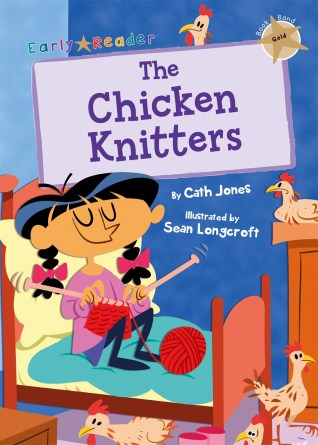
How I set about writing an early reader, depends on whether it is a higher or lower level book. For the lower levels, I have lists of all the words that are appropriate to that level. I study the lists and try to create a story (very often humorous). The story might have as few as 70 words and none of them more than three letters long. It’s like doing a puzzle. It’s a challenge but very rewarding. For the higher levels there are fewer restrictions so I just try to write the best possible story to engage a reader. One reviewer recently described Chicken Knitters as being as good as any early chapter book.

cover The Chicken Knitters JPEG

She revealed that when she first started writing stories for children, she had no idea that there were rules. She joined a local writing group and was amazed to discover that there were hundreds of books on the theory of writing.

“Getting rejections is never easy but other writers encouraged me not to give up. I remember author Jane Clarke telling me that it was those who persist who get published. She was right! In the end, all that effort paid off. In the space of a few months I had eight early readers accepted and my first picture book, Bonkers About Beetroot.” Cath Jones

Her inspiration for writing Bonkers About Beetroot was her own allotment. She also used to run school gardening clubs and for a number of years she managed a community allotment. So it’s really not surprising that gardening is a frequent theme in her stories. At the community allotment, she ran some really fun projects, including story sack making for families. She made a purple stripy zebra out of Fimo with the kids and close by was a bed of beetroot. Instantly she knew Zebra had eaten too much beetroot. The idea of a beetroot eating zebra just wouldn’t go away. It stayed in her head for years, quietly composting while she got on with life, growing vegetables and writing many, many stories.

Bonkers About Beetroot Cover LR RGB JPEG

Her writing tips for readers who may be interested in writing for the younger age range is it’s really important to know who you are writing for. Think about the age group that might read your story and ask yourself what they are interested in. If they are beginner readers, make sure your story gets going fast and keep up a good pace. If they get bored they won’t read on.

To find out more about Cath Jones and her books check out her website: @cathjoneswriter

You can read the complete feature in #219 Jan 2020 of Writers’ Forum magazine.

Children Using Non-Fiction Books

As you may all know, I write a column for Writers’ Forum on the types of research authors do for their books. I was also a primary school teacher for seventeen long years and have written many children’s illustrated non-fiction books and teacher resources for primary school. So children, using non-fiction books for their own research and writing is something that fascinates me.

Margaret Mallett has written extensively about children using non-fiction for researching their own writing. She has written such books as:

  • Choosing and Using Fiction and Non-Fiction 3-11: A Comprehensive Guide for Teachers and Student Teachers
  • Early Years Non-fiction: A Guide to Helping Young Researchers Use and Enjoy Information Texts
  • Young Researchers: Informational Reading and Writing in the Early and Primary Years

These books are aimed at primary school teachers with an aim of teaching children how to use non-fiction books and list suitable non-fiction books to meet the requirements of the National Curriculum and Literacy Strategy.

It is true there are new, fun interactive ways to find information via the Internet and downloads. These interactive models work and provide variation. But, in my experience, children do still enjoy looking at non-fiction books to satisfy their curiosity and thirst for knowledge. Non-fiction books need to be widely available in the classroom to support other things they are doing.

nonfiction books

Making non-fiction reading and writing exciting and relevant helps advance children’s thinking and understanding. Young children require literacy activities that are embedded in practical activities, drama, role-play and outings. These connect children’s experiences in school with wider society and provide opportunities to use and talk about texts.

clock2

Time should be made during the school day (OK! Don’t laugh – I’ve been there!) for the children to talk about specifically non-fiction books. As writers and teachers we ultimately want children to learn to be independent readers by looking at both fiction and non-fiction books. Listening to others and their interpretations of the books helps with internal reasoning and encourages a quest to find out more. The children’s hypothesis can be supported and reinforced by looking at more books.

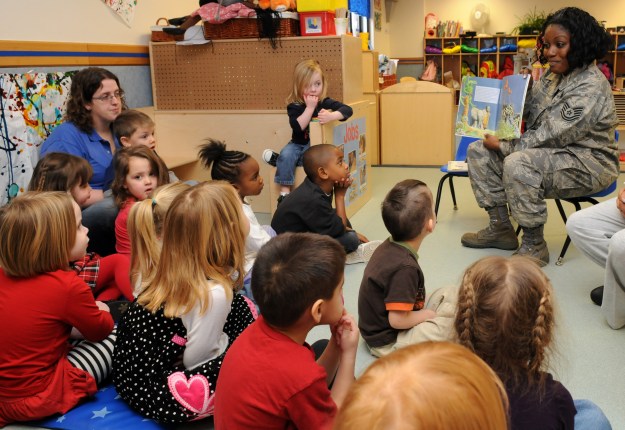
Teachers should also read non-fiction books to the class and show the illustrations. Seeing the pictures and hearing the text triggers reflection and help the children by giving knowledge.

illustrated non-fiction

Using illustrated non-fiction in the classroom is a highly successful way to engage children’s interest, helping them to establish a personal foothold and provide a reference against which to check what they have found from other information sources.

Story sacks don’t have to be confined to KS1 they can be for any age and contain non-fiction books. Drama does not have to be solely linked to fiction but can be used to support what is happening in non-fiction texts too.

In my opinion, to foster a love of children’s non-fiction books we need to think about the way it is being used with the children in the classroom and also at home.

An interview with… Leonard S. Marcus

Leonard S. Marcus is one of the children’s book world’s most respected and versatile writers, historians, and critics. He has written many highly acclaimed books about children’s literature, and the authors and artists who created them. Leonard’s book reviews have been featured in many US magazines including Parenting magazine, the New York Times Book ReviewWashington Post Book World, and Publishers Weekly. I interviewed him January 2008, as one of the speakers at the SCBWI Bologna Conference, March 2008.

These are some of his award-winning books:

In the interview, Leonard told me he started writing when he was at school in the US during second grade. His passion for writing grew throughout his education, even though it was a long time before he had any idea of how to go about making a living or a life as writer.

“The reading specialist who was assigned to help me at school suggested that I try writing poems to read to her. It was then that I began my writing and reading life. Thanks to that teacher, I experienced a feeling of great satisfaction because I found that it was easy to read what I myself had written and that made me want to write more and more.” Leonard S Marcus

For the first three years in New York, he was a copywriter for Dover Books, a New York paperback publisher specialising in reissues of out of print classics. He explained how he learned a great deal about art and bookmaking there, and a lot about the stinginess of publishers. After that he freelanced, writing book reviews and also teaching courses on children’s books at the School of Visual Arts and elsewhere while trying to get started as an author.

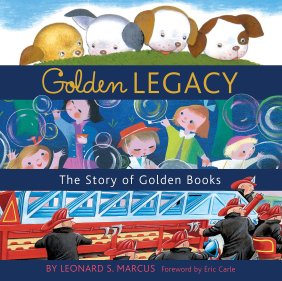
Leonard Marcus - Golden Legacy

Golden Legacy: The Story of Golden Books

Leonard mostly writes nonfiction. He said, of all the people he has written about as characters he found, Feodor Rojankovsky, the great Russian illustrator of Golden Books one of the most inspiring, because his art has so much energy and he travelled so much and led such an adventurous life.

His favourite picture book as a child was a Little Golden Book called Laddie and the Little Rabbit. It had photographic illustrations by Bill Gottlieb, a photographer who took some of the best known pictures of Billie Holiday and Louis Armstrong.

“I think I loved the book because I wanted to have a dog and wasn’t allow to. Laddie was a springer spaniel. I recently met Bill Gottlieb’s widow Delia and – all these years later – learned that the dog in the photos was her dog and that his real name was James Thurber.” Leonard Marcus

Leonard’s tip to other writers is to put effort into promotion and marketing of your books. He explained some writers such as, Shel Silverstein, did not have to market themselves and had bestseller after bestseller. But publishers appreciate an author’s own promotional efforts and sometimes can be persuaded to help, for instance by contacting a public radio station in the city where a talk is about to take place.

“I enjoy giving talks and readings and try to do as many of them as possible. Lately, I have been making more of an effort to group these programs so that I get the most out of a trip to another city or region.” Leonard S. Marcus

Leonard’s interest in early 19th-century American children’s Books, began as a history major in college, as they stirred memories of his own childhood. It dawned on him that because children’s books are usually illustrated he would be able to write about art as well as literature. He became fascinated by the challenge of telling stories in two different media, and by all the many different ways that artists and writers have found to do this effectively.

He began to wonder why children’s book art is not often exhibited in museums. This in turn raised questions about the value our society places on childhood and the things of children’s culture. This inspired him to write books about the creation, marketing, and world-wide impact of popular children’s literature.

You can discover more about Leonard S. Marcus and his books on his website: www.leonardmarcus.com

Book Review – The twelve days of Christmas

Title: The twelve days of Christmas

Illustrated by: Britta Teckentrup

Published by: Little Tiger Kids

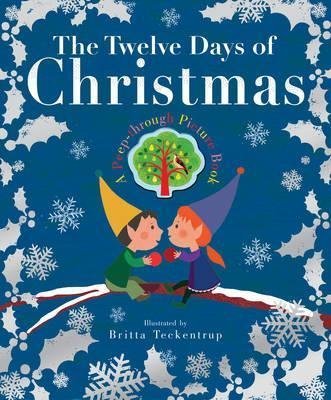
The twelve days of christmas

Britta Teckentrup has illustrated the traditional Christmas carol, The twelve days of Christmas, to produce a fun and interactive novelty book.

It is described on the cover as, ‘a peep-through picture book’. Each spread is a verse of the carol and as you turn each page the holes grow in size and quantity to reveal the next days gifts radiating out from the partridge in a pear tree at the centre. The final page shows all the gifts in no particular order, interspersed with gold snowflakes and stars.

The children will enjoy taking the time to study each page, count the gifts and admiring the tiny, digital artwork in pastel shades as they sing along to each page.

The book would make a lovely stocking filler for children aged between 2-7 years.

An interview with… Cathy Cassidy

I interviewed Cathy Cassidy for my Writing 4 Children double page spread in the national writing magazine, Writers’ Forum, in 2016. She revealed some of her writing secrets and tips.

WF-CC5

Cathy explained to me writers do not really get to choose the voice or genre they write, it is more of an organic process.

I’m not sure you get to choose your voice or genre… not always, anyway. I have always worked with and for young people, as an art teacher, a teen mag agony aunt, a journalist etc… that age group did and still does fascinate me, perhaps because it was a part of my life I didn’t manage especially well. When I finally did work out how to write a book length story, it turned out to be young teen rather than the YA I had envisaged. 

Cathy Cassidy

Most of Cathy’s readers fall between the ages of nine and fourteen and she calls the genre, ‘real-life, growing up’ books, as she often tackles quite difficult themes. But generally her books are about family, friendship and fitting in.

Cathy told me that she thinks the most important thing for any writer is to find your own voice and find your story, and then stay true to it

Don’t assume that children’s books are somehow less important than those aimed at adults, because that’s not the case. Often, the books we read as children are the ones that shape us, the ones we remember forever… let’s make them awesome!

Cathy Cassidy

Her top tip on writing for children is to write from the heart, and put everything you have into what you’re writing. If this means re-arranging your to-do list for the day, do it – writing has to come first, for the duration of the book at least. Set yourself a challenge to write a certain amount each day – it may just be 1000 words, but if you stick to it, those words will soon mount up. And when you start to doubt yourself and feel like throwing your laptop out of the window, don’t. 

Her message is write because you love it, because you can’t help it, because you love words and stories. Don’t do it for fame, fortune or an easy life, as those things are most unlikely to happen.

I’m lucky enough to write full-time now, but when I say full-time I mean it… sometimes it is seven days a week, and I can’t recall a break where I didn’t bring my laptop with me. If you love something, put all have into it… it’s worth it when you love what you do, I promise.

You can find out more about Cathy Cassidy and her books on her website: www.cathycassidy.com

Book Review – North Child

Title: North Child

Written by: Edith Pattou

Edited by: Rebecca Hill

Cover illustrated by: Clare Lefevre 

Published by: Usborne

North Child

A very cleverly written novel that uses a succession of monologues from each of the main characters – Rose, her father, her brother Neddy, the White Bear and the Troll Queen – to weave Rose’s story, which is based on the Norwegian fairy tale East of the Sun and West of the Moon. Each of them with their own distinct voice.

We learn Rose was accidentally born facing North. Her mother believes this means she is destined to travel far from home on a dangerous journey. Rose’s love of weaving appeases her mother but Rose’s loyalty to her family and her thirst for adventure are stretched at the seams. Despite all her mother’s efforts to keep Rose home, the prophecy comes true. Rose makes a deal with the giant White Bear. She agrees to go with him if he saves her sister’s life. Rose is whisked away to an enchanted castle.

In the castle, she befriends, Tuki, a troll child and starts to learn his language. Apart from the White Bear, Tuki and his mother Urda, Rose does not meet anyone else in the castle but each night a silent stranger lays by her side in the big bed. She has been warned never to look at him and nearly lasts the whole year but her curiosity gets the better of her and she stares into the golden-haired man’s eyes. Immediately the castle and all its contents vanish.

The Troll Queen takes the White Bear away in her sleigh and the only clue to where he has gone are the White Bear’s words: East of the Sun and West of the Moon. Rose realises she has deep feelings for the White Bear. Wearing his ring she vows to rescue him. Her quest takes her on a perilous journey North where she meets many distinct characters to help her on her way. Edith Pattou creates an mesmerising icy palace where the final battle against the Troll Queen must be fought. Rose’s honesty and integrity sets her on the winning path. 

The novel encompasses the themes of temptation, loss and betrayal wrapped in a blanket of magic. The short monologues are quick and easy to read and follow a chronological sequence to build up Rose’s world, feelings and adventure. 

A great story for reading aloud to your children at bedtime that will have them hooked from the start.

An interview with… Peter Bunzl

For my Writing 4 Children slot in the national writing magazine Writers’ Forum I interview Peter Bunzl about his Cogheart series, published by Usborne.

PBfeature

Peter told me his inspiration to write the Cogheart ‘steampunk’ Victorian adventure series, was sparked when he was reading about real clockwork robots that existed in Georgian and Victorian times. They were called automatons and were incredible pieces of engineering. Here is an example of some of them from youtube so you can see how amazing they are.

Automatons were built to do simple tasks like write their name or a few lines of poetry, or play an instrument, or a card trick or some of them were clocks with moving figures on. Peter wondered, what would happen if the technology back then had got so good that they could make clockwork robots that could do everything and anything. Robots made of bits of metal that were almost human and alive. Could they feel and think? Could the spark of life ever exist inside them? What would that mean for their inventors and owners? And what kind of world could I set a story be in where all this would take place?

There are four books in the series now, and they all take place over roughly a year. So the characters don’t really age that much physically, although emotionally they go through a lot.

Peter explained the reason his main characters, Robert and Lily, stay the same age is because, at thirteen-fourteen, they are already at the top end of what’s considered a middle-grade hero, and so, if they got much older, they would be more teens and their concerns would probably stray more into teen story lines, which would change the tone and themes of the books considerably.

Though they feature the same heroes in each book, the stories themselves are stand-alone, with different settings and different villains who have different goals in each, so there isn’t necessarily an overarching conflict to the series. Peter told that when writing a series, it is important to get the details consistent because once the series got to the third book, Skycircus, Peter realised everything was getting a little complicated, so he designed a big chart with all the main characters on,which clearly displayed their backstory, when they were born, what they looked like etc. Now he can easily refer to his chart when he needs to check a detail.

To find out more about Peter Bunzl you can check out his website www.peterbunzl.com 

Or follow him on Twitter @peterbunzl

To read the complete feature take a look at #218 Dec 2019 of Writers’ Forum magazine.
Book review – William Wenton series

Title: William Wenton series

Written by: Bobbie Peers

Published by: Walker Books

The William Wenton series are fast-paced, thrilling fantasy adventures about twelve-year-old codebreaking genius. In book one, William Wenton was nearly kidnapped and taken to the secretive Institute for Post-Human Research to hide out. His parents believe he will be safer there as it was established by his grandfather who disappeared eight years earlier.

His grandfather also has an extraordinary talent for cracking codes and everyone thinks he used these skills to steal the last remaining traces of a strange and powerful substance known as luridium, originally discovered by Abraham Talley. William wants to learn more about Abraham Talley and why Talley thinks he would know anything about where his grandfather hid the luridium, so he breaks into the Institute’s Archives.

An enormous cybernetic robot hunts William down and attacks the Institute. William is taken to the Centre for Misinformation by Fritz Goffman who claims to be a friend of his grandfather. After escaping the Centre for Misinformation, William bumps into Iscia who he met at the Institute. Together they explore the underground tunnels of London on a quest to find his grandfather. But, they are trapped and William has to use all his ingenuity and code-cracking skills in order to escape with no idea who he can trust.

The second book, shows William adapting to his extraordinary talent for cracking codes when an ancient artefact mysteriously disappears from the Depository for Impossible Archaeology. William chases the antagonist from Norway, to England and then to the dizzying heights of the Himalayas. This race-against-time adventure pushes his skills to the limit to stop an ancient portal of untold power being unleashed.

The third book starts with William celebrating his thirteenth birthday when news breaks that Big Ben has suddenly stopped working due to a powerful ancient weapon. A series of codes and puzzle unravel to lead William to a network of long-lost underground tunnels beneath London.

The futuristic steam punk elements in each book will appeal to fans of Alex Rider, Percy Jackson and Peter Bunzl. It is ideal for boys and girls 8+. I was a little disappointed there were no codes to actually break in the story. We are simply told William solves them with his fantastic mind. However, William Wenton and the Luridium Thief, could spark off a multitude of code-breaking activities in the classroom.

These books are exciting page turners, which create vivid images in your mind. The plots are full of twists and turns that will keep young minds active and engaged. The characters are strong and realistic that make you feel for their dilemmas. I enjoyed reading these thrilling action adventures and hope the series continues.

Book review – Are you a Monkey?

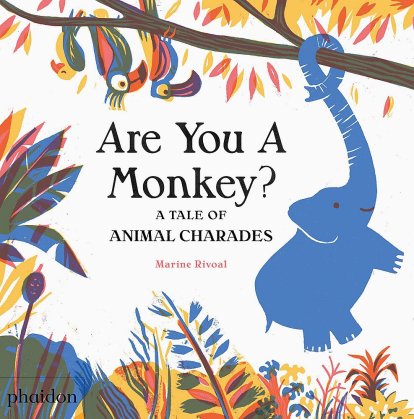
Title: Are you a Monkey? A Tale of Animal Charades

Written and Illustrated by: Marine Rivoal

Published by: Phaidon Press

Are you a Monkey

This is a creative non-fiction book using animal characters and the guessing game of charades to divulge poignant facts about a wide variety of jungle animals. The title Are you a Monkey? is memorable, intriguing and matches the tone of the story, as well as highlighting the charades theme of this picture book.

The beautiful screen-printed illustrations are bright and fun, creating a lively jungle setting and atmosphere. The structure of the book is ideal for keeping a child turning the pages to find out who is character is acting out, whilst providing space for the child to interpret the story, with added humour as toucan keeps guessing wrong.

I personally felt Marine Rivoal could have developed each individual character more with exciting sound effects and a wider variety of dialogue, rather than using the same phrase to disclose what animal they were pretending to be. There was also an explanation of what charades is at the beginning, which I felt was not necessary and a little preachy. The story works well without this.

A cute and satisfying ending that resolves the question of who the tiny starfish could act out, creating a ‘big reveal’ moment and bringing the story full circle.

This book would be great for acting out the characters at home or in the classroom and could spark of a wide range of investigative work on finding out more about the animals portrayed.