Tag Archives: Anita Loughrey

Book Review – Amazing Mr Zooty

Title: Amazing Mr Zooty

Written and Illustrated by: Emma Chichester Clark

Published by: Anderson Press

Amazing Mr Zooty

This is the story of a cat called Mr Zooty who likes to help people. The Amazing Mr Zooty’s motto is:

‘Get out, help out’

He searches the park to find someone who needs his help and discovers Lucy and Sam Taylor. They are down on their luck and very poor. With the aid of his little red case Mr Zooty grants them all a wish to make their dreams come true but he likes to sprinkle in a few ideas of his own.

This is a good book to read aloud to a foundation class whilst showing the pictures and asking the children what they think might happen next. Early readers could use the illustrations to tell their own versions of the story.

Face Your Fears

I am sure I am not the only one who has got to a point in my writing and lost confidence in what I am doing. I often get about half way through and realise there is still so much to do and  the end is still unclear and a muddle in my mind. Then I think what I’ve done so far is all utter rubbish and is only fit for the bin.

Maybe your manuscript is also full of gaps and glitches and your desk is like mine and covered with strange notes and ramblings that have lost all meaning because you – like me – are overwhelmed. Is the dreaded question storming through your head too?

How am I ever going to finish?

doubts

It is easy to lose faith and wonder whether it is actually worth the effort. The hard part is remembering this is NORMAL. It is how you know you are a real writer. We all get tired and disheartened. The trick is to take a deep breath and carry on.

The only way you can get over the hump is to face your fear and nagging doubts and get on with it anyway.

Force yourself to work through it.

Don’t think about it! Go on Try it!

Book Review – The Girl with the Bird’s Nest Hair

Title: The Girl with the Bird’s Nest Hair

Written and illustrated by: Sarah Dyer

Published by: Bloomsbury

The Girl with the Bird_s Nest Hair

A little girl does not like brushing her tangled tresses, but when a varied selection of birds set up home in her hair, she knows she certainly cannot brush it and upset them. Nothing her mother says or does makes any difference, until one day when the birds become a little more than she can handle!

This is a beautifully illustrated book written in rhyming couplets. This book would be a joy to read aloud in the classroom, or could be used for guided reading, allowing time for the children to ponder over the illustrations to spot the different birds that nest in Hollie’s hair. Children will be able to easily identify with Hollie and the dilemma of having to have their hair brushed.

Poetry

Poetry should be ageless but, should have a target audience in mind. Your voice has to appeal to the child of today.

Poems for children can be divided into three age ranges: 5+, 9+ and YA.

  • A-Z: The best children’s poetry from Agard to Zephaniah compiled by Michael Rosen
  • Please Mrs Butler by Allan Ahlberg
  • The Day I Fell Down the Toilet and Other Poems by Steve Turner and David Mostyn

The Poetry Society is an excellent resource for poets: www.poetrysociety.org.uk

If you want to target you poetry in an event remember National Poetry Day is the 4th October.

There are often opportunities for aspiring poets for children in anthologies and you can see your name alongside big names such as:

  • Michael Rosen,
  • Carol Anne Duffy,
  • John Agard,
  • Pie Corbett,
  • Paul Cookson,
  • Roger McGough

If want to write poetry for children go to local bookshop and browse their most recently published anthologies. See who published them. Write to them and say interested in submitting to the next anthology and could they put you on their list. Include a selection of poems as example of your style and voice. Try and include a poem that would have been appropriate for their latest anthology as a similar theme.

poetry anthology

Poems can be timeless and you are often able to re-use them. My poem The Fairground is in the Teaching ICT with Story and has previously been featured in a teacher resource called ‘Here comes the Fair’ published by Ahmed Iqbal Ullah Education Trust, in conjunction with the University of Manchester and Manchester City council and is now part of an anthology of poems for speech and drama teachers, Poetry for Performance published by The Playing Space.

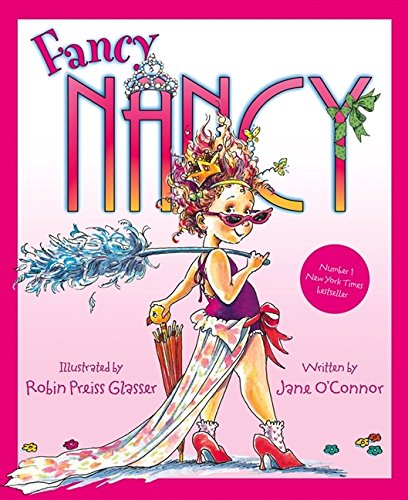
Book Review – Fancy Nancy

Title: Fancy Nancy

Written by: Jane O’Conner

Illustrated by: Robin Preiss Glasser

Published by: Harper Collins

Fancy Nancy

Fancy Nancy is an ingenious character who believes that less is definitely NOT more, when it comes to dressing up and being fabulous! From the top of her tiara down to her sparkly studded shoes, Nancy is determined to show everyone she meets a thing or two about being fancy. The stories are enchanting, warm and funny – with or without the frills.

The first book in the series is about how she transforms her family with her ‘How to be Fancy’ class. This book would be ideal for introducing a discussion on family outings and things families do together.

The Fancy Nancy picture book series are a wonderful blend of pattern, colour and action that are sure to appeal to any girls’ inner princess. Robin Preiss Glasser portrays her character and facial expressions perfectly.

They are excellent books to study if you are aspiring to be a picture book writer and want to discover how to develop characterisation and a voice that can carry a whole timeless series in your own children’s picture book.

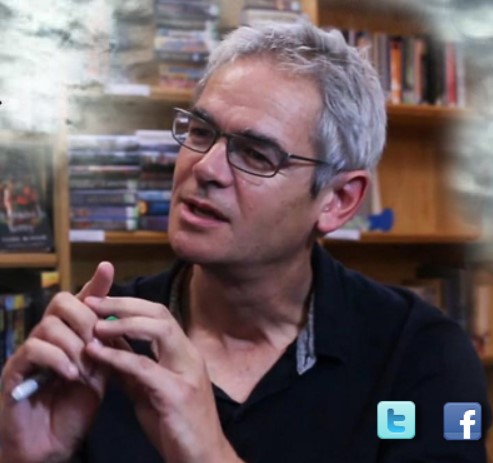
An Interview with… Cliff McNish

In July, 2016, Cliff McNish talked to Papers Pens Poets about his newly discovered stationery idiosyncrasies. He thought he didn’t care about what pens/paper I used… until he realised, after we made him think about it, that he really, really did. Or did he?

Cliff McNish

Cliff revealed he prefers ink-roller pens to standard biro, and they usually have to be blue ones unless he is in a perverse mood and decides to use green. When he is sketching ideas he tends to start a new note pad. But not any note pad,  it needs to be A5 format.

“Here’s the weird thing … even if I only make 3 or 4 pages of notes before I go to the PC I then like to discard it and start with a new notebook for the next book. All that space wasted.” Cliff McNish

When he is signing books he prefers a sharpie fine point, preferable in blood red.

You can read the full interview here and you might just get the slight impression he really wasn’t taking it seriously. I think maybe he did the interview more as a favour for me than a real love of stationery. so thank you Cliff for being such as good sport and taking part. 🙂

Find out more about Cliff on his website and follow him on Twitter @cliffmcnish

Book Packagers

Series books are often written under pseudonyms by a variety of authors, such as:

  • Rainbow Magic Fairies by Daisy Meadows also published by Orchard Books created by the fiction packager Working Partners
  • Beast Quest books by Adam Blade published by Orchard Books but created by the fiction packager Working Partners
  • Little Animal Arc by Lucy Daniels published by Hodder

Fiction packagers come up with the ideas in-house and they will write a detailed outline saying what needs to go in every chapter. They then have a selection of authors on their list who they will ask to write the first three chapters. They often ask more than one author and choose the one they like best.

Their favourite chapters are presented to publishers and if the publisher likes them, they will commission the writer to write the proposed book in the series or maybe four of the desired books. They will then go through the same process again for the next idea for a story in the series. So each book is written by a different author.

Book Review – Earth to Daniel

Title: Earth to Daniel

Written by:  Gwenyth Rees

Published by: Bloomsbury (originally published by Macmillan Children’s Books in 2003 as Mum’s from Planet Pluto)

Earth to Daniel

This book deals competently and sensitively with mental illness and the effects it has on others. Daniel’s mum has bi-polar disorder and stops taking her medication causing her behaviour to escalate into a manic episode. He makes a new friend, Abby, who shares his interest in football. Abby’s mum has just had to go back into rehab because she is an alcoholic so she is being looked after by her sister, Suzy.

Daniel knows his mum was very ill once but the circumstances of her illness are kept a secret from him as the adult’s believe he is too young to understand. All he knows is her illness is controlled by medication. But then his life changes suddenly, he moves house and has to go to a new school, where his mum has just become the Head Teacher. His dad has to go to New Zealand as Daniel’s grandmother is seriously ill. His mum stops taking her lithium tablets and starts to act like she is from another planet. Daniel is the only one who can look after his sister and help his mum.

I am sure many children will be able to identify with Daniel’s and Abby’s situations and how they deal with the negative reactions of others to mental illness and dependency.

Even though they try to solve their problems alone, this book is excellent in the way it suggests seeking help from and adult without labouring a point. It also provides the support telephone number of Childline and highlights the dilemma of how much do you tell a child about mental illness.

A great book for classroom discussion.

This book review was previously published on the online Armadillo Children’s Book Review Magazine.


An interview with … Anita Loughrey

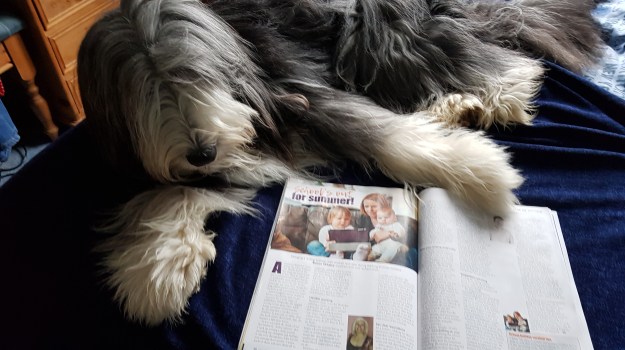
In the July 2019 issue of Writing Magazine, I was interviewed by Simon Whaley about my school holiday survival tips on how to push on with writing projects when the children are home all day. As mentioned in a tweet it is really very rare for me to be interviewed. I am usually the person doing the interviews. So I get very excited when I see myself in a magazine. The feature even gets a mention on the front cover:

Writing Magazine - Schools Out

Schools Out! How to juggle your freelance business with kids holidays.

When I reread my words compared to what John Adams, founder of Dad Blog UK, I realised how much things have changed over the years as my children have got older. When my children between the ages of 5-11, I too used to rely on holiday clubs which my children loved. There was so much for them to do to keep them active and interested. Once they started secondary school they would rather do their own thing and hang out with their own friends.

One thing is for certain though I have never, ever, ever got up to write voluntarily at 5am in the morning. I am definitely not a morning person. Although, I have been known to be still at my keyboard at 3am in the morning, having not gone to bed yet.
WM with Dexter2

In the feature, I advocate timetabling as a way to find time to write. This is beneficial not only to the children who get advanced warning of when you are working and when they need to amuse themselves, but it is also a way of motivating yourself to actually sit yourself in the chair and get on with the work. Timetabling works both ways and sets the expectations of the children that I am actually going to produce something at the end of the day. If you say you are going to work there has to be words on the page as evidence of this.

I have also been guilty of turning family excursions into writing projects and like Simon mentioned himself in the feature taken family for days out on assignments and when researching areas. This in a way makes it even more fun and helps me to hone in what I actually want to find out so I use my time productively.

20160813_113747

I think another thing though to ensure you get a well deserved break from your writing is to actually give yourself permission to stop writing and have a holiday. to do this I recommend telling your editor, project manager, publisher, agent and who ever else is involved waiting on you to send in copy what your holiday dates are. Let them know you will be away from your desk and will not be working at the set holiday dates. Everybody needs a holiday – even writers!

Plot

The plot of any story can be set out as follows:

books

Beginning – meet the main character and introduce the problem

Middle – focus on the problem, which gets worse through the inciting incident – introduce a focus of resistance such as suspense / surprise / tension

End – resolve the problem, whichever way, then get out as quickly as possible.

Aristotle said the most important thing in any story is the sequence of events. Each event has a cause and effect, and each is connected in the plot. There are six stages of plot development:

  • The opening
  • The arrival of conflict
  • The early achievement
  • The twist and the change
  • The resolution
  • The final outcome