Tag Archives: Anita Loughrey

Book Review – Benny’s Hat

Title: Benny’s Hat

Written by: Juliet Claire Bell

Illustrated by: Dave Gray

Published by: Pomelo Pip
Benny's Hat

This is a picture book about empathy and surviving despair at the loss of a loved one. A book definitely made for sharing, Benny’s Hat will have you weeping from start to finish.

It is about a young girl called Lizzy (nicknamed Friz) whose brother, Benjamin is terminally ill. It is told from Friz’s point of view. This book deals with a sibling dying in a subtle way, through Friz’s actions and reactions to the deterioration of her brother. It may be delicate, understated storytelling but Juliet Claire Bell’s exceptional ‘show not tell’ skills have a dynamic impact on the reader and their emotions from how Friz gets her nickname to hiding Benny’s hat. The brother and sister exchanges are spot on and despite the tears, brought a little smile to my face.

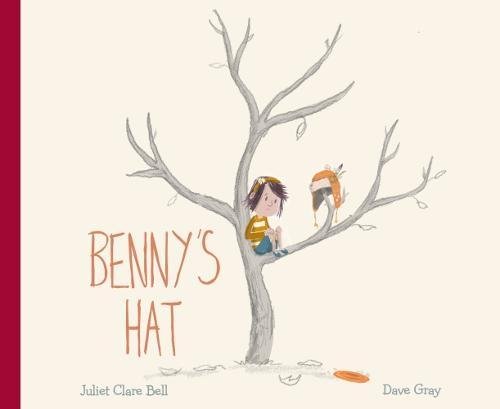
Juliet Claire Bell’s text and Dave Gray’s illustrations work in perfect unison. The use of pastel shades for the background contrast the orange of Benny’s hat. The layout of the page panels and the vignettes lead you into the bold black page when Friz finds out her brother has died. I particularly liked the use of the trees which start off green and full of leaves and become stark, empty branches to depict Friz’s mood. Then at the end a few green leaves are beginning to grow at the far tips of the branches to symbolise, maybe there can be hope to survive such a traumatic loss.

Benny's Hat2

At the back of the book, there is a note for parent’s by child bereavement counsellor Sue Dale. She provides tips on talking about Benny’s Hat and links to organisations that can help. There are also activities to try that may help children going through bereavement.

I would recommend this book to all parent’s and teachers whether they are helping a child through grief, or not. I strongly advocate it is important to talk about such issues even if it may never be within the child’s experience. If it ever did happen they are more likely to discuss their thoughts and feelings before they get out of hand and understand the way they feel is perfectly normal. I think this book is written sensitively enough to achieve this.

Benny’s Hat is a great way in for discussing and teaching children about compassion and for talking about feelings. If you are a writer, for children or adults alike, it is also the ideal book to study to discover how to evoke emotion in your reader in just a few words.

£2 from each book sold is donated to Edward’s Trust, a children’s bereavement charity,  based in Birmingham.

To find out more about Juliet Claire Bell and her books visit her website: www.julietclarebell.com

To find out more about illustrator, Dave Gray, check out: www.iamdavegray.com
An interview with… Sally Piper

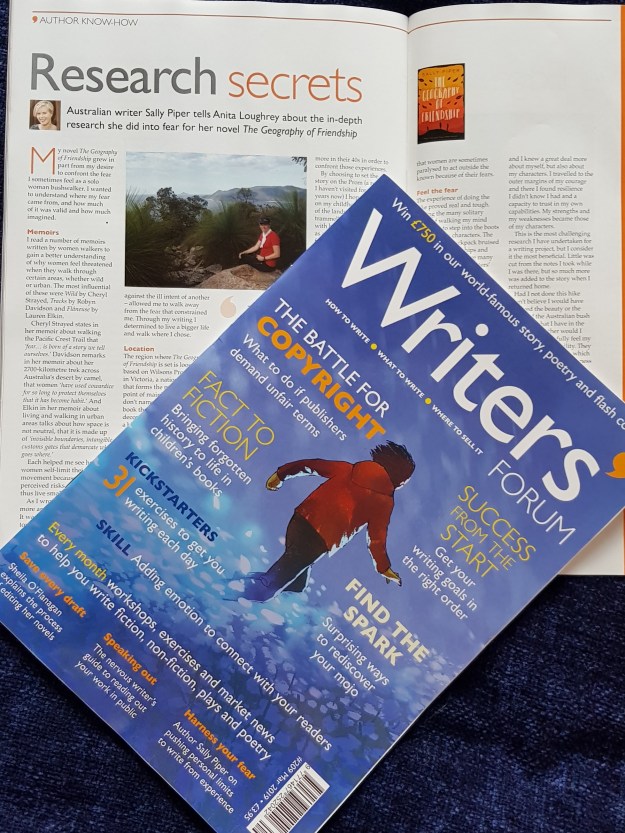
Australian writer, Sally Piper told me all about her research into fear for my Research Secrets column in the national writing magazine Writers’ Forum this month. She revealed that as a solo woman bushwalker she often felt afraid and wanted to know where this fear came from.

Sally Piper2

When I first found out about this I thought Fear was a very strange thing to want to research. Where do you start? Sally Piper started by reading memoirs of other female walkers and discovered how women self-limit their free movement because of real and perceived risks, which can cause themselves to live smaller lives.

“Fear… is born of a story we tell ourselves.” Robyn Davidson

This discovery inspired her to write her novel, The Geography of Friendship.

geography of friendship high resHer novel is about female friendships under pressure and is based loosely on the national park, Wilsons Promontory in Victoria, Australia where she had played as a child. But she had to deconstruct the landscape a bit to fit her purposes.

Ultimately it was inevitable that to really feel the fear she was going to have to do the walk herself. So to really understand what it was like to walk the Prom she undertook the 5 day hike alone noting how she felt, the weather, the terrain and how sounds were distorted by the absolute quite.


Sally believes that if she had not done the hike she would not have captured the beauty or the threats  of the Australian Bush the way she did in her novel.

Her advice to other writers is to experience first hand what you hope to subject your characters to.

“Research can sometimes occur by osmosis. Before I’d even taken my first step on the hike I started to collect new material for the novel, most notably by the way others (mainly women) responded to me doing the hike alone.”

Sally Piper

To find out more about Sally and her books check out her website: www.sallypiper.com. Or follow her on Twitter @SallyPiper

You can read the full interview in the March 2019 issue #209 issue of Writers’ Forum.

Meeting Deadlines

One of my plus points is that I am good at multi-tasking. An important requirement of multi-tasking is setting deadlines.

Whenever, I start a new job I always ask, ‘When do you want it done by.’ Often the reply is as soon as possible but, I find this is not helpful. I prefer to have someone say ‘I want it by next Tuesday,’ or ‘Ten o’clock tonight at the latest.’ This keeps me on track and helps me to organise my workload. If I don’t set myself these time limits I find myself procrastinating and time-wasting by staring out the window or my worse vice, playing computer games.

clock

Deadlines have to be reasonable, whether I’m setting them for myself or they’ve been set by an editor. Some deadlines are tight; rush jobs come up, emergencies occur, and then the pressure is on. Most of the time, it’s possible to merge tasks, working for a while on one thing and then a few days on something else and get it done without undue stress. Sometimes I just need time out from a job and I am pleased I can work on something else to take a break.

WP_20170709_17_17_16_Pro

When I have deadlines set for me, I always break them into smaller tasks, giving myself my own time limit for each chapter or section. It’s nice to give myself a little reward when I achieve it too but, often the personal satisfaction of knowing I achieved what I wanted to do is reward enough. I work within the time available and I’m an organisation freak so this method of working suits me fine.

I would be interested to know how you do it. Do you find it easier to write to deadlines?

Book Review – There’s Only One Kind of Duck

Title: There’s Only One Kind of Duck

Written and Illustrated by: Heather Kilgour

Published by: Heather Kilgour

there's only one kind of duck

This creative non-fiction book encompasses some fascinating, eye-opening facts about ducks within the story of Lee and Alex who are going to the pond to feed the ducks.

Alex insists there is only one kind of duck, but Lee knows better. The author – illustrator, Heather Kilgour, introduces us to a multitude of different species of duck, consolidated by an ingenious duck fact file in the last three spreads. This charming picture book was inspired by the Wetlands Centre in Barnes, London.

Heather’s passion for conservation shines like a beacon on every page. Her superb illustrations demonstrate each duck’s uniqueness and diversity. A duck is simply not just a duck. There are so many different species, that live in different habitats with very different diets. There’s Only One Kind of Duck, carries a very important message for children and their parents – ducks should not eat bread. It makes them ill and pollutes the water.

This book would make the ideal educational gift for your budding conservationist.

“This is a story of diversity that will open your child’s eyes to the richness of the natural world.” Heather Kilgour

It would also provide an excellent introduction into conservation and caring for animals in their natural environment and be used in the classroom to support a topic on animals and their habitats.

To find out more about Heather Kilgour and her illustrations visit her website: www.heatherkilgour.com


An interview with… Sarah Stewart

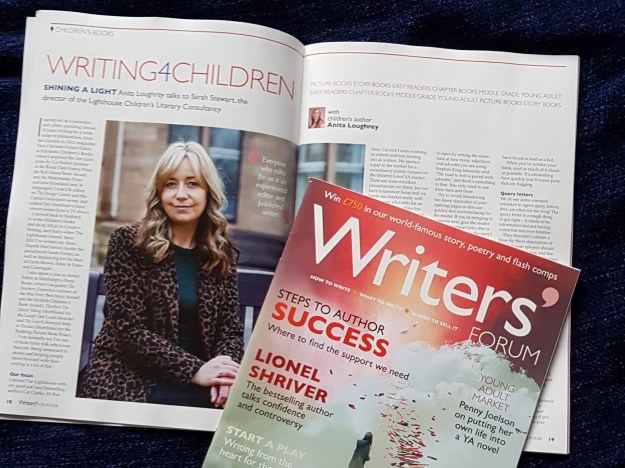
In the February Issue of Writers’ Forum I have interviewed Sarah Stewart the director of the Lighthouse Children’s Literary Consultancy about her career and the services she offers to children’s and YA book writers.

writing 4 children - lighthouse4

She started The Lighthouse with her good friend, Cat Clarke, when they were both working as editors. Sarah was the UK editor of The Hunger Games at Scholastic and has also worked for the excellent Edinburgh based publisher, Floris Books.

The feature contains valuable advice about opening lines and query letters. They also link up writers with agents  when they feel they’ve read a good, strong submission.

Some of Sarah’s advice includes:

If you’re writing for younger children, a sense of immediacy is a bonus in an opening; I like a bit of meandering description when I am read adult fiction, but not if I’m looking at something aimed at seven year olds.

You can read the full interview in the Feb 2019 #208 issue of Writers Forum. To find out more about the Lighthouse Children’s Literary Consultancy and their services you can view their website: www.lighthouseliterary.co.uk or follow them on Twitter at: @thelighthouseuk 

My Writing Tips

Here are some more writing tips that you may find useful. They are not in any particular order.

notebook and pen2

  • If you want to write a big book, pick a big theme.
  • Write rich characters with rich backgrounds (and I’m not talking about money.)
  • Finish each chapter on a cliffhanger.
  • The plot must race along at breakneck speed.
  • Mix fact with fiction so that the reader does not know where the truth ends and the fiction starts.
  • Be clear of all the underlying themes and what is going on in the background.
  • Look at the opening – does it grab you?
  • Think about the title.
  • A good story has a great plot and loads of action.
  • Be careful the ending is not an anti-climax.
  • Make up your own secret society if you want.
  • The ‘What if…?’ button, is the most important key on the keyboard.

Book Review – Is it a Mermaid?

Title: Is it a Mermaid?

Written by: Candy Gourlay

Illustrated by: Francesca Chessa

Published by: Otter-Barry Books

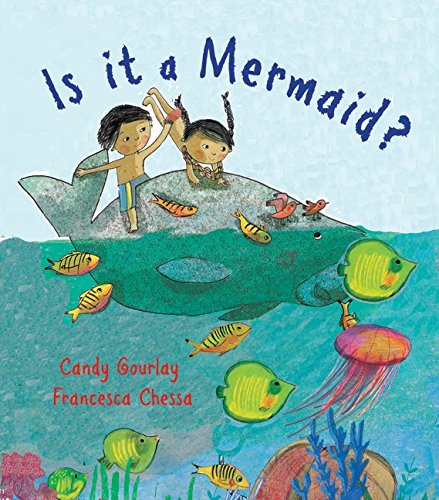
is it a mermaid

This book is full of interesting facts about the dugong and its history. Bel and Benji meet a dugong whilst playing on a beach in the Philippines. The dugong insists she is a mermaid. Bel is swept away by her imagination and instantly believes this. After all, in Malay the word for mermaid is ‘duyong’. Benji is harder to convince. He does not believe in mermaids and tells the dugong she is nothing but a Sea Cow. Understandably, this upsets the dugong. It is lucky that mermaids are so forgiving. By the end of the book even the most sceptic reader will believe in mermaids.

The story is enhanced by Francesca Chessa’s beautiful Monet-style illustrations. The colours take you on a journey through time, from the morning, to midday and then the glorious sunset and finally the deep blues of twilight when they have to pack up their fun day on the beach to go home. Even the end pages are illustrated as part of the story.

On the surface the themes of Is it a Mermaid? are friendship and kindness but this book carries a deeper message about how the dugong’s habitat of seagrass is under threat.

“They have been listed as vulnerable to extinction by the International Union for Conservation and Natural Resources (IUCN).” Candy Gourlay

Seagrass are flowering plants that live in shallow sheltered areas along coastlines all over the world. They are different from seaweed, have bright green leaves and are very important for the biodiversity around our planet.

  • Seagrass meadows act as a natural sea defence by trapping sediment and slowing down currents and waves.
  • They provide a home for many baby fish, including Cod, Plaice and Pollack around our shores.
  • Seagrass meadows absorb and store large amounts of carbon and are vital in the fight against climate change.
  • They absorb nutrients, pollutants and bacteria and help to keep our coastal waters clean.”

Project Seagrass

In the British Isles there is over 22,000 hectares of seagrass that is threatened by pollution and human damage such as boat propellers and chain moorings that can hinder its ability to produce new growth. Two species of seahorse depend on shrimp which inhabit the British Isles seagrass meadows and cuttlefish lay their eggs in these underwater fields.

I love the fact that Candy Gourlay ends the book with this educational message and points readers in the direction of an app called SeagrassSpotter designed by the charity Project Seagrass.

“SeagrassSpotter is a conservation, monitoring and education tool to help us better understand seagrass meadows around our coat.

By using SeagrassSpotter and becoming a Citizen Scientist with Project Seagrass, you can help us learn more about the seagrass meadows in your area, so that together, we can protect them.” Project Seagrass

This book would be ideal to use in the classroom to support work on habitats and conservation.

Is it a Mermaid? is a book to treasure.

To find out more about Candy Gourlay and her books visit www.candygourlay.com or follow her on Twitter @candygourlay and Instagram @candygourlay

To find out more about Francesca Chessa and her illustrations visit https://francescachessa.format.com/hello  or follow her on Instagram @hollysredboots and Twitter @hollyredboots

To find out more about Project Seagrass visit www.projectseagrass.org

To find out more about the app SeagrassSpotter visit www.seagrassspotter.org or search in the App Store or Google Play.

An interview with… Penny Joelson

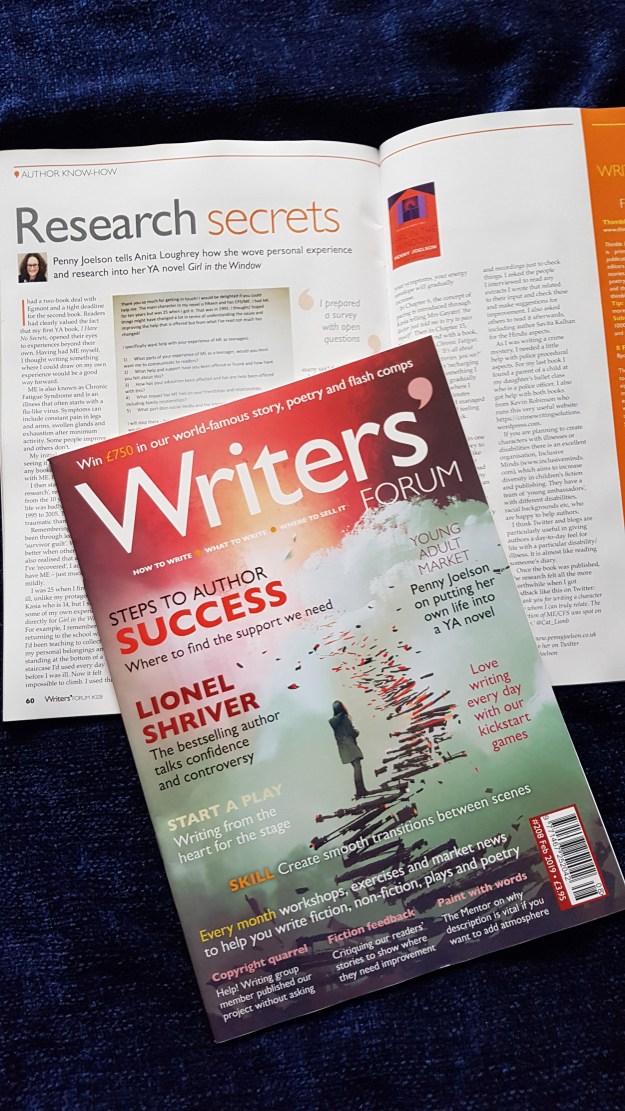
My Research Secrets slot in Writers’ Forum features YA writer, Penny Joelson. She explained how she wove personal experience and research into her YA novel, Girl in the Window.

research secrets - penny joelson4

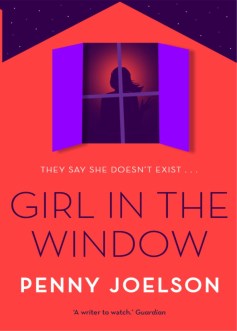
The book is about a teenage girl called Kasia, who has ME so spends most of her time staring out the bedroom window. Nothing ever happens on Kasia’s street so when she sees what looks like a kidnapping, she’s not sure whether she can believe her own eyes. she notices a girl in the window opposite and hopes she saw something too but when Kasia goes to find her she is told there is no girl.

In the feature you can see a copy of the interview that Penny used as part of her research to gain a young teenage perspective of ME.

I prepared a survey with open questions and an option to add further information. I was overwhelmed with the response and the moving stories I read.

Penny explained that while some research needs to be done before writing, she prefers to write a first draft and then do more research, check facts and add details. This stops her from info dumping and the feeling she must include everything she discovered.

covers

You can read the full interview in the Feb 2019 #208 issue of Writers Forum. You can find out more about Penny Joelson and her books on her website: www.pennyjoelson.co.uk or follow her on Twitter @pennyjoelson

Book Review – The Salvation Project

Title: The Salvation Project

Written by: Stewart Ross

Published by: Blean Books

salvation project

A fast-paced, exciting dystopian set in a world with no adults. This novel is the conclusion to the Soterion Mission trilogy where a very contagious mini-flu mutated everyone’s DNA, accelerating the ageing process so the human race only live a few weeks after their nineteenth birthday. A scary but brilliant concept. This young adult novel is full of tension and emotion.

With no education and no technology, the population split into two fractions: Zeds and Constants. The narrative unfolds into an emotional roller-coaster of totally believable reactions to such an apocalyptic disaster. A skilful and commendable modern version of William Golding’s Lord of the Flies with hints of Mad Max.

The characters are heart-wrenchingly realistic but coming into the story at the last book I couldn’t help feeling I was missing something. Stuart Ross does provide a very comprehensive ‘previously…’ prologue but I would recommend reading all three books in order to get the full impact of the story and all its complexities.

The haunting ending hits home as it encompasses the fundamental truth that resistance to change is human nature. As with all good books, I was thinking about the conclusion and the character’s struggles to get there, long after the book was finished.

An interview with… Rebecca Colby

In the January 2019 #207 edition of Writers’ Forum, I interviewed high-concept picture book writer, Rebecca Colby about the importance of rhyme and rhythm in children’s books.

RebeccaColby-9

Rebecca told me:

When I began writing children’s picture books, I naturally gravitated towards writing in verse. But the industry professionals at the writing events I attended warned against it. Phrases I heard many times included:

  • Rhyming books are too difficult to translate.
  • We can’t sell co-editions.
  • It’s hard to rhyme well.

While I knew these statements to be true, I also knew that children love rhyme, and these warnings didn’t stop publishing houses from buying books in rhyme.

In the feature she demonstrates how she uses onomatopoeia, repetition, juxtaposition and prediction to write fun and imaginative that children love. Here is an example from her picture book Motor Goose Rhymes that Go! published by Feiwel & Friends.

Motor Goose_Spread 2sm

Her message to other writers who want to write rhyming picture books, is to try and come up with fifty ideas and give these ideas plenty of time and space to grow.

Rebecca Colby3

In a forthcoming book entitled How to Write Picture Books that Knock Editors (and Agents!) Socks Off, Rebecca Colby will share some games which makes the task of starting to write less daunting and provides loads of tips for writing high-concept picture books. More details will be available on her website later in the year.

Find out more here: www.rebeccacolbybooks.com and follow her on Twitter: @amscribbler