Tag Archives: Anita Loughrey

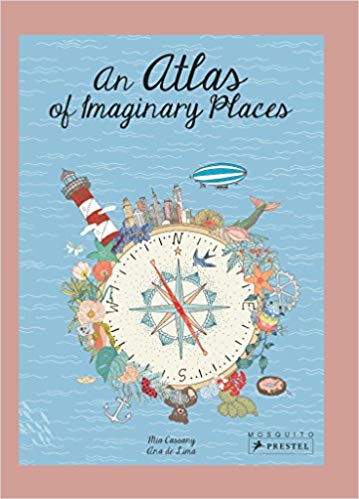
Book Review – An Atlas of Imaginary Places

Title: An Atlas of Imaginary Places

Written by: Mia Cassany

Illustrated by: Ana de Lima

Published by: Prestel Publishing

An Atlas of Imaginary Places

This unusual and beautifully illustrated atlas transports the reader into a fantastical world that nestles between reality and dreams. Children will discover mountains that grow upside-down, paper boats that transform into donut and cake islands, a city that floats on a whale, animals that change in appearance every time they sneeze and volcanoes that spit out bubblegum lava.

Author, Mia Cassany, has created the ideal picture book for older 5+ readers that will spark every child’s imagination. The pastel-coloured illustrations by Ana de Lima are jam-packed with interesting and thought-provoking images. The reader needs time to explore and think about each spread as they sail the wonderous journey through the Atlas of Imaginary Places.

I believe this book will make a great teaching resource, as each spread could be used as a story starter, as well as inspiring art creations and displays in the classroom. The maps on the end papers are ingenious. They encourage the children to develop not only their imagination but their observation skills. A great book for the class book corner and the ideal book for sharing with your child before bedtime.

This book review was previously published on the online Armadillo Children’s Book Review Magazine.

An interview with… Alex Woolf

On the 25th April 2016 me and my friend Jo Franklin launched a unique blog where I interviewed authors about their love of stationery, called Paper Pens Poets. The site has been running for over two years and there has been a new author interview featured on the site almost every week.

The very first author interview was with children’s book writer Alex Woolf and went out on the 6th May 2016. Alex could not really say he had a favourite stationery item. He told me:

I hunted around my desk to see if anything there sparked a particular affection. I eyed my blue Paper Mate® ball points, which I certainly appreciate, as I do my Avery® Jam-Free Laser Address Labels – they fulfil their assigned functions perfectly, though they don’t exactly set my pulse racing or bring a lump to my throat.

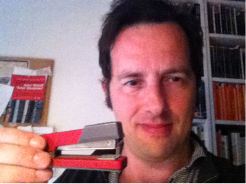
Then he saw his trusty old stapler. This is an item I myself have always taken fore-granted but Alex proudly proclaims that this is his favourite stationery item. You can see the full interview here.

Alex Woolf

To find out more about Alex Woolf and his books take a look at his website: www.alexwoolf.co.uk or follow him on Twitter: @RealAlexWoolf

You can also follow Alex on the innovative Fiction Express website.

Editing

Reading through the posts on this blog, I’ve noticed I often make silly mistakes, miss out words or have extra letters in words that should not be there because I’ve hit the wrong keys whilst typing. It has highlighted to me how important editing is.

With a blog it is easy, as you can go back and correct the posts. But you can’t correct the automatically shared posts to Twitter and Facebook, which is just embarrassing. Notice how I’m talking like a seasoned blogger and I’ve only been blogging on a daily basis for a few weeks.

editing1

Good editing means making wise choices. What words should you use? What order do you put them in? There is never a single correct answer. The best sentences are sturdy and straightforward. The reader can understand them easily, without having to reread them. Sentences become difficult to read for two main reasons: the sentences are too long, or the sentences are poorly constructed.

One of the most informative talks on editing I’ve ever been to was given by John Jenkins, who was the editor of Writers’ Forum. There were three main rules to editing that he pointed out.

The first thing he suggested, is to take out all the adjectives. I found the easiest thing to achieve this was to use the ‘Find and Replace’ application in the Edit menu of Microsoft Word and search for all the -ly words and delete them. More often than not, they were not needed and if I desperately wanted to keep one I could, because I’d whittled them down to only a few.

By combining the verb and adverb into one more descriptive verb, I not only cut the word count but was being more precise. For example, if a person was walking slowly, they could be described as sauntering, meandering, or strolling. So, ‘she walked slowly toward me’ would become, ‘she sauntered toward me’, or ‘meandered toward me’. Controlling adverb/verb combinations, allows me to set the tone and communicate the emotion of a scene.

Lots of adverbs and adjectives slow the pace and jar the reader out of the action. What I did, was look at some of the children’s books I admire and enjoyed reading and found that adverbs and adjectives were used very sparsely and also got an idea of the type of strong verbs used to replace them.

Next, John Jenkins said be active not passive. If you find yourself using forms of ‘be’ such as: are, is, was, becomes, became, you are using the passive tense. I find this the most difficult but, it is important especially when writing articles. I’ve used ‘become’ in a paragraph above, but I think it needs to be there.
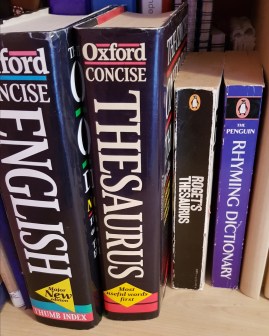
dictionaries1

The third rule was to remove all waste words. This included: them, that, began, started, about, all, along, and, away, before, after, down, up, out, in, even, ever, just, little, now, only, over, really, so, some, sort, such, felt, feel, back, returned, instead, to the, to be, there, was, suddenly and very. Again, I use the ‘Find and Replace’ application in Microsoft Word. Then I check to see if any of these words need to be added back in. You’ll be surprised how few do. I replace only the ones that are essential.

I hope this advice is as useful to you as it has been to me. But, remember before you start editing, put the manuscript away and do something else. This will allow you to look at it with fresh eyes and see the mistakes more easily.
Book Review – Am I Yours?

Title: Am I Yours?

Written and illustrated by: Alex Latimer

Published by: Oxford University Press

am i yours

This lovely ‘identity’ story that will bring a tear to your eye. It is about a dinosaur egg, which is pushed out of its nest by an icy wind. A host of different dinosaurs try to discover who the egg belongs to, before night fall. I like the way Alex Latimer ranks up the tension by telling the reader the egg will not survive another cold night.

This book is is cleverly written in rhyme with a catchy repeated phrase:

‘What do you look like inside the shell?

I can’t see so I can’t tell.’

It encompasses the themes of kindness, community and working as a team.

Am I Yours? by Alex Latimer would be a great book to introduce young children to the species of different dinosaurs and their characteristics. The illustrations are bold and eye-catching with charming, friendly dinosaur faces that every child will fall in love with. The end papers are full of even more dinosaurs for children to enthusiastically spot. It could be used in the classroom as a fun way to discuss similarities and differences in body parts.

This book review was previously published on the online Armadillo Children’s Book Review Magazine.

An interview with… Carole Matthews

My Research Secrets column was launched in the national writing magazine, Writers’ Forum, in October 2008. It has been running for just over ten years. To celebrate the tenth anniversary of my column I wanted to tell you about my very first interview that launched Research Secrets.

The very first interview was with Carole Matthews who writes romantic comedy.


Carole Matthews’ favourite research tools in 2008 were:

  • The Little Book of Baby Names – it’s where most of her character ‘s names come from.
  • IMDB –Internet Movie Database imdb.com – which is useful for all movie related questions.
  • Amazon – to keep up with what’s coming out.

Her research tip was to go and do what you’re writing about if you can.  She had set one of her books in a library, so she did some volunteer work in her local library for a few days. She also advises if you splash out to visit somewhere take masses of photos, notes, video.  Work on the premise that you’re never likely to go back.

I always visit the area I am writing about. I have a file drawer for every area we’ve ever visited – complete with local info, hundreds of photographs (or a CD these days) and probably a video too.

For writers who want to write chick-lit, she suggested you organise a girl’s night with your best mates once a month.  Drink lots of wine.  Tell lots of stories and try not to drink so much wine that you forget all the stories in the morning.

happiness for beginners

Carole Matthew’s new book, Happiness for Beginners, is released in February 2019. To find out more about Carole Matthews and her books take a look at: www.carolematthews.com

Or follow her on Twitter at: @carolematthews

Writing an Educational Book Proposal

Before I submit a proposal, whether it has been commissioned or is unsolicited, I look for a gap in the market. I always check out my local library and online bookstores to see if there is a book on the subject already and if there is how could I approach it from a new angle that would be relevant to the classroom today. If I do find a gap, I think why is it there? Is there a demand for the subject? And what would be another books ‘unique selling point’. Finding a new subject, or even better a new slant on an old subject is half the battle.

As in all forms of writing, it is important to study the market. I have been fairly successful with writing educational resources. Today I have over 80 books published. You can see them on my website here. I have to keep reminding myself – this is very good. Yet, the hardest thing for me about writing a proposal is explaining why I am the best person to write the book. I am not very good at blowing my own trumpet.

I suppose part of the process is, feeling the fear and doing it anyway, just like Susan Jeffers books says. Also, keeping in mind we can achieve anything if we really put our minds to it. I remember when I passed my Bronze Medallion (Life Saver’s swimming certificate) in 1994. I was asked to take over training the top swimmers for the Berkshire school’s swimming gala after the previous teacher died of a brain tumour. To do this I needed to have a Life Savers certificate. I saw this as a challenge and enrolled on the RLSS Bronze Medallion course.

When I started I could not even swim one length of the 25m pool. After the twelve week course I could swim 20 lengths in under 20 minutes and fetch a body from the bottom of the pool, fully clothed. To achieve this I had to go swimming at least three times a week, sometimes more. I was still on maternity leave and so had the time to do it but, my stomach muscles were very weak and I could not pull myself out of the pool when I started, I had to use the steps.

trophy

I got the highest marks in the group on the theory exam. But, it was sheer determination that got me through. And you know what? We went home with the relay trophy every single year, until I moved schools and stopped doing the job.

Book Review – Dougal Daley I’m Phenomenal

Title: Dougal Daley I’m Phenomenal

Written by: Jackie Marchant

Illustrated by: Loretta Schauer

Published by: Wacky Bee Books

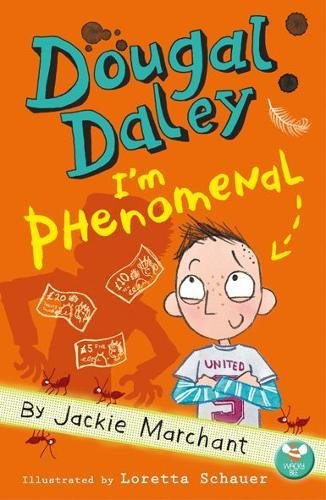
The Dougal Daley books are funny mid-grade stories about a young boy who always seems to land himself in trouble with his antics. The third in the series is about Dougal’s ingenious enterprise to make money by setting up a website to help people. Obviously he has to keep this a secret from his parents.

Dougal Daley3

The books are fun, exciting and visually engaging. I believe they will encourage even the most reluctant reader to read. I particularly like the inclusion of multi media in the book, with pages from Dougal’s website, email messages, school letters and text messages all included as part of the story. This along with Loretta Schauer’s brilliant character sketches gives the book a really modern up-to-date feel.

I was lucky enough to be invited to Jackie’s book launch where there was wine and cup cakes.

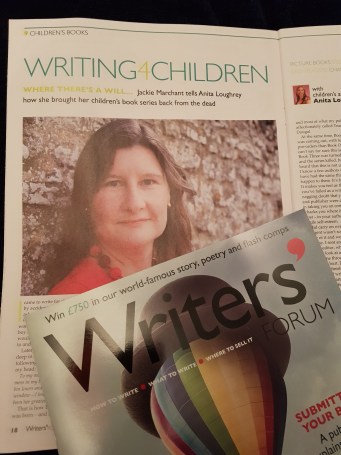
In the March 2018 issue of Writers Forum I interviewed Jackie Marchant about the Dougal Daley series. Jackie told me her inspiring story of how the books were given an incredible face lift by changing the name of the main character and using a new illustrator, after meeting Louise Jordan at the London Book Fair. Louise Jordan runs the publishing company Wacky Bee. She told Louise her story and Louise went away and read the original books. She then contacted Jackie to say she loved them and would like to publish all three titles.

20180212_212301

You can find out more about this interview in the #197 March 2018 issue of Writers Forum.

You can find out more about Jackie and her books on her website:  www.jackiemarchant.com and follow her on Twitter at: @JMarchantAuthor 

You can find out more about Loretta Schauer and her illustrations on her website: www.lorettaschauer.com and follow her on Twitter at: @Loretta_Schauer 


An interview with… Becky Bagnell

My Writing 4 Children column was launched in the national writing magazine Writers’ Forum in May 2016. It has show-cased an interview every month with top authors, editors and agents for over two years. The very first feature was with  Becky Bagnell founder of the Lindsay Literary Agency.

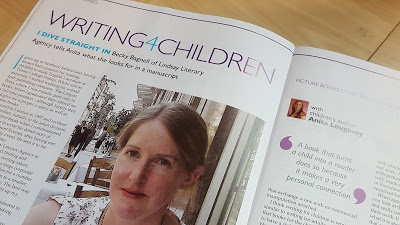
Becky Bagnell magazine

She provided some valuable insights into the children’s book world and explained to me what she looks for in a manuscript, what makes a good children’s book agent and what makes a great children’s book.

Becky set up the Lindsay Literary Agency in 2008 having worked as a commissioning editor for Macmillan. The agency represents a wide range of authors including Pamela Butchart, who won 2015’s Blue Peter Award. She has a particular interest in discovering new talent from picture books to YA.

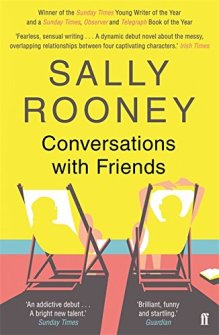
I heard Becky talk at this year’s SCBWI Agent’s Party. She said her favourite commercial debut book this year was Conversations with Friends by Sally Rooney. This gives an indication of Becky’s taste and writing styles which will grab her attention.

Conversation with Friends

In her interview for Writers’ Forum Becky told me she likes to dive straight into the manuscript before reading the submission letter and the synopsis. This reiterates what she said in her interview with me.

I like to get that excited feeling about a manuscript at the very first paragraph, and if I’m still keen after the first three chapters it is a pretty good sign.

She suggests that you look at that agent’s list of authors and really consider if you like any of their work and if you do then tell the agent what it about a certain book or author that appeals to you. Even if their work is completely different to your own – it shows that you’re a reader and you’re thinking about how your writing might fit alongside the other authors that the agent is working with.

You can find out more about Becky Bagnell’s likes and dislikes for submissions in the May 2016 #175 issue of Writers Forum.

Writing Educational Resources

The main difference I’ve found between writing educational resources and writing fiction is… you get commissioned to write educational books. This means I know my work is going to be published before I’ve written the book. It is also a more of a group effort than writing a novel, with input at each stage of the books development.

I was a teacher for many years and this background in education is beneficial, as I’ve studied most subjects in depth and know what is required in a classroom situation. I can also write to match the targets of the National Curriculum.

When I tell people I was a teacher, the first thing they ask is what did you teach. I usually said, “Children.” But, then I felt guilty for being flippant and would say, “As a primary school teacher you name it, and I have taught it.” Now I say, “As a writer you name it and I’ll write it.” This is very true. I love research and so if I don’t know anything on a subject I will spend time finding out about it.

research

I prefer it when the publisher rings me up, or emails me, and says we’ve got an idea for a project. This really gets me to focus. Turn around times are quite fast in comparison to fiction and the books are published within a few months of submitting the final draft of the manuscript, which is actually good as you get to see that final product really quick. None of this hanging around waiting for two years. Even so, it is still important to get started on the next book before the one you have just written is out.

Launch of my new blog

Today I am launching my new blog all about Writing for Children. It is going to be jammed pack full of information about the many books I have written, interviews I have done, book reviews I have written and my writing advice. My aim is to share with the world my immense writing experience and background.

w4c2

I write two slots for the national writing magazine, Writers Forum and will be announcing on my blog when the new features are out and who I have interviewed. I will give teasers from the magazine in the hope you will want to find out more. I have already posted a Research Secrets blog post, which you can take a look at here. I will also be including snippets from interviews I have done for the stationery blog Papers Pens Poets.

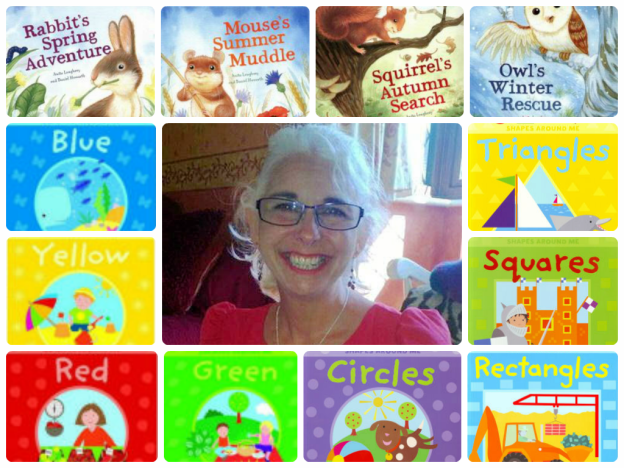
KS1postcardcollage4

Book reviews are one of my many writing specialisms. I have been writing book reviews for many years for a variety of websites and magazines including the Historical Association, Nikki Gamble’s Write Away and Armadillo Children’s Book Review Magazine. I plan to post a review each week which will include a mixture of some of my favourite books and new releases . I already have a book review on the blog so you can see what to expect. Take a look here.  I thought it was quite an appropriate book review as I have migrated from Blogger to WordPress.

Leave me a comment…

It is an exciting time and I hope you will comment and share my posts. I have been writing in a vacuum for years, blogging without anyone knowing. Now is the time to get out there and be noticed. So if you just want to say ‘Hi’, or let me know your opinion, please do. I would love to hear from you.