Anita Loughrey's blog. This is my journal about my experiences and thoughts on writing. As well as news about me and my books, it includes writing tips, book reviews, author interviews and blog tours.
For more information about me and my books see my website: www.anitaloughrey.com. Follow me on Twitter @amloughrey, Facebook @anitaloughrey.author and on Instagram @anitaloughrey
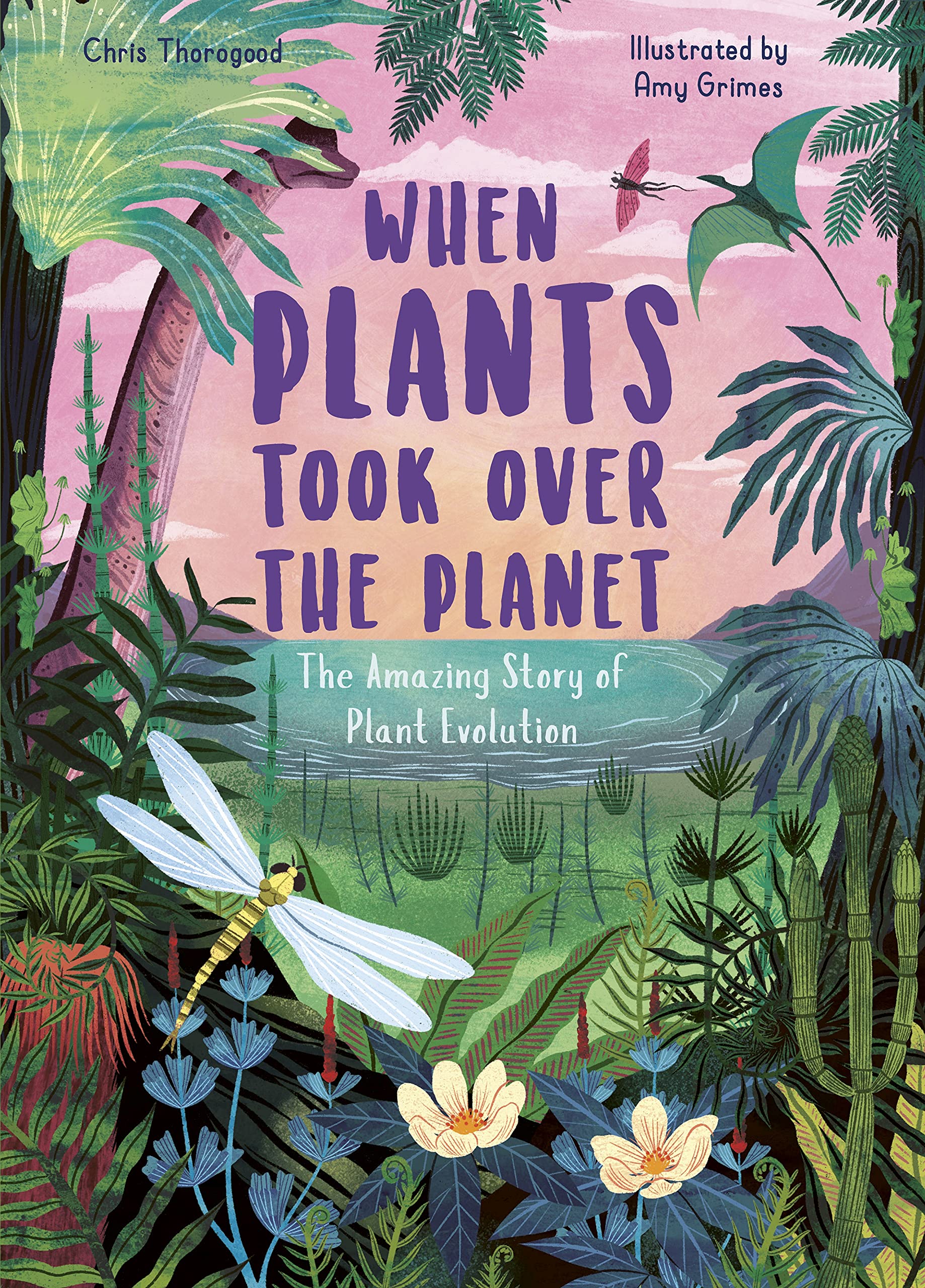
Title: When Plants Took Over the Planet. The Amazing Story of Plant Evolution.
Written by: Dr Chris Thorogood
Illustrated by: Amy Grimes
Published by: QED Publishing
When Plants Took Over the Planet. The Amazing Story of Plant Evolution by Dr Chris Thorogood and Amy Grimes
When Plants Took Over the Planet. The Amazing Story of Plant Evolution documents a concise history of plants from the first water plants that have been estimated to have appeared around 500 million years ago and through their amazing journey onto land. There is also an excellent timeline of their evolution from the Palaeozoic era to the Cenozoic era.
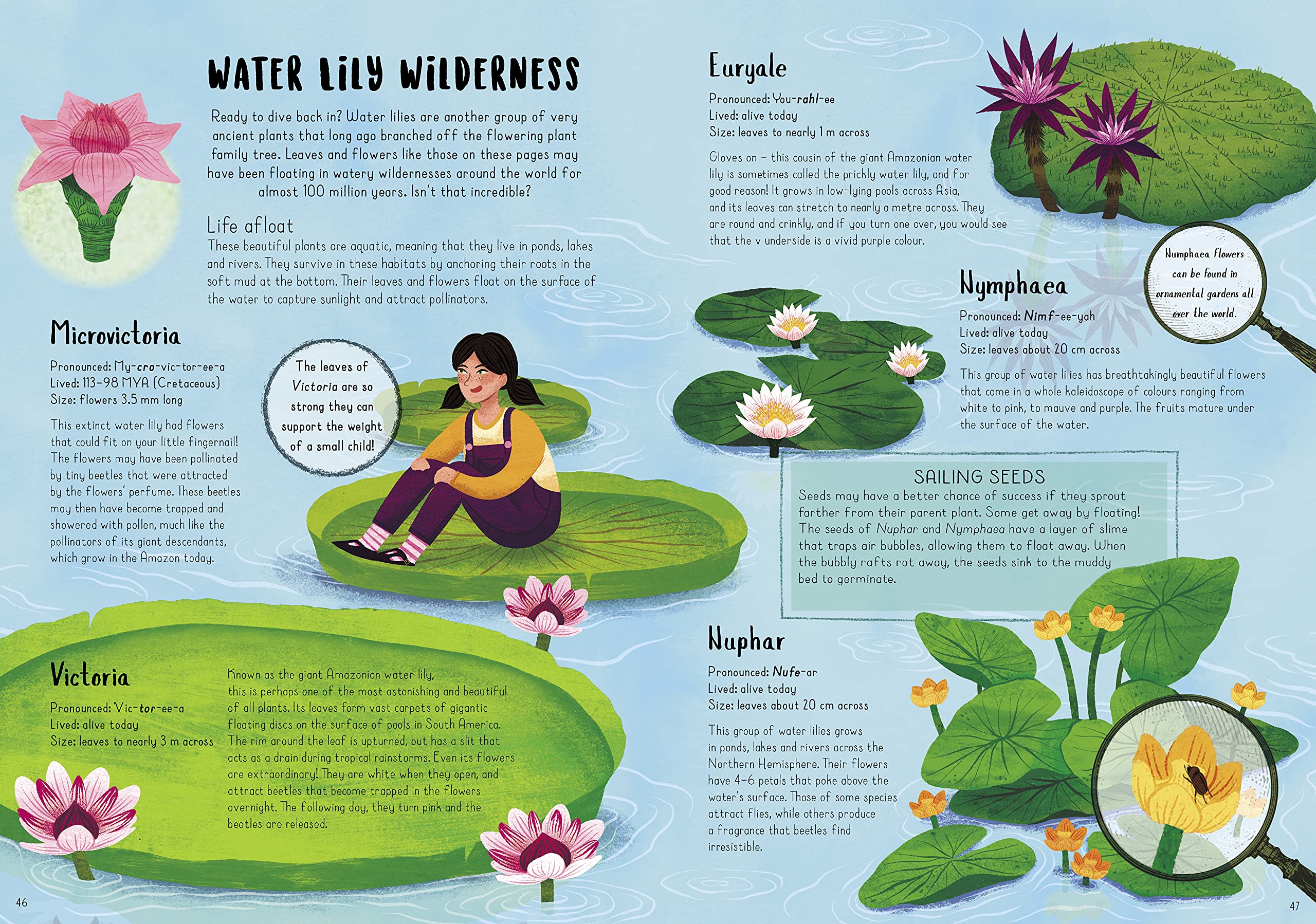
Dr Chris Thorogood has put his reputation as a botanic field guide writer to good use to create a visually dynamic non-fiction picture book for young people that can be used as a means for identifying different plants and guide young readers through the key aspects of the life of plants, from early ferns which were most certainly munched on by dinosaurs, to carnivorous plants that snap and ‘attack’ their prey, or powerful medicinal plants that can heal ailments and boost health. It even includes how to pronounce the difficult looking Latin words.
The snippets of bite-sized narrative weaves its way through how the multitude of magnificent and mysterious variations evolved into the vast array of adaptations that populate our planet today. It provides examples of how they can be used in medicines, the animals, including humans that need them to survive and also touches on the damage humans are doing to this fascinating resource.
Amy Grimes’ illustrations are bright and bold vinaigrettes inspired by the colours of nature and the natural world. Any child will want to spend hours just pouring over the illustrations to determine the plants similarities and differences.
This large-format, highly illustrated non-fiction picture book could be used to support topics taught at the top end of primary school in particular, living things and their habitats and evolution and inheritance. It will inspire budding young gardeners and botanists to discover more about the world of plants and maybe even go on to grow some truly bizarre and extraordinary plants for themselves.
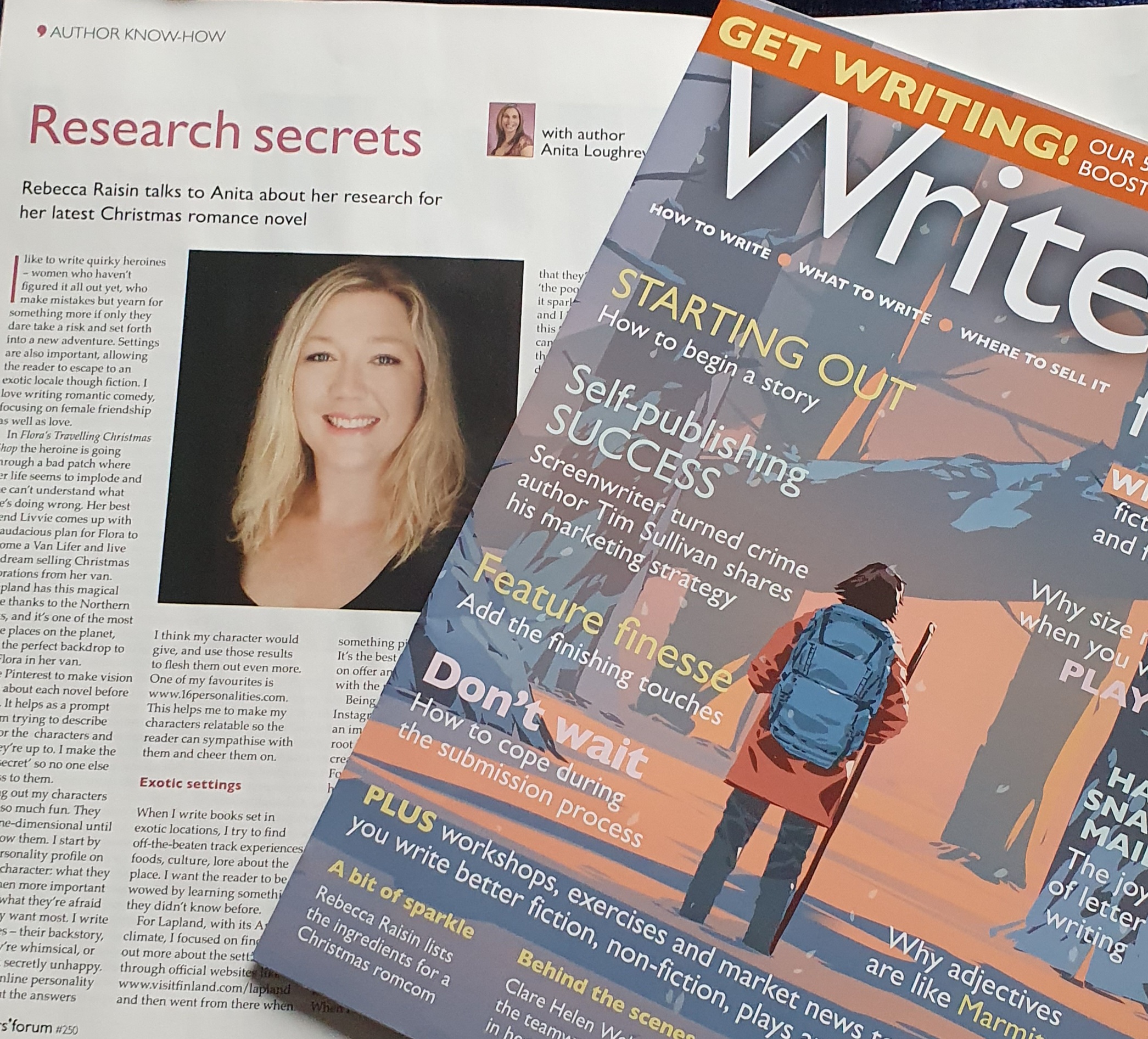
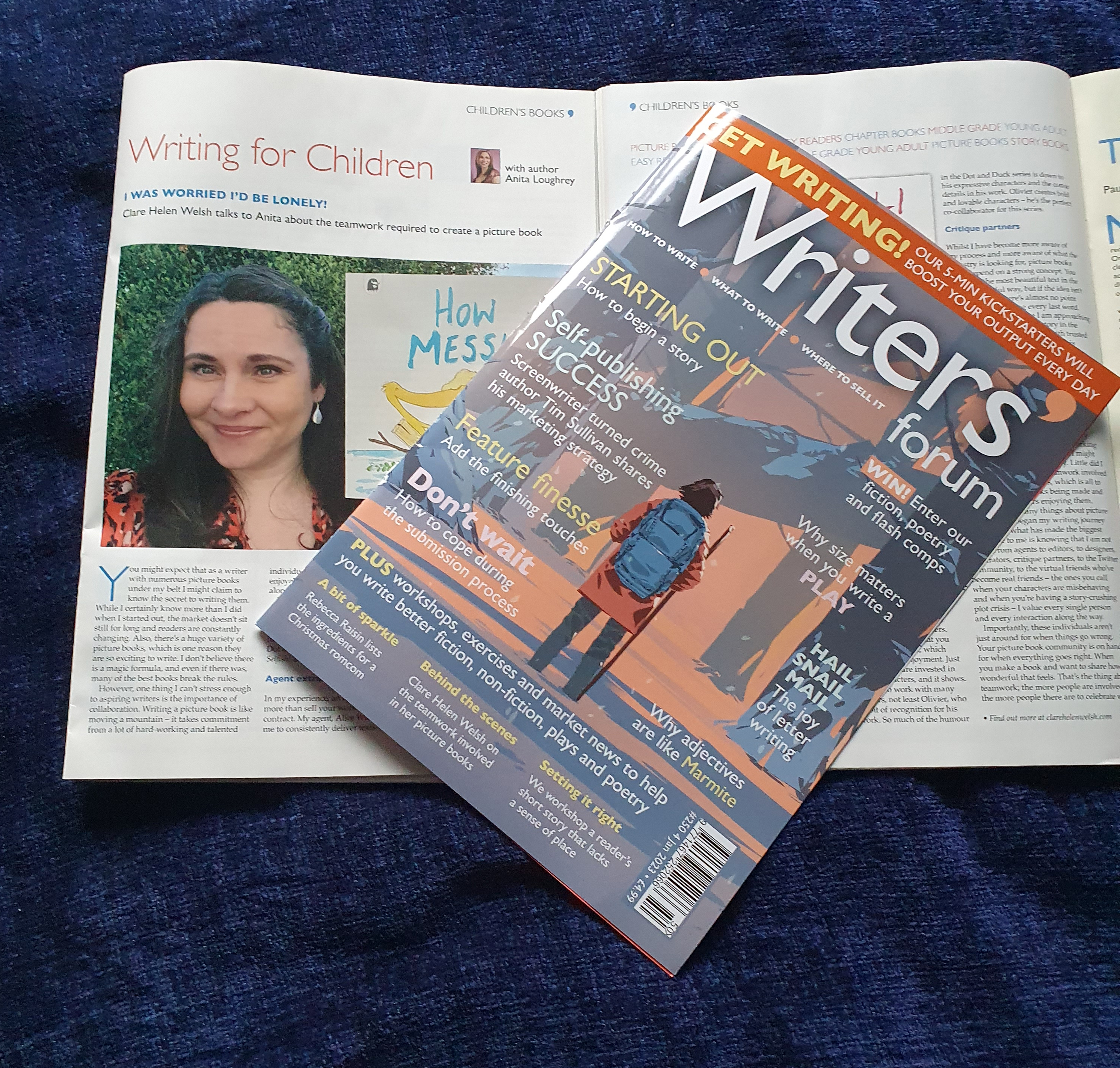
In a Research Secrets interview for #250 4 Jan 2023 issue of Writers’ Forum, I spoke to Rebecca Raisin about her travel research into Van Life and Christmas traditions in Lapland for her latest romance novel, Flora’s Travelling Christmas Shop.
In typical romance style the heroine is going through a bad patch where her life seems to implode and she can’t understand what she’s doing wrong. Flora’s best friend Livvie comes up with an audacious plan for her to become a Van Lifer and live her dream selling Christmas decorations from her van at a market in Lapland.
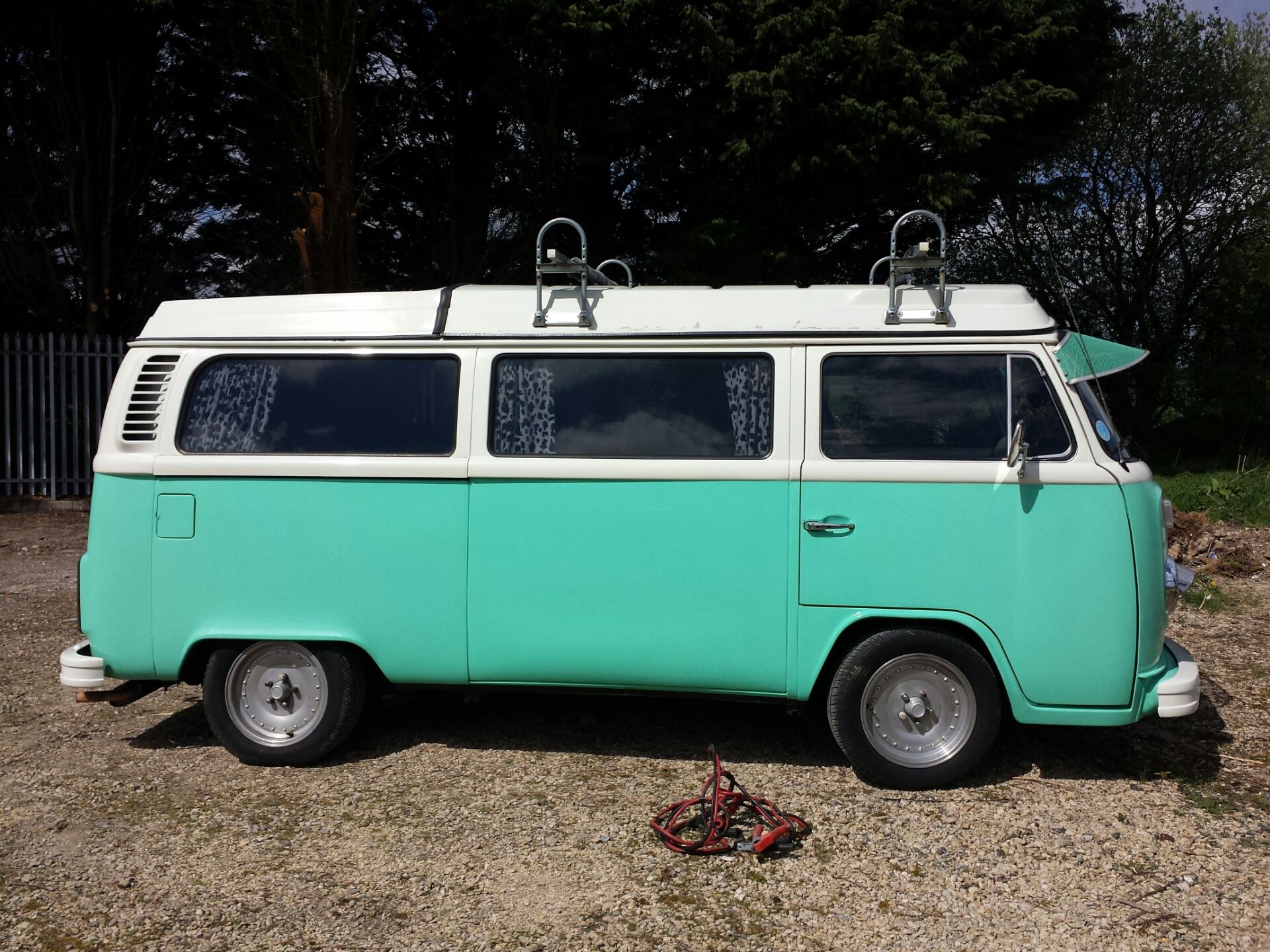
My beautiful van Peppermint
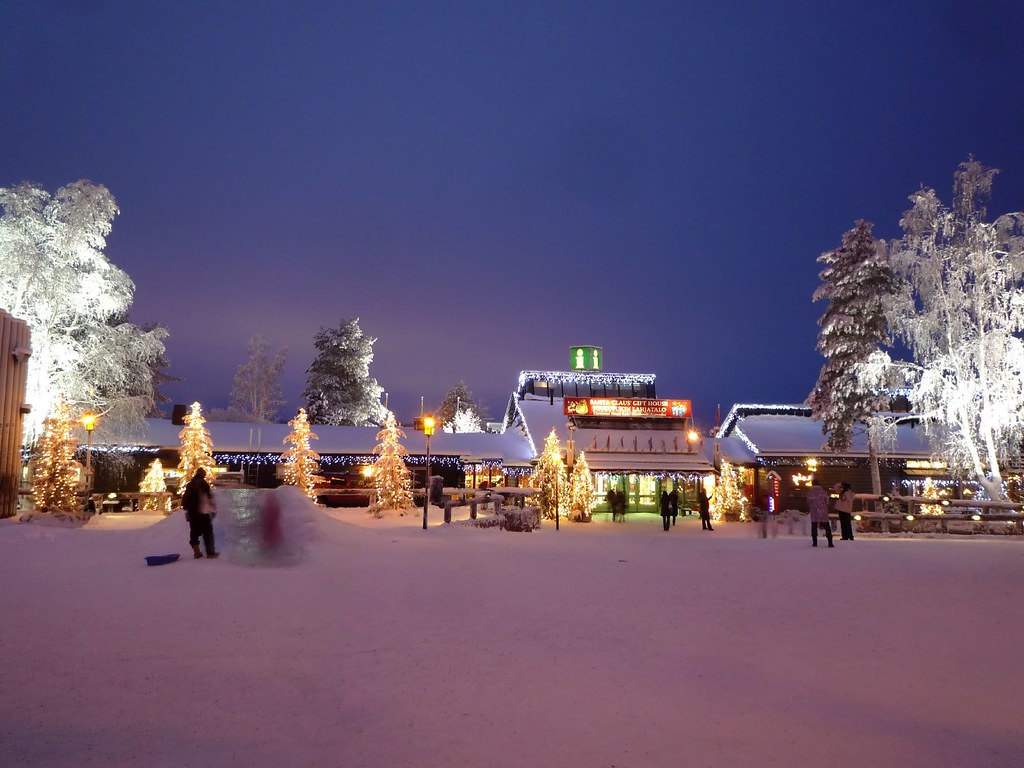
Rebecca told me Lapland has this magical allure thanks to the Aurora Borealis and it’s one of the most festive places on the planet so felt is was the perfect backdrop to send Flora in her van. She revealed she uses Pinterest to make vision boards about each novel before she begins as it helps as a visual prompt when she describes the town, characters and what they’re up to. She makes her boards ‘secret’ so no one has access to them before she has finished writing the book.
To flesh out her characters she starts by doing a personality profile on each main character – what they look like, and then more important parts like what they’re afraid of, what they want most. She told me she writes copious notes, their backstory, whether they’re whimsical, sassy or confident but secretly unhappy.
“I also use online personality tests and input what I think my character would choose and use those results to flesh them out even more. One of my favourites is www.16personalities.com. This helps me to make my characters relatable so the reader can sympathise with them and cheer them on.”
Rebecca Raisin
When setting books set in exotic locations, Rebecca explained she looks for off-the-beaten track experiences, foods, culture, lore about the place. She wants the reader to be wowed by learning something they didn’t know before. For Lapland, with its artic climate she focused on finding out more about the setting through official websites like: www.visitfinland.com/lapland/ and when something piqued her interest she searched further afield.
She finds Instagram great for providing images that take root in her imagination so she can then create more vivid descriptions. She searches hashtags such as #Wanderlust #VanLife #Nomads #Lapland. For example:
“Cradling the mug to warm my hands, I look at the snowy view outside and know that moments like these are why people choose Van Life. There’s no one about, just me and the snowy cotton-ball landscape.“
Extract from Flora’s Travelling Christmas Shop by Rebecca Raisin
Rebecca told me the most unusual piece of research she did for Flora’s Travelling Christmas Shop was to find a local sauna at a swimming centre and try it out. After reading so much about the health benefits, she wanted to experience it for herself to help her describe it throughout the book.
“I found it mercilessly hot and hard to breathe and I only lasted about five minutes.”
Rebecca Raisin
This research, along with her reading, filtered into her writing, as can be seen in this following extract:
One thing I’m curious about, why are saunas so popular here? Is it because of the arctic temperatures? A way to warm up?’
‘Yes, that I suppose but it’s mainly for the health benefits. For general wellbeing. If the sauna can’t cure you, nothing can. I use it for detoxing, anti-ageing, to speed up my metabolism. Back in the day, my grandmother gave birth to all her babies in saunas, as did many in her generation, thinking it was the safest, most sterile place for such a thing. Every single member of my family has a sauna at home – they use the sauna, then swim in the icy cold lake and head back into the sauna. It’s invigorating, makes you feel alive! It’s just one of those things that’s ingrained in us.’
Extract from Flora’s Travelling Christmas Shop by Rebecca Raisin
Her research into Christmas traditions revealed the typical cosy way in which Finnish people celebrate Christmas. It’s traditional to celebrate Christmas from the 21st of December until St Knut’s Day January 13th. Finnish people tend to work a lot in the lead up so they can spend the holidays with their families. On December 24th they decorate the tree, have a warm glass of gløgge, or mulled wine before their joulusauna.
Rebecca explained she spends a lot of time reading travel blogs and searching on Instagram for people living the same sort of Van Life lifestyle. She advocates reading travels blogs is an authentic way to learn about what struggles they face along the way, as well as the gems they find that an everyday tourist might miss. Usually her heroines are thirty-somethings travelling on a limited budget so she hunts for others who go from country to country and live a frugal existence selling what they can and living outside of ordinary. She revealed YouTube van diaries were also a fun way to tag along these journeys from the comfort of her own home.
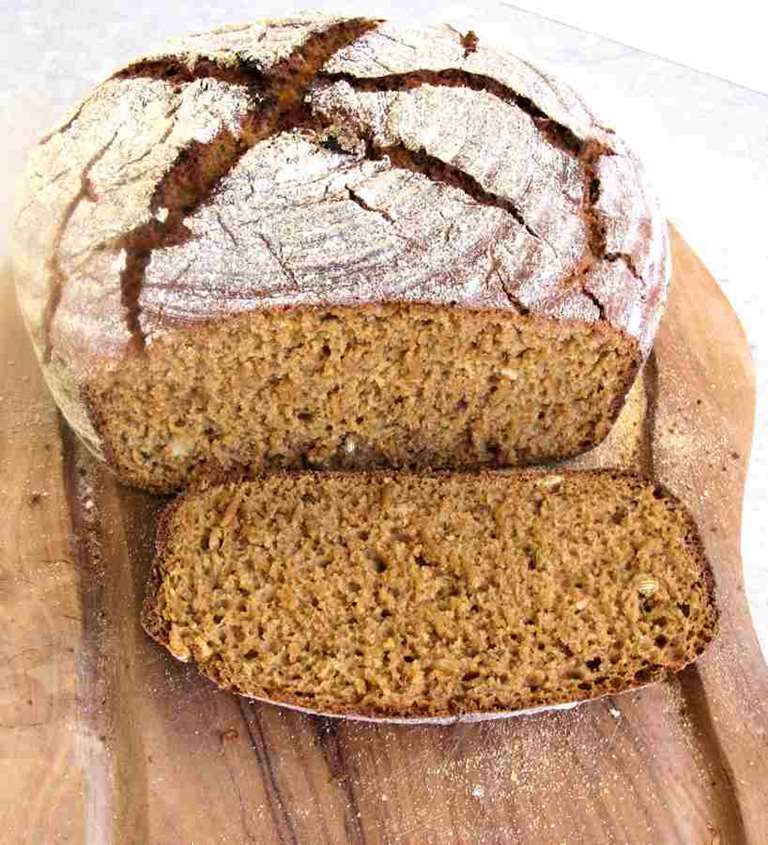
Rebecca told me she is particularly interested in food when researching for a book, as it’s a great way for characters to try something new and is a scene setter. Popular during the festive season in Lapland is joululimppu which is Christmas bread.
She explained that like a lot of the Finnish food it’s a mix of strong flavours that just seem to work. She found the ideal recipe for joululimppu on www.cuisinefiend.com.
“Browsing food blogs is a very addictive past time of mine, especially when researching for a Christmas book set in a country foreign to me. I like the personal touch when reading blogs and that the creators are clearly passionate about their subject. I read up on certain recipes from that country, in this case Finland and then lace them throughout the book, trying not to info dump, but so they appear naturally to the reader.”
Rebecca Raisin
This can be seen in this extract from Flora’s Travelling Christmas Shop:
“Stalls sell roasted chestnuts, and piparkakut a traditional Finnish gingerbread. There’s a sign for the ultimate comfort food riisipuuro otherwise known as rice pudding, mugs of steaming hot cocoa and warm pastries. The scent of Christmas – a mix of nutmeg, vanilla, star anise – is heavy in the icy air.“
Extract from Flora’s Travelling Christmas Shop by Rebecca Raisin
You can find out more information about Rebecca Raisin and her books on her website: www.rebeccaraisin.com
To read the complete feature you can purchase a copy of #250 4 Jan 2023 Writers’ Forum by ordering online from Select Magazines.
In issue #250 4 Jan 2023 of Writers’ Forum I interviewed Clare Helen Welsh about the teamwork required to create a picture book and the importance of community for authors.
Clare said that writing a picture book is like moving a mountain – it takes lots of commitment from a lot of hard-working and talented individuals. It’s also significantly more enjoyable with like-minded people alongside you. She told me to help her make sure she is approaching the strongest version of a story in the strongest way, she shares her work with trusted critique partners whose feedback is nothing short of invaluable. She explained they are excellent at the word level bits, but she also values their thoughts on the bigger picture issues such as arc, character development and theme providing her with the objectivity that is often hard to see when you are so close to your own work.
“Your picture book community are on hand for when everything goes right. When you make a book and want to share how wonderful that feels. That’s the thing about teamwork; the more people involved, the more people to celebrate with… and the more special it feels.”
Clare Helen Welsh
For Clare one of the most important team members is her agent, Alice Williams, from Alice Williams Literary. Clare elaborated that Alice does much more than sell her work and check her contract. She explained Alice reads, guides and mentors her to consistently deliver texts that families and gatekeepers love. She’s the critical eye that wants her story to be the best it can be and crucially, she has the other eye on the market.
Alice Williams ensures there’s enough in the picture book texts for them to be acquired and read (and re-read) many times, asking questions such as ‘What is there for a child to enjoy? How can I sell this to a publisher as a must-have text?How will I pitch it?’ With these questions in mind, there is usually at least one round of edits before a text goes out on submission, and when they do Alice utilises her contacts and knowledge of the industry to give a text the best chance of being acquired.
“You don’t have to have an agent to be a writer and there are many writers doing fantastically on their own, but for me the relationship is hugely valuable and enjoyable, too. It’s also handholding while you find your publishing feet.”
Clare Helen Welsh
Clare told me how the collaboration continues with the publisher, when a team of people play their part in editing, designing and producing the book. The publishing team she worked with at Quarto Kids were Rhiannon Findlay, Jane Wilsher, Malena Stojić, Emily Pither and Sarah Chapman-Suire. Once a text lands in an editor’s inbox, they will decide if it has potential and if it would result in a book that fits their list.
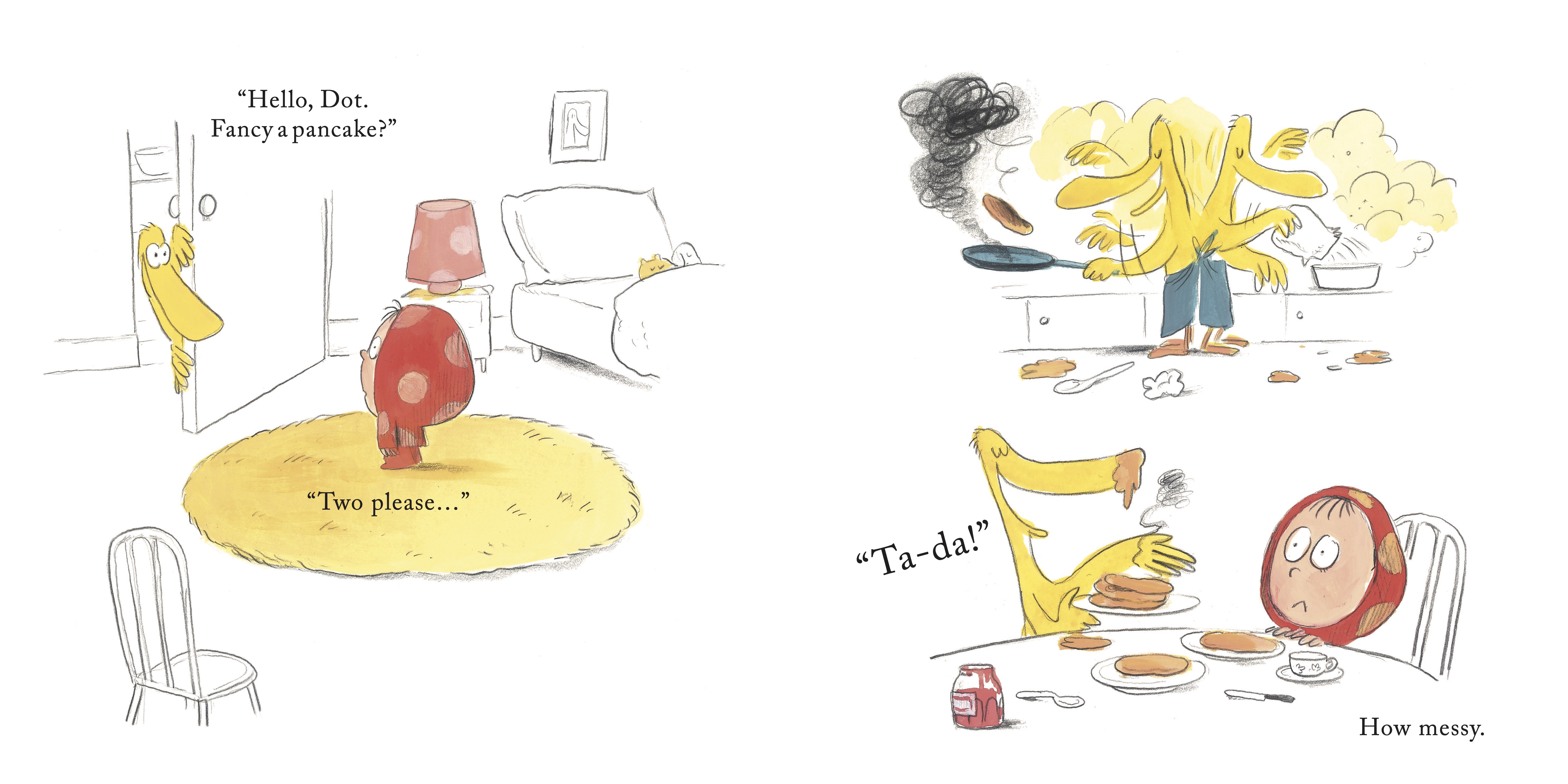
Dot and Duck had three commissioning editors cheering them on: Matt Morgan for How Rude! Ellie Brough for How Selfish! and Emily Pither for How Messy! If it’s a yes, the idea will be pitched to the wider team at an acquisitions meeting, including representatives from sales and marketing, together deciding if a book should go ahead.
Publishing is a creative business, but it’s also very much about the commercial side. Everyone has to be behind the project with a clear idea of how the book will be marketed, how much it will cost to produce, where it will be sold and who will buy it, for it to get the green light. Once a book is given the go ahead and is acquired, editors then have a significant role in developing and shaping a text. Should the character be male or female? Can they be androgynous? Should Duck always be the antagonist? Are there too many penguins in picture books? Your editor will help you to polish and refine a story, both on a line level and the larger plot and concept. They are on hand every step of the way as your book is brought to life.
But editors don’t work in isolation . Picture books, by their very nature, are more than just words and require a seamless combination of words and images. The designer, which for Dot and Duck was Sarah Chapman-Suire, is to the illustrator what the editor is to a writer – someone with ideas, suggestions and insider knowledge on how to sculpt and layout a picture book so that it will have the best chance in the market. Sample illustrations are sometimes commissioned.
On top of these names and roles for this series, she had Nikki Ingram – the Production Manager and Lucy Lillystone – the Campaign Assistant, sales teams, marketing teams, foreign rights teams and countless others. Having such a large team is good news. Your publisher, and everyone working for them, wants your book to be a big success and wants it to sell as much as you. There really is a whole village of enthusiastic individuals invested in making your story the very best it can be.
The Dot and Duck series are illustrated by Olivier Tallec. The interaction between the the words and the pictures makes this genre of children’s fiction special. Picture books wouldn’t exist without an illustrator – they’d just be words in a digital document. But more than bringing an idea to life, an illustrator is a co-author.
“I have been lucky to work with many fantastic illustrators, not least Olivier Tallec, who deserves every bit of recognition for his outstanding work. So much of the humour in the Dot and Duck series is down to his expressive characters and comic details in his work. Olivier creates bold and loveable characters – he’s the perfect co-collaborator for this series.”
Clare Helen Welsh
An illustrator breathes new ideas and new threads into stories, which means your story will be working on several layers to engage and entertain readers. They add details to your story that you might not have even imagined, which again only adds to reader enjoyment. Just like your publisher, they are invested in your story and its characters and it shows.
As you can see there is a wide cast of characters that all work together to produce a children’s book. and I would like to thank Clare Helen Welsh for explaining the process so succinctly.
In January 2022 I interviewed Stephen Wade about the research he did for his fiction novel, The Lovers on Asphodel Way. The interview appeared in the #241 Feb 2022 issue of Writers’ Forum.
It is set on a Yorkshire building site of a new housing estate during 1972. The story encompasses the worries and fears of everyday life at this time. The Lovers on Asphodel Way is published by a new publisher called Inky Lab who are based in Newcastle. They have published four anthologies and my book is part of their new fiction list.
Most of his published books have been non-fiction and this one is fiction. Even so Steve revealed the research was basically the same, but in addition he had my own memories.
“Although I never took any photos at the time, luckily, on the main heritage site for the Leeds area, Leodis, I found houses and streets from all decades throughout the twentieth century. Imagining places has always been the first stage of my research, followed by tracking down objects, pictures, and of course, memoirs of times and places.”
Steve Wade
After his first draft, he realised that there was a lot he still needed to know, especially since he had only been working as a labourer in his student years. He realised he couldn’t carry a hod, lay a brick or spread concrete on a drive and he needed facts about the men on the site and the women workers in the places around the site, in particular a corner shop and a working men’s club. he told me for the latter, he used the newspaper archive for the basic facts – the Times Digital Archive for the year 1972. he also accessed the Lancashire Library Service digital archive, after first joining the Lancashire Library. This provided all kinds of details, including costs.
He used family anecdotes about when his dad was a baker to help him create the atmosphere and find his character’s voices. Most helpful of all the sources was the memories of the man who ran the site – the gaffer – who knew his father, who bought back memories of the way he spoke and his overall attitudes. But again, people who knew him provided more detail.
Steve said discovering information about life doing Voluntary Services Overseas proved to be a challenge. In the end, he looked at some old archives from a woman who worked for the Women’s Volunteer Service in Korea, and he transmuted her work – arranging concerts and music – into his story, which (in one strand) concerns a father writing to a son in Africa which is a contrast between the lawlessness the father sees at home and the surprising civilised and progressive context in Africa, reported by the son. When Steve looked at some memories of people who had done VSO, he found the British view of Africa was still governed at that time by the distortions of the media.
“As for the use I made of the Korean material and the Women’s Voluntary Services, this was wonderful source material, because the woman whose archive I accessed had been a working-class Lincolnshire woman whose family had lived lives of great service (from being in the second world war to the Korean and then in the Middle East). Her letters home gave me the authentic feel of the period because she was still working abroad into the 1980s, mainly in Germany.”
Steve Wade
Steve elaborated that these letters are the only ones that deal with the world well outside the Yorkshire village and people. He used them to make the exotic references more distinct and interesting, so the element of surprise and even shock in the letters from Africa gives the reader an element of the unexpected. It also has a modern resonance because the Africa depicted is not at all like author Joseph Conrad’s, or anything similar.
In the novel the writer of the letters in Yorkshire is a doctor, and he looks backwards in time for a kind of comfort, seeing the modern world as threatening, so he over-stresses the dangers he perceives around him as he writes his letters. The creation of his character proves how useful our own locality is because the model for him was a corner house in my own town, which had gradually been vandalised over a period of a few years.
Steve explained when doing research organisation is crucial. For his non-fiction he gathers all kinds of materials in folders, and relate the material to chapters, after first outlining the chapter content but for his fiction he revealed it was easier for him to put them in folders that roughly related to stages in the book.
“I tend to write fiction in passages and moods, short bursts. This relates to my fondness for notebooks and coffee shops. I tend to take my notebook somewhere beyond phones and doors, to somewhere where I will not be contacted, and then write a few pages. These pages then go into the folders for each stage as the story unfolds.”
Steve Wade
He told me his oddest piece of research was for the working men’s club. Back then, these places really were old school and very ‘unwoke.’ There were snooker rooms and bars where women were not permitted. There was a male culture that thrived away from home. What I did was invent an old soldier who is full of stories, strange exaggerations, and make his recalling the past a satire on him. In other words, he is something of a grotesque. He comes out as a Python-type character.
His research tip for other writers is when you need to have authentic voices from the past, use the Old bailey Sessions Online. Here, dipping into any criminal trial between 1683-1913, who have the actual voices of ordinary people of all trades and places, to read – exactly as they spoke. Characters may be lifted from these very rich and fascinating trail transcripts.
Steve told me researching archives is particularly rewarding and surprising. He once found, in a pack of letters between mother and son, from way back in 1977, some pressed flowers and dried blood. The son had died on his way to take part in the Zulu War. The family history site is a wonderful resource because they have all kinds of previously hard to find court and prison records. The Ancestry site is also particularly useful.
You can discover more about Stephen Wade and his books on his website: www.stephen-wade.com
To read the complete feature you can purchase a copy of #241 Feb 2022 Writers’ Forum by ordering online from Select Magazines.
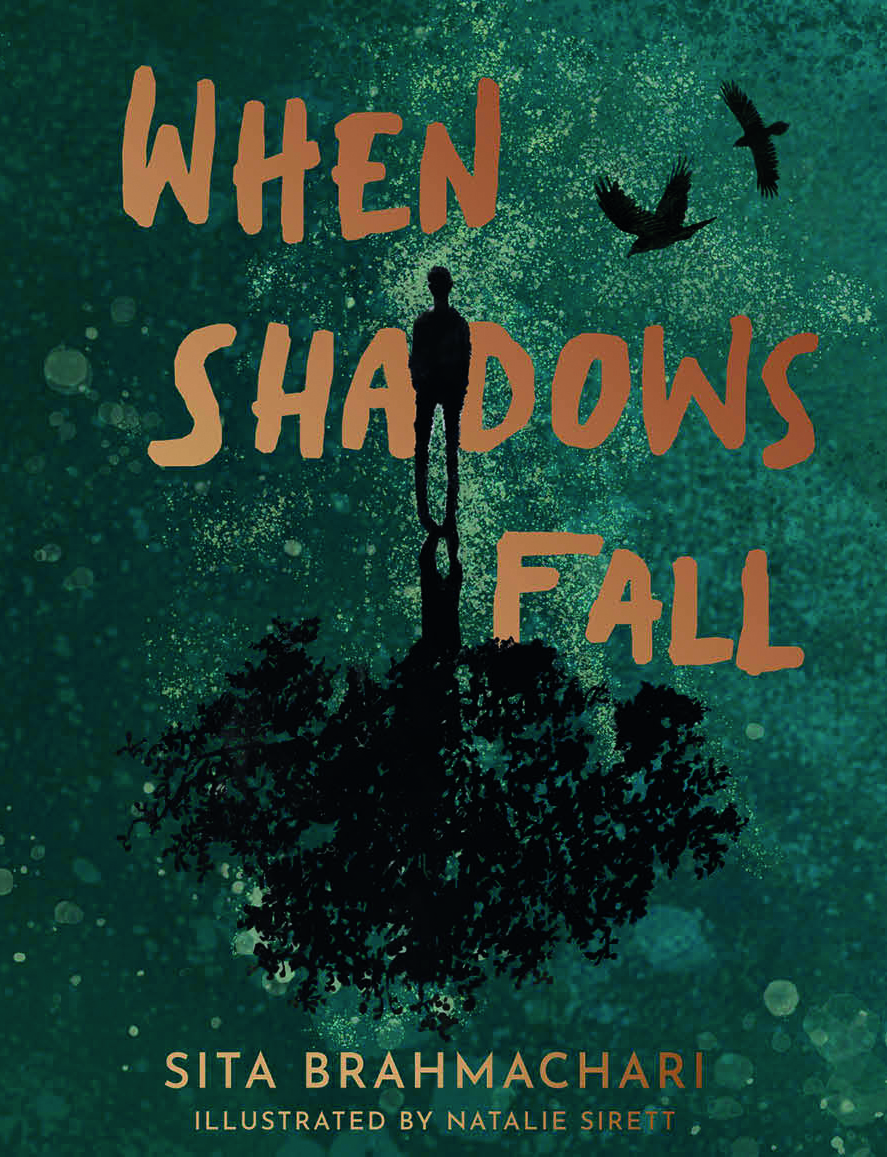
For my Writing for Children slot in the #239 Dec 2021 issue of Writers’ Forum I interviewed Sita Brahmachari about how she develops her characters and setting for her young adult books.
She told me how When Shadows Fall grew out of an interaction she had in her first workplace at the Royal Court Young People’s Theatre with children who had been excluded from school. They were children full of potential who had already decided that education wasn’t for them. She worked on location and they had a small space to work in and the adjacent outside area was not ‘safe’ because people threw things from the flats above. ‘Missiles miss,’ one girl explained.
“Certain children I’ve met in my work as a writer and through arts education have stayed with me. I think about them and hope they’ve found a way to untap their potential. This book is a symbolic passing of the pen to all of them.”
Sita Brahmachari
Sita elaborated how when writing about life – grief and loss is always a constant presence. It’s always been a central theme in children’s literature and she likes toweave them into her stories. She believes keeping stories and realities from children is what creates monsters and nightmares. The task is to find the right tone and holding place for the age of reader who might find your story.
She explained this is why she writes ‘rites of passage’ novels about grief and loss. In an exploration of loss she is also interested in diverse beliefs in what comes after. The timing of the publication of When Shadows Fall is one in which young people have suffered so many losses, not only of loved ones but also to their own liberty and potential.
When Shadows Fall by Sita Brahmachari
Sita revealed her characters grow the story.
“The longer I live with the characters the more they become part of my life. I have met and worked with thousands of young people during my work in community, youth theatre, novel writing and education. Aspects of character: a phrase, a look, a comment, a steely stare, a leaning back, a leaning in, a discovery that a child that won’t speak is a gifted artist… these memories glimmer as I write and ignite something in a character I’m exploring.”
Sita Brahmachari
She elaborated that at a certain point of writing the character emerges like a figure from clay, the features form and then everything in them speaks to you and drives the narrative. Working with and writing for Young Adults requires curiosity, honesty and to be open to their realities. Sita likes to connect with the feelings of the young person she was. So whatever age character she writing will do a little writing exercise where she imagines meeting them when she was the same age and they have an imaginary conversation.
“As a child I longed to see the diversity of characters who were my family and the people I met in life in the stories I read. So my stories have featured Diaspora characters from many cultures, histories and beliefs. I’ve seen how powerfully young people have wanted and responded to these stories.”
Her advice to other writers is don’t wait for the story to come whole. Keep a sketch book. Doodle, daydream, and write any thoughts, ideas, imaginings that come. Leave your ideas to prove and come back to them later to look for jewels. Writing is a layering process. Have patience. Don’t rip work up but do be prepared to start again and re- layer, re-voice and re-write. Question. Be open to what editors and first readers say. Test material. Listen deep. Pay attention also to the twist in your gut that hasn’t untangled what you need to in the story yet. Enjoy growing characters and let plot find you through them. Enjoy the flow when it comes like white water rafting or being in perfect balance on an imaginary high wire.
When it happens it’s exciting! Accept that sometimes there’s just a lot of heavy rowing to do. Keep going till you feel that what you’ve written could make some sense to someone else but don’t show your work too early. If you feel it has a force of its own that could convey, feel the fear of putting it out in the world and do it anyway. Never react to feedback or start re-writes straight away… let the thoughts and comments mull. Whatever changes you make have to be true to your characters and story and to yourself.
It is with great pleasure I join the blog tour for renowned author Oscar Wilde and the fantastic reprint of the compendium of his fairy Stories in The Complete Fairy Stories Of Oscar Wilde. It is such an honour to be included in this tour and I must thank Anne Cater from Random Things Through My Letterbox for organising the tour and for ensuring I received the incredible collectors’ edition as a review copy.
Born in Dublin in 1854, Oscar Wilde was an Irish wit, playwright and poet best remembered for his only novel, The Picture of Dorian Gray written in 1891. His social comedies includes The Importance of Being Earnest first performed in 1895. This is one of my favourite plays and one that I had the delight of acting in whilst I was in the sixth form at school. Oscar Wilde was educated at Trinity College, Dublin and Magdalen College, Oxford. In 1884 he married Constance Lloyd, and his two sons were born in 1885 and 1886. Oscar Wilde died in Paris in 1900.
My stop on the tour involves a book review of this beautiful new edition. It is not so much a review of the contents, as reviewing Oscar Wilde’s work as for nearly 150 years, the classic fairy stories of Oscar Wilde have been cherished by readers of all ages. This will be more a review of the magnificent book itself.
********
Title: The Complete Fairy Stories Of Oscar Wilde
Written by: Oscar Wilde
Illustrated by: Philippe Jullian
Published by: Duckworth Books
The Complete Fairy Stories Of Oscar Wilde is a stunning 70th-anniversary gift-edition of Duckworth’s treasured compilation. He originally published two volumes of beloved fairy tales – The Happy Prince and other stories, bought out in 1888 and A House of Pomegranates, published in 1891. Now we have the good fortune of being able to rediscover all nine of the stories in this beautiful new edition of Duckworth’s exquisite collection.
The first edition of the complete collection was first published in 1952 and the original copy contained over twenty original line drawings. These exquisite illustrations, created by the distinguished and celebrated artist and aesthete, Philippe Jullian, have been expertly reproduced for this gorgeous giftable edition of The Complete Fairy Stories Of Oscar Wilde.
The new edition is quarter-bound with intricate green foil cover and spine detailing. It has been divided into two sections to keep the original volumes together. This is a beautiful edition and one people will want to cherish forever. You know how sometimes you pick up a book and want to stroke the cover well this copy is highly strokeable.
Oscar Wilde’s stories themselves are as relevant today as they were in the late 1800’s. His insight into human character is perceptive and pertinent from, The Nightingale and the Rose, where the nightingale gives up his life for a selfish, ungrateful woman, to The Star-Child that portrays what a kind and just leader should be with the underlying message that evil is still out there
His deep Christian beliefs are also evident as can be seen in The Happy Prince where the statue and the Swallow devote their days to helping others and win their place in paradise, The Selfish Giant with the symbolic child who is Christ and The Fisherman and his Soul. There is also an afterword by Wilde’s son Vyvyan Holland, which explores the inspirations behind his father’s fairy stories and how they have roots in his devote Catholic beliefs and the influence of Irish folktales.
The Complete Fairy Stories Of Oscar Wilde would make the ideal Christmas of birthday present for all ages. If you have not read these stories I recommend that you do and if you have read them they are definitely worth re-reading. If you love Oscar Wilde’s writing and poignant comments on human nature as much as I do it is worth purchasing a copy as a celebrated collector’s item. head and shoulders above any other copy on the market.
********
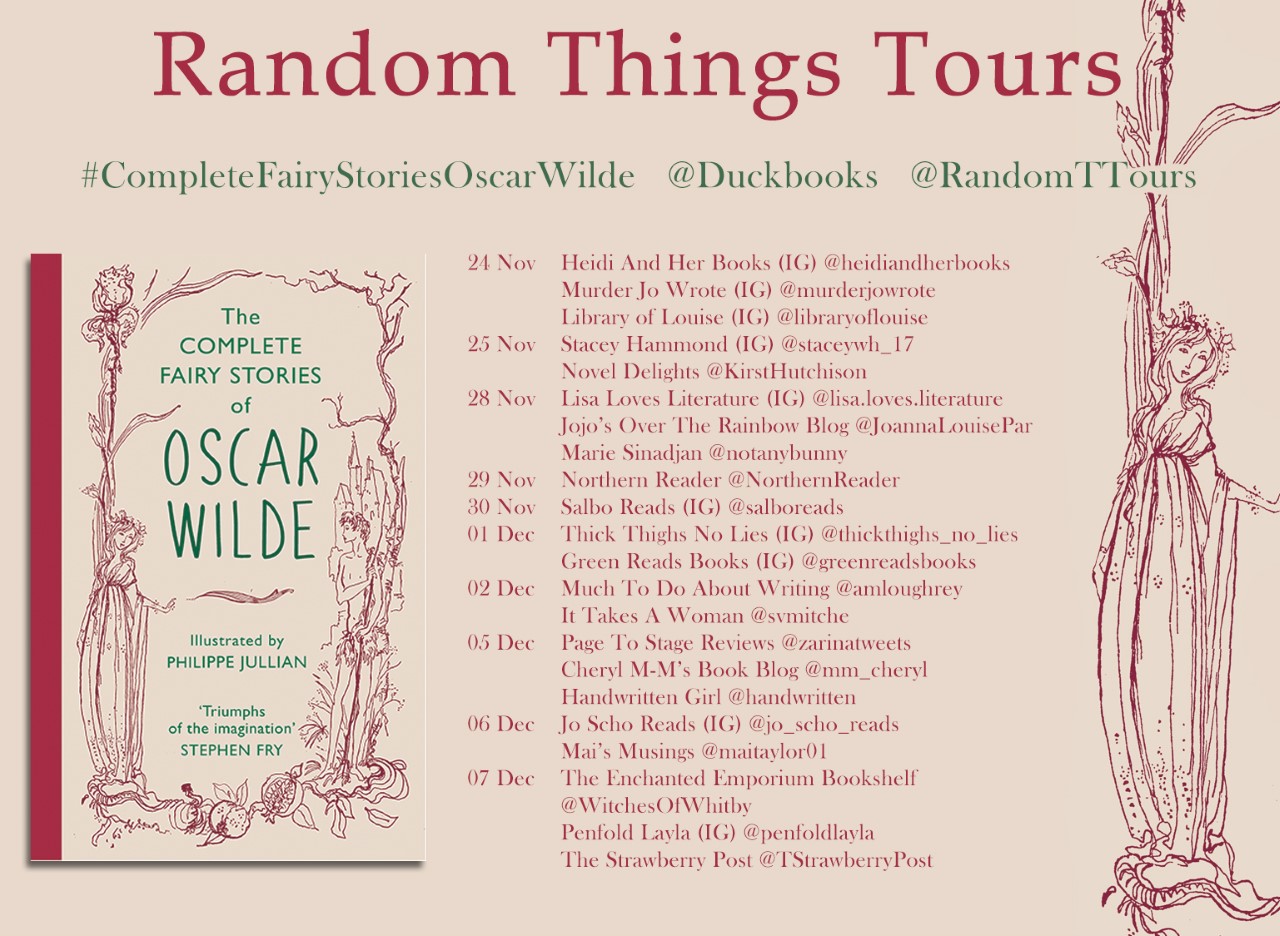
To join the other stops on the blog tour take a look at the schedule below:
You can purchase a copy of The Complete Fairy Stories Of Oscar Wilde published by Duckworth Books from your local bookshop, or online at uk.bookshop.org.
Thanks again to Anne Carter for inviting me to take part and also to the publisher Duckworth Books for producing such a lovely copy. Thank you.
Title: A Year Full of Celebrations and Festivals: Over 90 fun and fabulous festivals from around the world!
Written by: Claire Grace
Illustrated by: Christopher Corr
Published by: Frances Lincoln
A Year Full of Celebrations and Festivals by Claire Grace and Christopher Corr
A Year Full of Celebrations and Festivals compiled by Christopher Corr and Claire Grace is a fantastic compendium of carnivals, festivals, historical commemorations, religious events and other special days, which are celebrated around the world. Each celebrations has a double page spread which has text on one side and a bright, vibrant illustration opposite that often bleeds across both pages. They have been collated into seasons with a brief introduction to each season to explains what that season has in common all over the world, however they mainly describe seasonal differences in the Northern hemisphere.
Each season is not organised in any particular order within the chapter. Spring opens with the Indian International Kite Festival, with the Japanese Cherry Blossom Festival Hanami in the middle and concludes with Martin Luther King Jr Day. Summer includes Palio de Siena the Italian horse race, the Edinburgh Fringe Festival and finishes with a spread about the different Summer Solstice celebrations across the globe. Autumn starts with the Mid-Autumn Moon festival celebrated in East Asia, Diwali in the middle and climaxes with the Pearly Kings and Queens Harvest Festival in the United Kingdom. Winter features Hanukkah first, The African Festival of Dancing Masks (FESTIMA) in the middle and finally New Year’s Eve Countdown across the world.
Claire Grace’s text provides a brief, concise explanation of the celebrations, which includes some of the history and pageantry involved. Scattered across each spread is an insightful information bubble or snippet that contains extra fun facts about that particular celebration to stretch and entertain readers. At the back of the book is a spread of glossary words that appear in the text.
This colourful non-fiction book would be a great reference book for teachers wanting to think of ideas for a school assembly that could be expanded and for children who are curious about the world and other cultures. The ideal book for children to dip in and out of during reading times.
Title: Lands of Belonging: A History of India, Pakistan, Bangladesh and Britain
Written by: Donna and Viskesh Amey Bhatt
Illustrated by: Salini Perera
Published by: Nosy Crow
Lands of Belonging: A History of India, Pakistan, Bangladesh and Britain is a much needed, long overdue book that should adorn every bookshelf in all schools and libraries. It outlines the history of India, Pakistan and Bangladesh and how these cultures are entwined and shape British history. It was launched by Nosy Crow in July 2022 to coincide with the 75th anniversary of the Partition of India.
This is an innovative children’s non-fiction book about belonging and celebrating the past, present and future of our complex and diverse nation written with a clear and concise writing style by husband and wife team, Donna and Viskesh Amey Bhatt. It is divided into double-page spread chapters that start with an introductory welcome, which explains how India is divided and the difference between the United Kingdom and Great Britain, to a very useful timeline and glossary at the back of the book. With a chronological overall organisation it takes us from the past, into the present and looks onwards to the future.
Each beautifully illustrated spread covers such topics as how every person is an amalgamation of different things; the ancient history of India and its many religions; the British Empire and the decisions that led to a divided independent India. It touches on some difficult topics such as slavery and racism, as well as exploring the beauty of South Asian culture, customs, food, sport and language exuberated by the bright and colourful illustrations.
Lands of Belonging would be an asset in all classrooms for stimulating discussion on diversity and the celebration of our differences and similarities. I particularly liked the inclusion of the spread on the Asian calendar of celebrations, which would be perfect for helping children clarify and discuss the different religious festivals and celebrations throughout the year, whether the children traditionally celebrate these or not.
This brilliant book provides an insightful and inclusive educational overview of the links between our cultures. Truly a book about identity and belonging.
I was lucky enough to interview Donna Amey Bhatt for my Writing for Children slot in the UK’s national writing magazine, Writer’s Forum. The feature appeared in issue #247 21 Sep 2022. To read highlights from the feature take a look at my blog post: An interview with… Donna Amey Bhatt.
You can buy copies of Lands of Belonging: A History of India, Pakistan, Bangladesh and Britain by Donna and Viskesh Amey Bhatt and illustrated by Salini Perera from your local bookshop, or online at uk.bookshop.org, an organisation with a mission to financially support local, independent bookshops.
I interviewed BAME author Ruby Lovell about the importance of diversity in children’s fiction for my Writing for Children slot in Writers’ Forum #200 June 2018.
She revealed when she moved to London from Sri Lanka at seven years old, the culture shock was quite something.
“I spoke very little English and my school mates had never met anyone from Sri Lanka, so didn’t really understand me or my culture. I found it hard to fit in at first and that experience stuck with me, especially when I looked at the books available to me as a child. All that was on offer were things like Enid Blyton and stories about white British children getting up to great adventures. Growing up on exotic tales from my grandmother, that lack of diversity in reading always stuck with me.”
Ruby Lovell
She explained her experience made her aware of the lack of diversity in books and wanted to see more children of colour represented in children’s literature for her own children who have never been to Sri Lanka and experienced all the wonderful things she did as a child growing-up there.
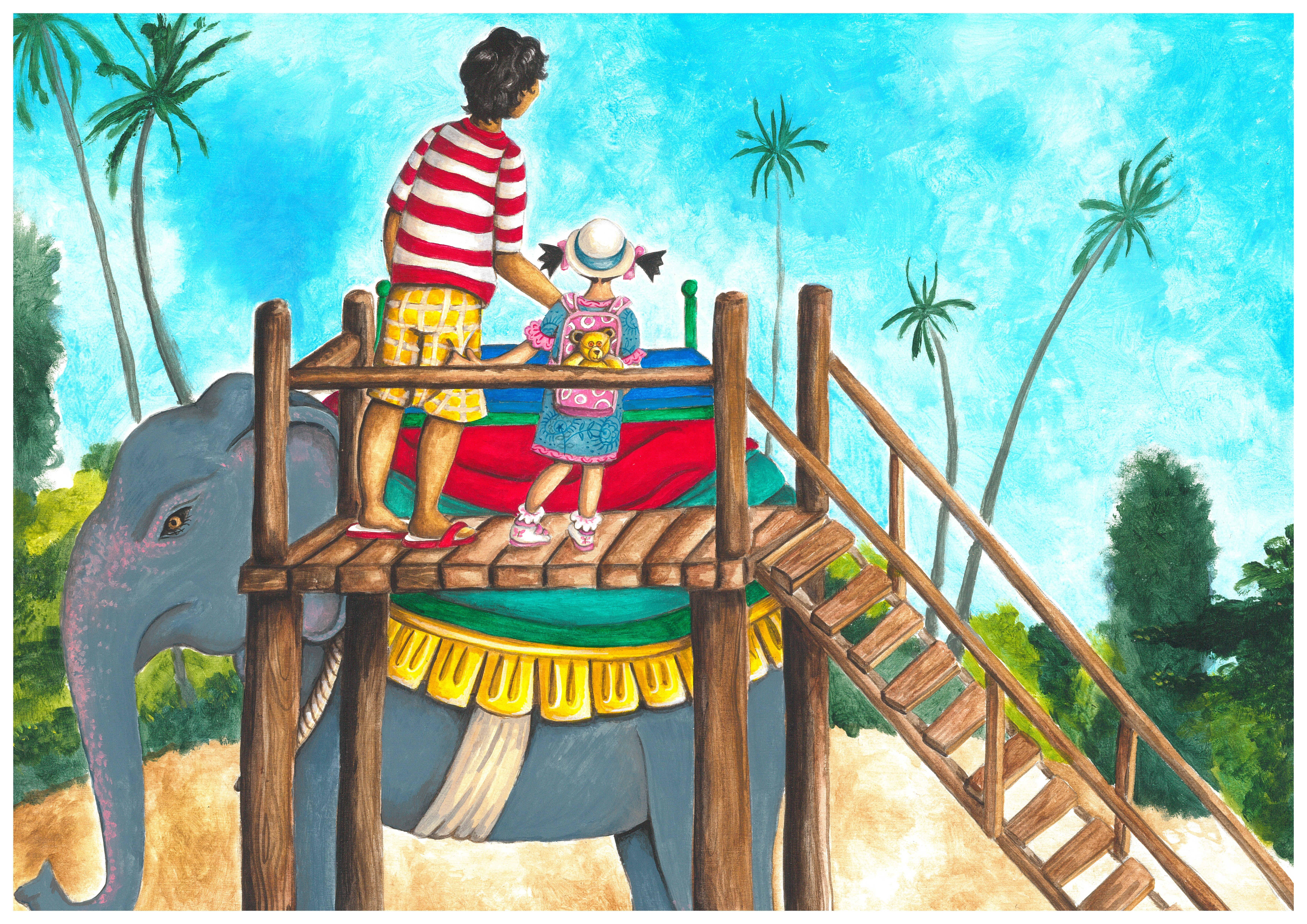
This inspired her to write her Ruby series of picture books published by Lychee Books. The adventures that the character Ruby gets up to are all based on real-life experiences her boys had during their first trips to Sri Lanka. They visited an elephant orphanage where they saw how injured elephants are cared for, rode tuk tuks and they learned to play the traditional drums and see snake charmers and much more.
Illustration by Zara Merrick
Ruby enthusiastically spoke about how this unique experience awoke an explosion of an exciting new culture that was part of them.
“My writing and the books I create for children all come from my heart. I had a huge amount of help from my young sons and writing something that means something to you is so much more special than an idea picked out of thin air. I want my books to not only be a ‘go to’ bedtime story for children of a South Asian background, but for children of all races and backgrounds who want a good adventure story.”
Ruby Lovell
Ruby explained she was motivated by the fact you find a lot in books for kids that characters are anthropomorphised so they appeal to as many people as possible but she wants to see books with people of colour on the cover, people who are differently able, a range of genders and shapes and sizes. She elaborated children are unique, so let’s write books that are as varied as they are. A diverse book is one that explores a different point of view than those represented in the majority of books on the market. This can be a different racial/cultural point of view in the case of Ruby’s book, or a different point of view about physical ability, sexual orientation etc.
Hearing other people’s stories helps children appreciate other points of view, especially those that differ from their own. The more diverse a child’s reading experience, the more understanding, tolerant and accepting they will become as human beings. They will also form friendships with children of various backgrounds and this is healthy as when they become adults this helps them become accepting of a world filled with so many different cultures, religions and customs.
Ruby Rides and Elephant by Ruby Lovell and Zara Merrick
Ruby would also like to see more books featuring mixed race characters of all combinations of backgrounds and smaller racial groups and backgrounds. For example, the Disney film Moana was one of the first mainstream representations of Polynesian culture for children.
Ruby’s tip on writing for children is to run your book past real children before you send it out to agent. See their reaction, learn which jokes soar and which ones fall flat. Children are wonderfully honest critics, but don’t just rely on your own kids. See if you can go into a local primary school and do a reading of your final manuscript (with some illustrations if you can). The feedback and reaction you receive will shape your writing like nothing else.
Find out more about Ruby Lovell and her picture book Ruby Rides an Elephant and the other books in the series at: www.lycheebooks.org You can follow her on Twitter @RLovellAuthor and on Instagram @rubylovellauthor
To read the complete feature you can purchase a copy of #200 June 2018 Writers’ Forum by ordering online from Select Magazines.
For the #242 30 Mar 2022 issue of Writers’ Forum, Christina Courtenay (Pia Fenton) explained to me why seeing and experiencing things first-hand is the best kind of research.
Being half Swedish, she has been interested in the Vikings for a long time and wanted to showcase their amazing achievements as craftsmen, traders and explorers, as well as their fearlessness, curiosity and sense of adventure.
She started by researching the background and history, then studied particular aspects more in depth, which included reading loads of books, watching a wide range of TV programmes and visiting museums. She found there are a lot of resources out there on the Vikings and her main problem was in trying to choose the resources that would be most useful.
Christina told me that if she can’t find the relevant non-fiction books in the library, she will buy second-hand copies online from AbeBooks, where she has discovered some real bargains. Whilst reading, she take notes and compiles a summary of the information she needs.
“It is a long process and it’s ongoing as I keep finding and adding more information all the time. I also chatted to re-enactors and contacted an archaeologist who is a specialist in the Vikings. I managed to make contact via social media – Twitter and Facebook are very useful for that.”
Christina Courtenay
To keep track of her research, she creates Word documents with headings like ‘Clothes’, ‘Food’, ‘Weapons’ etc in alphabetical order and whenever she finds new and relevant information she adds it under the specific heading so she can easily find it later.
Christina revealed her most frustrating experience when writing her Icelandic stories was they had to be mostly written without ever going to Iceland, and it wasn’t until right before her deadline that the Covid restrictions were eased and she finally managed a trip over there. Before this she had to rely on contacting all the people she knew who had either been to Iceland or lived there, and sent them a questionnaire.
“I also read an awful lot of travel blogs, and watched YouTube clips as well. For specific places, there is always Google Earth if you need to see the layout of the land. But I won’t lie – it was extremely difficult and I didn’t feel entirely satisfied with the result so it was a huge relief when I was able to go there myself.”
Christina Courtenay
For Christina, seeing and experiencing things first hand is key. In Ribe, Denmark, there is an outdoor museum with a dozen buildings of various types.¹ Sitting in the longhouse and chieftain’s hall helped her to imagine myself back in time and she was able to lie down on a sleeping bench covered in old furs.
Christina sitting in hall at Ribe
Near Skanör in the south of Sweden is a similar museum, the Fotevikens Museum², and in Iceland she found a reconstructed turf house at the Eiriksstadir Museum³, which was invaluable. These museums always have dedicated and knowledgeable staff who are more than happy to answer questions. There are also places like the Jorvik Viking Centre⁴ in York https://www.jorvikvikingcentre.co.uk/ where you can experience life in that city. She said the best thing about visiting living history museums and events like the Jorvik Viking Festival is seeing the re-enactors (and talking to them) and the various craftsmen.
Christina explained replica Viking clothing and jewellery are readily available for the purposes of re-enactment, as are weapons. You can see examples on the Jelldragon Viking Craft Store⁵ online. In fact, her family have become used to buying her Viking artefacts for Christmas and birthdays. Christina told me she has also learnt to weave properly on a loom and suggested a great book with instructions for band-weaving is Weaving Patterned Bands by my teacher Susan J Foulkes
“Wearing them or handling them allows me to imagine what it would feel like to live in that era. And I bought myself a fire iron and tried striking it with the flint to make fire – it worked just fine.”
Christina Courtenay
Christina told me she has also learnt to weave properly on a loom and recommended, Weaving Patterned Bands by Susan J Foulkes as it contains excellent instructions for band-weaving.
The heroine in one of her stories has to sew herself some clothes so Christina decided to try to make a so called smokkr – the apron overdress worn by some Viking women. Re-enactors recommended she purchase the woollen material needed from Bernie the Bolt Cloth Merchant⁶ on Facebook, as he stocks authentic fabric for historical garments. She found a pattern in a leaflet she’d bought some years earlier. She sewed several of the seams by hand to find out how long it would take.
The Viking dress Christina made
She revealed the main surprise was how heavy the resulting dress was – several yards of woollen fabric weighed a lot more than she’d imagined. She also realised the garment had to be fairly loose as there were no buttons/openings, and also for ease of movement.
“Paired with a linen underdress (which I had bought readymade), it felt great, although it’s still missing a decorative border. I did a weekend course to learn how to do band-weaving though, so I will soon be adding that. Apron dresses were held up by straps fastened with tortoise brooches, so of course I asked for a pair for Christmas, as well as a belt with a Viking buckle and some Viking leather half-boots. And I bought beads for a necklace to string between the brooches.”
Christina Courtenay
Her favourite piece of hands-on research so far was helping to row a Viking ship round Roskilde harbour in a reconstructed longship at the Viking Ship Museum⁷ there. She found out it was a very smooth ride. The most unusual research was when she visited an open air museum in Gudvangen, Norway, called Njardarheimr⁸ where I was allowed to try throwing a Viking axe with the aim of hitting a huge block of wood. To my intense surprise, I managed it. (Lucky throw?)
For Viking food Christina recommends cookbooks such as, Eat Like a Viking by Craig Brooks and revealed she has tried some of the recipes.
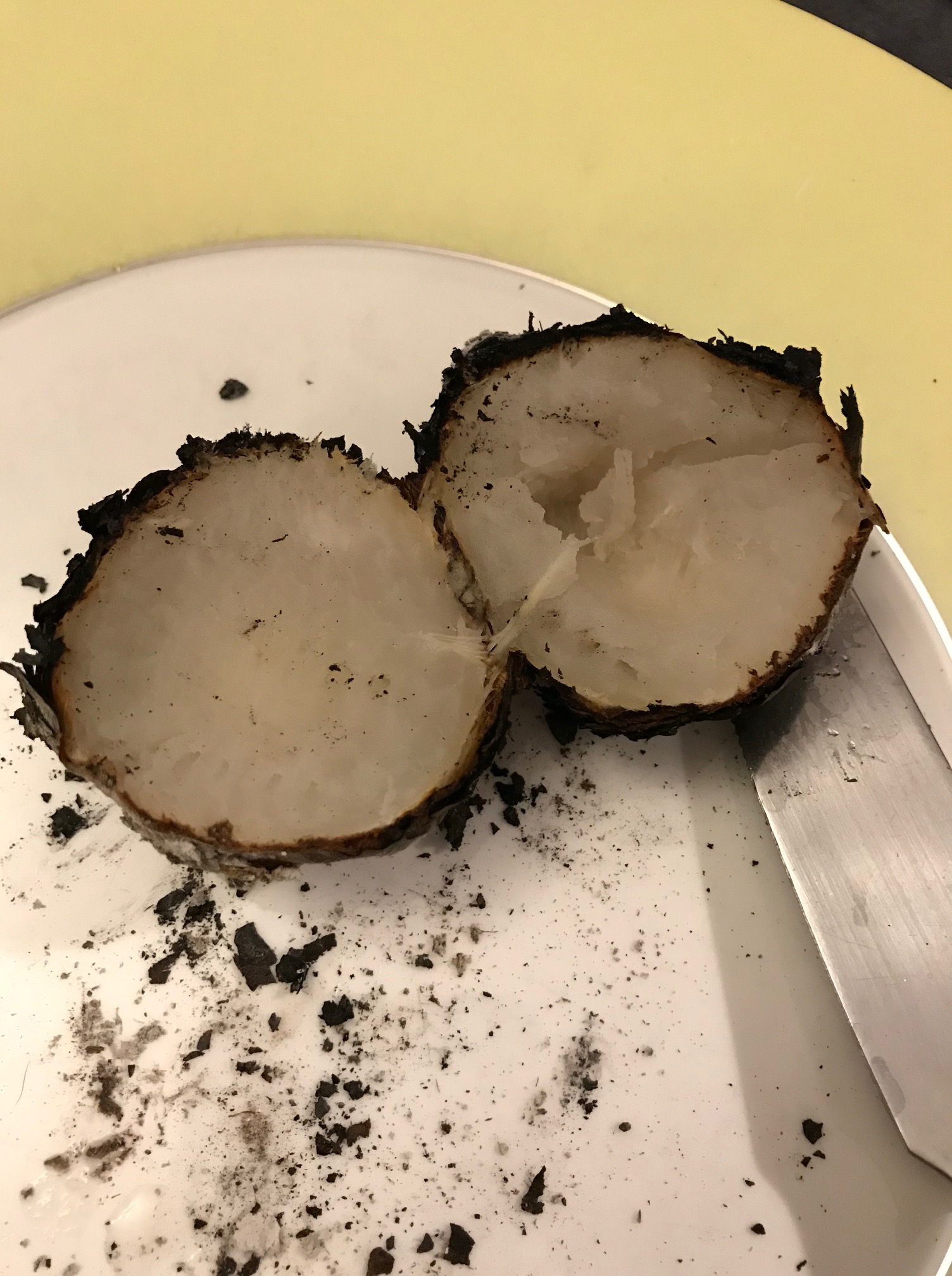
Ember cooked turnip
A lot of their food was fairly bland and monotonous and, for me, not salty enough. (I love salt!) For the purposes of preserving meat, either smoking it or keeping it in whey was more common.
While visiting the island of Birka she went to the Birka Vikingastaden⁹, just west of Stockholm, where she was shown how Vikings made flatbread – delicious. And tried mead which she found lovely and sweet.













 Much To Do About Writing