Tag Archives: Anita Loughrey

Book Review: Autumn Moonbeam Dance Magic!

To celebrate the launch of Emma Finlayson Palmer’s debut book, Autumn Moonbeam Dance Magic! I am posting an extra special book review as part of #TeamAutumnMoonbeam.

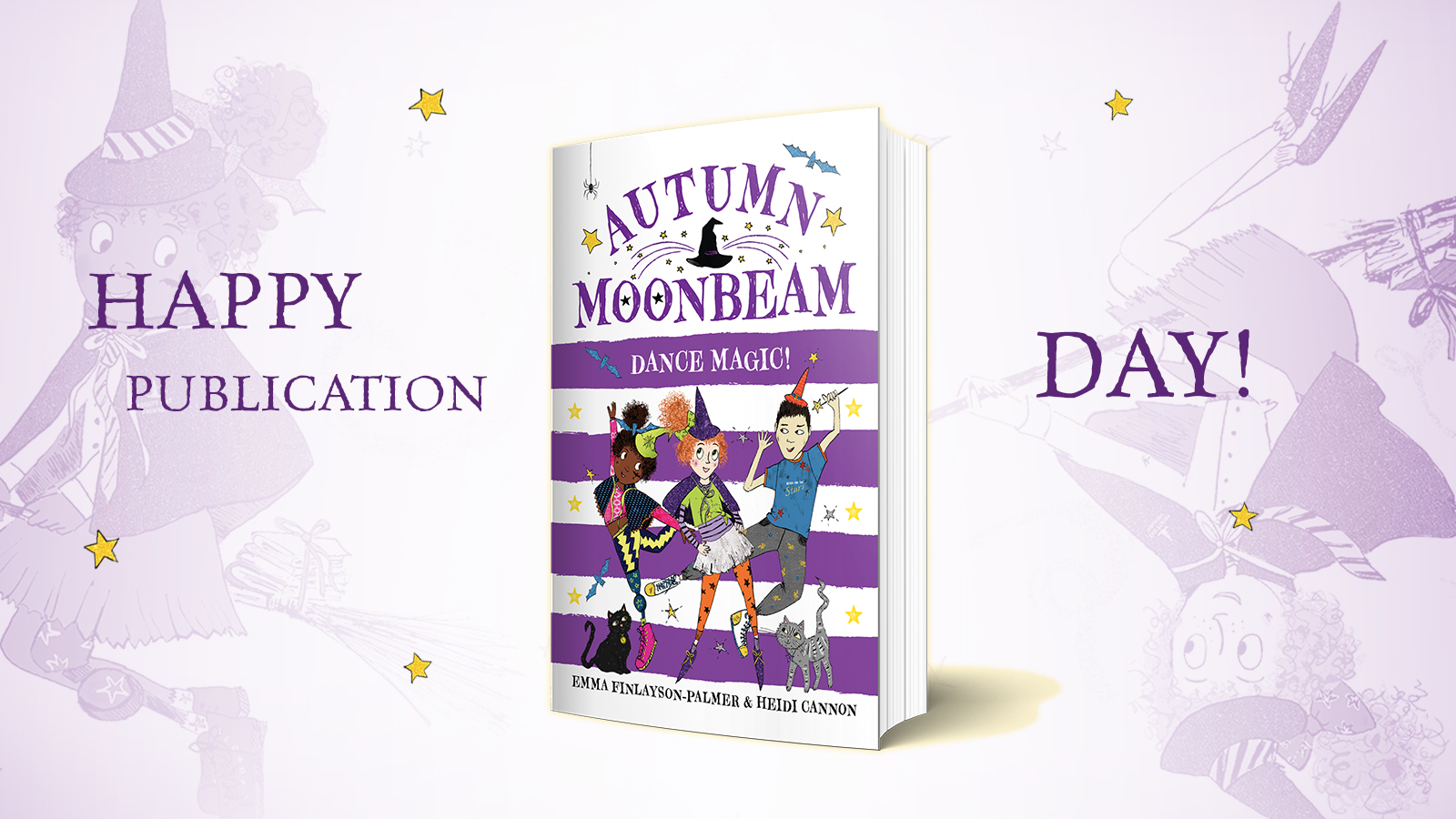
Autumn Moonbeam Dance Magic! is planned to be the first in the ‘spell-tacular’ Autumn Moonbeam series.

* * * * * * * *

TitleAutumn Moonbeam Dance Magic!

Written by: Emma Finlayson Palmer

Illustrated by: Heidi Cannon

Published by: Uclan Publishing

Autumn Moonbeam Dance Magic! by Emma Finlayson Palmer and Heidi Cannon

From the very first page Autumn Moonbeam leaps off the page and into the reader’s heart. Her energy and enthusiasm is infectious. I love the way Emma Finlayson-Palmer has amalgamated the world of dance and the world of witches. This makes this debut stand out head and shoulders above other witch themed books for lower middle-grade. Emma’s imagination and use of language brings the book to life with its own unique dance magic quality.

Autumn Moonbeam Dance Magic! is full of glitzy magic and well-structured friendships. I really felt for Autumn as she tries out for the Black Cat dance team to achieve her life-long goal of joining the Sparkledale Dance Academy. Autumn has to overcome her lack of confidence. She is supported by her best-friend Batty and teased by her mean next door neighbour, Severina Bloodworth. The tension is racked up when Autumn discovers  Serina is also trying out for the dance academy. A great example of a character-led book.

Heidi Cannon’s illustrations compliment the text perfectly and add that extra dimension children will love. I particularly liked the pencil portraits of all the characters at the front of the book. Autumn Moonbeam Dance Magic! is perfect for girls who enjoy dancing and gymnastics and also for anyone who loves to read witch school based adventures. Readers will be enthralled by Autumn’s mystical mishaps and I suspect will be trying out a few magical dance moves for themselves. In the classroom children will enjoy making up their own spookytacular words and writing their own witch based stories using spellendous language.

This is definitely a book to cherish and collect the whole series. I can’t wait for book two Autumn Moonbeam Spooky Sleepover! released just in time for Halloween.

Autumn Moonbeam Spooky Sleepover! by Emma Finlayson Palmer and Heidi Cannon

* * * * * * * *

Keep a look out for my first ever Special Guest Q &A with author of the Autumn Moonbeam series, Emma Finlayson-Palmer, which is going live here on my blog tomorrow.

I would like to thank Uclan Publishing for inviting me to be part of #TeamAutumnMoonbeam.

You can buy copies of Autumn Moonbeam Dance Magic! by Emma Finlayson-Palmer from your local bookshop, or online at uk.bookshop.org, an organisation with a mission to financially support local, independent bookshops.
An interview with… Kathryn Evans

In an interview for Writers’ Forum #195 Jan 2018, Kathryn Evans told me how a good agent supports you through the ups and downs.

She followed her agent, Sophie Hicks from Ed Victor Ltd when she set up her own agency, the Sophie Hicks Agency. Kathryn revealed Sophie was amazing at picking her up when she’s down and always fighting her corner.

Kathryn originally sent her a picture book, which she turned down. So she tried again with a YA novel called Skin. Sophie rang her to have a chat and when she offered to represent her, she was stunned . However, that book just didn’t sell – who knows why, sometimes things just aren’t quite right for the market or the moment. Kathryn wrote a couple of other things too – one of them Sophie wasn’t keen on and the other, Kathryn panicked about and asked her to withdraw as she had lost my nerve.

For a while Kathryn stopped writing. She told me she went to see Sophie about it and she was brilliant, she basically said she honestly believed they’d get there, she backed her 100%, which inspired her to set to work with an idea I’d had. That idea was the beginnings of More of Me.

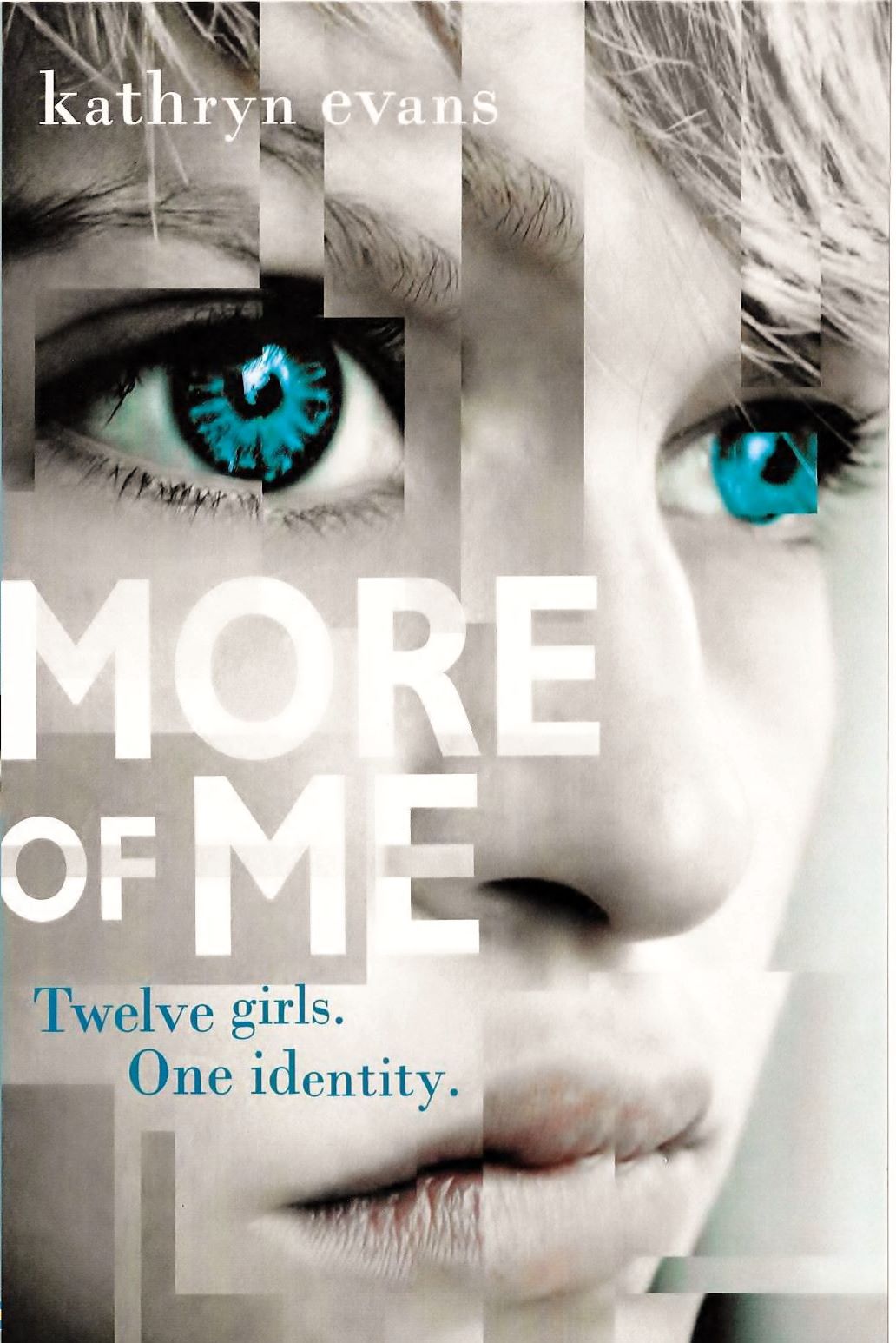
More of Me by Kathryn Evans

Kathryn explained she wrote the first draft of More of Me quite fast. It is about a girl who replicates herself once a year and the version that is left behind is stuck at that age forever. She has to hand over her life to the new Teva – best friend, boyfriend and all her plans for the future. It makes for some interesting dynamics at home! She had a scruffy first draft within eight months of coming up with the idea. She revealed as part of her writing process she uses Scrivener to sort her first draft.

“Scrivener allows me to see what’s in each chapter and where it comes, at a glance. I have a header line and a brief synopsis for each chapter so I know what comes where – it makes it so easy to physically switch scenes around.  Also you can flag up issues by making notes as you go ‘more of x here’ or ‘go back and change x to fit with this’.”

Kathryn Evans

Kathryn told me she probably does four or five full edits before she sends the manuscript to Sophie. A pass for structure – is the pace right, is the tension right, has each chapter got a hook, is every scene driving the action forward. Then a pass for character and another for relationships and finally, one to see if she is really dealing with the heart of her story. She explained that in More of Me, it was ultimately about identity.

Whilst her agent submitted More of Me she got on with a new book. Kathryn explained it is the only way and important if you are intending to build up a career from your writing.

More of Me sold really quickly. It had taken so long, years and years, I could hardly believe it.  I ran out to find my husband then and cried all over him. He probably though the dog had died or something. It was an amazing mix of joy and relief and validation.”

Kathryn Evans

Kathryn proclaims having an agent who has faith in you, helps overcome any nagging doubts. Her advice to authors who have been taken on by an agent but are still waiting to be discovered is to be professional – trust your agent to get on with their job – selling your work – while you get on with yours – writing the best books you can.

“My writing really came together when I let myself be me. When you start out you’re trying lots of styles, it’s hard to find your own voice. I realised my own voice was exactly that – my own. The sum total of all I’d read and all I wanted to write about. I wrote it out as an equation for a blog post:

(Hardy5 + Bronte3) x (Asimov2 + Wyndham2) x Orwell5 + (King2/Rennison6) = Evans

And that’s me, my style: Contemporary thrillers with strong relationships, a sci-fi twist and a spoonful of horror.”

Kathryn Evans

You need to find your own voice by being yourself.

You can find out more about Kathryn Evans and her books on her website: https://kathrynevans.ink and follow her on twitter at: @KathrynEvansInk

To read the complete feature you can purchase a copy of #195 Jan 2018 Writers’ Forum by ordering online from Select Magazines.

To read my future Writing 4 Children or Research Secrets interviews you can invest in a subscription from the Writers’ Forum website, or download Writers’ Forum to your iOS or Android device.

You can buy copies of Kathryn Evans’ books, More of me and Beauty Sleep from your local bookshop, or online at uk.bookshop.org, an organisation with a mission to financially support local, independent bookshops.
Book Review: The Very Best Beast

Title: The Very Best Beast

Written by: Alison Green

Illustrated by: Siân Roberts

Published by: Maverick Publishing

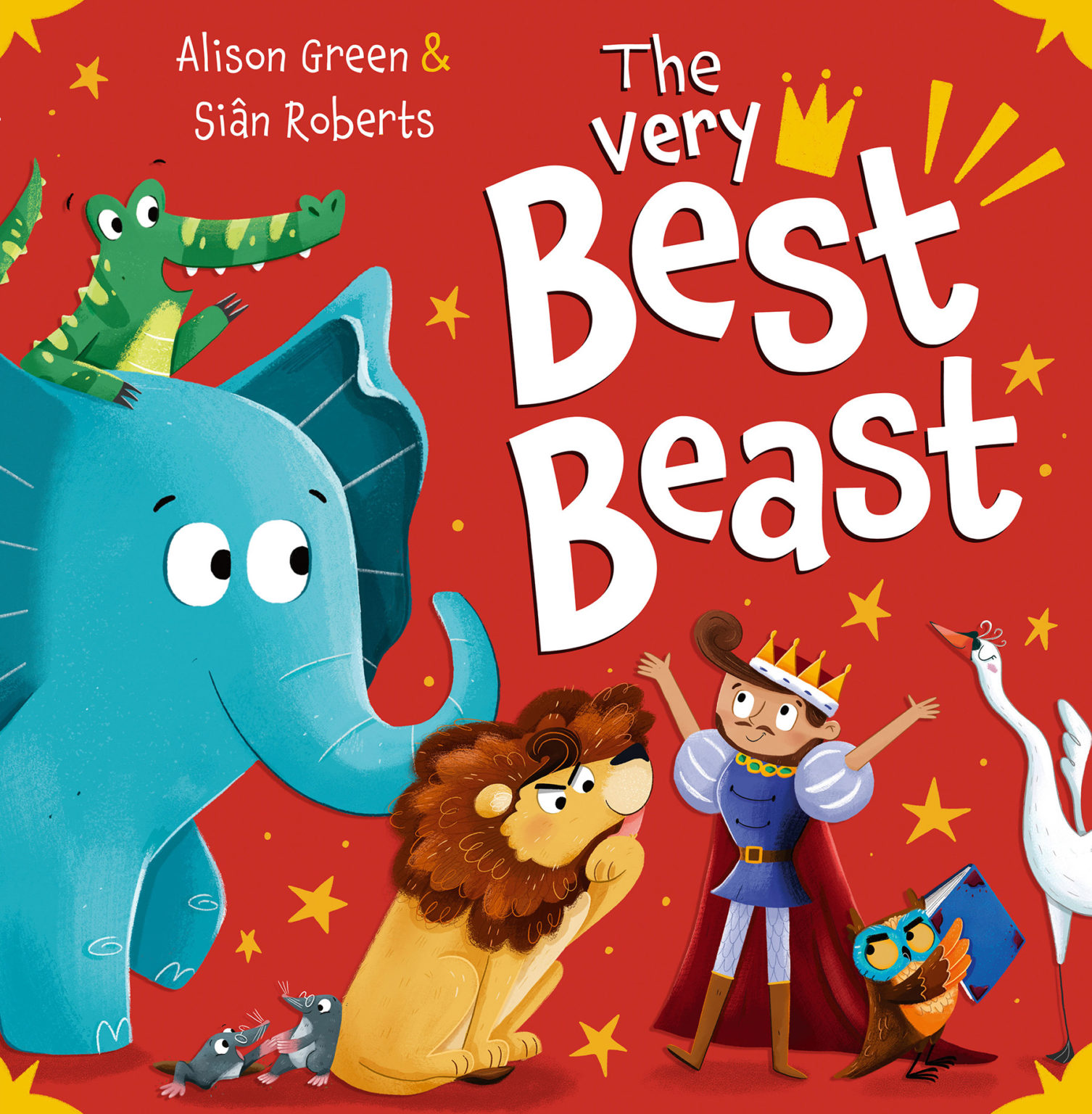
The Very Best Beast by Alison Green and Siân Roberts

This is a clever, lyrical rhyming picture book that will have young children engaged to the end. The new King is searching for an animal to feature on his royal crest. All the animals think they will be the perfect choice, except for elephant, who is too shy to put herself forward. However, an unexpected guest shows everyone’s true colours and one beast proves themselves to be the bravest and most helpful of all.

The illustrations are bold and vibrant, with such a dynamic feel I am sure the children will be eager to keep turning the pages. I loved the different expressions on the animal’s faces. They complement the text perfectly. Pre-school and Key Stage One children will enjoy listening to the book being read aloud as well as pouring over the pictures in quiet time.

A great book to help children recognise different species of wildlife and their characteristics. It would also be an ideal opportunity for slightly older children to learn about different character traits that can be used as part of a story, both good and bad. They could have fun creating their own animal characters.

The Very Best Beast could also be used as part of a PSHE and empathy lesson on shyness and how everyone is valuable in their own way.

You can buy a copy of, The Very Best Beast by Alison Green and Siân Roberts, direct from the publisher Maverick Publishing, from your local bookshop, or you can also purchase a copy online at uk.bookshop.org, an organisation with a mission to financially support local, independent bookshops.

I would like to thank Maverick Publishing for sending me a review copy of The Very Best Beast to review on my blog.

An Interview with… Jules Wake

For the #238 Nov 2021 issue of Writers’ Forum, I interviewed Jules Wake about the research for her historical novel inspired by Latimer House.

Jules told me she had no intention of writing a historical novel but the idea for The Secrets of Latimer House was one of those wonderful, serendipitous times when a fully formed idea just popped into her head, literally overnight, inspired by a talk by the real life events that took place at Latimer House in Buckinghamshire during World War II. The house, home to a secret POW camp housing senior officers of the German armed forces, was bugged from top to bottom, so that their every conversations could be recorded. 

The Secrets of Latimer House by Jules Wake

She explained that this in itself was fascinating, however what really sparked her interest was the number of women at the house who were involved in a wide variety of roles from interrogating prisoners, translating transcripts from German to English and analysing data through to compiling intelligence reports.

“Writing a historical novel during lockdown presented quite a challenge compared to writing my next novel The Cosy Cottage in Ireland, written by my alter ego, Julie Caplin. For this I was able to rely heavily on You Tube videos to visit numerous tourist locations by proxy.”

Jules Wake

Jules elaborated that when it came to writing The Secrets of Latimer House, she had to be more innovative because she couldn’t use a lot of the usual channels for her historical research during the lockdowns. she told me she would have normally started by visiting the Imperial War Museum or the National Archives at Kew which holds many of the original reports and documents from Latimer House. Unfortunately, with the National Archives closed, she couldn’t do as much original research as she would have liked, so had to do a lot of desk research instead.

This involved reading a lot of books. Jules told me she read a number of reference books for research and was careful to find a second source of the same information and to use historical accounts as inspiration to create fictional versions.  For example, in one reference book there was a detailed account of how someone was recruited to work at Latimer.  Jules described how she created a fictional alternative to this scene by reading up on the process from different sources.

She explained that Michael Smith’s, The Debs of Bletchley Park, gives several different accounts of Wrens being recruited to Bletchley Park, as does Sara Baring’s autobiographical account of her life at Bletchley in The Road to Station X. From these she constructed her own recruitment scene based on the sort of things that would have happened, rather than on exactly what did happen.  

Jules said reading more generally about wartime Britain was also invaluable, enabling her to write with a better understanding of what ordinary people experienced during the war. It gave her a flavour of what people’s lives were like and their different attitude towards everything from views on foreigners, bombing raids and joining up through to American GIs, the black market and rationing. 

“As my story is narrated in third person but from the view point of three different characters from very different backgrounds, it was important for me that each of them used the right sort of language.  I nearly came a cropper when I wanted to use the phrase, ‘in slow motion’.  The technique of slow motion in films hadn’t been invented in 1943! I also spent a lot of time googling the origin of phrases and items that we take for granted.”

Jules Wake

She particularly recommends reading self-published titles, which can be goldmines of information as they’re often written by real enthusiasts and experts with access to first-hand accounts. For example, Derek Nudd’s Castaways of the Kriegsmarine (his grandfather was actually the Commander at Latimer House) is an incredibly detailed account of information garnered from prisoners at the house, which gave Jules a lovely insight into what went on at the house, including the fact that prisoners were taken out on trips. This allowed her to create her own scene of prisoners being driven around London which was loosely based on true accounts of prisoners going out on journeys designed to undermine their confidence in the success of the German bombing campaigns.

She revealed, the accounts of the German Jews living at Latimer house who worked as listeners and translators, including Egon Brandt and Franz Lustig were invaluable. Both were  German Jews who had escaped to Britain and their memories helped shape one of her characters, in particular their views of the German prisoners and the work they were doing.  

Her advice to writers of historical fiction is to use your research to inform and direct but not to let yourself be led by it. Readers want to know that they are in safe hands but hate being patronised by too much superior knowledge.

You can find out more about Jules wake on her website www.juleswake.co.uk and on Twitter @Juleswake.

To read the complete feature you can purchase a copy of #238 Nov 2021 Writers’ Forum by ordering online from Select Magazines.

To read my future Research Secrets or Writing 4 Children interviews you can invest in a subscription from the Writers’ Forum website, or download Writers’ Forum to your iOS or Android device.

Inspirations from the Bookshelf – Lynn Stuart

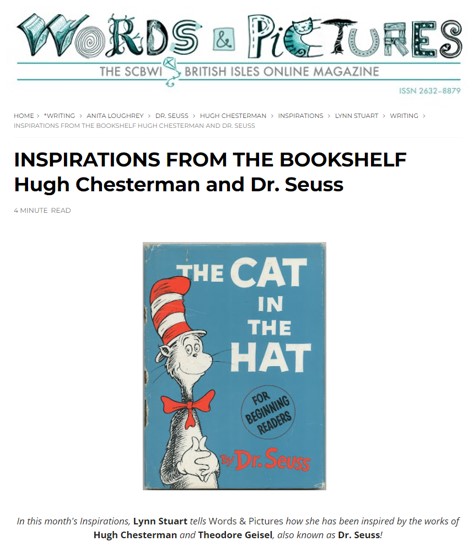
For a recent issue of the SCBWI British Isles online magazine, Words & Pictures, I interviewed Lynn Stuart about what authors have inspired her writing. She explained that she is inspired by the work of Hugh Chesterman and Dr Seuss.

She told me how she was introduced to Hugh Chesterman after purchasing Number 11 Joy Street in 2007. The illustrations reminded her of the Dr Seuss books as both authors have a great sense of fun and adventure. Lynn elaborated that her most vivid memory of Dr Seuss is reading The Lorax to her daughter in 1995 and the enjoyment on her face.

“The more I read by Hugh Chesterman and Dr Seuss, the more I am impressed with them. It’s just my opinion, but I believe Dr Seuss was inspired by Chesterman in the same way he has inspired me.”

Lynn Stuart

Lynn recommends children’s authors should read The Lorax by Dr Seuss, as it is a book very much ahead of its time about industrialisation and its effect on nature.

To read the complete feature take a look at: Words & Pictures – INSPIRATIONS FROM THE BOOKSHELF Hugh Chesterman and Dr. Seuss.

Book Review: The Artificial Anatomy of Parks

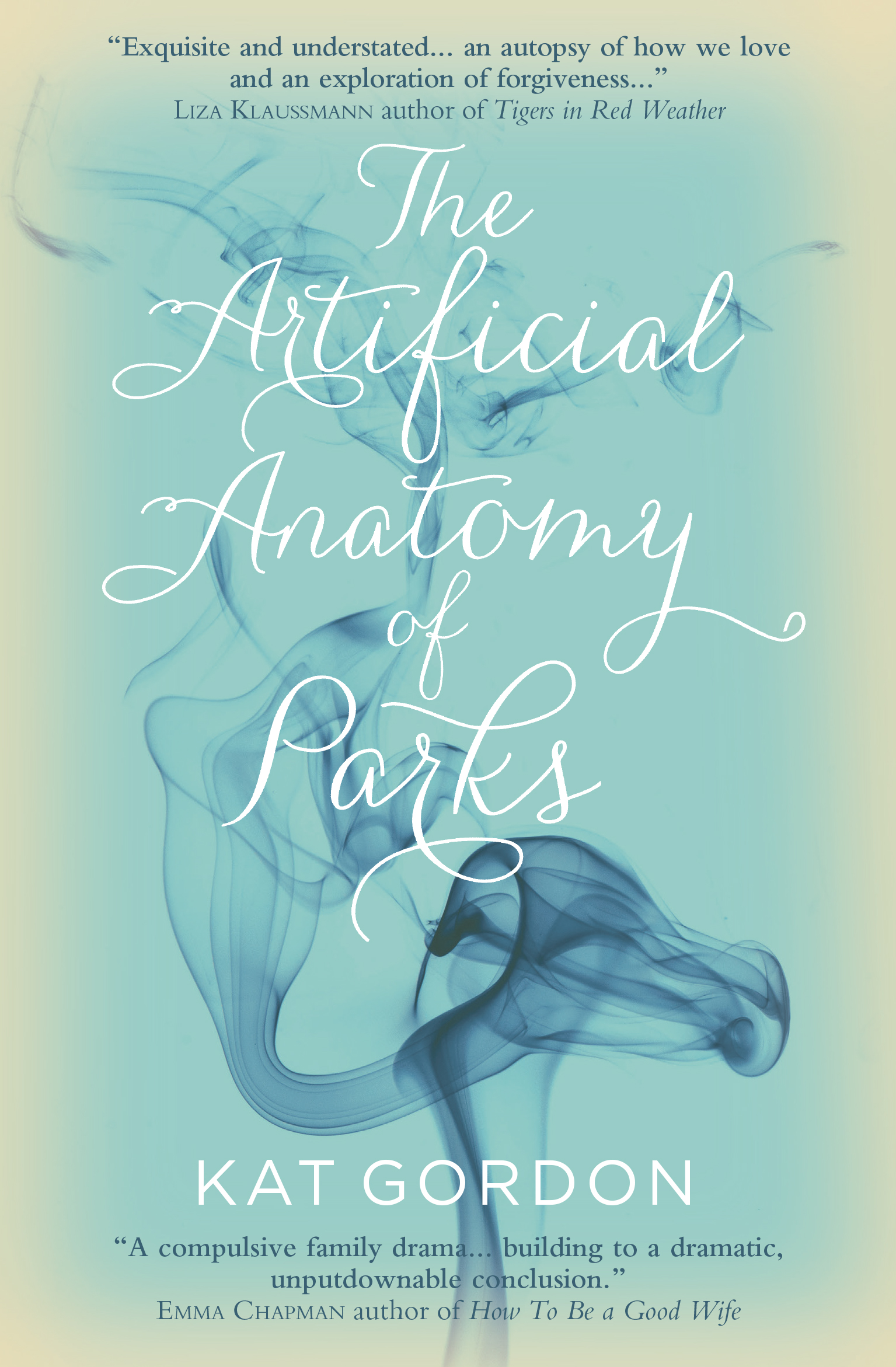
Title: The Artificial Anatomy of Parks

Written by: Kat Gordon

Published by: Legend Press

 The Artificial Anatomy of Parks by Kat Gordon

At twenty-one, Tallulah Park lives alone in a grimy bedsit. There’s a sink in her bedroom and a strange damp smell that means she wakes up wheezing. Then she gets the call her father has had a heart attack.

Years before she was being tossed around her difficult family: a world of sniping aunts, precocious cousins, emigrant pianists and lots of gin, all presided over by an unconventional grandmother. But no one was answering Tallie’s questions: why did aunt Vivienne loathe Tallie’s mother? Who was Uncle Jack and why would no one talk about him? And why was everyone making excuses for her absent father?

As Tallie grows up, she learns the hard way about damage and betrayal, that in the end, the worst betrays are those we inflict on ourselves. This is her story about the journey from love to loss and back again.

Review: This novel takes us on a rollercoaster ride of Tallie’s emotional turmoil, triggered by her father’s heart attack. Through a series of interwoven flashbacks to Tallie’s childhood interwoven with the present day action, we discover how secrets and half-heard truths have influenced Tallie’s whole life.

The author Kat Gordon has evidently done a lot of medical research for her novel The Artificial Anatomy of Parks. The book is split into five sections: Heart, Skin, Bones, Blood, and Heart Again. Each body parts parallels Tallie’s life and they are used as metaphors for Tallie’s emotions. Each medical emergency acts as a cornerstone for another development and surprising discovery. It encompasses themes of betrayal and a search for identity

This story will tug at your heart strings as you cross your fingers in the hope Tallie’s father will survive.

An interview with… Frances Tosdevin

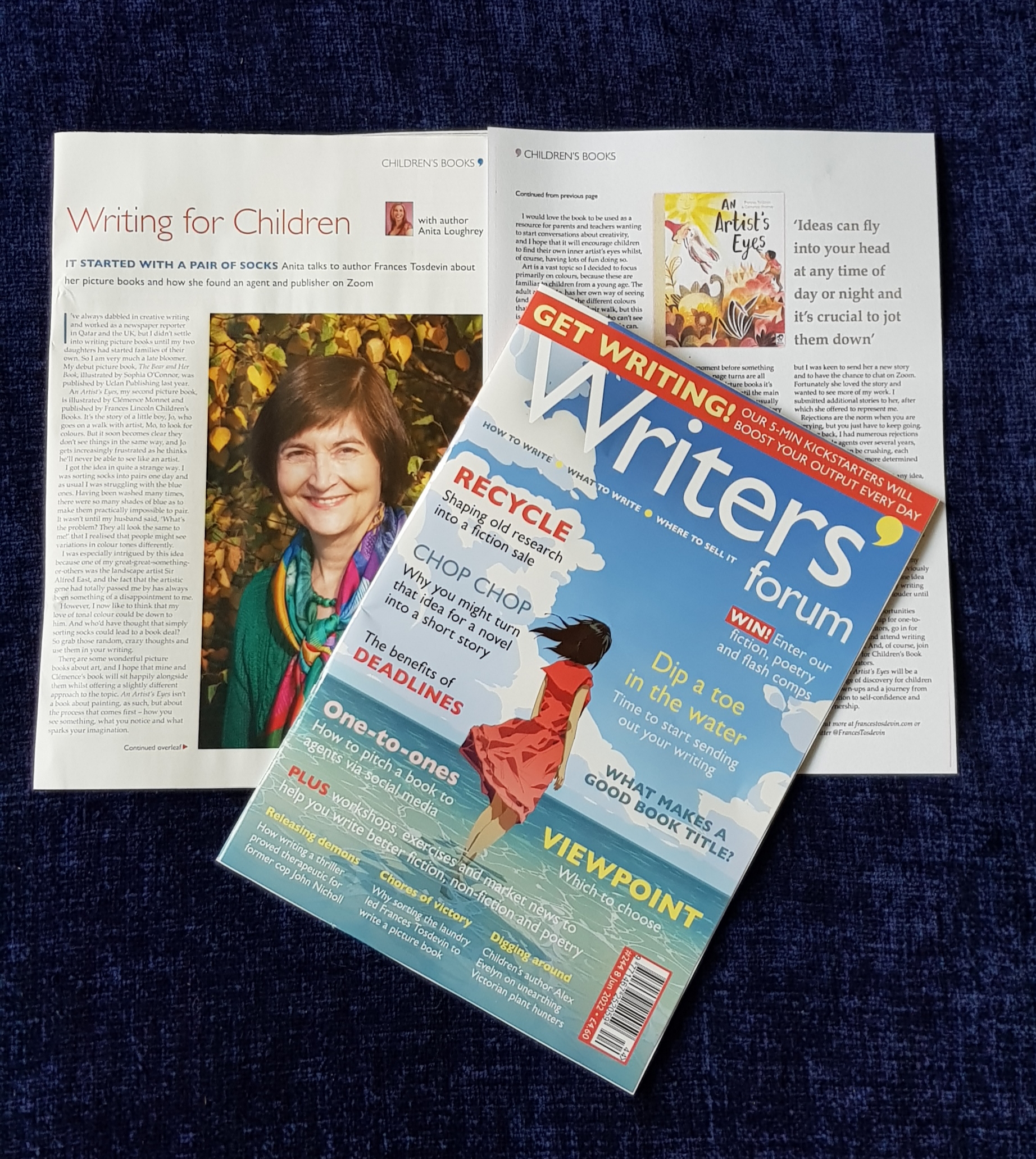
I interviewed Frances Tosdevin for the #244 8 Jun 2022 issue of Writers’ Forum about her writing process from conception to final draft for An Artist’s Eyes.

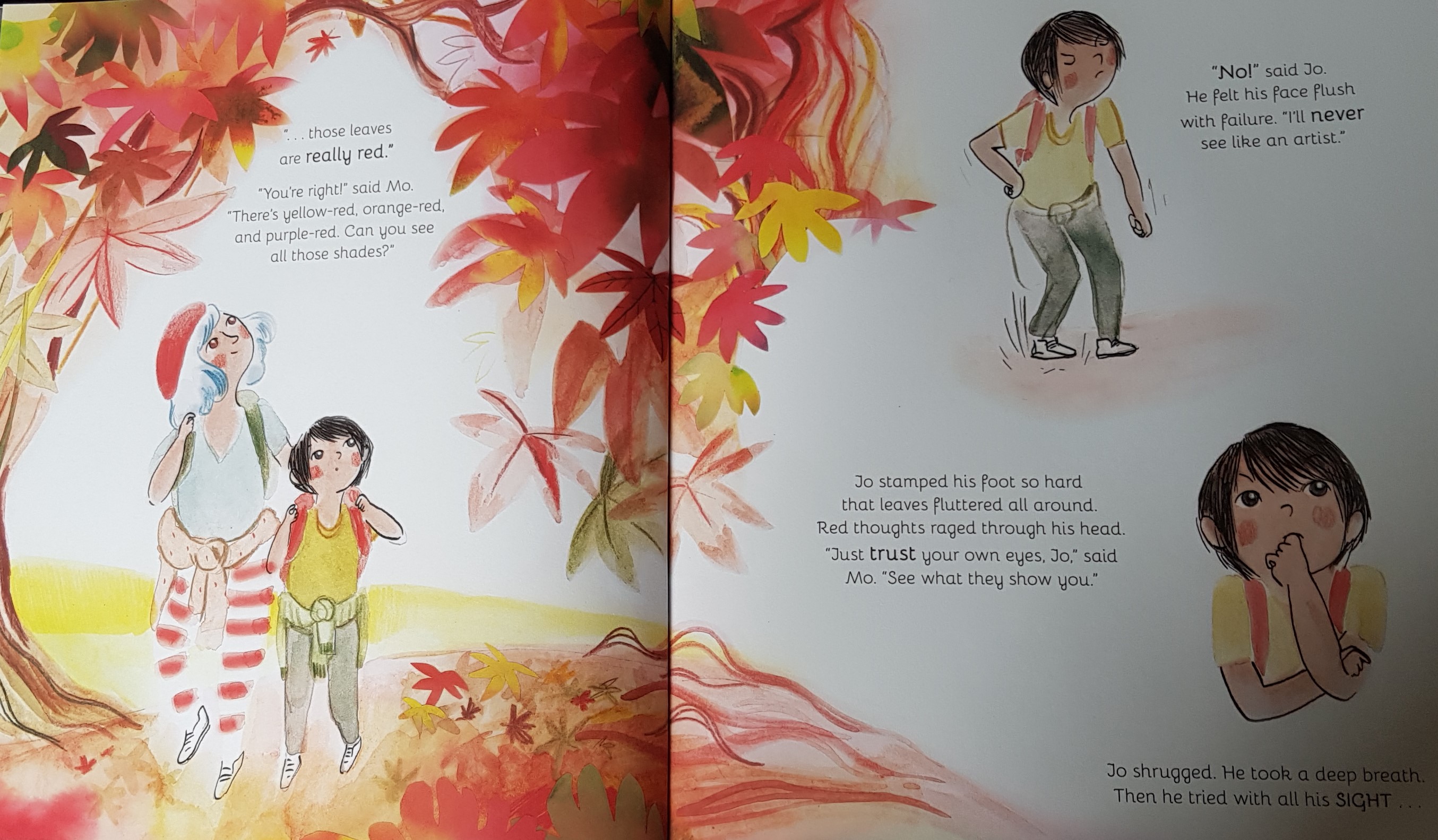
An Artist’s Eyes is illustrated by Clémence Monnet and published by Frances Lincoln Children’s Books. It is the story of a little boy, Jo, who goes on a walk with artist, Mo, to look for colours. But it soon becomes clear they don’t see things in the same way, and Jo gets increasingly frustrated because he thinks he’ll never be able to see like an artist.

It isn’t a book about painting, as such, but about the process that comes first — how you see something, what you notice and what sparks your imagination. Frances revealed she got the idea for an An Artist’s Eyes whilst sorting socks into pairs. The blue ones were so many shades of blue she found them impossible to pair. When her husband told her they all look the same to him, she realised people might see variations in colour tones differently.

Frances said all children’s book writers should grab these crazy thoughts, the ones that come at random times when you’re doing ordinary things, and use them in their writing. She told me she decided to focus primarily on colours because these are familiar to children from a young age.

An Artist’s Eyes is an empowering book – a clarion call to creativity, if you like – and I hope that it will help children to embrace their own unique way of seeing the world and all the wonderful things in it. I would love the book to be used as resource for parents and teachers wanting to start conversations about creativity and I hope that it will encourage children to find their own inner artist’s eyes whilst, of course, having lots of fun doing so.”

Frances Tosdevin

She elaborated that colour is also used in the artwork at key points to convey Jo’s feelings. For example, there is an almost totally black spread, scattered with tiny bursts of colour, to convey Jo’s increasing sense of frustration at not being able to see things in the way Mo can, whilst red is the key to his turning point, when he finally starts to believe in himself and to trust his own artist’s eyes. 

Frances explained she prefers to work on several picture book texts at once, because that way, if she hits a block with one and something needs to swirl around in my subconscious a little longer, she has other texts to be working on. She is often found pacing round the kitchen in the middle of the night, working out tricky plot points or strengthening characterisation.

“I love it when the house is dark and quiet, and it’s just me, my thoughts and two slumbering cats.”

Frances Tosdevin

She continued her stories go through numerous drafts, during which time they can change quite dramatically and she spends a good deal of time identifying, and replacing any word or phrase that sounds ‘flat’ to find a more exciting approach. She also roots out text that goes sideways, such as unnecessary details that slow down the story, rather than forwards.

Frances tries to think visually when writing, and pays special attention to page turns. to set up opportunities to surprise the reader. She explained it is a bit like delaying the punchline of a joke, or eeking out a spooky moment before something goes ‘Boo!’ Page turns are all about timing. Plus, in picture books it’s important to build tension until the main character’s lowest point (which is usually in Spread 9) and then to wrap up the story and provide the resolution quite quickly.

Frances warns all picture book writers rejections are the norm when you are querying, but you just have to keep going. She told me she had numerous rejections from multiple agents over several years, and although it can be crushing, each rejection just made hermore determined to write something better.

Her top tip is never to discount any idea, however small. Ideas can fly into your head at any time of day or night and it’s crucial to jot them down. Don’t delay, you might forget your idea. It doesn’t have to be a full-blown concept, it could simply be a pleasing phrase, a quirky title, or a character that demands attention. It could be a feeling you are experiencing, or a sense of place, or a funny situation.

An Artist’s Eyes by Frances Tosdevin and Clémence Monnet

She told me she currently has over 600 ideas on her phone, and a full notebook, as well. One of these idea often wriggles its way to the top of her writing brain and keeps making itself louder until she gives in and writes it. She recommends you take opportunities that come your way, sign up for 121s with agents and editors, go in for writing competitions and attend writing events whenever you can.

Find out more about Frances Tosdevin on her website: www.francestosdevin.com and follow her on twitter @FrancesTosdevin.

To read the complete feature you can purchase a copy of #244 8 Jun 2022 Writers’ Forum by ordering online from Select Magazines.

To read my future Writing 4 Children or Research Secrets interviews you can invest in a subscription from the Writers’ Forum website, or download Writers’ Forum to your iOS or Android device.

You can read my book review of An Artist’s Eyes by Frances Tosdevin and Clémence Monnet here: Book Review: An Artist’s Eyes.

Book Review: The Thief Who Sang Storms

Title: The Thief Who Sang Storms

Written by: Sophie Anderson

Illustrated by: Joanna Lisowiec

Published by: Usborne Publishing

The Thief Who Sang Storms by Sophie Anderson

Sophie Anderson’s imagination and beautiful descriptions bring the world and characters alive. Like her other books The Thief Who Sang Storms was inspired by Slavic folklore in particular, the Russian folk poem, The First Journey of Ilya Muromets featuring Nightingale the Robber. The book is set on the floating island of Morovia which itself was inspired by Buyan, an island from a Slavic folktale. Sophie builds a vivid world in this book of bravery and determination when everything looks bleak.

The population of Morovia consist of the humans and the alkonists, who are bird-like people with hollow bones and feathers instead of hair and each can perform their own unique form of magic with their singing. They have been divided by a terrible tragedy – singing magic created a storm that sunk the ship the king and queen were on. Now the humans live on one side of the island the most of the alkonists have been forced to leave their homes to live in the Mournful Swamp or have been sentenced to work in the Keep.

The story is told in first person from the point of view of a thirteen-year-old alkonist called Linnet. Her mother died on the ship that sunk. Linnet has been thrown into adulthood where she has had to learn to survive and has become a parent-figure to her grieving father. Her only friends are Lumpy a three-legged toad and a swamp-rat called Whiskers. They go everywhere with her.

I was hooked by her quest to save her father and reunite the alkonists and humans. I also like that we got a brief glimpse of the House with the Chicken Legs in Linnet’s dream-like scene. The whole book is interspaced with flashbacks about her mother and her friendship with a human she knows as Hero. These nostalgic flashbacks sometimes slowed the pace of an otherwise fast-past adventure.

The Thief Who Sang Storms deals sensitively with issues of grief and how it effects people differently. I think it is a great book to read to a class in the book corner, or to a child before bed. I would recommend this book to fluent readers at Key Stage Two and Three.

An interview with… Alex Evelyn

For my Research Secrets slot in this month’s #244 9 June 2022 issue of Writers’ Forum, I interviewed debut children’s writer, Alex Evelyn, about her research into botany for her middle grade novel, The Secret Wild, published by Walker Books.

Alex Evelyn explained she was actually writing a time travel story set in Egypt when the idea for The Secret Wild came to her. So she filed the original idea and switched her research from pharaohs to plants. The idea for her main characters Fern and Special came to her when she was helping at a plant sale at her village primary school. The children were queueing up to buy mini cacti, and when they had their new ‘pet’ in their hands they were chatting about what they were going to call them and where in their bedrooms they were going to put them. Alex did some research which showed house plant sales were booming amongst younger people, which gave her story idea roots. Alex revealed:

“During my research I was surprised to learn that there is such a thing as botonaphobia. Fern’s friend Woody’s character was already partly based on my own journey with anxiety, and when I read about this very specific fear I had to explore more.”

Alex Evelyn

She explained one of the things she has learnt about anxiety is that your own fears can be almost incomprehensible to others who don’t suffer from the same fear. This was the case for her with botonophobia – she couldn’t imagine how anyone could be scared of something she found so soothing. Fern is also very confused by it, but as she learns about friendships, she learns not to judge this unusual fear of Woody’s.

“I am very aware that writing for young children I need to entertain first and educate second – and never, ever to preach. Characters and a well-paced story have to form the backbone, the STEM is merely the flesh.”

Alex Evelyn

Alex told me one of the most useful resources she didcovered during her research was a second hand collection of Kew Garden botany books from World of Books. Determined to become an overnight expert she ploughed straight in to their Latin for Gardeners but no matter how hard she tried she couldn’t remember the plants’ Latin names, and so the part of Fern’s character that drives her scientist Dad Darwin mad was created – she, like Alex, can never remember names and responds more to how the plants look and feel than by being successful at categorising them.

To see plants through a child’s eyes or to ‘think the right height’ she dipped in to the Plantopedia by Adrienne Barman, a beautifully illustrated book that categorises plants using criteria that appeal to a young child.  From the ‘imposters’ to the ‘stinkers’, the ‘useful’ and the ‘healers’ to the ‘poisoners’. Alex explained the book brings the amazing plants on this earth to life as if they are characters.

The Secret Wild by Alex Evelyn

Alex divulged her setting was inspired by a visit to the Natural History Museum in London when she strolled past a sign for an open garden on the roof on an office block. She wondered what was hidden away up there, beyond the reach of our eyes. The shoot of an idea began to sprout – a glasshouse in the sky that held plants from the wilder places of the world.

“I am not a natural city dweller, and so it was easy to write Fern’s astonishment at arriving in such a big, overwhelming place. Fern is much more at home surrounded by the wilds of the rainforest. The minute we could get back on to the streets of London I was there with notebook in hand. I wanted to try and show that as a Londoner you can feel that you live in a village tucked in to the greater mass of the city.”

Alex Evelyn

Alex revealed that one of her favourite pieces of research was visiting the great glasshouses of Kew Gardens as this helped with writing the five senses. Feeling so hot that sweat ran down her legs, seeing water droplets on luscious leaves and feeling the texture of the plants bought them to life in a way she could never have discovered from books alone.

Kew Gardens

Alex told me she often ‘writes with her nose’ and it was the smell of the Kew glasshouses that helped her write the scene when Fern and Woody first walk in to Oleander’s glasshouse in the sky:

As they stepped forwards, they parted a cloud of butterflies which scattered like tiny pieces of torn paper being blown in the wind. A warm, figgy smell wrapped itself around her nostrils, sweet and delicious.

Extract from The Secret Wild by Alex Evelyn

Alex’s tip to other writers is to let your research lead you to places you haven’t necessarily planned. She elaborated that she often finds her narrative guided by things she discovered by digging a bit deeper and a bit wider. Nothing is ever wasted, even if you don’t end up using your research directly it might inform the depth of a character or a setting. But you do have to know when to stop. Research can be a lovely black hole that stops you from focusing on the hard task of drafting words in to a story. 

You can follow Alex on Twitter @alexrevelyn.

To read the complete feature you can purchase a copy of #244 8 Jun 2022 Writers’ Forum by ordering online from Select Magazines.

To read my future Writing 4 Children or Research Secrets interviews you can invest in a subscription from the Writers’ Forum website, or download Writers’ Forum to your iOS or Android device.

Blog Tour – The Extraordinary Adventures of Alice Tonks by Emily Kenny

It is with great pleasure I am taking part in the fabulous blog tour for author Emily Kenny and her debut novel The Extraordinary Adventures of Alice Tonks, published by Rock the Boat, an imprint of Oneworld Publications.

Emily Kenny

The Extraordinary Adventures of Alice Tonks is about an autistic girl who finds it difficult to make friends at her new boarding school. She discovers she has switcher powers where she can speak to and change into animals. She uses her new powers to help her solve the mystery of the missing animals.

The Extraordinary Adventures of Alice Tonks
by Emily Kenny

********

Q&A session with Emily Kenny

Thanks so much Emily for agreeing to be interviewed as part of the blog tour for your debut novel, The Extraordinary Adventures of Alice Tonks. This is the ninth stop of your tour and I am thrilled to be taking part so let’s quickly dive into the first question:

Where did you get the brilliant idea for a girl who could not only talk to animals but can shapeshift into them too?

The idea came from the way in which many Autistic and neurodivergent people have a particular affinity with animals, often finding them much easier to relate to and communicate with than other humans. I just stretched this idea a bit further by having Alice learn to switch.

Tell us a little bit about the themes of friendship and self-acceptance within the book.

There are lots of different friendships in The Extraordinary Adventures of Alice Tonks: Alice and the library cat, Alice and the other animals, Alice and Ottie and Tim, and also Alice with key adults like the school chef and the librarian. I wanted to show the tricky, stop-start side of friendship as well as how wonderful a close friendship can be when it is finally achieved.

In terms of self-acceptance, I wanted to show both neurodivergent and neurotypical readers that Alice comes not only to accept but to celebrate her differences. I think that’s something we could all get better at.

How did you go about creating your cast of children and talking animals?

The animals were far, far easier than the children! The animals’ personalities came to me fully-formed, along with their voices, whereas the children needed more refinement. For Tim, I definitely wanted someone quirky but really good-hearted and loyal, whereas with Ottie I tried to keep things a bit more ambiguous, at least to begin with. The bullies who make Alice’s life unpleasant were easier to write as I remembered girls like that from school only too well…

Do you have a favourite place to write?

I like to write anywhere that’s quiet but particularly like snuggling up in bed to let my imagination run wild and get words on the page (or screen!). However, my son, who has just turned one, isn’t a big fan of letting me slip away and write so that’s proving a bit tricky at the moment…

Is there anything else you would like to tell readers about The Extraordinary Adventures of Alice Tonks?

The story takes place at a clifftop boarding school outside a little seaside town. I boarded as a teenager and I’ve tried to create a home away from home for my readers too.

What writing advice would you give to people trying to break into the children’s book market?

Write the book you need to write. Don’t worry too much about the market or what is selling for big bucks in The Bookseller. I really believe if you write the story that demands to be told then there will be a reader who needs to hear it.

Thank you Emily for giving us a peek into your writing world and your time and cooperation in taking part in the Q & A session.

********

You can find out more about Emily Kenny and her books on her website: emilykenny.co.uk, on Twitter @Emilie_London and on Facebook: @EmilyKennyauthor. She’d love to hear from you so please get in touch.

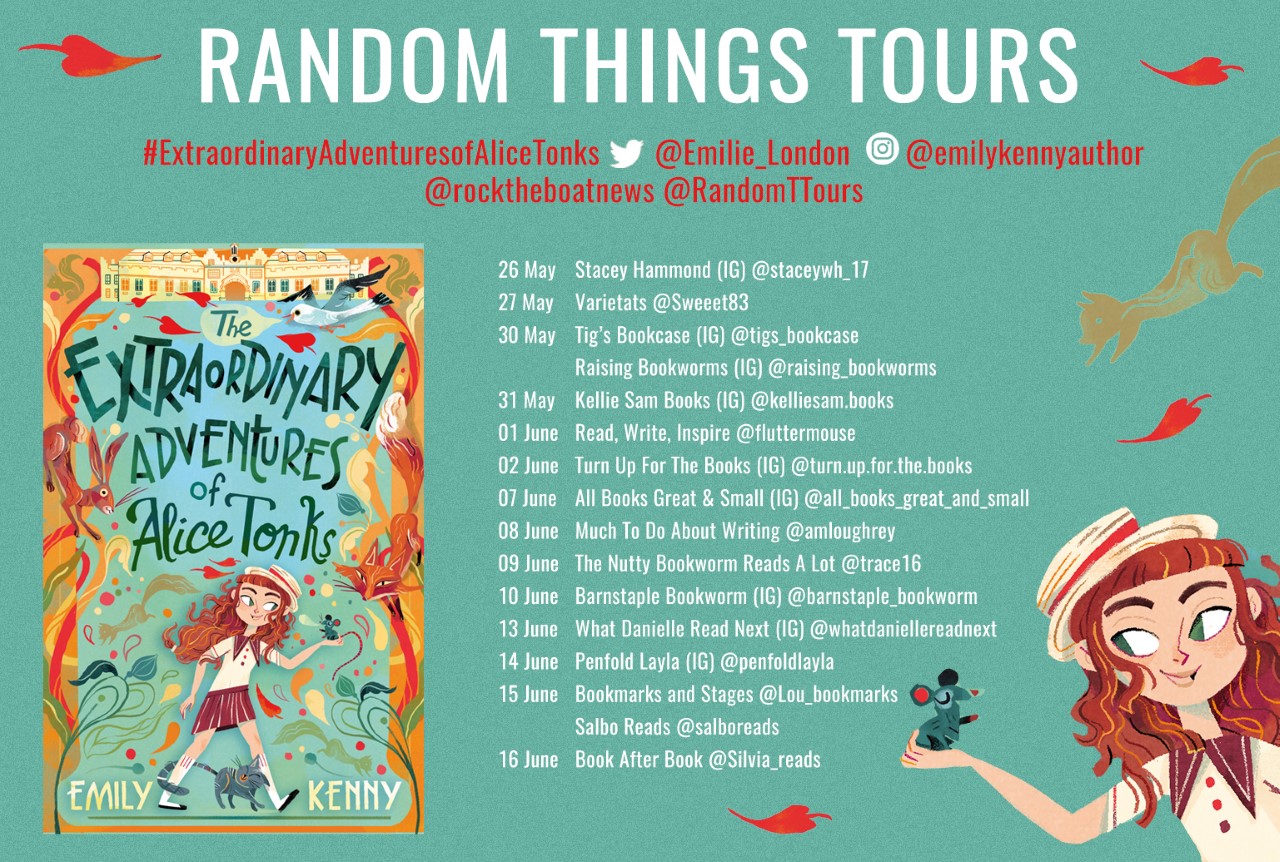
To visit the rest of Emily’s The Extraordinary Adventures of Alice Tonks blog tour take a look at the schedule below.

The Extraordinary Adventures of Alice Tonks is available to buy now from your local bookshop, or online at uk.bookshop.org, an organisation with a mission to financially support local, independent bookshops.

I would like to thank Anne Cater from Random Things Through My Letterbox for organising this blog tour and inviting me to take part. Thank you.