Tag Archives: Writers Forum

Interview with… Lucie Whitehouse

In my Research Secrets this month, I interview Lucie Whitehouse who revealed how she weaves fact and fiction into her psychological thrillers, so she doesn’t jolt the reader out of the story.

Lucie Whitehouse2

Lucie told me her latest novel, Critical Incidents, launched this month had an unusual beginning. She was working on her previous novel in Brooklyn Central Library one morning when a TV producer in the UK emailed to ask if she had an idea for a female lead investigative character. She replied straight away and said she was thinking about a woman in her thirties, a single mother of a teenage girl, who’s been booted out of her job as a senior homicide detective at the Met and returns in disgrace to her hometown, Birmingham. After she hit send she sat back in surprise. She’d never consciously had the idea. Evidently, though, her subconscious had been hard at work.

Critical Incidents

In Critical Incidents, Robin, the main protagonist, is technically off the job so for Lucie, it was a gentle introduction to writing procedurals. Her first four novels were psychological suspense and she felt had a lot to learn.

She explained she researched the structure of the Met’s Homicide Command online, reading up about Major Incident Teams, what rank of officer would lead one (a DCI) and how many officers each comprises.

“The police are quite transparent, and a lot of information can be found on a force’s website. For specific queries, you can contact them directly via their site. Forces’ Facebook and Twitter accounts are great resources.” (Lucie Whitehouse)

Lucie said the trick with research is to reassure the reader that you know your stuff without boring his or her pants off, and information dumps because great chunks of undigested information will pull a reader right out of the story.

To get her facts right she does a lot of on-the-ground research in concentrated bursts when she is in the UK. She spends days in Birmingham visiting or finding locations, taking photographs, collecting flyers, pamphlets, café menus, bus tickets and perusing the local history shelves of bookshops (Waterstones on the High Street has a great range). Lucie has found that buying local history books is better done on location than on Amazon, as shops often stock things from local presses.

“Birmingham’s rich history is one of the reasons I wanted to write about it and I read several books not only about the city itself but more broadly its role in the Industrial Revolution. My favourite was A History of Birmingham by Chris Upton.” (Lucie Whitehouse)

Lucie loves stitching in little bits of her own family history. A photo of the Whitehouse Flexible Tubing helped her with the visual details. This is the factory, where her father was Managing Director. It still operates out of this building.

Whitehouse Flexible Tubing

She also enjoys going to the places her characters would go, such as Moor Street Station, the Custard Factory, Stratford Road where Gamil’s bakery is located. She told me Dunnington Road, where Robin’s parents live, is fictional but based on a real street in Hall Green that she walked up and down repeatedly on a sweltering July day and one of her favourite is The Golden Boys statue, known locally as Boulton, Murdoch and Watt, three giants of Birmingham’s proud history as a hub of the Industrial Revolution.
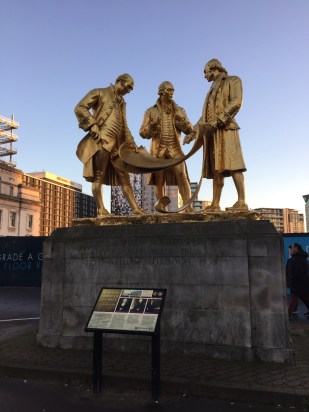
The Golden Boys statue

Lucie explained:

“Ninety percent of my research never comes close to the page but doing it allows me to know the world of my book properly and write with confidence. It’s wool-gathering in both senses – by researching, I collect the raw materials but I’m also creating a mental space where I can spin them into something new.” (Lucie Whitehouse)

You can find out more about Lucie and her books at https://www.facebook.com/lucie.whitehouse.9 and on Twitter @LWhitehouse5 and Instagram @lwhitehouse5

To read the complete feature you can purchase a copy of #220 Feb Writers’ Forum from your nearest good newsagents or order online from Select Magazines.

Another interview with… Mo O’Hara

In my Writing 4 Children column this month, I interview children’s book writer Mo O’Hara about writing comedy for middle grade series books. I have previously interviewed and blogged about Mo O’Hara before when I interviewed her for Papers Pens Poets. Take a look at: An Interview with… Mo O’Hara

Mo O'Hara5

She explained that she was inspired to start writing children’s books after she took a course in writing for children. Now My Big Fat Zombie Goldfish series are bestsellers here and in the US and her new series My Fangtastically Evil Vampire Pet is doing quite well too.

Mo told me:

“I definitely draw on my own experiences for all my writing – comedy included. Remembering all your embarrassing moments is a great place to start.” (Mo O’Hara)

In the feature, Mo explains how written comedy is different to stand up.  For Mo the story and the characters come first and then the jokes come out of the situation. She always starts with characters that are funny.

Mo with toys of her book characters

She did this for her graphic novel launching this year – Agent Moose. Originally the main character was a mouse who is a master of disguise. But the idea wasn’t working and did not seem funny at all She put it away and one day it hit her – a 7 foot tall moose that can hide anywhere is just more funny. The comedy just fell in place because of the character.

Agent Moose

Mo’s writing tip for other writers who want to write comedy is to write with a knowledge of the vocabulary of the age range of your reader. Kids are capable of getting the meaning of a word through context and they love funny words too – ‘Discombobulate!’ for instance. Also repeated words that are explained through context are funny sometimes. 

“If you get a kid to laugh it’s because at that moment, they had a genuine reaction and thought it was funny. That’s the emotional response I want. That’s why writing funny for kids is more rewarding for me.” (Mo O’Hara)

Her most important tip is ALWAYS read all comedy aloud. She explained that sometimes what you think is funny when it’s written loses something when spoken. It pulls up the flaws in timing.

Find out more about Mo O’Hara and her books on her website: www.moohara.co.uk and on Twitter @Mo_Ohara

To read the complete feature you can purchase a copy of #220 Feb Writers’ Forum from your nearest good newsagents or order online from Select Magazines.

An interview with… Tracey Mathias

In an interview with Tracey Mathias she told me all about how her children’s fantasy series was first published in Germany and how she got it into children’s hands in the UK.

tracey author pic

She started writing in 2005 and as a crime fiction addict and had a vague ambition to write but no real direction or conviction. That summer, whilst she was working at a children’s music school she found herself writing some last minute song lyrics, and had the sudden inspiration that she wanted to write for children.

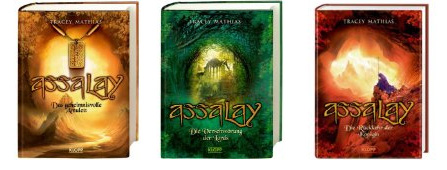
At the same time, she had an idea for a story that wouldn’t leave her alone. Over a week of sleepless nights she sketched out a rough plot for a whole novel and gave herself a year to work on the story. By the end of the summer term, she had completed the first draft of A Fragment of Moonswood, and her brain was seething with plans for volumes two and three of the Assalay trilogy – an otherworld fantasy about a land with a hidden past, facing political and ecological breakdown. She wrote the other two volumes – The Singing War and Weatherlord – over the next three years.

books german covers

The first volume of the trilogy went on submission in the UK and overseas in mid-2007. In one of the most bizarre couple of weeks of her life, she got a quick succession of offers from three German publishers. Her agent was hopeful that this would be quickly followed by a UK deal – but over the next months, rejection followed rejection, including a couple of annoyingly near misses. Tracey explained:

“I was left with an odd sense of half success, half failure. Yes, I was a published author (and unpacking your first box of author copies is thrilling whichever language they’re in!) but I was dogged by a sense of unfinished business that didn’t go away. Friends kept asking when they could read my books in English. ‘Why not self-publish?’ was a frequent suggestion, but for a long time, I clung to the hope of a conventional UK deal. “Tracey Mathias

Then, in 2015, Tracey was invited to speak to a school workshop on fantasy writing. She read the opening of A Fragment of Moonswood to a class of year 6 children, and at the end of the session, one of the boys came up to her, handed her a scrap of grubby paper for her autograph, and asked, ‘Miss, when can I read your book in English? Because I really like books like that…’

Tracey told me that this was a bit of a lightning moment! She decided pretty much on the spot just to go ahead and pursue the option of self-publishing and started to research options.

“Self-publishing is definitely a demanding route to take. It’s great to be independent and in control – but the flip side of that is having to tackle a wide variety of often quite technically detailed tasks that call for very different skills. Some of them suited me. Others, emphatically, didn’t.” Tracey Mathias

Tracey’s tip for children’s book authors who are considering self-publishing is to start by taking a long, hard look at what this is going to involve. It’s important to have a clear sense of how ‘self-publishing’ breaks down into different tasks, and how you’re going to tackle each, where you want or need help, and where you want to devote your energies.

The Assalay trilogy is published by Erika Klopp – part of the Oetinger group in Germany and can be ordered in any bookshop and on Amazon in the UK and is also available to buy from Barnes and Noble in the US.

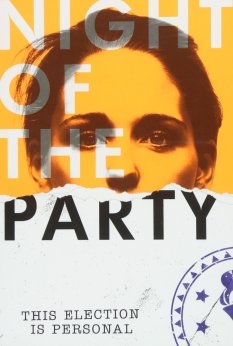
In 2018, Tracey got a traditional publishing deal with Scholastic with her very topical novel Night of the Party. It is about withdrawing from the EU and Britain is governed by a far-right nationalist party. Its flagship policy is the British Born edict, which allows only those born in Britain to live here. Everyone else is an ‘illegal’, subject to immediate arrest and deportation. ‘

Tracey Mathias

You can find extracts and links to Tracey’s books on her website: www.traceymathias.com and follow her on twitter @traceymathias. 

You can read the complete feature in Writers’ Forum #190 Aug 2017, in my Writing 4 Children column. 

An interview with… M. G. Leonard

In my Research Secrets double page spread in Writers’ Forum M. G. Leonard explained how her research into beetles turned her fear of creepy crawlies into an obsession.

Front cover

She told me her, Beetle Boy book didn’t start out with a beetle as a central character and it wasn’t called Beetle Boy. M. G. Leonard revealed she knew there would be beetles in the story, but because she was scared of creepy crawlies and thought they were horrid and signified something bad it neveer occured to her to make them the protagonists. But when she started researching beetles she became obsessed .

She didn’t start keeping pet beetles until after Beetle Boy was published and was still nervous around live insects.

“Everything changed when I was invited to appear on Blue Peter for National Insect Week with lots of live beetles. I visited my entomologist friend, Dr Sarah Beynon, who has a bug zoo in Pembrokeshire. She spent a day getting me to hold insects, and I fell in love with rainbow stag beetles. They are so beautiful. I immediately bought myself a pair and took them home so that I could handle them every day and desensitize myself to my fear. I was at the beginning of a journey.” M.G, Leanard

Since then she has bought an adult pair of African flower beetles, which she claims are relatively easy to breed. Watching them grow, eat and eventually pupate, informed her descriptions of the rooms inside Lucretia Cutter’s villainous lair – the Biome deep in the Amazon jungle – featured in Battle of the Beetles.

MG Leonard’s tip if you are incorporating unusual pets into your stories, is to spend time with the living creatures. Peering at them in a zoo won’t give you a unique insight into the way they behave when they’re hungry, or horney, scared or resting.

The descriptions of what it feels like to hold a beetle, to hear a beetle flying, of how they express themselves, all comes from careful observation of her living pets. It’s because she keeps beetles she knows many species are nocturnal, none sleep, and they control their body temperature by burying into soil.

“I did so much research for the Beetle Boy series. There isn’t a book about beetles that I don’t own. I trawled the internet browsing every single website that contained information about beetles. I watched all the youtube videos, listened to BBC audio shows.” M. G. Leonard

M. G. Leonard told me that researching is like a treasure hunt. There’s no right or wrong way to do it. You find a clue and follow where it takes you. There’s no pattern to it. She believes that there is no greater resource to the researching writer than the internet. Google maps allow you to see any place on the planet and Wikipedia will give you information about it. Books would take years longer to write without them.

You can find out more about M. G. Leonard and her books on her website www.mgleonard.com and follow her on social media: Twitter @mglnrd; Instagram @mglnrd; Facebook @MGLnrd

To read the complete feature take a look at #219 Jan 2019 of Writers’ Forum magazine.

An interview with… Cath Jones

Cath Jones writes picture books and early readers. I interviewed her for the January 2020 issue #219 of Writers’ Forum about the importance of early readers and how they differ from picture books.

Cath fb post

She explained how early readers usually form part of an educational reading scheme. They are aimed at readers of any age who are learning to read. Each publisher produces their own set of early reader guidelines or instructions for authors to use. These are usually based very closely on the Department of Education publication: Letters and Sounds (anyone can download this free of charge). This sets out very clearly, level by level which letters can be used, the type of vocabulary, complexity of sentences etc.

Cath told me:

“I try really hard to make my early readers stories funny and unexpected. One publisher told me that my stories are too quirky and another that they are too crazy. But children love that and so do I. I’ve had about twenty accepted for publication so far, with three different publishers.” Cath Jones

Cath explained it is important to keep the story interesting enough to engage an early and reluctant readers. Using appropriate words for the different ability levels can be quite a challenge. She told me she always tries to come up with a surprising twist at the end.

“When I write stories I have two aims in mind. I want to keep the reader interested enough to keep them reading on and more often than not, I want to make them laugh. The majority of stories I write are humorous and maybe a little quirky: a zebra who grows beetroot, chickens that knit, owls acting as hats.” Cath Jones

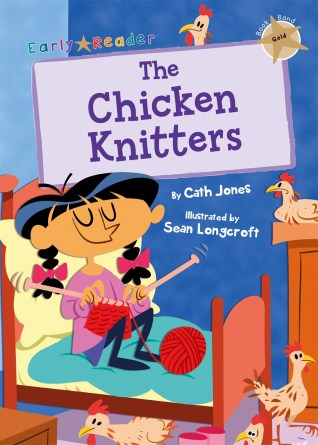
How I set about writing an early reader, depends on whether it is a higher or lower level book. For the lower levels, I have lists of all the words that are appropriate to that level. I study the lists and try to create a story (very often humorous). The story might have as few as 70 words and none of them more than three letters long. It’s like doing a puzzle. It’s a challenge but very rewarding. For the higher levels there are fewer restrictions so I just try to write the best possible story to engage a reader. One reviewer recently described Chicken Knitters as being as good as any early chapter book.

cover The Chicken Knitters JPEG

She revealed that when she first started writing stories for children, she had no idea that there were rules. She joined a local writing group and was amazed to discover that there were hundreds of books on the theory of writing.

“Getting rejections is never easy but other writers encouraged me not to give up. I remember author Jane Clarke telling me that it was those who persist who get published. She was right! In the end, all that effort paid off. In the space of a few months I had eight early readers accepted and my first picture book, Bonkers About Beetroot.” Cath Jones

Her inspiration for writing Bonkers About Beetroot was her own allotment. She also used to run school gardening clubs and for a number of years she managed a community allotment. So it’s really not surprising that gardening is a frequent theme in her stories. At the community allotment, she ran some really fun projects, including story sack making for families. She made a purple stripy zebra out of Fimo with the kids and close by was a bed of beetroot. Instantly she knew Zebra had eaten too much beetroot. The idea of a beetroot eating zebra just wouldn’t go away. It stayed in her head for years, quietly composting while she got on with life, growing vegetables and writing many, many stories.

Bonkers About Beetroot Cover LR RGB JPEG

Her writing tips for readers who may be interested in writing for the younger age range is it’s really important to know who you are writing for. Think about the age group that might read your story and ask yourself what they are interested in. If they are beginner readers, make sure your story gets going fast and keep up a good pace. If they get bored they won’t read on.

To find out more about Cath Jones and her books check out her website: @cathjoneswriter

You can read the complete feature in #219 Jan 2020 of Writers’ Forum magazine.

Children Using Non-Fiction Books

As you may all know, I write a column for Writers’ Forum on the types of research authors do for their books. I was also a primary school teacher for seventeen long years and have written many children’s illustrated non-fiction books and teacher resources for primary school. So children, using non-fiction books for their own research and writing is something that fascinates me.

Margaret Mallett has written extensively about children using non-fiction for researching their own writing. She has written such books as:

  • Choosing and Using Fiction and Non-Fiction 3-11: A Comprehensive Guide for Teachers and Student Teachers
  • Early Years Non-fiction: A Guide to Helping Young Researchers Use and Enjoy Information Texts
  • Young Researchers: Informational Reading and Writing in the Early and Primary Years

These books are aimed at primary school teachers with an aim of teaching children how to use non-fiction books and list suitable non-fiction books to meet the requirements of the National Curriculum and Literacy Strategy.

It is true there are new, fun interactive ways to find information via the Internet and downloads. These interactive models work and provide variation. But, in my experience, children do still enjoy looking at non-fiction books to satisfy their curiosity and thirst for knowledge. Non-fiction books need to be widely available in the classroom to support other things they are doing.

nonfiction books

Making non-fiction reading and writing exciting and relevant helps advance children’s thinking and understanding. Young children require literacy activities that are embedded in practical activities, drama, role-play and outings. These connect children’s experiences in school with wider society and provide opportunities to use and talk about texts.

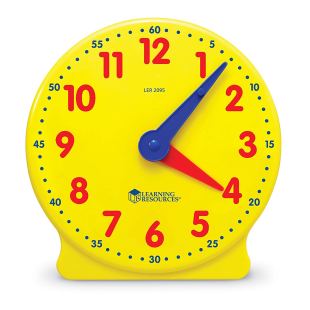
clock2

Time should be made during the school day (OK! Don’t laugh – I’ve been there!) for the children to talk about specifically non-fiction books. As writers and teachers we ultimately want children to learn to be independent readers by looking at both fiction and non-fiction books. Listening to others and their interpretations of the books helps with internal reasoning and encourages a quest to find out more. The children’s hypothesis can be supported and reinforced by looking at more books.

Teachers should also read non-fiction books to the class and show the illustrations. Seeing the pictures and hearing the text triggers reflection and help the children by giving knowledge.

illustrated non-fiction

Using illustrated non-fiction in the classroom is a highly successful way to engage children’s interest, helping them to establish a personal foothold and provide a reference against which to check what they have found from other information sources.

Story sacks don’t have to be confined to KS1 they can be for any age and contain non-fiction books. Drama does not have to be solely linked to fiction but can be used to support what is happening in non-fiction texts too.

In my opinion, to foster a love of children’s non-fiction books we need to think about the way it is being used with the children in the classroom and also at home.

An interview with… Cathy Cassidy

I interviewed Cathy Cassidy for my Writing 4 Children double page spread in the national writing magazine, Writers’ Forum, in 2016. She revealed some of her writing secrets and tips.

WF-CC5

Cathy explained to me writers do not really get to choose the voice or genre they write, it is more of an organic process.

I’m not sure you get to choose your voice or genre… not always, anyway. I have always worked with and for young people, as an art teacher, a teen mag agony aunt, a journalist etc… that age group did and still does fascinate me, perhaps because it was a part of my life I didn’t manage especially well. When I finally did work out how to write a book length story, it turned out to be young teen rather than the YA I had envisaged. 

Cathy Cassidy

Most of Cathy’s readers fall between the ages of nine and fourteen and she calls the genre, ‘real-life, growing up’ books, as she often tackles quite difficult themes. But generally her books are about family, friendship and fitting in.

Cathy told me that she thinks the most important thing for any writer is to find your own voice and find your story, and then stay true to it

Don’t assume that children’s books are somehow less important than those aimed at adults, because that’s not the case. Often, the books we read as children are the ones that shape us, the ones we remember forever… let’s make them awesome!

Cathy Cassidy

Her top tip on writing for children is to write from the heart, and put everything you have into what you’re writing. If this means re-arranging your to-do list for the day, do it – writing has to come first, for the duration of the book at least. Set yourself a challenge to write a certain amount each day – it may just be 1000 words, but if you stick to it, those words will soon mount up. And when you start to doubt yourself and feel like throwing your laptop out of the window, don’t. 

Her message is write because you love it, because you can’t help it, because you love words and stories. Don’t do it for fame, fortune or an easy life, as those things are most unlikely to happen.

I’m lucky enough to write full-time now, but when I say full-time I mean it… sometimes it is seven days a week, and I can’t recall a break where I didn’t bring my laptop with me. If you love something, put all have into it… it’s worth it when you love what you do, I promise.

You can find out more about Cathy Cassidy and her books on her website: www.cathycassidy.com

An interview with… Peter Bunzl

For my Writing 4 Children slot in the national writing magazine Writers’ Forum I interview Peter Bunzl about his Cogheart series, published by Usborne.

PBfeature

Peter told me his inspiration to write the Cogheart ‘steampunk’ Victorian adventure series, was sparked when he was reading about real clockwork robots that existed in Georgian and Victorian times. They were called automatons and were incredible pieces of engineering. Here is an example of some of them from youtube so you can see how amazing they are.

Automatons were built to do simple tasks like write their name or a few lines of poetry, or play an instrument, or a card trick or some of them were clocks with moving figures on. Peter wondered, what would happen if the technology back then had got so good that they could make clockwork robots that could do everything and anything. Robots made of bits of metal that were almost human and alive. Could they feel and think? Could the spark of life ever exist inside them? What would that mean for their inventors and owners? And what kind of world could I set a story be in where all this would take place?

There are four books in the series now, and they all take place over roughly a year. So the characters don’t really age that much physically, although emotionally they go through a lot.

Peter explained the reason his main characters, Robert and Lily, stay the same age is because, at thirteen-fourteen, they are already at the top end of what’s considered a middle-grade hero, and so, if they got much older, they would be more teens and their concerns would probably stray more into teen story lines, which would change the tone and themes of the books considerably.

Though they feature the same heroes in each book, the stories themselves are stand-alone, with different settings and different villains who have different goals in each, so there isn’t necessarily an overarching conflict to the series. Peter told that when writing a series, it is important to get the details consistent because once the series got to the third book, Skycircus, Peter realised everything was getting a little complicated, so he designed a big chart with all the main characters on,which clearly displayed their backstory, when they were born, what they looked like etc. Now he can easily refer to his chart when he needs to check a detail.

To find out more about Peter Bunzl you can check out his website www.peterbunzl.com 

Or follow him on Twitter @peterbunzl

To read the complete feature take a look at #218 Dec 2019 of Writers’ Forum magazine.

An interview with… Juliet Clare Bell

For my latest Research Secrets slot in the national writing magazine Writers’ Forum, I interview picture book writer Juliet Clare Bell. She talked me through her research process and how this has inspired some of the thorough and often unusual research she has done for her picture books.

JCBfeature

In the interview Juliet Clare Bell told me about the psychologist Graham Wallas who published The Art of Thought in 1926. In this book he identified a four-step process of problem-solving, insight or creative breakthroughs. Juliet Clare Bell summarises the four steps as:

“[1] Preparation –where you formulate your problem, then read, sketch, write, research etc., often very intensively. This, he believed, was absolutely necessary in creative thinking. During this intensive stage, you often end up feeling stuck, and to get past this mental block you must move onto phase two:

[2] Incubation where you let it sit whilst doing other things. If the answer you’re looking for feels really close, he argued, don’t force it. Trust that the process will lead to phase three:

[3] Illumination –often thought of as a ‘Eureka!’ moment –when the answer bursts into your consciousness. The final phase is:

[4] Verification –a conscious, formal activity, where you test it out and ensure that the insight is correct, or that the idea for your story fits.”

Juliet Clare Bell on The Art of Thought  by Graham Wallas

All writers love the illumination phase when writing seems to happen without much conscious effort, but Juliet Clare Bell finds it really useful to think of it in these phases. She explains you need to create the environment for it to happen, by preparing well with research and formulating ideas, and then you need to put in the work in phase four with the editing, even if the story does not change much from the original version.

“I’d recommend approaching people who are experts about an area. In my experience they’ve been really helpful and willing to share their interest. For fictional picture books, I like spending time with people whose lives are similar to those I’m writing about, as I did for The Unstoppable Maggie McGee and Benny’s Hat, both illustrated by Dave Gray. You might do loads of research for a book but it’s often one small snippet you read, or hear in an interview, that can really bring the person to life, or change the direction of your story.” Juliet Clare Bell

The Unstoppable Maggie McGee

Juliet Clare Bell told me it’s taken her a long time to really ‘get’ the idea of incubation, to the point where she now factors it into her schedule of writing. She can’t just do the research and then get straight down to writing it. For a week or two, she needs to let it sit whilst her unconscious gets on with making links with everything she has immersed herself in and other things she has learned or experienced.

Her advice to other writers is to trust in the process and treat incubation and illumination as skills which can be practised and improved on. Create an environment where phases 2 and 3 can happen, and that means being active when you’re reading/conducting your research (phase 1): before you start reading, ask yourself specific questions about the person/subject that you’re really interested in and which your readers will be interested in discovering, but also be on the lookout for the little nuggets that illuminate something interesting.

Author picture - Juliet Clare Bell

Juliet Clare Bell is always interested in the human side of things (so the personality of the inventor, explorer, mountaineer, scientist) and there might be one line in a whole autobiography that makes me say wowthat’s the angle I’m looking for.

To find out more about Juliet Clare Bell you can check out her website www.julietclarebell.com or follow her on Twitter @julietclarebell

To read the complete feature take a look at #218 Dec 2019 of Writers’ Forum magazine.

I have also reviewed some of Juliet Clare Bell’s picture books on my blog. Have a look at Two Brothers and a Chocolate Factory: The Remarkable Story of Richard and George Cadbury, illustrated by Jess Mikhail and Benny’s Hat, illustrated by Dave Gray.


An interview with… Moira Butterfield

I have a regular monthly, double-spread feature on writing for children in the national writing magazine, Writers’ Forum, which contain loads of writing tips from successful authors, agents and editors. The focus is on what works for these professionals and how this could benefit other children’s book writers. These features have been running for three years now.

In the #217 November issue I interview children’s non-fiction book writer, Moira Butterfield, about her latest books and why non-fiction books are so important. 

Moira Butterfield1

Moira has been fighting the children’s non-fiction corner for many years and proudly told me:

It’s an exciting time for children’s non-fiction. For years non-fiction was not valued in the trade. This has changed thanks to the influence of the US market, in particular, where non-fiction is highly valued. At last we are being paired with good artists and editors are keen to hear from us. Thank goodness kids who love non-fiction are at last being catered for in the trade.

Moira Butterfield

Her latest books are Welcome To Our World, illustrated by Harriet Lynas and published by Nosy Crow and Home Sweet Home, illustrated by Clair Rossiter and published by Red Shed (part of Egmont UK).

Welcome to our World demonstrates how children all over the world are very different, but they also have much in common – despite different languages, customs and traditions, everyone shares a love of family, friends, food and fun. Home Sweet Home, sets out to explore the familiar features of a home, touching on different cultures and history to encourage children to think about what it is that makes a home.

Moira explained it is important to provide a diverse viewpoint, that all children will find interesting.

When writing non-fiction for children we not only need to get facts right with careful research, we also need to make sure that our work is multicultural. By ‘writing multiculturally’, I mean creating text that has an awareness of the whole world naturally and effortlessly within its fabric.

Moira Butterfield

Her tip for children’s non-fiction writers just starting out, is to go to bookshops to get an idea of the visual styles being published right now. Make a note of the text length being used, the types of illustrations and the layouts of the books. Think carefully about what you like and what you do not like. Buy some of the books you like and study them closely. Note the approach, the word count and how it appeals to the age-group it’s aimed at. Feed this information into your own work.

You can find out more about Moira Butterfield and her books on her website: www.moirabutterfield.com You can follow her on Instagram @moirabutterfieldauthor and on Twitter @moiraworld