Tag Archives: writing for children

Write Like What You Talk

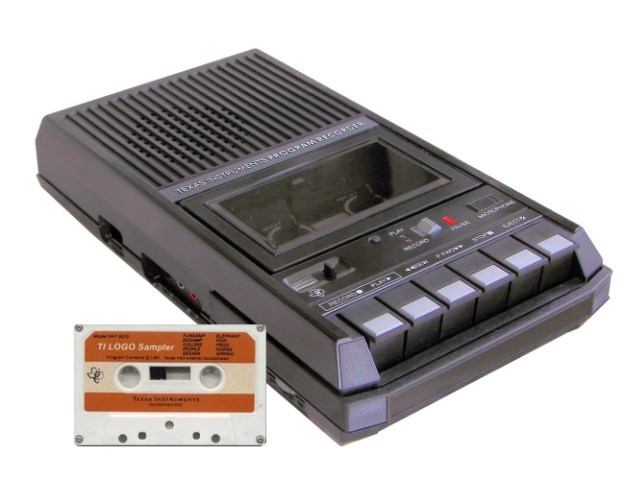
You can cheat the eye but you can’t cheat the ear, so always read your story aloud. Stories are oral and this is why voice is important. So write like you talk. It really is as simple as that. Say something. Then write it. Record it so you can really listen to what you have written.casette recorder
If it sounds stilted or wooden, stop and think about what you’re trying to say. Say what you want to convey aloud. Then write it down. A group reading or performance is even more useful since each reader, like an actor, will deliver their lines of dialogue at a different pace. When writing dialogue less is more, so use limited speech tags.

However, it is not only the way the characters talk that is important, spend time trying to understand why your characters say the things they do, and how they feel about it. Think about the characters and their motives:

  • What would she do?
  • What happens next?
  • What would she say?

Make these motives plausible. Get into the body of your character.

costume

Create character sketches and think about their off the page activity so you can step into your characters shoes and know how they would react and speak in a given situation.

  • Where do they live?
  • How do they talk?
  • What non-verbal mannerisms do they have?
  • What food do they like?
  • What is their taste in music?

All these things can contribute to developing your character’s voice. I spend many hours talking aloud to myself and acting out bits of my WIP just to see how it sounds and works with the action. Oh yes, and don’t forget to use the correct punctuation so your reader knows how it should sound. A quick speaking exercise you can try is to say these three sentences aloud. Notice how the emphasise is on different words in each sentence.

You’re going to be in Strictly Come Dancing.

You’re going to be in Strictly Come Dancing!

You’re going to be in Strictly Come Dancing?

This doesn’t mean your whole book should be full of exclamation marks though. Too many exclamation marks is off putting and in my opinion lazy writing!
The Publishing World

A big consideration is what the big booksellers want, as if they wont stock the book it wont sell. The book cover can sell the book so how good or enticing the book cover is look is an important part of an editors job. It is the cover that will give the book an edge with the booksellers. It is quite scary the impact the big bookstores have on the publishing world and when you realise they monopolise over 70% of the book selling market it is understandable why writing for children has become more competitive.

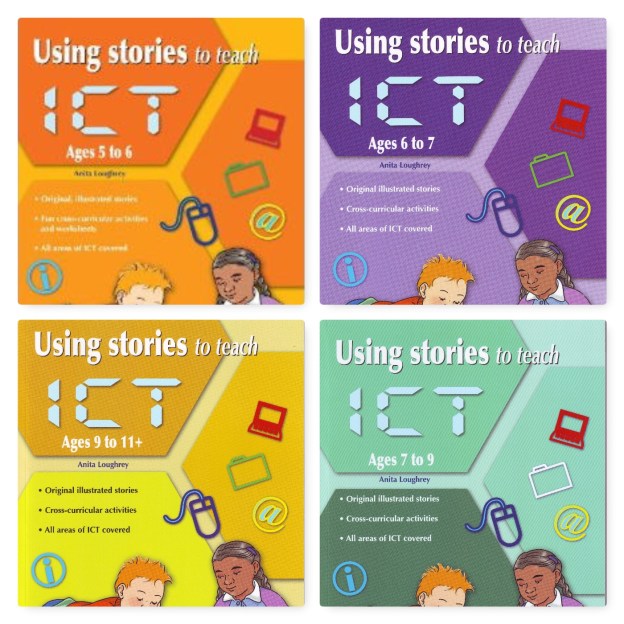
Using story to teach ict collageBook publishing is becoming more commercial and it is true, the big publishing companies increasingly will not back a book unless it is a sure bet. This may be why more authors are self-publishing – to prove they have a viable product. Publishing houses spend a lot of money on marketing. They budget for each book but the author has to get involved with marketing too. Once the book is released you don’t instantly become a best seller.

Nowadays, more gimmicks are being used to sell their books, such as collectable web cards and glitsy book covers that catch your attention on the shelf. Statistics show thin books, for the six-to-eight age range, did not sell as well as thicker books, because they were not so easy to see on the shelf. So publishing houses started to make fatter books. As you can imagine, this makes production more expensive. My Adventure Passport series were packaged in cute little suitcases.Adventure Passports Collage
Editors are an important role in publishing your book, whether you are writing for children, adults, education or trade. But they don’t have the scope to build a writer up over a number of books in the way they use to. Their job is to see the book all the way through not just to edit it. So be an original voice. Remember you are sending your manuscript to someone who reads over 500 a year. Ask yourself: Would an editor or agent jump off a bridge for your book? To spend so much time on a book, you have to be a fan.

Writing for Children

I don’t believe writing is easy and I do believe writing for children is the most difficult of all. I have often wondered why I want to write for children. Why this market above any other?

writing2

The reason I am writing for children is partly I want to have a lasting effect on children’s lives. Yes, I remember reading the Narnia books and Enid Blyton stories when I was younger and I loved them. I look fondly back at these stories, which remind me of my childhood. But, this is only part of the reason why I want to write for children.

narnia1
It is also partly the immense satisfaction I get from seeing myself published. I get a thrill when I see my words in print and I love to hear feedback that shows all my hard work is appreciated by others.

A big chunk of the reason I want to write for children is because I believe I understand children and how their minds work. I’ve always had an interest in Psychology. I did a degree with honours in Behavioural Sciences, which means I have a basic understanding of developmental stages, but it is more than this. I think I am more in tune with children’s emotions and imaginations than I am with adults.

Maybe, I have never grown up and I am still very child-like or childish myself. It is true; I’ve had my fair share of tantrums and setbacks. Again, I think it is more than this. I don’t like long flowery language and long descriptions. I find them boring. So the vocabulary I use naturally leans towards being punchy, attention grabbing and exciting, which is more suited for the younger reader. I love short paragraphs and lots of dialogue and definitely feel that dialogue is my strength.

Also, I have a very short attention span so tend to write in short, sharp bursts, which I think is more suited to writing for the younger age range. However, the most important reason I want to write novel for children is I love the challenge.

So, if you know why you have chosen to write in your particular genre or age group, whether it is for children or adults, please leave a comment and share your thoughts.

Books for Christmas

It is coming up to Christmas and you may be searching for that last minute present for your writer friend. If you are here is a list of books from my bookshelf that I have found useful during my writing career.

christmas stocking

The Creative Writing Coursebook: Forty Authors Share Advice and Exercises for Fiction and Poetry edited by Julia Bell and Paul Mars (Pan, 2001)

A comprehensive guide for improving story. Contributions from forty authors provide a generous pool of information, experience and advice.

The Forest for the Trees: An Editors’ Advice to Writers by Betsy Lerner (Pan, 2002)

Betsy Lerner is an editor turned agent and provides a true insider’s perspective. Everything you could ever possibly want or need to know about story is here.

Story: Substance, Structure, style and the Principles of Screenwriting by Robert McKee (Methuen, 1999)

Robert McKee is a New York ‘don’t-mess-with-me’ type who runs a popular film structuring course. The techniques he suggests can be used in all writing and not just in writing screenplays.

Aristotle’s Poetics for Screenwriters: Storytelling Secrets from the Greatest Mind in Western Civilisation by Michael Tierno

Tierno uses examples from some of the best films ever made to demonstrate how you can apply Aristotle’s ancient insights to modern-day story.

Twenty Master Plots and How to Build Them by Ronald B. Tobias (Writer’s digest Books, 1994; Walking Stick Press, 2003)

Gets you thinking about story. All the great stories can all be found in these plots.

The Writer’s Journey by Christopher Vogler (Pan, 1999)

One of the cornerstones of modern screenwriting theory. Vogler’s ideas have been used by a whole generation of story writers.

Launch of my new blog

Today I am launching my new blog all about Writing for Children. It is going to be jammed pack full of information about the many books I have written, interviews I have done, book reviews I have written and my writing advice. My aim is to share with the world my immense writing experience and background.

w4c2

I write two slots for the national writing magazine, Writers Forum and will be announcing on my blog when the new features are out and who I have interviewed. I will give teasers from the magazine in the hope you will want to find out more. I have already posted a Research Secrets blog post, which you can take a look at here. I will also be including snippets from interviews I have done for the stationery blog Papers Pens Poets.

KS1postcardcollage4

Book reviews are one of my many writing specialisms. I have been writing book reviews for many years for a variety of websites and magazines including the Historical Association, Nikki Gamble’s Write Away and Armadillo Children’s Book Review Magazine. I plan to post a review each week which will include a mixture of some of my favourite books and new releases . I already have a book review on the blog so you can see what to expect. Take a look here.  I thought it was quite an appropriate book review as I have migrated from Blogger to WordPress.

Leave me a comment…

It is an exciting time and I hope you will comment and share my posts. I have been writing in a vacuum for years, blogging without anyone knowing. Now is the time to get out there and be noticed. So if you just want to say ‘Hi’, or let me know your opinion, please do. I would love to hear from you.