Tag Archives: writing tips

An interview with … Anita Loughrey

In the July 2019 issue of Writing Magazine, I was interviewed by Simon Whaley about my school holiday survival tips on how to push on with writing projects when the children are home all day. As mentioned in a tweet it is really very rare for me to be interviewed. I am usually the person doing the interviews. So I get very excited when I see myself in a magazine. The feature even gets a mention on the front cover:

Writing Magazine - Schools Out

Schools Out! How to juggle your freelance business with kids holidays.

When I reread my words compared to what John Adams, founder of Dad Blog UK, I realised how much things have changed over the years as my children have got older. When my children between the ages of 5-11, I too used to rely on holiday clubs which my children loved. There was so much for them to do to keep them active and interested. Once they started secondary school they would rather do their own thing and hang out with their own friends.

One thing is for certain though I have never, ever, ever got up to write voluntarily at 5am in the morning. I am definitely not a morning person. Although, I have been known to be still at my keyboard at 3am in the morning, having not gone to bed yet.
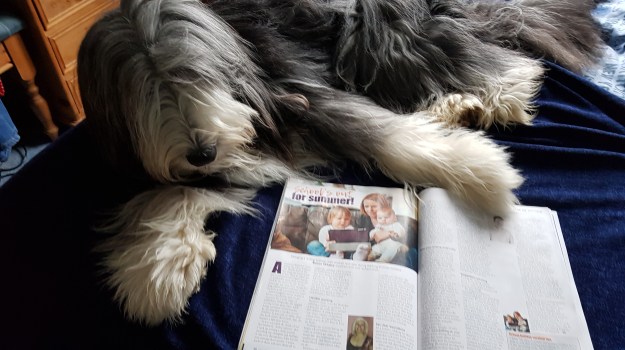
WM with Dexter2

In the feature, I advocate timetabling as a way to find time to write. This is beneficial not only to the children who get advanced warning of when you are working and when they need to amuse themselves, but it is also a way of motivating yourself to actually sit yourself in the chair and get on with the work. Timetabling works both ways and sets the expectations of the children that I am actually going to produce something at the end of the day. If you say you are going to work there has to be words on the page as evidence of this.

I have also been guilty of turning family excursions into writing projects and like Simon mentioned himself in the feature taken family for days out on assignments and when researching areas. This in a way makes it even more fun and helps me to hone in what I actually want to find out so I use my time productively.

20160813_113747

I think another thing though to ensure you get a well deserved break from your writing is to actually give yourself permission to stop writing and have a holiday. to do this I recommend telling your editor, project manager, publisher, agent and who ever else is involved waiting on you to send in copy what your holiday dates are. Let them know you will be away from your desk and will not be working at the set holiday dates. Everybody needs a holiday – even writers!

Plot

The plot of any story can be set out as follows:

books

Beginning – meet the main character and introduce the problem

Middle – focus on the problem, which gets worse through the inciting incident – introduce a focus of resistance such as suspense / surprise / tension

End – resolve the problem, whichever way, then get out as quickly as possible.

Aristotle said the most important thing in any story is the sequence of events. Each event has a cause and effect, and each is connected in the plot. There are six stages of plot development:

  • The opening
  • The arrival of conflict
  • The early achievement
  • The twist and the change
  • The resolution
  • The final outcome


Creating Conflict

Conflict is a storyteller’s best friend. The stronger the problem, the stronger the story.

conflict

A story for children should open with conflict. 

Don’t be nice to your character! Create obstacles to their goal. The story is more exciting that way, the character learns more, and the reward is more valuable since the character worked so hard for it.

Conflicting Characters

The most popular, since conflicts between people are the most interesting to readers.

cinderella

Cinderella and her wicked stepmother

Inner Conflict 

Conflict between good and evil or strengths and weaknesses in a character. This is deep stuff and not usually the main conflict. The Grinch is evil and hates Christmas, but he is not evil at heart, he is like that because someone hurt him. The Grinch feels inner conflict over the good and evil inside of him.

thegrinch

The Grinch

Fight Against Nature

Usually involves natural disasters or survival skills. This conflict is exciting, but often difficult to write about at length.

Lord of the Flies

You can combine different types of conflict. Maybe your characters struggle to survive and fight among themselves, such as in Lord of the Flies.

Add more conflicts and obstacles if your story seems slow or not ‘big’ enough.

Before you write, know how the problem will be solved. Don’t write yourself into a hole! Most importantly your main character must solve the problem. Don’t have someone (or something) enter at the last minute and save the day.

Point of View

When I saw this it made me laugh. It highlights how different characters can see things from different points of view.  These two frames get the creative juices flowing for a whole host of stories. How did the characters get there? what’s going to happen now? Generally though a story should be told through the eyes of a single character, usually the main character.

point of view

I have found this myself when reading a novel, sudden shifts in the story’s point of view can jolt and disorient me, as the reader, out of the story. As a rule to keep it consistent, I tend to narrate only what my chosen character would know and nothing they wouldn’t. For example, other people’s thoughts, or something out of sight. although some stories work excellently with two point of views. For example, Philip Pullman’s, The Subtle Knife is one of my all-time favourite books and is told from the viewpoint of Lyra and Will. So like Philip Pullman, if you do need to switch to a different point of view, set up a separate section or chapter for it.

subtle knife

Written in third person, The Subtle Knife, immerses the reader in both characters’ voices in alternate chapters. The narrator’s voice is kept well out of the picture. This again should be a general rule when writing novels, unless you are writing fairy tales and folktales, which opens up for a whole new post.

Building character

Now I’ve got your attention, the first port of call is to build the protagonist (your main character).

body building

The important traits of your protagonist should be:

  • They have a problem or need.
  • They have the ability to solve the problem, whether or not they know it (there’s usually more suspense if he doesn’t)
  • They have a character flaw to overcome to solve the problem, or win the reward.

Your main character should be someone the reader can identify and/or sympathise with. They should be near the top age of your intended readers. One exception  to this is in folktales. You should identify your characters with one or more telling details—a physical trait, a mannerism, a favourite phrase but a complete description is not really required.

Then, think about your secondary characters, which includes the main character’s friends and enemies.

Protagonist: Main character with flaws

Antagonist: Block the main character from reaching goals. (The Green Goblin in Spider-Man)

Allies: Assist the main character in reaching goals. (Robin in Batman)

Mentors: Wise characters that help the main character. (Obi-Wan Kenobi in Star Wars)

Jokers: Lighten things up! Often the main character’s best friend is a joker. (Donkey in Shrek)

You can combine different types of characters to make them stronger.

A funny villain like Dr. Evil in Austin Powers:

Dr Evil

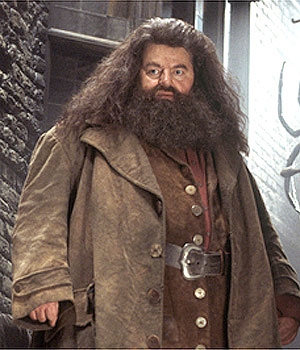
A mentor, like Hagrid from Harry Potter, who is also a joker:

Hagrid

A villain that becomes an ally and helps the main character solve the real problem such as Sloop from Spy Kids:

Floop

Strong secondary characters are important in all stories for all age ranges so it is worth spending time on creating them.

Writing Non-Fiction

There is a large market for non-fiction reference books based on topics taught in school. I recently ran a workshop all about writing for educational publishers. Today I thought I would share some tips.

course photo2

Writing for Educational Publishers workshop. Photo taken by Addy Farmer

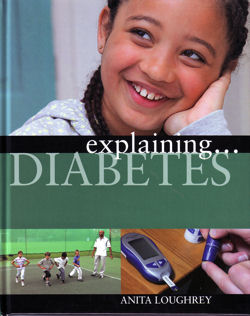
I think one of the main points is that educational publishers prefer to come up with their own ideas in-house or work through book packagers. I work a lot to commission. My book, Explaining Diabetes, which was published by Franklin Watts but, was commissioned by the book packager Bender, Richardson and White. It was one book in a series of books about illnesses and conditions.

explaining diabetes sm

When approaching publishers with unsolicited non-fiction it is better not to have a finished book. A one-page outline giving a brief breakdown of the chapters, target audience and potential market is generally what is required.

I suggest you market research the publishers you want to submit to as well. Check they publish books for the age range you want to write. There are different publishers for primary than secondary aged children. You can find out which publishers print what by checking out The Writers and Artists Yearbook.

W and A

It is wise to look at what books are out there and analyse them to see how each book is divided and what sort of things are included on each spread. Look for patterns as an indication of style and what might have been in the brief the author was given. Then try and use this as a template to plan your own book that would fit the series.

Why not try it for yourself. If you are successful please let me know.

Keep Going

These are my words of wisdom for today. I often feel disheartened with my writing and some days it is hard work just to keep myself sat at the computer. It’s not easy to get published but perseverance does pay off. Over the years this has become increasingly apparent and over 85 books later I am still persevering. This became dramatically evident when I was running a SCBWI-BI workshop last weekend for the Central North network on Writing for Educational Publishers.

I took a selection of books with me for the attendees to look at and analyse the different series and write their own book proposals. It dawned on me whilst I was teaching, not a lot of people could use their own books to do this as they have not written enough series for each group to go through. It was a proud moment.

Course photo

Writing for Educational Publishers workshop. Photo taken by Addy Farmer

There is a quote that springs to mind. I do not know who originally said this:

“Writing is one percent inspiration and 99 percent perspiration.”

And it is not just me. Other authors are still getting deal and books are still selling. During difficult times people turn to escapism through books and movies, so the market is out there.

Sweat-Miracle

I  know it’s difficult to keep going, especially if your aim is to write the next bestseller. Remember only a tiny majority of writers find fame and fortune but most make a slow steady income by doing what they love. So take small steps to move your self forward a centimetre at a time.

quote1

I’m definitely not saying set your sights lower – what I am saying is don’t let your nagging doubts stop you. All writers feel like this at some point in their careers. Don’t let other distractions get in the way of you reaching your goals. Only you can write your story so…

…keep going. 

End Each Chapter With a Cliffhanger

Cliff hangers keep your readers reading by building up the story’s tension. They literally leave your reader hanging.

cliff hanger

Cliff hangers should always involve your characters:

  • A character arrives
  • A character feels something
  • A character forgets something
  • A character is jolted into action
  • A character leaves
  • A character makes an important decision
  • A character makes an urgent demand
  • A character reacts badly
  • A character reacts internally to events
  • A character remembers something

Your reader has to turn to the next chapter to find out what happens to resolve the tense situation you have created.

Combine Speech with Action

People rarely stand still and speak. They wave their arms, they pace, they scuff their feet, check their nails, get distracted or even make a cup of tea. I know these are all rather cliched examples but they serve the point. When writing dialogue have your characters do things whilst they speak.

child drinking

Spend some time people watching and observe for yourself the things they do when they talk. Keep in mind Anne fine’s words:

 “Don’t write about people you know, write what you know about people.” Anne Fine

And what better way to find out about people than to watch them.

“A rough estimate would be one third dialogue, one third action and one third introspection.” Diane Doubtfire

Introspection are the character’s inner thoughts.

“A character’s thoughts can greatly enhance a story: deepening characterisation, increasing tension, and widening the scope of a story.” Nancy Kress

So next time you are out and about observe some of the little actions people do that hint at their character. It all adds to the story.

More on Market research

When I first started out I found market research extremely difficult. But, the more I tried to do it the better I got. I have been published in several national magazines.

writers-forum-206-december-2018

The ones below are just a small selection. I now automatically pick up a magazine and look at the adverts, the letters page and the way the stories and articles are written, to get an idea of who the readership the magazine is aimed at, are.

I ask myself questions like:

  • Whose viewpoint is it from?
  • How long are the sentences?
  • How long are the paragraphs?
  • Is it in first or third person?
  • What tense is it written in?
  • How much dialogue is used?
  • Is slang used?
  • Is compression used (i.e. i’ll, we’ve)?
  • Are there any sentences beginning with And and But?
  • Are there any swear words?

I believe this was excellent training and has helped me to launch my career into writing for children because, although the writing and market is different you still need to consider who the target audience is and whether you are meeting the requirements of the in-house style.

So my advice is to anyone who wants to get published, whether it is in writing for magazines, writing for children, adults, your publisher, or a specific editor – do your market research. Know who you are writing for.

If you are interested in writing for magazines, get hold of the contributor’s guidelines. These are often available online.