Tag Archives: writing tips

Think About Theme

The theme of a book is an ‘abstract idea’ such as friendship, loyalty or a quest for identity.

Themes are different to morals. The theme should be subtle and strengthen your story by adding depth and meaning. Visit your local library and look at some of the classic picture books. Notice that although the text may be brief and tightly written there lay truths that are timeless. The story should leave readers with a residual feeling that stays with them.

Season collage

You should be able to sum up your theme in one or two words. The theme of the first series of Season books is friendship. I have written two more Season picture book series since then. This is a book with a compilation of my Animal Stories for all Seasons. They will also be available to buy individually.
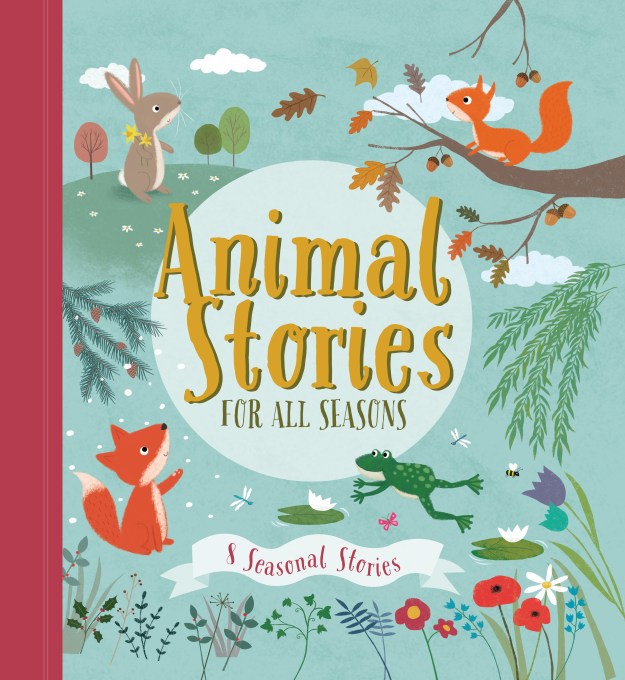
Animal Season Treasury Cover (003)

Your characters should always carry the theme. It is important not to blurt out your theme but to let it emerge from the story. If you must come out and say it, do it in dialogue, not narration and whatever you do avoid preaching. Children’s stories should be explorations of life not Sunday school lessons.

In picture book you should keep your theme positive. If writing about difficult situations and feelings, offer constructive ways for your readers to cope with them.

Use Slang Sparingly

This is not necessarily only good advice for writer’s writing for children. I think it is true for what ever books you are writing.

What we need to remember is the dialogue is not real conversation but has to create the illusion of a real conversation. Slang words and catch phrases can date a book and go out of fashion very quickly so it is best to avoid them. Remember you want you children’s characters to sound like children and not an adult pretending to be a child.

marvel-characters-comic-art

Consider your character’s patterns of speech rather than particular words. For example, an impatient character would use short sentences and not waste words whereas a dreamer might ramble on without care. Much like some of my blog posts.

So be careful with slang. It dates dialogue.

“It is best to get the flavour and texture of what you want to say without having to patronise or, worse still, getting it wrong.” Andrew Melrose

The idea is to keep dialogue short and concise. There is no room for lengthy descriptions in dialogue. The other characters would get bored and wander off. You should be able to sum it up in a few words.

groot

If you do want to use speech to convey important information it is better to begin the section of dialogue with the information or end with it. If you bury it in the middle of the dialogue it could get missed.

And avoid ellipses… unless absolutely necessary for effect. Don’t litter the page with dots.

Know Your Readers

It is essential for who ever you are writing for to have a good knowledge of your audience and have a target age in mind.

snoopy-reading

When writing for children remembering back to your own childhood is a starting point but you must keep in mind the modern child in today’s technology filled world. This does not mean every child in your book needs their own mobile phone or games console. In fact it is often better for tension if they are unable to call for help at a touch of the screen.

The best way to find out about your audience if you are writing for children is to observe them. Not in a stalkerish, creepy kind of way. If you have children, or have friends and relatives with children talk to them, find out what is going on in their lives. Ask about their likes and dislikes. Find out what books they love to read and their favourite characters. If you don’t have children talk to friends who have, or talk to your local children’s librarian.

Another good way to find out about children today is by watching children’s movies and television. Immerse yourself in the adventures, problems and emotions of the characters. They are likely to defy authority and will be outspoken with their own strong opinions. This may vary in intensity for reception, junior and secondary aged children but there should be a degree of independence.

One More Step

confucius
I’m in a very philosophical mood today. The ancient Chinese philosopher Confucius said:
“Every journey of a thousand miles starts with a single step.”
He also said:
“Be not ashamed of mistakes and thus make them crimes.”
Confucius

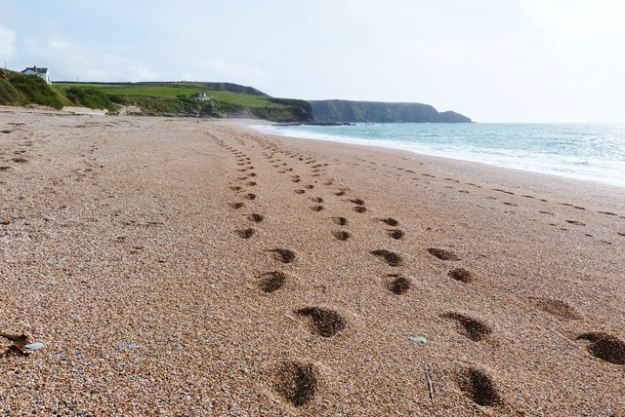
Think of each step you write as a single incident, such as writing one paragraph, producing a character sketch or sketching a map of the location. It is a process of going through the layers.

The process of writing itself, even for very experienced writers, can be difficult and frustrating. The choices involved in creating the text, selecting appropriate words, arranging these words into meaningful sentences and using these sentences to explain a flow of fast moving ideas is hard work. Writing is a physical activity:

footsteps

So take the first step…
Think what is it you want. Where you are now? Where do you want to go? What’s the first thing that you need to do to get moving? Don’t worry about making mistakes just get the story down on paper.

And keep taking steps….
Even if they feel like baby steps! We all have days where every step feels painful, or there is something else to do, or it’s just plain too difficult. This is the, ‘Don’t wanna’ tantrum. Go on, even if it’s something really easy, take that one step. Just open the file on your computer. It’s only a small step, but it proves your intent. After all, the files open now, you might as well do something with it.

And most importantly enjoy every step you take…
The psychotherapist and child psychologist Haim Ginott once said:

“Happiness… is not a destination: it is a manner of travelling.”

So have fun on your journey. Enjoy your writing and when you get there rather than moving straight to the next place, next goal, and next challenge, rest a while and glory in the fabulousness of what you have achieved.

But most importantly… Read it aloud and be proud of what you have written.

Visualise Your Story

Writing can be a visual, multi-dimensional experience similar to painting, or designing a structure. I have always developed scrap books of my stories using pictures I have found to help me describe my character and setting.

20160630_140814

I once went on a Book Bound course led by Karen Ball of Speckled Pen. She made us rip out pictures from magazines that linked in some way to our character. We were not allowed scissors we had to use our hands and carefully tear out the images. At first, I found this difficult as I like order and conformity and this was a little too haphazard. But I soon got into the flow and found it quite freeing and inspiring.

It was fun. It didn’t help with the character I was working on at the time as she was quite dark so the magazines were not suitable. But it did help develop a new character from scratch. It can also help to develop key images within your story before they are drafted into scenes. I believe visualising your story is a great way of adding texture to your text. It is good to see the world from a different perspective. Let your imagination go wild.

Convex_lens

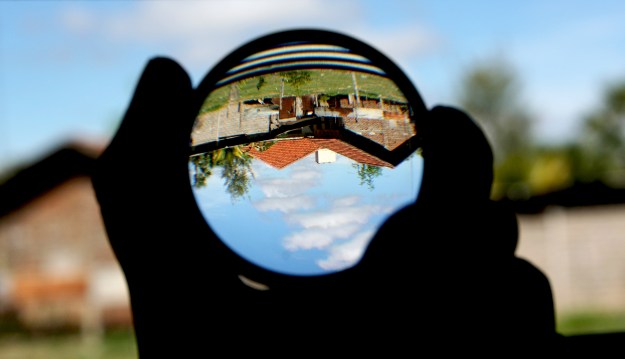
I suggest you search the world wide web and magazines for images that inspire and help you develop your characters, setting and plot. Turn it into a collage. This could be done using sites like Pinterest, or software like Paint, or by hand-gluing pictures printed, or cut out of magazines onto large sheets of paper in the same way as Karen Ball made us do, although you can use scissors if you want. Don’t glue down the pieces too early so you can let your mind free-flow.

tree collage

You could even turn your writing space into a canvas. Sketch with words, post scenes form your novel and photos all around your study or writing space to sculpt them into a 3D-version of your book. Move things about, add some colourful phrases and quotes from your characters here and a touch of darkness there. Look where the light is coming from and then transfer this light into the pages of your story.

OK. Maybe I’m going over the top but writing is multi-tasking, and I am quite good at that.

The Fictional Dream

Read for inspiration. If you admire an author and their writing, copy a couple of pages of their work and take it apart to find out how they did it.

Midsummer_Night's_Dream

Shakespeare’s Titania depicted by Edwin Landseer in his painting Scene from A Midsummer Night’s Dream, based on A Midsummer Night’s Dream act IV, scene I

When you read you forget the words. You enter the fictional dream. You don’t read on unless the dream is continuous and vivid. You have in your mind’s eye what you want to write about and the film is running in your head. What you feel, hear, touch, the clothes you are wearing, the sensation on your skin. Know these physical clues and work the scene.

“If you put your energy into getting all the senses right, the words come easier.”

Pamela Cleaver

Modified by CombineZP

The story produced is like growing crystals. You have to be there. Being there is writing what you see, hear and feel. An image or idea can be developed. Your unconscious will join them up. Work with your unconscious and accept the ideas do not come in the right order. Ask, what does the reader really want out of this scene? By seeing you can lead the reader into the fictional dream.

Write Like What You Talk

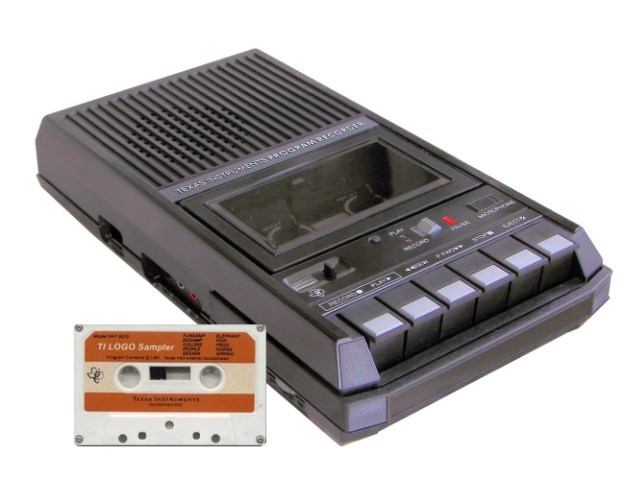
You can cheat the eye but you can’t cheat the ear, so always read your story aloud. Stories are oral and this is why voice is important. So write like you talk. It really is as simple as that. Say something. Then write it. Record it so you can really listen to what you have written.casette recorder

If it sounds stilted or wooden, stop and think about what you’re trying to say. Say what you want to convey aloud. Then write it down. A group reading or performance is even more useful since each reader, like an actor, will deliver their lines of dialogue at a different pace. When writing dialogue less is more, so use limited speech tags.

However, it is not only the way the characters talk that is important, spend time trying to understand why your characters say the things they do, and how they feel about it. Think about the characters and their motives:

  • What would she do?
  • What happens next?
  • What would she say?

Make these motives plausible. Get into the body of your character.

costume

Create character sketches and think about their off the page activity so you can step into your characters shoes and know how they would react and speak in a given situation.

  • Where do they live?
  • How do they talk?
  • What non-verbal mannerisms do they have?
  • What food do they like?
  • What is their taste in music?

All these things can contribute to developing your character’s voice. I spend many hours talking aloud to myself and acting out bits of my WIP just to see how it sounds and works with the action. Oh yes, and don’t forget to use the correct punctuation so your reader knows how it should sound. A quick speaking exercise you can try is to say these three sentences aloud. Notice how the emphasise is on different words in each sentence.

You’re going to be in Strictly Come Dancing.

You’re going to be in Strictly Come Dancing!

You’re going to be in Strictly Come Dancing?

This doesn’t mean your whole book should be full of exclamation marks though. Too many exclamation marks is off putting and in my opinion lazy writing!

Market Research

One of the most difficult things about breaking into children’s writing is finding the right market for your manuscript. Many new writers are in such a hurry to be published they send their manuscript out to as many publishers as they can and often before it has even been edited properly. This is a big mistake.

It has also been recommended that you don’t write a word until you have a firm contract. In practice this often does not work as for educational writing, the deadlines are so tight the contract often does not arrive until halfway through a project or even after you have finished writing the book. Getting a commission before you start to write may be true of educational work but, less true for fiction. Even so, if you are interested in writing for the education market, it is worth writing and asking for any writer’s briefs. That’s information about projects they are developing and not their underwear.

pants

Don’t send picture book manuscripts to publishers that only print educational non-fiction, or primary school educational non-fiction to a publisher that focuses on secondary education. I know this seems obvious, but we hear over and over how writers send their work to inappropriate markets. It’s important to research your markets regularly as sometimes publishers who used to publish picture books may only be concentrating on mid-grade now.

OLYMPUS DIGITAL CAMERA

Research the different publishers and what they produce. Look at their catalogues online, or go to book fairs and pick up a copy of their new catalogue, or go to an independent bookstore and browse.  Your local library will have books publishers have previously published, which you can browse and get a feel for the publisher’s style.

Make lots of notes. Look at the titles and the title page with current editorial contact information on. Pay close attention to the focus of the books. The more time you spend on this preliminary research, the more likely you’ll be to find the right publisher for your work.

Meeting Deadlines

One of my plus points is that I am good at multi-tasking. An important requirement of multi-tasking is setting deadlines.

Whenever, I start a new job I always ask, ‘When do you want it done by.’ Often the reply is as soon as possible but, I find this is not helpful. I prefer to have someone say ‘I want it by next Tuesday,’ or ‘Ten o’clock tonight at the latest.’ This keeps me on track and helps me to organise my workload. If I don’t set myself these time limits I find myself procrastinating and time-wasting by staring out the window or my worse vice, playing computer games.

clock

Deadlines have to be reasonable, whether I’m setting them for myself or they’ve been set by an editor. Some deadlines are tight; rush jobs come up, emergencies occur, and then the pressure is on. Most of the time, it’s possible to merge tasks, working for a while on one thing and then a few days on something else and get it done without undue stress. Sometimes I just need time out from a job and I am pleased I can work on something else to take a break.

WP_20170709_17_17_16_Pro

When I have deadlines set for me, I always break them into smaller tasks, giving myself my own time limit for each chapter or section. It’s nice to give myself a little reward when I achieve it too but, often the personal satisfaction of knowing I achieved what I wanted to do is reward enough. I work within the time available and I’m an organisation freak so this method of working suits me fine.

I would be interested to know how you do it. Do you find it easier to write to deadlines?

My Writing Tips

Here are some more writing tips that you may find useful. They are not in any particular order.

notebook and pen2

  • If you want to write a big book, pick a big theme.
  • Write rich characters with rich backgrounds (and I’m not talking about money.)
  • Finish each chapter on a cliffhanger.
  • The plot must race along at breakneck speed.
  • Mix fact with fiction so that the reader does not know where the truth ends and the fiction starts.
  • Be clear of all the underlying themes and what is going on in the background.
  • Look at the opening – does it grab you?
  • Think about the title.
  • A good story has a great plot and loads of action.
  • Be careful the ending is not an anti-climax.
  • Make up your own secret society if you want.
  • The ‘What if…?’ button, is the most important key on the keyboard.