Tag Archives: writing tips

Ideas! Ideas! Ideas!

Apparently authors are always being asked where do you get your ideas from. You know what? I have never been asked this. Maybe because I am constantly spouting weird ideas, they are too scared to ask me.  I do have a rather vivid imagination.

But just in case you were interested here is a list of places I often find ideas. I put them in an idea cloud using: www.wordart.com

idea cloud2

There are loads of places brimming with ideas to be scribbled down. Sometimes I am like a tree with spreading branches reaching out into the far corners of the world, storing each idea on my leaves ready to drop them into a new book.

spreading branches.jpg

There are millions of ideas waiting to be explored. Some days though, it seems every topic imaginable has already been done, or that my ideas are too obscure for anyone else to be remotely interested. But, maybe that has more to do with the mood I’m in rather than the actual flow of ideas.

From the day I decided I want to be a writer, I started to carry a notebook on me. I write down everything, as my memory for trivia is awful. Talking to children, and listening to children, also gives me loads of ideas. Although, I am no longer teaching I am lucky, as I have three children who liked to get into mischief and that triggered lots of ideas too. My children are all grown up now but they are still a great source of new ideas.

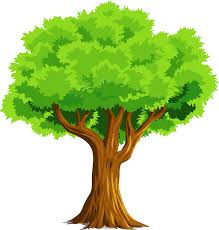
Sometimes, I really have to make myself notice what is going on around me, as when I am working on a project, I find I mull it over in my mind and walk through real life in a daydream. Not such a good idea when you’re driving or trying to explain why you’ve reversed into the tree at the edge of the driveway… again.
tree

I tend to get my best ideas for things that I’m already working on when I’m reading something else. Surprisingly, it never has anything to do with what I’m actually reading. I think it might have something to do with cognitive processes. I did a degree in Behavioural Sciences, so I can say things like ‘cognitive processes’ and know what I’m talking about. Pity no one else does.

But what do you do with these ideas once you’ve got them? Often an idea needs time to grow and sort itself out in my head. I tend to draft scenarios in my notebook, then re-write them on the computer and print them off. You can tell if something is really rubbish when you see it in print. I also pretend I am the character and act out the scenes blow by blow in m,y study, or sometimes I act out little scenes in my head.

Opps! There’s that tree again.

The Book Selling Debate

Over the last few years more and more big bookshops have merged. I believe this reduces the range of books being sold. When I walk into a bookshop like W. H. Smiths and Waterstones I see the same old children’s books on the shelves and almost the same stationery too.

whsmithbookshelf

Specialist books are not getting the publicity or shelf space they have previously had. This is why educational publishers tend to sell direct to schools and libraries rather than to bookshops.

One thing is clear the retailing of books has changed dramatically over the past few years. Supermarkets, such as Tesco, sell books at discount prices and buying books over the Internet, as e-books or second hand, has meant it pays to shop around for the best deal. This is not good for the reader.

As a reader, if you prefer YA trade fiction, sports books or cooking books the contraction in range won’t affect you, as prices will remain low. But, if you prefer more specialist books, your choice will be drastically diminished and the prices will rise. And if you’re someone who just likes to browse, your browsing range is restricted to the choice Waterstone’s, and W. H. Smith’s have decided to offer. This has a knock on effect. It means new authors will find it increasingly difficult to place their books with publishers, as mainstream publishers are concentrating on finding and promoting the ‘big hits’.

To combat this, we should be supporting our smaller local, independent bookstores. OK it may be easier, and more convenient, to buy books online, or to buy them with the weekly supermarket shop but it is reducing your choice as a reader. If books were sold at fixed prices, I do not believe it would change this buying trend.

This is my opinion. What are your views?

An interview with… Philip Ardagh

In August 2016, for my Writing 4 Children slot in Writers’ Forum I interviewed one of mine and my children’s favourite authors, Philip Ardagh.

wf178-august-2016

He has been writing for over twenty five years and has over a hundred children’s books published, including The Moomins: The World of Moonminvalley, a series of books for the National Trust and the Stick and Fetch Investigate adventures.

He told me:

I suspect that I was born wanting — needing — to write. I filled old diaries and exercise books with my scribbles from a very early age, and English was my favourite subject at school. I knew that I wanted a career as a writer but had no real concept of the idea that one could earn a living as an author.

Philip’s  seven quick fire tips for writing for children are:

  1. Do a job you love
  2. Explore all aspects of the job
  3. Never dumb down
  4. Write the manuscript
  5. Never write yourself out
  6. Keep everything
  7. Make time to write.

Some advice I feel we all need to remember was:

Whoever you’re writing for — whether it be adults or children — the most important part is the actual writing. Not blogging about it, not telling people you’re a writer, not Tweeting or Facebooking about it, but ACTUALLY writing. Once you’ve written and rewritten and rewritten however many times, THEN is the time to start worrying about your social media presence.

To read Philip Ardagh’s essential tips in more detail take a look at #178 August 2016 issue of Writers’ Forum.

You can follow Philip Ardagh on Twitter @PhilipArdagh

My Writing Tips

Here are some writing tips I have picked up over the years. They are not in any particular order.

pic1

  • From the moment you submit your manuscript be as professional as possible, remember you are trying to enter into a business agreement.
  • The hook is what really drives the book.
  • Create plot and characters you can’t leave when you start reading about them. The aim is to draw the reader into the book and keep their attention.
  • Have characters the readers can believe in.
  • Story and character are absolute key.
  • Pace is becoming faster as a lot of things are competing for attention.
  • You have to catch the reader in the first few sentences.
  • Find one line that sums up what your book is about.
  • Good self-editing is crucial.
  • Show don’t tell. If your character is anxious don’t say so, write what they are doing because they are anxious.

Books for Christmas

It is coming up to Christmas and you may be searching for that last minute present for your writer friend. If you are here is a list of books from my bookshelf that I have found useful during my writing career.

christmas stocking

The Creative Writing Coursebook: Forty Authors Share Advice and Exercises for Fiction and Poetry edited by Julia Bell and Paul Mars (Pan, 2001)

A comprehensive guide for improving story. Contributions from forty authors provide a generous pool of information, experience and advice.

The Forest for the Trees: An Editors’ Advice to Writers by Betsy Lerner (Pan, 2002)

Betsy Lerner is an editor turned agent and provides a true insider’s perspective. Everything you could ever possibly want or need to know about story is here.

Story: Substance, Structure, style and the Principles of Screenwriting by Robert McKee (Methuen, 1999)

Robert McKee is a New York ‘don’t-mess-with-me’ type who runs a popular film structuring course. The techniques he suggests can be used in all writing and not just in writing screenplays.

Aristotle’s Poetics for Screenwriters: Storytelling Secrets from the Greatest Mind in Western Civilisation by Michael Tierno

Tierno uses examples from some of the best films ever made to demonstrate how you can apply Aristotle’s ancient insights to modern-day story.

Twenty Master Plots and How to Build Them by Ronald B. Tobias (Writer’s digest Books, 1994; Walking Stick Press, 2003)

Gets you thinking about story. All the great stories can all be found in these plots.

The Writer’s Journey by Christopher Vogler (Pan, 1999)

One of the cornerstones of modern screenwriting theory. Vogler’s ideas have been used by a whole generation of story writers.