Category Archives: Research Secrets

An interview with … Anne Rooney

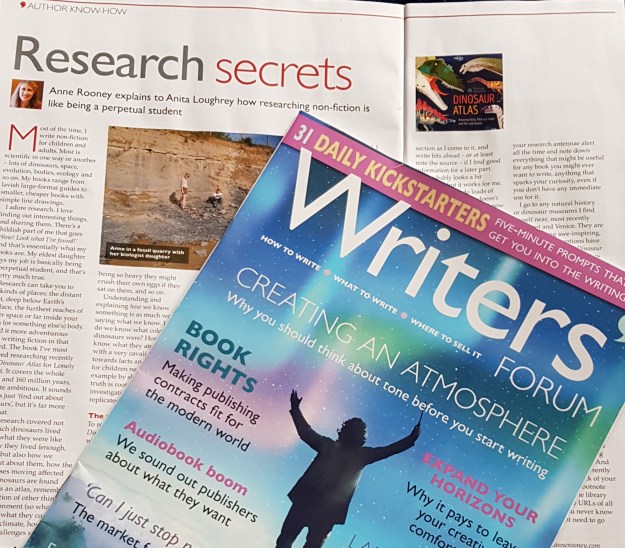
For the latest issue of my Research Secrets column in Writers Forum I have interviewed Anne Rooney about her research process for her non-fiction children’s books.
Anne Rooney3

Anne Rooney’s books range from lavish, large-format to smaller, cheaper books. Dinosaur Atlas (2017) and Animal Atlas (2019) for Lonely Planet are good examples of the first type, with fold-out maps, flaps, and fantastic illustrations. How to be an Eco-Hero (2020) is an example of the smaller format and has line drawings.

Anne loves doing research. She said:

“There’s a childish part of me which goes ‘Wow! look what I’ve found!’ — and that’s essentially what my books are. My older daughter says my job is basically being a perpetual student, and that’s pretty much true.” (Anne Rooney)

Anne explains that research can take you to all kinds of places: the distant past, deep below Earth’s surface, the furthest reaches of outer space or far inside your own (or something else’s) body. This is why she finds it more adventurous than writing fiction. Throughout the interview she used her book, Dinosaur Atlas (illustrated by James Gilleard), to demonstrate what she meant and discuss the research she covered.

“It covers the whole world and 160 million years, so it is quite ambitious. It sounds like it’s just ‘find out about dinosaurs’, but it’s far more than that.” (Anne Rooney)
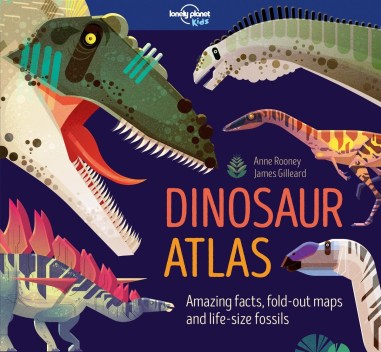
Dinosaur Atlas

Anne explained how her research varies considerably from one book to another and how it differs slightly between fiction and non-fiction, but not necessarily more than between different types of non-fiction or different types of fiction. She told me the real difference is whether you are completely immersing yourself in an unfamiliar environment — 16th-century Italy, say — or checking details, such as which flavour crisps were available in 1980. The same applies in non-fiction. Some topics take tons of in-depth research and others take far less.

Anne said:

“Perhaps research for fiction can get you into more trouble more easily. In Off the rails (Evans, 2010; reissued, Readzone, 2014), a boy witnesses a crime from a moving train. I took the train journey, found the right spot, and tracked the other locations and journeys on Google maps. A few days later, my younger daughter challenged me: what had I done? Why did Google maps have an overlay marked ‘dump body here’? That doesn’t happen with non-fiction — though my lists of street prices of illegal drugs have raised eyebrows occasionally.” (Anne Rooney)

Anne also spelled out why there’s as much work to do understanding and sometimes explaining how we know something as what we know. Do we know what colours dinosaurs were? Why not/how? How do we know what they ate? In a world with a very cavalier attitude towards facts and truth, books for children need to set a good example by showing how truth is rooted in rigorous investigation that can be replicated and explained. Dinosaur Atlas features life size photos of bits of dinosaur. Anne suggests that museums are the best source for this: actually seeing a tooth the size of a banana makes it clear that absolutely has to go on the page.
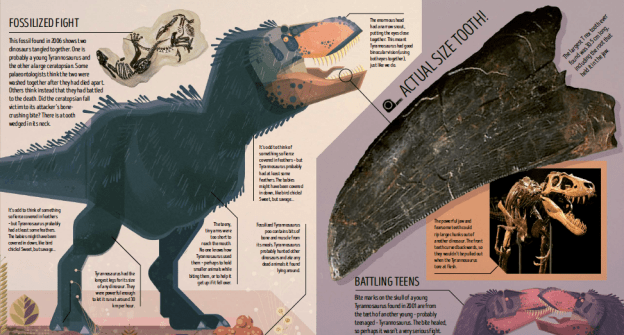
dinosaurs

To research a book like Dinosaur Atlas, first Anne sets out what she needs to know. The parameters are set by the format of the book, including illustrations. An important part of research is providing an artwork brief and reference – that is, pictures the artist or picture researcher can use as a guide. The better and more detailed the ref is, the more likely they are to come up with a suitable picture the first time round.

My PhD supervisor told me years ago that you don’t need to know everything, you just need to know people who know everything you need to know. One of the best resources is people. I’m lucky to know lots of knowledgeable and helpful people! I had a consultant on this book, Dr David Button, who works at NHM in London and could answer any tricky questions I couldn’t resolve on my own.

Dr David Button, who works at NHM in London

Dr David Button

She explained that with a book like Dinosaur Atlas, the reference has to be accurate, and that means knowing which sources are reliable and which not.

“There’s a lot of dinosaur stuff out there and it’s important to know which sources are reliable and which not. You need to look for things that cite authoritative sources. It’s not all reading. I also watched YouTube videos produced by reputable channels such as PBS and the BBC to get some kind of idea of dinosaurs as living creatures.” (Anne Rooney)

She mentioned there are some brilliant professional paleolithic artists out there and Computer Generated Imagery  (CGI) created by experts where you can see the exact posture for theropods, because dinosaurs such as the T-rex didn’t stand upright as they are often shown, but had a more horizontal posture.

posture for theropods

Her starting point for choosing dinosaurs was to get a good geographic spread. She started with the Natural History Museum’s Dino Directory  as you can search about 300 dinosaurs by date, by type (eg theropod, sauropod, ankylosaur) and by continent, so it was a great way to get an initial list of possible candidates. Anne told me for details of specific dinosaurs, there are some great online databases, such as Prehistoric Wildlife  and blogs such as Everything Dinosaur.

Her research tip for other non-fiction book writers, it to integrate research into your life.

The world is buzzing with fascinating information. Keeping your research antennae alert all the time and note down everything that might be useful for any book you might ever want to write, anything that sparks your curiosity, even if you don’t have any immediate use for it.

She also explains you need to keep on top of your particular areas of expertise. Read the relevant magazines or journals, subscribe to email updates from all the relevant organisations and not everything potentially interesting and suggests that you keep track of your sources rigorously. Footnote everything. Keep the library call marks and the URLs of all your sources. You never know when you might need to go back to them.

Find out more about Anne Rooney, her research and her books on her website: http://www.annerooney.com, Twitter @annerooney and Instagram @stroppyauthor

To read the complete feature you can purchase a copy of #221 Mar Writers’ Forum from your nearest good newsagents or order online from Select Magazines.

An interview with… Sarwat Chadda

Sarwat Chadda’s first novel, The Devil’s Kiss, was released by Puffin in May 2009 and was quickly followed by the sequel, The Dark Goddess. He has also written a breathtaking action adventure series for children aged 8-12 years, called Ash Ministry and writes under the pseudonym Joshua Kahn. He is currently working on a project with Rick Riordan. I interviewed Sarwat about his research in 2009 for my Research Secrets column.

He explained that for him the research comes before the writing because he loves reading about history, mythology and fairy tales way back when he was an engineer. He likes to start something on a whim and then explore the area, culture and background until he reaches a saturation point. This gives him enough information to sound convincing and have all the key characters and locations in place.

Ultimately, his books are about the character and feels everything else is scene setting. To help create his characters he looks into his life and projects how he was at the age of his protagonist. He said the core needs come from there.

Sarwat insists research shouldn’t be a chore it should be part of the fun.

“We’re not just putting words down on paper we’re offering readers our unique take on the world. If you’re finding it hard work constantly, question why you’re doing it. Writing is about passion, life’s too short to be wasted on something you don’t love.” (Sarwat Chadda)

Most of his research is done through books. In fact, he admits that his biggest cost is books, but he was buying them before he decided to become a full time writer. Sarwat believes that libraries are our greatest resource. I agree. Use them or lose them. He explained:

“The Internet has its place, but nothing beats getting really into a subject in a library and second hand book shops. They’re great since you’ll come across stuff that’s years old and since I’m writing about mythology, those sort of books just set the mood perfectly.” (Sarwat Chadda)

He said the danger is over-research and getting yourself trapped by it. But he does not have a system for the way he does his research. because he feels the best thing about writing is the license to mix it all up how you like. His tip to other writers is not to stack your books in a too organised manner. Mix them up and see what happens as you’ll come across connections otherwise impossible to see if it’s all logical.

Sarwat explained sometimes the ‘official’ version doesn’t work and you have to tweak it. This happens a lot in historical fiction, especially with combining characters and moving dates. But that’s why it’s called FICTION. In his adventures he admits he makes up all the difficult and dangerous stuff.

OLYMPUS DIGITAL CAMERA

For all that sort of practical detail on the ‘day in the life of a warrior’ he got in touch with various re-enactment societies and visited shows around England. Since his books are based on the Knights Templar, he found their working understanding of the practical nature of the arms and armour of a medieval knight, very useful.

“They explained the nitty-gritty of the sword hilt, the practicalities of the weight of armour, its properties and the weapons designed to overcome mail or plate. It’s all these details that make the story breathe with a sense of reality.” (Sarwat Chadda)

To find out more about Sarwat Chadda and his books take a look at his excellent website: http://www.ashmistry.com or follow him on Twitter: @sarwatchadda 

To read the complete feature you can purchase a copy of #93 June 2009 Writers’ Forum by ordering online from Select Magazines.

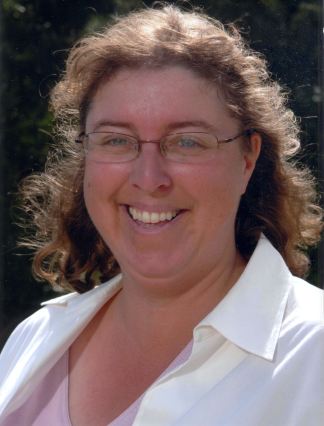
An interview with… Helen Fry

In 2009, I interviewed British historian and historical non-fiction writer, Dr Helen Fry,  for my Research Secrets feature in the #94 July 2009, issue of Writers’ Forum.

Helen photo

Helen Fry specialises in history books, specifically refugees in the British forces in the Second World War; as well as English Jewish community history. But she co-wrote with James Hamilton under the pseudonym of  J. H. Schryer for her first novel, Goodnight Vienna. It is a love-triangle within MI6 British operatives, set against Hitler marching into Vienna in March 1938, based on authentic background research which she did for some of her history books.

For example: on 10 May 1933 Hitler ordered the burning of Jewish books in Berlin, including those of Sigmund Freud. As each book was hurled into the burning pile, a ritual chant was said by the SS, SA men and students. In our novel Goodnight Vienna, we have a scene of burning of books in Vienna in 1938, this time one of the central characters, a young headstrong anti-Nazi student hurls a copy of Hitler’s Mein Kampf into the fire. It never happened in reality, neither were books burned in Vienna, but one historical event in 1933 sparked the idea for a powerful fictionalising of it in a scene for the novel.

Goodnight Vienna came out in June 2009. The sequel, Those who Avenge, came out in March 2010.

Helen enjoys interviewing war veterans, many of whom have not told their stories before. The main focus of her writing and research was refugees from Nazism who fought for Britain in the Second World War. She feels there seems to be no other historian taking down their stories, which will very soon be lost and cannot be reconstructed from official government papers.

“It is important to me to capture the human dimension of what it was like in the war. I also enjoy searching through unpublished documents and material in national archives. Shaping a wealth of diverse material into a book is an art and skill.” (Helen Fry)

A number of her books are based on the oral testimony of war veterans. She rings them up after they have replied to a search notice in a paper or journal, and arranges to visit them. Helen explained it is important that they feel relaxed and are not pressurised to tell what they find too painful. You have to build up trust and their confidence. This often necessitates two or three visits. It is a lengthy process but makes it easier if you need to interview them for a sequel book because they then have your trust.

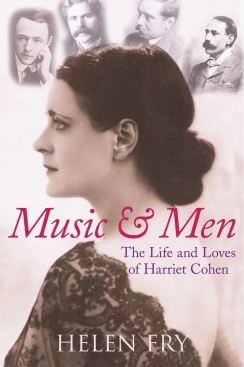
When researching, she often uses unpublished documents, papers, memoirs and the Sound Archive at The Imperial War Museum or the British Library. A prime example of this was for her book Music and Men: The Life and Loves of Harriet Cohen in which she used the archive of 3,000 letters which Harriet Cohen bequeathed to the British Library.

4817 Harriet FCP.indd

Sometimes Helen will visit the area she is writing about. For example, for Music and Men: The Life & Loves of Harriet Cohen after she discovered Harriet Cohen’s ashes were interred at Stoke Poges Memorial Park in Buckinghamshire she felt the need to go and see her final resting place, especially after having written what was an intensely emotional book, working through all her love letters. Helen discovered her final resting place was totally in character with her life. She is on her own tiny rockery island in the water garden, alongside her sister. Everything in her life was imbued with deep meaning and emotion, Helen felt this was no ordinary burial place, and so typical of her.

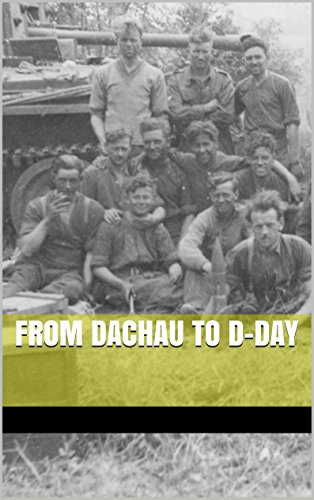
Many of her original sources are found in museum and government archives as well as specialist libraries, so for example when she was writing her book From Dachau to D-Day, it’s the story of a tank driver (originally a refugee from Nazi oppression), she used the official war diaries from D-Day to the end of the war at the Public Record Office, Kew. She also consulted the archivist at The National Tank Museum.

Dachau to D-Day

Helen revealed the Sound Archive at The Imperial War Museum was especially useful when she was adding research to my existing material from veteran interviews she had conducted. The Sound Archive contains masses of veteran interviews, some of which are specific to refugees who served in the British forces in WWII.

Helen told me she rarely, almost never, conducts research using the internet, as she believes this is how historical inaccuracies creep in.

“I believe that historians should use primary archives and sources and not rely on the internet, except to search for people who can help them with something specific. I am wary of online encyclopaedias.” (Helen Fry)

The key to her success as an author is being highly organised and methodical. Once she has carried out an interview with notes in her notebook, she types it up chronologically according to a veteran’s life story and asks the veteran to check it for errors. Then she files it in a single clear document wallet. Each veteran is given their own wallet which is then filed in a box file. Helen explains this makes it easy to retrieve when she comes to the writing-up process. She has gathered an archive of several box files of original interviews with war veterans, plus copies of photographs from their personal albums.

It is important to keep the reader’s attention throughout your book even if some of the material is heavy.

5112 Freud FCP.indd

For example, material for Freuds’ War could have been overwhelming, but she came across some wonderful quotes which just summed up the moment – so used them in the text. She explained:

“I wrote something about how Sigmund Freud was wrestling with the biblical character of Moses whilst he and his family were waiting for exit visas to leave Nazi-occupied Vienna in 1938. Freud was working on his final publication before his death called Moses and Monotheism. He wrote to one of his friends Ernest Jones: “Moses haunts me like a ghost not laid.” A brilliant quote which I incorporated into the relevant chapter because it captures the voice of the person you are writing about (in this case Sigmund Freud) and lifts the text. It gives one’s writing a lively flare.” (Helen Fry)

Helen told me one of the most unusual, or seemingly obscure, research she has done was about Jews in North Devon during the Second World War. She discovered that over 4,000 Jewish refugees were in North Devon during the war and they were all the intellectuals of German and Austrian society who had volunteered for the British army and were training there. This inspired her to produce a detailed book with over 250 black & white photos. It was awarded Devon Book of the Year, was made into a mini documentary for BBC South-West and has led to commissions for over six more books published since 2007.

most_loyal_jacket

“Books once they are published take on a life of their own. They can do extraordinary and unexpected things which are fun, like a mini documentary or radio programme. Few authors are lucky to have their books made into a blockbuster film, but there are other ways in which books can make their mark, sometimes beginning in small ways. The most important point is to get published. Then one can build on what is already in print to raise the profile.” (Helen Fry)

Her tip for other historical writers is to always have an acknowledgements page in your books, to firstly thank the people who have helped you, and also for the reader to see that the research behind the book is thorough and credible.

Find out more about Helen Fry on her website: www.helen-fry.com Or follow her on Twitter @DrHelenFry

To read the complete feature you can purchase a copy of #94 July 2009 Writers’ Forum by ordering online from Select Magazines.

Interview with… Lucie Whitehouse

In my Research Secrets this month, I interview Lucie Whitehouse who revealed how she weaves fact and fiction into her psychological thrillers, so she doesn’t jolt the reader out of the story.

Lucie Whitehouse2

Lucie told me her latest novel, Critical Incidents, launched this month had an unusual beginning. She was working on her previous novel in Brooklyn Central Library one morning when a TV producer in the UK emailed to ask if she had an idea for a female lead investigative character. She replied straight away and said she was thinking about a woman in her thirties, a single mother of a teenage girl, who’s been booted out of her job as a senior homicide detective at the Met and returns in disgrace to her hometown, Birmingham. After she hit send she sat back in surprise. She’d never consciously had the idea. Evidently, though, her subconscious had been hard at work.

Critical Incidents

In Critical Incidents, Robin, the main protagonist, is technically off the job so for Lucie, it was a gentle introduction to writing procedurals. Her first four novels were psychological suspense and she felt had a lot to learn.

She explained she researched the structure of the Met’s Homicide Command online, reading up about Major Incident Teams, what rank of officer would lead one (a DCI) and how many officers each comprises.

“The police are quite transparent, and a lot of information can be found on a force’s website. For specific queries, you can contact them directly via their site. Forces’ Facebook and Twitter accounts are great resources.” (Lucie Whitehouse)

Lucie said the trick with research is to reassure the reader that you know your stuff without boring his or her pants off, and information dumps because great chunks of undigested information will pull a reader right out of the story.

To get her facts right she does a lot of on-the-ground research in concentrated bursts when she is in the UK. She spends days in Birmingham visiting or finding locations, taking photographs, collecting flyers, pamphlets, café menus, bus tickets and perusing the local history shelves of bookshops (Waterstones on the High Street has a great range). Lucie has found that buying local history books is better done on location than on Amazon, as shops often stock things from local presses.

“Birmingham’s rich history is one of the reasons I wanted to write about it and I read several books not only about the city itself but more broadly its role in the Industrial Revolution. My favourite was A History of Birmingham by Chris Upton.” (Lucie Whitehouse)

Lucie loves stitching in little bits of her own family history. A photo of the Whitehouse Flexible Tubing helped her with the visual details. This is the factory, where her father was Managing Director. It still operates out of this building.

Whitehouse Flexible Tubing

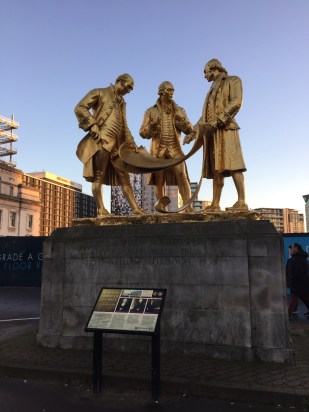
She also enjoys going to the places her characters would go, such as Moor Street Station, the Custard Factory, Stratford Road where Gamil’s bakery is located. She told me Dunnington Road, where Robin’s parents live, is fictional but based on a real street in Hall Green that she walked up and down repeatedly on a sweltering July day and one of her favourite is The Golden Boys statue, known locally as Boulton, Murdoch and Watt, three giants of Birmingham’s proud history as a hub of the Industrial Revolution.

The Golden Boys statue

Lucie explained:

“Ninety percent of my research never comes close to the page but doing it allows me to know the world of my book properly and write with confidence. It’s wool-gathering in both senses – by researching, I collect the raw materials but I’m also creating a mental space where I can spin them into something new.” (Lucie Whitehouse)

You can find out more about Lucie and her books at https://www.facebook.com/lucie.whitehouse.9 and on Twitter @LWhitehouse5 and Instagram @lwhitehouse5

To read the complete feature you can purchase a copy of #220 Feb Writers’ Forum from your nearest good newsagents or order online from Select Magazines.

An interview with… M. G. Leonard

In my Research Secrets double page spread in Writers’ Forum M. G. Leonard explained how her research into beetles turned her fear of creepy crawlies into an obsession.

Front cover

She told me her, Beetle Boy book didn’t start out with a beetle as a central character and it wasn’t called Beetle Boy. M. G. Leonard revealed she knew there would be beetles in the story, but because she was scared of creepy crawlies and thought they were horrid and signified something bad it neveer occured to her to make them the protagonists. But when she started researching beetles she became obsessed .

She didn’t start keeping pet beetles until after Beetle Boy was published and was still nervous around live insects.

“Everything changed when I was invited to appear on Blue Peter for National Insect Week with lots of live beetles. I visited my entomologist friend, Dr Sarah Beynon, who has a bug zoo in Pembrokeshire. She spent a day getting me to hold insects, and I fell in love with rainbow stag beetles. They are so beautiful. I immediately bought myself a pair and took them home so that I could handle them every day and desensitize myself to my fear. I was at the beginning of a journey.” M.G, Leanard

Since then she has bought an adult pair of African flower beetles, which she claims are relatively easy to breed. Watching them grow, eat and eventually pupate, informed her descriptions of the rooms inside Lucretia Cutter’s villainous lair – the Biome deep in the Amazon jungle – featured in Battle of the Beetles.

MG Leonard’s tip if you are incorporating unusual pets into your stories, is to spend time with the living creatures. Peering at them in a zoo won’t give you a unique insight into the way they behave when they’re hungry, or horney, scared or resting.

The descriptions of what it feels like to hold a beetle, to hear a beetle flying, of how they express themselves, all comes from careful observation of her living pets. It’s because she keeps beetles she knows many species are nocturnal, none sleep, and they control their body temperature by burying into soil.

“I did so much research for the Beetle Boy series. There isn’t a book about beetles that I don’t own. I trawled the internet browsing every single website that contained information about beetles. I watched all the youtube videos, listened to BBC audio shows.” M. G. Leonard

M. G. Leonard told me that researching is like a treasure hunt. There’s no right or wrong way to do it. You find a clue and follow where it takes you. There’s no pattern to it. She believes that there is no greater resource to the researching writer than the internet. Google maps allow you to see any place on the planet and Wikipedia will give you information about it. Books would take years longer to write without them.

You can find out more about M. G. Leonard and her books on her website www.mgleonard.com and follow her on social media: Twitter @mglnrd; Instagram @mglnrd; Facebook @MGLnrd

To read the complete feature take a look at #219 Jan 2019 of Writers’ Forum magazine.

An interview with… Juliet Clare Bell

For my latest Research Secrets slot in the national writing magazine Writers’ Forum, I interview picture book writer Juliet Clare Bell. She talked me through her research process and how this has inspired some of the thorough and often unusual research she has done for her picture books.

JCBfeature

In the interview Juliet Clare Bell told me about the psychologist Graham Wallas who published The Art of Thought in 1926. In this book he identified a four-step process of problem-solving, insight or creative breakthroughs. Juliet Clare Bell summarises the four steps as:

“[1] Preparation –where you formulate your problem, then read, sketch, write, research etc., often very intensively. This, he believed, was absolutely necessary in creative thinking. During this intensive stage, you often end up feeling stuck, and to get past this mental block you must move onto phase two:

[2] Incubation where you let it sit whilst doing other things. If the answer you’re looking for feels really close, he argued, don’t force it. Trust that the process will lead to phase three:

[3] Illumination –often thought of as a ‘Eureka!’ moment –when the answer bursts into your consciousness. The final phase is:

[4] Verification –a conscious, formal activity, where you test it out and ensure that the insight is correct, or that the idea for your story fits.”

Juliet Clare Bell on The Art of Thought  by Graham Wallas

All writers love the illumination phase when writing seems to happen without much conscious effort, but Juliet Clare Bell finds it really useful to think of it in these phases. She explains you need to create the environment for it to happen, by preparing well with research and formulating ideas, and then you need to put in the work in phase four with the editing, even if the story does not change much from the original version.

“I’d recommend approaching people who are experts about an area. In my experience they’ve been really helpful and willing to share their interest. For fictional picture books, I like spending time with people whose lives are similar to those I’m writing about, as I did for The Unstoppable Maggie McGee and Benny’s Hat, both illustrated by Dave Gray. You might do loads of research for a book but it’s often one small snippet you read, or hear in an interview, that can really bring the person to life, or change the direction of your story.” Juliet Clare Bell

The Unstoppable Maggie McGee

Juliet Clare Bell told me it’s taken her a long time to really ‘get’ the idea of incubation, to the point where she now factors it into her schedule of writing. She can’t just do the research and then get straight down to writing it. For a week or two, she needs to let it sit whilst her unconscious gets on with making links with everything she has immersed herself in and other things she has learned or experienced.

Her advice to other writers is to trust in the process and treat incubation and illumination as skills which can be practised and improved on. Create an environment where phases 2 and 3 can happen, and that means being active when you’re reading/conducting your research (phase 1): before you start reading, ask yourself specific questions about the person/subject that you’re really interested in and which your readers will be interested in discovering, but also be on the lookout for the little nuggets that illuminate something interesting.

Author picture - Juliet Clare Bell

Juliet Clare Bell is always interested in the human side of things (so the personality of the inventor, explorer, mountaineer, scientist) and there might be one line in a whole autobiography that makes me say wowthat’s the angle I’m looking for.

To find out more about Juliet Clare Bell you can check out her website www.julietclarebell.com or follow her on Twitter @julietclarebell

To read the complete feature take a look at #218 Dec 2019 of Writers’ Forum magazine.

I have also reviewed some of Juliet Clare Bell’s picture books on my blog. Have a look at Two Brothers and a Chocolate Factory: The Remarkable Story of Richard and George Cadbury, illustrated by Jess Mikhail and Benny’s Hat, illustrated by Dave Gray.


An interview with… Helen Lipscombe

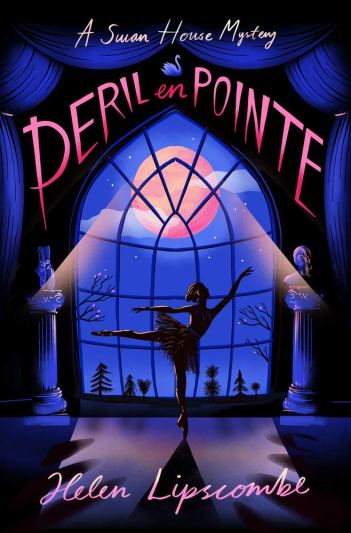
In the #217 November issue of Writers’ Forum Helen Lipscombe told me all about researching both espionage and ballet for her debut children’s novel, Peril En Pointe.

Peril En Pointe book cover

Her main character, Eva, needed physical strength, mental resilience, the ability to speak several languages and an excuse to travel the world. Helen explained how Natalie Portman from the 2010 movie, The Black Swan was her inspiration for the book.

2010 film, The Black Swan - Natalie Portman

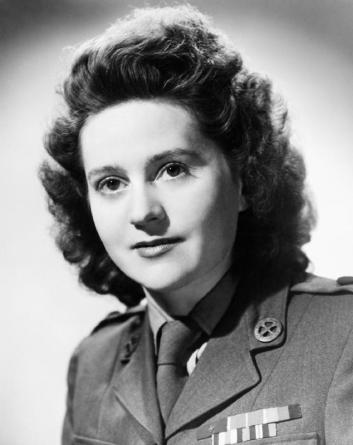
From the moment she saw her dark eyes gazing at her through that mask Helen knew Eva would be a ballerina and her setting would be a ballet school for spies. This lead her to research for accurate accounts of the lives of female spies. On the Imperial war Museum’s website, she read all about a spy called Odette Samson.  Odette was also the name of the White Swan in Swan Lake and inspired Eva’s code-name ‘O’.

“I read that Odette Samson had been awarded a George Cross for her refusal to name her fellow secret agents during the second world war. Despite having three young girls, she had volunteered to work for the Special Operations Executive (SOE), but in 1944, was captured and brutally tortured. (The Nazis extracted her toenails; a feature I bestowed on Swan House’s battle-worn Spy Craft teacher, the Captain).”

Helen Lipscombe

Odette Samson

Odette Samson

In order to capture the heightened atmosphere of a live performance, Helen revealed she went to see Swan Lake by the Russian State Ballet and the Royal Ballet’s production of Romeo and Juliet.

“I also took part in a backstage tour of the Royal Opera House which proved particularly worthwhile. Walking through the maze of corridors as the dancers do every day; standing amongst the sets and lighting; handling the ballet shoes, headdresses and props, and watching the dancers rehearse gave me a real feel for the setting.”

Helen Lipscombe

To read the complete interview check out the #217 Nov 2019 issue of Writers’ Forum.

You can find out more about Helen Lipscombe you can follow her on Twitter @Helen_Lipscombe or Instagram @helenlipscombe

An Interview with… Francesca Capaldi Burgess

I have been told about such a wide range of resources that writers have used over the years I have been doing my Research Secrets slots in the national writing magazine Writers Forum. Resources are a writer’s best friend when researching for your writing and everybody has their own unique resource bank.

Francesca Capaldi writes short stories for anthologies and national women’s magazines such as My Weekly and The People’s Friend. In the October issue of Writers’ Forum she told me how she has gathered together a large selection of social history books, many secondhand, for her historical based research.

Research books

She explained books are not the only resources she turns to again and again. When researching locations her research always involves a map and sticking it on her whiteboard.

Old map Littlehampton

Francesca revealed:

“Back in my youth I did a history degree and discovered that there’s nothing better than first hand research, and even better if you’re using primary sources. I used to love sitting in the records’ office, wading through a census or tithe map, gathering information not necessarily found in a book. I love social history, that of ordinary, everyday folk.” Francesca Capaldi Burgess

Some other resources she talks about in the feature are: Google Maps, town websites, Pinterest, libraries, museums, local archives, ancestry.co.uk, newspapers, teh met office and documentaries. She said:

“If I’m at a talk or watching a documentary, I always take copious notes as I find I remember the details better. I also jot down ideas as I go along.”  Francesca Capaldi Burgess

Danger For Daisy by F Capaldi coverHer pocket novel for My Weekly, Danger for Daisy, came out on January 2019. It is about the newly single Daisy Morgan who is excited about celebrating her first Christmas away from home with her extrovert flatmates. Then she meets intriguing university lecturer Seth, who offers a completely alternative Christmas – an archaeological dig on a secluded island. As she gets to know the diverse bunch of people working on Sealfarne, and romance blossoms with Seth, she begins to enjoy her adventure. But a series of bizarre occurrences convince her all is not as it seems, and there may even be murder involved…

To read the complete interview check out the #216 Oct 2019 issue of Writers Forum.

You can follow Francesca on Facebook @FrancescaCapaldiAuthor or on twitter @FCapaldiBurgess

An interview with… Simon Whaley

In my Research Secrets column in the national writing magazine Writers’ Forum this month #215 Sep 2019, I interview Simon Whaley about the research he does for his magazine articles.

Simon Whaley 2

Simon told me:

“What I love about research is the plethora of ideas for potential articles that it generates. You can be researching about one thing, and then come across one small fact that triggers an idea for an entirely different article, for an entirely different market.”

Simon Whaley

He said he uses a program called Evernote to store and organise all his research as it enables him to ‘tag’ notes. He often tags notes with useful contacts, the types of activity, such as event, attraction, tourist, walk and also with the locations such as county, country, towns and villages. This means when he searches something such as Walks and Shropshire it will bring up every note with those tags no matter which project he originally collected the information for.

Simon explained he always makes written notes when researching his articles, even if he has his Dictaphone switched on while interviewing someone. He explained he was once commissioned to undertake a walking route for Country Walking magazine when they discovered he wrote all his routes down in a notebook. The staff writer had dictated the route description into their smartphone, only to discover when they got back to the office four hours later that their smartphone had failed to record. You don’t have that problem writing in a notebook.

He labels all his notebooks and they in turn are an excellent resource.

(c) Simon Whaley

Simon’s notebooks

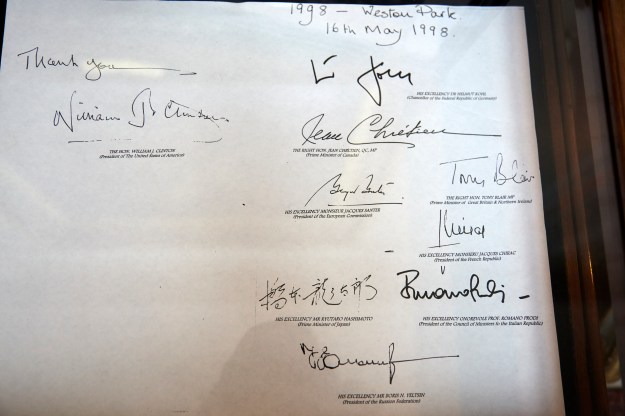
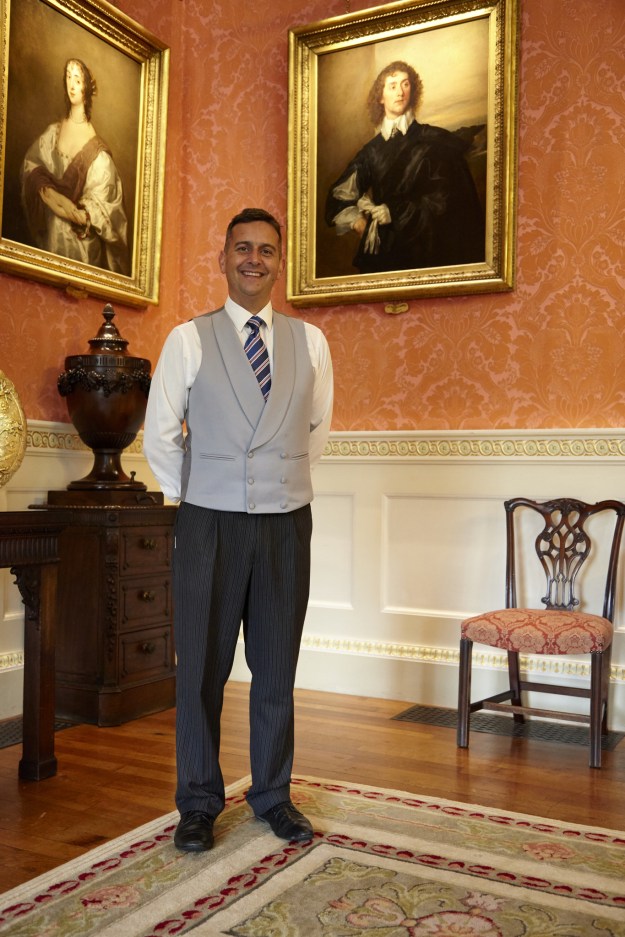
Simon told me how he had to endure a luxury overnight stay at Weston Park, home of the Earl of Bradford. Not only did he have to experience a 5-course meal sat at the same table used by the Heads of State when the G8 summit was held there, but he also had the opportunity to interview the Head Butler and the Head Gardener.

Photo of Graeme Currie, the Head Butler at Weston Park

Photo of Graeme Currie, the Head Butler at Weston Park (c) Simon Whaley

He said he finds his written notes invaluable when he comes to write his articles. He also takes lots of photographs, which he can refer to.

I take photos of everything: information panels, pages inside books, entry fee panels, accommodation rooms I stay in … everything! How many windows on the ground floor at the front of Weston Park? Eight. (I have a photo.) Which Heads of State were at the G8 summit at Weston Park? Clinton, Kohl, Chretien, Santer, Blair, Chirac, Hashimoto, Prodi and Yeltsin. (I have the photo.)

Simon Whaley

Commemmorating the G8 summit visit to Weston Park on 16th May 19

Photo of the Heads of State signatures at the G8 summit at Weston Park (c) Simon Whaley

Simon’s research tip was to take photographs of the information panels as it is the best way to capture all the details and you can read it at your leisure when you get home.

You can find out more about Simon Whaley and his writing on his website:

Website: www.simonwhaley.co.uk

Twitter: @simonwhaley

Facebook: https://www.facebook.com/SimonWhaleyAuthor

An interview with… Michael Rosen

I interviewed Michael Rosen about the research he does for his writing in 2009, when he was children’s laureate . 

Michael Rosen WBD 08 (84 of 147)

He explained when researching, he uses a mixture of the British Library, Internet, newspapers, Cecil Sharp Library and the state library of Melbourne (re Cuffay). He often starts with Google and goes from there. He revealed he often uses Carpenter’s Oxford Guide to Children’s Literature as a starting point.

Michel Rosen told me:

“In phase one of your research, you should allow yourself to be distracted by anything and everything that you discover. In Phase Two, you have to be ruthless and only stick with the subject in hand, or you’ll never finish the work.”

Michael Rosen

There is no pattern to the way he researches. He said he usually puts everything he discovers either physically into piles in his office, or log it into the computer. He likes to follow his nose – let one thing lead to another.

“Asking ‘what if’ and speculating are two important research techniques to discover a coherent narrative and ear-catching moments.”

Michael Rosen

In one of his ‘following his nose moments’ he discovered  museums in Britain kept the heads (or at least one head) of aboriginals who had been killed. Michael Rosen used this idea in You’re Thinking about Tomatoes when the protagonists hear the sound of bubbles and wheezing, and when they get to see what’s going on, it’s the head of an aboriginal man talking to them.

You’re Thinking about Tomatoes  and You’re Thinking about Doughnuts are two books that explore how things we see today, a museum and a stately home, owe their appearance and exhibits to aspects of the past.

You can find out more about Michael Rosen and his children’s books on his website: www.michaelrosen.co.uk