Tag Archives: Writers Forum

An interview with… Sarah Aspinall

For my Research Secrets slot in Writers’ Forum issue Sept 2021 #236 I interviewed Sarah Aspinall about her memoir Diamonds at the Lost and Found: A Memoir in Search of My Mother, published by Fourth Estate and inspired by her glamourous, yet eccentric mother, Audrey Miller, later known as Audrey Aspinall.

Sarah knew she had to find a way of writing this book as every time she told the story of her childhood adventures people would gasp and say, ‘you have to write that, it’s such an incredible story.’ The word incredible always worried her a little, as she’d sometimes wonder if it all really happen as she remembered it.

“My memories were vividly of a wild harum-scarum life, travelling the world with my glamorous but eccentric mother, Audrey. We wound up in various strange exotic destinations around the world; sometimes we were in luxury hotels and fantastic mansions, other times we lived in cabins of cruise ships, or a cheap scruffy motel in the Killdevil Hills of North Carolina. We often stayed with people we’d just met. Many of these people were men, as the purpose of these trips seemed to be for my mother ‘to find true love.’”

Sarah Aspinall

Sarah revealed when she started writing she had no contacts as she knew most of the people as ‘Auntie Sadie’ or ‘Uncle Les.’ She had no idea how to start her research and all she had to go on was a big chocolate box full of photographs, some had dates and names scribbled on the back. There was also a battered address book held together with rubber bands, in which nothing was in order in its alphabetical pages. It was stuffed with scraps of paper with barely legible names and numbers. Yet, Sarah had spent most her childhood listening to her mother regale people with her amazing stories. These people would have heard them all and may be able to fill in the blanks.   

“I think even a simple memoir is a way of passing on something precious as everyone has a story to tell.”

Sarah Aspinall

Audrey’s own childhood in Liverpool was easy to write about, as Sarah told me she had already vividly conjured the sights, sounds and smells of the coal-yard belonging to her Uncle Charlie where she and her mother lived after being deserted by her father. Memoirs such as Helen Forrester’s story of her desperately poor childhood in Depression-ridden Liverpool of the 1930 were brilliant for details of daily life.

On Facebook there are pages such as Liverpool Hidden History, which has 42,000 members. Her queries about the lives of a bookie’s runner got many helpful responses from people whose own parents told them stories of illegal back street gambling.  She used some of these personal for moments such as Audrey’s description of running back from the pubs with all the bets and hiding under the big tarpaulin in the yard when someone had tipped off the police. Similarly with accounts of the evacuees getting on trains Sarah borrowed from real memories of people:

‘…as the train crowded with children pulled out of Lime Street station, some of the little ones were screaming for their mothers. I saw one mother being sick on the platform, but mine managed to stand tall.’ 

Extract from Diamonds at the Lost and Found: A Memoir in Search of My Mother

Sarah explained she was aware of Audrey being very much the family star from the photos of her at the time in dance clothes, or leading the Orange Day parades or as the May Queen. She found accounts of these big celebrations of a working-class Liverpool childhood on social media. Watching archive from Pathe news on YouTube was useful gave a sense of the crowds watching a horse parade and the nodding heads of the horses. Sarah said there are hundreds of wonderful Pathe news clips online which really transport you to the past and spark the imagination. 

For her mother’s eventful voyage to America just after the war when she was twenty, Sarah bought James Steele’s book Queen Mary, which is rich in images that show the fabulous décor of the ballrooms and cocktail lounges and gives you a sense of daily life for the different class of passengers. She also signed up to ancestry.co.uk to look for clues to her parents’ family histories and was thrilled to find it has passenger lists for sea voyages. 

“Discovering her name handwritten on the list was magical. Revealing she had written in one column she was a ‘journalist’ I’d known she had a social diary in the local paper, Talk of Many Things by Audrey Miller but was disappointed to find no records for those years.”

Sarah Aspinall

Sarah told me that travelling back to places in the book was the most powerful way of reaching back to the past. Scents and smells are amazing at unlocking memories. Walking the streets of New York helped her to write about the city Audrey discovered in 1946. Although the air would have been a little different then, many things would not have changed. Sarah knew she would be dreaming of something more thrilling than her godmother’s small flat in the suburb of Jackson Heights. Using this memory, she wrote:

‘Of course, in my fantasies I was in the New York of the Movies.. off sipping Martini at the Copacabana Bar with Cary Grant, not sitting each night in Mike and Sadie’s little apartment with our TV dinners on a tray.’  

Extract from Diamonds at the Lost and Found: A Memoir in Search of My Mother

A lightning bolt of memory came when her childhood friends reminded her of the stuffed snake toy she’d named Sabet Sabescue. Sarah divulged she suddenly remembered this was the name of the man who had taken them on the felucca boat down the Nile. HIs smile remained like the Cheshire Cat, long after the rest of him had vanished, hovering at the edge of my memory, along with the thrill of driving too fast in his open car with the wind in my hair. This is perhaps the most exciting thing about researching a memoir – the finding of these tiny keys that unlock a secret storehouse of forgotten memories.

For writing any book, and particularly a memoir Sarah’s advice is to get a good editor, or friendly reader to find cuts to make in your writing. Every line of a memoir can feel precious to you, because it is so intimately your story. She rarely read drafts of people’s books which wouldn’t benefit enormously by a tough edit. Writers must invite it, or even insist on it, as friends hate to tell the awful truth. You need to insist ‘be brutal, find me whole sections to lose, not just a few lines here and there’.  

Trims and tightening can help a lot, but the painful truth is often whole chunks of story just need to go even though they may have taken a lot of time and be beautifully written. Sarah elaborated that she cut three last chapters out completely, although they represented months of work because two trusted friends both said the same thing ‘it is better without them; the story really ends earlier.’ They were right. This is when she found a publisher.

Her research tip is to interrogate friends and family about tiny details of what they remember, as the name of an old toy can bring so much flooding back. Use the sense of smell to unlock the past. Sarah explained that if she smells Youth Dew her mother’s perfume whole scenes come back to her. If you can revisit places close your eyes and breath in, as it may allow you to time travel.

Sarah is happy for anyone wanting writing tips or advice to contact her via Facebook or Instagram. She doesn’t use twitter much. 

You can find Sarah Aspinall on Facebook @sarah.aspinall.355 and Instagram @sarahjaspinall

To read the complete feature you can purchase a copy of Sept 2021 #236 Writers’ Forum by ordering online from Select Magazines.

To read my future Research Secrets or Writing 4 Children interviews you can invest in a subscription from the Writers’ Forum website, or download Writers’ Forum to your iOS or Android device.

An interview with… Tim Collins

For the #251 8 Feb issue of Writers’ forum I interviewed Tim Collins about creating children’s book with unique selling points.

Tim has recently launched a series of puzzle adventure books. His new Sherlock Bones series combines a detective story with puzzles, such as mazes and spot-the-difference illustrations. The puzzles are inspired by the text, but readers don’t need to solve them to continue with the story. More confident readers can keep going and come back to them later, while those who want a break can stop and complete them.

He explained when writing for children it’s worth considering whether your story could be told in a different way. Could some of the action be told in cartoons? Could some of the dialogue be in speech bubbles? Could you box out some of the text as ‘top tips’ or ‘life lessons’? There must be hundreds of ways to mess things around that haven’t been done yet. His advise to othr authors is to experiment with format. Breaking up chapters with unusual elements can help young readers engage with books, especially if they’re put off by large chunks of text.

When Tim was writing th series he aimed to get a balance of mystery chapters and action chapters in the book, to vary the storytelling. For example, Bones and Catson crack a secret code in one chapter, and chase a suspect in the next.

“Whatever genre I’m writing in, I try to think about how much of the story will be mystery plot and how much will be action plot.”

Tim Collins

Tim said when you’re writing a detective or mysteery story where your characters follow a series of clues try to end each chapter on a cliffhanger. Many children will be in the habit of reading a chapter, or having a chapter read to them, before bed, so you need to leave them wanting to know what happens. If you’re struggling to end a chapter on a cliffhanger, you can always have your character reflecting on their goals. Anything that makes the reader imagine what’s coming next.

The series is inspited by Holmes and Watson. Tim explained J M Barrie, Mark Twain, Stephen King, Neil Gaiman, Anthony Burgess, Michael Chabon, and Nicholas Meyer have all written pastiches of Holmes, so it’s a great tradition to be part of.

“It was fun to build a fantastical world with animals in place of humans, though I had to work out its exact rules first.”

Tim Collins

As the majority of Holmes stories are narrated by Watson, he wrote his series from the viewpoint of Doctor Catson, using first person, which is an imtrigal part of the original stories, even though third person limited is more common for this age group. The first book is set in an animal-populated London. A bloodhound police inspector calls at Barker Street to tell Bones and Catson that the crown jewels have been stolen. Their investigation takes them everywhere from Buckingham Kennel to the secret tunnels beneath the city.

Anthropomorphic animals can be a great source of humour, especially when there’s a clash between their animal nature and the sophisticated roles they’re assuming. In the book, Sherlock chews rubber bones rather than smoking a pipe when he’s mulling things over, and Catson is easily distracted by string. It’s great if you can find a source of humour for young readers that doesn’t rely on puns. Publishers will be looking for something that can work in foreign editions, and puns are tough to translate. Admittedly, I’m being hypocritical here. The book, after all, is about a dog called Sherlock Bones who lives in Barker Street. But there are some you can’t resist.

Tim’s advice to someone writing a series for younger readers is to know what happens after book one. Even if you just write paragraph outlines for the next two books, you’ll know you have something more than just a good one-off.  So much of this is down to having two or more central characters with a relationship that’s easy to write to, and keeps suggesting new adventures.

Writing series fiction for younger children can be very rewarding. Your books could be the ones that convert a child into a confident, independent reader. And if you think of an interesting way to present your story, it could help to draw more young people into reading for pleasure.       

You can find out more about Tim and his books on his website: http://www.timcollinsbooks.com/

To read the complete feature you can purchase a copy of #251 8 Feb Writers’ Forum by ordering online from Select Magazines.

To read my future Writing 4 Children or Research Secrets interviews you can invest in a subscription from the Writers’ Forum website, or download Writers’ Forum to your iOS or Android device.

An Interview with… Rebecca Raisin

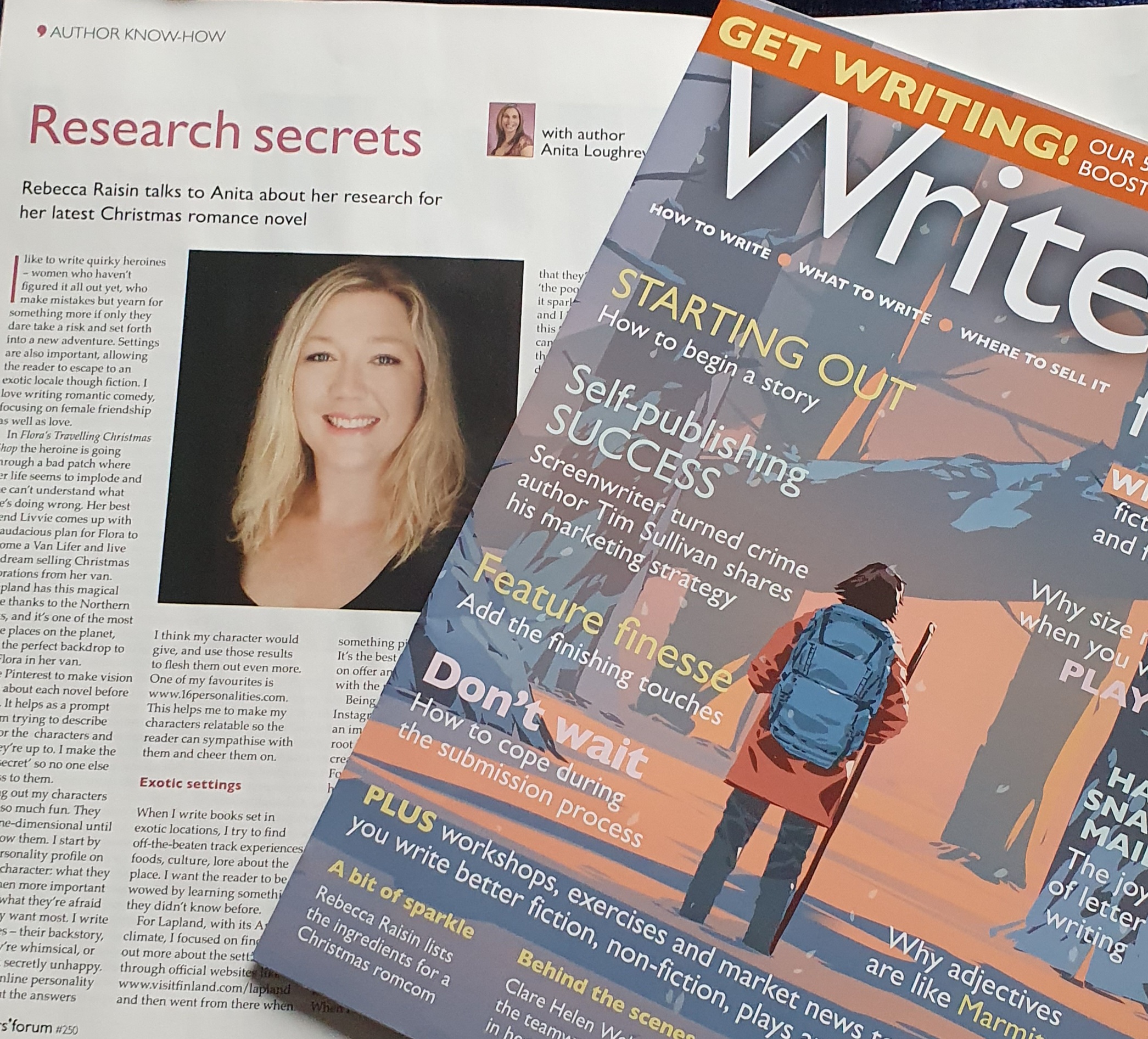
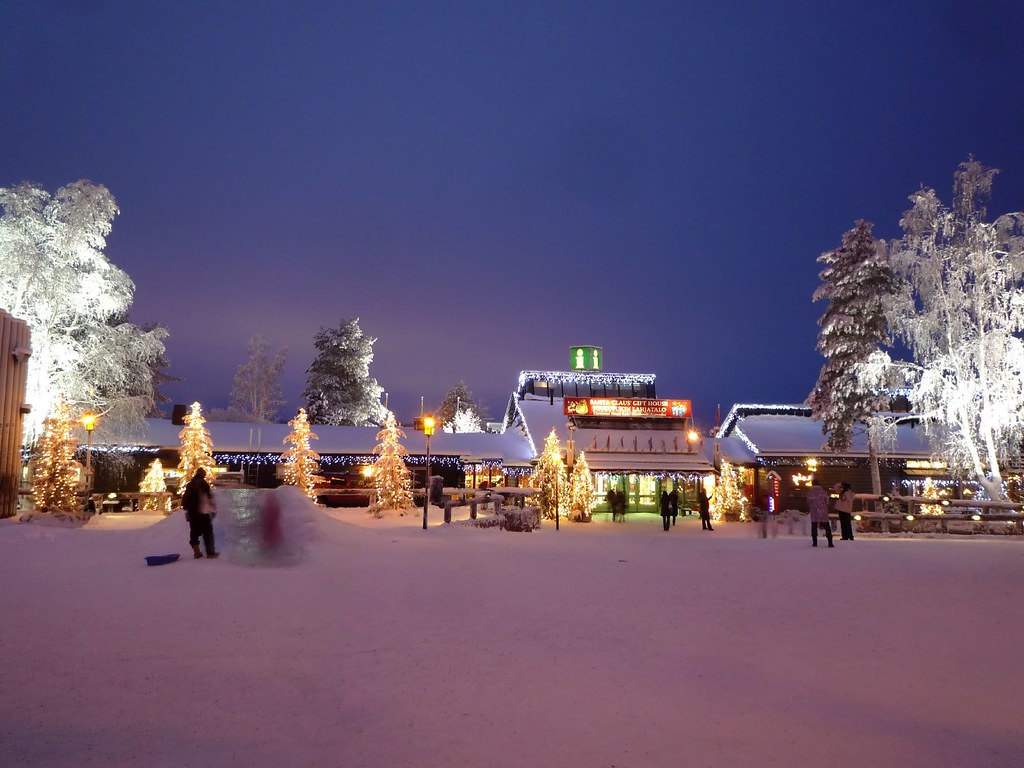
In a Research Secrets interview for #250 4 Jan 2023 issue of Writers’ Forum, I spoke to Rebecca Raisin about her travel research into Van Life and Christmas traditions in Lapland for her latest romance novel, Flora’s Travelling Christmas Shop.

In typical romance style the heroine is going through a bad patch where her life seems to implode and she can’t understand what she’s doing wrong. Flora’s best friend Livvie comes up with an audacious plan for her to become a Van Lifer and live her dream selling Christmas decorations from her van at a market in Lapland.

My beautiful van Peppermint

Rebecca told me Lapland has this magical allure thanks to the Aurora Borealis and it’s one of the most festive places on the planet so felt is was the perfect backdrop to send Flora in her van. She revealed she uses Pinterest to make vision boards about each novel before she begins as it helps as a visual prompt when she describes the town, characters and what they’re up to. She makes her boards ‘secret’ so no one has access to them before she has finished writing the book.

To flesh out her characters she starts by doing a personality profile on each main character – what they look like, and then more important parts like what they’re afraid of, what they want most. She told me she writes copious notes, their backstory, whether they’re whimsical, sassy or confident but secretly unhappy.

“I also use online personality tests and input what I think my character would choose and use those results to flesh them out even more. One of my favourites is www.16personalities.com. This helps me to make my characters relatable so the reader can sympathise with them and cheer them on.”

Rebecca Raisin

When setting books set in exotic locations, Rebecca explained she looks for off-the-beaten track experiences, foods, culture, lore about the place. She wants the reader to be wowed by learning something they didn’t know before. For Lapland, with its artic climate she focused on finding out more about the setting through official websites like: www.visitfinland.com/lapland/ and when something piqued her interest she searched further afield.

She finds Instagram great for providing images that take root in her imagination so she can then create more vivid descriptions. She searches hashtags such as #Wanderlust #VanLife #Nomads #Lapland. For example:

Cradling the mug to warm my hands, I look at the snowy view outside and know that moments like these are why people choose Van Life. There’s no one about, just me and the snowy cotton-ball landscape.

Extract from Flora’s Travelling Christmas Shop by Rebecca Raisin

Rebecca told me the most unusual piece of research she did for Flora’s Travelling Christmas Shop was to find a local sauna at a swimming centre and try it out. After reading so much about the health benefits, she wanted to experience it for herself to help her describe it throughout the book.

“I found it mercilessly hot and hard to breathe and I only lasted about five minutes.”

Rebecca Raisin

This research, along with her reading, filtered into her writing, as can be seen in this following extract:

One thing I’m curious about, why are saunas so popular here? Is it because of the arctic temperatures? A way to warm up?’

‘Yes, that I suppose but it’s mainly for the health benefits. For general wellbeing. If the sauna can’t cure you, nothing can. I use it for detoxing, anti-ageing, to speed up my metabolism. Back in the day, my grandmother gave birth to all her babies in saunas, as did many in her generation, thinking it was the safest, most sterile place for such a thing. Every single member of my family has a sauna at home – they use the sauna, then swim in the icy cold lake and head back into the sauna. It’s invigorating, makes you feel alive! It’s just one of those things that’s ingrained in us.’

Extract from Flora’s Travelling Christmas Shop by Rebecca Raisin

Her research into Christmas traditions revealed the typical cosy way in which Finnish people celebrate Christmas. It’s traditional to celebrate Christmas from the 21st of December until St Knut’s Day January 13th. Finnish people tend to work a lot in the lead up so they can spend the holidays with their families. On December 24th they decorate the tree, have a warm glass of gløgge, or mulled wine before their joulusauna.

Rebecca explained she spends a lot of time reading travel blogs and searching on Instagram for people living the same sort of Van Life lifestyle. She advocates reading travels blogs is an authentic way to learn about what struggles they face along the way, as well as the gems they find that an everyday tourist might miss. Usually her heroines are thirty-somethings travelling on a limited budget so she hunts for others who go from country to country and live a frugal existence selling what they can and living outside of ordinary. She revealed YouTube van diaries were also a fun way to tag along these journeys from the comfort of her own home.

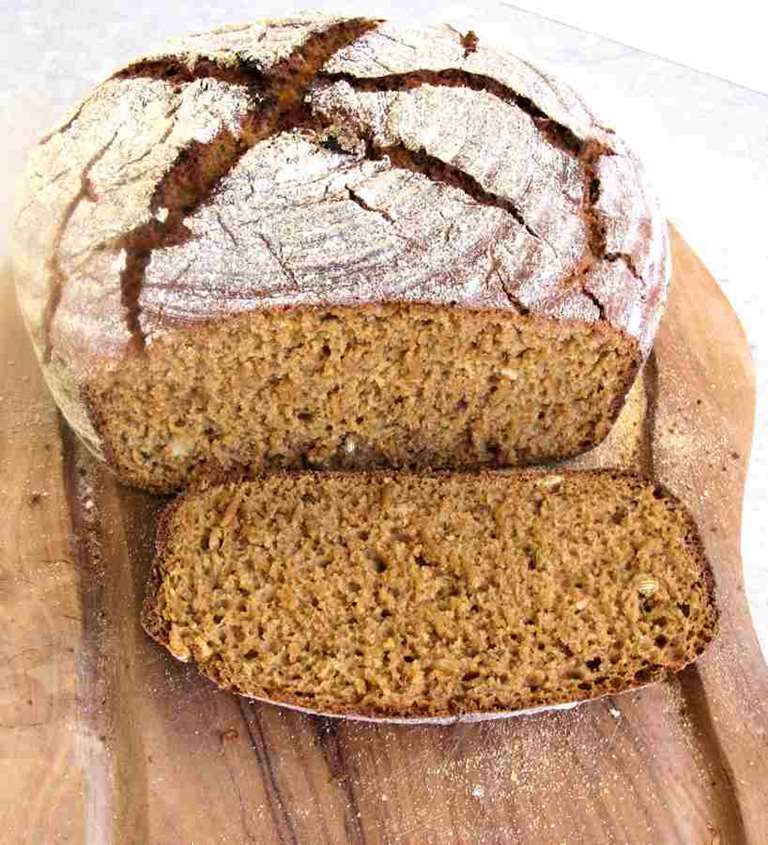
Rebecca told me she is particularly interested in food when researching for a book, as it’s a great way for characters to try something new and is a scene setter. Popular during the festive season in Lapland is joululimppu which is Christmas bread.

She explained that like a lot of the Finnish food it’s a mix of strong flavours that just seem to work. She found the ideal recipe for joululimppu on www.cuisinefiend.com.

“Browsing food blogs is a very addictive past time of mine, especially when researching for a Christmas book set in a country foreign to me. I like the personal touch when reading blogs and that the creators are clearly passionate about their subject. I read up on certain recipes from that country, in this case Finland and then lace them throughout the book, trying not to info dump, but so they appear naturally to the reader.”

Rebecca Raisin

This can be seen in this extract from Flora’s Travelling Christmas Shop:

Stalls sell roasted chestnuts, and piparkakut a traditional Finnish gingerbread. There’s a sign for the ultimate comfort food riisipuuro otherwise known as rice pudding, mugs of steaming hot cocoa and warm pastries. The scent of Christmas – a mix of nutmeg, vanilla, star anise – is heavy in the icy air.

Extract from Flora’s Travelling Christmas Shop by Rebecca Raisin

You can find out more information about Rebecca Raisin and her books on her website: www.rebeccaraisin.com

To read the complete feature you can purchase a copy of #250 4 Jan 2023 Writers’ Forum by ordering online from Select Magazines.

To read my future Research Secrets or Writing 4 Children interviews you can invest in a subscription from the Writers’ Forum website, or download Writers’ Forum to your iOS or Android device.

An interview with… Clare Helen Welsh

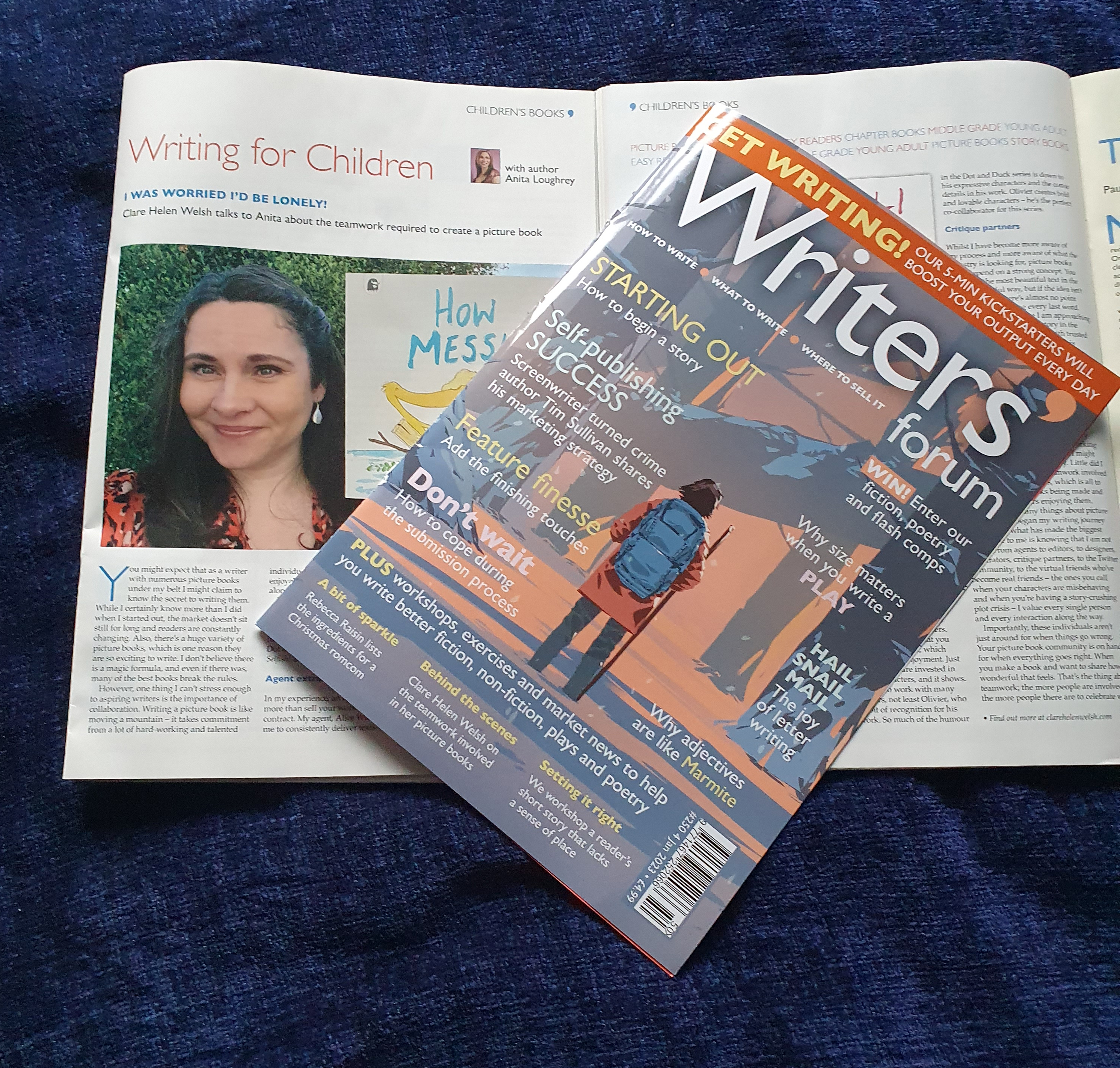
In issue #250 4 Jan 2023 of Writers’ Forum I interviewed Clare Helen Welsh about the teamwork required to create a picture book and the importance of community for authors.

Clare said that writing a picture book is like moving a mountain – it takes lots of commitment from a lot of hard-working and talented individuals. It’s also significantly more enjoyable with like-minded people alongside you. She told me to help her make sure she is approaching the strongest version of a story in the strongest way, she shares her work with trusted critique partners whose feedback is nothing short of invaluable. She explained they are excellent at the word level bits, but she also values their thoughts on the bigger picture issues such as arc, character development and theme providing her with the objectivity that is often hard to see when you are so close to your own work.

“Your picture book community are on hand for when everything goes right. When you make a book and want to share how wonderful that feels. That’s the thing about teamwork; the more people involved, the more people to celebrate with… and the more special it feels.”

Clare Helen Welsh

For Clare one of the most important team members is her agent, Alice Williams, from Alice Williams Literary. Clare elaborated that Alice does much more than sell her work and check her contract. She explained Alice reads, guides and mentors her to consistently deliver texts that families and gatekeepers love. She’s the critical eye that wants her story to be the best it can be and crucially, she has the other eye on the market.

Alice Williams ensures there’s enough in the picture book texts for them to be acquired and read (and re-read) many times, asking questions such as ‘What is there for a child to enjoy? How can I sell this to a publisher as a must-have text? How will I pitch it?’ With these questions in mind, there is usually at least one round of edits before a text goes out on submission, and when they do Alice utilises her contacts and knowledge of the industry to give a text the best chance of being acquired.

“You don’t have to have an agent to be a writer and there are many writers doing fantastically on their own, but for me the relationship is hugely valuable and enjoyable, too. It’s also handholding while you find your publishing feet.”

Clare Helen Welsh

Clare told me how the collaboration continues with the publisher, when a team of people play their part in editing, designing and producing the book. The publishing team she worked with at Quarto Kids were Rhiannon Findlay, Jane Wilsher, Malena Stojić, Emily Pither and Sarah Chapman-Suire. Once a text lands in an editor’s inbox, they will decide if it has potential and if it would result in a book that fits their list.

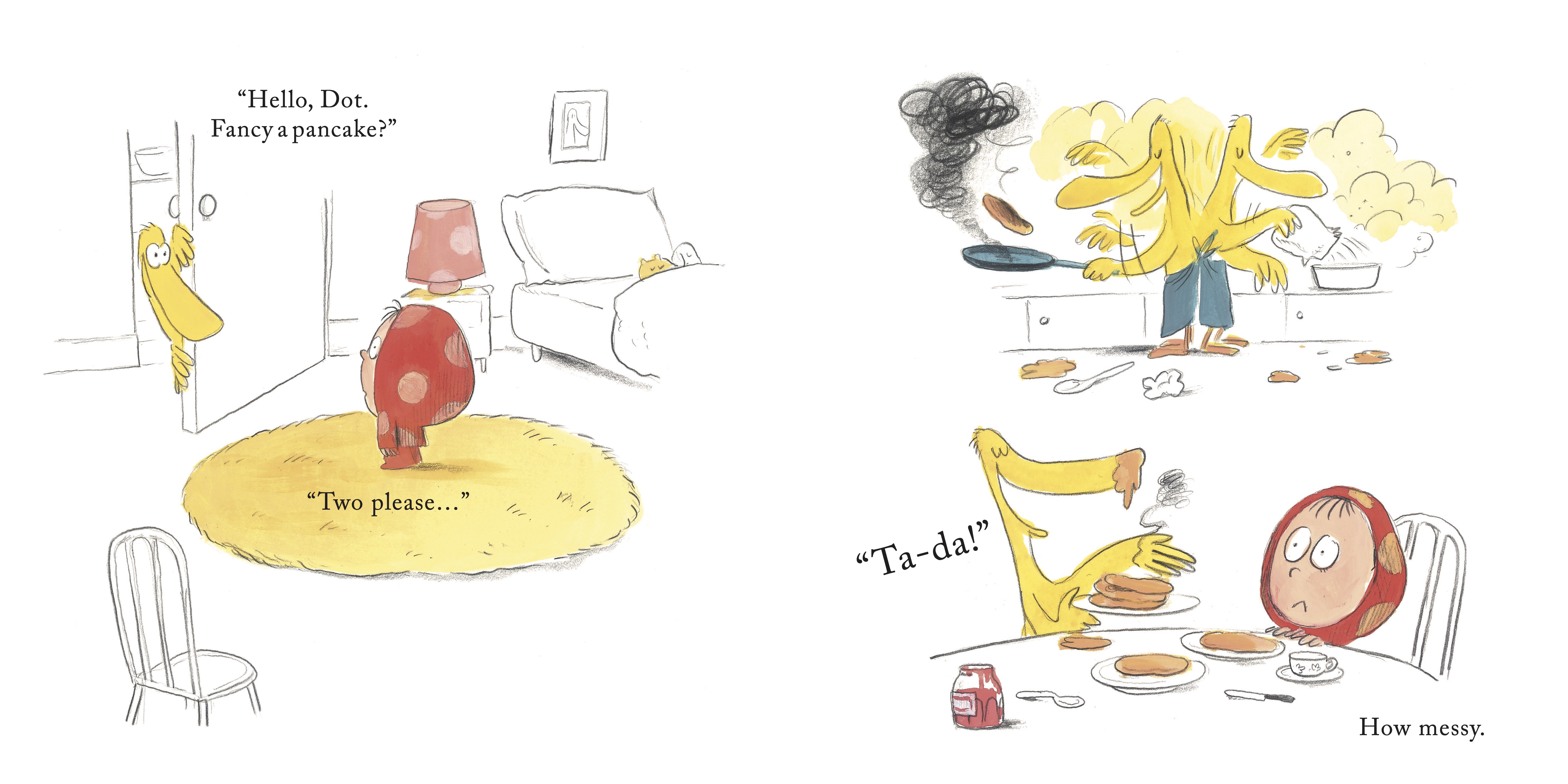
Dot and Duck had three commissioning editors cheering them on: Matt Morgan for How Rude! Ellie Brough for How Selfish! and Emily Pither for How Messy! If it’s a yes, the idea will be pitched to the wider team at an acquisitions meeting, including representatives from sales and marketing, together deciding if a book should go ahead.

Publishing is a creative business, but it’s also very much about the commercial side. Everyone has to be behind the project with a clear idea of how the book will be marketed, how much it will cost to produce, where it will be sold and who will buy it, for it to get the green light. Once a book is given the go ahead and is acquired, editors then have a significant role in developing and shaping a text. Should the character be male or female? Can they be androgynous? Should Duck always be the antagonist? Are there too many penguins in picture books? Your editor will help you to polish and refine a story, both on a line level and the larger plot and concept. They are on hand every step of the way as your book is brought to life.

But editors don’t work in isolation . Picture books, by their very nature, are more than just words and require a seamless combination of words and images. The designer, which for Dot and Duck was Sarah Chapman-Suire, is to the illustrator what the editor is to a writer – someone with ideas, suggestions and insider knowledge on how to sculpt and layout a picture book so that it will have the best chance in the market.  Sample illustrations are sometimes commissioned.

On top of these names and roles for this series, she had Nikki Ingram – the Production Manager and Lucy Lillystone – the Campaign Assistant, sales teams, marketing teams, foreign rights teams and countless others. Having such a large team is good news. Your publisher, and everyone working for them, wants your book to be a big success and wants it to sell as much as you. There really is a whole village of enthusiastic individuals invested in making your story the very best it can be.

The Dot and Duck series are illustrated by Olivier Tallec. The interaction between the the words and the pictures makes this genre of children’s fiction special. Picture books wouldn’t exist without an illustrator – they’d just be words in a digital document. But more than bringing an idea to life, an illustrator is a co-author.

“I have been lucky to work with many fantastic illustrators, not least Olivier Tallec, who deserves every bit of recognition for his outstanding work. So much of the humour in the Dot and Duck series is down to his expressive characters and comic details in his work. Olivier creates bold and loveable characters – he’s the perfect co-collaborator for this series.”

Clare Helen Welsh

An illustrator breathes new ideas and new threads into stories, which means your story will be working on several layers to engage and entertain readers. They add details to your story that you might not have even imagined, which again only adds to reader enjoyment. Just like your publisher, they are invested in your story and its characters and it shows.

As you can see there is a wide cast of characters that all work together to produce a children’s book. and I would like to thank Clare Helen Welsh for explaining the process so succinctly.

You can read the interview I did with Clare Helen Welsh for her blog tour of the Dot and Duck series here: Blog Tour – How Messy! by Clare Helen Welsh

To read my review of How Messy! go to: Book Review: How Messy!

To read my book review of The Perfect Shelter by Clare Helen Welsh and Åsa Gilland here Book Review: The Perfect Shelter

Find out more about Clare on her website www.clarehelenwelsh.com  and follow her on Twitter @ClareHelenWelsh

To read the complete feature you can purchase a copy of #250 4 Jan 2023 Writers’ Forum by ordering online from Select Magazines.

To read my future Writing 4 Children or Research Secrets interviews you can invest in a subscription from the Writers’ Forum website, or download Writers’ Forum to your iOS or Android device.
An interview with… Sita Brahmachari

For my Writing for Children slot in the #239 Dec 2021 issue of Writers’ Forum I interviewed Sita Brahmachari about how she develops her characters and setting for her young adult books.

She told me how When Shadows Fall grew out of an interaction she had in her first workplace at the Royal Court Young People’s Theatre with children who had been excluded from school. They were children full of potential who had already decided that education wasn’t for them. She worked on location and they had a small space to work in and the adjacent outside area was not ‘safe’ because people threw things from the flats above. ‘Missiles miss,’ one girl explained.

“Certain children I’ve met in my work as a writer and through arts education have stayed with me. I think about them and hope they’ve found a way to untap their potential. This book is a symbolic passing of the pen to all of them.”        

Sita Brahmachari

Sita elaborated how when writing about life – grief and loss is always a constant presence. It’s always been a central theme in children’s literature and she likes toweave them into her stories. She believes keeping stories and realities from children is what creates monsters and nightmares. The task is to find the right tone and holding place for the age of reader who might find your story.  

She explained this is why she writes ‘rites of passage’ novels about grief and loss. In an exploration of loss she is also interested in diverse beliefs in what comes after. The timing of the publication of When Shadows Fall is one in which young people have suffered so many losses, not only of loved ones but also to their own liberty and potential.  

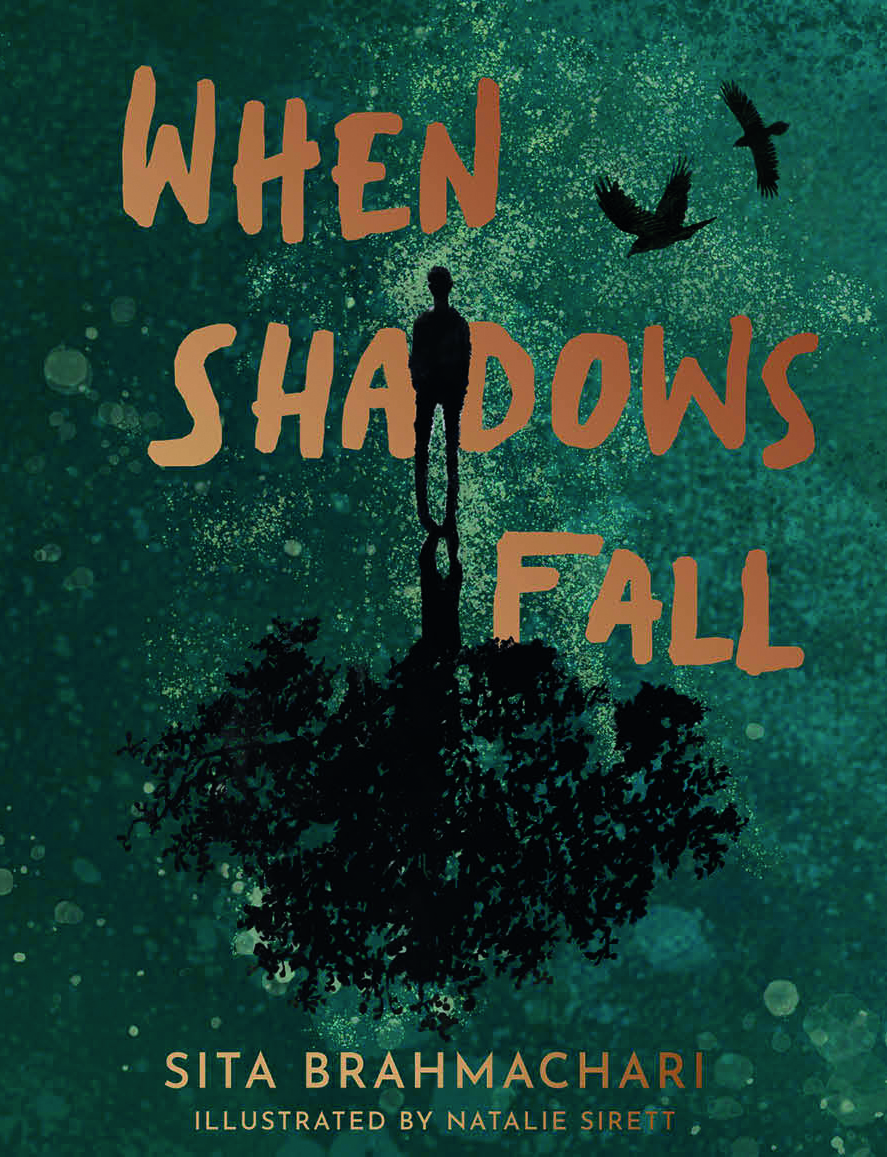
When Shadows Fall by Sita Brahmachari

Sita revealed her characters grow the story.

“The longer I live with the characters the more they become part of my life.  I have met and worked with thousands of young people during my work in community, youth theatre, novel writing and education. Aspects of character: a phrase, a look, a comment, a steely stare, a leaning back, a leaning in, a discovery that a child that won’t speak is a gifted artist… these memories glimmer as I write and ignite something in a character I’m exploring.”

Sita Brahmachari

She elaborated that at a certain point of writing the character emerges like a figure from clay, the features form and then everything in them speaks to you and drives the narrative.  Working with and writing for Young Adults requires curiosity, honesty and to be open to their realities. Sita likes to connect with the feelings of the young person she was. So whatever age character she writing will do a little writing exercise where she imagines meeting them when she was the same age and they have an imaginary conversation.  

“As a child I longed to see the diversity of characters who were my family and the people I met in life in the stories I read. So my stories have featured Diaspora characters from many cultures, histories and beliefs.  I’ve seen how powerfully young people have wanted and responded to these stories.”

Her advice to other writers is don’t wait for the story to come whole. Keep a sketch book.  Doodle, daydream, and write any thoughts, ideas, imaginings that come. Leave your ideas to prove and come back to them later to look for jewels.  Writing is a layering process. Have patience. Don’t rip work up but do be prepared to start again and re- layer, re-voice and re-write. Question. Be open to what editors and first readers say. Test material. Listen deep. Pay attention also to the twist in your gut that hasn’t untangled what you need to in the story yet.  Enjoy growing characters and let plot find you through them. Enjoy the flow when it comes like white water rafting or being in perfect balance on an imaginary high wire.

When it happens it’s exciting! Accept that sometimes there’s just a lot of heavy rowing to do. Keep going till you feel that what you’ve written could make some sense to someone else but don’t show your work too early.  If you feel it has a force of its own that could convey, feel the fear of putting it out in the world and do it anyway. Never react to feedback or start re-writes straight away… let the thoughts and comments mull. Whatever changes you make have to be true to your characters and story and to yourself.  

You can find out more about Sita on her website www.sitabrahmachari.com and follow her on Twitter @sitabrahmachari and on instagram @sita.brahmachari.

To read the complete feature you can purchase a copy of #239 Dec 2021 Writers’ Forum by ordering online from Select Magazines.

To read my future Writing 4 Children or Research Secrets interviews you can invest in a subscription from the Writers’ Forum website, or download Writers’ Forum to your iOS or Android device.

An interview with… Sue Moorcroft

Today you can discover what Sue Moorcroft told me about her research into the seasons for her romance novels in the interview for the #240 Dec 2021 issue of Writers’ Forum.

Sue explained writing a summer novel and a winter novel each year makes weather a consideration. When she was writing about Switzerland she used an online snow-cam and other online resources for typical temperatures and daylight hours.

She also keeps my eye out for seasonal events or traditions that she could be used in her novels and keeps a note on any posters about seasonal events – a Christmas tree competition or an artificial beach in the local town centre during the school summer holidays, etc.

“I had a Christmas wreath made last year and the florist explained it was compostable so I brought that into Under the Mistletoe and found a demonstration of how to make one online.”

She revealed when writing a Christmas book she bears in mind Christmas can affect everything. For those who celebrate the season, things are worse or better if you tag ‘at Christmas’ onto a situation. He lost his job at Christmas. She found her long-lost sister at Christmas. Christmas affects what restaurants or pubs look like, menus, what shops sell, what’s on the radio or TV and how people spend their time. Even a Christmas gift is meaningful for both plot and characterisation.

“Ideas are like gold dust. When I get one, I write it down. I can usually make my ideas fit the season with a bit of plot dexterity but definitely an ice hockey player fits nicely into a winter book and a vineyard owner into a summer book.”

Sue Moorcroft

Sue told me people with knowledge are key to her research and she is always interested in what they have to say and will follow up with more questions. She revealed she often uses social media to find the people she needs. For Under the Mistletoe she needed help from a teacher on the subject of bullying and help from an artist, as it’s my heroine Laurel’s occupation. She explained people can be incredibly kind.

When writing Under the Italian Sun she saw a documentary on the subject of post partum psychosis and followed the filmmaker on Twitter. He was the subject of the documentary, too, as he’d lost his mum young and didn’t understand why there was such a mystery around it. Sue told him how much she’d enjoyed the documentary and she was writing a book that covered the same subject. He offered her a video chat where she could find out more information.

In Just for the Holidays a forced helicopter landing took place. The process is called autorotation, the skill of keeping the rotors moving using pitch and yaw when the engine cuts out – a bit like a sycamore seed twirling to earth. Sue had trouble finding a helicopter pilot who wanted to help but eventually, via a friend of a friend, she found one. He took her up in a helicopter and they ‘pretend crashed’.

“It was awesome! I absolutely loved it. We shot down to earth and then he just pulled it up and landed (this is called ‘flare and run-on landing). Chatting afterwards, although it had taken ages casting around to find him, it turned out he knew my auntie.”

Sue Moorcroft

Sue also loves to visit the countries she write about. She regularly goes to writing retreats and courses in Umbria, Italy and has used the setting for several of her novels. Under the Italian Sun and One Summer in Italy are both set there so she was able to use her extensive photo library as a resource.

I know a lovely Italian lady and I asked her if she could help with things that were hard to research from here, or are cultural, such as what kind of beer this person would drink or how people behave if they have nuns to lunch, and she answered every email. She also put the Italian phrases right for me. It gave me a lot of confidence in the authenticity of the setting and themes.

On a visit, Sue told me she tends to eat local food, especially any particular to the region. Menus are also helpful, and available online. Settings can help an author weave a romantic spell around the reader. Her tip is to pick a setting that heightens the emotional stakes and visit it.

Find out more about Sue Moorcroft on her website www.suemoorcroft.com and follow her on Twitter @SueMoorcroft and on Instagram @suemoorcroftauthor.

To read the complete feature you can purchase a copy of #240 Dec 2021 Writers’ Forum by ordering online from Select Magazines.

To read my future Research Secrets or Writing 4 Children interviews you can invest in a subscription from the Writers’ Forum website, or download Writers’ Forum to your iOS or Android device.

An interview with… Christina Courtenay (Pia Fenton)

For the #242 30 Mar 2022 issue of Writers’ Forum, Christina Courtenay (Pia Fenton) explained to me why seeing and experiencing things first-hand is the best kind of research.

Being half Swedish, she has been interested in the Vikings for a long time and wanted to showcase their amazing achievements as craftsmen, traders and explorers, as well as their fearlessness, curiosity and sense of adventure.

She started by researching the background and history, then studied particular aspects more in depth, which included reading loads of books, watching a wide range of TV programmes and visiting museums. She found there are a lot of resources out there on the Vikings and her main problem was in trying to choose the resources that would be most useful.

Christina told me that if she can’t find the relevant non-fiction books in the library, she will buy second-hand copies online from AbeBooks, where she has discovered some real bargains. Whilst reading, she take notes and compiles a summary of the information she needs.

“It is a long process and it’s ongoing as I keep finding and adding more information all the time. I also chatted to re-enactors and contacted an archaeologist who is a specialist in the Vikings. I managed to make contact via social media – Twitter and Facebook are very useful for that.”

Christina Courtenay

To keep track of her research, she creates Word documents with headings like ‘Clothes’, ‘Food’, ‘Weapons’ etc in alphabetical order and whenever she finds new and relevant information she adds it under the specific heading so she can easily find it later.

Christina revealed her most frustrating experience when writing her Icelandic stories was they had to be mostly written without ever going to Iceland, and it wasn’t until right before her deadline that the Covid restrictions were eased and she finally managed a trip over there. Before this she had to rely on contacting all the people she knew who had either been to Iceland or lived there, and sent them a questionnaire.

“I also read an awful lot of travel blogs, and watched YouTube clips as well. For specific places, there is always Google Earth if you need to see the layout of the land. But I won’t lie – it was extremely difficult and I didn’t feel entirely satisfied with the result so it was a huge relief when I was able to go there myself.”

Christina Courtenay

For Christina, seeing and experiencing things first hand is key. In Ribe, Denmark, there is an outdoor museum with a dozen buildings of various types.¹ Sitting in the longhouse and chieftain’s hall helped her to imagine myself back in time and she was able to lie down on a sleeping bench covered in old furs.

Christina sitting in hall at Ribe

Near Skanör in the south of Sweden is a similar museum, the Fotevikens Museum², and in Iceland she found a reconstructed turf house at the Eiriksstadir Museum³, which was invaluable. These museums always have dedicated and knowledgeable staff who are more than happy to answer questions. There are also places like the Jorvik Viking Centre⁴ in York https://www.jorvikvikingcentre.co.uk/ where you can experience life in that city. She said the best thing about visiting living history museums and events like the Jorvik Viking Festival is seeing the re-enactors (and talking to them) and the various craftsmen.

Christina explained replica Viking clothing and jewellery are readily available for the purposes of re-enactment, as are weapons. You can see examples on the Jelldragon Viking Craft Store⁵ online. In fact, her family have become used to buying her Viking artefacts for Christmas and birthdays. Christina told me she has also learnt to weave properly on a loom and suggested a great book with instructions for band-weaving is Weaving Patterned Bands by my teacher Susan J Foulkes

“Wearing them or handling them allows me to imagine what it would feel like to live in that era. And I bought myself a fire iron and tried striking it with the flint to make fire – it worked just fine.”

Christina Courtenay

Christina told me she has also learnt to weave properly on a loom and recommended, Weaving Patterned Bands by Susan J Foulkes as it contains excellent instructions for band-weaving.

The heroine in one of her stories has to sew herself some clothes so Christina decided to try to make a so called smokkr – the apron overdress worn by some Viking women. Re-enactors recommended she purchase the woollen material needed from Bernie the Bolt Cloth Merchant⁶ on Facebook, as he stocks authentic fabric for historical garments. She found a pattern in a leaflet she’d bought some years earlier. She sewed several of the seams by hand to find out how long it would take.

The Viking dress Christina made

She revealed the main surprise was how heavy the resulting dress was – several yards of woollen fabric weighed a lot more than she’d imagined. She also realised the garment had to be fairly loose as there were no buttons/openings, and also for ease of movement.

“Paired with a linen underdress (which I had bought readymade), it felt great, although it’s still missing a decorative border. I did a weekend course to learn how to do band-weaving though, so I will soon be adding that. Apron dresses were held up by straps fastened with tortoise brooches, so of course I asked for a pair for Christmas, as well as a belt with a Viking buckle and some Viking leather half-boots. And I bought beads for a necklace to string between the brooches.”

Christina Courtenay

Her favourite piece of hands-on research so far was helping to row a Viking ship round Roskilde harbour in a reconstructed longship at the Viking Ship Museum⁷ there. She found out it was a very smooth ride. The most unusual research was when she visited an open air museum in Gudvangen, Norway, called Njardarheimr⁸ where I was allowed to try throwing a Viking axe with the aim of hitting a huge block of wood. To my intense surprise, I managed it. (Lucky throw?)

For Viking food Christina recommends cookbooks such as, Eat Like a Viking by Craig Brooks and revealed she has tried some of the recipes.

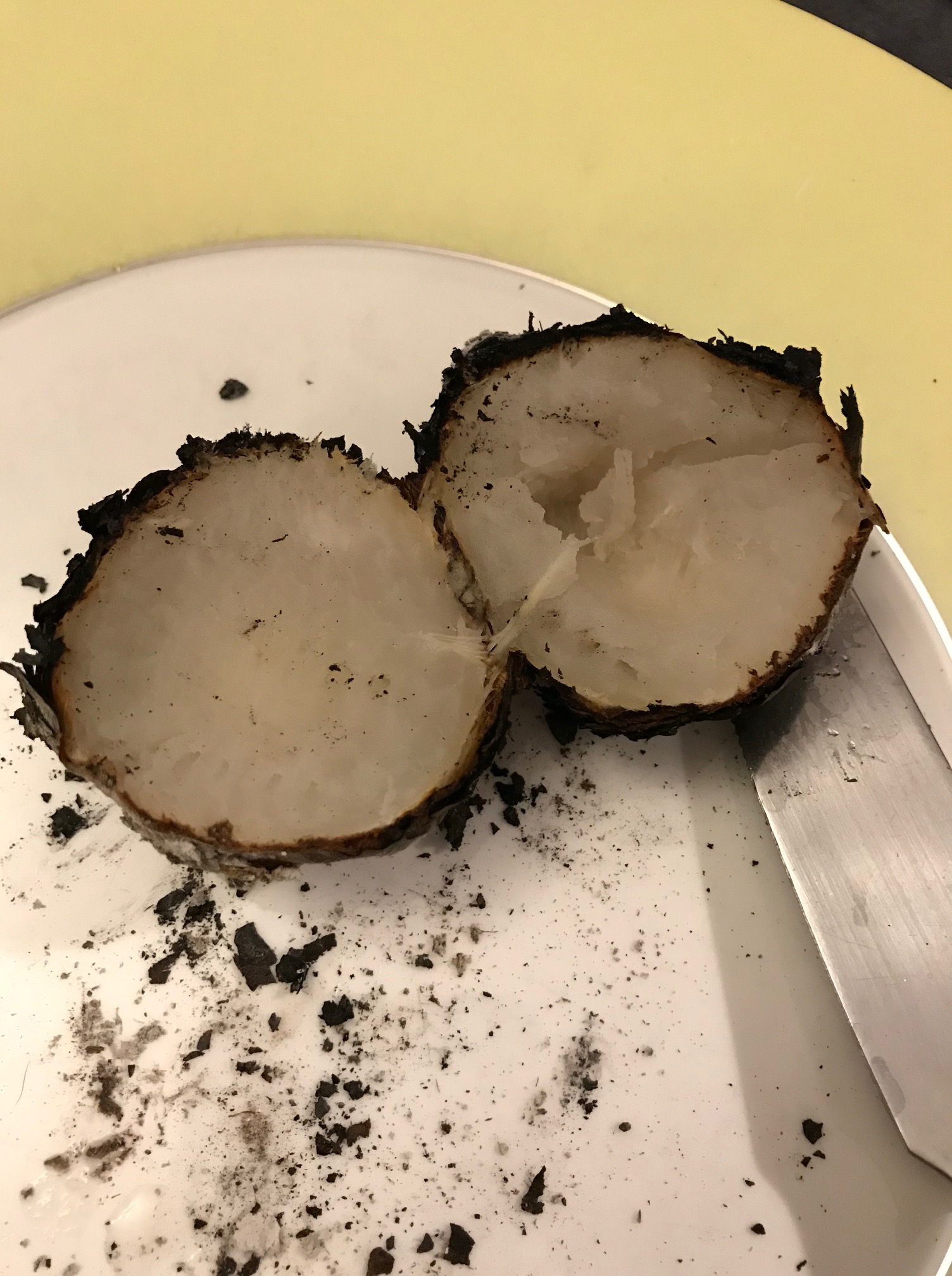
Ember cooked turnip

A lot of their food was fairly bland and monotonous and, for me, not salty enough. (I love salt!) For the purposes of preserving meat, either smoking it or keeping it in whey was more common.

While visiting the island of Birka she went to the Birka Vikingastaden⁹, just west of Stockholm, where she was shown how Vikings made flatbread – delicious. And tried mead which she found lovely and sweet.

Christina’s list of useful websites on Vikings

  1. Ribe Viking Center – www.ribevikingecenter.dk/en
  2. Foteviken Museum – www.fotevikensmuseum.se
  3. Eiriksstadir Museum – www.eiriksstadir.is/en
  4. Jorvik Viking Centre – www.jorvikvikingcentre.co.uk
  5. Jelldragon Viking Craft Store – www.jelldragon.com
  6. Bernie the Bolt Cloth Merchant – www.facebook.com/Bernie-the-Bolt-Cloth-Merchant-738089226363967/
  7. Viking Ship Museum – www.vikingeskibsmuseet.dk
  8. Njardarheimr – www.vikingvalley.no
  9. Birka Vikingastaden – www.birkavikingastaden.se
  10. Christina has an extensive range of research features on her website, which includes information about the Vikings – www.christinacourtenay.com

You can follow Christina Courtenay (aka Pia Fenton) On Twitter @PiaCCourtenay and Instagram @christinacourtenayauthor

To read the complete feature you can purchase a copy of #242 30 Mar 2022 Writers’ Forum by ordering online from Select Magazines.

To read my future Research Secrets or Writing 4 Children interviews you can invest in a subscription from the Writers’ Forum website, or download Writers’ Forum to your iOS or Android device.
An Interview with… Roma Agrawal

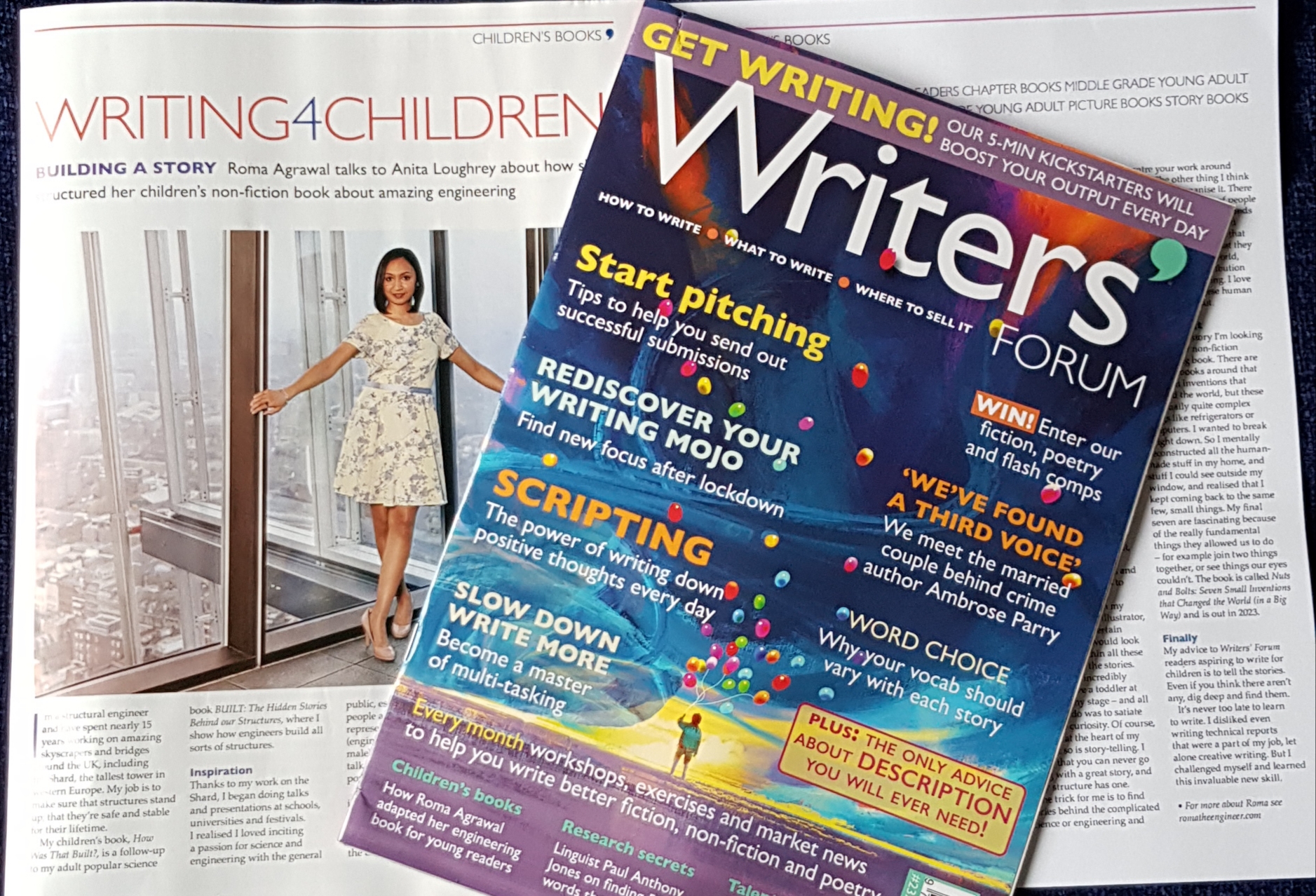
My interview today is a blast from the past from Writers’ Forum issue #237 Oct 2021, when I interviewed structural engineer, Roma Agrawal, about her children’s non-fiction that provides a behind-the-scenes look at some of the world’s most amazing landmarks.

Author photo © Rebecca Reid

Roma has worked on many of the skyscrapers and bridges in the UK, including The Shard, the tallest tower in Western Europe. Her technical job is to ensure the structures are safe and stable. Her children’s book How Was That Built? The Stories Behind Awesome Structures was inspired by an adult book she wrote looking at how construction has evolved from the mud huts of our ancestors to skyscrapers of steel that reach hundreds of metres into the sky.

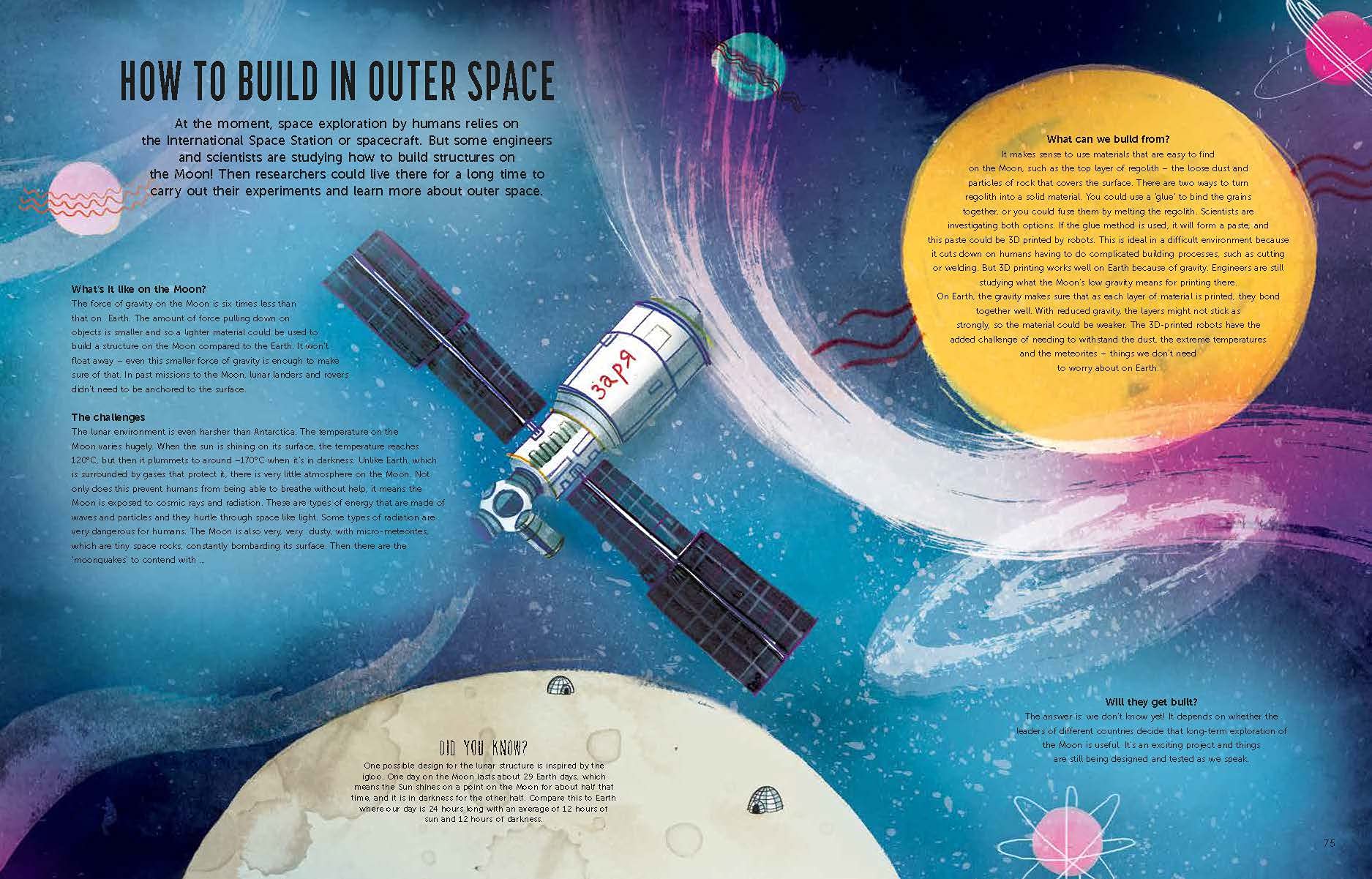
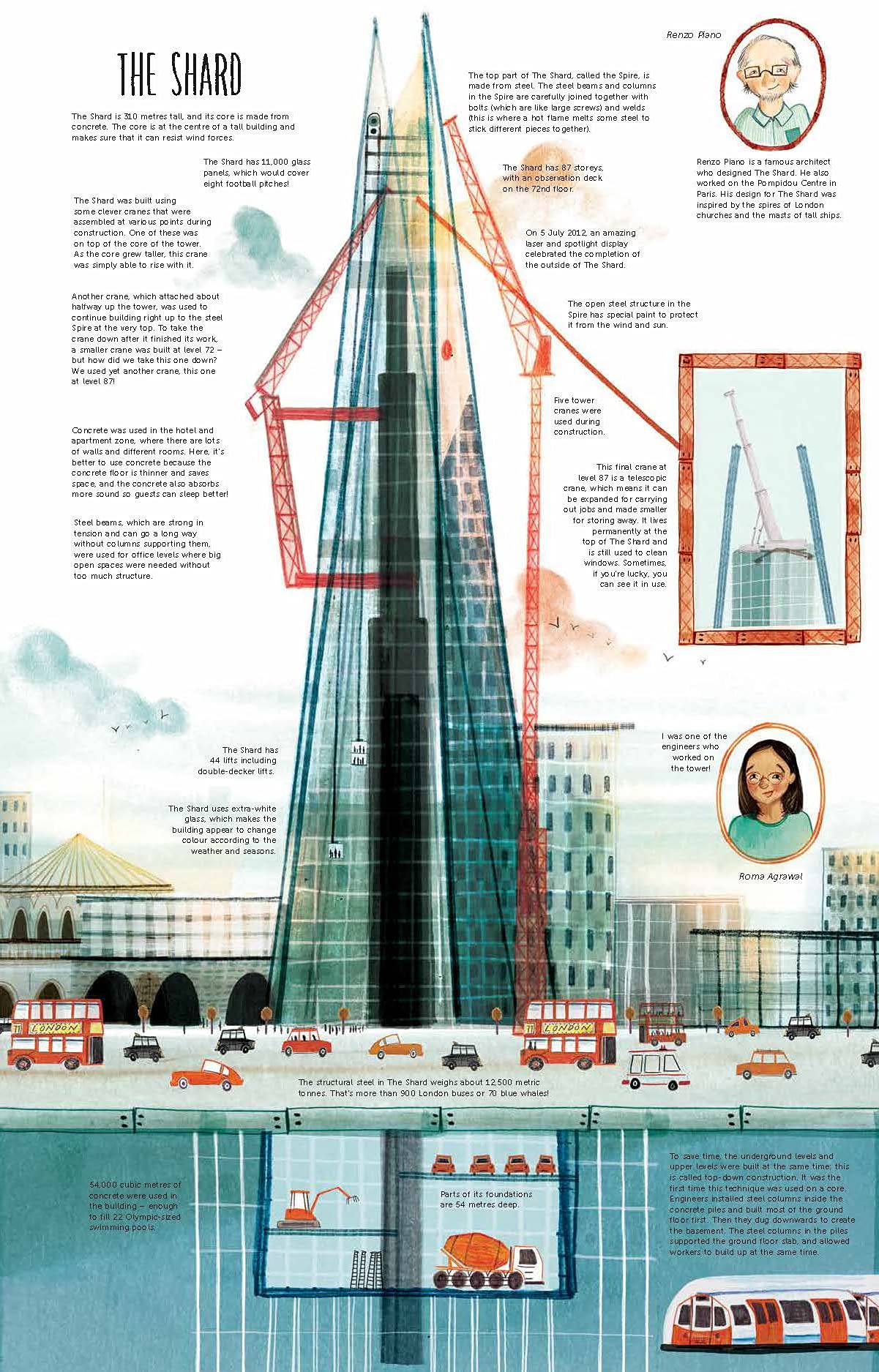
How Was That Built? The Stories Behind Awesome Structures is a concise look at how engineers build all sorts of structures and the ingenious methods engineers have come up with to enable us to build underground, underwater, on ice and even in space. Her illustrator was Katie Hickey who has brought a beautiful sense of wonder and playfulness to this book with her illustrations showing fascinating cross-sections, skylines and close-ups of engineering techniques in action, provide unique and illuminating perspectives of these awe-inspiring constructions.

How Was That Built? The Stories Behind Awesome Structures by Roma Agrawal

Roma told me her aim was to showcase a mix of well-known structures and also less familiar ones that would be accessible for young readers. She explained it was hard to narrow it down and started with a long list, in a spreadsheet, with structures from each continent from the categories – bridge, building, dam, tunnel, etc. After this she jotted down what fascinated her about each structure and what was the most compelling story behind it. In some cases, she said it was a story about a material, in others, its history.

“Some of the content between my book for adults and the adaptation for children overlaps but I wanted to ensure I covered structures from all seven continents and also in space, so I researched loads more stories. I thought about which structures and engineers might capture a young person’s imagination and create stunning visuals. It was a tough task trying to cut down the extensive list I first came up with.”

Roma Agrawal

Roma told me her favourite spread is the How to Build in Outer Space. It feels like science fiction, but it’s real research that scientists are doing right now.

She said she chose the particular engineers as they are all really inspiring and she wanted to feature people from different eras and from different places to show children that engineers are from all sorts of diverse backgrounds. So in the book she has included the more known names from the Industrial Revolution like Henry Bessemer, but also Emily Roebling, who ran the Brooklyn Bridge construction as a woman in the 19th century.

Roma revealed that when adapting her adult non-fiction book, Built, into a STEM non-fiction aimed at children the major change was restructuring the narrative to answer the sort of questions a young reader might have such as, How do you build tall? How do you build a long bridge? Or how do you build a watertight dam?

“I wanted to answer these questions with surprising examples from all around the world, and very importantly, include some of the pioneering engineers who made them possible. I also needed to figure out how to fit in all the information needed to understand a structure – this ranges from how particular materials are made, or how the ancient Romans built to how columns and beams work and how to design against forces like earthquakes.”

Roma Agrawal

She explained the trick was to find stories behind the complicated science or engineering and centre the information around them as this was important to humanise STEM. The book includes some incredible stories of people from all sorts of backgrounds that have made the world the way it is today, and proves to young people they too can change the world and make a contribution to something exciting.

Her advice to Writers’ Forum readers aspiring to write for children is to tell the stories. Even if you think there aren’t any, dig deep and find them. It’s never too late to learn to write. She told me she disliked even writing technical reports that were a part of my job, let alone creative writing. But she challenged herself and learned this invaluable new skill in my 30s.

Roma has another children’s non-fiction engineering book out in 2023 called, Nuts and Bolts: Seven Small Inventions that Changed the World (in a Big Way).

To read the complete feature you can purchase a copy of #237 Oct 2021 Writers’ Forum by ordering online from Select Magazines.

To read my future Writing 4 Children or Research Secrets interviews you can invest in a subscription from the Writers’ Forum website, or download Writers’ Forum to your iOS or Android device.

An interview with… Paola Totaro

Today on my blog I am talking about an interview I did with Paola Totaro for my Research Secrets slot In this month’s issue of Writers’ Forum #248 26 Oct 2022. She explained how losing her sense of smell during Covid inspired her and her husband to co-write their non-fiction book, On the Scent.

On the afternoon of March 27, 2020, Paolo told me she went to the bathroom and after washing her hands and using her usual scented hand cream, she realised she had completely lost her sense of smell.

“I will never forget the moment because it was so sudden, so inexplicable and so utterly frightening. I’m driven by smell. I walk the park with the dog smelling flowers, the air, rain and being unable to smell anything was an existential shock. I felt as if I’d been put in a bubble and was missing a vital connection with the outside world.”

Paola Totaro

This inspired her to read more anecdotal reports of this mysterious, sudden smell loss to find out what was happening to her and what quickly also struck millions of others around the world. She found herself researching the cultural history of smell and how human perception and response to smells has changed over the centuries, from theories of miasma in which smell was said to be harbinger of disease to the use of changes in smell as diagnostic tools.

She told me she must have read hundreds of research papers that were being pre-published during Covid and also interviewed scientists from all over the world -neuroscientists in the US – to specialist ENT physicians in Germany and Switzerland – to philosophers in the UK and Spain.

“I reached out straight away to Professor Barry Smith, Director of the Institute of Philosophy at the School of Advanced Study, University of London who happened to have said something on Twitter about smell that day and he, bless him, sent me an incredibly kind email acknowledging just how awful the loss can be. Later, he would also help me onto the path to find the top global chemosensory specialists who might explain what was going on.”

Paolo Totaro

Paola revealed she even created a google alert on the word anosmia, which was enormously helpful as science and medicine were advancing at leaps and bounds in this area. She also spent a week immersed with young doctors and scientists who planned to specialise in otorhinolaryngology or olfaction research, at a summer school at the University of Dresden in 2021 run by Professor Thomas Hummel, known in this world of smell as the ‘grandfather of olfaction’.

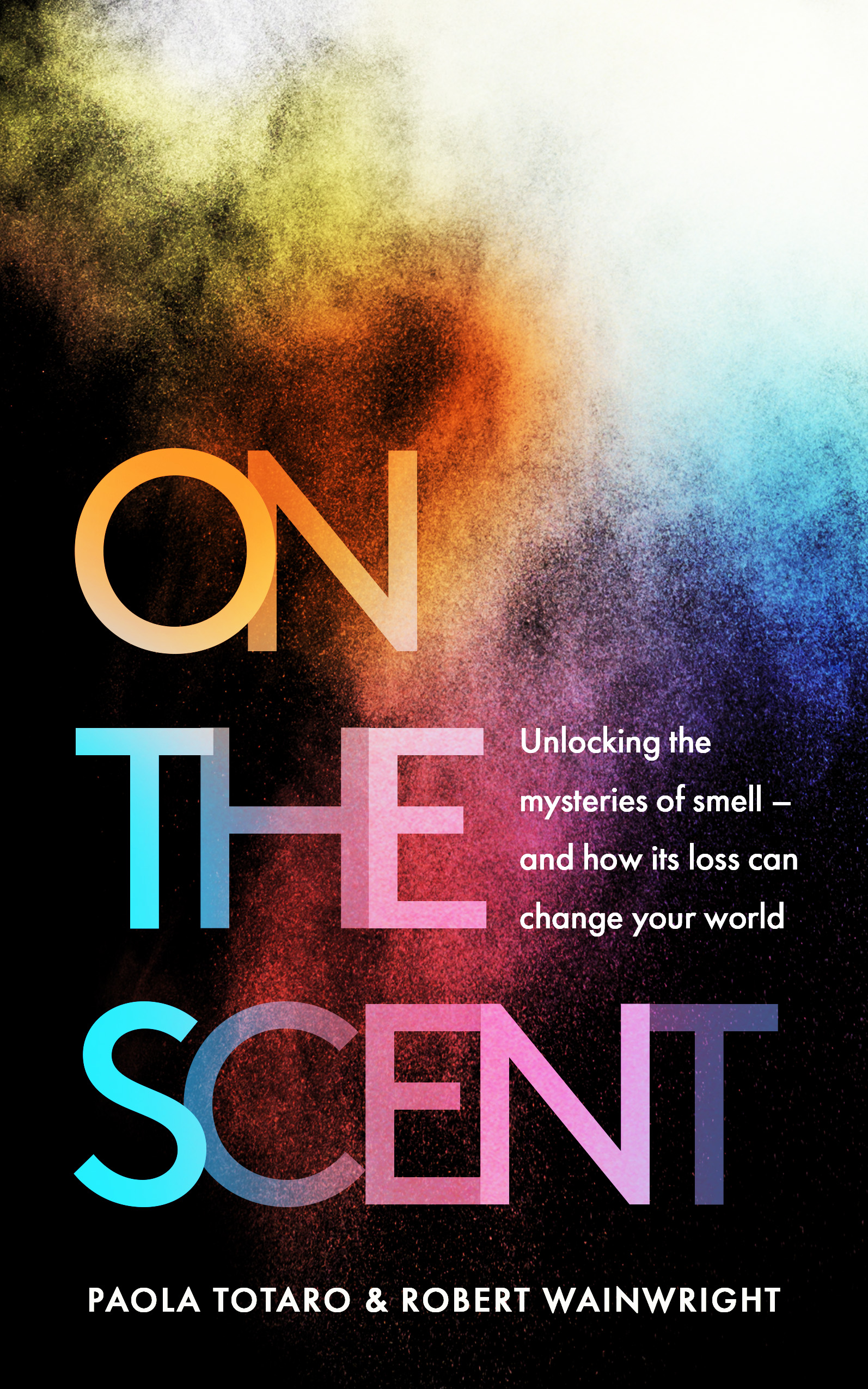
On the Scent by Paolo Totaro and Robert Wainwright

The resulting book, On the Scent – Unlocking the mysteries of smell – and how its loss can change your world, is a mix of Paolo’s personal memoir of her journey into dealing with her loss of smell integrated with all the scientific research she uncovered. Much of the book was written in lockdown so many of her interviews were conducted over Zoom. She also interviewed people who had been born without a sense of smell, others who lost the sense to virus or brain injury. Reading the bibliographies and footnotes of other published writers/authors on the topic of olfaction was also hugely helpful and Paolo reached out to some authors who were also helpful and generous.

Paolo explained her husband, Robert Wainwright who specialises in writing the biographies of interesting and important people lost in history wrote about people throughout history who had no sense of smell, such as the great nature poet, Wordsworth who was anosmic. He also contributed the story of INXS frontman, Michael Hutchence, who plunged into depression when he lost his sense of smell. She elaborated Robert was her slash and burn guy as were the editors at Elliott and Thompson.

“Throughout the writing process, I would read aloud to Robert each evening and if his eyes glazed over in the science bits, I’d wind them back. He did the same for me with his people chapters – but he’s much less long winded than me.”

Paolo Totaro

The book was written in just six months.

To find out more about Paolo and her journalism on her website www.paolatotaro.com. You can find her on Twitter at @p_totaro and on Instagram, @aggiornalista on Twitter.

To read the complete feature you can purchase a copy of #248 26 Oct 2022 Writers’ Forum by ordering online from Select Magazines.

To read my future Writing 4 Children or Research Secrets interviews you can invest in a subscription from the Writers’ Forum website, or download Writers’ Forum to your iOS or Android device.
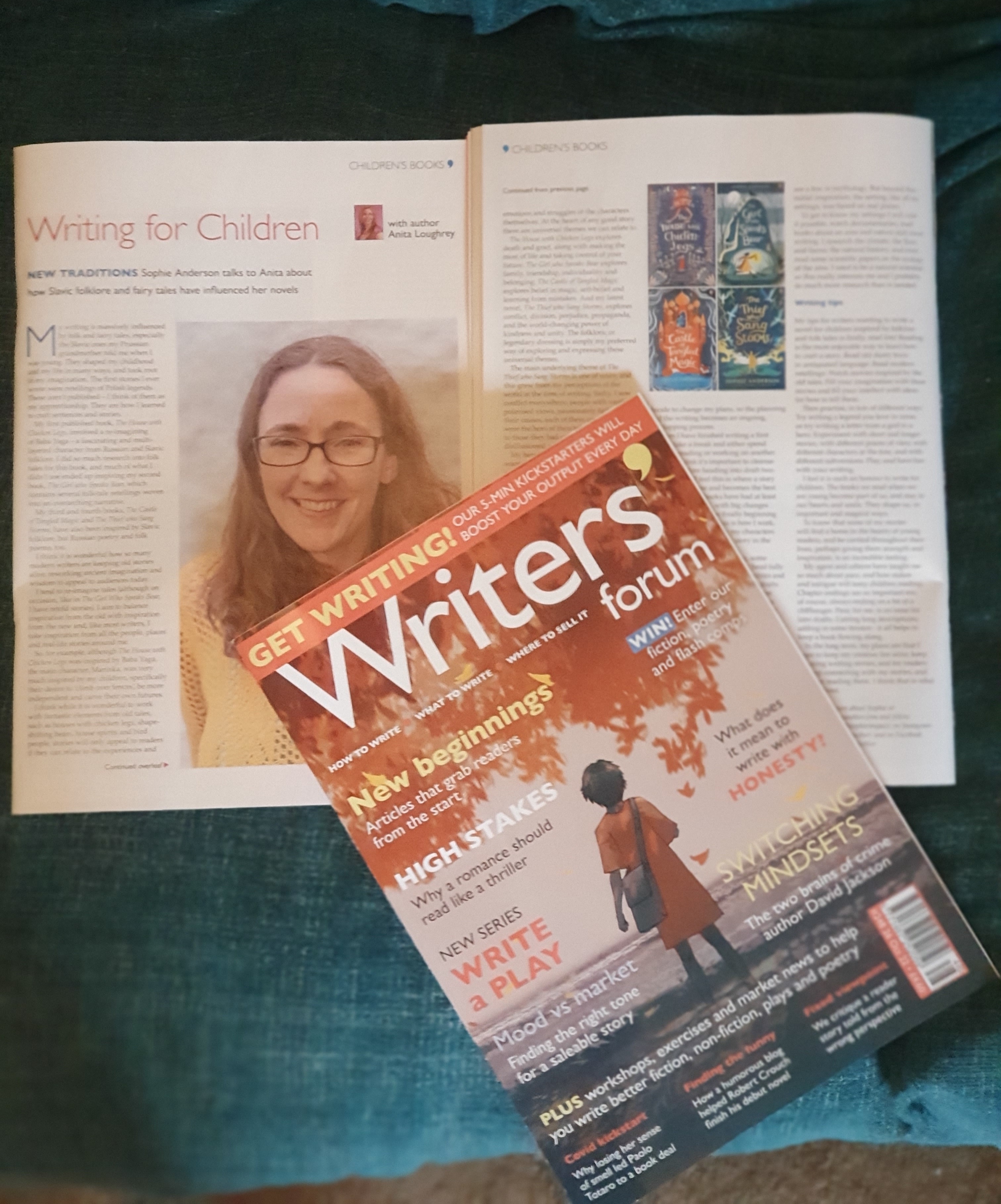
An interview with… Sophie Anderson

In the October issue of Writers’ Forum #248 Oct 22, I have interviewed Sophie Anderson for my Writing for Children double-page spread, about how Slavic folklore and fairy tales have influenced her novels.

Sophie told me her writing is massively influenced by folk and fairy tales, especially the Slavic ones her Prussian grandmother told her when she was young.

“They shaped my childhood and my life in many ways, and took root in my imagination.”

Sophie Anderson

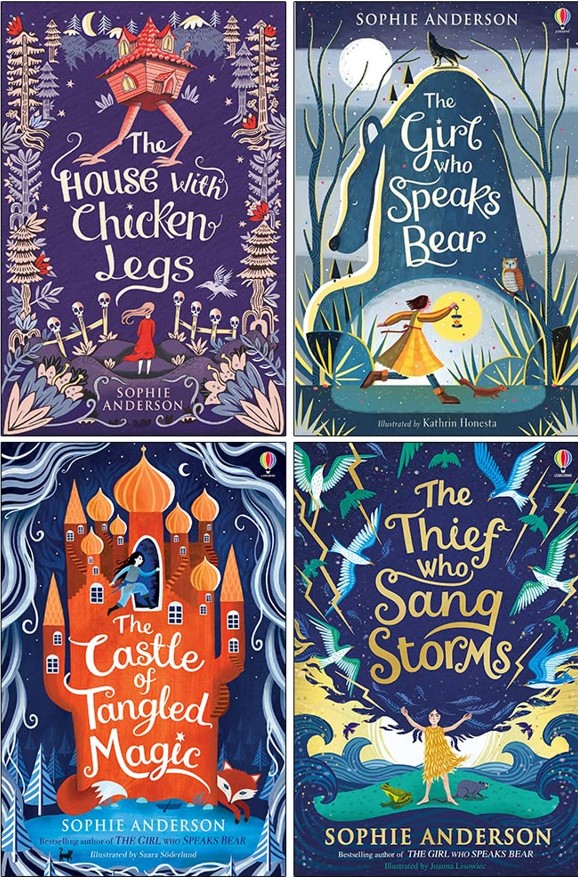
Sophie’s first published book was The House with Chicken Legs, which involved a reimagining of Baba Yaga – a fascinating and multi-layered character from Russian and Slavic folklore. She revealed she did so much research into folktales for this book, that much of what she didn’t use ended up inspiring her second book, The Girl who Speaks Bear, which contains several folktale-retellings woven into an overarching narrative.

Her third and fourth books, The Castle of Tangled Magic and The Thief who Sang Storms, were also inspired by Slavic folklore, as well as Russian poetry and folk poems.

“I think it is wonderful how so many modern writers are keeping old stories alive; retelling, reimagining and reworking ancient imagination and wisdom to appeal to audiences today. I tend to reimagine tales rather than retell them (although on occasion, like in The Girl Who Speaks Bear, I have retold stories). I aim to balance inspiration from the old with inspiration from the new.”

Sophie Anderson

Sophie explained she takes inspiration from all the people, places and real-life stories around her. The House with Chicken Legs was inspired by Baba Yaga, the main character, Marinka, was inspired by her children, specifically their desire to ‘climb over fences’, be more independent, and carve their own futures.

At the heart of any good story there are universal themes we can relate to. The House with Chicken Legs explores death and grief along with making the most of life and taking control of your future. The Girl who Speaks Bear explores family, friendship, individuality and belonging. The Castle of Tangled Magic explores belief in magic, self-belief, and learning from mistakes. The Thief who Sang Storms, explores conflict, division, prejudice, propaganda, and the world-changing power of kindness and unity. The main underlying theme is one of unity.

“I think whilst it is wonderful to work with fantastic elements from old tales, such as houses with chicken legs, shapeshifting bears, house-spirits, and bird-people, stories will only appeal to readers if they can relate to the experiences, emotions and struggles of the characters themselves.”

Sophie Anderson

She uses folklore and legends as a way of exploring and expressing these themes.

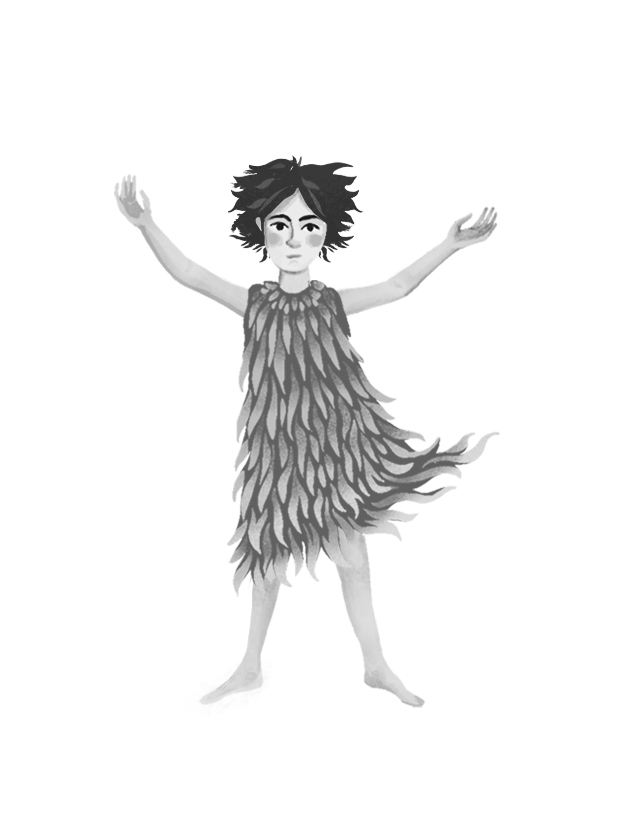
Linnet from The Thief who Sang Storms
Illustrated by Joanna Lisowiec

Sophie revealed her planning process is messy and very paper-based. She told me she fills up notebooks with ideas and stream-of-consciousness free writing and ring-binders with maps and plans, character studies, notes on settings, lists of key events and plot points, and thoughts about possible themes and messages. Once she starts writing the chapters she inevitably changes her plans so it is an organic process. .

Sophie said if a character feels vague and not fully-formed she will do some exercises, like write letters or a diary from that character’s point of view. Or might interview them, take them out for an imaginary coffee for a chat, or write a scene that doesn’t end up in the book, where they are having a day out with a friend.

Her writing tips to writers wanting to write a novel for children inspired by folklore and folktales is firstly, read lots!

“Reading is the most enjoyable way to learn how to craft a story. Read old dusty texts in antiquated language. Read modern retellings. Watch movies inspired by the old tales. Fill your imagination with these stories and fill your intellect with ideas for how to tell them.”

Sophie Anderson

Then practice, in lots of different ways.

“Try writing a legend you love in verse, or try writing a letter from a god to a hero. Experiment with short and longer stories, with different points of view, with different characters at the fore, and with different subversions. Play, and have fun with your writing.”

Sophie Anderson

You can discover more about Sophie on her website: www.sophieandersonauthor.com and follow her on Twitter: @sophieinspace, Instagram: @sophieandersonauthor and Facebook: @SophieAndersonAuthor.

To read the complete feature you can purchase a copy of #248 Oct 2022 Writers’ Forum by ordering online from Select Magazines.

To read my future Writing 4 Children or Research Secrets interviews you can invest in a subscription from the Writers’ Forum website, or download Writers’ Forum to your iOS or Android device.