Anita Loughrey's blog. This is my journal about my experiences and thoughts on writing. As well as news about me and my books, it includes writing tips, book reviews, author interviews and blog tours.
For more information about me and my books see my website: www.anitaloughrey.com. Follow me on Twitter @amloughrey, Facebook @anitaloughrey.author and on Instagram @anitaloughrey
Glow Up Lara Bloom is a great concept middle grade book, written in the style of an online diary and reminds me of the Angus, thongs and full-frontal snogging series by Louise Rennison.
When 14-year-old Olmara Bloom falls for the hot new boy, Caiden, she initially thinks the best way to get him to notice her is to give herself a glow up. She keeps a journal on a private online app, to keep it away from the prying eyes of her blackmailing brother, outlining her feelings, expectations and the often devastating consequences. The diary format really draws you in making this book a fun, quick and easy read.
With themes of self-confidence and identity in the light of peer pressure, Glow Up Lara Bloom realistically portrays the life of a teenager and the doubts and fears they face. I found myself laughing and crying with Lara and the devastating chaos that plagues her. I particularly liked the way, she comes to the empowering realisation she is better off being herself no matter how clumsy she is.
A truly hilarious coming of age story, suitable for upper key stage 2 and lower key stage 3 readers.
I would like to thank Antonia Wilkinson for organising a review copy of this book.
You can buy copies of Glow Up Lara Bloomby Dee Benson from your local bookshop, or online at uk.bookshop.org, an organisation with a mission to financially support local, independent bookshops.
Please join me on the next stop of Genna Rowbotham’s blog tour for the release of her latest picture book, Ellie-May and her Toy Dragon, Ben.
Genna Rowbotham wrote her first children’s story in 2017, fitting it in around caring for her young family, and is now an author of nine children’s books as well as a short story in a magazine. Rowbotham has a passion to write stories that help entertain, educate and inspire young-ones as the reader can escape the seriousness of life and enter a world of magic.
Her other interests include reading, writing, travelling, astrology, spending time with her family and exploring the great outdoors.
She lives with her lively, imaginative family in Derbyshire in a house full of books, magazines as well as colourful drawings and all sorts of artwork from her children (empty cereal boxes are often taken from the recycle bin to reinvent something wonderful like a spy camera or telescope).
My stop of the tour consists of a book review and prize giveaway.
********
Title: Ellie-May and her Toy Dragon, Ben
Written by: Genna Rowbotham
Illustrated by: Shamima Afroz Alis
Published by: Adventure Scape Press
Ellie-May and her Toy Dragon, Ben is a quaint longer length picture book consisting of eighteen spreads and written in rhyming couplets. The spreads are formatted with the picture on one side and the text on the other. The text is in a large bold font and easy to read.
The story reminded me of the timeless classic The Boy Who Wouldn’t Go To Bed by Helen Cooper in that the main protagonist, Ellie-May, is excited about the next day so refuses to sleep. When her toy dragon, Ben becomes real, they take to the starry skies and embark on a night-time adventure, where they visit Ben’s castle and enjoy a dragon party. But Ellie-May struggles to keep her eyes open and eventually realises the importance of sleep.
This delightful, lyrical story is ideal for readers aged three upwards. The bold colourful illustrations compliment the text perfectly.
Giveaway to Win a bundle of 3 Children’s books by Genna Rowbotham (Open Int)
Prize includes Where is Lamby? (rhyming picture book), Lottie the Ladybird’s Adventure (for ages 7-9) and Ellie-May & her Toy Dragon, Ben (rhyming picture book)
*Terms and Conditions –Worldwide entries welcome. Please enter using the Rafflecopter box link. The winner will be selected at random via Rafflecopter from all valid entries and will be notified by Twitter and/or email. If no response is received within 7 days then Rachel’s Random Resources reserves the right to select an alternative winner. Open to all entrants aged 18 or over. Any personal data given as part of the competition entry is used for this purpose only and will not be shared with third parties, with the exception of the winners’ information. This will passed to the giveaway organiser and used only for fulfilment of the prize, after which time Rachel’s Random Resources will delete the data. I am not responsible for despatch or delivery of the prize.
********
You can purchase a copy of
Ellie-May and her Toy Dragon, Ben by Genna Rowbotham and Shamima Afroz Alis at the following links:
Title: Pick a Story A Dinosaur + Unicorn + Robot Adventure
Written by: Sarah Coyle
Illustrated by: Adam Walker-Parker
Published by: Farshore Books
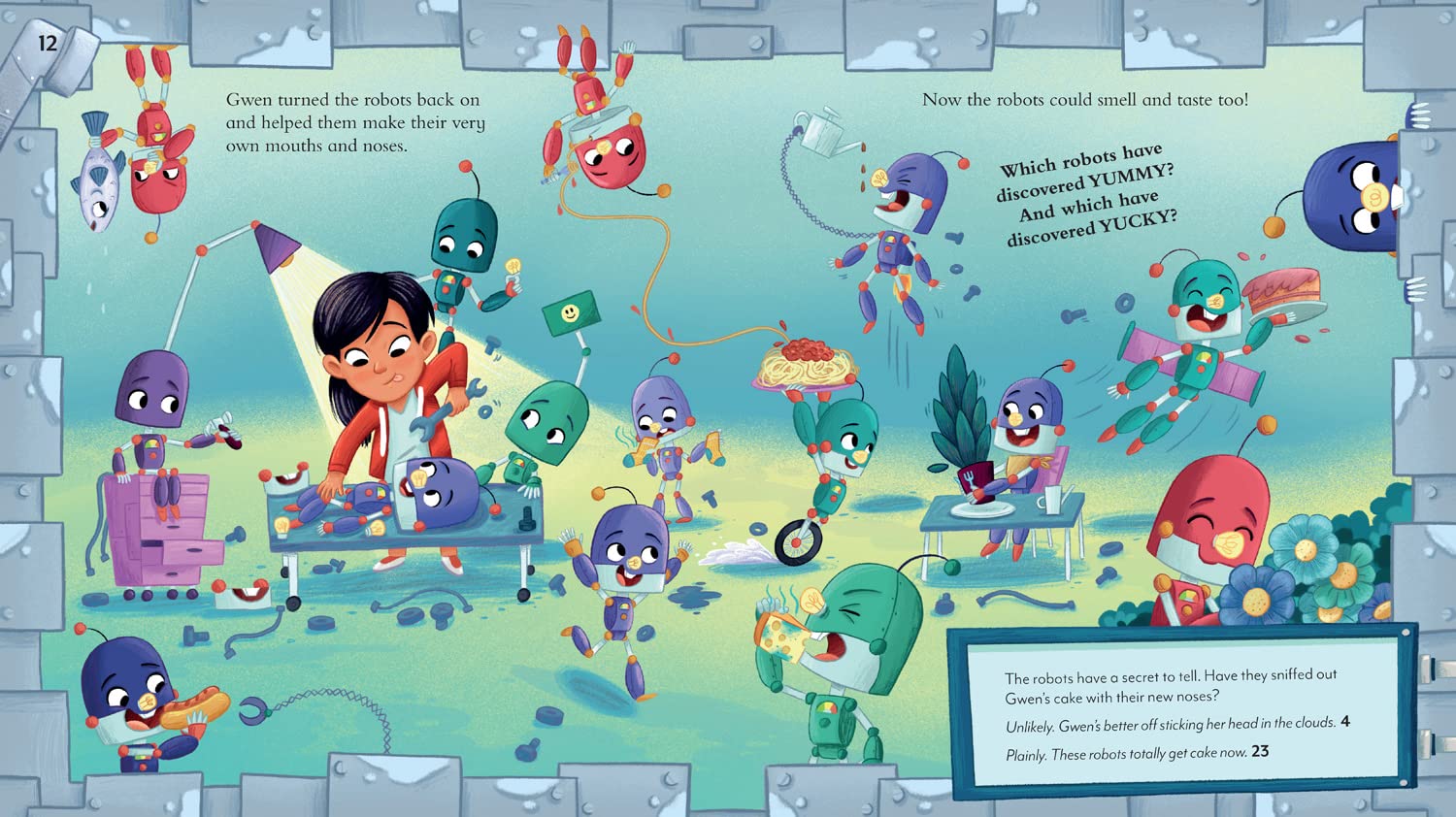
Pick a Story A Dinosaur + Unicorn + Robot Adventure is fabulous picture book which encourages children to read in a very different imaginative way. Children can learn to make decisions so they can influence the route the story takes to achieve its final conclusion.
This is the second book in the series of Pick A Story laugh-out-loud, interactive picture book adventures. This time instead of pirates, aliens and jungle animals searching for the lost dog, Sarah Coyle and Adam Walker-Parker have amalgamated dinosaurs, unicorns and robots into one fun-filled escapade to find the missing birthday cake. It is such a clever device to incorporate a wide range of characters. This way the book will appeal to a large readership.
The zany, eye-catching illustrations pop with colour and excitement. One of my favourite was the look on the dinosaurs face when it had to clean up the mess after the food fight. In fact, there are lots of food related shenanigans throughout the book.
It is great the way the book encourages the reader to interact and make their own choices. It is a brilliant way to keep the children entertained and engaged in reading with the possibility of a different story each time the book is read. There are four alternative endings with options to continue if you and your little one are determined to find the cake.
I would recommend this book for children aged 2 and upwards and it would be ideal in the classroom for children with short attention spans. In my opinion there should be more books like this for Key Stage 1 and Key Stage 2.
I would like to thank Antonia Wilkinson for organising a review copy for me.
You can buy your own copy of Pick a Story A Dinosaur + Unicorn + Robot Adventure by Sarah Coyle and Adam Walker-Parker from your local bookshop, or online at uk.bookshop.org, an organisation with a mission to financially support local, independent bookshops.
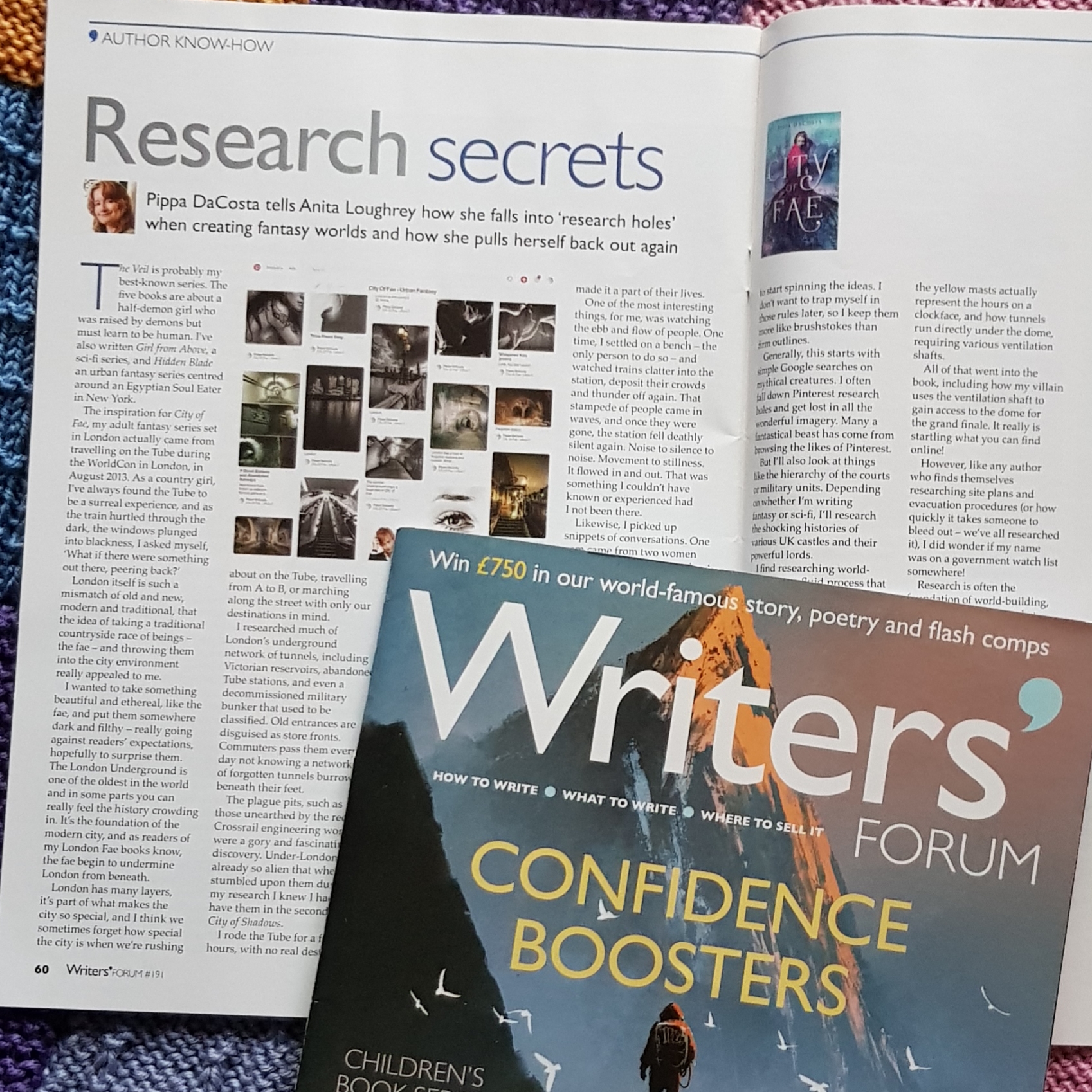
Fantasy is another of those genres where people have said to me you do not need to research that you just make it up. But I believe to write believable fantasy you will need to research the world’s you are creating. In 2017, for the Sept 2017 #191 issue of Writers’ Forum, I interviewed fantasy writer, Pippa DaCosta who explained how her research helps ground those fantastical elements and convince the reader that what they’re reading could be real.
Pippa DaCosta’s five book The Veil series is about a half-demon girl who was raised by demons, but must learn to be human. Through various trials against the backdrop of an imminent demon invasion, she must conclude whether humans or demons are the real monsters. she has also written, Girl from Above, a four book sci-fi series and Hidden Blade another urban fantasy series centred around an Egyptian Soul Eater in New York.
The inspiration for, City of Fae, her adult fantasy series set in London came from travelling on the tube during the WorldCon in London, in August 2013. As a country girl, she’s always found the tube to be a surreal experience, and as the tube train hurtled through the dark, the windows plunged into blackness, she asked herself, “What if there were something out there, peering back?” London itself is such a mismatch of old and new, modern and traditional, that the idea of taking a traditional countryside race of beings – the fae – and throwing them into the city environment, really appealed to her.
Pippa explained she wanted to take something beautiful and ethereal, like the fae, and put them somewhere dark and filthy—really going against reader expectations, hopefully to surprise them. The London Underground is one of the oldest in the world and in some parts you can really feel the history crowding in. It’s the foundation of London, and as readers of my London Fae know, the fae begin to undermine London from beneath.
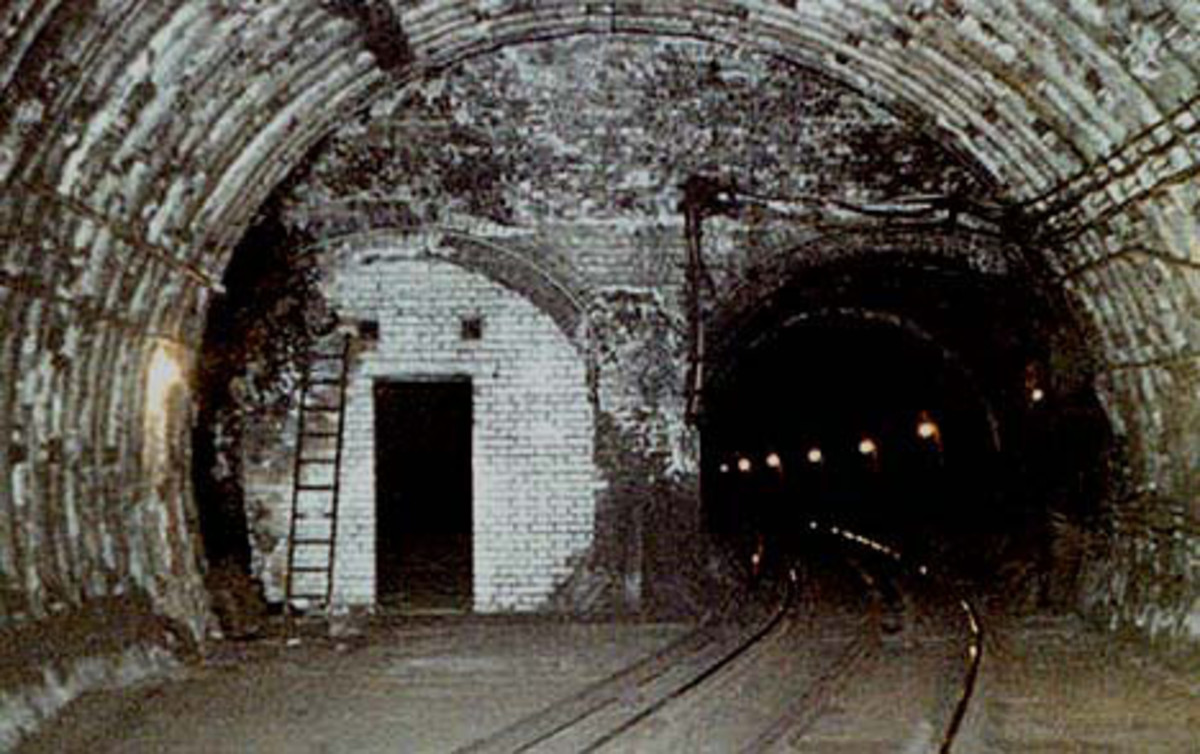
London has many layers, it’s part of what makes the city so special, traveling from A to B, or marching along the street with only our destinations in mind. Pippa told me she researched much of London’s underground network of tunnels, including Victorian reservoirs, abandoned tube stations, and even a decommissions military bunker that used to be classified. Old entrances are disguised as store fronts. Commuters pass them every day not knowing a network of forgotten tunnels burrows beneath their feet.
The plague pits were a gory and fascinating discovery—such as those unearthed by the recent Crossrail engineering works. The under London is already so alien, that when she stumbled upon these plague pits during her research she knew she had to write them into the second book, City of Shadows.
Pippa revealed she rode the tube for a few hours, with no real destination in mind. She discovered once she slowed her pace and took the time to observe, the tube became a fantastic and interesting place to people-watch. Human beings aren’t meant to be crammed together in small metallic vessels and then dragged through underground tunnels at increasing speeds, but all she had to do was look around and see how commuters had adjusted to the uncomfortable and made it a part of their lives.
“One of the most interesting things, for me, was watching the ebb and flow of people. One time, I settled on a bench—the only person to do so—and watched trains clatter into the stations, deposit their crowds, and thunder off again. That stampede of people came in waves, and once they were gone, the station fell deathly silent again. Noise to silence to noise. Movement to stillness. It flowed in and out. That was something I couldn’t have known or experienced had I not been there.”
Pippa DaCosta
This way she picks up snippets of conversations. She said one gem came from two women talking and complaining about how hot the tube was, they explained between themselves that it was because the line we were travelling on at the time was one of the oldest and deepest parts of the London underground. That was a brilliant nugget of information, which went straight into the London Fae books.
Fantasy worlds are grounded in reality. As an author, you can’t just fling ideas together and hope they stick. The world has to make sense, it has to have an order, and rules. Research helps ground those fantastical elements and convince the reader that what they’re reading could be real. Before writing the book, Pippa explained she looks at the world and its rules. Nothing too strict, just enough to start spinning the ideas as she doesn’t want to trap herself in those rules later, she keeps them more like brush stokes than firm outlines.
She revealed her research generally starts with simple Google searches on mythically creatures where she often falls down Pinterest research holes and get lost in all the wonderful imagery. She explained many a fantastical beast has come from browsing the likes of Pinterest. She told me she keeps a document folder on her mac for articles and uses private Pinterest boards to pin research and images of various locations. In fact, creating a new Pinterest board is one of her ‘book rituals’.
“I’ll also look at things like the hierarchy of the courts or military units. Depending on whether I’m writing fantasy or sci-fi, I’ll research the shocking histories of various UK castles and their powerful lords. I find researching worldbuilding is a fluid process, that builds with each new lead I chase down. But, it’s easy to fall into a research hole, so you have to be focused and have a goal.”
Pippa DaCosta
Research is the foundation of worldbuilding, and worldbuilding is what brings fantasy realms to life. You never know what little research gem could prove to be the shining star of the next chapter. Give yourself time to get lost down those research holes, you never know where they may lead but never forget your goal.
Pippa told me about a new app coming for desktop PCs soon, called the Novel Factory. It allows you to generate character and plot profiles and link various research elements, including web addresses, articles, images, so it can all be easily found again in one place. She reckoned it looks like a great resource for organising all those plot bunnies.
You can find out more about Pippa DaCosta, her urban fantasy and science fiction novels here:
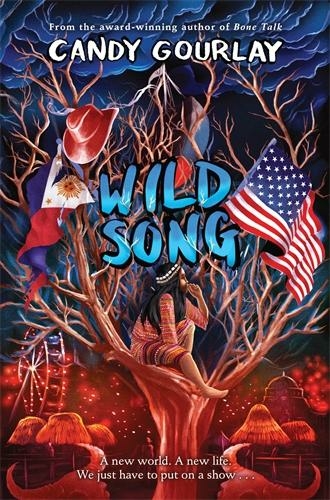
This week I am posting two book reviews. today the review is to celebrate the launch of Candy Gourlay’s latest novel, Wild Song.
Title: Wild Song
Written by: Candy Gourlay
Cover illustrated by: Leo Nickolls
Published by: David Fickling Books
The vivid descriptions in Wild Song by Candy Gourlay transport you to life in 1904 not only in the Bontok tribe but also life in America where the inequalities were abundant in this so called land of opportunities. There are a whole host of highly believable characters, in particular the main protagonist Luki, who has a clear, strong voice that carries the story well. I love the way she fights against male/female stereotypes and how she is an inspiration to others, not only in her tribe but also at the St Louis World Fair.
I was impressed with how tight and well-constructed the prose is, as every word of this novel serves a purpose. The dialogue is realistic and keeps the readers turning the pages. This emotional roller-coaster of a young adult novel is steeped in the Bantok history and culture. It is evident Wild Song has been well researched. The story left me thinking long after I’d finished the book.
A masterpiece of a novel.
You can buy copies of Wild Song by Candy Gourlay from your local bookshop, or online at uk.bookshop.org, an organisation with a mission to financially support local, independent bookshops.
The Swing by Britta Teckentrup is a gentle, meandering picture book of 160 pages, that guides you through snippets of a whole host of character’s lives all depicted by Britta Teckentrup’s distinctive collage paintings. The soft, calming colours escort the reader on an enchanting journey through time.
The Swing is a meeting place where many relationships and emotional journeys have bloomed. As the seasons change from year to year, we get a glimpse of the many people and animals who have enjoyed swinging, playing, thinking and planning their futures on the swing. Things change, people grow and the swing is the constant that is reassuringly always there. So when it is wrecked in a severe storm those that found solace at The Swing and have cherished memories of their time there, work together to restore the swing to its former glory.
This picture book is a joy for both children and adult readers alike. The message is timeless. A book to treasure
I believe The Swing by Britta Teckentrup would be an excellent discussion opener for people with all types of dementia to evoke memories of a specific place and time, as well as being an excellent resource in the classroom to talk about favourite places and change.
You can buy copies of The Swing by Britta Teckentrup from your local bookshop, or online at uk.bookshop.org, an organisation with a mission to financially support local, independent bookshops.
I would like to thank Antonia Wilkinson PR for organising me a copy of The Swing by Britta Teckentrup to review on my blog.
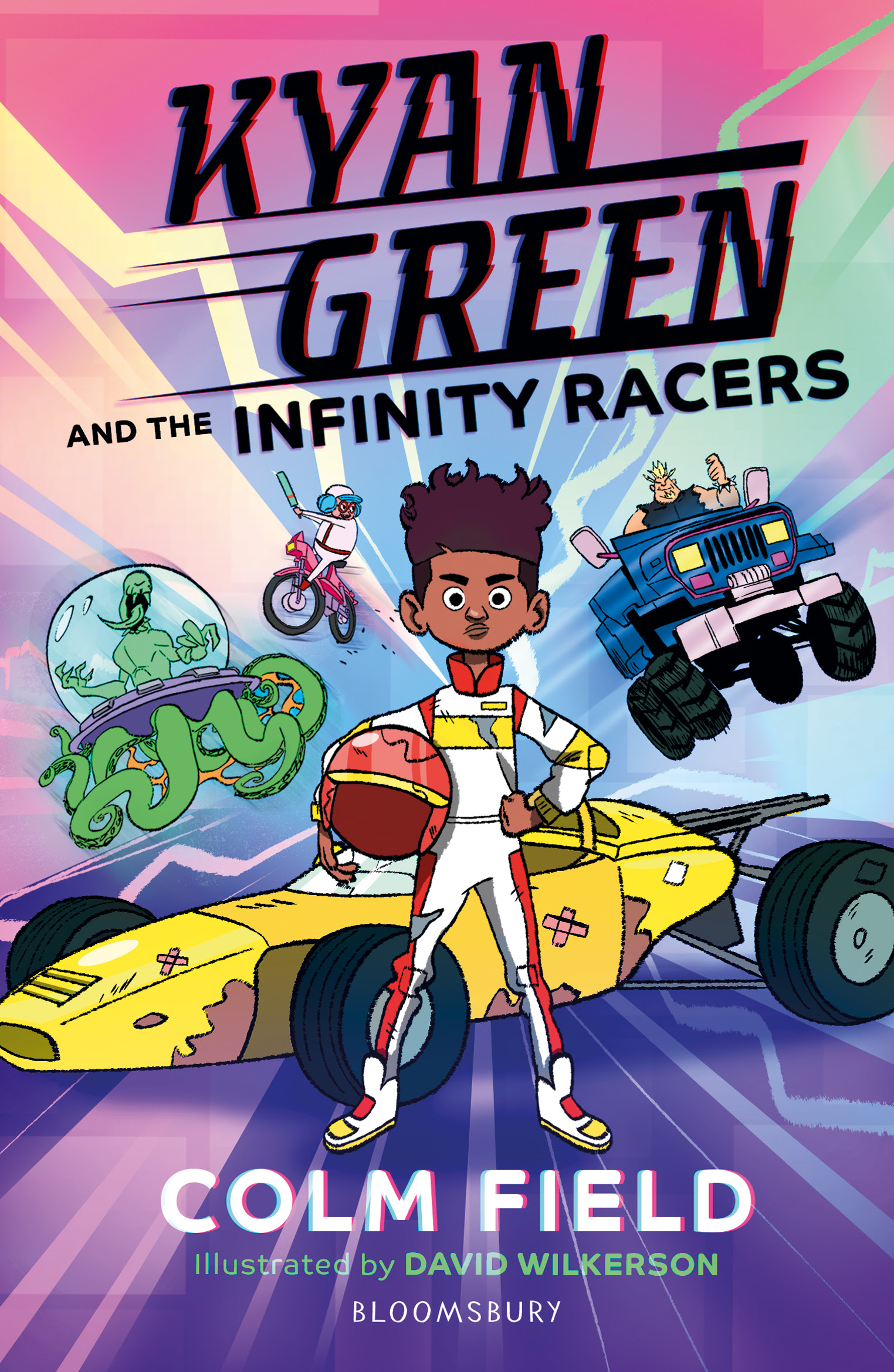
For the Writing for Children section of the #252 15 Mar 2023 issue of Writers’ Forum, I interviewed Colm Feld about his research into the science behind his debut children’s book series, Kyan Green and the Infinity Racers.
He told me the idea of a toy racetrack that rockets you to other worlds, came about when he was playing race cars with his own children. He had two thoughts: how soon could he get out of playing the game without feeling guilty and how mega would it be if…
In the book, the toy racetrack that Kyan discovers is a String Theory Based Multiverse Hopper. Colm revealed, the multiverse aspect came about later on, when Kyan Green was clearly more sci-fi than fantasy because the idea a racetrack would just take you to other worlds because Magic kept bothering him. He explained it took a while to be happy with the multiverse as a cause – it wasn’t everywhere everywhere like now, but it was common enough that he worried the concept was stale.
When he spotted an article about string theory on his news feed, he told me he fell down a rabbit hole in a good way. The multiverses he’d seen in comic book movies etc had always been a plot device, rather than an opportunity to look at the science behind them. Even better, that science is mysterious enough to be magical, but grounded enough to offer some rules, so this meant he couldn’t go off the deep end and come up with lame excuses to get out of difficult plot points. Once he’d gone into the science, it wasn’t too difficult to explain it to children.
“I genuinely think that they’re more well-equipped to handle these kind of abstract concepts than adults. Also, I had an advantage in that my wonder at science is boundless, but my actual understanding is very slow. I get these articles about quantum physics and space (I flipping LOVE space). I read them with a face like George W. Bush. Then I check Bitesize for a explanation that makes sense to me, and after just five or six hours I’ve worked out what it’s all about to a Key Stage Two level.”
Colm Feld
With the basic idea in his head, this toy racetrack takes you places, he put the idea away until he’d come up with another story, something more personal, that would be the heart of Kyan Green. Once that core was there, he took the Infinite Race for a spin to other dimensions. He elaborated how there would be a random idea that would pop into his head, and then, while he was writing it up, the world would present its own rules.
For example, the Europa moon the Racers visit has a gigantic underwater ocean. What would the creatures be like that lived there? Would they see, given that they reside in a place with no light? How would they travel then? Why might this dimension’s rapacious Stringer be trying to exploit them? The characters the Infinity Racers encountered were the way they were, because that’s how their world had made them.
“With all these characters I know so well, it is a special privilege to work on Kyan Green as a series, a knockout opportunity to broaden their (and my) horizons. I’ll feel very blessed, right up until I have to remember names and places and… ahhhh, I’m useless at that!”
Colm Feld
Colm explained writing Kyan Green as a series also tossed up other challenges – most importantly the need for an overarching conflict, something that gels the stories together. He told me the story personally affects the characters and the main characters in particular are genuinely altered by the challenges they encounter in their first adventure. Colm revealed this made it difficult to reset the clock for their next adventure. They might not fight the same battles, but surely they’ll have to build on what they’ve learned, which in itself is an overarching (if internal) conflict.
Colm’s advice to other writers is to find that bit every day where you’ve nowt to do but write, whether on the bus or on the bog. Oh, and if you’re writing for younger readers, please please please don’t talk down to them – kids are brilliant, and even in those times they’re not, they’re the kind of plonkers you can say owt to and they’ll still pretend they get it anyway.
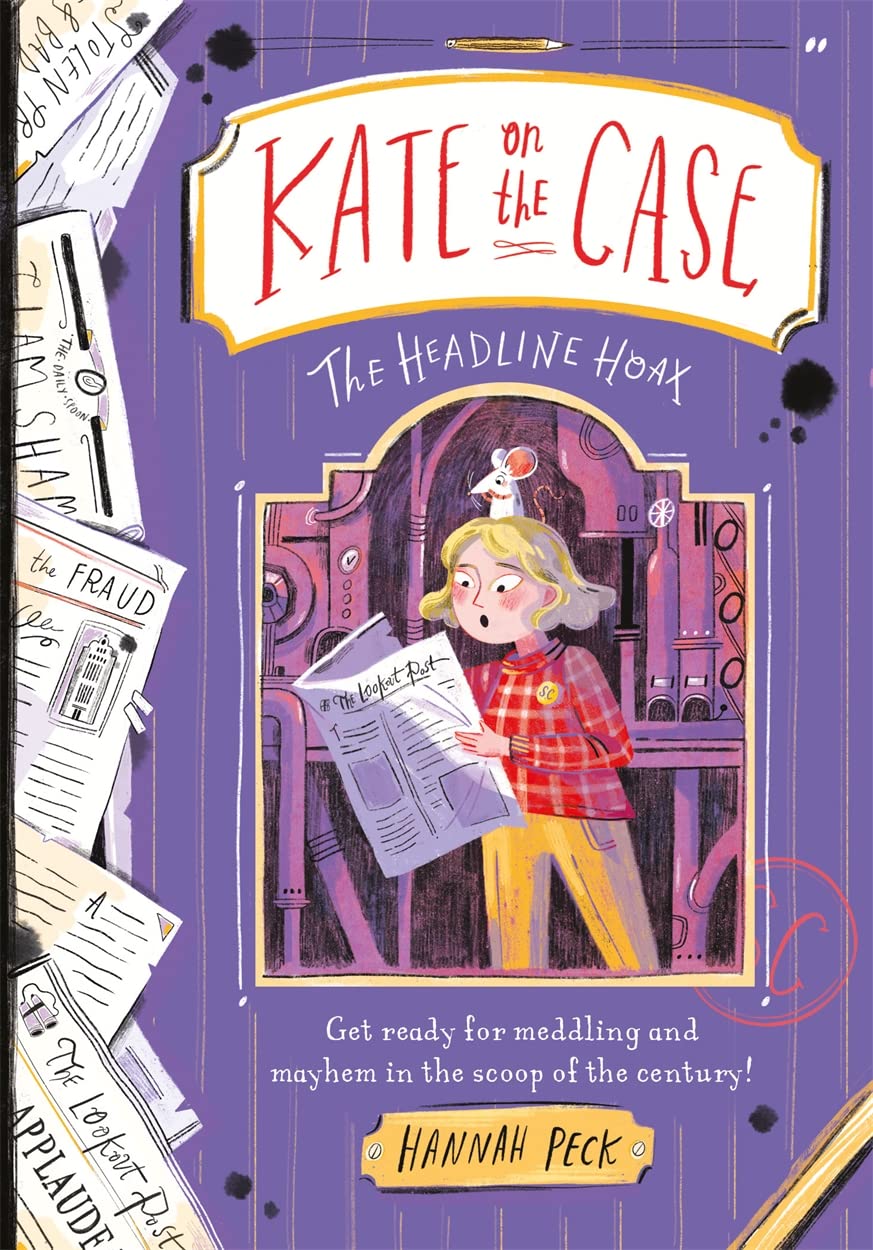
Kate on the Case: The Headline Hoax is a fun, fast-paced adventure with lots of exciting twists and turns to keep the reader turning the pages. Hannah Peck definitely has a great understanding of her 7 – 11 year old readership and her brilliant illustrations compliment the text perfectly.
In this third mystery in the series, Kate is thrilled when she receives an invitation to work as a reporter at the local newspaper alongside her hero, Catherine Rodriguez, for her birthday. But then she discovers, Penny Press the proof reader, distraught as she has checked the copy of The Lookout Post newspaper over sixteen times before it went to press and somehow it still contains spelling errors and nonsense headlines. She insists they were not there when she checked it.
Kate and her trusty mouse sidekick, Rupert, have forty-eight hours to discover who the saboteur is before the owner, Figgy FitzHarris, shuts The Lookout Post down for good. Readers can help solve the mystery alongside our two amateur detectives, Kate and Rupert by unravelling the clues and eliminating the red herrings.
A great book to get those brains ticking. Ideal for all KS2 bookshelves.
This book was previously reviewed on Netgalley and Goodreads.
Even picture books need researching. A good writer always checks their facts. For the #252 15 Mar 2023 issue of Writers’ Forum, I interviewed Ebele Bright about the research she did for her picture book about eagles, Fly Chico Fly.
Fly Chico Fly is a story about an eaglet, Chico, who is afraid to do what birds are naturally good at, flying. He feels left out as his brothers have already taken to the skies, but his vivid imagination and caution stop him from taking that important leap. The story follows Chico as he learns to face his fear of flying.
Ebele told me the internet is her first stop during research, as so much information is readily available and easily accessible. She finds it an invaluable resource. There is access to research papers, places to visit, library searches, documentaries, other people’s pictures and videos, movies, images and more. She elaborated:
“I knew I wanted an eagle for this story and immediately looked into the different species of eagles, their appearance, anatomy, natural habitats, flight altitude, what they are synonymous with, their flying and landing positions, their interaction with their young, and how they learn to fly.”
Ebele Bright
She used Google images for pictures of eagles and chose the bald eagle, as she felt it would translate easily to illustrations, and capture the attention of children. As she particularly wanted to understand and express Chico’s concern of the differing weather conditions she searched Google images of eagles in their natural habitat. She explained it was important to her to make her research relevant to young children.
As well as the informative websites, she used video footage from places like Netflix and YouTube to further supplement her research. She told me Our Planet on Netflix was particularly useful for observing different environments and the documentary 72 dangerous animals: Asia on Netflix was also helpful. She watched on YouTube, a particularly beautifully slowed down flight of a bald eagle by the Epic slow Mo channel and discovered an Instagram hashtag search with your word of interest, comes up with useful images and videos.
Ebele also searched the bible app for verses containing eagles and read through them. The bible spoke of the swiftness of eagles, their superb vision, powerful wings, natural habitat of dwelling on the cliffs, rocky crags at night and building their nests on high, and the intentional and caring relationship between parent eagles and their eaglets.
As children learn by play, fun and in the most natural way she followed their lead by weaving certain elements into the story; a few characteristics of eagles, like their ability to fly really high and their perfect vision. She also mentioned specific parts of their anatomy to spark questions, providing some education on eagles in simple format.
The information was dropped in bite size by putting an illustration of a wing and talons on one page to encourage discussion, and allow kids to point to parts of the eagle’s anatomy. Ebele observed her own children particularly love talking about the differences between eagles and humans, and naming parts of the eagle. The emotional development for Chico was important to validate his fears, explore his vulnerability, guide his speech and growth, so that children relate to him.
“I found speaking with counsellors and parents about their knowledge on dealing with fear fascinating. I wanted to know their body language, word usage at the beginning of counselling, techniques for helping children walk through obstacles and the visible signs they are opening up. I spoke with other parents and drew on my parenting style raising fearless children, as well as my childhood.”
Ebele Bright
To ensure she portrayed this accurately she spoke with teachers as they have more access to children from different backgrounds. She wanted to discover how they navigate different emotions in the classroom and help guide children needing more support. Ebele explained observation is our close friend as writers. She constantly observes people, things and environments, because it’s free. She likes to observe the workers at her daughter’s nursery to see how they interact with the children.
“On one occasion, I recall the tearful screams of a child who clung to his father in hopes of not going into nursery. I observed a staff member calm the child, turning his lunging hands into a warm embrace. The staff member validated the child’s feelings with soft spoken words, an attentive gaze and an open body language.”
Ebele Bright
A combination of these experiences helped her to frame Chico’s dialogue and character development, as both dialogue and character are interwoven.
Ebele’s research tip to other writers writing picture books is to read it aloud to people to gain feedback and watch their reaction. Reading to children in groups is a helpful way to observe which parts of your story stick, and makes them laugh. Did they understand the story? Did they enjoy it? Which parts are they repeating afterwards? Children are beautifully expressive and very honest. She revealed she prefers to do this without the illustrations, as it gives a true picture of the strength of the story.
Ebele said she organises the information she finds by the main character, relationships, environment and any additional details. She knows which details are really important and dispensable. She then makes a collage on google docs using screenshots and images, sketch things on paper, and make notes until her research looks more like a painting, and not just individual splashes of colour.
She emphasised it is important to remind yourself research must come to an end to avoid the research vortex which may ultimately keep your story at bay. Allow your imagination the freedom to thrive and simply write.
To read the complete unabridged feature you can purchase a copy of the #252 15 Mar 2023 issue of Writers’ Forum by ordering online from Select Magazines.
The Forgettery is a brilliant book that has a theme of memory and how things can be forgotten over time, touching on dementia in a sensitive and reassuring way. This fantastic picture book was one of my favourites for 2021. It is a celebration of love between a young girl and her Granny and has an amazing timeless quality.
Walking in the woods one day Amelia and her Granny stumble upon The Forgettery – ‘a place where you can find anything you have ever forgotten’ from ‘maps, moments and memories.’ Rachel Ip uses alliteration throughout the book to give the text a lyrical charm.
Each double-page spread is full of exquisite details for children to explore and discuss. I particularly like the warning sign of how memories may be delivered out of the blue, the draws full of all the odd socks, glasses, shoes and handbags and the use of colour that make the images fade and amalgamate into each other to give a dream-like illusion.
Although the word dementia is never mentioned there are hints that Granny’s memory loss is more serious by the things she has forgotten, things that she may do every day. The addition of making a memory book to help people remember their most treasured memories is lovely and I’m sure children will enjoy creating their own. The I also liked the excellent memory making advice on how to make beautiful new memories to remember and share. Children will enjoy sharing their ideas and carrying them out.
I believe this book l will be loved by adults and children alike and both will be happy to reread repeatedly, as it leaves you with a warm feeling of love.