An interview with… Matt Gaw

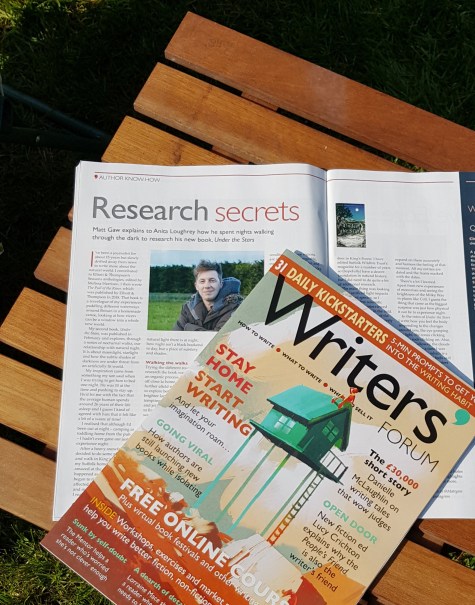
In this month’s issue of Writers’ Forum I have interviewed Matt Gaw about his research for his second book, Under the Stars, which was published by Elliott & Thompson in February this year. It is about moonlight, starlight and how the subtle shades of darkness are under threat from an artificially lit world, exploring through a series of nocturnal walks, our relationship with natural night.

Matt Gaw 6

Matt’s inspiration to write Under the Stars came from something his son said when he was trying to get him to bed one night. He was 10 at the time and pushing to stay up. His son told him the average human spends around 26 years of their life asleep and felt like this was a waste of time. Matt realised that although he had been out at night – camping or toddling home from the pub – he had never gone out just to experience night.

Under the Stars jkt

So when day after a heavy snow fall, he decided to do some research and walk in King’s Forest near his home in Suffolk. Matt was amazed at the changes that happened as darkness slowly began to rise, changes that affected both the landscape and his own body.

“I think I realised then how much natural light there is at night; how night isn’t a black bookend today, but a place of subtlety and shades.” (Matt Gaw)

Matt explained walking the different routes to research the book was an organic process. He started off close to home and then started to go further afield when he wanted to explore both darker and brighter landscapes because he feels it is important for people to experience the nightscape close to home.

“It’s about being honest I guess, showing people that there are problems but there is action that can be taken and beauty to be found.” (Matt Gaw)

Matt told me he realised he felt safer the darker it was as once your senses have adapted to darkness, it is easy enough to navigate.

“It’s strange really, in some ways your world is made smaller – you operate in this reduced bubble of visibility – but in other ways it is infinitely bigger. At night you experience not only space, but time; the light from the stars has often been travelling for thousands of years before it reaches your retina.” (Matt Gaw)

Matt explained that wildlife is most active at dusk and dawn and I was lucky enough to see an otter hunting in Scotland and had some memorable encounters later with a huge, galloping herd of deer in King’s Forest and nightjar on Dartmoor. He has edited Suffolk Wildlife Trust’s magazine for a number of years so has an excellent foundation in natural history, but discovered he also needed to do quite a bit of additional research.

The main thing was looking at how artificial light impacts on different species, so he read quite a few scientific papers and also interviewed academics working in the field. For example, Travis Longcore, one of the first people to write extensively about artificial light and ecology was very generous with his time and illustrated to Matt how our perception of darkness is a world apart from that of nocturnal species. He recounts parts of this conversation in Chapter 5, while exploring the night close to his Suffolk home.

His research tip to other travel writers is to read everything on your topic or location – local guides, national stories, folk stories, blogs, scientific papers – then rip it all up and write your own. Matt tries not to over plan his trips, he has a rough idea of where he will start and where he wants to go, but he prefers to be adaptable to prevent being  closed off to the actual experience. If you’re just marching from A to B Matt believes you will lose something.

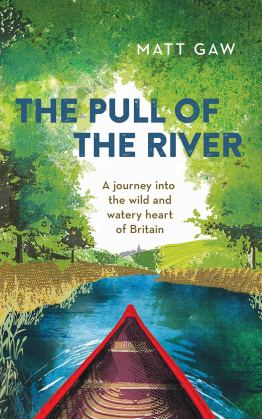
Matt’s has also written The Pull of the River where he explores Britain’s waterways with his friend James in a canoe, to give a new insight into nature, place and friendship.

Pull of the River

To find out more about Matt Gaw and his writing you can look at his website www.mattgaw.com, and follow him on Twitter @Mattgaw and Instagram @mattgaw

You can read the complete feature in #223 2020, which is available to buy from Writers’ Forum online at Select Magazines.

To read my latest Research Secrets or Writing 4 Children interviews you can invest in a subscription from the Writers’ Forum website or download Writers’ Forum to your iOS or Android device.

Using subtext

Subtext is the gaps between what they people thinking and what they actually say. Ernest Hemingway called this the ‘Iceberg Theory’ as there is deeper meaning below the surface of the text, in the same way as the bulk of an iceberg floats beneath the surface of the water.

Iceberg

For example, when using dialogue to develop action, the real significance is not what is said but what is meant. People hold back information all the time – they keep secrets, they avoid embarrassment, they twist the truth for good and for bad reasons. US playwright and film director said:

“People may or may not say what they mean, but they always say something designed to get what they want.” (David Mamet)

The subtext reveals more to the reader about your characters than the actual text as you are conveying the motivation behind the character because when subtext conflicts with what a character says or does, it creates tension.

subtext3

Our challenge as writers is to use this omission and implication to create subtext that the reader will understand. Sometimes your characters may not even know what they truly feel or what they mean and sometimes other characters may totally misinterpret what they mean.

subtext4

You can create subtext by providing just enough information for the reader to allow them to connect the dots and reach a conclusion. To do this you need to reveal information about the plot or characters without stating it outright. In this way you are foreshadowing what’s to come.

Self-confidence could be pure bluster, evasive replies could be resistance and a seemingly harmless piece of gossip could ignite the fuse that smoulders into a dramatic explosion. A small crisis could carry the seeds that grow into high drama. Knowing what your characters really want and their motivations will strengthen your characterisation and intensify drama in your writing.

subtext1

I find acting out the story can help with this as it provides the opportunity to explore the character’s thoughts and situations and the different way s tension could be implied to allow the reader to make personal connections.

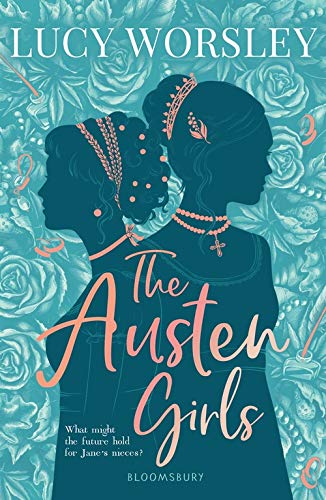
Book Review: The Austen Girls

Title: The Austen Girls

Written by: Lucy Worsley

Published by: Bloomsbury

The Austen Girls

An expertly written historical YA novel that weaves real people and places with fictional events that portray the realities of Georgian England. Fanny Austen is the eldest of eleven children. She is the niece of the infamous Jane Austen and is about to be launched at her debut ball in order to find a husband who can support her and take the burden off of her family. Both Fanny and her cousin Anna are frequently told their futures depend on finding a husband with money.

Although, I am aware these were the attitudes of the time and is no reflection on author and historian, Lucy Worsley, I personally found the opinion that women need to be married made my skin prickle and could feel myself getting angry and defensive. It drummed home how the majority of people are much more enlightened than they were over 200 years ago. Lucy skilfully portrays her characters to consider these attitudes and make up their own minds about their reasons for marriage.

We follow Fanny through her trials and tribulations of feeling obliged to find a suitable husband without ever really knowing what her heart truly desires and the emotional ups and downs of life changing events. We also see through Fanny’s eyes how her cousin Anna deals with finding a suitor and views it as a means of escape from her own life.

Yet the only man who Fanny truly enjoys dancing with is the clergyman Dominic Drummond and she has been told clergymen do not earn enough money so are not good prospects. He is then conned and whisked away to a correction centre. Fanny is left to prove his innocence and with the help of her Aunt Jane adopts the role of a thief-taker, which is similar to a detective.

Lucy Worsley’s thorough research and knowledge shines through every page with her cleverly entwined details of rooms within Godmersham Park and other locations. The reader has a distinct idea of the era and the characters are all well formed and leave you wanting to learn more about the Austen girls, their families and their futures.

An interview with… Jane Borodale

In Dec 2009, I interviewed historical novelist and short story writer Jane Borodale for my Research Secrets column in the national writing magazine Writers’ Forum #98.

B Jane Borodale

She explained to me how she steeped herself in the period by reading widely, including contemporary commentary such as Thomas Turner’s diary of 1754-65 and the enclosure and rural social change, prostitution, illegitimacy, parish relief, the bills of mortality. She also listened to music; Handel, Rameau, Thomas Arne, secular street ballads and poured over maps of the period like John Rocque’s famous map of London, and images of daily life from Hogarth to Paul Sandby, to get a clear idea of clothes worn at the time.

A THE BOOK OF FIRES

Whilst researching the chalk downland area for her novel, The Book of Fires, published by Harper Collins, Jane Borodale realised what a rich resource the Weald and Downland Open Air Museum was. Historic buildings, rescued from destruction and rebuilt to their original form on the Museum’s site in Sussex, demonstrate examples of vernacular homes, farmsteads and rural industries from the 13th to the 19th centuries. They’re presented in a historically precise way which also strongly evokes their individual setting and period, and they seemed ripe for exploring with the fluidity of fiction.
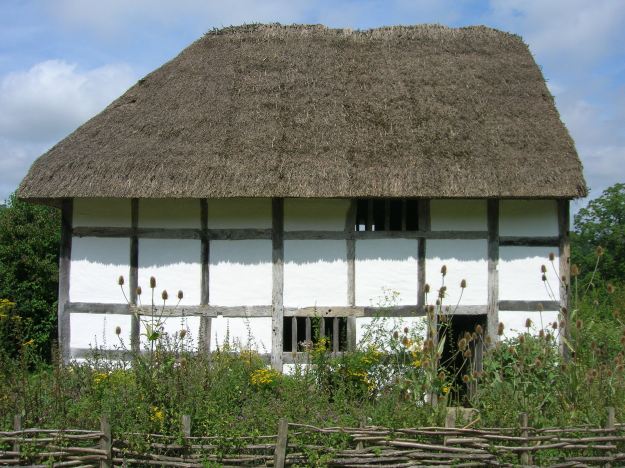
C Poplar Cottage Washington

“Studying the buildings closely has made an enormous difference to the scale of the way I see history – its human intimacy – and I have learnt much about using texture and atmosphere. The library for researchers at the Museum is a small goldmine – with an authentic 14th-century draught blowing over the flagstones under the thick oak door – and filled to the brim with books about vernacular architecture, building techniques and social history that relates to the Weald and Downland collection.” (Jane Borodale)

Jane explained that it was important to her to involve all the senses so she went to a butchery day one cold November, to discover what the smell of fresh pig fat was like; cooked recipes from Hannah Glasse that always seem to start ‘take a little bit of butter rolled in flour’; sat on the north scarp of the chalky Downs and looked inland, imagining her character Agnes creaking on the carrier up to London before the turnpikes had reached Sussex and grazed endlessly on the internet.

D Interior detail Bayleaf

She told me:

“I love research; it’s a huge privilege to spend time finding a trail through the wilderness of something fascinating – and call it work! I always think that looking at history is like putting your hand into a huge barrel for little fistfuls of stories – whatever comes up.” (Jane Borodale)

Researching the fireworks history was more specific, and Jane had the delicious feeling of eavesdropping on a faintly illicit scene to which she wasn’t initiated. She looked at both contemporary and modern fireworks material – the latter partly to verify the former, as many of the grubby fireworks manuals of the early 19th century were full of inaccuracies. She explained it was very exciting to order up little pamphlets at the British Library that had clearly been used over the years, blackened with thumbprints, offering recipes for detonating balls, silver rain, honorary skyrockets, serpents.

Many original documents are now digitised and searchable for free if you access them from your local library or records office – www.ancestry.com offers all census returns for England, Scotland, Wales and Ireland from 1841 to 1901, among other things, or you can subscribe for access from home.

The language of the 18th-century chemistry was also rich and poetic, with its roots still firmly planted in the work of the alchemists. Jane even had fireworks propped up in her workroom, in her desk drawers, and went to displays, rubbed gunpowder between her thumb and forefinger, visited a fireworks expert to talk about his pyrotechnic work (who also demonstrated an explosion for her in his garden).

For Jane, each of her projects has a different organising solution, but she tends to sort notes, maps and copying into a stack of variously coloured Manila folders, usually according to subject, though sometimes to place or period of time. She finds the activity of regularly sifting through helps her to remember what she has, and keeps it all current in her head when she’s working on something. She explained she has separate notebooks for different aspects – one for topographical on-site notes; one for useful scraps, and a (usually) smaller one that she always carry in case of sudden unexpected bursts of inspiration on the bus.

When a notebook is full she transcribes the best bits onto the computer, striking lines through the pages as she goes, and these notes tend to be a kind of halfway house towards the writing itself. At a records office or library she writes out her notes on sheets of unlined A4 and includes the reference of what she’s looking at the top of every page, which she also numbers as it really helps when she gets home and tries to make sense of all the pencilled, frantic scribbling. She finds the use index cards quite constricting.

Her writing tip for other historical writers is to actually go to the places your are writing about. Seeing for yourself the particular scale of an environment, the prevailing wind, light quality, smell, the tilt of the land or the narrowness of a street, where the sun goes down – distinctive things that can’t be got easily on the internet. Even a few, isolated hours makes all the difference. Also (and this is quite boring) she always tries to note down the full reference details of every tiny fragment that might be useful – it is hugely frustrating to be unable to follow up something half-remembered at a later date.

To read the complete feature you can purchase a copy of #98 Dec 2009 Writers’ Forum online from Select Magazines.

To read the latest research secrets interview you can invest in a postal subscription.

To find out more about Jane Borodale check out her website: www.janeborodale.co.uk

Life… but not as we know it

Now more than ever we need to stay positive, which is easier said then done.

coronavirus_structure

As a freelance writer, you would have thought I was use to staying home all day and working and that is true but at the moment with a full house it is extremely difficult to work. Everyone is pulling on my time.

I have my husband, three children and three-year-old grandson at home and I was not prepared for how much they all eat. My first problem was that even though I had sorted evening meals for at least two weeks, I had not even thought about lunch. I had to do a special trip to the supermarket just to sort out lunches for six people each day. These will be coming to an end at the end of this week.

My second problem is that my daughter seems to think I am now her child minder. My time is monopolised by my grandson who is potty training, which leaves me very little time to work on my writing. Don’t get me wrong I love being with my grandson but I am slowly running out of ways and role play ideas to entertain him. Any ideas please post and let me know.

trolley

The third problem is snacks. I never thought about snacks. In fact my family snack a whole lot more than me. I am avidly doing Weight Watchers and have over the last few months weened myself off of snacking but I did not account for how many more snacks I’ve had to buy and have in the house. this makes it so difficult for me. The temptation to eat is now constantly here in the house.  I hope other people who are also trying to diet via WW or any other way can empathise how difficult this is. Any ways you can suggest to keep me on track is much appreciated.

Puffer fish

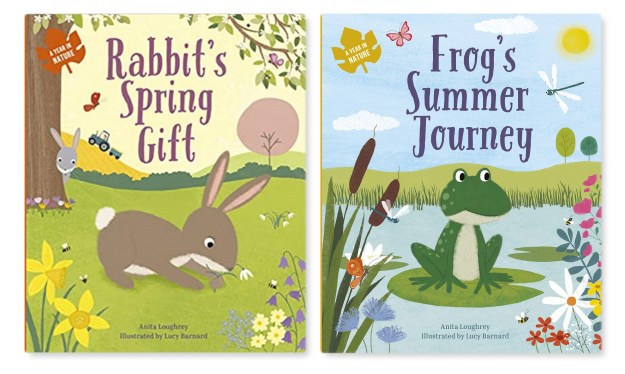
Another thing making it extremely difficult for me to stay positive is the very sad fact all events for my new books have had to be cancelled and now the publication of the other two books in the series, Squirrel’s Autumn Puzzle and Fox’s Winter Discovery, which were due out this September have now been postponed to next year, 2021 and I suspect this is September 2021 as they are seasonal books. 😦 So I am currently seeking ideas and advice on how to stay positive and publicise the two books that have been released in the A Year in Nature series. 

Also, my columns in Writers’ Forum have also been reduced as the magazine is printing the next issue and then there will be a five month gap during the lock down. This is because high street retailers, like W H Smiths, are obviously shut and the system for stocking magazines is being suspended in supermarkets. This will obviously effect sales. Disappointing but inevitable at this difficult time. I have let me authors know yesterday but very sad for everyone involved. 

So unfortunately, this has turned into a doom and gloom blog. I am in obvious need of cheering up. Positive comments welcome.

Book Review: Prime Suspect

Title: Prime Suspect – Suspect Identification System

Written by: David Holzer

Illustrated by: The Top That! Publishing team

Published by: Tangerine Press an imprint of Scholastic US

Prime Suspect - Suspect Identification System

Learn how to solve crimes by creating your own photo-fits and matching fingerprints. This book takes you through page-by-page the different skills required to solve crimes such as, making an e-fit using the CD-ROM, retrieving and studying fingerprints, interrogation methods and techniques and witness statements. There are many fun and interesting crimes to solve included in this book. They provide the reader with the chance to use the skills identified and see for themselves how and why they are used.

I think the CD-ROM is rather disappointing in the present climate of fast moving adventure games. The fingerprint database was too small to identify the fingerprints on the normal computer screen and would have to be enlarged on an interactive whiteboard. The photo-fit graphics are very simple and a little too basic for 9+ age range it is aimed at. Children today are use to creating miis on the wii and the Prime Suspect CD-Rom can not compete with this more advanced technology.

An interview with… Cas Lester

In September 2017, I interviewed Cas Lester about some of the differences between writing a children’s TV series and writing a children’s book series.

Cas Lester author picture

Cas explained for both children’s dramas for CBBC and her children’s books she always looks for a fresh idea or contemporary ‘spin’ on an existing idea. For example, Mischievous fairy Nixie wears ‘doc martin’ style boots and keeps a wand in one and a spanner in the other because she’s better at DIY than she is at magic. Her Harvey Drew books are based round the contemporary topic of space trash. 

When she is developing her characters and their world she researches the story territory and then does a huge amount of playing around with the idea – she revealed usually way more than is strictly necessary. She wrote a post-it note to make herself actually start to writing the first Harvey Drew manuscript, which she stuck to her laptop. It read: Stop mucking about and write the book.

Cas told me she plans everything as she is not one of those brave writers who can simply start writing and see where the story takes them. She believes this is because she is used to multi-episodic TV dramas where there are multiple writers and they all have to go in the same direction. All the episodes have to head towards the series finale, and the various subplots can’t conflict or be inconsistent. She also writes lots different scenes and chunks of dialogue until she can see the world and hear the characters speak. She explained she can’t write unless she can run the scenes in her head like an animation or a movie.

“I always write a series bible. For the Nixie books I included a calendar of events, the fairy realm, the fairies’ characters, jobs, and catchphrases, what their little houses were like and, crucially, the rules of magic. I am fanatical about consistency of rules. Again, I think this is because of my experience of creating multiple storylines with multiple writers. Inconsistency irks me, and I can’t bear it if rules are broken or fudged for narrative convenience. It’s cheating! My books are inspired by children – sometimes my own.” (Cas Lester)

Cas siad that one of the great things about writing children’s books is that they’re often illustrated. This can help fix the characters and the settings in your head. But not when you write the first book in any series, of course. She think in pictures. So she downloads images to help her get a handle on her characters, settings and key locations.

Cas loves subplots. She explained this is because when you’re making a children’s drama series, the UK law limits the hours a child can work on any day (and rightfully so). So you have a good proportion of scenes without your central protagonist.  Inevitably, this usually means having at least a B and probably a C plot too. Children’s books seem to be more linear.

“My writing is powered by chocolate – not always my own!” (Cas Lester)

do you speak chocolate

She told me how one of the big differences in writing children’s books rather than children’s TV is that the characters on the pages don’t age the same way real children do. She elaborated:

“The fabulous Dani Harmer was, I think, 12, when we cast her to play 10-year-old Tracy Beaker. With every following series she, and the entire child cast, grew a year older. We had to reflect this in the writing. Four series on, you couldn’t have 14-year-old Tracy behaving like a 10-year-old. It also meant we had to add some new, younger, characters in the following series in order to keep the age pitch right for the audience. It was always a nightmare when the children came to the first rehearsals of any follow up series. The boys changed more than the girls. Sometimes they’d shot up several inches, their voices had broken and they’d started shaving.” (Cas Lester)

In her book series there is no passage of time between the books. The characters don’t get older. They stay exactly the same, which Cas finds a lot easier. But she does have an ongoing story line. In the Harvey books it’s the on-going story line about Harvey trying to get home to Earth. With Nixie it’s about how Adorabella the Goody, Goody Fairy is always getting her into trouble with the Fairy Godmother.

When she is pitching an idea for a series, she drafts several story lines – even if only to convince herself that the idea really does have ‘long legs’.

“I always pitch at least two or three more books in the series.  It’s important to show that the subsequent books won’t be formulaic and that there is sufficient (ideally endless) fresh territory to plunder. Interestingly, when OUP commissioned the four Nixie books they wanted one for each season of the year, to tie in with publication dates, which isn’t something that would have occurred to me.” (Cas Lester)

Her tip for other writers interested in writing for children, whether for print or TV, is to remember to write for children as they are NOW and not as they were when you were a child.

To read the complete feature you can purchase a copy of #191 Sep 2017 Writers’ Forum online from Select Magazines.

To read my latest Research Secrets or Writing 4 Children interviews you can invest in a subscription from the Writers’ Forum website or download Writers’ Forum to your iOS or Android device.

You can find out more about Cas Lester and her books on her website, www.caslester.com and on Twitter @TheCasInTheHat

Rabbit’s Spring Adventure

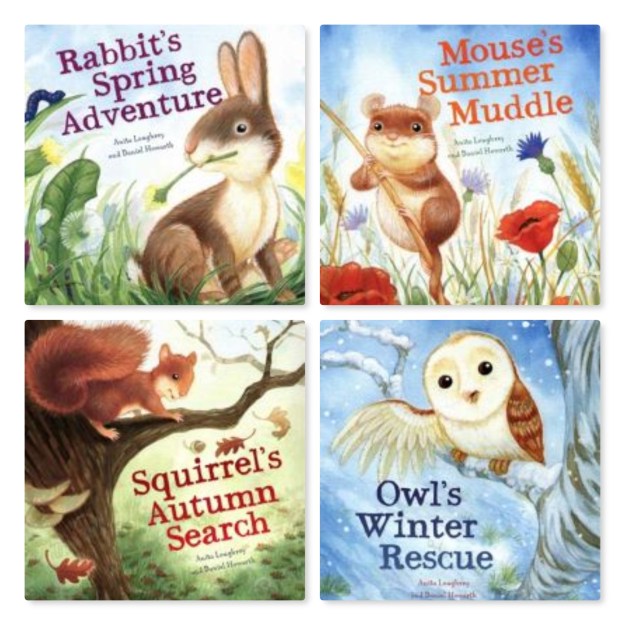
In 2012, I wrote a series of picture books based around the seasons which were part of the Animal Seasons series. They are published by QED and illustrated by Daniel Howarth.Season collage

You can listen to a reading of Rabbit’s Spring Adventure read by Jessica Zumhingst on YouTube. Jessica is a Kindergarten Teacher at North Park Elementary.

This year I have had the first two picture books also based on the seasons released just last month. They are part of a new series called A Year in Nature that compliment the previous series. They are also published by QED but this time they are illustrated by Lucy Barnard.


Book Review: Magnetic First Sums

Title: Magnetic First Sums

Written by: Mary Denson

Illustrated by: Barry Green

Published by: Top That! Publishing

These are hard-board books, which have been designed to promote numeracy skills, help hand-eye coordination and to encourage parent-child interaction are ideal for home learning at this difficult time. The pages are magnetic so the words and numbers do not easily fall off and the pages can be turned leaving the magnets in place, although there are not enough of some numbers to complete the whole book this way.

The Taking Away book contains over 70 sum magnets and the Adding Up book boasts to containing over 100 sum magnets. In my opinion the books will make learning fun whilst encouraging and reinforcing counting and taking away up to 10 (such as: 5-3 =; 7+2=).

Barry Green’s bright and colourful double-page spread illustrations contain a lot of action, ideal for prompting discussion whilst matching the numbers, pictures and symbols to the pages. I particularly like the way they relate adding and taking away to things that are familiar to the children in everyday life, such as how many children playing on the different equipment at the park altogether, and put the correct number of pairs of socks on the bed, if you put one pair of socks in the wash how many are left, etc.

Suitable for children aged three upwards, I think they would also make an ideal activity for KS1 children on the maths table. You will need a pretty little pot to keep all the magnets in though once you have taken them out to use.

An interview with… Eve Ainsworth

In December 2017, I interviewed award winning children’s author, Eve Ainsworth, about the issues she covers in her YA books and how she develops the different voices for her YA characters.

wf2

She explained:

“My YA books focus mainly on issues I experienced when I was working in schools, or issues I remember facing myself as a teen. I explore topics such as bullying, mental health, toxic relationships and self-harm.” (Eve Ainsworth)

In Damage the themes of self-harm, grief and alcoholism are explored. These are quite dark topics. In my child protection role, I had dealt with self-harm cases within the school and was trained in this area. I had regularly spoken to young people who had harmed and had been taught why so many chose to do so.

Eve told me how she had experienced a recent grief in the loss of her father and how this made the writing process extremely difficult. She’d also had direct experience of alcoholism as my older brother died of drink related illness.

Eve’s aim is to increase awareness and understanding by raising these themes and hopefully help to support those struggling.

“I know when I was young, I felt isolated at times and books helped me to tap into the feelings and emotions I was experiencing. It helped me and ultimately I hope I can help others.” (Eve Ainsworth)

Her favourite thing about writing for young adults is the characters’ voices. She love the way they are vibrant, questioning and constantly encouraging her, pushing herto break down the boundaries she might have set herself.

She reads her pieces out loud and if something sounds out of place or too adult, she’ll delete it immediately. In her head her characters have a total back story, she can tell how they’ll react to something or judge an action. She explained this is because they are part of her for a long time.

“It’s quite a strange process and difficult to describe to non-writers. They often look at me as if I’m mad.” (Eve Ainworth)

She told me that characters often send her in a new direction she wasn’t quite expecting – which is both an exciting and fairly stressful event. She discovered from a conversation in her head with Gabi she was even more vulnerable than she first thought and a lot of her pain and fears were hidden in a deep dark place within her. Eve knew she was going to be feisty and headstrong at the start of the book – but it was only through development and conversations she worked out this was just her ‘front’. Her way of preventing anyone coming too close and hurting her anymore. This is particularly evident in her relationship with her mum. Eve didn’t plan for it to be a difficult relationship. Gabi led me that way.

This information created more plot layers for Eve, so her novel became more than just about ‘self-harm’ – it was now also a book about identity and about relationships. Gabi’s relationship with her Mum became key – as the two are very similar in the way they deal with grief and pain. As the plot evolved it was clear to Eve that Gabi and her mum had to work through their demons together in order to move on and heal.

Eve explained:

“Voices come from having strong, relatable characters. Once you have a well-defined character in your mind, their voice should be unique –and as I mentioned before, the voice will be with me – in my head, like an old friend nagging at me.” (Eve Ainsworth)

Eve told me that to ensure her characters’ voices are different from each other she uses subtle differences in the writing – phrasing and sentence structures to make the characters stand out. She asks ‘would he say that?’ ‘how would she react to this’? The differences become magnified once the characters are fully formed. Development of character is key. Only once you have a strong character can you have a strong voice. Her tips to other writers who want to get the voice of their characters write is to either ‘hot seat’ or write out a questionnaire asking your character several questions.

Think how would they react to a given situation, or how would they feel if this happened? Consider how your character responds – tone, body language, facial expressions and make notes – all these factors will help you to create their unique voice.

Eve suggests you could get your characters to write to each other, a couple of letters each to help develop their different style. Or write a short monologue in the voice of one character – telling their version of a story (whether it be the one you are writing or something completely new). Then, get your other character to tell their version of events. Read both pieces out loud. Do they sound like two individuals, or the same person? If it’s the latter, tweak – look at the words used again, the sentence structure. The tone. Make them different and stand apart.

A final good exercise that Eve shared with Writers’ Forum readers is is to listen to other peoples’ conversations more. Eavesdrop. Notice how voices are unique and make notes about what people are actually saying to each other, how they say it and what they don’t say. Buses and trains are great places for this, and it’s the reason why I carry my notebook everywhere. You never know what you might discover or overhear. Writing is the perfect excuse to be a nosy beast.

You can find out more about Eve Ainsworth’s books on her website: www.eveainsworth.com and Twitter @eveainsworth