An interview with… Kathleen Duey

I interviewed her in November 2007, as a speaker at the SCBWI Bologna Conference, March 2008.

Kathleen Duey is the author of over 70 children’s and young adult books including historical fiction, nonfiction, picture books and dark fantasy. She was one of the 2007 finalists for the National Book Award for Literature for Young People, with her novel Skin Hunger: A Resurrection of Magic. She writes for adults with a partner; they have a finished novel with an agent and a second work being optioned by HBO. She lives in San Diego County, USA.

Kathleen Duey

This is what Kathleen told me:

I always want to be a writer. My fourth grade teacher encouraged me and got me started writing stories. Then an English teacher in high school made me promise I would keep writing and give it a serious try, which I finally did, in my late thirties. Mrs. Fredericksen and Mr. Doohan. Bless ‘em both.

She explained all the work she has done and all the play, informs her writing. Living off-grid for a long time shaped her, too. She missed a couple of decades of TV. She does a lot of historical research for her books. But, the research never hampers her historical fiction. She uses a lot of primary sources and they always enrich, guide, inform. She told me she has never once felt constrained by facts.

Kathleen said she identifies very closely with all her characters, so in a way, has been all of them. She could live where Heart Avamir lives. (The Unicorn’s Secret) in fact she hinted she did, in a weird way, but that’s a whole story in itself. Her life has been extraordinary – she dropped out of the mainstream and lived off the land for many years. That gave her a rich vein of knowledge to mine.

Her childhood influenced what she writes in every way. She grew up in rural places, was raised by rural parents. She writes historical fiction and fantasy… both usually low tech, in cultures where people are close to the soil. As a child, her parents bought her non-fiction, almost exclusively. The first novel she loved was Molly Make Believe, an old book she found in her great Aunt’s apartment. Then came Black Beauty and then all the Farley books. In middle school she discovered fantasy and SF and was astounded at the created worlds, the possibilities of speculation, the massive intellects of the writers.

Kathleen claims the best books are autobiographical to some degree.

I work alone, almost always, in my office at home. I often play music, quietly. Sometimes I prefer silence. If it is chilly, Rooibos tea is wonderful. The hardest part of writing is sitting still, indoors – I hate it. The shortest time it has taken me to write a book is nine days. the longest was fifteen years.

She told me, people just need to figure out what is comfortable, what works for them when it comes to social media and marketing. She likes travel, she loves schools and speaking has become fun even though she said she began as a nervous, two-puke speaker, she now enjoys it.

Every book presents different obstacles, various areas of clear sailing.

I like every genre I have written in and intend to try more. It’s just the way my brain works; it’s not a conscious business choice or a deliberate artistic decision. It is about the individual project for me, not the genre. Whatever takes my breath away – that’s what I want to write. I like writing for all age groups. I seem to thrive on variety. Writing for kids is an obvious choice for me. I like kids. And I am head over heels in love with the possibility of touching a child’s (or a teen’s) life the way mine was touched by books.


 

Re-evaluate your characters

Sometimes you need to step back from your writing and take a deeper look into your character’s and their story so they do not appear flat on the page.

Flat Stanley

Ask yourself if your readers can relate to your protagonist. You need to consider who will be reading your book. It does not matter how clever, funny and charming your characters are, will the readers truly care about them. What can you do to make them care more?

SC_D11_02752

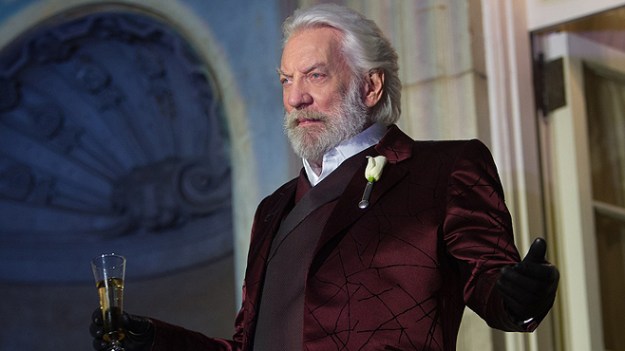
Often you can relate to your readers by giving your main character a problem they can empathise with. But it is not just the hero you need to consider. You also need an enemy for your hero to battle against. Someone who is blocking their way to achieving their goals.

The antagonist in your story should appear to be everything that your protagonist is not but they must also have some good qualities as well. People are not good or evil. Your characters should have the same character traits, as the rest of humanity to give them depth. Both your hero and antagonist need to have a few bumps in the road. Life isn’t smooth. Let them both make mistakes and figure their way out of their problems.

President Snow.jpg

Begin and end your story with a bang. Remember your hero needs to learn a lesson about themselves. Are they braver than they thought? Did they know more than they thought? Were they in love with the person they thought? Your characters should have some type of self-realisation.

Peeta Mellark

It can be subtle. You do not have to go into a five chapter monologue on it, just give the readers some clues how they have changed.

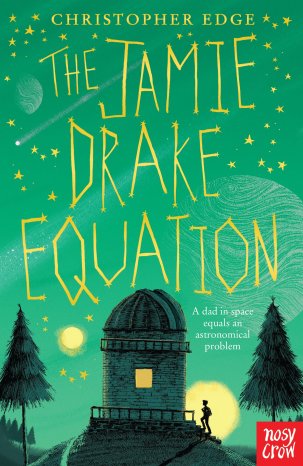
Book review – The Jamie Drake Equation

Title: The Jamie Drake Equation

Written by: Christopher Edge

Published by: Nosy Crow

The Jamie Drake Equation

This is an ideal book for young sci-fi enthusiasts. It combines real interstellar facts with fantasy to produce a unique and heart-warming story that will keep the readers turning the pages.

Written in first person narrative, Jamie retells the story of his dad, Commander Dan Drake, who is about to embark on a spacewalk as part of a mission in search of alien life. He has been orbiting the Earth in the International Space Station for several months but won’t be back in time for Jamie’s eleventh birthday.

Jamie describes how he disturbed Professor Forster, an astronomer doing unofficial investigations into signs of extra-terrestrial intelligence, at the abandoned observatory and inadvertently picked up a weird signal on his mobile phone which he tried to charge it from her laptop. The phone buzzes in his pocket and strange messages start coming through from an ancient alien civilisation known as the hi’ive, which Jamie names Buzz. When Jamie’s dad gets caught in a solar storm during his spacewalk, Jamie and Buzz have to save him.

The Jamie Drake Equation touches on the issue of divorce without labouring the point. The reader is left with the sense relationships change but they are still a family. A satisfying, thought-provoking book for mid-grade readers, which will make you laugh and cry.

The job of an editor

In my opinion an editors job is to see the book all the way through not just to edit it. Being an editor is not only about getting the book into a child’s hand, but getting the book noticed by parents, trade, bookstores and libraries.

Getting an editor to love your work is the biggest hurdle of all because what the editor does is become an advocate of your work within the publishing company. If your book fits into the list, it means the editor loves it and has transmitted that enthusiasm to others. There needs to be a shared passion for the book between writer and editor.

daisy

They love me, they love me not…

If an editor likes a book, they will take it to an editorial meeting, if others feel the same way as them it is then taken to an acquisition meeting, at which the editor has to convince the sales force and marketing people that this great book has commercial possibilities. They often spend a lot of money on marketing.

salesology

It is important to keep in mind that it is still your responsibility as the author to promote your book. As an author do not depend on the publisher to do all the work for you. You will need to organise your own book tours, your own school visits and your own merchandise.

The truth is you have to find the publisher that’s looking for the sort of book you’re writing, read my post on The Publishing World last week.  Capture their attention by being an original voice. Remember you are sending your manuscript to someone who reads over 500 a year. Ask yourself:

Would an editor jump off a bridge for this book?

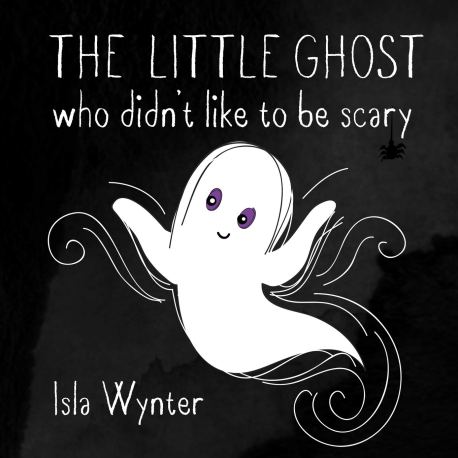
Book Review – The Little Ghost who didn’t like to be scary

Title: The Little Ghost who didn’t like to be scary

Written and illustrated by: Isla Wynter

Published by: Peryton Press

This unusual sized, 17cm x 17cm, Halloween themed book is about challenging stereotypes. It is about Layla who does not want to be a scary ghost that haunts the castle. She prefers to play and be friendly so she goes to speak to the wise old owl.

An excellent book for showing how important it is to talk about your worries and ask for help if you need it. I like the way the author, Isla Wynter, demonstrates free will when Layla thinks about the advice she receives from the owl before deciding what she wants to do.

The bold illustrations are white on a black background. These high-contrasting black and white pictures are ideal for very young children. Studies show babies from 6 months old can detect light and dark contrasts: see here. Black and white visual stimulation encourages young children to focus their eyes on objects and over time helps to increase attention span.

The Little Ghost who didn’t like to be scary could be used in the classroom and at home to reinforce and discuss how we shouldn’t make judgements about people based on what they look like.

An interview with… Moira Butterfield

I have a regular monthly, double-spread feature on writing for children in the national writing magazine, Writers’ Forum, which contain loads of writing tips from successful authors, agents and editors. The focus is on what works for these professionals and how this could benefit other children’s book writers. These features have been running for three years now.

In the #217 November issue I interview children’s non-fiction book writer, Moira Butterfield, about her latest books and why non-fiction books are so important. 

Moira Butterfield1

Moira has been fighting the children’s non-fiction corner for many years and proudly told me:

It’s an exciting time for children’s non-fiction. For years non-fiction was not valued in the trade. This has changed thanks to the influence of the US market, in particular, where non-fiction is highly valued. At last we are being paired with good artists and editors are keen to hear from us. Thank goodness kids who love non-fiction are at last being catered for in the trade.

Moira Butterfield

Her latest books are Welcome To Our World, illustrated by Harriet Lynas and published by Nosy Crow and Home Sweet Home, illustrated by Clair Rossiter and published by Red Shed (part of Egmont UK).

Welcome to our World demonstrates how children all over the world are very different, but they also have much in common – despite different languages, customs and traditions, everyone shares a love of family, friends, food and fun. Home Sweet Home, sets out to explore the familiar features of a home, touching on different cultures and history to encourage children to think about what it is that makes a home.

Moira explained it is important to provide a diverse viewpoint, that all children will find interesting.

When writing non-fiction for children we not only need to get facts right with careful research, we also need to make sure that our work is multicultural. By ‘writing multiculturally’, I mean creating text that has an awareness of the whole world naturally and effortlessly within its fabric.

Moira Butterfield

Her tip for children’s non-fiction writers just starting out, is to go to bookshops to get an idea of the visual styles being published right now. Make a note of the text length being used, the types of illustrations and the layouts of the books. Think carefully about what you like and what you do not like. Buy some of the books you like and study them closely. Note the approach, the word count and how it appeals to the age-group it’s aimed at. Feed this information into your own work.

You can find out more about Moira Butterfield and her books on her website: www.moirabutterfield.com You can follow her on Instagram @moirabutterfieldauthor and on Twitter @moiraworld

The world of publishing

More and more publishers are saying they no longer accept unsolicited manuscripts or writers can only submit to them through an agent. An agent is essential for the children’s fiction writer. Mainstream publishers will only look at agented work and as we all know, agents are becoming increasingly difficult to find. But don’t despair…

Agents of Shield logo

With the big publishers, what is on the shelves is what was accepted about eighteen months ago. The independent book publishers get things out a lot faster, so their turnaround can often be about six months. A good idea is to find out about these independent publishers. They are often more likely to take on new writers from the slushpile.

If you do decide to go it alone without an agent, it is important to identify the market place you think your book will fit into so you have an idea about who will be publishing your work even before it is finished. Don’t plough on with a book before you know where you are going to send it. Know where your story fits in the market. Take a look at the Children’s Writers and Artists Yearbook.

sherlock-holmes

Evaluate who is publishing what. Not only by looking at the publisher of the types of books you like to read, which are the same genre as what you are writing, take a look at what else is out there too. You need to have your finger on the pulse, look at their catalogues and websites for things that are due to come out. Narrow your market down and check out the publishers’ websites for more information and their submission guidelines. Really get a feel for the market place and remember, as mentioned already, if the books are already in print they are two or three years out of date from what the publishers are looking for now.

Think about your elevator pitch too. If you have a problem defining your own book you need to be realistic and consider if it is working for the reader. If you do not have an agent to champion your work it is even more important for you to be able to sell your novel – else what is the point of writing it.

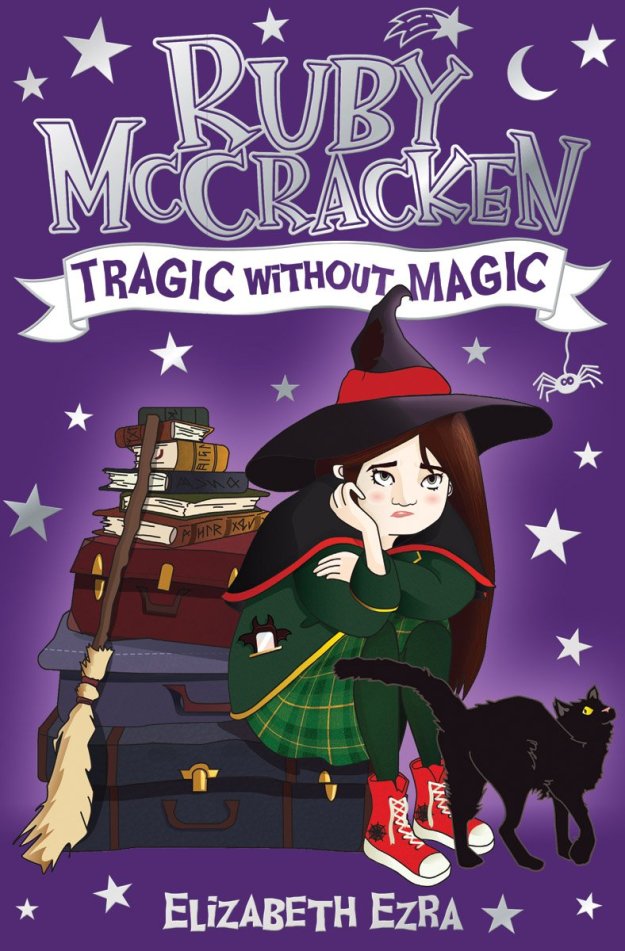
Book review – Ruby McCracken

Title: Ruby McCracken Tragic without Magic

Written by: Elizabeth Ezra

Published by: Kelpies, Floris Books

Ruby McCracken

In a reverse plot to Harry Potter, twelve-year-old Ruby McCracken believes her life is over. She has been forced to leave her home in Hexdonia and live in the ordinary world, without magic, after her parents both mysteriously lose their jobs at the same time. She is totally magicless – she can’t even conjure up a quick snack spell to ward off the hunger pangs. She misses leaping off the flyway on her broomstick to go to school, she misses her old school and she misses her witchy best friends, Abigail and Margaret. Even her familiar, Vronsky, has turned weird. So when the girls at her new school are mean to her, she tries to phone home, with dire consequences.

This fast-paced, mystery-adventure story set in Edinburgh, will appeal to eight to twelve-year-olds. Ruby McCracken Tragic without Magic is packed with humour, magic, disgusting food concoctions and hilarious anecdotes that will be perfect for fans of the Worst Witch and You Can’t Make Me Go to Witch School.

Ruby McCracken Tragic without Magic could be used in the classroom as a good starting point to discuss talking to strangers and how to make someone new to their school feel welcome.

An interview with… Helen Lipscombe

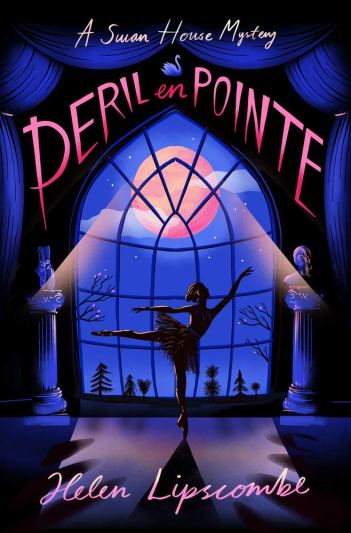
In the #217 November issue of Writers’ Forum Helen Lipscombe told me all about researching both espionage and ballet for her debut children’s novel, Peril En Pointe.

Peril En Pointe book cover

Her main character, Eva, needed physical strength, mental resilience, the ability to speak several languages and an excuse to travel the world. Helen explained how Natalie Portman from the 2010 movie, The Black Swan was her inspiration for the book.

2010 film, The Black Swan - Natalie Portman

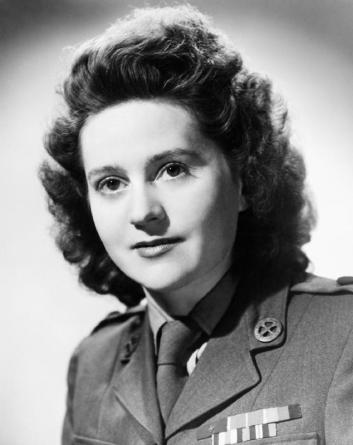
From the moment she saw her dark eyes gazing at her through that mask Helen knew Eva would be a ballerina and her setting would be a ballet school for spies. This lead her to research for accurate accounts of the lives of female spies. On the Imperial war Museum’s website, she read all about a spy called Odette Samson.  Odette was also the name of the White Swan in Swan Lake and inspired Eva’s code-name ‘O’.

“I read that Odette Samson had been awarded a George Cross for her refusal to name her fellow secret agents during the second world war. Despite having three young girls, she had volunteered to work for the Special Operations Executive (SOE), but in 1944, was captured and brutally tortured. (The Nazis extracted her toenails; a feature I bestowed on Swan House’s battle-worn Spy Craft teacher, the Captain).”

Helen Lipscombe

Odette Samson

Odette Samson

In order to capture the heightened atmosphere of a live performance, Helen revealed she went to see Swan Lake by the Russian State Ballet and the Royal Ballet’s production of Romeo and Juliet.

“I also took part in a backstage tour of the Royal Opera House which proved particularly worthwhile. Walking through the maze of corridors as the dancers do every day; standing amongst the sets and lighting; handling the ballet shoes, headdresses and props, and watching the dancers rehearse gave me a real feel for the setting.”

Helen Lipscombe

To read the complete interview check out the #217 Nov 2019 issue of Writers’ Forum.

You can find out more about Helen Lipscombe you can follow her on Twitter @Helen_Lipscombe or Instagram @helenlipscombe

The role of the booksellers

The book business is an industry run by booksellers, marketers and publishers. Over the last few decades book publishing has become more commercial than ever and the big publishing companies will not back a book unless it is a sure bet. It is all about selling and whether the retail outlets can persuade the public to buy your book. This blog is not really about the independent local booksellers but the multi-national companies that have monopolised the book market for years.

whsmith

Publishing houses are actively acquiring books they believe the big booksellers will like. If the bookseller wont stock the book, the book will not sell. It is the book cover and how enticing it is that gives a book an edge with the bookseller. Many retailers base their judgements on whether to stock the book on the cover and usually the author has no say in this at all.

waterstones

Big book chains have been centralising the ordering of books, which means there are one or two people deciding for the chain store which books children will read all over the country. The retail market is 70% chain. Waterstones bought Foyles in September 2018.

The buying process for Foyles will now work in a similar way as it does for fellow Waterstones-owned bookshops Hatchards and Hodges Figgis, with the initial layer of ordering done by the central team in Piccadilly rather than by Foyles buyers. Bespoke ordering will then be layered on top.

The Bookseller October 1, 2019

‘High concept’ books are the easiest to sell as they are more commercially successful because they stand out from the crowd.

tesco

It is quite scary the impact the big bookstores have on the publishing world and when you realise they monopolise over 70% of the book selling market it is understandable why writing for children has become more competitive. In turn, more and more consumers are buying books from large supermarket chains and the big book chains feel squeezed by these supermarkets muscling in on their territory.

amazon_online

The internet is part of this rumbling revolution. Large online booksellers such as Amazon are seen as a threat by publishers as they are able to give large discounts on books, cutting profits. They can also create a lot of publicity for a book through online advertising and linking from authors websites. I think this is one of the reasons why more authors are turning to self-publishing.