Tag Archives: Writers Forum

An interview with… Cas Lester

In September 2017, I interviewed Cas Lester about some of the differences between writing a children’s TV series and writing a children’s book series.

Cas Lester author picture

Cas explained for both children’s dramas for CBBC and her children’s books she always looks for a fresh idea or contemporary ‘spin’ on an existing idea. For example, Mischievous fairy Nixie wears ‘doc martin’ style boots and keeps a wand in one and a spanner in the other because she’s better at DIY than she is at magic. Her Harvey Drew books are based round the contemporary topic of space trash. 

When she is developing her characters and their world she researches the story territory and then does a huge amount of playing around with the idea – she revealed usually way more than is strictly necessary. She wrote a post-it note to make herself actually start to writing the first Harvey Drew manuscript, which she stuck to her laptop. It read: Stop mucking about and write the book.

Cas told me she plans everything as she is not one of those brave writers who can simply start writing and see where the story takes them. She believes this is because she is used to multi-episodic TV dramas where there are multiple writers and they all have to go in the same direction. All the episodes have to head towards the series finale, and the various subplots can’t conflict or be inconsistent. She also writes lots different scenes and chunks of dialogue until she can see the world and hear the characters speak. She explained she can’t write unless she can run the scenes in her head like an animation or a movie.

“I always write a series bible. For the Nixie books I included a calendar of events, the fairy realm, the fairies’ characters, jobs, and catchphrases, what their little houses were like and, crucially, the rules of magic. I am fanatical about consistency of rules. Again, I think this is because of my experience of creating multiple storylines with multiple writers. Inconsistency irks me, and I can’t bear it if rules are broken or fudged for narrative convenience. It’s cheating! My books are inspired by children – sometimes my own.” (Cas Lester)

Cas siad that one of the great things about writing children’s books is that they’re often illustrated. This can help fix the characters and the settings in your head. But not when you write the first book in any series, of course. She think in pictures. So she downloads images to help her get a handle on her characters, settings and key locations.

Cas loves subplots. She explained this is because when you’re making a children’s drama series, the UK law limits the hours a child can work on any day (and rightfully so). So you have a good proportion of scenes without your central protagonist.  Inevitably, this usually means having at least a B and probably a C plot too. Children’s books seem to be more linear.

“My writing is powered by chocolate – not always my own!” (Cas Lester)

do you speak chocolate

She told me how one of the big differences in writing children’s books rather than children’s TV is that the characters on the pages don’t age the same way real children do. She elaborated:

“The fabulous Dani Harmer was, I think, 12, when we cast her to play 10-year-old Tracy Beaker. With every following series she, and the entire child cast, grew a year older. We had to reflect this in the writing. Four series on, you couldn’t have 14-year-old Tracy behaving like a 10-year-old. It also meant we had to add some new, younger, characters in the following series in order to keep the age pitch right for the audience. It was always a nightmare when the children came to the first rehearsals of any follow up series. The boys changed more than the girls. Sometimes they’d shot up several inches, their voices had broken and they’d started shaving.” (Cas Lester)

In her book series there is no passage of time between the books. The characters don’t get older. They stay exactly the same, which Cas finds a lot easier. But she does have an ongoing story line. In the Harvey books it’s the on-going story line about Harvey trying to get home to Earth. With Nixie it’s about how Adorabella the Goody, Goody Fairy is always getting her into trouble with the Fairy Godmother.

When she is pitching an idea for a series, she drafts several story lines – even if only to convince herself that the idea really does have ‘long legs’.

“I always pitch at least two or three more books in the series.  It’s important to show that the subsequent books won’t be formulaic and that there is sufficient (ideally endless) fresh territory to plunder. Interestingly, when OUP commissioned the four Nixie books they wanted one for each season of the year, to tie in with publication dates, which isn’t something that would have occurred to me.” (Cas Lester)

Her tip for other writers interested in writing for children, whether for print or TV, is to remember to write for children as they are NOW and not as they were when you were a child.

To read the complete feature you can purchase a copy of #191 Sep 2017 Writers’ Forum online from Select Magazines.

To read my latest Research Secrets or Writing 4 Children interviews you can invest in a subscription from the Writers’ Forum website or download Writers’ Forum to your iOS or Android device.

You can find out more about Cas Lester and her books on her website, www.caslester.com and on Twitter @TheCasInTheHat

An interview with… Eve Ainsworth

In December 2017, I interviewed award winning children’s author, Eve Ainsworth, about the issues she covers in her YA books and how she develops the different voices for her YA characters.

wf2

She explained:

“My YA books focus mainly on issues I experienced when I was working in schools, or issues I remember facing myself as a teen. I explore topics such as bullying, mental health, toxic relationships and self-harm.” (Eve Ainsworth)

In Damage the themes of self-harm, grief and alcoholism are explored. These are quite dark topics. In my child protection role, I had dealt with self-harm cases within the school and was trained in this area. I had regularly spoken to young people who had harmed and had been taught why so many chose to do so.

Eve told me how she had experienced a recent grief in the loss of her father and how this made the writing process extremely difficult. She’d also had direct experience of alcoholism as my older brother died of drink related illness.

Eve’s aim is to increase awareness and understanding by raising these themes and hopefully help to support those struggling.

“I know when I was young, I felt isolated at times and books helped me to tap into the feelings and emotions I was experiencing. It helped me and ultimately I hope I can help others.” (Eve Ainsworth)

Her favourite thing about writing for young adults is the characters’ voices. She love the way they are vibrant, questioning and constantly encouraging her, pushing herto break down the boundaries she might have set herself.

She reads her pieces out loud and if something sounds out of place or too adult, she’ll delete it immediately. In her head her characters have a total back story, she can tell how they’ll react to something or judge an action. She explained this is because they are part of her for a long time.

“It’s quite a strange process and difficult to describe to non-writers. They often look at me as if I’m mad.” (Eve Ainworth)

She told me that characters often send her in a new direction she wasn’t quite expecting – which is both an exciting and fairly stressful event. She discovered from a conversation in her head with Gabi she was even more vulnerable than she first thought and a lot of her pain and fears were hidden in a deep dark place within her. Eve knew she was going to be feisty and headstrong at the start of the book – but it was only through development and conversations she worked out this was just her ‘front’. Her way of preventing anyone coming too close and hurting her anymore. This is particularly evident in her relationship with her mum. Eve didn’t plan for it to be a difficult relationship. Gabi led me that way.

This information created more plot layers for Eve, so her novel became more than just about ‘self-harm’ – it was now also a book about identity and about relationships. Gabi’s relationship with her Mum became key – as the two are very similar in the way they deal with grief and pain. As the plot evolved it was clear to Eve that Gabi and her mum had to work through their demons together in order to move on and heal.

Eve explained:

“Voices come from having strong, relatable characters. Once you have a well-defined character in your mind, their voice should be unique –and as I mentioned before, the voice will be with me – in my head, like an old friend nagging at me.” (Eve Ainsworth)

Eve told me that to ensure her characters’ voices are different from each other she uses subtle differences in the writing – phrasing and sentence structures to make the characters stand out. She asks ‘would he say that?’ ‘how would she react to this’? The differences become magnified once the characters are fully formed. Development of character is key. Only once you have a strong character can you have a strong voice. Her tips to other writers who want to get the voice of their characters write is to either ‘hot seat’ or write out a questionnaire asking your character several questions.

Think how would they react to a given situation, or how would they feel if this happened? Consider how your character responds – tone, body language, facial expressions and make notes – all these factors will help you to create their unique voice.

Eve suggests you could get your characters to write to each other, a couple of letters each to help develop their different style. Or write a short monologue in the voice of one character – telling their version of a story (whether it be the one you are writing or something completely new). Then, get your other character to tell their version of events. Read both pieces out loud. Do they sound like two individuals, or the same person? If it’s the latter, tweak – look at the words used again, the sentence structure. The tone. Make them different and stand apart.

A final good exercise that Eve shared with Writers’ Forum readers is is to listen to other peoples’ conversations more. Eavesdrop. Notice how voices are unique and make notes about what people are actually saying to each other, how they say it and what they don’t say. Buses and trains are great places for this, and it’s the reason why I carry my notebook everywhere. You never know what you might discover or overhear. Writing is the perfect excuse to be a nosy beast.

You can find out more about Eve Ainsworth’s books on her website: www.eveainsworth.com and Twitter @eveainsworth


An interview with… Christopher Lloyd

For my Writing 4 Children column in the national writing magazine Writers’ Forum this month, I interview Christopher Lloyd about his inspiration for creative non-fiction books.

Christopher Lloyd1

In the interview he explains how he realised that in order for children to explore learning, their own natural curiosity knowledge needed to be stitched back together again, not chopped up into separate subjects and curriculum.

“Afterall, the brain is not divided into separate sections for maths, music, art, languages, history, science – how absurd! It is all connected! So my books became all about ways of connecting knowledge into giant narratives.” (Christopher Lloyd)

Christopher revealed he originally submitted the proposal for What on Earth Happened? as a children’s book but when Bloomsbury bought the rights, they wanted him to write it for adults, so he had to change tracks. Ten years later, the original concept has finally been published (and entirely re-written) as a children’s book: Absolutely Everything! A History of Earth, Dinosaurs, Rulers, Robots and Other Things Too Numerous to Mention.

The first Wallbook timeline books were his first children’s books and they were written as a result of his home educating experience. He stuck sixteen pieces of A4 paper together and started drawing pictures and writing captions. Three months later (and various pencil, and rubbers consumers) the blueprints for the Big History Wallbook were born.

The Big History Timeline Wallbook cover

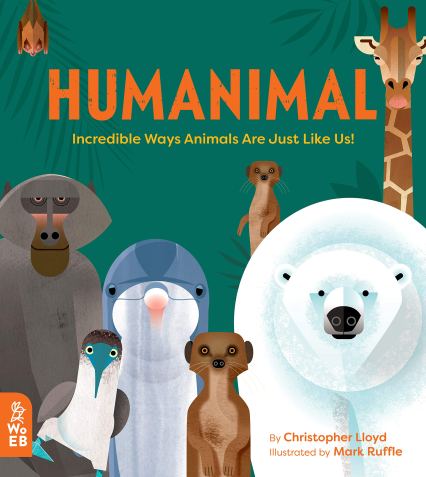
His latest book, Humanimal, explores the connections between humans and other animals. The whole concept of What on Earth Books is to find new perspectives for looking at the real world – far more amazing than anything you can make up! Once I had finished Absolutely Everything! I was left with the dangling question in my mind – how clever are humans really? Are we so much more advanced and intelligent that other life around us? Or is that just a human arrogance fuelled by ancient religions and modern scientific traditions?

He states:

“Children have an intuitive sense that humans and animals are far closer than many professional adults realise and I thought it would be good to create a book that’s scientifically rigorous but totally accessible to younger people to explore this theme further.” (Christopher Lloyd)

The title Humanimal shows his conclusions were that the links are very strong indeed – far more profound than the differences, hence the need for a new word – describing us all as Humanimal is in many ways, far more accurate than the artificial divisions we wedge between species by using traditional scientific conventions. After all, human DNA is approximately 84% similar to dogs and 98% the same as chimpanzees.

Humanimals

He explained that during the writing process he divided the book into three themes that best characterise what most people would say it means to be human – Living Together, Having Feelings and Being Intelligent. He then researched to see what other animals have behaviours that seem similar and came up with a huge list. It was then a matter of honing them down to see which ones made the best stories and could be backed up by really reliable scientific evidence. The copy then went through a rigorous editing, fact-checking process before he received it back again to make any final stylistic changes with the editor.

His tips for other non-fiction children’s writers is to think what you want to write then think what will make the child go WOW! when they turn the page. There are plenty of triggers for this rush of dopamine in our natural reward system such as powerful visuals, finding out stuff that’s surprising, giving them different routes through the information.

“I think non-fiction had traditionally been poorly served as in terms of the priority given to it by schools in reading schemes and honestly many children find learning about the world we live in so fascinating. I hope that more focus will be given to non-fiction at festivals, in schools and generally in the field of writing for children.” (Christopher Lloyd)

To read the complete feature you can purchase a copy of #222 Apr Writers’ Forum from your nearest good newsagents or order online from Select Magazines.

You can discover more about Christopher Lloyd and his What on Earth Books on his website: www.whatonearthbooks.com and follow him on Twitter: @chrislloydwoep and @whatonearthbook

An interview with… Joy Court

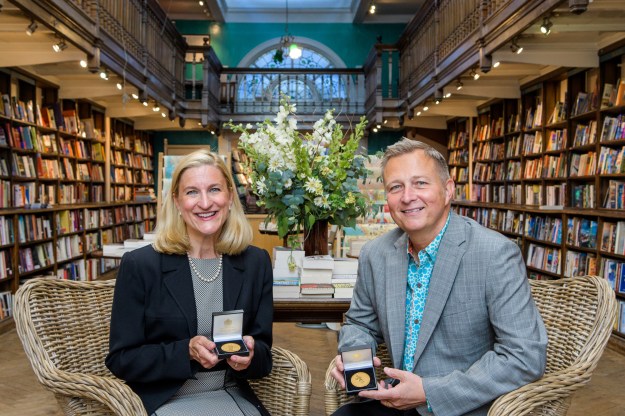
In November 2017, I interviewed librarian Joy Court, about some of the children’s book awards she was involved with for my Writing 4 Children slot in Writers’ Forum. Joy is a professional librarian and was the Chair of the CILIP Carnegie and Kate Greenaway Medals – the oldest and most prestigious children’s book awards in the world of children’s literature.

Joy Court photo

The Carnegie Medal

The Carnegie Medal was introduced by the Library Association 80 years ago and is awarded for outstanding writing for children and young people. It is named after Andrew Carnegie, a self-made industrialist who made his fortune in steel in the USA. His experience of using a library as a child led him to resolve:

‘…if ever wealth came to me it should be used to establish free libraries.’

Andrew Carnegie

He set up more than 2800 libraries across the English speaking world and, by the time of his death, over half the library authorities in the UK had Carnegie libraries. He must be turning in his grave with the current shocking spate of library closures.

One misconception of the Carnegie Medal is that it has been taken over by teenage and YA publishing. There is only one definition of a children’s book – it is published on a children’s list (technically listed on the Neilsen database). Until the industry differentiates between children and teenage publishing we cannot.

A book can be great for many different reasons. For the purposes of the Carnegie we are looking for a book of outstanding literary quality.

“The whole work should provide pleasure, not merely from the surface enjoyment of a good read, but also the deeper subconscious satisfaction of having gone through a vicarious, but at the time of reading, a real experience that is retained afterwards.”

Past winners include: Tanya Landman with Buffalo Soldier, published by Walker Books; Sarah Crossan with One, published by Bloomsbury and 2017’s winner was Ruta Sepetys with Salt to the Sea, published by Puffin.

The Kate Greenaway Medal

The Kate Greenaway Medal was created 60 years ago to award outstanding illustration for children and young people and was named after one of our most iconic British illustrators.

Previous winners include: William Grill with Shackleton’s Journey, published by Flying Eye Books; Chris Riddell with The Sleeper and the Spindle, published by Bloomsbury and 2017’s winner was Lane Smith with There is a Tribe of Kids, published by Two Hoots.

Judging

Both medals are unique as they are judged by librarians and are completely devoid of any commercial influence. Neither publishers, nor authors can submit their books and the judging is not influenced in any way by sales or publicity. She read every single book nominated for them but does not get to vote. Joy’s job was to ensure every book got a fair chance and all the procedures were followed correctly.

In the early days, judging was carried out by men in suits behind closed doors (the Library Association Council). Now the judging process is under the control of children’s librarians from the 12 regions of the UK including Scotland, Wales and Northern Ireland. They are elected for a two-year-term by their regional Youth Libraries Group committee, thanks to the pioneering work of Eileen Colwell, the first specialist children’s librarian and founder of the Youth Libraries Group. She must also be turning in her grave at the loss of specialist posts.

Gradually the system of nominations, election of judges and the criteria has been honed and improved to keep pace with new developments in the world of children’s publishing. You have to be a member of CILIP to be able to nominate and can then nominate two books for each award. Unlike many other awards we publish our judging criteria on our website.

CKG Medal-5948, 16281

2017 winners

Impact

These awards have a huge impact on the world of children’s literature because of the enormous shadowing scheme. There are around 5000 groups shadowing the awards each year, with hundreds of thousands of young readers reading and commenting on the shortlisted books. This means a lot of shortlisted books will be sold and figures show an ongoing increase in sales from winning the medal.

The medals have always been international in outlook. Books first published elsewhere in the world can be eligible providing they are published in the UK within 3 calendar months of original publication. In 2014, books in translation (first English translation published in the UK) became eligible. We can genuinely say that the medal awards the best writing in the world.

You only have to look at the list of winners to see they have become classic titles that are always available in bookshops. I believe 80 years of ‘they all want to win the medal’ has led to the development of the UK ‘world-beating’ publishing industry we have today.

UK Literary Association Book Award

Joy is also a Trustee and National Council member of UKLA and helps to manage their book awards. They are nicknamed the ‘Teacher’s Carnegie’ as they are the only awards judged by teachers. The 60 teacher judges involved in the initial shortlisting are selected from around the geographical area where the next UKLA international conference will be held – 2018 is Cardiff.

UKLA invite publisher submissions according to three age categories 3-6, 7-11 and 12-16. A publisher can submit 3 books per imprint. A publisher like Penguin Random House has many imprints: Jonathan Cape, Bodley Head, Corgi, Puffin, Red Fox, etc.

In 2017, the winning book in the 12-16 category was The Reluctant Journal of Henry K Larsen by Susin Nielsen, published by Andersen Press. In the 7-11 category the winner was The Journey written and illustrated by Francesca Sanna and published by Flying Eye Books. The winner for the 3-6 category was There’s a Bear on MY Chair by Ross Collins, published by Nosy Crow.

As the conference moves around, we are gradually infecting the UK with teachers hooked on reading quality books. The impact in their schools and upon the young people they teach has been positively awe inspiring.  And of course books recommended by teachers are very popular with schools and parents. I strongly recommend authors to ensure their publishers are aware of the UKLA awards, which may be only 9-years-old but are growing in influence all the time.

 Other Awards

There are many awards for children’s books in existence today and the Writers’ and Artists’ Yearbook is probably the best source of information about them. Many are administered by the Booktrust so it is worth looking at their website and others are linked to children’s book writing festivals. Some awards require a submission fee from the publisher, so it can be very difficult for an individual author to influence this. It can be a marketing budget based decision.

In the feature, Joy recommended researching local awards in your area run by your local library service. Becoming well known in your local area – visiting schools and doing local bookshop signings is a good way to get your books noticed and considered for such awards.  Once over the hurdle of submissions / nominations every award will have a different system of judging and / or voting, often by the children readers themselves.

The Coventry Inspiration Book Awards, which she created, has a tense system of Big Brother style voting. The book with the least number of votes is voted off each week until we get a winner. This ensures readers keep voting to keep their favourites in.

Anything which raises the profile of books and reading has to be a good thing. We all know that bookshops can have a bewildering array of titles and something having an award sticker can make a huge difference to sales. The most important thing about children’s book awards is the pursuit of excellence.

Joy Court can be found on Twitter: @Joyisreading

An interview with… Julie Cohen

Julie Cohen writes romantic comedy for Headline’s Little Black Dress imprint and novels for the Mills & Boon’s Modern Heat imprint and is a Richard and Judy bestselling author. I interviewed her for my Research Secrets column in the #92 May 2009 issue Writers’ Forum.

She told me she loves research because it means she gets to do stuff she wouldn’t normally do. She has ridden roller coasters repetitively for a roller-coaster designer hero; gone to famous restaurants for a celebrity chef hero; rode on the back of a BMW motorcycle at 80 mph down the M4 for a motorcycling hero; ran from South Street Arts Centre in Reading to the station in high heels just to see how fast it could be done; visited art deco cinemas, retro diners, art galleries, cities and parks to research settings for her books. But, Julie believes the best resource is to get out there and talk to people.

Her original sources are all people. She explained talking to them is utterly inspirational and helps her get into the heads and lives of my characters. She has also met some really cool people who she has looked up online, in the phone book, or through research books.  Usually she emails or pick up the phone and rings. She has found that most people are happy to talk to you about what they know and told me their opinions are just as useful as the facts for developing characters.

She explained it is always important to acknowledge experts who have taken time to help or whose expertise you’ve used extensively. She like to send a thank-you email or note and often sends them a signed copy of the book when it comes out.

It is not until she is about half to two-thirds of the way through a book that she begins to see what information she actually needs.  That’s when she starts making lists of questions to ask, and that’s generally when she start calling experts and asking for interviews.  Because her books are more focused on the characters and the story than on research details, she does not see the point in getting huge amounts of information she probably won’t need.  Instead, she pinpoints what she has to know for the story and only uses (and often only find out in the first place) what’s vital to the story, or what seems to add vital flavour.

“I’m not a plotter when I write, and generally my first forays into research are pretty vague.  I use the internet first – and then the local library and bookshop. I’ll just dabble around in a subject finding out some stuff to see if any of it inspires me. My books centre round people and relationships rather than facts.” (Julie Cohen)

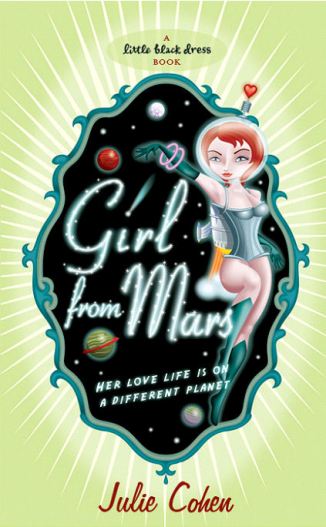
Julie told me that quite often, doing her research, she will find a central metaphor that she can use and examine through the whole book. For example when researching comics for Girl from Mars, she was intrigued by the concept of the gutter, which is the name for the blank spaces between panels.

girlfrommarslge

Because comics are static but portray action, the reader actually fills in the action between panels. The blank gutter is extremely important to make this happen. In her story, it became a metaphor for change happening when you’re not looking, for filling in the blanks, which are both key themes to the story.

You can find out more about Julie Cohen and her books on her website: www.julie-cohen.com

To read the complete feature you can purchase a copy of #92 May 2009 Writers’ Forum online from Select Magazines.

An interview with… Holly Rivers

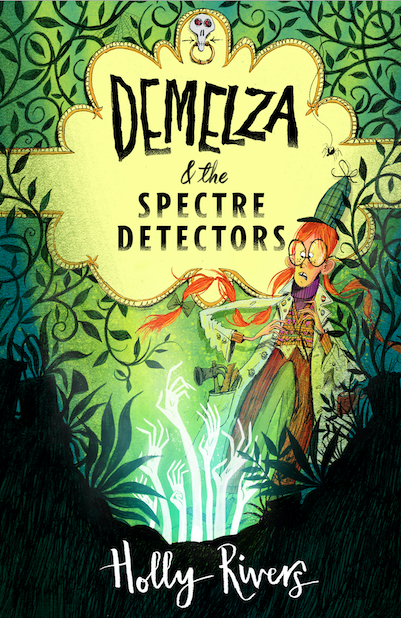
In my Writing 4 children column this month (issue #221 Mar of Writers’ Forum) Holly Rivers, explained what inspired her to write a story about a stubborn young inventor called Demelza.

Holly Rivers2

The idea struck her in 2016 and she put pen to paper immediately and very quickly realised she never wanted to stop writing.

“I could see her clearly from the very beginning: her red hair, her cosy attic room, her quirky inventions, and her thinking hat.” (Holly Rivers)

For the first time in her life she had found something she wanted to do every single day for evermore. Holly believes this realisation massively changed her life for the better, and revealed sitting down to write always makes her heart beat a little faster. She explained that she spent a year writing the (very long and very messy) first draft of Demelza and the Spectre Detectors, before spending a further year honing the manuscript on The Golden Egg Academy’s Foundation Course.

Holly told me the fact she is absolutely fascinated by anything spooky, macabre and ghostly inspired her to explore how a logical, science-minded character such as Demelza would react to finding themselves in a mysterious supernatural environment.

“Having an inquisitive stem-girl protagonist was really important to me, and I think there’s quite a lot of young Holly in Demelza. A few of her inventions were things I actually attempted to make as a child — namely the ‘Magnificent Belly Button Cleaner’” (Holly Rivers)

A lot of her inspiration comes from the sci-fi and fantasy books/films she enjoyed as a child such as: Ghostbusters, E.T, Labyrinth, Chitty Chitty Bang Bang, the books of Roald Dahl, The Goonies, Pippi Longstocking, Teenage Mutant Hero Turtles.

This slideshow requires JavaScript.

Many of her characters are inspired in part by real people, for example Grandma Maeve’s eccentricity, warmth and humour all stem from her own wonderful grandmothers. Ms Cardinal was also inspired by someone, but she wouldn’t say who. Holly said that so much great material can be mined from keeping your ears and eyes open, and I can often be found jotting down snippets of conversations that I’ve overheard, making notes of an unusual mannerism, or sketching an interesting outfit that somebody is wearing.

Demelza jacket lowres

The children she works with are huge inspirations too  and Holly has no doubt that bits of their brilliant (and often mischievous) personalities have found their way into Demelza, Percy and Miranda, and she believes this has made their characters all the richer.

She has also spent a lot of time in Mexico, where Dia de Los Muertos is the annual holiday celebrating the dead and observing the way that different cultures mark death was also a big inspiration for her book.

“Some people can have such a sombre, stiff and austere outlook on death, so I wanted Demelza and the Spectre Detectors to hopefully open up the conversation around death to a young readership in a ‘lighter’ and more accessible way.” (Holly Rivers)

Her writing tip for other children’s fiction writers is to read:

“I try and read or listen to at least one book a week, and I make sure that the titles are diverse and genre-crossing. One week I might be reading a quirky middle grade such as Beetle Boy by M G. Leonard or the latest YA from Frances Hardinge; the next I might be listening to an old Agatha Christie on audio book, and the next I might be dipping back into the Tank Girl comics (for the umpteenth time!)  I feel that most of my own development as a writer has come through exploring, savouring and digesting other people’s work.” (Holly Rivers)

To read the complete feature you can purchase a copy of #221 Mar Writers’ Forum from your nearest good newsagents or order online from Select Magazines.

Find out more about Holly and her books on her website: www.hollyrivers.co.uk, Twitter: @hollyrivers_lit and on Instagram: @hollyriversauthor

Writers’ forums

As you all know by now I write for Writers’ Forum a national writing magazine. I have two columns each month, one about authors and their research and the other about writing for children. Each is approximately 1200-1500 words.

Today on my blog though I thought I would write about my thoughts on writers’ forums that is somewhere where people can get together online to discuss writing. There are hundreds of professional and aspiring writers out there and basically we are all in the same boat submitting our manuscripts to agents and editors, with similar wishes and desires for success.

Forums bring people together to chat and talk about their writing. There are different forums for different types of writing. I used to belong to a lot of yahoo Groups when I first started out but I found I outgrew them and Yahoo groups do not not run in the same way anymore, if at all. Nowadays most forums seem to be on Facebook, or run through a society’s websites such as SCBWI and NIBWEB. It is part of your virtual network. I have posted about Virtual networking before, See: Virtual networking

blog-forums

I try to limit myself to three forums so I do not get too many distractions from my work. On these forums, people often asked the same sort of questions But, these were sometimes questions that I may have been pondering over for weeks and just wasn’t brave enough to ask myself.

Sometimes little debates linked to writing go on with everyone adding their point of view. These can be fascinating. Sometimes I listen in or add my own snippet. It is important to contribute to forums to get the most out of them, although I am sure there are plenty of ‘lurkers’. One thing for certain is they definitely counteract the feeling of being alone.

forum 2

It is also important to keep it positive. If someone says something controversial my advice is – keep quiet. Remember some of the members may be very highly-regarded authors or editors and you want to make a good impression.

And probably most importantly, when you post to a forum every single member gets to read what you have written so keep it relevant. If you want to ask a specific person a question it might be a good idea to do it more privately through email.

If you belong to any forums, which are different to the ones, mentioned above, whether they are for children’s writers or writing for adults why not add a comment. I’d be interested to know a little about them and how they have helped you.

John Condon’s book launch

Last week Thursday, I went to John Condon’s book launch for his latest picture book, The Pirates are Coming written by John Condon and illustrated by Matt Hunt.

The Pirates are Coming

This is an ingenious picture book all about a little boy who keeps a look out everyday for pirates in a similar vain to the boy who called wolf but as John’s son, Eddie, explained the boy is not being naughty because he really believes it is a pirate ship he sees.

On arrival I was greeted by the staff of Queen’s Park Books, London, who offered me a drink, red wine, white wine and rum, which made it really difficult for me not to take an alcoholic drink as dark rum is one of my favourites. After much deliberation, I drank mango juice and managed to restrain myself from mixing it with rum. There were also some delicious pirate cupcakes.

The first person I met was John’s son, Eddie, who pointed out he was the boy in the cover of the book and indeed he was – right down to the red sash and the bell. Some of the guests also dressed up as pirates, including myself. This is a picture of me with author Matt Killeen and another of author, Cath Jones in her pirate costume. I interviewed Cath for the January 2020 issue #219 of Writers’ Forum see: An interview with… Cath Jones

John was also dressed up and he was the spitting image of he dad in the book. The likeness was uncanny. I was wondering if Matt did this intentionally.

During the launch we were entertained by violinist, Frank Biddulph, and John read the book with the help of his son Eddie who got the timing perfect and even managed an improvised squawk of the parrot.

I have also previously interviewed John about his writing process for the #216 Oct 2019 issue of the national writing magazine, Writers Forum. I have blogged about the interview here: An interview with… John Condon. In the interview John explained that even though The Pirates are Coming was accepted to be published first, due to the backlog of pirate based stories his other picture book The Wondrous Dinosaurium (illustrated by Steve Brown) was published first.

All in all a very successful book launch for another excellent picture book. I can’t wait for the next one.

To find out more about John take a look at his website www.johncondon.co.uk or follow him on Twitter @John_Condon_OTT

An interview with… Sarwat Chadda

Sarwat Chadda’s first novel, The Devil’s Kiss, was released by Puffin in May 2009 and was quickly followed by the sequel, The Dark Goddess. He has also written a breathtaking action adventure series for children aged 8-12 years, called Ash Ministry and writes under the pseudonym Joshua Kahn. He is currently working on a project with Rick Riordan. I interviewed Sarwat about his research in 2009 for my Research Secrets column.

He explained that for him the research comes before the writing because he loves reading about history, mythology and fairy tales way back when he was an engineer. He likes to start something on a whim and then explore the area, culture and background until he reaches a saturation point. This gives him enough information to sound convincing and have all the key characters and locations in place.

Ultimately, his books are about the character and feels everything else is scene setting. To help create his characters he looks into his life and projects how he was at the age of his protagonist. He said the core needs come from there.

Sarwat insists research shouldn’t be a chore it should be part of the fun.

“We’re not just putting words down on paper we’re offering readers our unique take on the world. If you’re finding it hard work constantly, question why you’re doing it. Writing is about passion, life’s too short to be wasted on something you don’t love.” (Sarwat Chadda)

Most of his research is done through books. In fact, he admits that his biggest cost is books, but he was buying them before he decided to become a full time writer. Sarwat believes that libraries are our greatest resource. I agree. Use them or lose them. He explained:

“The Internet has its place, but nothing beats getting really into a subject in a library and second hand book shops. They’re great since you’ll come across stuff that’s years old and since I’m writing about mythology, those sort of books just set the mood perfectly.” (Sarwat Chadda)

He said the danger is over-research and getting yourself trapped by it. But he does not have a system for the way he does his research. because he feels the best thing about writing is the license to mix it all up how you like. His tip to other writers is not to stack your books in a too organised manner. Mix them up and see what happens as you’ll come across connections otherwise impossible to see if it’s all logical.

Sarwat explained sometimes the ‘official’ version doesn’t work and you have to tweak it. This happens a lot in historical fiction, especially with combining characters and moving dates. But that’s why it’s called FICTION. In his adventures he admits he makes up all the difficult and dangerous stuff.

OLYMPUS DIGITAL CAMERA

For all that sort of practical detail on the ‘day in the life of a warrior’ he got in touch with various re-enactment societies and visited shows around England. Since his books are based on the Knights Templar, he found their working understanding of the practical nature of the arms and armour of a medieval knight, very useful.

“They explained the nitty-gritty of the sword hilt, the practicalities of the weight of armour, its properties and the weapons designed to overcome mail or plate. It’s all these details that make the story breathe with a sense of reality.” (Sarwat Chadda)

To find out more about Sarwat Chadda and his books take a look at his excellent website: http://www.ashmistry.com or follow him on Twitter: @sarwatchadda 

To read the complete feature you can purchase a copy of #93 June 2009 Writers’ Forum by ordering online from Select Magazines.

An interview with… Helen Fry

In 2009, I interviewed British historian and historical non-fiction writer, Dr Helen Fry,  for my Research Secrets feature in the #94 July 2009, issue of Writers’ Forum.

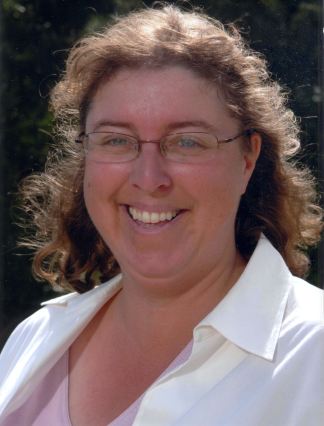
Helen photo

Helen Fry specialises in history books, specifically refugees in the British forces in the Second World War; as well as English Jewish community history. But she co-wrote with James Hamilton under the pseudonym of  J. H. Schryer for her first novel, Goodnight Vienna. It is a love-triangle within MI6 British operatives, set against Hitler marching into Vienna in March 1938, based on authentic background research which she did for some of her history books.

For example: on 10 May 1933 Hitler ordered the burning of Jewish books in Berlin, including those of Sigmund Freud. As each book was hurled into the burning pile, a ritual chant was said by the SS, SA men and students. In our novel Goodnight Vienna, we have a scene of burning of books in Vienna in 1938, this time one of the central characters, a young headstrong anti-Nazi student hurls a copy of Hitler’s Mein Kampf into the fire. It never happened in reality, neither were books burned in Vienna, but one historical event in 1933 sparked the idea for a powerful fictionalising of it in a scene for the novel.

Goodnight Vienna came out in June 2009. The sequel, Those who Avenge, came out in March 2010.

Helen enjoys interviewing war veterans, many of whom have not told their stories before. The main focus of her writing and research was refugees from Nazism who fought for Britain in the Second World War. She feels there seems to be no other historian taking down their stories, which will very soon be lost and cannot be reconstructed from official government papers.

“It is important to me to capture the human dimension of what it was like in the war. I also enjoy searching through unpublished documents and material in national archives. Shaping a wealth of diverse material into a book is an art and skill.” (Helen Fry)

A number of her books are based on the oral testimony of war veterans. She rings them up after they have replied to a search notice in a paper or journal, and arranges to visit them. Helen explained it is important that they feel relaxed and are not pressurised to tell what they find too painful. You have to build up trust and their confidence. This often necessitates two or three visits. It is a lengthy process but makes it easier if you need to interview them for a sequel book because they then have your trust.

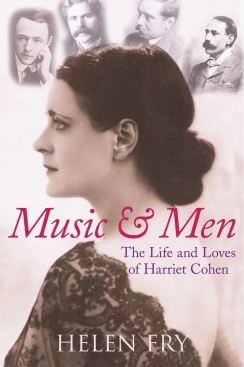
When researching, she often uses unpublished documents, papers, memoirs and the Sound Archive at The Imperial War Museum or the British Library. A prime example of this was for her book Music and Men: The Life and Loves of Harriet Cohen in which she used the archive of 3,000 letters which Harriet Cohen bequeathed to the British Library.

4817 Harriet FCP.indd

Sometimes Helen will visit the area she is writing about. For example, for Music and Men: The Life & Loves of Harriet Cohen after she discovered Harriet Cohen’s ashes were interred at Stoke Poges Memorial Park in Buckinghamshire she felt the need to go and see her final resting place, especially after having written what was an intensely emotional book, working through all her love letters. Helen discovered her final resting place was totally in character with her life. She is on her own tiny rockery island in the water garden, alongside her sister. Everything in her life was imbued with deep meaning and emotion, Helen felt this was no ordinary burial place, and so typical of her.

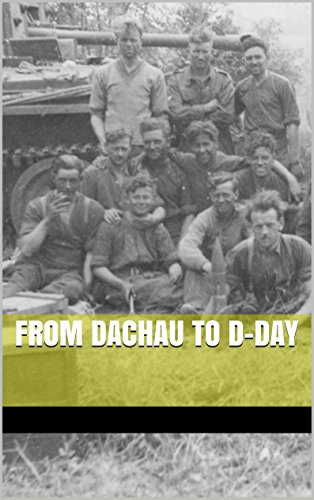
Many of her original sources are found in museum and government archives as well as specialist libraries, so for example when she was writing her book From Dachau to D-Day, it’s the story of a tank driver (originally a refugee from Nazi oppression), she used the official war diaries from D-Day to the end of the war at the Public Record Office, Kew. She also consulted the archivist at The National Tank Museum.

Dachau to D-Day

Helen revealed the Sound Archive at The Imperial War Museum was especially useful when she was adding research to my existing material from veteran interviews she had conducted. The Sound Archive contains masses of veteran interviews, some of which are specific to refugees who served in the British forces in WWII.

Helen told me she rarely, almost never, conducts research using the internet, as she believes this is how historical inaccuracies creep in.

“I believe that historians should use primary archives and sources and not rely on the internet, except to search for people who can help them with something specific. I am wary of online encyclopaedias.” (Helen Fry)

The key to her success as an author is being highly organised and methodical. Once she has carried out an interview with notes in her notebook, she types it up chronologically according to a veteran’s life story and asks the veteran to check it for errors. Then she files it in a single clear document wallet. Each veteran is given their own wallet which is then filed in a box file. Helen explains this makes it easy to retrieve when she comes to the writing-up process. She has gathered an archive of several box files of original interviews with war veterans, plus copies of photographs from their personal albums.

It is important to keep the reader’s attention throughout your book even if some of the material is heavy.

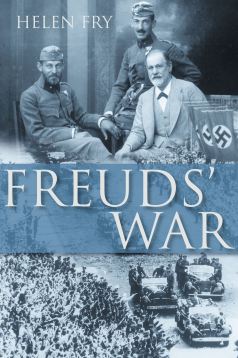
5112 Freud FCP.indd

For example, material for Freuds’ War could have been overwhelming, but she came across some wonderful quotes which just summed up the moment – so used them in the text. She explained:

“I wrote something about how Sigmund Freud was wrestling with the biblical character of Moses whilst he and his family were waiting for exit visas to leave Nazi-occupied Vienna in 1938. Freud was working on his final publication before his death called Moses and Monotheism. He wrote to one of his friends Ernest Jones: “Moses haunts me like a ghost not laid.” A brilliant quote which I incorporated into the relevant chapter because it captures the voice of the person you are writing about (in this case Sigmund Freud) and lifts the text. It gives one’s writing a lively flare.” (Helen Fry)

Helen told me one of the most unusual, or seemingly obscure, research she has done was about Jews in North Devon during the Second World War. She discovered that over 4,000 Jewish refugees were in North Devon during the war and they were all the intellectuals of German and Austrian society who had volunteered for the British army and were training there. This inspired her to produce a detailed book with over 250 black & white photos. It was awarded Devon Book of the Year, was made into a mini documentary for BBC South-West and has led to commissions for over six more books published since 2007.

most_loyal_jacket

“Books once they are published take on a life of their own. They can do extraordinary and unexpected things which are fun, like a mini documentary or radio programme. Few authors are lucky to have their books made into a blockbuster film, but there are other ways in which books can make their mark, sometimes beginning in small ways. The most important point is to get published. Then one can build on what is already in print to raise the profile.” (Helen Fry)

Her tip for other historical writers is to always have an acknowledgements page in your books, to firstly thank the people who have helped you, and also for the reader to see that the research behind the book is thorough and credible.

Find out more about Helen Fry on her website: www.helen-fry.com Or follow her on Twitter @DrHelenFry

To read the complete feature you can purchase a copy of #94 July 2009 Writers’ Forum by ordering online from Select Magazines.